
Ford Ranger vs Raptor: Which Pickup Should We Buy?

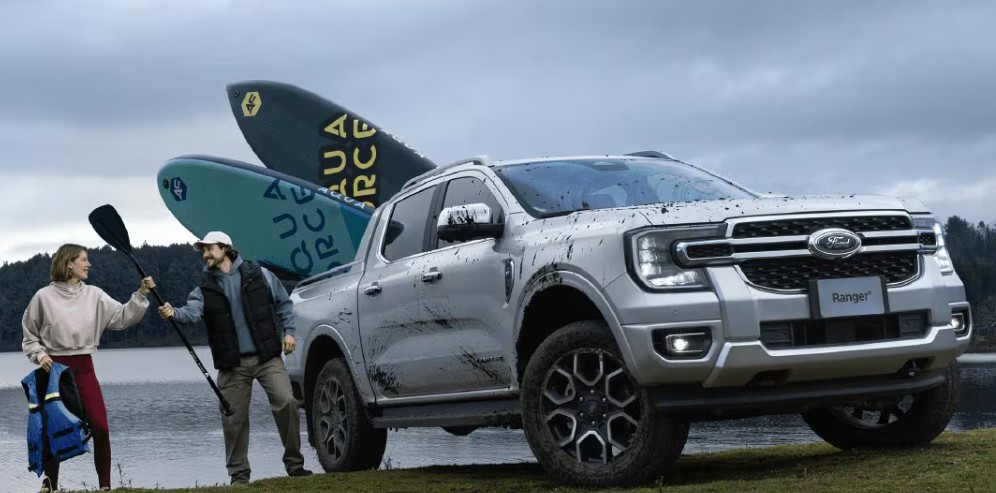
The Ford Ranger vs Raptor debate is not simply about choosing between two versions of the same pickup. It is really a choice between two different personalities.
The regular Ford Ranger is the sensible all-rounder. It can carry tools, tow trailers, tackle muddy tracks, handle family duties, and still fit into everyday life without turning every fuel stop into a financial event. The Ranger Raptor, meanwhile, is the wild sibling—the one that arrives wearing chunky tyres, performance suspension, flared bodywork, and a grin that suggests it has already found the nearest dirt road.
Both trucks share the Ranger name, but they approach pickup ownership from opposite directions. One prioritises versatility and working capability. The other transforms the Ranger platform into a specialised high-performance off-road machine.
So, which one belongs in our driveway? Let us compare performance, towing, payload, comfort, practicality, running costs, off-road ability, and everyday usability to find out.
Important note: Ford Ranger engines, trim levels, towing limits, prices, and equipment vary significantly by country and model year. This comparison focuses on the broader differences between a conventional Ranger and the current-generation Ranger Raptor, with examples from major markets such as the United States, Australia, and the United Kingdom.
Content in this publication
- Ford Ranger vs Raptor at a Glance
- What Is the Difference Between a Ford Ranger and a Ranger Raptor?
- Ford Ranger vs Raptor Engine Performance
- Ford Ranger vs Raptor Acceleration
- Transmission and Four-Wheel-Drive Systems
- Ford Ranger vs Raptor Off-Road Capability
- Raptor Suspension vs Regular Ranger Suspension
- Ford Ranger vs Raptor Towing Capacity
- Payload and Load-Bed Practicality
- Exterior Size and Road Presence
- Interior Design and Technology
- Rear-Seat and Family Practicality
- Ford Ranger vs Raptor Fuel Economy
- Maintenance, Tyres, and Running Costs
- On-Road Driving Experience
- Ranger vs Raptor Styling
- Safety and Driver-Assistance Technology
- Ford Ranger vs Raptor Price
- Which Truck Holds Its Value Better?
- Should We Modify a Ranger Instead of Buying a Raptor?
- Who Should Buy the Regular Ford Ranger?
- Who Should Buy the Ford Ranger Raptor?
- Ford Ranger vs Raptor for Daily Driving
- Ford Ranger vs Raptor for Work
- Ford Ranger vs Raptor for Camping and Overlanding
- Common Mistakes When Choosing Between Them
- Ford Ranger vs Raptor: Pros and Cons
- Ford Ranger vs Raptor Final Verdict
- Frequently Asked Questions
Ford Ranger vs Raptor at a Glance
Before diving into the details, here is the basic distinction:
| Category | Regular Ford Ranger | Ford Ranger Raptor |
|---|---|---|
| Main purpose | Work, towing, family use, general off-roading | High-performance off-road driving |
| Engine choices | Market-dependent petrol, diesel, or hybrid options | High-output performance engine |
| Suspension | Conventional road-and-load-focused setup | Specialised FOX performance suspension |
| Ride | Controlled and practical | Softer over rough terrain, sportier overall |
| Payload | Usually higher | Usually lower |
| Towing | Often higher, depending on market | Frequently reduced compared with work-focused models |
| Fuel use | Generally lower | Generally higher |
| Tyres | Road, all-terrain, or optional off-road tyres | Large all-terrain performance tyres |
| Width | Easier to place in traffic and parking spaces | Wider and more difficult to park |
| Price | Broad range of affordable-to-premium trims | Usually one of the most expensive Rangers |
| Best for | Buyers needing one truck for many jobs | Enthusiasts prioritising speed and off-road control |
The simplest explanation is this: the regular Ranger is a multipurpose tool, while the Raptor is a purpose-built toy that can still perform useful work.
What Is the Difference Between a Ford Ranger and a Ranger Raptor?
A Ranger Raptor is not merely a standard Ranger with cosmetic accessories.
Ford Performance substantially changes the suspension, chassis tuning, track width, tyres, drivetrain calibration, drive modes, steering response, braking hardware, and body design. Depending on the market, it also receives a much more powerful engine than mainstream Ranger trims.
For example, the 2026 U.S.-spec Ranger Raptor uses a 3.0-litre twin-turbocharged EcoBoost V6 producing 405 horsepower and 430 lb-ft of torque. A conventional U.S. Ranger starts with a 2.3-litre EcoBoost engine producing 270 horsepower and 310 lb-ft, while an available 2.7-litre EcoBoost V6 develops 315 horsepower and 400 lb-ft.
Australian specifications illustrate how regional differences matter. The Australian Ranger range includes turbo-diesel and plug-in-hybrid powertrains, while the Raptor uses a 3.0-litre twin-turbo petrol V6 producing up to 292 kW and 583 Nm.
In other words, the regular Ranger adapts to many jobs. The Raptor narrows its focus and turns the excitement dial almost all the way to the right.
Ford Ranger vs Raptor Engine Performance
Regular Ranger Engines Prioritise Flexibility
The standard Ranger’s engine range depends heavily on where we live.
In North America, petrol EcoBoost engines dominate. In Australia, the United Kingdom, and several international markets, buyers may find four-cylinder diesel, V6 diesel, petrol, and plug-in-hybrid options.
That variety is one of the regular Ranger’s biggest strengths. We can choose an engine based on:
- Fuel economy
- Towing requirements
- Purchase price
- Commercial use
- Annual mileage
- Local fuel availability
- Tax or emissions rules
A diesel Ranger may feel less dramatic than a Raptor, but strong low-speed torque makes it well suited to towing, carrying loads, and crawling across uneven ground.
The Ranger Raptor takes a completely different route.
The Raptor Is Built Around Fast Responses
The current Raptor’s twin-turbo V6 delivers much sharper acceleration and a more energetic personality than ordinary work-focused Ranger engines.
Press the accelerator, and the Raptor does not slowly gather momentum like a heavily loaded utility vehicle. It leaps forward. The engine, transmission, exhaust, and drive modes work together to create something closer to a rally-inspired performance vehicle wearing a pickup body.
That power becomes especially entertaining on loose surfaces. Instead of merely surviving a gravel road, the Raptor encourages us to enjoy it.
Still, raw speed is not always useful speed. A contractor towing equipment through city traffic may gain little from a high-output petrol engine. A recreational driver crossing fast desert tracks may consider it the entire point.
Performance Winner: Ford Ranger Raptor
For acceleration, sound, throttle response, and entertainment, the Raptor wins comfortably.
For engine choice, low-speed work, and practical fuel selection, the regular Ranger may be the smarter package.
Ford Ranger vs Raptor Acceleration
Exact acceleration figures vary by model, surface, fuel quality, weather, tyres, and testing method. Nevertheless, there is no mystery about which truck feels faster.
The Raptor’s power advantage, performance-calibrated automatic transmission, and sophisticated four-wheel-drive system make it dramatically quicker than most regular Rangers.
Acceleration is not only about impressing passengers. Extra power can help when:
- Joining a motorway
- Overtaking slower traffic
- Climbing steep sand dunes
- Maintaining momentum on loose hills
- Crossing soft ground
- Driving fast on open gravel roads
However, the same performance can become unnecessary in crowded cities. We may have 400-plus horsepower available, yet spend most mornings crawling between traffic lights.
The regular Ranger feels calmer. It may not pin us into the seat, but it delivers its performance in a measured, predictable way. For many owners, that is enough.
Transmission and Four-Wheel-Drive Systems
Many current Rangers use a 10-speed automatic transmission, although manual and other automatic configurations remain available in certain markets.
A conventional Ranger’s transmission is generally calibrated to balance fuel use, towing, smoothness, and low-speed control. The Raptor’s gearbox programming is more aggressive, especially when we select a performance-oriented drive mode.
The Raptor may also include paddle shifters, full-time four-wheel drive, locking differentials, and terrain-specific electronic settings, depending on the regional specification.
Ford Australia lists the current Raptor with a 10-speed automatic transmission, full-time four-wheel drive, and a locking rear differential. Ford also highlights front and rear electronic locking differentials among the Raptor’s specialised performance technologies.
For ordinary driving, these systems operate quietly in the background. Off-road, they become the invisible hands pulling the vehicle forward when traction begins to disappear.
Ford Ranger vs Raptor Off-Road Capability
A Regular Ranger Is Already Highly Capable
We should not underestimate an ordinary four-wheel-drive Ranger.
Depending on trim and options, a standard Ranger can offer low-range gearing, a locking rear differential, hill-descent control, terrain modes, underbody protection, all-terrain tyres, and strong water-wading ability.
For slow trails, farms, construction sites, snow, mud, camping routes, and rocky climbs, a properly equipped Ranger is more capable than many owners will ever need.
It approaches obstacles like a careful mountain guide: steady, controlled, and rarely dramatic.
The Raptor Adds High-Speed Control
The Raptor is designed to do more than crawl over difficult ground. Its signature talent is maintaining control at speeds that would make a normal pickup feel nervous.
Its wider stance, reinforced chassis elements, long-travel suspension, FOX dampers, all-terrain tyres, and performance drive modes allow it to absorb repeated bumps and harsh impacts.
Ford describes the Raptor’s Baja mode as a setting that adjusts the transmission, throttle, steering, suspension, and other systems for high-speed off-road use.
This is where the Raptor separates itself. A normal Ranger can cross a rough trail. The Raptor can make that trail feel like the opening stage of an off-road rally.
Which One Is Better on Technical Trails?
The answer is not always obvious.
The Raptor has exceptional traction and suspension articulation, but it is also wider. Narrow forest tracks, tight gates, and confined rocky paths may be easier in a slimmer regular Ranger.
Large all-terrain tyres can improve grip, yet they also increase turning effort and make precise placement more important. The Raptor is a powerful animal, but sometimes a smaller footprint is the better tool.
Raptor Suspension vs Regular Ranger Suspension
Suspension is arguably the most meaningful mechanical difference in the entire Ford Ranger vs Raptor comparison.
The regular Ranger’s suspension must perform several conflicting jobs. It needs to:
- Support cargo
- Remain stable while towing
- Deliver acceptable road comfort
- Survive commercial use
- Control body movement
- Keep production costs reasonable
The result is a suspension setup that feels firm when the bed is empty but becomes more settled when carrying weight.
The Raptor’s suspension prioritises wheel travel, impact control, and off-road speed. Its FOX dampers are designed to react to changing conditions and control the body when the truck encounters dips, corrugations, rocks, and jumps.
On badly surfaced roads, the difference can feel remarkable. Where a standard Ranger may bounce or shake, the Raptor often rounds off the impact as though the road’s sharp edges have been sanded smooth.
Is the Raptor More Comfortable?
Frequently, yes—but not in every situation.
The Raptor can be impressively comfortable over broken pavement because its suspension absorbs large impacts so effectively. However, its broad tyres may generate more road noise, while its width and performance-focused setup can make it feel busier in tight urban environments.
A premium regular Ranger may provide a calmer motorway experience, especially when fitted with less aggressive tyres.
Ford Ranger vs Raptor Towing Capacity
This is where many buyers make the wrong assumption.
The Raptor looks tougher, costs more, and produces more power, so we might expect it to tow more. Yet towing capacity depends on far more than engine output. Cooling, suspension design, axle ratings, tyres, braking, chassis configuration, and gross combination mass all matter.
The Raptor’s soft, long-travel suspension is optimised for off-road performance—not maximum trailer stability or commercial load carrying. Consequently, some regional Raptor models tow less than selected mainstream Ranger variants.
You may be interested in reading Ford Ranger and Everest: Same DNA, Different Adventures
Certain regular Rangers in international markets are rated to tow up to approximately 3,500 kg when correctly configured, while the exact Raptor limit can be lower depending on the country and model year. Ford’s Middle East Ranger information, for example, advertises towing capability of up to 3,500 kg for applicable configurations.
Before buying either truck, we should check four figures:
- Maximum braked towing capacity
- Gross vehicle mass
- Gross combination mass
- Maximum tow-ball or tongue load
A headline towing number tells only part of the story. Passengers, accessories, cargo, and tow-ball weight can quickly consume the vehicle’s available capacity.
Towing Winner: Regular Ford Ranger
For frequent heavy towing, the regular Ranger—particularly a work-focused diesel or appropriately configured petrol model—is usually the more logical choice.
The Raptor can tow, but towing is not the reason it exists.
Payload and Load-Bed Practicality
Payload creates another surprising result.
A standard Ranger is engineered to carry tools, building materials, camping equipment, machinery, or commercial supplies. Many versions offer a healthier payload allowance than the Raptor.
The Raptor’s performance suspension, specialised components, larger tyres, and higher kerb weight reduce the amount of weight it can legally carry.
This means a Raptor may look ready to haul an entire expedition camp, yet heavy accessories can eat into its available payload quickly. Consider the combined weight of:
- Occupants
- A canopy or bed cap
- A steel bumper
- A winch
- Recovery equipment
- A refrigerator
- Additional fuel
- Camping equipment
- Tow-ball load
The numbers can stack up like luggage beside an airport scale.
The load bed remains genuinely useful, and Ford UK advertises 1,233 litres of Raptor load-space volume. Nevertheless, usable volume and legal payload are different measurements. A large bed does not automatically mean we can fill it with dense, heavy cargo.
Payload Winner: Regular Ford Ranger
For tradespeople, farmers, fleet operators, and buyers carrying heavy equipment, the conventional Ranger is usually superior.
Exterior Size and Road Presence
The Ranger Raptor is wider, more muscular, and visually more aggressive than most conventional Rangers.
Ford Australia lists the Raptor at approximately 5,380 mm long, 2,208 mm wide, and 1,926 mm tall. Exact measurements and whether mirrors are included can vary by published specification, but the important point is that the Raptor occupies a substantial amount of road and parking space.
Its flared wheel arches, bold grille, raised stance, chunky tyres, and underbody protection make it look as if it has rolled straight out of a desert race.
A regular Ranger is hardly discreet, particularly in premium trims. However, it generally blends into daily traffic more easily and can be less stressful to place between parked cars.
Raptor Parking Challenges
The Raptor’s width matters in:
- Multi-storey car parks
- Older garages
- Narrow city streets
- Drive-through lanes
- Tight rural gateways
- Underground parking areas
- European parking spaces
Cameras and parking sensors help, but technology cannot physically widen a narrow garage.
Before purchasing one, measuring our parking area is far more useful than admiring another dramatic promotional video.
Interior Design and Technology
The current Ranger cabin feels more like a modern SUV than an old-fashioned commercial pickup. Depending on trim, buyers can find a large central touchscreen, a digital instrument display, smartphone connectivity, multiple cameras, driver-assistance features, premium audio, leather upholstery, heated seats, and generous storage.
The Raptor adds a stronger performance flavour. Common distinctions include:
- Raptor-branded seats
- More supportive side bolsters
- Unique stitching
- A performance steering wheel
- Paddle shifters
- Raptor-specific displays
- Special drive-mode graphics
- Distinctive trim materials
Ford Australia describes Raptor seating with leather-accented trim, suede-style bolsters, Code Orange stitching, heating, and power adjustment. Equipment naturally varies across markets.
The result feels special without becoming impractical. We still get cupholders, rear seats, storage spaces, charging points, and everyday controls. It is a performance cabin that remembers it belongs to a pickup.
Rear-Seat and Family Practicality
Both trucks can work well as family vehicles when purchased in a double-cab configuration.
The rear doors are usable, the seating position is elevated, and the cabin provides enough flexibility for school runs, weekend trips, and outdoor equipment.
The Raptor may appeal to families because its suspension handles potholes and rough roads so well. However, there are trade-offs:
- The step-in height can be challenging for small children
- Large tyres may create additional road noise
- The truck’s width complicates school parking
- Fuel costs can become significant
- The load bed needs a cover to protect luggage
- Child-seat access may be less convenient than in an SUV
A regular Ranger can offer nearly the same cabin usefulness while costing less to purchase and operate.
For family life, the practical Ranger is often the rational answer. The Raptor is the emotional answer—and emotions occasionally win.
Ford Ranger vs Raptor Fuel Economy
No one buys a Raptor because it is the champion of fuel efficiency.
A powerful twin-turbo petrol V6, heavy-duty four-wheel-drive hardware, broad bodywork, large tyres, and extra weight create an unavoidable appetite for fuel.
The regular Ranger has more economical possibilities. Depending on the market, these may include smaller petrol engines, turbo-diesels, or a plug-in-hybrid configuration. Ford’s European Ranger plug-in hybrid combines a 2.3-litre EcoBoost petrol engine with an electric motor, illustrating how broad the mainstream Ranger powertrain range has become.
Real-world consumption depends on driving style and conditions. A Raptor driven gently may return acceptable results for its performance, while one driven enthusiastically through sand or mud can consume fuel at an alarming rate.
Large off-road tyres also increase rolling resistance. Add roof racks, a canopy, extra weight, or a trailer, and economy can fall further.
Fuel-Economy Winner: Regular Ford Ranger
For long commutes, high annual mileage, or business use, the standard Ranger makes much more financial sense.
Maintenance, Tyres, and Running Costs
The Raptor’s purchase price is only the beginning.
Its specialised components can make routine ownership more expensive. Potential cost areas include:
- Larger all-terrain tyres
- Premium-grade fuel where recommended
- Higher insurance premiums
- Performance suspension components
- More expensive brake parts
- Greater fuel consumption
- Wheel-alignment requirements
- Faster tyre wear under aggressive driving
A regular Ranger is not necessarily cheap to maintain, especially in premium specification, but mainstream tyres and simpler suspension components may cost less to replace.
Commercial buyers should also consider downtime. Standard Ranger components may be more readily available in remote regions, while Raptor-specific parts could require additional ordering time.
That does not make the Raptor unreliable. It simply means specialised equipment carries specialised ownership costs.
On-Road Driving Experience
The Regular Ranger Feels Predictable
A mainstream Ranger drives with the solid, confident character we expect from a modern pickup. Steering is generally manageable, visibility is good, and the commanding driving position helps us judge traffic.
Unladen ride quality can feel firm, particularly in work-oriented models. The rear suspension may react sharply to potholes when there is no cargo in the bed.
Still, the Ranger settles comfortably into motorway driving and usually feels narrower and easier to position than the Raptor.
The Raptor Feels Like a Performance SUV on Stilts
The Raptor’s steering, power, grip, and body control make it unexpectedly entertaining on paved roads.
It cannot hide its size or weight, but it feels far more composed than its appearance suggests. Acceleration is effortless, and the suspension can make damaged roads feel almost trivial.
Yet we should not mistake capability for sports-car agility. The Raptor remains a tall, heavy pickup. Physics does not disappear because the steering wheel has a bright centre marker.
The best way to enjoy it is to appreciate its unusual mixture of speed, comfort, and ruggedness—not to treat every corner like a racetrack.
Ranger vs Raptor Styling
Styling is subjective, but the Raptor has undeniable presence.
The oversized grille, widened arches, skid plates, all-terrain tyres, raised body, and unique badging broadcast its purpose before the engine even starts.
A standard Ranger offers more variety. We can choose:
- A basic work-truck appearance
- A chrome-heavy premium look
- A dark sports package
- A rugged off-road trim
- A luxury-focused specification
- A fleet-friendly configuration
That flexibility matters. Not every buyer wants a pickup that attracts attention everywhere it goes.
The Raptor enters a car park like a rock band walking into a quiet café. Some people will love the theatre. Others will prefer the regular Ranger’s calmer confidence.
Safety and Driver-Assistance Technology
Safety equipment varies by trim and market, but modern Rangers may offer features such as:
- Autonomous emergency braking
- Adaptive cruise control
- Blind-spot monitoring
- Lane-keeping assistance
- Rear cross-traffic alert
- Parking sensors
- Surround-view cameras
- Trailer-related assistance
- Traffic-sign recognition
The Raptor usually carries a generous technology package because of its premium position in the range.
However, electronic assistance does not overcome excessive speed, poor tyre condition, overloading, or unsafe towing. Off-road performance can create a strong sense of security, but the laws of traction remain stubbornly old-fashioned.
Ford Ranger vs Raptor Price
The regular Ranger covers a wide price spectrum. Entry-level models may target fleets and commercial users, while premium variants can approach luxury-SUV territory.
You may be interested in readingFord Ranger and Everest: Same DNA, Different AdventuresYou may be interested in reading
Ford Ranger Versus Hilux: Which Pickup Is Better?The Raptor generally sits near the top of the range.
Its higher price reflects real engineering changes rather than badges alone. Buyers receive a specialised engine, performance suspension, wider body, upgraded drivetrain hardware, distinctive interior, advanced drive modes, and unique styling.
Still, value depends on whether we will use those features.
A Raptor represents poor value when it spends its entire life commuting through traffic and never leaves sealed roads. It becomes easier to justify when we regularly explore dunes, gravel routes, rough rural roads, or recreational off-road parks.
The regular Ranger allows us to spend money more strategically. We can select the trim, engine, towing equipment, bed accessories, and comfort features that match our actual needs.
Which Truck Holds Its Value Better?
Raptor models often attract enthusiast demand because they are distinctive, desirable, and relatively specialised. That can support strong resale values.
However, resale depends on condition.
A carefully maintained Raptor with complete service records and minimal modification may remain highly desirable. One showing evidence of repeated jumps, deep-water use, aggressive tuning, or poor-quality aftermarket work may frighten cautious buyers.
Regular Rangers also benefit from broad used-market demand. Contractors, families, towing buyers, and recreational users all shop for them.
For resale, we should preserve:
- Full maintenance records
- Original parts
- Factory keys
- Clean interior trim
- Undamaged underbody components
- Matching quality tyres
- Evidence of responsible servicing
- Legal and professionally fitted modifications
A pickup’s future value is built one maintenance decision at a time.
Should We Modify a Ranger Instead of Buying a Raptor?
This is a tempting strategy.
We could buy a regular Ranger and add suspension, wheels, tyres, underbody protection, a snorkel, lighting, and cosmetic upgrades. That may produce a highly capable off-road truck for less money.
However, recreating a true Raptor is not easy.
The factory Raptor integrates its suspension geometry, chassis calibration, drivetrain software, steering, electronic systems, body width, cooling, and drive modes as one package. A modified Ranger may become excellent, but it will not automatically behave like a Raptor.
Modifications can also introduce complications involving:
- Warranty coverage
- Insurance
- Road legality
- Payload
- Towing limits
- Electronic calibration
- Tyre clearance
- Ride quality
- Resale value
A modified Ranger makes sense when we have a clear goal. Randomly installing parts because they look rugged can create an expensive truck that performs worse than it did originally.
Who Should Buy the Regular Ford Ranger?
The conventional Ranger is the better choice when we:
- Tow heavy trailers frequently
- Carry substantial payloads
- Use the truck commercially
- Drive long annual distances
- Need better fuel economy
- Want more engine and trim choices
- Live with narrow roads or parking spaces
- Need a capable but sensible family vehicle
- Prefer lower tyre and maintenance costs
- Only drive off-road occasionally
It is the dependable multi-tool of the comparison. It may not deliver the Raptor’s drama, but it handles a broader range of responsibilities.
Who Should Buy the Ford Ranger Raptor?
The Raptor makes sense when we:
- Regularly drive on rough or loose surfaces
- Value high-speed off-road performance
- Want strong acceleration
- Enjoy specialised performance engineering
- Prefer a more distinctive design
- Can accept higher fuel and ownership costs
- Do not require maximum payload
- Do not tow at the upper end of Ranger capability
- Have enough space to park a wide pickup
- Want the most exciting Ranger available
Buying a Raptor with no intention of using its abilities is a little like buying hiking boots to walk across the living room. They still work, but we are paying for talents that remain untouched.
Ford Ranger vs Raptor for Daily Driving
For daily commuting, the result depends on our environment.
The regular Ranger wins in dense cities because it is generally easier to park, less expensive to fuel, and available in more modest configurations.
The Raptor becomes appealing when everyday roads are poor. Its suspension can turn potholes, corrugations, and damaged rural surfaces into minor inconveniences.
We should also think about emotional value. Some vehicles merely move us. Others make us look back after parking.
The Raptor belongs firmly in the second category.
That feeling has value, but it is personal rather than practical. No spreadsheet can calculate exactly how much enjoyment matters to us.
Ford Ranger vs Raptor for Work
For most professional work, the regular Ranger wins.
It offers the broader selection of body styles, powertrains, payload ratings, towing configurations, and fleet-friendly specifications. It is easier to tailor for construction, agriculture, maintenance, delivery, towing, or field service.
The Raptor can perform work, but its reduced load focus and higher running costs make it less efficient as a dedicated commercial tool.
There are exceptions. Surveyors, mining personnel, rural technicians, or emergency-support teams travelling quickly over extremely rough terrain may benefit from the Raptor’s suspension and stability.
Even then, payload calculations must come before excitement.
Ford Ranger vs Raptor for Camping and Overlanding
This comparison becomes more balanced for recreational travel.
The Raptor offers outstanding rough-road comfort and traction. Long gravel stages become less tiring, and difficult terrain feels more manageable.
The regular Ranger counters with stronger payload potential, better economy, broader fuel options, and greater practicality when carrying heavy camping equipment.
Overlanders often add:
- Canopies
- Drawer systems
- Water tanks
- Auxiliary batteries
- Roof tents
- Refrigerators
- Recovery gear
- Spare wheels
- Long-range fuel tanks
All of this weight matters. A regular Ranger may provide more room within its legal payload allowance.
The ideal choice depends on the journey. For fast, lightly loaded desert exploration, the Raptor is spectacular. For heavily equipped long-distance touring, a suitably configured regular Ranger may be wiser.
Common Mistakes When Choosing Between Them
Buying Only for Appearance
The Raptor looks fantastic, but visual appeal should not erase practical requirements.
Ignoring Payload
Accessories, passengers, luggage, and trailer tongue weight all count against payload.
Assuming More Power Means More Towing
Suspension, chassis ratings, cooling, brakes, and legal limits determine towing capacity—not horsepower alone.
Forgetting About Tyre Costs
Replacing a full set of large performance all-terrain tyres can be expensive.
Skipping the Parking Test
A short test drive does not reveal whether the truck actually fits our garage.
Comparing Different Markets
A U.S. Ranger, UK Ranger, Australian Ranger, and Colombian Ranger may have completely different engines, ratings, equipment, and prices.
Ford Ranger vs Raptor: Pros and Cons
Regular Ford Ranger Pros
- More affordable entry point
- Wider range of trims and engines
- Usually better payload
- Often better suited to heavy towing
- Lower fuel consumption
- Easier urban use
- More practical for commercial work
- Lower potential tyre and maintenance costs
Regular Ford Ranger Cons
- Less exciting performance
- Firmer ride in some work-focused trims
- Less specialised suspension
- Less distinctive appearance
- May require options for serious off-road use
Ford Ranger Raptor Pros
- Powerful performance engine
- Exceptional rough-road suspension
- Excellent high-speed off-road ability
- Distinctive styling
- Strong road presence
- Advanced drive modes
- Premium interior details
- Entertaining on and off the road
Ford Ranger Raptor Cons
- Higher purchase price
- Greater fuel consumption
- Lower payload than many work-focused Rangers
- Potentially reduced towing capacity
- Expensive tyres and specialised parts
- Wide body complicates parking
- Many owners may never use its full capability
Ford Ranger vs Raptor Final Verdict
The Ford Ranger vs Raptor decision comes down to what we genuinely expect our pickup to do.
The regular Ford Ranger is the better all-rounder. It provides broader engine choices, more useful payload, stronger work credentials, better efficiency, and easier everyday ownership. For towing, business use, family transport, long-distance driving, or general off-road adventures, it is usually the sensible winner.
The Ford Ranger Raptor is not designed to win a practicality contest. It wins by delivering an experience.
Its powerful engine, sophisticated suspension, wide stance, specialised drivetrain, and aggressive personality turn an already capable pickup into something genuinely unusual. It can float across broken terrain, charge along gravel roads, and make an ordinary journey feel like an event.
Our final recommendation is straightforward:
Choose the regular Ranger when the truck must earn its keep. Choose the Ranger Raptor when driving enjoyment is part of the job description.
The Ranger is the pickup we need. The Raptor is the pickup we keep thinking about after the test drive.
Frequently Asked Questions
1. Is the Ford Ranger Raptor better than the regular Ranger?
The Raptor is better for high-speed off-road driving, acceleration, suspension performance, and excitement. The regular Ranger is generally better for payload, heavy towing, fuel economy, commercial work, and affordability. The better truck depends on how we plan to use it.
2. Can the Ford Ranger Raptor tow a caravan?
Yes, a Ranger Raptor can tow a caravan when the caravan’s loaded weight, tow-ball load, and combined vehicle weight remain within the manufacturer’s limits. However, some regular Ranger variants may offer a higher towing rating. Always confirm the exact specification for the model year and country.
3. Is the Ranger Raptor comfortable for daily driving?
Yes. Its advanced suspension can deliver impressive comfort, particularly on damaged roads. Nevertheless, the Raptor is wide, thirsty, and expensive compared with a regular Ranger, which may make it less convenient in dense urban areas.
4. Does the Ranger Raptor carry less weight?
In many markets, yes. The Raptor’s specialised suspension, equipment, and higher kerb weight often result in a lower payload than work-focused Ranger variants. Buyers should calculate the weight of passengers, accessories, cargo, and trailer tongue load before purchasing.
You may be interested in readingFord Ranger and Everest: Same DNA, Different AdventuresYou may be interested in reading
Ford Ranger Versus Hilux: Which Pickup Is Better?You may be interested in reading
Ford Ranger vs Mitsubishi Triton: The Complete Pickup Comparison5. Is the Ford Ranger Raptor worth the extra money?
It is worth the premium for buyers who value performance, regularly drive off-road, and can afford the higher operating costs. It may not be worthwhile for someone primarily needing an economical work truck, a heavy-duty towing vehicle, or basic urban transport.
If you want to know other articles similar to Ford Ranger vs Raptor: Which Pickup Should We Buy? you can visit the category Models.
BMW i7 vs Porsche Taycan: Luxury EVs With Very Different Personalities
BMW i7 vs 7 Series: Which BMW Flagship Makes More Sense?
BMW i7 vs Mercedes EQS: The Ultimate Luxury EV Comparison
BMW i7 vs M760e: Electric Luxury or Plug-In Hybrid Power?
NFINITI QX60 or Similar: Luxury SUVs Worth Comparing
Infiniti QX60 vs VW Atlas: Which Three-Row SUV Makes More Sense?
Leave a Reply
More content of your interest