

BMW i7 vs 7 Series: Which BMW Flagship Makes More Sense?

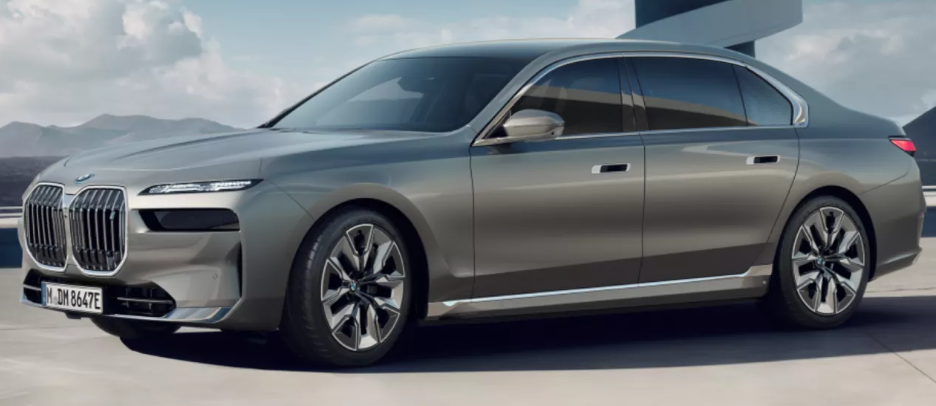
Put a BMW i7 vs 7 Series side by side and, at first glance, the differences can seem almost comically small. They share the same imposing shape, the same enormous kidney grille, the same executive-lounge atmosphere, and much of the same technology. Yet underneath that tailored suit, they have very different personalities.
The BMW i7 is not really a rival to the 7 Series in the traditional sense. The i7 is the fully electric member of the modern 7 Series family. BMW developed the current generation so gasoline, plug-in hybrid, and battery-electric versions could deliver essentially the same flagship experience without forcing electric-car buyers into a radically different body style.
That makes this comparison particularly interesting.
Instead of asking whether we prefer two completely different luxury sedans, we are essentially deciding how we want our BMW flagship to be powered.
Do we want the whisper-quiet acceleration and home charging of the i7? Or do we prefer the range flexibility, fast refueling, and familiar mechanical character of a gasoline-powered 7 Series?
There is no one-line answer. Let's dig into the details.
Content in this publication
- BMW i7 vs 7 Series at a Glance
- Is the BMW i7 Actually a 7 Series?
- BMW i7 vs 7 Series Performance
- BMW i7 vs 7 Series Driving Experience
- Which Is Quieter: BMW i7 or 7 Series?
- BMW i7 vs 7 Series Range
- BMW i7 Charging vs 7 Series Refueling
- BMW i7 vs 7 Series Fuel Economy and Running Costs
- BMW i7 vs 7 Series Weight
- BMW i7 vs 7 Series Interior
- The BMW Theatre Screen Factor
- BMW i7 vs 7 Series Exterior Design
- BMW i7 vs 7 Series Cargo Space and Practicality
- BMW i7 vs 740i
- BMW i7 vs 760i
- What About the BMW 750e Plug-In Hybrid?
- BMW i7 vs 7 Series for Long-Distance Driving
- BMW i7 vs 7 Series for City Driving
- Which BMW Flagship Is Easier to Own?
- BMW i7 vs 7 Series Maintenance
- BMW i7 vs 7 Series Resale Considerations
- Which One Feels More Luxurious?
- BMW i7 vs 7 Series: Pros and Cons
- Who Should Buy the BMW i7?
- Who Should Buy a Gasoline BMW 7 Series?
- BMW i7 vs 7 Series: Which Makes More Sense?
- Frequently Asked Questions
BMW i7 vs 7 Series at a Glance
Before getting buried in specifications, here is the basic difference.
| Feature | BMW i7 | BMW 7 Series |
|---|---|---|
| Power source | Fully electric | Gasoline or plug-in hybrid |
| Transmission | Single-speed | 8-speed automatic |
| Driving character | Silent, instant torque | Traditional luxury-car character |
| Home charging | Yes | Only plug-in hybrid models |
| Fuel stops | None | Required |
| Long-distance refueling | Slower charging stops | Very quick |
| Cabin concept | Nearly identical | Nearly identical |
| Wheelbase | 126.6 in on 2026 U.S. models | 126.6 in on 2026 U.S. models |
| Best suited to | EV-ready luxury buyers | Drivers wanting maximum travel flexibility |
Current U.S. specifications show how closely related these cars really are. The 2026 i7 and combustion-powered 7 Series share a 126.6-inch wheelbase and virtually identical exterior dimensions.
In other words, choosing the electric car does not mean accepting a smaller or oddly proportioned alternative.
You are still getting the big BMW.
Is the BMW i7 Actually a 7 Series?
Yes.
This is probably the most important thing to understand when researching BMW i7 vs BMW 7 Series.
BMW's naming can make the two sound like completely separate products. They aren't.
Think of the 7 Series as the family and the i7 as its electric branch.
The conventional lineup includes gasoline-powered and, depending on the market, plug-in hybrid versions. The i7 replaces the combustion engine with an electric drivetrain and a large high-voltage battery.
The overall architecture, luxury positioning, interior philosophy, and dimensions remain closely aligned.
Why BMW Took This Approach
Some manufacturers design their luxury EVs to look almost like spaceships compared with their traditional cars.
BMW went another way.
It essentially said: if someone wants an electric flagship, why should that person have to abandon the appearance and presence associated with our flagship sedan?
The result is rather clever.
From across a parking lot, most people would need to know what they are looking for to distinguish an i7 from another current-generation 7 Series.
Look Closely and the Differences Appear
Badging is the easiest clue, but we can also find EV-specific design details, wheel choices, aerodynamic touches, and blue accents depending on specification.
Still, this isn't a case of traditional sedan versus futuristic science project.
They're siblings wearing slightly different shoes.
BMW i7 vs 7 Series Performance
Here things become much more interesting.
Electric motors and combustion engines deliver performance differently, even when their horsepower numbers look similar.
The i7 provides torque immediately. Push the accelerator and there is no waiting for engine revs or a transmission to shuffle through ratios. The car simply moves.
And considering how enormous an i7 is, it can move with slightly absurd urgency.
BMW i7 Performance
For the 2026 U.S. lineup, BMW lists three major i7 variants.
The rear-wheel-drive i7 eDrive50 produces 449 horsepower and reaches 60 mph in about 5.3 seconds. The i7 xDrive60 produces 536 horsepower and reaches 60 mph in approximately 4.5 seconds. At the top sits the i7 M70, with 650 horsepower and a claimed 3.5-second 0–60 mph time.
That last number deserves a moment.
We're talking about a massive luxury sedan capable of reaching highway speed with the urgency we once associated with dedicated sports cars.
BMW 7 Series Performance
The gasoline side hardly feels slow.
BMW lists the 2026 740i with 375 horsepower, while the 760i xDrive uses a V8 producing 536 horsepower. The plug-in hybrid 750e xDrive develops a combined 483 horsepower. BMW quotes 0–60 mph times of approximately 5.2 seconds for the rear-wheel-drive 740i, 4.6 seconds for the 750e xDrive, and 4.1 seconds for the 760i xDrive.
So the performance hierarchy is more complicated than simply saying electric equals fast.
Both families can be seriously quick.
BMW i7 vs 7 Series Driving Experience
Numbers tell us how fast a car is.
They don't tell us how it feels.
And this may be where the decision becomes personal.
The i7 Feels Effortlessly Smooth
Acceleration in the i7 feels almost liquid.
There are no conventional gear changes interrupting the power delivery. There is no engine climbing through its rev range. Press the accelerator and a giant luxury sedan quietly gathers speed.
For city driving, that can feel magnificent.
The drivetrain almost disappears from the experience.
Luxury cars have spent decades trying to isolate occupants from engine vibration and transmission changes. Electric propulsion essentially removes much of the problem at the source.
The 7 Series Feels More Mechanical
A gasoline 7 Series gives us more traditional feedback.
There is still an engine working underneath the hood. There are gears changing. Depending on the model, there is an exhaust note and a more recognizable relationship between accelerator position and engine speed.
Some drivers will see those sensations as imperfections.
Others will call them character.
Neither reaction is wrong.
It's a little like comparing a high-end mechanical watch with a perfectly accurate digital one. One provides beautiful engineering we can feel working; the other achieves its purpose with almost eerie smoothness.
Which Is Quieter: BMW i7 or 7 Series?
The i7 has a natural advantage.
Without a combustion engine operating during normal driving, one of the largest traditional noise sources simply isn't there.
At low speeds, the difference can be striking.
Cruise down a quiet street and the experience is closer to gliding than driving.
However, the ordinary 7 Series is hardly noisy. BMW has spent generations refining noise insulation, suspension isolation, engine mounts, aerodynamics, and cabin sealing.
At Highway Speeds the Gap Shrinks
At motorway speeds, engines are only one part of cabin noise.
We also hear:
- tyres interacting with pavement;
- wind around mirrors and bodywork;
- suspension impacts;
- passing traffic;
- rain against the body and glass.
The i7 still feels extraordinarily calm, but the difference isn't necessarily as dramatic at 70 mph as it is pulling away from a traffic light.
BMW i7 vs 7 Series Range
Range is where the two powertrain philosophies separate dramatically.
A gasoline-powered 7 Series can travel hundreds of miles and then replenish its energy supply in a few minutes at a fuel station.
An i7 can also cover serious distances, but charging requires more planning.
How Far Can a BMW i7 Travel?
BMW's current U.S. information for the 2026 i7 lists estimated ranges of roughly 301–314 miles for the eDrive50, 296–311 miles for the xDrive60, and 268–285 miles for the M70, depending partly on wheel and tyre configuration. BMW also stresses that actual range varies with driving style, weather, traffic, accessories, and other conditions.
That's plenty for normal daily driving.
Imagine somebody travelling 30 miles per day. Even allowing for real-world variations, that person isn't necessarily thinking about charging every night.
The bigger consideration is road trips.
BMW i7 Charging vs 7 Series Refueling
Here's the question that can make or break the i7 experience:
Can we charge conveniently where we live?
If the answer is yes, EV ownership changes dramatically.
Home Charging Changes the Equation
A gasoline car requires us to visit a station.
An electric car can often be replenished while we sleep.
Plug the i7 in during the evening and, depending on equipment and charging conditions, it can recover the energy used during the day before morning.
That means many owners may spend less time actively “refueling” during ordinary weeks than someone driving a combustion-powered car.
Fast Charging Matters on Road Trips
The equation flips during long-distance travel.
BMW lists DC fast-charging capability for the 2026 i7, with charging performance varying by model. BMW states that the eDrive50 and xDrive60 can charge from 10% to 80% in roughly 34 minutes under suitable conditions, while actual charging performance depends on factors such as battery temperature and charger capability.
Thirty-plus minutes isn't terrible when we stop for lunch.
It feels considerably longer when we simply want to continue driving.
A gasoline 7 Series wins the convenience contest there.
Fill the tank, buy a coffee, and go.
BMW i7 vs 7 Series Fuel Economy and Running Costs
Comparing electricity with gasoline isn't as simple as comparing miles per gallon.
Local energy prices matter enormously.
Someone with cheap overnight electricity and home charging may find the i7 remarkably economical to operate for such a large luxury car.
Someone relying heavily on expensive public DC fast chargers may see much smaller savings.
You may be interested in reading BMW i7 vs Porsche Taycan: Luxury EVs With Very Different Personalities
The Gasoline 7 Series Is Surprisingly Efficient for Its Size
The 2026 rear-wheel-drive 740i is rated by BMW at 25 mpg city and 31 mpg highway, while the 740i xDrive is listed at 24/31 mpg. The much more powerful 760i xDrive is listed at 18/25 mpg.
Those figures illustrate something important.
“7 Series” doesn't automatically mean thirsty V8.
The six-cylinder 740i can be a relatively sensible long-distance luxury sedan.
Where the i7 Can Save Money
Potential savings can appear in several areas:
- no gasoline purchases;
- fewer traditional engine-related service items;
- no engine oil changes;
- no spark plugs;
- no conventional exhaust system;
- regenerative braking can reduce use of the friction brakes.
But we shouldn't pretend an i7 is inexpensive to own.
This remains a complicated flagship luxury vehicle with sophisticated suspension, electronics, enormous tyres, and expensive components.
Electric does not magically mean cheap.
BMW i7 vs 7 Series Weight
Here we find one unavoidable electric-car compromise.
Batteries are heavy.
Very heavy.
BMW lists a curb weight of approximately 5,635 lb for the 2026 i7 eDrive50, 5,975 lb for the i7 xDrive60, and 6,191 lb for the i7 M70.
Compare that with approximately 4,720 lb for the rear-wheel-drive 740i and 5,095 lb for the V8-powered 760i xDrive.
We're potentially talking about hundreds of pounds of additional mass.
Can We Feel the Extra Weight?
Yes and no.
Modern suspension technology does an impressive job of hiding mass during ordinary driving.
The battery also sits low in the vehicle, helping the centre of gravity.
But physics doesn't completely disappear.
On a narrow, rapidly changing road, the i7 can't shrink itself into an M3. The weight can become apparent when asking the car to change direction aggressively or slow repeatedly.
Then again, how many buyers regularly attack mountain roads from the rear seat of a flagship limousine?
Exactly.
BMW i7 vs 7 Series Interior
If the drivetrain is the biggest difference, the cabin may be the smallest.
Both cars deliver the outrageous theatre expected from BMW's flagship.
The dashboard stretches horizontally across the cabin, displays dominate the driver's environment, ambient lighting transforms the atmosphere at night, and rear-seat passengers can be treated less like passengers and more like first-class airline customers.
The Luxury Experience Is Fundamentally Similar
Depending on options and market, both cars can offer features such as:
- high-end leather and trim;
- sophisticated climate control;
- electrically adjustable rear seating;
- premium audio;
- large digital displays;
- advanced driver-assistance technology;
- configurable ambient lighting;
- powered comfort features.
This is important because early luxury EVs sometimes demanded compromises compared with established flagship sedans.
The i7 doesn't feel like an experimental alternative.
It feels like a 7 Series that happens to be electric.
The BMW Theatre Screen Factor
One of the defining features associated with today's high-end 7 Series experience is the available rear entertainment setup.
The enormous screen can transform the rear cabin into something resembling a private cinema.
Is it necessary?
Absolutely not.
Does it suit a car whose entire personality says “why settle for necessary”?
Perfectly.
Both the i7 and other 7 Series derivatives can deliver the kind of rear-seat environment that makes us question whether the owner should actually be sitting behind the steering wheel.
Which Is Better for Chauffeur Use?
The i7 arguably adds another layer of refinement because its electric drivetrain is exceptionally smooth at low speeds.
There are no traditional transmission shifts and no combustion-engine vibration during electric operation.
For executives working in the back seat, that silence matters.
On the other hand, a chauffeur covering huge distances every day may find a gasoline or plug-in hybrid version easier to keep moving without charging downtime.
BMW i7 vs 7 Series Exterior Design
Walk around either car and subtlety is not the first word that comes to mind.
The current BMW flagship has presence.
A lot of it.
The front end is tall, the grille is enormous, and the lighting design deliberately separates the daytime signature from the main headlights.
Some people adore it.
Others probably need a minute.
But nobody is likely to mistake it for a modest family sedan.
The i7 Doesn't Shout “Electric Car”
That can be a major attraction.
Not every EV buyer wants a car shaped like a rolling computer mouse.
The i7 offers electric propulsion while retaining the upright, formal presence associated with a traditional executive limousine.
For buyers who want an EV without constantly announcing that fact, this approach works brilliantly.
BMW i7 vs 7 Series Cargo Space and Practicality
Electric architecture can sometimes compromise cargo capacity because batteries, motors, charging hardware, and electrical components have to live somewhere.
The i7 remains practical enough for executive-sedan duties, but this isn't the body style we'd choose for transporting refrigerators.
That's not really the point.
Passenger Space Matters More Here
The enormous wheelbase deserves more attention than outright trunk volume.
Both versions are designed around generous passenger accommodation, particularly in the rear.
BMW lists a 126.6-inch wheelbase for both current i7 and 7 Series derivatives in the U.S., demonstrating how closely the two share their basic proportions.
For airport runs, business travel, and carrying four adults in serious comfort, either makes sense.
BMW i7 vs 740i
This may be the most logical comparison for buyers who care about comfort more than extreme performance.
The 740i uses a turbocharged six-cylinder gasoline engine and is dramatically lighter than the i7.
It also offers an easy ownership routine for drivers who don't have home charging.
The i7 counters with silence, immediate response, and the possibility of charging at home.
Choose the i7 Over the 740i If…
The i7 makes particular sense when:
- you can charge at home or work;
- most journeys are predictable;
- silence matters enormously;
- instant electric acceleration appeals to you;
- you want the flagship experience without gasoline;
- your regular driving rarely exceeds the car's practical range.
Choose the 740i Instead If…
The 740i may fit better when:
- you regularly make very long trips;
- charging access around you is poor;
- you live somewhere without practical home charging;
- you prefer lighter vehicle weight;
- you like traditional engine character;
- effortless refueling is a priority.
Neither car invalidates the other.
They solve different ownership problems.
BMW i7 vs 760i
Now things get emotional.
The 760i xDrive brings a twin-turbo V8 into the discussion, producing 536 horsepower in BMW's current U.S. specification.
Interestingly, the i7 xDrive60 is also listed at 536 horsepower.
Same horsepower.
Completely different experience.
Electric Punch or V8 Character?
The i7 responds instantly and quietly.
The 760i builds its personality around eight cylinders, combustion, gears, and mechanical theatre.
One feels like an express elevator launched horizontally.
The other feels like an old-school flagship reimagined with modern technology.
This is probably the hardest comparison to settle using spreadsheets because emotion plays such a large role.
What About the BMW 750e Plug-In Hybrid?
The 750e occupies an interesting middle ground.
BMW lists the U.S.-market 2026 750e xDrive at 483 horsepower.
A plug-in hybrid can complete shorter journeys using electricity while retaining a gasoline engine for longer trips.
Conceptually, it combines two worlds.
That sounds perfect—but there is a catch.
The Plug-In Hybrid Compromise
A PHEV carries both an electric propulsion system and a combustion drivetrain.
That means additional complexity.
You may be interested in readingBMW i7 vs Porsche Taycan: Luxury EVs With Very Different PersonalitiesYou may be interested in reading
 BYD Shark 6 2025 vs 2026: What Actually Changed?
Drivers who charge consistently can make excellent use of a plug-in hybrid.
Drivers who never plug it in may carry around battery hardware without enjoying much of the benefit.
The 750e therefore makes most sense for people who genuinely intend to use both sides of its personality.
BMW i7 vs 7 Series for Long-Distance Driving
For pure road-trip simplicity, the conventional 7 Series remains hard to beat.
Fuel stations are widespread, refueling takes minutes, and cold weather doesn't require the same charging considerations.
The i7 can absolutely travel long distances.
Its current estimated range is substantial, and rapid charging means cross-country travel is feasible rather than adventurous.
But “feasible” and “effortless” aren't always the same thing.
Planning Is the Difference
In a 740i or 760i, we can generally drive until the fuel gauge gets low and then look for a station.
In the i7, smart long-distance driving involves considering:
- charger locations;
- charger availability;
- charging speed;
- battery state of charge;
- battery temperature;
- weather;
- the next charging opportunity.
Modern navigation can manage much of this automatically, but the mental model is still different.
BMW i7 vs 7 Series for City Driving
Reverse the situation and the i7 becomes extremely compelling.
Urban driving rewards electric propulsion.
Stop-and-go traffic allows regenerative braking to recover some energy. Instant torque makes gaps effortless. There is no idling combustion engine, and home charging can remove petrol-station visits from the weekly routine.
The heavy weight is still there, of course.
Nobody is confusing the i7 with a compact city hatchback.
But as giant luxury sedans go, electric propulsion fits city use remarkably well.
Which BMW Flagship Is Easier to Own?
This depends almost entirely on infrastructure.
A homeowner with a garage and a dedicated charger may wonder why anyone thinks EV ownership is inconvenient.
Someone parking on a city street without reliable public charging may reach exactly the opposite conclusion.
The Most Important Question Isn't Horsepower
Ask this first:
Where will we charge the car?
If the answer is “in my garage every night,” the i7 deserves serious consideration.
If the answer is “I'm not really sure,” investigate local charging before falling in love with the car.
That one practical detail can matter more than horsepower, acceleration, screens, leather, or wheel design combined.
BMW i7 vs 7 Series Maintenance
EVs eliminate several routine combustion-engine maintenance items.
There is no engine oil, spark plugs, conventional engine air-fuel combustion process, or traditional multi-speed transmission in the i7.
That's appealing.
Still, a flagship EV is far from maintenance-free.
Tyres, suspension components, braking systems, cooling circuits, electronics, cabin filters, and other components still require attention.
Tyres Deserve Special Attention
Heavy electric luxury cars combine substantial weight with huge torque.
That's a recipe for tyre wear if driven aggressively.
And premium tyres in 7 Series sizes aren't exactly bargain-bin items.
Anyone comparing ownership costs should therefore look beyond the simplistic “EVs have fewer moving parts” argument.
They do.
But the i7 is still a six-figure-style flagship luxury machine, not an electric appliance.
BMW i7 vs 7 Series Resale Considerations
Long-term depreciation is difficult to predict because luxury vehicles and EV technology both evolve rapidly.
Flagship sedans traditionally suffer significant depreciation because today's cutting-edge technology becomes tomorrow's used-car repair bill.
Electric vehicles add another variable: battery technology continues to improve.
On the other hand, combustion-powered luxury cars face their own uncertainties as markets gradually shift toward electrification.
Our approach would be simple.
Buy the drivetrain that suits how the car will actually be used rather than trying to predict a resale market years ahead.
Which One Feels More Luxurious?
If luxury means effortless movement and silence, the i7 has a powerful argument.
Electric motors are almost perfectly suited to the traditional luxury-car mission.
They deliver power without drama.
No vibration.
No waiting for downshifts.
No engine revving through gears.
Just smooth acceleration.
Yet luxury is also emotional.
For some enthusiasts, hearing and feeling a sophisticated six-cylinder or V8 engine adds richness to the experience.
Luxury isn't mathematically defined.
Sometimes imperfection creates character.
BMW i7 vs 7 Series: Pros and Cons
BMW i7 Pros
- Exceptionally quiet powertrain.
- Immediate electric torque.
- Strong acceleration.
- Convenient home charging when available.
- No gasoline required.
- Nearly the same flagship cabin experience as other 7 Series versions.
- Excellent fit for urban and suburban luxury driving.
BMW i7 Cons
- Considerably heavier.
- Long trips require charging stops.
- Public charging convenience varies enormously by location.
- Cold weather and high speeds can reduce real-world range.
- Home charging may be impractical for some owners.
BMW 7 Series Pros
- Very quick refueling.
- Excellent long-distance flexibility.
- Multiple gasoline and plug-in hybrid choices.
- Lighter than comparable i7 versions.
- Familiar ownership routine.
- Combustion versions provide more mechanical character.
BMW 7 Series Cons
- Requires gasoline unless operating a PHEV electrically.
- More traditional engine-related servicing.
- Not as quiet during acceleration as the i7.
- Fuel costs can become substantial with high mileage or powerful variants.
Who Should Buy the BMW i7?
The ideal i7 owner probably has convenient charging and sees a vehicle's powertrain primarily as a tool for delivering smooth, effortless transportation.
Daily mileage is predictable.
Long road trips happen occasionally rather than constantly.
Silence matters more than engine noise.
Technology is exciting rather than intimidating.
For that person, the i7 feels almost as though electric propulsion was invented specifically for flagship luxury sedans.
The smoothness just makes sense.
Who Should Buy a Gasoline BMW 7 Series?
The traditional 7 Series remains compelling for drivers who want maximum freedom from charging infrastructure.
Perhaps we travel between cities constantly.
Perhaps our apartment building doesn't offer charging.
Maybe we simply love combustion engines.
A 740i, for example, combines serious luxury with respectable highway efficiency, while the 760i provides the theatre of V8 power.
Neither suddenly became obsolete because the i7 exists.
They simply represent another route to the same destination.
BMW i7 vs 7 Series: Which Makes More Sense?
The BMW i7 vs 7 Series debate ultimately comes down to lifestyle rather than luxury.
Both give us the grand BMW flagship experience. Both are enormous, sophisticated, technology-heavy executive sedans. Both can deliver extraordinary comfort and serious performance.
The difference appears when we ask how that luxury should move.
The i7 emphasizes silence, immediate torque, electric efficiency, and the convenience of charging at home.
A gasoline 7 Series emphasizes travel flexibility, rapid refueling, lighter weight, and traditional engine character.
And the 750e plug-in hybrid sits somewhere between those philosophies.
If we already have reliable home charging and most driving falls comfortably inside the i7's practical range, the electric drivetrain fits the character of a luxury limousine beautifully.
If our life involves frequent unpredictable long-distance journeys—or charging simply isn't convenient—the traditional 7 Series remains easier to live with.
That's really the beauty of BMW's strategy.
We're not choosing between luxury and electric mobility.
We're choosing which kind of luxury fits our life.
Frequently Asked Questions
Is the BMW i7 the electric version of the 7 Series?
Yes. The BMW i7 is the fully electric member of the current BMW 7 Series family. It shares its fundamental flagship architecture, dimensions, luxury positioning, and much of its interior technology with combustion-powered 7 Series models.
Is the BMW i7 faster than the BMW 7 Series?
It depends on the versions compared. For example, BMW lists the 2026 i7 M70 at 650 horsepower with a claimed 0–60 mph time of about 3.5 seconds, making it substantially quicker than many conventional 7 Series variants. The 760i xDrive remains very fast, with BMW quoting approximately 4.1 seconds to 60 mph.
How far can the BMW i7 travel on one charge?
BMW lists estimated 2026 U.S. ranges of approximately 301–314 miles for the i7 eDrive50, 296–311 miles for the i7 xDrive60, and 268–285 miles for the performance-focused i7 M70. Actual range varies with wheels, temperature, driving style, traffic, climate-control use, and other conditions.
Does the BMW i7 have less interior space than the 7 Series?
The i7 and current 7 Series are extremely closely related in dimensions and share a 126.6-inch wheelbase in BMW's 2026 U.S. specifications. Passenger accommodation is therefore fundamentally similar, although drivetrain packaging can create small differences in areas such as cargo capacity and vehicle weight.
You may be interested in readingBMW i7 vs Porsche Taycan: Luxury EVs With Very Different PersonalitiesYou may be interested in reading
BYD Shark 6 2025 vs 2026: What Actually Changed?You may be interested in reading
 Peugeot RCZ vs Audi TT: Which Stylish Sports Coupe Makes More Sense?
Is the BMW i7 better for long road trips than the 7 Series?
Both can handle long journeys comfortably, but they require different routines. The gasoline 7 Series can refuel in minutes and therefore provides simpler long-distance flexibility. The i7 offers substantial driving range and DC fast charging, but longer journeys require charging stops and more route planning. For drivers with convenient charging who mostly make shorter daily trips, however, the i7 can be easier to live with because much of its charging can happen at home.
If you want to know other articles similar to BMW i7 vs 7 Series: Which BMW Flagship Makes More Sense? you can visit the category Models.
Honda Passport vs Toyota 4Runner: Which SUV Is Better?
Honda Passport vs Ford Bronco: Which SUV Is Better?
Honda Passport vs Ford Explorer: Which SUV Is Better?
Honda Passport or Pilot: Which SUV Is Better?
Honda Passport vs Jeep Grand Cherokee: Which SUV Is Better?
Honda Passport vs Nissan Pathfinder: Which SUV Is Better?
Leave a Reply
More content of your interest