
BMW i7 vs Mercedes EQS: The Ultimate Luxury EV Comparison

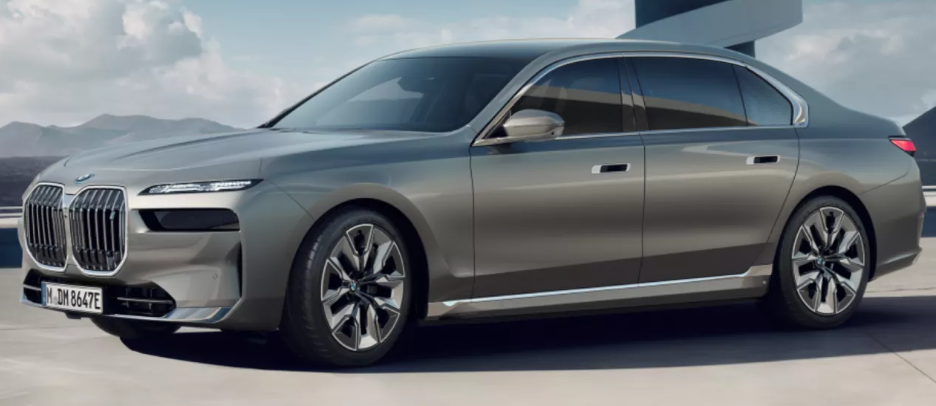
The BMW i7 vs Mercedes EQS comparison is less about deciding whether electric luxury works and more about choosing what kind of luxury we want. Both cars are enormous, silent, technologically extravagant flagship sedans. Both can make an ordinary commute feel like we have accidentally wandered into the first-class lounge at an airport. Yet they approach the job from noticeably different directions.
The BMW i7 takes the traditional luxury limousine and electrifies it. Sit behind the wheel and, despite the giant screens and instant electric torque, there is still something recognizably BMW about the experience. The seating position, steering, body proportions and road manners remind us that this is essentially the electric member of the 7 Series family.
The Mercedes-Benz EQS is more radical. Instead of making an electric S-Class, Mercedes developed a slippery, cab-forward EV shape with an enormous hatchback opening, a futuristic cabin and efficiency playing a central role. It looks and feels like a car created specifically to announce that the luxury sedan has entered a new era.
So, BMW i7 or Mercedes EQS? The answer becomes much clearer once we compare range, comfort, performance, technology, practicality and everyday usability.
Note: specifications vary by market, trim, wheels and model year. Current U.S.-market figures referenced below primarily reflect 2026 models unless otherwise stated.
Content in this publication
- BMW i7 vs Mercedes EQS at a Glance
- Exterior Design: Two Interpretations of Luxury
- Interior Quality and Luxury
- BMW i7 vs Mercedes EQS Rear Seat Comfort
- Infotainment and Technology
- BMW i7 vs Mercedes EQS Performance
- Which One Is Better to Drive?
- Ride Comfort and Refinement
- BMW i7 vs Mercedes EQS Range
- Charging Speed and Road-Trip Usability
- Practicality and Cargo Space
- Dimensions and City Driving
- Efficiency: Where the EQS Philosophy Makes Sense
- Luxury Features That Actually Matter
- BMW i7 vs Mercedes EQS Price and Value
- BMW i7 vs Mercedes EQS Reliability and Ownership
- Which One Makes More Sense for Highway Travel?
- Which Is Better for a Chauffeured Owner?
- Which Is Better for Someone Who Loves Driving?
- BMW i7 vs Mercedes EQS: How to Choose
- BMW i7 vs Mercedes EQS: Closing Thoughts
- Frequently Asked Questions
BMW i7 vs Mercedes EQS at a Glance
Before diving into the details, here is the broad picture.
| Category | BMW i7 | Mercedes-Benz EQS |
|---|---|---|
| Overall character | Traditional luxury limousine gone electric | Purpose-built futuristic luxury EV |
| Styling | Upright, imposing, formal | Smooth, aerodynamic, flowing |
| Interior focus | Driver engagement + rear-seat luxury | Digital experience + relaxed cruising |
| Current U.S. battery capacity | 115.5 kWh listed by BMW | 118 kWh on selected EQS versions |
| DC charging | Up to 195 kW on current i7 technical data | Up to 200 kW on current 2026 EQS |
| Flagship cabin feature | 31.3-inch rear Theatre Screen | MBUX Hyperscreen |
| Practicality | Conventional sedan trunk | Large liftback cargo area |
| Driving personality | More traditional and connected | Softer and more isolated |
| Best suited to | Chauffeured luxury with driver appeal | High-tech cruising and practicality |
BMW currently lists a 115.5-kWh battery for the i7, while Mercedes specifies a 118-kWh battery on the 2026 EQS 450 4MATIC. BMW's current technical data quotes up to 195-kW DC charging, while Mercedes specifies up to 200 kW and a 10–80% charging time of approximately 31 minutes for the EQS 450 4MATIC.
Numbers, however, tell only half the story. These cars have wildly different personalities.
Exterior Design: Two Interpretations of Luxury
Park a BMW i7 beside a Mercedes EQS and nobody will confuse them.
BMW i7: Traditional Presence With a Futuristic Edge
The i7 is enormous, upright and intentionally imposing. Its long hood, tall body and formal three-box silhouette visually connect it to decades of BMW 7 Series sedans.
Then there is that front end.
The huge kidney grille, split lighting arrangement and available illuminated elements are hardly shy. Subtlety left the building several exits ago. Whether we love the design or find it overwhelming, the i7 looks expensive before anybody opens the door.
That matters in this segment. Flagship luxury cars have historically been as much about arrival as transportation.
At approximately 212 inches long in current U.S. specification, the i7 also has genuine limousine proportions.
Mercedes EQS: Designed Around Aerodynamics
The Mercedes EQS takes almost the opposite approach.
Its roof sweeps continuously toward the rear, creating the familiar "one-bow" silhouette. The nose is short, the windshield sits relatively far forward and the body appears to have been polished by the wind.
It does not resemble a conventional Mercedes flagship nearly as closely as the i7 resembles a traditional BMW limousine.
That can divide opinion.
Some buyers may prefer the visual authority of the BMW. Others may appreciate the EQS because it looks unmistakably electric rather than like an existing combustion-engine sedan with batteries underneath.
Mercedes has increasingly added traditional grille-inspired details to the EQS, but aerodynamic efficiency remains central to its identity. The current EQS measures approximately 207.7 inches long, making it slightly shorter than the i7.
Which Design Ages Better?
That will depend heavily on personal taste.
The BMW's classic sedan proportions may remain familiar for longer, even if its front styling is dramatic. The EQS could either look wonderfully futuristic years from now or become strongly associated with the first generation of dedicated luxury EV design.
We would not choose between them from photographs alone. Both have far more presence in three dimensions.
Interior Quality and Luxury
This is where flagship EVs earn their eye-watering prices.
Open either door and the ordinary world suddenly seems rather under-equipped.
Inside the BMW i7
The i7 cabin blends traditional luxury materials with extravagant technology.
There is a digital instrument display, a wide central screen, the illuminated BMW Interaction Bar and plenty of beautifully finished surfaces. Depending on specification, buyers can find Merino leather, crystal-like controls, elaborate trim and even cashmere upholstery.
What makes the BMW particularly interesting is that technology does not completely overwhelm the architecture. It still feels like a luxury car first and a collection of screens second.
The seats deserve particular praise conceptually. Up front, we get a commanding position and extensive adjustment. In the back, appropriately equipped versions become genuine executive lounges.
Inside the Mercedes EQS
The EQS feels more like entering a digital cocoon.
The headline feature is the MBUX Hyperscreen, which integrates three displays beneath a broad piece of glass: a 12.3-inch driver display, a 17.7-inch central OLED touchscreen and a 12.3-inch passenger display on configurations offering the system.
Ambient lighting stretches around the cabin. The dashboard flows smoothly into the doors. Menus, animations and graphical elements are everywhere.
At night, the experience can feel almost theatrical.
The downside? Buyers who prefer physical switches and restrained interiors may find the EQS slightly too digital. When virtually every function wants screen time, simple actions can occasionally feel more complicated than they need to be.
BMW i7 vs Mercedes EQS Rear Seat Comfort
This is an especially important comparison because many flagship sedans spend significant time carrying executives rather than entertaining their owners from the driver's seat.
The i7 Turns Into a Private Cinema
BMW takes rear-seat entertainment almost absurdly far—and we mean that affectionately.
Its available 31.3-inch 8K Theatre Screen folds down from the ceiling. Combined with an available Bowers & Wilkins Diamond Surround Sound system, reclining seating, heating, ventilation and massage functions, the rear cabin can feel closer to a private screening room than a normal car.
An available Executive Lounge arrangement can also move the front passenger seat forward while allowing the rear passenger to recline and use an extending footrest.
For chauffeured owners, this is one of the i7's defining features.
The EQS Takes a More Digital Approach
Mercedes also offers excellent rear accommodation, but the standard EQS experience is less centered around one spectacular cinematic trick.
Instead, the EQS emphasizes spaciousness, comfort, ambient lighting, quietness and integrated technology.
Its rear compartment remains suitably luxurious, yet the BMW makes a particularly dramatic case for buyers who regularly sit in the back.
Infotainment and Technology
If smartphones had luxury penthouses, these two dashboards would probably qualify.
BMW iDrive in the i7
BMW's system combines its curved display with touchscreen control, steering-wheel inputs and voice operation.
There is significant complexity beneath the surface, but menus tend to follow a logical hierarchy once we spend some time with them. The graphics look crisp without turning the cockpit into a nightclub.
BMW also places considerable emphasis on customization and connected functions.
More importantly, the technology does not completely erase the driving environment. The steering wheel, displays and major controls still feel organized around the person driving.
Mercedes MBUX in the EQS
MBUX makes a larger visual statement.
The Hyperscreen essentially transforms the entire dashboard into an interface. Its zero-layer concept attempts to bring frequently needed functions forward rather than forcing us through endless menus, while voice control can handle numerous requests.
Mercedes also equips MBUX navigation with Electric Intelligence, which can consider factors such as charging stops when planning EV journeys.
When it works seamlessly, the EQS feels incredibly advanced.
Still, there is a difference between impressive technology and invisible technology. Some drivers will love the spectacle. Others may prefer the BMW's somewhat more restrained approach.
BMW i7 vs Mercedes EQS Performance
Luxury EVs have created one wonderfully ridiculous situation: cars weighing well over two tons can now accelerate like serious sports cars.
BMW i7 Performance
The 2026 U.S.-spec i7 range demonstrates how broad this performance spectrum can be.
BMW lists the i7 eDrive50 at 449 hp and a manufacturer-estimated 5.3-second 0–60 mph time. The xDrive60 increases output to 536 hp and cuts the sprint to roughly 4.5 seconds. At the other end sits the i7 M70, rated at 650 hp and an estimated 3.5 seconds from 0–60 mph.
You may be interested in reading BMW i7 vs 7 Series: Which BMW Flagship Makes More Sense?
That is absurdly quick for something with reclining rear seats.
But raw acceleration isn't the most interesting part.
The i7 still tries to feel like a BMW. There is weight—lots of it—but the chassis disguises much of that mass through carefully controlled suspension movements, rear-wheel steering and immediate electric response.
It feels substantial rather than clumsy.
Mercedes EQS Performance
The Mercedes lineup is similarly broad.
For the current U.S. range, Mercedes lists the EQS 450+ at 402 hp and 5.7 seconds to 60 mph, the EQS 500 4MATIC at 469 hp and 4.3 seconds, and the EQS 580 4MATIC at 576 hp with a claimed 3.9-second sprint.
Even the less powerful versions feel effortless because electric torque arrives immediately.
Press the accelerator and there is no engine building revs, no dramatic gearbox kickdown and no waiting. The scenery simply begins moving backward much faster.
Which One Is Better to Drive?
This is arguably where the philosophical difference becomes clearest.
The BMW i7 feels like a luxury sedan that still remembers driving can be entertaining.
Its steering, seating position and chassis responses make the driver feel more involved. Nobody will mistake it for an M3 on a narrow mountain road—the i7 weighs nearly 6,000 pounds in xDrive60 form—but it shrinks around the driver remarkably well considering its dimensions. BMW lists the xDrive60 curb weight at 5,975 pounds.
The Mercedes is different.
Its personality encourages us to settle back, turn on the massage function and allow the miles to disappear. The steering feels lighter, the car isolates us from the road more deliberately and comfort sits at the center of the experience.
Neither philosophy is wrong.
If we regularly drive ourselves and still want some connection with the road, the i7 has obvious appeal. If serenity matters more than involvement, the EQS makes an equally persuasive argument.
Ride Comfort and Refinement
This is flagship territory, so poor ride quality simply isn't acceptable.
Fortunately, both cars take isolation very seriously.
The absence of an internal-combustion engine helps. At urban speeds, there is virtually no drivetrain noise, leaving tire and wind noise as the main enemies.
Air suspension systems work constantly beneath us, softening impacts and keeping these huge bodies composed.
The EQS often feels as though it is floating a few inches above rough pavement. Its entire personality seems engineered around removing irritation from driving.
The BMW also rides beautifully, but it retains slightly more information through the chassis. That extra communication helps when driving quickly without turning normal journeys into endurance tests.
Wheel choice matters enormously on both. Giant wheels may photograph brilliantly outside a hotel, but additional sidewall usually benefits ride comfort, road noise and efficiency.
Sometimes the less glamorous wheel is the smarter luxury option.
BMW i7 vs Mercedes EQS Range
Range anxiety has become less relevant as batteries and charging networks improve, but flagship EV buyers still expect serious long-distance ability.
BMW's published 2026 U.S. ranges vary considerably by i7 configuration and wheel choice. BMW lists approximately 301–314 miles for the i7 eDrive50, 296–311 miles for the xDrive60 and 268–285 miles for the M70.
Mercedes has pushed particularly hard on efficiency. A current Mercedes U.S. listing shows the 2026 EQS 450+ at an EPA-estimated 390 miles, while the 2026 EQS 450 4MATIC page lists 367 miles.
That difference tells us something important about these cars.
The EQS's unusual silhouette is not merely a styling exercise. Aerodynamic efficiency pays dividends at highway speeds, where pushing air becomes one of an EV's biggest energy demands.
Real-world range will naturally vary with temperature, speed, climate-control use, elevation, wheels and driving style.
Range Matters Differently in a Luxury EV
There is another factor we sometimes ignore.
An extra 50 miles does not necessarily matter when charging at home and driving 30 miles per day. But on repeated highway trips, those extra miles can reduce charging stops—or allow us to choose better chargers rather than stopping simply because the battery demands it.
Long-distance drivers should therefore treat range as part of convenience rather than just a scoreboard.
Charging Speed and Road-Trip Usability
Peak charging numbers attract attention, but charging curves matter too.
The current BMW i7 technical sheet lists 195-kW maximum DC charging and around 34 minutes from 10% to 80% under suitable conditions.
For the 2026 EQS 450 4MATIC, Mercedes lists 200-kW DC charging and approximately 31 minutes for 10–80%.
On current versions, therefore, neither car belongs to the ultra-fast 800-volt charging elite represented by some newer EV platforms.
There is an important timing consideration, though. Mercedes has already announced major technological changes for the 2027 EQS, including an 800-volt architecture, up to 430-kW DC charging capability at compatible infrastructure, a 122-kWh battery and a new two-speed transmission. U.S. model pages list up to 350 kW on 800-volt chargers for production specifications currently published.
Anyone shopping around a model-year transition should therefore verify exactly which EQS version is being offered.
Practicality and Cargo Space
Here the EQS hides one of its strongest advantages.
It may look like a sedan, but its rear opening behaves more like a hatchback. Mercedes lists 22 cubic feet behind the rear seats and up to 63 cubic feet with the seats folded on current EQS versions.
That giant opening makes loading bulky luggage considerably easier.
The i7 has a more traditional sedan trunk. It provides perfectly usable luggage room for airport runs, business travel and normal family use, but the smaller opening cannot match the flexibility of the Mercedes hatch.
This distinction may sound mundane beside 8K televisions and crystal interior details, but practicality becomes very important after ownership begins.
Want to transport an awkward box?
The Mercedes suddenly looks like the clever one.
Dimensions and City Driving
Neither car is what we would call compact.
The current i7 is about 212.2 inches long with a 126.6-inch wheelbase, while the current EQS is approximately 207.7 inches long with a 126.4-inch wheelbase.
In tight parking garages, five inches can matter.
Fortunately, rear-wheel steering helps both cars behave as though somebody digitally trimmed their wheelbases when maneuvering.
The Mercedes can feel particularly nimble with its more aggressive rear-steering configurations. The 2027 EQS 580, for example, lists 10-degree rear-axle steering and a 35.8-foot turning circle.
The visual challenge remains, though. These are still exceptionally wide, expensive luxury sedans. Narrow concrete parking spaces can suddenly become character-building experiences.
Efficiency: Where the EQS Philosophy Makes Sense
At first glance, efficiency may sound like an odd concern for six-figure luxury cars.
It isn't.
Greater efficiency means the same battery can carry us farther, the car may need less charging energy and highway journeys become easier.
The EQS was designed around aerodynamics from the beginning. Its smooth roofline and rounded surfaces are functional as well as stylistic.
You may be interested in readingBMW i7 vs 7 Series: Which BMW Flagship Makes More Sense?You may be interested in reading
BMW i7 vs Porsche Taycan: Luxury EVs With Very Different PersonalitiesBMW accepts more aerodynamic compromise in exchange for traditional sedan proportions and a stronger visual identity.
Neither approach is objectively correct. One optimizes the EV shape; the other preserves flagship-limousine character.
That single difference explains an enormous amount about these cars.
Luxury Features That Actually Matter
A specification sheet can quickly become a jungle of equipment, so we would concentrate on features that noticeably improve ownership rather than those included merely because they sound impressive:
- Air suspension: essential to the character of both cars and especially valuable on rough roads.
- Rear-wheel steering: dramatically improves maneuverability in a vehicle this long.
- Comfort seats: heating is common; ventilation and massage are genuinely worthwhile on long journeys.
- Premium audio: quiet EV cabins make high-end sound systems easier to appreciate.
- 360-degree cameras: almost mandatory when parking something this large.
- Smaller wheel options: usually improve comfort, efficiency and replacement-tire costs.
- Rear-seat packages: worth prioritizing if passengers regularly occupy the second row.
- Home charging capability: more important to everyday satisfaction than shaving a second from the 0–60 time.
That last point is easy to forget. The most luxurious EV feature may simply be leaving home every morning with a charged battery.
BMW i7 vs Mercedes EQS Price and Value
Prices vary heavily with market, incentives and equipment.
In the U.S., current Mercedes listings start at $101,450 for the EQS 450+, rising to $104,450 for the EQS 500 4MATIC and $123,900 for the EQS 580 4MATIC before options and applicable fees.
BMW's current U.S. listings place the i7 family around the same six-figure territory, with BMW showing a starting MSRP of $106,200 on its current i7 range page and $124,700 for the i7 60 xDrive configuration listed in its model directory.
But sticker price is only one part of luxury-EV economics.
Depreciation, insurance, tire replacement, financing, incentives, charging costs and warranty coverage can dramatically alter the real ownership equation.
This is also a segment where lightly used examples can sometimes present a completely different value proposition from new cars.
Why Options Can Change the Comparison
A base specification and a heavily optioned flagship can feel like different cars.
Add premium leather, upgraded audio, rear executive seating, larger wheels, advanced driver assistance and special paint, and the final transaction price can climb quickly.
Therefore, comparing two dealership cars requires examining the actual equipment—not simply the badge on the trunk.
BMW i7 vs Mercedes EQS Reliability and Ownership
Both vehicles are mechanically simpler in some ways than equivalent combustion-powered flagship sedans. There is no gasoline engine, conventional multi-speed transmission or exhaust system.
But "simpler powertrain" does not mean "simple car."
These are extraordinarily sophisticated vehicles packed with air suspension, complex electronics, power-operated equipment, advanced displays, sensors, cameras and software.
Long-term repair costs outside warranty could therefore be significant even if the electric motors themselves prove durable.
BMW states that its U.S. all-electric vehicles receive an 8-year/100,000-mile limited high-voltage battery defect warranty, although exact terms and coverage should always be checked for the individual vehicle.
For used shoppers, service history, software updates, remaining warranty coverage and proper operation of expensive comfort equipment deserve careful inspection.
Which One Makes More Sense for Highway Travel?
For frequent interstate or motorway driving, the Mercedes EQS presents an attractive formula: excellent aerodynamics, strong range in efficiency-oriented versions, a quiet cabin and huge luggage access.
It settles into high-speed cruising effortlessly.
The i7 is hardly an unsuitable road-trip car. Far from it. Its seats, silence and ride make long-distance travel remarkably relaxing.
Instead, the distinction comes down to priorities.
The Mercedes extracts more of its identity from efficiency and isolation. The BMW layers more traditional luxury-sedan behavior over its electric powertrain.
One glides into the future.
The other brings the limousine with it.
Which Is Better for a Chauffeured Owner?
Rear-seat passengers should spend considerable time inside both before deciding.
The i7 makes an especially compelling statement with its Theatre Screen and available reclining Executive Lounge setup. Its formal exterior also feels naturally suited to chauffeur duty.
The Mercedes provides enormous comfort and technology but places more emphasis on the entire cabin experience than on creating one spectacular rear-seat centerpiece.
If our imaginary daily routine involves answering emails while somebody else handles traffic, rear-seat configuration becomes more important than horsepower.
That is worth remembering when browsing specifications online.
Which Is Better for Someone Who Loves Driving?
This is where BMW's heritage still shows.
The i7 feels surprisingly natural from behind the wheel. Its size never disappears completely, yet the chassis manages mass convincingly and the steering gives the driver enough information to make a winding road interesting.
The EQS can move astonishingly quickly, especially in stronger versions, but speed and involvement are not identical.
Mercedes seems more interested in making 80 mph feel like 50.
BMW wants 50 mph to retain at least a little personality.
Neither approach is superior for every owner; they simply answer different questions.
BMW i7 vs Mercedes EQS: How to Choose
The easiest way to decide is not to ask, "Which car has more features?"
They both have more features than most of us will discover during the first week.
Instead, think about how the car will actually be used.
Choose between them by considering cabin position, preferred design, regular journey length, cargo needs, local charging infrastructure and whether most miles will be driven from the front seat or experienced from the rear.
Someone who wants a stately limousine, enjoys driving and values exceptional rear entertainment may naturally gravitate toward the i7.
Someone who values aerodynamic efficiency, long-range cruising, hatchback practicality and the distinctive Hyperscreen experience may find the EQS more aligned with their priorities.
A 30-minute back-to-back test drive should tell us more than another three hours reading specification sheets.
BMW i7 vs Mercedes EQS: Closing Thoughts
The fascinating thing about the BMW i7 vs Mercedes EQS rivalry is that both cars reach the same destination without following the same road.
BMW asks: What happens when we take the classic flagship sedan and give it an electric heartbeat?
Mercedes asks: What should a flagship become once an engine no longer dictates its shape?
The i7 answers with enormous presence, strong performance, traditional limousine proportions and one of the most extravagant rear-seat environments available in an electric sedan.
The EQS answers with aerodynamic bodywork, excellent cruising refinement, a spectacular digital dashboard and surprisingly useful cargo space.
Neither is merely an electric luxury car. Each represents a different theory about where luxury is going.
And perhaps that is what makes this comparison so interesting. We are not simply choosing between two badges. We are choosing between two versions of the electric future.
Frequently Asked Questions
Is the BMW i7 bigger than the Mercedes EQS?
Yes, in current U.S. specifications the BMW i7 is longer. BMW lists the i7 at approximately 212.2 inches, while Mercedes lists the EQS Sedan at roughly 207.7 inches. Their wheelbases are much closer: approximately 126.6 inches for the BMW and 126.4 inches for the Mercedes.
Does the BMW i7 or Mercedes EQS have more range?
It depends on configuration, but efficiency-focused versions of the current EQS can offer substantially more EPA-rated range than many i7 versions. Mercedes has listed up to 390 miles for the 2026 EQS 450+, while BMW lists 2026 i7 variants ranging from approximately 268 to 314 miles depending on model and configuration. Real-world results vary with weather, wheels, speed and driving conditions.
Which is faster, the BMW i7 or Mercedes EQS?
That depends on the trim being compared. The 2026 BMW i7 M70 is rated at 650 hp and a manufacturer-estimated 3.5-second 0–60 mph time, while the current Mercedes EQS 580 4MATIC is rated at 576 hp and 3.9 seconds. Lower versions of both cars offer progressively less performance.
You may be interested in readingBMW i7 vs 7 Series: Which BMW Flagship Makes More Sense?You may be interested in reading
BMW i7 vs Porsche Taycan: Luxury EVs With Very Different PersonalitiesYou may be interested in reading
 BYD Shark 6 2025 vs 2026: What Actually Changed?
Is the Mercedes EQS more practical than the BMW i7?
For carrying bulky cargo, the EQS has an important advantage because of its large rear liftback. Mercedes lists 22 cubic feet of cargo capacity with the seats in place and as much as 63 cubic feet with them folded. The BMW uses a conventional sedan trunk, which is less flexible for unusually shaped items.
What is the biggest difference between the BMW i7 and Mercedes EQS?
Their philosophy. The BMW i7 preserves the feel, shape and road manners of a traditional flagship limousine while adding an electric drivetrain and spectacular rear-seat technology. The Mercedes EQS is more obviously a purpose-built EV, prioritizing aerodynamics, digital interaction, cruising refinement and cargo versatility.
If you want to know other articles similar to BMW i7 vs Mercedes EQS: The Ultimate Luxury EV Comparison you can visit the category Models.
Honda Passport vs Toyota 4Runner: Which SUV Is Better?
Honda Passport vs Ford Bronco: Which SUV Is Better?
Honda Passport vs Ford Explorer: Which SUV Is Better?
Honda Passport or Pilot: Which SUV Is Better?
Honda Passport vs Jeep Grand Cherokee: Which SUV Is Better?
Honda Passport vs Nissan Pathfinder: Which SUV Is Better?
Leave a Reply
More content of your interest