
BMW i7 vs M760e: Electric Luxury or Plug-In Hybrid Power?

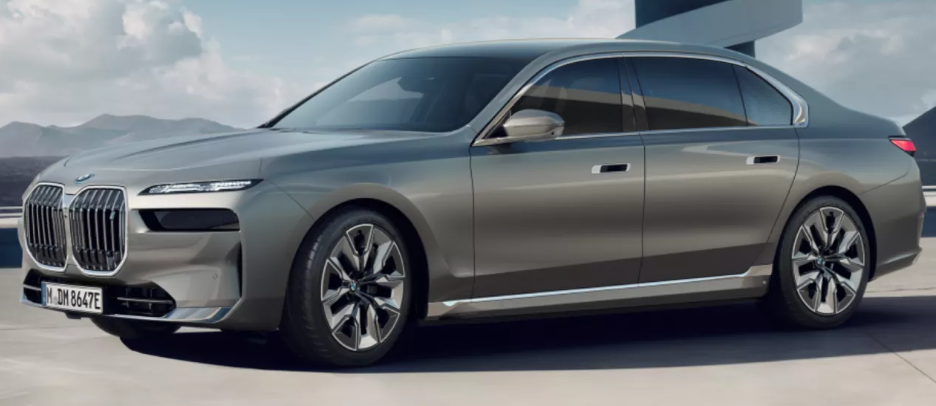
Choosing between the BMW i7 and M760e is not really about deciding which luxury sedan has the longer equipment list. These two cars share the same 7 Series DNA, much of the same technology and essentially the same limousine-sized footprint, yet they approach performance from completely different directions.
The BMW i7 M70 xDrive represents BMW's idea of an electric flagship: huge battery, enormous torque, silent acceleration and enough performance to embarrass many sports cars.
The BMW M760e xDrive, meanwhile, refuses to abandon combustion. It combines a turbocharged straight-six petrol engine with an electric motor, creating a plug-in hybrid that can handle shorter journeys electrically while keeping petrol power available for long-distance travel.
Think of them as two first-class cabins heading toward the same destination. The i7 takes the direct electric express. The M760e changes trains along the way—but sometimes that flexibility is exactly what we want.
So, in the BMW i7 vs M760e comparison, which one makes more sense?
Let's dig into the details.
Content in this publication
- BMW i7 vs M760e at a Glance
- BMW i7 vs M760e Performance
- BMW M760e Performance: More Theatre, Still Serious Speed
- BMW i7 vs M760e Engine and Powertrain
- BMW i7 vs M760e Electric Range
- BMW i7 vs M760e Charging
- M760e Charging
- BMW i7 vs M760e Fuel and Energy Costs
- BMW i7 vs M760e Long-Distance Driving
- BMW i7 vs M760e Driving Experience
- BMW i7 vs M760e Weight
- BMW i7 vs M760e Interior
- BMW i7 vs M760e Exterior Design
- BMW i7 vs M760e Boot Space
- BMW i7 vs M760e Technology
- BMW i7 vs M760e Maintenance
- BMW i7 vs M760e Reliability Considerations
- BMW i7 vs M760e Environmental Impact
- BMW i7 vs M760e for City Driving
- BMW i7 vs M760e for Motorway Driving
- BMW i7 vs M760e for Performance Enthusiasts
- BMW i7 vs M760e for Chauffeur Use
- Which BMW i7 Should We Compare With the M760e?
- BMW i7 vs M760e: Advantages of the i7
- BMW i7 vs M760e: Advantages of the M760e
- BMW i7 vs M760e: Which One Fits Different Drivers?
- The Hidden Issue: Charging Habits
- BMW i7 vs M760e: Future-Proofing
- BMW i7 vs M760e: Our Final Perspective
- Frequently Asked Questions
BMW i7 vs M760e at a Glance
For a meaningful performance comparison, we are focusing primarily on the BMW i7 M70 xDrive, which is the electric M Performance counterpart to the M760e.
BMW's latest specifications list the i7 M70 at up to 500 kW (680 hp) and 1,015 Nm of torque, while the updated M760e produces 450 kW (612 hp) and 800 Nm from its petrol-electric powertrain.
| Specification | BMW i7 M70 xDrive | BMW M760e xDrive |
|---|---|---|
| Powertrain | Fully electric | Plug-in hybrid |
| Maximum output | 680 hp | 612 hp |
| Maximum torque | 1,015 Nm | 800 Nm |
| Drive | AWD | AWD |
| 0–100 km/h | 3.8 sec | 4.2 sec |
| Electric range | Up to 686 km WLTP* | Around 69–80 km WLTP* |
| Main battery | 112.4 kWh | 18.7 kWh usable |
| DC rapid charging | Up to 250 kW | Not the main charging method |
| AC charging | Up to 22 kW | Up to 11 kW |
| Luggage capacity | 500 litres | 525 litres |
| Approx. kerb weight | 2,845 kg | 2,560 kg |
| Length | 5,395 mm | 5,395 mm |
*Figures vary according to configuration, market and homologation. Some updated M760e figures published by BMW for the late-2026 model are provisional.
The numbers immediately tell us something interesting. The electric BMW isn't merely the environmentally focused alternative. It is actually the more powerful and quicker car.
BMW i7 vs M760e Performance
Performance is where this comparison becomes entertaining.
BMW i7 M70: Instant Electric Muscle
Put your foot down in the i7 M70 and there is almost no waiting.
No downshift.
No turbo waking up.
No engine climbing toward its sweet spot.
The electric motors simply deliver.
BMW quotes the latest i7 M70 at 680 hp and 1,015 Nm, with 0–100 km/h taking around 3.8 seconds. Depending on the specification and market, BMW also lists an even quicker one-foot-rollout figure.
For a giant luxury sedan approaching three tonnes, that performance borders on absurd.
Acceleration feels less like a conventional car gathering speed and more like someone quietly releasing a stretched elastic band.
Why the i7 Feels So Fast
Electric torque arrives almost immediately.
That gives the i7 several advantages:
- explosive response at low speeds;
- extremely rapid overtaking;
- no interruption from conventional gear changes;
- smooth power delivery;
- near-silent acceleration.
Yet the strangest part is how effortless it feels.
There is little drama. The scenery simply starts moving backward very quickly.
BMW M760e Performance: More Theatre, Still Serious Speed
The M760e approaches the same problem differently.
Instead of relying exclusively on electric motors, it combines a 3.0-litre turbocharged inline-six petrol engine, an electric motor integrated with the transmission and xDrive all-wheel drive.
For BMW's updated 2026 specification, the system develops around 612 hp and 800 Nm. BMW quotes 0–100 km/h in approximately 4.2 seconds.
That means the M760e is slower than the i7 M70.
But calling a 4.2-second luxury limousine slow would be like calling a private jet slightly inconvenient.
The M760e Has More Mechanical Character
Here the petrol engine changes the experience.
Press the accelerator and we get more layers:
electric assistance begins the process, the straight-six joins the conversation, the transmission works through its ratios and the engine note builds.
Drivers who enjoy mechanical feedback may find this more engaging than the seamless surge of the i7.
Neither approach is inherently superior.
They simply speak different languages.
BMW i7 vs M760e Engine and Powertrain
This is the fundamental difference between the two cars.
BMW i7 Powertrain
The i7 M70 is completely electric.
BMW uses an electric all-wheel-drive arrangement with motors powering both axles. There is no petrol engine, conventional fuel tank or exhaust system.
Electricity does everything.
That makes the drivetrain remarkably simple from the driver's perspective.
Charge it.
Select Drive.
Go.
BMW M760e Powertrain
The M760e is considerably more complex.
Its system includes:
- a 3.0-litre inline-six turbocharged petrol engine;
- an electric motor;
- a high-voltage lithium-ion battery;
- an eight-speed Steptronic transmission;
- BMW xDrive all-wheel drive.
The updated engine itself produces roughly 426 hp, while the electric motor contributes up to 197 hp, with BMW quoting combined system output of 612 hp.
That combination allows the M760e to behave like several cars in one.
Around town, it can operate electrically.
During harder acceleration, both propulsion systems cooperate.
On longer journeys, the combustion engine removes much of the anxiety associated with finding a charger.
BMW i7 vs M760e Electric Range
This is where the cars stop pretending to be direct substitutes.
BMW i7 Electric Range
BMW's latest i7 M70 figures indicate as much as roughly 601–686 km of WLTP range, depending on configuration and market specifications. BMW UK quotes as much as approximately 426 miles in some configurations.
Real-world range will naturally vary.
Cold temperatures, motorway speeds, large wheels, heavy climate-control use and enthusiastic acceleration can all reduce it.
Still, this is enough electric range for considerably more than ordinary commuting.
BMW M760e Electric Range
The M760e is designed differently.
BMW lists approximately 69–80 km of WLTP electric range for the refreshed version, with some market literature quoting up to around 50 miles.
That sounds tiny next to the i7.
But context matters.
A plug-in hybrid does not need hundreds of kilometres of battery range because it still has a petrol engine.
Someone with a 25 km commute could potentially complete much of the working week using electricity, provided the battery is charged regularly.
Then a 700 km weekend journey does not require planning several rapid-charging stops.
That flexibility is the entire point of the M760e.
BMW i7 vs M760e Charging
If we buy the i7, charging becomes part of normal ownership.
With the M760e, charging is still important—but avoiding it does not immobilise the car.
i7 M70 Charging Speed
BMW lists:
- 112.4 kWh battery capacity;
- up to 250 kW DC charging;
- roughly 28 minutes from 10% to 80% under suitable conditions;
- up to 22 kW AC charging on compatible equipment.
BMW also states that around ten minutes at a sufficiently powerful rapid charger can add well over 100 miles of rated range under favourable conditions.
That makes long motorway journeys far easier than earlier generations of electric luxury cars.
Charging Still Requires Planning
We should remember one thing, though.
A 250 kW maximum does not mean the battery receives 250 kW throughout the entire charging session.
Charging speed changes according to:
- battery temperature;
- state of charge;
- charger capability;
- ambient conditions;
- battery management.
Home charging remains the easiest ownership pattern.
Arrive home, plug in, wake up with the energy replenished.
M760e Charging
BMW's refreshed M760e uses an 18.7 kWh usable battery and supports up to 11 kW AC charging.
BMW states that a full charge can take roughly 2 hours and 15 minutes on appropriate AC hardware.
That smaller battery is useful because overnight charging is almost effortless.
Even if we forget to charge, however, there is still petrol in the tank.
That changes the psychology of ownership considerably.
BMW i7 vs M760e Fuel and Energy Costs
Running-cost comparisons are impossible to answer with one universal number because electricity and petrol prices vary enormously between countries—and even between charging networks.
But the basic pattern is predictable.
The i7 Rewards Cheap Home Charging
If most electricity comes from a home tariff, especially an inexpensive overnight rate, the i7 can be surprisingly economical for a 680 hp luxury sedan.
Public rapid charging is generally more expensive.
Rely exclusively on premium motorway chargers and some of the financial advantage over petrol can shrink dramatically.
The M760e Depends on Owner Behaviour
Plug-in hybrids are unusual because two owners can obtain completely different efficiency from the same car.
Charge the M760e daily and drive mostly short distances?
Fuel use could remain relatively low.
You may be interested in reading BMW i7 vs Mercedes EQS: The Ultimate Luxury EV Comparison
Never plug it in and carry around a depleted battery?
The car effectively becomes a very heavy petrol luxury sedan.
This is why official weighted plug-in-hybrid consumption figures must be interpreted carefully. They assume a particular balance of electric and combustion driving that may not resemble everyone's real-world use.
BMW i7 vs M760e Long-Distance Driving
Here the choice becomes personal.
Imagine driving 900 km in one day.
In the BMW i7
We would probably stop several times to recharge.
The navigation system can help plan those stops, and the i7's rapid-charging capability reduces waiting, but the charging network still becomes part of the journey.
On well-developed motorway corridors, this may barely matter.
In regions with sparse or unreliable charging infrastructure, it can matter considerably.
In the M760e
When the electric range disappears, the petrol engine continues.
Stop at a filling station, refuel in a few minutes and continue.
For drivers regularly travelling into remote regions, this flexibility remains one of the strongest arguments for the M760e.
BMW i7 vs M760e Driving Experience
Despite their mass, both cars are engineered to disguise their size.
Adaptive suspension, sophisticated chassis control, all-wheel drive and rear-wheel steering technologies help them move with far more confidence than their limousine proportions suggest.
i7: Calm Until It Becomes Violent
The i7's defining quality is silence.
At urban speeds, virtually nothing interrupts the cabin.
Acceleration can then transform that calm into something almost surreal.
One moment we are floating through traffic.
The next we are accelerating like a performance coupe.
M760e: More Traditional Emotion
The M760e retains the sensations many enthusiasts associate with performance cars.
There is combustion noise.
There are gear changes.
There is a physical sense that machinery is working beneath us.
For some buyers, that makes the driving experience richer.
For others, it simply feels less sophisticated than the silent electric drivetrain.
BMW i7 vs M760e Weight
Electric luxury has one unavoidable consequence: batteries are heavy.
BMW lists the latest i7 M70 at approximately 2,845 kg, while BMW specifications for the M760e indicate roughly 2,560 kg, depending on market and equipment.
So the i7 carries several hundred kilograms more.
That sounds alarming on paper.
Yet engineers position the battery low in the chassis, lowering the centre of gravity.
The result is a car that feels far more controlled than its mass suggests.
Physics has not disappeared, however.
During aggressive braking or sudden changes of direction, weight still matters.
BMW i7 vs M760e Interior
Inside, there is far less separating these cars.
Both belong to BMW's flagship 7 Series family, and both are designed around executive luxury rather than minimalist austerity.
Expect an environment built around:
- large digital displays;
- high-grade upholstery;
- configurable ambient lighting;
- extensive rear-seat comfort;
- advanced driver-assistance systems;
- sophisticated infotainment;
- premium audio options;
- electric seat adjustment;
- executive-style rear accommodation.
This is not merely transportation.
It is closer to a moving business-class lounge.
Rear-Seat Experience
For chauffeured owners, rear-seat comfort may matter more than horsepower.
That is why features such as executive seating, rear entertainment and powered comfort functions can become more important than whether the drivetrain contains pistons.
The brilliant part of this generation of 7 Series is that both powertrains provide essentially the same flagship experience.
BMW i7 vs M760e Exterior Design
From outside, the differences are surprisingly subtle.
Both use BMW's imposing modern 7 Series proportions:
long body, enormous wheelbase, upright front styling and strong road presence.
The easiest clues are underneath the skin.
The i7 has no need for conventional exhaust outlets.
The M760e embraces its combustion side with visible performance-oriented details, including exhaust elements in M-specific trim.
Either way, subtle is not the first adjective that comes to mind.
At roughly 5.4 metres long, both cars announce themselves before they arrive. BMW lists a 5,395 mm length and 3,215 mm wheelbase for the latest i7 M70, while the corresponding M760e body is essentially the same size.
BMW i7 vs M760e Boot Space
Interestingly, the plug-in hybrid holds a slight advantage.
BMW lists approximately:
- BMW i7 M70: 500 litres
- BMW M760e: 525 litres
That is not a dramatic difference, but it illustrates how much engineering has gone into packaging the hybrid components.
For airport transfers, luggage-heavy journeys or executive use, both offer genuinely useful boot capacity.
BMW i7 vs M760e Technology
Both cars are technology showcases.
BMW uses the 7 Series as a platform to demonstrate features that often trickle down into smaller models later.
Navigation can interact with energy management and route planning. Driving modes change the personality of the car. Displays, assistance systems and entertainment technology turn the cabin into something closer to a digital living room.
Technology Matters More in the i7
For the electric model, software has an additional job.
It needs to manage:
- battery temperature;
- charging preparation;
- energy consumption;
- range estimation;
- regenerative braking;
- charging-stop planning.
Good EV software can make long journeys feel easy.
Poor EV software can turn every charging stop into a maths lesson.
BMW's integrated approach is therefore one of the i7's most important features, even though it is far less exciting to discuss than horsepower.
BMW i7 vs M760e Maintenance
An electric drivetrain contains fewer conventional mechanical components.
The i7 has no engine oil, spark plugs or exhaust system.
That can reduce routine drivetrain maintenance.
We still have:
- tyres;
- brakes;
- suspension;
- cabin filters;
- coolant circuits;
- air conditioning;
- electronic systems.
And on a luxury car of this complexity, repairs outside warranty can still be expensive.
M760e Complexity
The M760e contains both electric and combustion technology.
That means we essentially have:
an engine, electric motor, high-voltage battery, fuel system, cooling systems and complex transmission working together.
The benefit is flexibility.
The cost is mechanical complexity.
For long-term ownership beyond warranty, this deserves consideration.
BMW i7 vs M760e Reliability Considerations
Neither car should be judged purely by the simplicity of its propulsion system.
Modern luxury vehicles contain enormous amounts of electronics.
The i7 removes many engine-related components, but its huge battery, charging electronics, motors, air suspension systems and infotainment architecture remain sophisticated.
The M760e adds a combustion powertrain on top of much of that technology.
When buying used years from now, service history, battery condition, software updates and warranty coverage may matter more than generalisations about whether EVs or hybrids are "more reliable."
BMW i7 vs M760e Environmental Impact
At the tailpipe, this comparison is straightforward.
The i7 produces no tailpipe CO₂ emissions while driving.
The M760e can drive locally without combustion while sufficient battery charge remains, but the petrol engine produces emissions once operating.
BMW's updated figures list zero combined tailpipe CO₂ for the i7, while the M760e's homologated figures depend heavily on the testing methodology and assumed electrical usage.
The complete environmental calculation is more complicated because vehicle production, electricity generation, fuel production and battery manufacturing all matter.
Still, drivers with access to low-carbon electricity can significantly reduce operational emissions in the i7.
BMW i7 vs M760e for City Driving
Urban driving strongly favours electrification.
Electric motors are smooth.
You may be interested in readingBMW i7 vs Mercedes EQS: The Ultimate Luxury EV ComparisonYou may be interested in reading
BMW i7 vs 7 Series: Which BMW Flagship Makes More Sense?There is no idling.
Regenerative braking can recover energy.
Stop-start traffic is quiet rather than irritating.
The i7 therefore feels almost purpose-built for metropolitan luxury.
The M760e can provide a similar experience while running electrically, provided we keep charging it.
For someone whose daily journey fits comfortably inside the M760e's electric range, the hybrid can behave like an EV for much of the week.
BMW i7 vs M760e for Motorway Driving
Motorways expose the philosophical difference.
The i7 remains extraordinarily quiet and refined, but sustained high speeds consume battery energy quickly.
The M760e can simply continue on petrol once its battery's useful electric range has been exhausted.
Therefore drivers covering huge motorway distances without reliable destination charging may appreciate the hybrid.
Those with strong rapid-charging infrastructure may find the i7's occasional charging breaks a small price for its superior refinement.
BMW i7 vs M760e for Performance Enthusiasts
If acceleration is the priority, the numbers favour the i7 M70.
It has:
- more horsepower;
- considerably more torque;
- faster 0–100 km/h acceleration;
- instantaneous throttle response.
But numbers are only part of performance.
The M760e gives us an engine note, a multi-speed gearbox and more mechanical involvement.
The i7 feels like being launched by magnetic force.
The M760e feels like a sophisticated performance machine working through the process.
Different flavours. Same outrageous pace.
BMW i7 vs M760e for Chauffeur Use
For chauffeur-driven buyers, the i7 has a compelling argument.
Silence.
Imagine finishing a long flight, climbing into the rear seat and travelling through the city without engine vibration or gear changes disturbing the cabin.
Electric propulsion complements luxury beautifully.
However, professional drivers covering enormous daily distances may prefer the M760e if charging downtime could interfere with their schedule.
Operational patterns matter more than theoretical advantages.
Which BMW i7 Should We Compare With the M760e?
This deserves clarification because "BMW i7" refers to a model family, not one single specification.
BMW offers different i7 versions depending on market, including variants below the M70.
The i7 M70 xDrive is the most logical direct comparison because both it and the M760e occupy BMW's high-performance M Performance flagship territory.
Lower-powered i7 variants may offer:
- better efficiency;
- potentially greater range;
- lower purchase prices;
- less extreme acceleration.
Therefore someone searching simply for BMW i7 vs M760e should first decide whether maximum performance is actually necessary.
A regular i7 may deliver most of the luxury experience without paying for M70 performance.
BMW i7 vs M760e: Advantages of the i7
The i7 makes the strongest case when we value the electric experience itself.
Its main strengths include:
- dramatically longer electric range;
- zero tailpipe emissions while driving;
- stronger acceleration in M70 form;
- immense torque;
- exceptionally quiet operation;
- rapid DC charging;
- simpler propulsion architecture;
- potentially lower energy cost with home charging.
There is also something satisfying about the coherence of the i7.
It is not trying to bridge two eras.
It is fully committed to electricity.
BMW i7 vs M760e: Advantages of the M760e
The M760e's appeal revolves around flexibility.
Its strengths include:
- petrol refuelling for long journeys;
- useful electric commuting capability;
- lower weight than the i7 M70;
- traditional straight-six engine character;
- no dependence on public rapid chargers;
- quick home charging because of the smaller battery;
- slightly larger luggage capacity;
- strong performance without requiring a fully electric lifestyle.
For buyers living somewhere with inconsistent charging infrastructure, those advantages can be substantial.
BMW i7 vs M760e: Which One Fits Different Drivers?
Rather than declaring one universal winner, it makes more sense to match each drivetrain to an ownership pattern.
The i7 Makes More Sense When…
Your home or workplace has dependable charging.
Most trips occur in regions with good public charging infrastructure.
You value silence and smoothness.
You want the strongest acceleration.
You prefer a fully electric vehicle rather than managing two propulsion systems.
The M760e Makes More Sense When…
You regularly complete extremely long journeys.
Public charging around your routes is inconsistent.
You want electric commuting without relying entirely on electricity.
You still enjoy the sound and behaviour of a petrol engine.
You frequently travel to remote destinations.
The key question is therefore not simply, "Which car is better?"
It is:
How do we actually drive?
This may be the most important part of the entire BMW i7 vs M760e comparison.
Both cars benefit enormously from regular charging.
But the consequences of not charging them are very different.
Leave the i7 unplugged long enough and eventually we cannot drive.
Leave the M760e unplugged and it continues using petrol.
That sounds like an automatic victory for the hybrid, but there is another side.
Owners who rarely plug in a PHEV miss much of its purpose. They haul an electric motor and battery around while relying heavily on petrol.
A plug-in hybrid works best when it is actually plugged in.
Simple, but often forgotten.
BMW i7 vs M760e: Future-Proofing
Predicting the future of luxury cars is risky, but the industry's direction is clearly becoming more electrified.
Charging networks continue expanding.
Battery technology continues developing.
Software is becoming increasingly central to vehicle ownership.
That environment naturally suits the i7.
Yet the M760e offers a transition strategy.
It allows us to experience electric commuting without surrendering the familiar convenience of liquid fuel.
For buyers uncertain about committing completely to an EV, that middle ground has genuine value.
BMW i7 vs M760e: Our Final Perspective
The BMW i7 M70 and BMW M760e demonstrate how dramatically the definition of a luxury performance sedan has changed.
The i7 M70 is the technological statement.
Its 680 hp electric drivetrain, immense torque and near-silent acceleration create an experience that would have sounded like science fiction not long ago. Its latest BMW-rated range of well over 600 km in favourable WLTP specifications also shows how far large electric cars have progressed.
The M760e takes a different route.
Its plug-in-hybrid drivetrain blends a powerful straight-six engine with substantial electric assistance, giving us short-distance electric driving without turning long journeys into a charging exercise. The refreshed version raises system output to 612 hp while retaining approximately 69–80 km of rated electric range.
So the real BMW i7 vs M760e decision revolves around lifestyle.
If we have reliable home charging and are comfortable incorporating charging stops into occasional long trips, the i7 delivers the purer electric-luxury experience.
If our life involves frequent long-distance travel, unpredictable routes or regions where chargers remain scarce, the M760e's petrol-electric flexibility becomes extremely attractive.
One is a glimpse of BMW's electric future.
The other is an exceptionally sophisticated bridge between the combustion age and the electric one.
Either way, we are dealing with a 7 Series capable of turning an ordinary journey into something that feels suspiciously close to travelling first class.
Frequently Asked Questions
1. Is the BMW i7 faster than the M760e?
Yes, when comparing the i7 M70 xDrive with the latest M760e. BMW quotes approximately 3.8 seconds from 0–100 km/h for the i7 M70 versus around 4.2 seconds for the updated M760e. The electric model also produces more torque.
2. What is the electric range of the BMW M760e?
BMW's updated specifications indicate roughly 69–80 km of WLTP electric range, depending on market specification, equipment and homologation. Some BMW material quotes approximately 50 miles at the upper end.
3. How far can the BMW i7 M70 travel on one charge?
BMW's latest figures indicate up to approximately 686 km or 426 miles WLTP in favourable configurations. Actual range can be lower depending on weather, speed, wheel choice, climate control and driving style.
4. Does the BMW M760e need to be charged?
It does not need a charged battery in order to continue driving because it has a petrol engine. However, regular charging is essential if we want to gain the fuel-saving and electric-driving benefits that make a plug-in hybrid worthwhile.
5. What is the main difference between the BMW i7 and M760e?
The biggest difference is the powertrain. The BMW i7 is fully electric, while the M760e combines an electric motor and rechargeable battery with a turbocharged inline-six petrol engine. The i7 therefore offers dramatically more electric range, while the M760e provides the convenience of petrol for extended journeys.
You may be interested in readingBMW i7 vs Mercedes EQS: The Ultimate Luxury EV ComparisonYou may be interested in reading
BMW i7 vs 7 Series: Which BMW Flagship Makes More Sense?You may be interested in reading
BMW i7 vs Porsche Taycan: Luxury EVs With Very Different PersonalitiesIf you want to know other articles similar to BMW i7 vs M760e: Electric Luxury or Plug-In Hybrid Power? you can visit the category Models.
Honda Passport vs Toyota 4Runner: Which SUV Is Better?
Honda Passport vs Ford Bronco: Which SUV Is Better?
Honda Passport vs Ford Explorer: Which SUV Is Better?
Honda Passport or Pilot: Which SUV Is Better?
Honda Passport vs Jeep Grand Cherokee: Which SUV Is Better?
Honda Passport vs Nissan Pathfinder: Which SUV Is Better?
Leave a Reply
More content of your interest