

Infiniti QX60 vs VW Atlas: Which Three-Row SUV Makes More Sense?

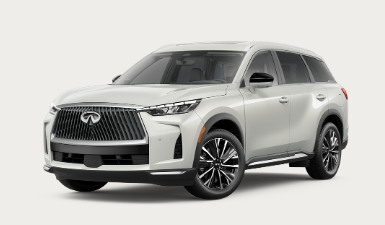
Shopping for a three-row SUV can feel like choosing a house while it is moving at 70 mph. We want enough room for the family, enough cargo capacity for everything the family insists on bringing, solid performance, modern technology, and—ideally—a cabin that does not make us feel like we are driving a delivery van.
That brings us to an interesting matchup: Infiniti QX60 vs VW Atlas.
At first glance, these SUVs seem to occupy different neighborhoods. The Infiniti QX60 presents itself as a luxury crossover, wrapping family practicality in a considerably more polished package. The Volkswagen Atlas takes a more straightforward route. It is a large, practical family SUV built around passenger room, cargo flexibility, and everyday usability.
Yet once we look beneath the badges, the comparison becomes surprisingly close in a few areas. Both use turbocharged four-cylinder engines. Both can seat up to seven. Both offer all-wheel drive. And both aim squarely at households that need three rows without moving into something truck-based and enormous.
So which approach fits your life better? Let us pull them apart piece by piece.
Note: specifications discussed below primarily reference 2026 U.S.-market models. Features and equipment can vary by trim, model year, and market.
Content in this publication
- Infiniti QX60 vs VW Atlas at a Glance
- Exterior Design: Luxury Curves or Rugged Practicality?
- Infiniti QX60 vs VW Atlas Interior Quality
- Seating Capacity and Family Friendliness
- Cargo Space: VW Atlas Has a Major Advantage
- Engine Performance: Surprisingly Close
- Nine-Speed QX60 vs Eight-Speed Atlas Transmission
- Ride Comfort and Refinement
- Handling and Everyday Maneuverability
- Towing Capacity: QX60 Takes the Lead
- Infiniti QX60 vs Atlas AWD Systems
- Technology and Infotainment
- Driver Assistance and Safety Technology
- Infiniti QX60 vs VW Atlas for Families
- Which Is Better for Road Trips?
- Luxury Experience: Where the Infiniti Justifies Itself
- Value for Money: Two Different Definitions
- Infiniti QX60 vs VW Atlas: Major Strengths and Weaknesses
- Who Should Choose the Infiniti QX60?
- Who Should Choose the Volkswagen Atlas?
- Which SUV Works Better for Different Buyers?
- What Should We Check During a Test Drive?
- Closing Thoughts: Infiniti QX60 vs VW Atlas
- Frequently Asked Questions
Infiniti QX60 vs VW Atlas at a Glance
Before diving into the details, here is the personality difference in one sentence: the QX60 emphasizes luxury and refinement, while the Atlas emphasizes usable space and practicality.
The numbers tell the story rather quickly.
| Feature | Infiniti QX60 | Volkswagen Atlas |
|---|---|---|
| Engine | 2.0L VC-Turbo four-cylinder | 2.0L turbocharged TSI four-cylinder |
| Horsepower | 268 hp | 269 hp |
| Torque | 286 lb-ft | 273 lb-ft |
| Transmission | 9-speed automatic | 8-speed automatic |
| Seating | 6 or 7 | Up to 7 |
| Max towing | 6,000 lb | 5,000 lb |
| Max cargo space | 75.4 cu ft | 96.6 cu ft |
| Third-row legroom | 28.0 in | 33.7 in |
| Available AWD | Yes | Yes |
Infiniti lists the QX60's 2.0-liter VC-Turbo at 268 horsepower and 286 lb-ft of torque, paired with a nine-speed automatic. Volkswagen lists the Atlas at 269 horsepower and 273 lb-ft, with a maximum towing capacity of 5,000 pounds.
Right away, we can see something unusual: raw horsepower is basically a tie. The big differences are hiding elsewhere.
Exterior Design: Luxury Curves or Rugged Practicality?
Styling is subjective, but these SUVs clearly speak different visual languages.
The QX60 tries to look expensive even while standing still. Its proportions are relatively sleek for a three-row crossover, with sculpted bodywork, a prominent Infiniti grille, slim lighting elements, and flowing surfaces. There is an elegance to the design that makes the QX60 feel less like a family bus and more like a luxury crossover that happens to have room for children.
The Atlas is different.
It looks broader, squarer, and more utilitarian. Volkswagen has softened the design compared with earlier Atlas models, but the overall philosophy remains unmistakable: maximize the visual impression of width and space.
The QX60 Feels More Upscale
If we regularly pull up to hotels, restaurants, business meetings, or upscale neighborhoods, the QX60 carries greater visual presence. The Infiniti badge also places it explicitly within the premium market.
Its styling feels tailored rather than purely functional.
Think of the QX60 as a fitted blazer. The Atlas is more like a high-quality outdoor jacket: perhaps less elegant, but extremely useful.
The Atlas Looks Ready for Family Duty
The Atlas does not try as hard to hide its dimensions. That is actually part of its appeal.
Large doors, an upright roofline, and a boxier passenger compartment communicate exactly what the Volkswagen wants to be: a genuinely spacious three-row SUV.
For buyers who prioritize function over prestige, that honesty can be refreshing.
Infiniti QX60 vs VW Atlas Interior Quality
This is where the Infiniti begins putting meaningful distance between itself and the Volkswagen.
Inside the QX60, there is greater emphasis on decorative materials, stitching, trim details, seat design, and the small tactile elements we notice every day.
Touch the dashboard. Grab the door handle. Adjust the seat. Look across the cabin at night.
Those little interactions matter in a luxury vehicle, and Infiniti spends more effort making them feel special.
The Atlas cabin is attractive and modern, but its goal is different. It needs to survive school runs, grocery bags, road-trip snacks, sports equipment, muddy shoes, and whatever mysterious substance children manage to attach to the back of a front seat.
Luxury Versus Durability
Neither approach is inherently superior.
If we want an SUV that feels indulgent during an hour-long commute, the QX60 makes a stronger case.
If we mainly care about having a spacious cabin that can absorb daily family chaos without making us nervous about every surface, the Atlas has obvious appeal.
Seating Capacity and Family Friendliness
Both models can accommodate seven occupants depending on configuration, although some QX60 versions can use second-row captain's chairs and therefore seat six. Infiniti officially lists seating for six or seven occupants. Volkswagen advertises seating for up to seven.
The interesting question is not whether seven seats exist.
It is whether seven people actually want to sit in them.
First-Row Comfort
Up front, both SUVs provide generous accommodations.
The QX60 makes the driver's seat feel more like the command center of a luxury crossover. Seating surfaces, trim choices, and general presentation contribute to a quieter, richer atmosphere.
The Atlas feels airy and open. Volkswagen lists 41.7 inches of first-row legroom, while Infiniti lists 42.1 inches for the QX60, so neither leaves front occupants begging for space.
In real-world terms, front-seat space is unlikely to decide this comparison.
Second-Row Comfort
Second-row numbers are also close. Infiniti lists 37.7 inches of second-row legroom, while Volkswagen lists 37.6 inches.
That is effectively a draw on paper.
Where the experience changes is configuration and atmosphere. A QX60 fitted with captain's chairs creates a more premium second-row environment and leaves a convenient passage between the seats.
A conventional Atlas bench maximizes total passenger capacity.
Third-Row Space: The Atlas Pulls Away
Now we reach one of the most important differences in the entire Infiniti QX60 vs VW Atlas debate.
Volkswagen lists 33.7 inches of third-row legroom in the Atlas.
Infiniti lists 28.0 inches in the QX60.
Five-plus inches is not a rounding error.
It can be the difference between passengers simply fitting and actually being comfortable.
If the third row will mainly carry children occasionally, the QX60 can work perfectly well. If teenagers, grandparents, adult friends, or taller passengers will regularly occupy row three, the Atlas makes a stronger argument.
The Atlas treats its third row as genuine passenger space.
The QX60 treats it more like flexible additional seating.
Cargo Space: VW Atlas Has a Major Advantage
Here the numbers are impossible to ignore.
Volkswagen advertises 96.6 cubic feet of maximum cargo capacity in the 2026 Atlas with the rear seats folded. Infiniti lists 75.4 cubic feet for the QX60 with its second and third rows folded.
That difference is substantial.
We are talking about roughly 21 additional cubic feet in the Volkswagen.
Why Cargo Volume Matters Beyond Numbers
Twenty-one cubic feet sounds abstract until life begins throwing objects at us.
Think:
- Flat-pack furniture
- Camping equipment
- Large suitcases
- Strollers
- Dogs and their gear
- Sports equipment
- Home-improvement supplies
- Airport runs with six people's luggage
- College move-in day
That is when a big, squared-off cargo area suddenly becomes one of the best options we ever paid for.
The Atlas is almost van-like in the way it consumes bulky family duties.
The QX60 Still Offers Useful Storage
The Infiniti is hardly impractical. Seventy-five-plus cubic feet is still a generous amount of maximum cargo room for a midsize luxury crossover.
But this is a question of emphasis.
The QX60 says, "We can carry your family and belongings in style."
The Atlas says, "Bring everything."
Engine Performance: Surprisingly Close
There was a time when choosing a luxury badge almost automatically meant getting significantly more engine.
Not here.
The QX60's VC-Turbo produces 268 horsepower and 286 lb-ft of torque. The Atlas produces 269 horsepower and 273 lb-ft.
Yes, you read that correctly.
The Volkswagen technically has one more horsepower.
Naturally, horsepower alone tells us very little about how each SUV feels.
Infiniti QX60 VC-Turbo Character
Infiniti uses its variable-compression turbocharged engine technology to balance response and efficiency.
You may be interested in reading NFINITI QX60 or Similar: Luxury SUVs Worth Comparing
The QX60 pairs the engine with a nine-speed automatic transmission. The result is intended to deliver smooth acceleration suitable for a premium crossover rather than chasing sports-car theatrics.
The extra torque compared with the Atlas can also help create a confident sensation when carrying passengers or pulling away from lower speeds.
VW Atlas 2.0 TSI Performance
Volkswagen's 2.0-liter TSI turbocharged engine generates 269 horsepower and 273 lb-ft of torque.
For a large three-row vehicle, those numbers may appear modest at first, particularly if we remember earlier SUVs with six-cylinder engines.
Yet modern turbocharged engines are remarkably effective at producing usable low- and mid-range power.
The Atlas is not pretending to be a giant hot hatch.
It simply needs to merge confidently, handle highway speeds, climb hills, and move a full family without drama.
That is exactly the mission.
Nine-Speed QX60 vs Eight-Speed Atlas Transmission
Transmission behavior matters because both engines depend heavily on turbocharging.
The QX60 uses a nine-speed automatic, providing a wide spread of ratios. Infiniti also includes paddle shifters and selectable drive modes.
The Atlas uses an eight-speed automatic.
On paper, one additional ratio sounds important. In reality, shift programming matters far more than the raw gear count.
For most owners, the distinction will come down to how naturally each vehicle responds during a test drive. We would pay particular attention to low-speed traffic, highway passing, and uphill acceleration rather than simply flooring the accelerator once from a stop.
Ride Comfort and Refinement
This is an area where the QX60's luxury positioning becomes relevant again.
Infiniti designs the QX60 around a more premium driving experience. That means refinement matters just as much as handling.
We expect a luxury crossover to isolate road imperfections, suppress unwanted noise, and make long drives feel less tiring.
The Atlas is also comfortable, but its enormous interior volume and family-first mission make its personality somewhat more utilitarian.
Which Feels Better on Long Trips?
It depends on what causes fatigue.
If cabin ambience, seat quality, noise isolation, and a richer overall environment matter most, the QX60 is likely to feel more special.
If fatigue comes from squeezing passengers and luggage into a smaller space, the Atlas fights back brilliantly.
Five relaxed passengers surrounded by premium materials can prefer the Infiniti.
Seven passengers plus luggage may strongly prefer the Volkswagen.
Context changes everything.
Handling and Everyday Maneuverability
Neither SUV should be mistaken for a sports sedan.
Still, three-row crossovers spend plenty of time in crowded parking lots, tight city streets, and multilane highways, so predictable handling matters.
The QX60's more premium focus gives it a somewhat more sophisticated character, while the Atlas feels like the larger tool that it is.
We would think about the driving environments we encounter most often.
For suburban roads and large parking areas, size may barely matter. In dense urban neighborhoods or compact garages, every inch suddenly feels magnified.
Do Not Buy on Dimensions Alone
A test drive should include:
- Parking between two vehicles.
- Making a U-turn.
- Reversing using the cameras.
- Entering a narrow parking garage.
- Driving over broken pavement.
- Merging onto a highway.
- Sitting in every row.
That reveals more about everyday compatibility than twenty minutes of highway driving with a salesperson.
Towing Capacity: QX60 Takes the Lead
Here comes the Infiniti's biggest practical surprise.
The QX60 has a maximum tow rating of up to 6,000 pounds, while Volkswagen lists 5,000 pounds for the Atlas.
That gives the Infiniti a meaningful advantage.
What Can That Extra 1,000 Pounds Mean?
Towing decisions involve more than simply staying beneath a headline maximum. Passenger weight, cargo, tongue weight, trailer equipment, vehicle configuration, and manufacturer requirements all matter.
Still, a higher maximum provides additional flexibility for owners considering:
- Small or medium travel trailers
- Utility trailers
- Boats
- ATVs or motorcycles
- Recreational equipment
Anyone who regularly tows should confirm the rating for the exact trim, drivetrain, and equipment package rather than assuming every version reaches the published maximum.
But as a broad comparison, the QX60 offers the stronger towing ceiling.
Infiniti QX60 vs Atlas AWD Systems
Both SUVs are available with all-wheel drive.
Infiniti calls its setup Intelligent All-Wheel Drive, while Volkswagen offers its 4MOTION system.
For most owners, AWD is less about conquering mountains than improving confidence in rain, snow, gravel, or other low-traction conditions.
Drivers who live in warm climates and rarely encounter slippery surfaces may decide front-wheel drive is perfectly adequate where offered.
Those dealing with winter weather, mountain roads, or frequent outdoor trips may see AWD as money well spent.
Just remember the humble tire.
The most sophisticated AWD system in the world cannot repeal physics if the tires have no grip.
Technology and Infotainment
Modern family vehicles are essentially rolling charging stations with steering wheels.
Everyone has a phone. Someone needs navigation. Someone else wants music. Children want entertainment. The driver wants everything to function without taking ten taps.
Infiniti has leaned into Google integration. Its QX60 infotainment system offers Google built-in functionality, including Google Maps, Google Assistant, and access to compatible apps through Google Play.
That creates a familiar interface for drivers already living inside Google's ecosystem.
Infiniti's technological approach fits the vehicle's broader luxury theme.
Rather than simply providing connectivity, the QX60 attempts to make technology part of the upscale experience.
The ability to integrate navigation, voice controls, vehicle functions, and entertainment creates a cleaner digital environment when everything works together.
Atlas Technology Prioritizes Everyday Function
The Atlas features a 12-inch touchscreen as part of its modernized cabin presentation, while Volkswagen also offers connected features and smartphone-oriented functionality.
The Volkswagen experience feels less like a technological showcase and more like another tool within an already practical vehicle.
That is not a criticism.
For many families, intuitive beats impressive every time.
Driver Assistance and Safety Technology
Both brands provide modern driver-assistance technologies, although specific equipment varies by trim.
Volkswagen's IQ.DRIVE suite can include features such as Travel Assist, Adaptive Cruise Control, Active Blind Spot Monitor, Rear Traffic Alert, Front Assist, Emergency Assist, and Lane Assist.
The Atlas also earned a 2026 IIHS TOP SAFETY PICK designation according to Volkswagen's current model information.
Infiniti offers its own advanced driver-assistance technologies, including ProPILOT Assist functionality on suitably equipped QX60 models.
These systems can make heavy traffic and long motorway journeys less demanding, but they remain driver-assistance features—not substitutes for attention.
Infiniti QX60 vs VW Atlas for Families
If our primary objective is carrying people, the Atlas has a persuasive advantage.
The third row is substantially roomier, and maximum cargo capacity is considerably greater.
Those characteristics compound over years of ownership.
One extra child joins the carpool.
Children become teenagers.
A stroller becomes sports gear.
You may be interested in readingNFINITI QX60 or Similar: Luxury SUVs Worth ComparingYou may be interested in reading
 BMW i7 vs M760e: Electric Luxury or Plug-In Hybrid Power?
A weekend road trip becomes a full week away.
Suddenly all that seemingly unnecessary room does not look unnecessary at all.
When the QX60 Makes More Sense for a Family
The QX60 makes sense when we need three-row flexibility but do not constantly fill every seat.
A family of four or five may use the third row occasionally while enjoying the Infiniti's more luxurious cabin every single day.
In that scenario, giving up some maximum interior volume can feel like an excellent trade.
When the Atlas Makes More Sense for a Family
Families regularly carrying six or seven people should pay close attention to the Atlas.
Its third-row legroom advantage alone changes the equation.
Add the larger maximum cargo volume, and the Volkswagen begins behaving more like a dedicated family transporter.
Which Is Better for Road Trips?
This might be the hardest category because the answer changes depending on how many people are traveling.
With four occupants, the QX60 can feel wonderful. Everyone has room, the cabin feels upscale, and there is sufficient cargo space for a normal holiday.
With six or seven occupants, however, the Atlas starts making a great deal of sense.
Space becomes luxury.
Nobody considers stitched leather particularly luxurious when their knees are pressed into the seat ahead for four hours.
The Atlas allows passengers and luggage to coexist more easily, which is exactly what we want from a road-trip machine.
Luxury Experience: Where the Infiniti Justifies Itself
Why consider the QX60 when the Atlas offers so much interior volume?
Because cars are not spreadsheets.
We touch them, hear them, look at them, and spend hundreds of hours sitting inside them.
The QX60's appeal lies in the experience surrounding the numbers.
Material choices, visual presentation, seating details, cabin ambience, exterior styling, and the prestige associated with a luxury brand all contribute to ownership satisfaction.
For someone who drives alone to work five days a week and carries the family on weekends, that distinction matters.
There is no prize for owning 96.6 cubic feet of cargo capacity if we almost never use it.
Value for Money: Two Different Definitions
The Atlas and QX60 approach value from opposite directions.
Volkswagen gives us a huge passenger compartment, enormous cargo capacity, competitive turbocharged power, modern technology, and meaningful towing ability in a mainstream package.
That is practical value.
The Infiniti asks us to pay for refinement, materials, design, luxury-brand positioning, stronger maximum towing capacity, and a more elevated ownership experience.
That is experiential value.
Think About Cost Per Feature You Actually Use
Before choosing either SUV, we would make a simple list.
What will we use every week?
Maybe it is:
- Third-row seating
- Maximum cargo capacity
- AWD
- Premium audio
- Towing
- Heated or ventilated seats
- Advanced parking cameras
- Driver-assistance systems
- Captain's chairs
- Luxury interior materials
A feature that looks exciting in a brochure but gets used twice per year should carry less weight than one we touch every morning.
Infiniti QX60 vs VW Atlas: Major Strengths and Weaknesses
Infiniti QX60 Strengths
The QX60 makes its best case through:
- More premium cabin presentation
- Luxury-brand positioning
- Attractive exterior design
- Up to 6,000 pounds of towing capacity
- Strong 286 lb-ft torque output
- Google built-in technology
- Available six-seat configuration with captain's chairs
- Comfortable, refined family transportation
Infiniti QX60 Weaknesses
Potential compromises include:
- Considerably less maximum cargo capacity than the Atlas
- Tight third-row legroom relative to the Volkswagen
- Luxury positioning means practicality is not its only priority
- Third row is better suited to occasional use than frequent adult occupancy
Volkswagen Atlas Strengths
The Atlas stands out for:
- Excellent passenger space
- Much more third-row legroom
- Up to 96.6 cubic feet of cargo space
- Seating for up to seven
- 269-hp turbocharged engine
- Up to 5,000 pounds of towing capacity
- Family-focused cabin
- Broad suite of driver-assistance technology
Volkswagen Atlas Weaknesses
Its trade-offs include:
- Interior presentation is not as luxurious as the Infiniti
- Lower maximum towing figure
- Large exterior footprint can feel cumbersome
- Less premium brand experience
Who Should Choose the Infiniti QX60?
The QX60 is particularly compelling when we want a three-row crossover without feeling as though practicality has taken over our entire automotive life.
We would put it high on the list when:
- Five people or fewer travel most of the time.
- The third row is only occasionally required.
- Interior quality matters heavily.
- We appreciate luxury styling.
- We tow and want the higher maximum rating.
- We want family practicality wrapped in a premium package.
The QX60 is essentially for buyers asking, "Can my family SUV still feel special?"
Yes, it can.
Who Should Choose the Volkswagen Atlas?
The Atlas is designed for households that keep testing the physical limits of their vehicles.
It becomes particularly attractive when:
- Six or seven seats are frequently occupied.
- Teenagers or adults use the third row.
- Cargo capacity is a major consideration.
- Road trips involve lots of luggage.
- We regularly carry sports or outdoor gear.
- Maximum interior flexibility matters more than luxury-brand prestige.
The Atlas does not merely have a third row.
It builds much of its identity around actually using it.
Which SUV Works Better for Different Buyers?
| Buyer Type | Stronger Fit |
|---|---|
| Family of four wanting luxury | QX60 |
| Frequent seven-passenger use | Atlas |
| Maximum cargo needs | Atlas |
| Luxury cabin priority | QX60 |
| Higher towing requirement | QX60 |
| Adult third-row passengers | Atlas |
| Upscale daily commuter | QX60 |
| Large-family road trips | Atlas |
| Occasional third-row use | QX60 |
| Practical space-first buyer | Atlas |
The important word here is fit.
Neither vehicle needs to dominate every category to make sense. It only needs to dominate the categories that matter in our own driveway.
What Should We Check During a Test Drive?
Do not simply drive around the dealership block and call it research.
Bring the family.
Bring the child seats if necessary.
Try the third row.
Fold the seats.
Open the cargo area.
Then ask:
- Can adults enter the third row easily?
- Does our usual luggage fit behind the occupied seats?
- Can children operate the doors and seat mechanisms?
- Is rearward visibility acceptable?
- Are the touchscreen controls intuitive?
- Do we like the ride on rough pavement?
- Does the engine respond naturally when merging?
- Can we park it comfortably?
- Are frequently used controls easy to reach?
- Does the cabin still feel comfortable after 45 minutes?
Cars often reveal their personality through mundane tasks rather than dramatic acceleration.
That is exactly where family SUVs should be judged.
Closing Thoughts: Infiniti QX60 vs VW Atlas
The Infiniti QX60 vs VW Atlas comparison comes down to two different interpretations of what makes a great three-row SUV.
The QX60 treats family transportation as something that can still feel elegant. It gives us a richer cabin, upscale styling, strong torque, useful three-row flexibility, and a maximum tow rating of 6,000 pounds. Its 75.4 cubic feet of maximum cargo capacity is respectable, but outright space is not the centerpiece of its design.
The Atlas takes practically the opposite philosophy. It gives passengers room to breathe, offers a much more adult-friendly third row, and opens to an enormous 96.6 cubic feet of maximum cargo room. Its 269-horsepower turbocharged engine and 5,000-pound towing rating provide plenty of useful capability for mainstream family duties.
So rather than asking which SUV is universally better, we should ask a more useful question: what problem are we trying to solve?
If our biggest problem is squeezing people and luggage into the vehicle, the Atlas addresses that challenge exceptionally well.
If our challenge is finding a practical three-row SUV that still delivers a genuine premium atmosphere, the QX60 answers from a different angle.
One gives us more room.
The other gives the room we have a more luxurious feel.
And that difference defines this comparison.
Frequently Asked Questions
1. Is the Infiniti QX60 bigger than the VW Atlas?
Not where interior utility matters most. The Volkswagen Atlas offers significantly more maximum cargo space—96.6 cubic feet compared with 75.4 cubic feet in the QX60—and considerably more third-row legroom. The QX60 is spacious enough for many families, but the Atlas makes better use of its footprint for maximum passenger and cargo capacity.
2. Which has more third-row space, the Infiniti QX60 or VW Atlas?
The Volkswagen Atlas has the advantage. Volkswagen lists 33.7 inches of third-row legroom for the 2026 Atlas, compared with 28.0 inches for the QX60. That makes the Atlas notably more accommodating when teenagers or adults regularly ride in the rear.
3. Which can tow more, the QX60 or Atlas?
The Infiniti QX60 has the higher published maximum towing figure at up to 6,000 pounds, versus up to 5,000 pounds for the Volkswagen Atlas. Always verify the limits and required equipment for the exact trim and drivetrain before towing.
4. Is the Infiniti QX60 more luxurious than the Volkswagen Atlas?
The QX60 is positioned as a luxury crossover and places greater emphasis on premium materials, styling, seating appointments, cabin ambience, and upscale features. The Atlas is a mainstream family SUV whose strongest qualities are interior space, flexibility, and everyday practicality.
You may be interested in readingNFINITI QX60 or Similar: Luxury SUVs Worth ComparingYou may be interested in reading
BMW i7 vs M760e: Electric Luxury or Plug-In Hybrid Power?You may be interested in reading
BMW i7 vs Mercedes EQS: The Ultimate Luxury EV Comparison5. Does the QX60 or Atlas have more horsepower?
They are almost identical. The 2026 QX60's 2.0-liter VC-Turbo produces 268 horsepower, while the 2026 Atlas's 2.0-liter TSI engine produces 269 horsepower. The QX60 produces more torque, however, at 286 lb-ft versus 273 lb-ft for the Atlas.
If you want to know other articles similar to Infiniti QX60 vs VW Atlas: Which Three-Row SUV Makes More Sense? you can visit the category Models.
Honda Passport vs Toyota 4Runner: Which SUV Is Better?
Honda Passport vs Ford Bronco: Which SUV Is Better?
Honda Passport vs Ford Explorer: Which SUV Is Better?
Honda Passport or Pilot: Which SUV Is Better?
Honda Passport vs Jeep Grand Cherokee: Which SUV Is Better?
Honda Passport vs Nissan Pathfinder: Which SUV Is Better?
Leave a Reply
More content of your interest