
Nissan Serena vs Toyota Voxy: Complete Buyer’s Comparison

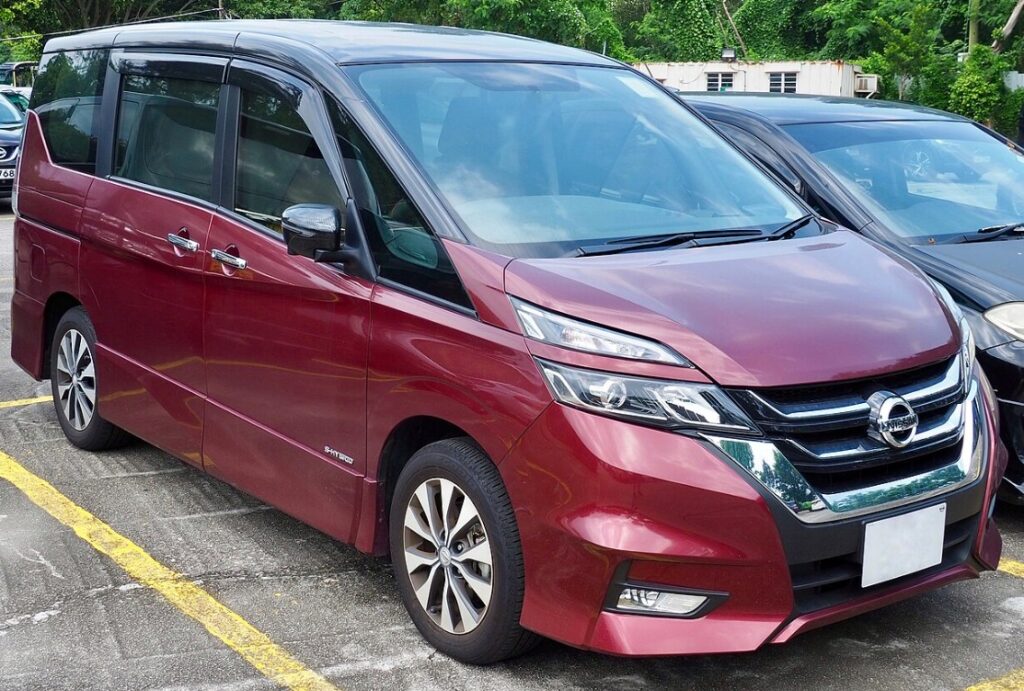
Choosing between the Nissan Serena and Toyota Voxy can feel like comparing two exceptionally practical homes on wheels. Both are boxy Japanese minivans with sliding doors, three-row seating, efficient powertrains, and enough cabin flexibility to make an ordinary SUV look unnecessarily complicated.
Yet these vehicles do not deliver exactly the same experience.
The Nissan Serena generally leans toward comfort, clever family conveniences, and an increasingly electric-feeling driving experience through Nissan’s e-POWER technology. The Toyota Voxy often counters with dependable mechanical engineering, flexible seating, strong hybrid efficiency, and the broad ownership support associated with Toyota.
Which one should we buy?
That answer depends heavily on the generation, powertrain, local parts availability, and how we intend to use the vehicle. A school-run family may value easy entry and cabin storage, while a rideshare operator might prioritize fuel economy and long-term durability. A buyer importing a Japanese used vehicle must also consider auction grades, battery condition, electronics, and access to specialist servicing.
In this Nissan Serena vs Toyota Voxy comparison, we will examine all major generations, not just the newest models. We will compare design, interior space, seating, engines, hybrid systems, driving comfort, reliability, maintenance, safety, and used-car value to determine which minivan suits different buyers.
Content in this publication
- Nissan Serena vs Toyota Voxy at a Glance
- Understanding the Two Minivans
- Nissan Serena Generation Overview
- Toyota Voxy Generation Overview
- Exterior Design and Road Presence
- Interior Space and Practicality
- Powertrain Comparison
- Fuel Economy
- Driving Experience
- Safety and Driver Assistance
- Reliability Comparison
- Maintenance and Repair Costs
- Nissan Serena vs Toyota Voxy for Families
- Which Is Better for Commercial Use?
- Which Is Better as a Used Import?
- Best Generations to Buy
- Generations Requiring Extra Caution
- Pre-Purchase Inspection Checklist
- Nissan Serena vs Toyota Voxy: Which One Should We Buy?
- Conclusion
- Frequently Asked Questions
Nissan Serena vs Toyota Voxy at a Glance
Before diving into the details, here is the simplest way to separate these two family vans:
| Category | Nissan Serena | Toyota Voxy |
|---|---|---|
| Overall character | Comfortable and technology-focused | Practical, polished, and dependable |
| First appearance | Serena name introduced before the Voxy | Voxy launched in 2001 |
| Seating | Usually seven or eight seats | Usually seven or eight seats |
| Main modern technology | e-POWER series-hybrid system | Toyota parallel-hybrid system |
| Ride quality | Usually soft and relaxed | Generally controlled and composed |
| Interior flexibility | Excellent | Excellent |
| Styling | Friendly or futuristic, depending on generation | Sportier and more aggressive |
| Used-car appeal | Often strong value for equipment | Often stronger resale demand |
| Best suited to | Comfort-focused families | Buyers prioritizing ownership confidence |
Toyota introduced the first Voxy in November 2001 as a successor within its compact one-box minivan lineage. It offered three rows, dual sliding rear doors, front-wheel drive, and seating for up to eight people.
The Serena has followed a longer evolutionary path, changing from a relatively conventional compact people carrier into one of Nissan’s most technology-led family models. Its fifth generation arrived in 2016 with conveniences such as hands-free sliding doors and available ProPILOT driver assistance.
Understanding the Two Minivans
What Is the Nissan Serena?
The Nissan Serena is a medium-sized Japanese minivan designed primarily for families who need three-row seating without moving into a large luxury van.
Across its generations, the Serena has emphasized:
- Easy passenger access
- A tall and spacious cabin
- Sliding rear doors
- Flexible seating arrangements
- Family-focused storage
- Comfortable urban driving
- Increasingly advanced safety technology
The Serena is widely associated with the Japanese domestic market, although used examples are exported to places such as New Zealand, Malaysia, Singapore, the Caribbean, the United Kingdom, and parts of Africa.
Its personality has changed considerably over time. Early Serenas were relatively simple people carriers. Later models became smoother, more efficient, and far more sophisticated, especially after the arrival of S-Hybrid and e-POWER versions.
What Is the Toyota Voxy?
The Toyota Voxy is the sportier-looking sibling of the Toyota Noah. Mechanically, the Noah and Voxy are closely related, but Toyota traditionally differentiated them through styling and marketing.
The Voxy tends to feature:
- More aggressive front-end styling
- Three-row seating
- Dual sliding rear doors
- Gasoline and hybrid powertrains
- A low and relatively flat passenger floor
- Strong interior versatility
- Toyota’s extensive hybrid expertise
Toyota launched the fourth-generation Voxy in January 2022. This generation moved onto the TNGA GA-C platform and introduced substantial improvements in structure, convenience, comfort, safety, and hybrid performance.
Nissan Serena Generation Overview
First-Generation Serena: C23
The C23 Serena belongs to a very different era from today’s polished family vans. Produced during the 1990s, it had a more traditional one-box shape and, depending on the market, could be found with gasoline or diesel engines.
Many examples were rear-wheel drive, giving the early Serena a mechanical layout that feels closer to a small commercial van than a modern front-wheel-drive MPV.
Its strengths included a roomy cabin, straightforward mechanical design, and useful passenger capacity. However, age is now the main concern. Corrosion, cooling-system deterioration, worn suspension components, oil leaks, and scarce trim pieces can turn a cheap purchase into a restoration project.
For most ordinary buyers, the first generation is now more interesting as an inexpensive utility vehicle or nostalgic import than as a primary family car.
Second-Generation Serena: C24
The C24 represented a major transition. Nissan adopted a more conventional modern minivan configuration, improving cabin packaging and making the Serena friendlier for everyday family use.
Compared with the first generation, it generally offered:
- Better use of interior space
- Easier access
- A more car-like driving position
- Front-wheel-drive-based engineering
- Improved comfort
- A more practical flat-floor layout
Used C24 models can still be functional, but condition matters more than specifications. Transmission behavior, cooling performance, engine oil consumption, power-door operation, and previous accident repairs deserve careful attention.
The C24 may cost less than a comparable Voxy, but an unusually low price can be a trap. At this age, neglected maintenance matters more than the badge on the grille.
Third-Generation Serena: C25
The C25 Serena is where the model began to feel much closer to the minivan we recognize today. Its upright body, large glass area, flexible cabin, and sliding doors make it a practical used-family option.
It is often affordable, and many buyers appreciate its light controls and spacious interior. Nevertheless, the continuously variable transmission is a major inspection point. A CVT should accelerate smoothly without shuddering, whining, delayed engagement, or sudden changes in engine speed.
This generation can represent good value when properly maintained, but buying solely on mileage is risky. A higher-mileage example with documented fluid changes may be safer than a low-mileage vehicle with an unclear history.
Fourth-Generation Serena: C26
The C26 refined the basic Serena formula. It looked cleaner, drove more smoothly, and brought improved efficiency.
This generation also introduced Nissan’s S-Hybrid branding. We should not confuse S-Hybrid with a full hybrid or the later e-POWER system. In broad terms, S-Hybrid uses modest electrical assistance and energy recovery rather than delivering the strong motor-driven character of an advanced full-hybrid powertrain.
The C26’s appeal lies in its balance:
- Modern enough for daily use
- Often cheaper than newer e-POWER models
- Spacious and comfortable
- Widely available in used-import markets
- Less electronically complex than the newest generation
Potential buyers should test the CVT thoroughly, inspect the sliding doors, confirm that warning lights illuminate and then turn off normally, and check the condition of the auxiliary electrical system.
Fifth-Generation Serena: C27
The C27 marked an important technological step. Introduced in 2016, it brought available ProPILOT, hands-free sliding-door functionality, improved family conveniences, and more distinctive styling.
The major development arrived when Nissan launched the Serena e-POWER in Japan in 2018. In the e-POWER arrangement, the electric motor drives the wheels, while the gasoline engine generates electricity rather than directly powering the vehicle in the conventional manner.
This changes the driving experience significantly. The Serena e-POWER responds more like an electric vehicle at low speeds, with smooth initial acceleration and reduced transmission sensation.
For urban families, that can feel wonderfully calm. The van moves through stop-and-go traffic like a quiet elevator rather than a machine constantly searching for the right gear.
The C27 is one of the most attractive used Serenas because it combines modern safety, strong practicality, and a choice between conventional and electrified powertrains.
Sixth-Generation Serena: C28
The C28 carries the Serena formula into a more mature era. It builds on the e-POWER concept with improved refinement, updated cabin technology, sharper driver assistance, and a more sophisticated interior.
Compared with older generations, it feels less like a basic people carrier and more like a purpose-designed family lounge. Controls are more digital, the dashboard is cleaner, and the overall experience is quieter.
The disadvantage is complexity. Advanced driver-assistance sensors, cameras, infotainment systems, electric doors, hybrid hardware, and electronic control modules may make repairs more specialized.
For buyers with access to proper Nissan diagnostics and trained technicians, the C28 is the most complete Serena. In markets where parts and knowledge are limited, a simpler C26 or gasoline C27 may be easier to own.
Toyota Voxy Generation Overview
First-Generation Voxy: R60
Toyota introduced the first Voxy in 2001. It used a front-engine, front-wheel-drive platform, offered seating for up to eight, and featured sliding doors on both sides. Early versions used a 2.0-liter gasoline engine and a four-speed automatic, with a CVT replacing that transmission in later production.
The first-generation Voxy established the model’s core identity: compact external dimensions combined with a tall, highly usable cabin.
Today, the R60 can be inexpensive, but age-related issues dominate the buying decision. We should inspect:
- Engine oil condition
- Cooling-system health
- CVT operation on later examples
- Suspension bushes
- Steering components
- Electric sliding doors
- Underbody corrosion
- Dashboard warning lights
A good R60 can still work as a budget people mover, but buyers should keep money aside for repairs.
Second-Generation Voxy: R70
Released in 2007, the second-generation Voxy improved ride comfort, usability, and environmental performance while retaining the features that made the original popular.
This generation is a sweet spot for some budget-conscious buyers. It feels more modern than the R60 but remains mechanically less complex than later hybrids.
The R70 is especially appealing when it has a clean service record, smooth CVT operation, and fully functional sliding doors. Toyota’s reputation may increase the asking price, but the stronger resale market can help recover part of that premium later.
Third-Generation Voxy: R80
The R80 arrived in 2014 and represented a major leap. Toyota developed it as a spacious next-generation family minivan and introduced a hybrid version shortly after the gasoline model’s launch.
This generation is especially important for used-car buyers because it combines:
- Modern styling
- Excellent cabin packaging
- Gasoline and hybrid options
- A low passenger floor
- Strong fuel efficiency
- Widely understood Toyota hybrid technology
- Good market demand
The R80 Hybrid is often one of the strongest all-round choices in this comparison. It may not feel as electrically driven as the Serena e-POWER, but Toyota’s system provides smooth low-speed operation and efficient everyday performance.
Battery condition still matters. A pre-purchase diagnostic scan should examine battery-block voltage differences, stored hybrid-system codes, cooling-fan cleanliness, and charging behavior.
Fourth-Generation Voxy: R90
Toyota launched the fourth-generation Voxy in January 2022. Built on the TNGA GA-C platform, it brought higher structural rigidity, updated gasoline and hybrid systems, improved safety, and a more refined cabin.
The R90 looks dramatic. Its front grille is almost architectural, as though Toyota designed the van around a futuristic city gate.
Behind the styling, however, it remains highly practical. It offers easy access, thoughtful storage, flexible seats, and a more settled driving experience than older Voxy generations.
For buyers seeking the newest possible option, the R90 is arguably the Voxy at its best. Its challenges are price, advanced electronic complexity, and the potentially high cost of repairing imported body and lighting components.
Exterior Design and Road Presence
Serena Styling
The Serena typically uses softer surfaces and a more family-friendly visual identity. Some generations look conservative, while later ones adopt split lighting, contrasting roof treatments, and more futuristic details.
You may be interested in reading Ford Taurus X Years: Complete 2008–2009 Model Guide
The design prioritizes visibility and space rather than pretending to be sporty. Large windows help the cabin feel bright, and the upright sides maximize interior width.
The Serena often looks like what it is: an intelligent transport tool designed around people.
Voxy Styling
The Voxy usually appears more aggressive. Toyota has used bold grilles, narrow headlights, dark trim, and angular details to separate it from the friendlier Noah.
For buyers who dislike the anonymous appearance of traditional MPVs, the Voxy may have more personality. It wears its boxy body like a tailored suit rather than trying to hide it.
Style is subjective, but our broad verdict is simple:
- Choose the Serena for a cleaner or more futuristic family aesthetic.
- Choose the Voxy for a stronger, sportier road presence.
Interior Space and Practicality
Which Minivan Has More Cabin Space?
Both vehicles use their footprints exceptionally well. Their tall roofs, relatively vertical sides, and sliding doors create more usable passenger space than many similarly sized SUVs.
The exact winner varies by generation and seating configuration. However, the difference is rarely large enough to choose one without physically testing the cabin.
We should bring the actual items we use every week:
- Child seats
- Baby strollers
- Sports equipment
- Luggage
- Mobility aids
- Work bags
- Large shopping boxes
A specification sheet may say both vans have eight seats, but that tells us little about how easy it is to reach the third row with two child seats installed.
Seating Flexibility
Seven-seat versions often use second-row captain’s chairs, creating better comfort and easier movement through the cabin.
Eight-seat versions usually use a second-row bench or movable center section. They provide maximum capacity but can feel less luxurious.
The Voxy’s seating mechanisms are generally intuitive, and Toyota has long treated cabin transformation as one of the model’s defining qualities. The Serena is equally inventive, frequently offering movable seating sections, numerous storage areas, folding trays, and family-oriented access solutions.
There is no universal winner. The best layout depends on whether we prioritize passenger count, walk-through access, child-seat placement, or cargo length.
Third-Row Comfort
Both third rows are more useful than the tiny emergency seats found in compact SUVs.
Adults can use them for shorter journeys, while children and teenagers should be comfortable on longer trips. Still, wheel-arch intrusion, seat height, cushion angle, and legroom vary between generations.
Before buying, sit in every seat. A ten-minute static inspection can reveal more than an hour of online research.
Cargo Space
With all three rows occupied, cargo room can become limited. Both vans are better at carrying either many passengers or bulky luggage than carrying both simultaneously.
For airport work or long family tours, consider:
- A roof box
- Folding part of the third row
- Choosing a seven-seat configuration
- Measuring the stroller before purchase
- Checking whether the third row folds sideways or into the floor
The most practical vehicle is not automatically the one with the largest published volume. Seat-folding convenience and load-floor shape matter just as much.
Powertrain Comparison
Conventional Gasoline Models
Older Serena and Voxy generations primarily use naturally aspirated gasoline engines paired with automatic transmissions or CVTs.
Neither is built for thrilling acceleration. These are family vans, not sports cars wearing tall roofs.
The Toyota often feels predictable and progressive. The Nissan may feel softer and quieter, though CVT behavior varies considerably by generation and condition.
For buyers in regions without hybrid specialists, a conventional gasoline model can be the sensible choice. It may consume more fuel, but easier diagnostics and simpler parts sourcing can reduce ownership stress.
Nissan S-Hybrid Explained
Nissan’s S-Hybrid system is a mild form of electrification. It supports functions such as energy regeneration and engine assistance, but it does not provide the same electric-motor driving experience as Serena e-POWER.
Buyers sometimes assume every Serena carrying a hybrid badge behaves like a Toyota full hybrid. That assumption can lead to disappointment.
S-Hybrid is best viewed as an efficiency-enhanced gasoline drivetrain rather than an electric-driving system.
Nissan e-POWER Explained
Nissan e-POWER uses an electric motor to drive the wheels. A gasoline engine generates electricity for the battery and motor, removing the need to plug the vehicle into an external charger.
This layout delivers several advantages:
- Smooth low-speed response
- Strong initial torque
- Reduced conventional transmission sensation
- Quiet operation in favorable conditions
- Regenerative deceleration
- An EV-like urban character
However, the gasoline engine may become noticeable when electricity demand rises. On sustained high-speed journeys, the system may not feel as naturally suited as it does in urban traffic.
Toyota Hybrid Explained
Toyota’s hybrid system can drive the vehicle using the gasoline engine, electric motor, or a combination of both, depending on operating conditions.
Its strengths include:
- Excellent stop-and-go efficiency
- Smooth power blending
- Regenerative braking
- Extensive real-world experience
- Strong familiarity among hybrid technicians
- Proven use across numerous Toyota models
The Toyota system may feel less dramatic than Nissan e-POWER, but that understatement is part of its appeal. It works quietly in the background, like a skilled stagehand moving the scenery without drawing attention.
Fuel Economy
Fuel consumption depends on generation, drivetrain, road type, load, climate, tires, and driving style.
In general:
- Older gasoline versions consume the most fuel.
- Mild-hybrid Serena models improve efficiency modestly.
- Toyota Voxy Hybrid models perform strongly in mixed urban driving.
- Serena e-POWER excels where frequent braking allows energy recovery.
- Heavy highway use can narrow the hybrid advantage.
- Four-wheel-drive versions usually consume more than front-wheel-drive models.
For city-focused ownership, both modern electrified options can be economical. The Voxy Hybrid may appeal to buyers who value consistency and familiarity. The Serena e-POWER may appeal to drivers who want smoother electric-motor propulsion.
Never rely solely on Japanese test-cycle figures when planning a fuel budget. Real-world results can differ substantially after importation, especially with hills, high speeds, short trips, air-conditioning use, and heavy passenger loads.
Driving Experience
Ride Comfort
The Serena generally prioritizes softness. It absorbs rough urban surfaces well and creates a relaxed passenger experience.
The Voxy can feel slightly firmer and more controlled. Its body movements may settle more quickly, particularly in newer generations.
Families carrying passengers on broken roads may prefer the Serena’s cushioning. Drivers who want tighter body control may favor the Voxy.
Handling and Steering
Neither vehicle enjoys aggressive cornering. Their tall bodies and family-focused tires encourage smooth driving.
The Voxy often feels a little more tied down, while the Serena tends to emphasize ease and lightness. The newest versions of both are far more stable than their box-shaped appearances suggest.
Crosswinds can still affect them, especially at motorway speeds. Correct tire pressures, suitable tires, and healthy suspension components are essential.
Urban Driving
In crowded towns, both vans are easier to manage than expected.
Their square bodies help us judge the corners, while large mirrors and cameras improve visibility. Sliding doors are transformative in narrow parking spaces. Children can enter without swinging a conventional door into the neighboring car.
The Serena e-POWER is especially pleasant in stop-start traffic because of its motor-driven response. The Voxy Hybrid counters with seamless operation and an easygoing efficiency that requires little driver adjustment.
Highway Driving
The Voxy may have a slight advantage for buyers who spend most of their time at higher speeds. Its controlled ride and familiar hybrid behavior can feel reassuring on long journeys.
The Serena remains comfortable, particularly for passengers, but e-POWER models may produce more noticeable engine activity during prolonged high-load driving.
Wind and road noise depend heavily on generation, tires, and trim. A poorly chosen replacement tire can make either van sound considerably less refined.
Safety and Driver Assistance
Safety technology differs dramatically across generations. Comparing a 2005 Voxy with a 2022 Serena based only on model names would be meaningless.
Older examples may offer basic airbags, anti-lock brakes, and stability control. Newer vehicles can include:
- Autonomous emergency braking
- Lane-departure warning
- Adaptive cruise control
- Blind-spot monitoring
- Surround-view cameras
- Parking assistance
- Traffic-sign recognition
- Driver-attention monitoring
- Advanced lane-centering support
The C27 Serena gained attention for introducing ProPILOT to the model, while the newest Voxy uses Toyota’s current safety and driver-assistance technologies.
Imported vehicles require additional caution. Some navigation, connected services, radio frequencies, road-sign recognition, or mapping functions may not work fully outside Japan.
Safety hardware is valuable, but it must function correctly. A damaged windscreen, misaligned camera, replaced bumper, or poorly repaired front-end collision can interfere with calibration.
Reliability Comparison
Is the Nissan Serena Reliable?
A well-maintained Serena can be reliable, but certain generations require careful drivetrain inspection.
Common areas to examine include:
- CVT operation
- Electric sliding doors
- Cooling-system condition
- Suspension wear
- Battery health
- Hybrid warning messages
- Sensor and camera faults
- Previous import or accident damage
The Serena’s complexity increased over time. Newer models offer more technology, but that also creates more potential failure points.
You may be interested in readingFord Taurus X Years: Complete 2008–2009 Model GuideYou may be interested in reading
Ford Taurus SHO Generations: Complete History and ComparisonIs the Toyota Voxy Reliable?
The Voxy generally has a strong reputation, especially when serviced correctly. Toyota’s hybrid experience also gives many buyers confidence.
That does not make every Voxy trouble-free. Potential concerns include:
- CVT neglect on gasoline versions
- Hybrid battery deterioration
- Electric-door faults
- Cooling-system leaks
- Suspension bushes
- Wheel-bearing noise
- Electrical issues caused by modifications
- Hidden accident repairs
Reliability is not only a property of the model. It is also the result of ownership history.
A neglected Toyota can be worse than a carefully maintained Nissan.
Which One Lasts Longer?
We would give the Voxy a cautious overall advantage for long-term ownership confidence, particularly in markets where Toyota parts and hybrid specialists are readily available.
However, the gap is smaller than brand stereotypes suggest. A Serena with documented maintenance can provide many years of service.
The winning formula is straightforward:
- Buy the cleanest example available.
- Verify the maintenance history.
- Scan every control module.
- Inspect the underbody.
- Test all doors and seats.
- Examine the hybrid battery where applicable.
- Avoid suspiciously cheap vehicles.
Maintenance and Repair Costs
Toyota parts availability is often better, but this varies by country. In regions filled with used Japanese imports, both may have strong specialist support.
The Serena can be cheaper to purchase, yet certain Nissan-specific electronic or e-POWER components may be costly. The Voxy may carry a higher purchase price, but stronger resale value and broad Toyota knowledge can offset that premium.
Routine costs include:
- Engine oil and filters
- Brake servicing
- Tires
- Coolant
- Spark plugs
- Transmission-fluid service where applicable
- Air-conditioning maintenance
- Suspension components
- Auxiliary 12-volt batteries
Hybrid models do not eliminate maintenance. They still have gasoline engines, cooling systems, brakes, fluids, and electrical components.
Before importing either vehicle, check whether local suppliers can obtain:
- Windscreens
- Headlights
- Body panels
- Sliding-door motors
- Hybrid cooling components
- Diagnostic software access
- Correct transmission fluids
A van is only inexpensive until it needs a part that must cross an ocean.
Nissan Serena vs Toyota Voxy for Families
For everyday family use, the Serena may be more appealing when comfort, light steering, electric-motor smoothness, and clever convenience features sit at the top of our list.
The Voxy may be better when we value straightforward usability, robust resale demand, familiar hybrid engineering, and slightly more disciplined road manners.
Choose the Serena when:
- Passenger comfort is the priority.
- Most driving occurs in urban traffic.
- We want an EV-like e-POWER experience.
- We find a well-maintained example at a competitive price.
- Local Nissan specialists understand the model.
Choose the Voxy when:
- Long-term ownership confidence matters most.
- Toyota parts are easier to obtain locally.
- We want a conventional full-hybrid system.
- Resale value is important.
- We prefer firmer, more controlled driving behavior.
Which Is Better for Commercial Use?
Both can serve hotels, airport operators, rideshare drivers, schools, and small transport businesses.
The Voxy may be the safer commercial choice because Toyota hybrids are familiar in many fleet environments. Strong resale demand also helps businesses calculate replacement cycles.
The Serena can be excellent for premium passenger work, particularly in e-POWER form. Its smooth low-speed operation and comfortable cabin create a relaxed experience.
Commercial buyers should prioritize downtime over purchase price. A vehicle that saves money on fuel but waits weeks for a control module is not economical.
Which Is Better as a Used Import?
The answer depends more on the specific vehicle than the model.
Japanese auction documents can help reveal:
- Accident history
- Exterior damage
- Interior condition
- Mileage concerns
- Repair marks
- Corrosion
- Modified components
We should never treat the auction grade as the entire inspection. Grades can provide guidance, but a local mechanical evaluation remains essential.
For used imports, the Voxy generally offers a lower-risk ownership proposition. The Serena may provide more equipment for the money, making it the stronger value choice when inspected carefully.
Best Generations to Buy
Best-Value Nissan Serena
The C26 is attractive for buyers seeking space and practicality without paying for the newest technology.
It offers a modern cabin, good family usefulness, and relatively approachable pricing. We should still demand evidence of correct CVT servicing and inspect the mild-hybrid components.
Best Modern Nissan Serena
The C27 e-POWER is arguably the Serena’s most compelling used-generation choice.
It delivers an EV-like urban drive, excellent practicality, and more advanced safety than earlier models. It is modern enough to feel special without necessarily carrying the highest price of a C28.
Best-Value Toyota Voxy
A clean late R70 can be a dependable budget option, especially for buyers who want a straightforward gasoline model.
However, the R80 may justify its higher cost through improved efficiency, refinement, safety, and resale value.
Best Modern Toyota Voxy
The R80 Hybrid is the standout all-rounder for many used buyers. It combines mature hybrid technology, excellent cabin packaging, attractive styling, and broad ownership appeal.
The R90 is better in absolute terms, but its higher price may not deliver the strongest value.
Generations Requiring Extra Caution
We would not automatically reject any generation, but some require more scrutiny.
Exercise caution with:
- Very old C23 and C24 Serenas showing corrosion or cooling issues
- C25 and C26 Serenas with unclear CVT maintenance
- Early Voxy models with neglected transmissions
- Any hybrid with unexplained warning lights
- Any vehicle with missing auction records
- Vans converted, lowered, or heavily modified
- Imports with mismatched tires
- Vehicles with nonfunctional power doors
- Models showing inconsistent mileage records
The cheapest van in the listings is rarely the cheapest van to own.
Pre-Purchase Inspection Checklist
Before buying either model, complete the following checks:
- Start the vehicle from cold.
- Listen for rattles, knocks, and abnormal engine cycling.
- Test acceleration from low speed.
- Check for CVT shudder or delayed engagement.
- Test both sliding doors several times.
- Fold, slide, and recline every seat.
- Test the air conditioning in all cabin zones.
- Scan the engine, transmission, safety, body, and hybrid modules.
- Check hybrid-battery data, not just dashboard lights.
- Inspect the underbody for corrosion and accident damage.
- Confirm that cameras and parking sensors work.
- Check tire age, size, and matching tread patterns.
- Review service and auction documents.
- Verify that replacement parts are available locally.
- Complete a longer road test at urban and highway speeds.
Nissan Serena vs Toyota Voxy: Which One Should We Buy?
For the broadest range of buyers, the Toyota Voxy is the safer overall recommendation.
It offers excellent practicality, mature hybrid engineering, predictable road manners, strong resale appeal, and generally reassuring ownership support. The R80 Hybrid is particularly difficult to ignore because it balances price, efficiency, space, and dependability so well.
The Nissan Serena should not be dismissed. In several areas, it may actually be the more enjoyable family van. Its ride is comfortable, its cabin is intelligently designed, and the e-POWER system gives urban driving a smoothness the Toyota does not replicate in quite the same way.
Our final decision looks like this:
- Best overall used choice: Toyota Voxy R80 Hybrid
- Best for smooth urban driving: Nissan Serena C27 e-POWER
- Best budget choice: Late Toyota Voxy R70 or Nissan Serena C26
- Best newest-generation option: Toyota Voxy R90
- Best comfort-focused choice: Nissan Serena
- Best resale-focused choice: Toyota Voxy
- Best value when equipment matters: Nissan Serena
The Voxy wins with the head. The Serena often wins with the heart.
Conclusion
The Nissan Serena and Toyota Voxy solve the same problem with slightly different personalities.
The Serena focuses on comfort, innovation, and a relaxed family experience. Its e-POWER drivetrain makes city driving unusually smooth, while its cabin feels designed by people who understand the chaos of school bags, groceries, child seats, and hurried passengers.
The Voxy offers a more conservative ownership argument beneath its aggressive styling. Toyota’s hybrid experience, strong market reputation, thoughtful seating, and predictable behavior make it an excellent long-term family vehicle.
We should not choose purely by brand. Generation, condition, maintenance history, battery health, local support, and purchase price matter more than the emblem.
A clean Serena is better than a neglected Voxy. A documented Voxy is better than a suspiciously cheap Serena.
Test both, inspect every system, and buy the vehicle that fits our real routine rather than the lifestyle shown in a brochure. The right minivan should disappear into family life, quietly handling passengers, luggage, traffic, and weekend adventures without becoming another problem to manage.
Frequently Asked Questions
Is the Nissan Serena better than the Toyota Voxy?
The Nissan Serena can be better for buyers who prioritize a soft ride, family-friendly conveniences, and smooth urban performance. The Serena e-POWER is particularly appealing in stop-and-go traffic because its electric motor drives the wheels.
The Toyota Voxy is usually the better all-round choice for buyers focused on resale value, familiar hybrid engineering, parts availability, and long-term ownership confidence.
Which is more fuel-efficient, the Serena or Voxy?
Modern electrified versions of both vehicles can be efficient. The Toyota Voxy Hybrid generally delivers strong and consistent mixed-driving economy, while the Serena e-POWER performs especially well in urban conditions involving frequent slowing and acceleration.
Actual consumption depends on speed, traffic, climate, terrain, passenger load, and driving habits.
Does the Nissan Serena have more space than the Toyota Voxy?
The Serena and Voxy offer similar overall practicality, with the precise advantage changing by generation and seating layout.
Both typically provide seven- or eight-seat configurations, tall cabins, sliding doors, and flexible third rows. Buyers should compare the actual vehicles with their child seats, luggage, or mobility equipment rather than relying only on published measurements.
Is the Nissan Serena e-POWER a full electric vehicle?
No. The Serena e-POWER uses an electric motor to drive the wheels, but it also has a gasoline engine that generates electricity. It does not normally require external charging.
It feels similar to an electric vehicle during low-speed driving, but it still consumes gasoline and requires conventional engine maintenance.
You may be interested in readingFord Taurus X Years: Complete 2008–2009 Model GuideYou may be interested in reading
Ford Taurus SHO Generations: Complete History and ComparisonYou may be interested in reading
Ford Taurus Years: Generations, Best Models, and Years to AvoidWhich used model is the best buy?
The Toyota Voxy R80 Hybrid is the strongest overall used choice for many buyers because it offers efficient performance, excellent packaging, modern safety, and good resale demand.
The Nissan Serena C27 e-POWER is an excellent alternative for buyers who prioritize comfort and smooth city driving. Condition and maintenance history should determine the final decision.
If you want to know other articles similar to Nissan Serena vs Toyota Voxy: Complete Buyer’s Comparison you can visit the category Models.
BMW i7 vs Porsche Taycan: Luxury EVs With Very Different Personalities
BMW i7 vs 7 Series: Which BMW Flagship Makes More Sense?
BMW i7 vs Mercedes EQS: The Ultimate Luxury EV Comparison
BMW i7 vs M760e: Electric Luxury or Plug-In Hybrid Power?
NFINITI QX60 or Similar: Luxury SUVs Worth Comparing
Infiniti QX60 vs VW Atlas: Which Three-Row SUV Makes More Sense?
Leave a Reply
More content of your interest