
Mazda BT-50 3.2 Diesel Fuel Consumption: Real-World Guide

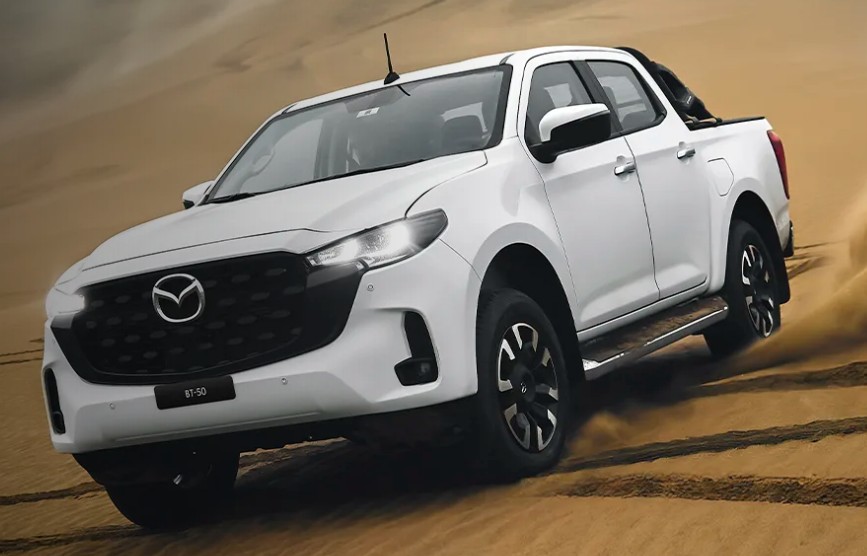
The Mazda BT-50 3.2 diesel fuel consumption figure looks fairly straightforward on a specification sheet. Yet once we add traffic, larger tyres, four-wheel-drive equipment, passengers, tools, hills, headwinds, trailers, and a heavy right foot, that tidy laboratory number can disappear faster than ice on a hot bonnet.
So, how much diesel does the 3.2-litre Mazda BT-50 actually use?
Depending on the model, body style, transmission, drivetrain, load, and driving conditions, official combined figures generally sit around 8.4 to 10.0 litres per 100 kilometres. Some 3.2-litre dual-cab versions were rated near the lower end of that range, while heavier 4x4 cab-chassis configurations could reach approximately 10.0 L/100 km. These figures were measured under controlled testing and are mainly intended to help buyers compare vehicles.
In everyday use, many owners should expect something closer to 9.0–12.0 L/100 km when the vehicle is unloaded. Consumption may rise to 12–16 L/100 km or more when towing, driving off-road, carrying heavy accessories, or spending most of the week in stop-start traffic.
That does not automatically make the BT-50 thirsty. We are talking about a large diesel pickup built to carry, tow, climb, and work—not a lightweight hatchback slipping through the air like a paper plane.
Let us examine what the numbers mean, what affects them, and how we can reduce fuel use without turning every journey into a painfully slow economy experiment.
Content in this publication
- What Is the Official Mazda BT-50 3.2 Fuel Consumption?
- What Fuel Economy Can We Expect in Real Driving?
- Mazda BT-50 3.2 Highway Fuel Consumption
- Mazda BT-50 3.2 City Fuel Consumption
- Manual Versus Automatic Fuel Consumption
- How Much Fuel Does the BT-50 3.2 Use While Towing?
- Fuel-Tank Capacity and Driving Range
- Does the 3.2-Litre Engine Use Too Much Fuel?
- The Biggest Causes of High Fuel Consumption
- How to Measure Fuel Consumption Correctly
- How to Improve Mazda BT-50 3.2 Fuel Economy
- When Is High Fuel Consumption a Warning Sign?
- Is an Economy Tune Worth It?
- Mazda BT-50 3.2 Versus Smaller Diesel Engines
- How Much Does the BT-50 3.2 Cost to Run?
- Is the Mazda BT-50 3.2 Economical Enough?
- Buying a Used BT-50 3.2: Fuel-Economy Checks
- Final Thoughts on Mazda BT-50 3.2 Diesel Consumption
- Frequently Asked Questions
What Is the Official Mazda BT-50 3.2 Fuel Consumption?
There is no single official consumption figure covering every Mazda BT-50 powered by the 3.2-litre five-cylinder diesel engine.
Fuel economy varies according to:
- Model year
- Single, freestyle, or dual-cab body
- Pickup or cab-chassis configuration
- Two-wheel drive or four-wheel drive
- Manual or automatic transmission
- Kerb weight
- Final-drive gearing
- Factory equipment
Published figures for different 3.2-litre versions commonly range from approximately 8.4 L/100 km to 10.0 L/100 km on the combined cycle. A representative 3.2-litre dual-cab specification lists 8.4 L/100 km, while several later Australian-market variants were listed between 8.9 and 10.0 L/100 km.
That range equals roughly:
| Fuel consumption | Kilometres per litre | US mpg | UK mpg |
|---|---|---|---|
| 8.4 L/100 km | 11.9 km/L | 28.0 mpg | 33.6 mpg |
| 9.0 L/100 km | 11.1 km/L | 26.1 mpg | 31.4 mpg |
| 10.0 L/100 km | 10.0 km/L | 23.5 mpg | 28.2 mpg |
| 11.0 L/100 km | 9.1 km/L | 21.4 mpg | 25.7 mpg |
| 12.0 L/100 km | 8.3 km/L | 19.6 mpg | 23.5 mpg |
The official number is useful, but we should treat it as a reference point rather than a promise engraved in steel.
Why Official Figures Differ Between Variants
Picture two BT-50s parked side by side. One is a relatively light 4x2 pickup with road tyres. The other is a 4x4 cab chassis carrying a steel tray, bull bar, winch, canopy, tools, roof rack, and all-terrain tyres.
They may share the same engine, but asking them to consume the same amount of diesel is like expecting two runners to record identical times when one is carrying a camping pack.
Mazda has noted that vehicle weight varies considerably between BT-50 configurations. Although the figures on Mazda’s current informational page cover multiple generations and engines, they illustrate how body style and drivetrain can substantially change kerb weight.
More mass requires more energy to accelerate, climb hills, and maintain speed. Extra aerodynamic drag also matters, especially above 80 km/h.
What Fuel Economy Can We Expect in Real Driving?
A standard, mechanically healthy BT-50 3.2 may return approximately:
- 8.0–9.5 L/100 km: relaxed highway driving
- 9.0–11.0 L/100 km: mixed urban and highway use
- 10.5–13.0 L/100 km: city traffic and short journeys
- 11.0–15.0 L/100 km: moderate towing
- 14.0–20.0 L/100 km: heavy towing, sand, mud, steep tracks, or severe headwinds
These are practical estimates, not guaranteed manufacturer figures. The precise result depends on the vehicle and the conditions.
A standard pickup driven gently on a flat road may edge close to its official rating. A modified touring vehicle pushing into a headwind with a caravan attached will not.
The important question is not whether our dashboard matches a brochure exactly. It is whether the consumption is reasonable for the way the vehicle is configured and used.
A Sensible Real-World Benchmark
For an unmodified automatic 4x4 dual cab, an average near 9.5–11.0 L/100 km is generally believable in mixed driving.
An average around 11.5 or 12.0 L/100 km is not necessarily alarming when the vehicle has:
- Larger all-terrain tyres
- A suspension lift
- A bull bar
- Underbody protection
- A canopy
- A roof rack
- Recovery equipment
- Constant cargo
- Frequent urban use
However, a sudden jump from 10.0 to 14.0 L/100 km without any change in driving conditions deserves investigation.
Mazda BT-50 3.2 Highway Fuel Consumption
The highway is where the 3.2-litre diesel often performs best.
Its generous torque allows the BT-50 to hold speed without frantic downshifts, particularly on open roads. Under favourable conditions, we may see 8.0–9.5 L/100 km at moderate cruising speeds.
That sounds impressive for a vehicle with the shape and aerodynamics of a garden shed, but speed changes the story quickly.
How Cruising Speed Changes Consumption
Aerodynamic drag rises sharply as speed increases. The engine must work much harder to push the pickup through the air at 110 km/h than at 90 km/h.
A BT-50 returning 8.5 L/100 km at 90 km/h might consume noticeably more at 110 km/h, particularly when equipped with:
- A rooftop tent
- An awning
- A roof basket
- Spotlights
- A tall canopy
- Wide tyres
- Raised suspension
We do not have to crawl along the highway to save fuel. Even reducing speed slightly, where safe and legal, can make a visible difference over a long trip.
The Headwind Effect
A strong headwind is an invisible hill.
Suppose we drive at 100 km/h into a 30 km/h headwind. From an aerodynamic perspective, the vehicle is pushing through the air at something closer to 130 km/h. The dashboard average can climb even though our speed and throttle position appear normal.
This is why consumption on an outbound trip can be dramatically different from the return journey.
Mazda BT-50 3.2 City Fuel Consumption
Urban driving is less flattering.
In heavy traffic, the BT-50 repeatedly accelerates more than two tonnes of vehicle, passengers, fuel, and equipment. Braking then throws much of that energy away as heat. The cycle repeats at the next light.
In city use, we may see approximately 10.5–13.0 L/100 km, with higher figures possible during severe congestion.
Why Short Trips Use More Diesel
Short journeys are especially inefficient because:
- The engine may not reach full operating temperature.
- Cold fluids create more mechanical resistance.
- Repeated starts consume additional fuel.
- The battery and electrical systems must recover starting energy.
- Low-speed travel produces little distance for the fuel burned.
- Diesel particulate filter regeneration may be interrupted.
A five-kilometre trip to the shops can produce a terrible dashboard figure even when nothing is wrong.
If most journeys are short, comparing our economy with an owner who travels 80 kilometres on open roads every day is not particularly useful. We are playing different games on different fields.
Manual Versus Automatic Fuel Consumption
On paper, a manual transmission may appear slightly more economical in certain variants. In practice, the difference is often smaller than expected.
A skilled manual driver can:
- Select higher gears early
- Avoid unnecessary revs
- Anticipate hills
- Use engine torque efficiently
But a driver who holds each gear too long or accelerates aggressively may consume more than a smooth automatic.
The six-speed automatic can also deliver reasonable economy by keeping the engine within its useful torque range. Its result depends heavily on speed, load, gear selection, and converter lock-up.
Should We Use Sports or Manual Mode?
Manual selection can help on hills and while towing.
Instead of allowing the transmission to hunt repeatedly between gears, we can select a suitable ratio and maintain steady engine speed. This may improve control and reduce heat, though it will not magically halve fuel consumption.
The goal is not to force the highest possible gear. Labouring the engine at very low rpm under heavy load can be counterproductive.
How Much Fuel Does the BT-50 3.2 Use While Towing?
Towing is where optimistic fuel calculations go to die.
A trailer adds weight, rolling resistance, and aerodynamic drag. A tall caravan behaves like a parachute tied to the rear bumper. Even when it is not exceptionally heavy, its large frontal area can punish fuel economy.
Depending on the load and conditions, towing consumption may land anywhere from 11 to 20 L/100 km.
Light Trailer Consumption
With a small box trailer or lightweight camper, we might see:
- 10.5–12.5 L/100 km on relatively flat roads
- 12.0–14.0 L/100 km in hills or traffic
The difference from unloaded driving may remain manageable if the trailer is low and aerodynamic.
Caravan Fuel Consumption
A large caravan commonly pushes consumption toward:
- 13.0–16.0 L/100 km in moderate conditions
- 16.0–20.0 L/100 km in strong winds, mountains, or fast highway driving
Weight is only part of the problem. A tall, square caravan may use more fuel than a heavier but lower and more streamlined trailer.
How to Estimate Towing Range
Use this simple calculation:
Usable fuel divided by consumption × 100 = estimated range
For example, with 75 litres of usable diesel and consumption of 15 L/100 km:
75 ÷ 15 × 100 = 500 kilometres
That is a theoretical figure. We should leave a safety margin rather than planning to arrive at the fuel station on fumes.
Remote travel, detours, wind, and closed stations can quickly turn an optimistic calculation into an unpleasant roadside adventure.
Fuel-Tank Capacity and Driving Range
Many second-generation BT-50 3.2 variants use an 80-litre fuel tank, although specifications should always be checked for the exact model and market. Published data for the 3.2 generation commonly list capacity at about 80 litres.
With an 80-litre tank, theoretical range looks like this:
| Average consumption | Theoretical range |
| 8.5 L/100 km | 941 km |
| 9.0 L/100 km | 889 km |
| 10.0 L/100 km | 800 km |
| 11.0 L/100 km | 727 km |
| 12.0 L/100 km | 667 km |
| 15.0 L/100 km | 533 km |
| 18.0 L/100 km | 444 km |
We should not regularly use every litre in the tank. Fuel gauges are not precision laboratory instruments, and driving a diesel vehicle completely dry can create additional complications.
A practical touring range may therefore be 10–15% lower than the mathematical result.
Does the 3.2-Litre Engine Use Too Much Fuel?
Compared with a small SUV, yes. Compared with other large five-cylinder diesel pickups designed for towing and payload duties, its consumption is understandable.
The 3.2-litre engine trades some fuel efficiency for:
- Strong low-speed torque
- Relaxed highway performance
- Load-carrying ability
- Confident towing
- Fewer downshifts on hills
- A durable work-oriented character
Fuel economy is only one part of the ownership equation.
A smaller engine may use less fuel when lightly loaded but work harder while towing. The larger engine may consume more around town yet feel calmer and more capable under load.
The best choice depends on what we actually ask the vehicle to do.
The Biggest Causes of High Fuel Consumption
Fuel economy rarely changes for no reason. Sometimes the cause is obvious. Other times, several small issues pile together like stones in a backpack.
1. Aggressive Acceleration
The turbocharged diesel produces satisfying torque, making it tempting to surge away from every traffic light.
But every hard launch asks the engine to inject more fuel. Smooth acceleration usually delivers better economy without making the vehicle dangerously slow.
Research using vehicle data has repeatedly found a meaningful relationship between driving style and fuel consumption.
2. Larger and Heavier Tyres
Oversized tyres affect fuel consumption in several ways:
- Greater rolling resistance
- More rotating mass
- Altered effective gearing
- Increased aerodynamic drag
- Possible speedometer and odometer errors
The final point matters. If larger tyres cause the odometer to under-record distance, calculated consumption may look worse than it truly is.
After changing tyre size, we should verify the odometer against GPS distance before drawing conclusions.
3. Low Tyre Pressure
Underinflated tyres flex more as they roll, wasting energy as heat.
We should use the recommended pressure for the actual load and tyre type, not blindly copy a figure from another owner. Too much pressure can reduce grip and ride comfort, while too little increases heat, wear, and resistance.
Check pressures when the tyres are cold.
4. Suspension Lifts
A lift exposes more of the underbody to airflow and may increase frontal area. By itself, a modest lift might not destroy economy, but combined with large tyres, roof accessories, and extra weight, the effect becomes more noticeable.
One modification whispers. Five modifications form a choir.
5. Roof Racks and Rooftop Tents
Anything mounted above the roof disturbs airflow.
An empty roof basket can still create drag. A rooftop tent adds both weight and a bulky obstacle in the fastest-moving air around the vehicle.
Removing unused roof equipment may be one of the simplest ways to improve highway economy.
6. Constant Heavy Loads
Many work vehicles carry hundreds of kilograms every day, even when the equipment is not needed.
Extra weight has the greatest effect during:
- Acceleration
- Stop-start driving
- Hill climbing
- Soft-surface driving
It has a smaller effect during steady cruising on flat roads, though it still increases rolling resistance.
7. Four-Wheel-Drive Use
Part-time four-wheel drive should generally be reserved for appropriate loose or slippery surfaces.
Using 4H or 4L increases driveline resistance and is unsuitable on high-grip sealed roads unless the manufacturer specifically permits it. Always follow the instructions for the exact vehicle.
8. Stop-Start Traffic
No pickup is at its best while crawling through congestion.
The engine keeps running while the vehicle covers little ground. Air conditioning, lights, cooling fans, and other systems continue consuming energy.
9. Diesel Particulate Filter Regeneration
Some 3.2-litre BT-50 models use emissions systems that periodically raise exhaust temperature to burn accumulated soot.
During an active regeneration, we may notice:
- Higher instantaneous fuel use
- A changed exhaust smell
- Increased idle speed
- Cooling fans operating
- A slightly different engine note
Repeatedly interrupted regeneration cycles may contribute to operational problems. Drivers who mainly complete short journeys should consult the owner’s manual and seek professional advice if warning lights appear.
10. Mechanical or Sensor Problems
High consumption can also result from:
- A clogged air filter
- A dirty mass-airflow sensor
- Injector problems
- Boost leaks
- A sticking exhaust gas recirculation valve
- A faulty thermostat
- Brake drag
- Wheel-alignment problems
- Incorrect engine oil
- Transmission faults
- A failing sensor
- Poor-quality fuel
Replacing parts at random is expensive. Proper diagnosis should begin with fault-code scanning, live data, visual inspection, maintenance history, and an accurate fuel log.
How to Measure Fuel Consumption Correctly
The dashboard display is convenient, but it may not be perfectly accurate.
The most reliable everyday approach is the full-tank method.
Full-Tank Calculation
- Fill the tank completely.
- Reset the trip meter.
- Drive normally.
- Refill at the same station if possible.
- Use the same pump and filling technique.
- Record litres added.
- Record kilometres travelled.
- Calculate:
Litres added ÷ kilometres travelled × 100
For example:
- Diesel added: 61 litres
- Distance travelled: 590 kilometres
61 ÷ 590 × 100 = 10.34 L/100 km
Do this across at least three tanks. One tank can be distorted by pump shutoff, parking angle, towing, wind, traffic, or incomplete filling.
Why the Dashboard May Be Wrong
The trip computer estimates fuel use using sensor and injector data. It does not physically measure every drop leaving the tank.
Tyre-size changes, software calibration, driving conditions, and normal estimation error may create a gap between the display and the pump calculation.
We should track both, but trust a consistent multi-tank fuel log when evaluating long-term economy.
How to Improve Mazda BT-50 3.2 Fuel Economy
We do not need to drive like there is an egg under the accelerator. A few sensible habits can lower consumption without draining every ounce of enjoyment from the journey.
Accelerate Smoothly
Use the engine’s torque rather than chasing high rpm.
Build speed progressively and allow the automatic transmission to shift without constant throttle changes.
Look Far Ahead
Anticipation is free fuel economy.
If a traffic light is red, lift early instead of accelerating toward it and braking hard. Maintaining momentum uses less energy than repeatedly rebuilding it.
Keep Speed Steady
Cruise control can help on flat highways, but it may apply too much throttle on steep rolling terrain.
In some conditions, allowing a small drop in speed on climbs and regaining it gently downhill can use less fuel.
Safety and traffic flow come first.
Reduce Unnecessary Weight
Remove equipment that is no longer required:
- Tools from completed jobs
- Empty storage boxes
- Recovery gear for ordinary city use
- Unused tow equipment
- Seasonal camping accessories
Do not remove essential safety equipment merely to chase a tiny improvement.
Control Aerodynamic Drag
Consider removing:
- Unused roof bars
- Empty roof baskets
- Temporary awnings
- Rooftop tents between trips
At highway speed, improving airflow can matter more than removing a few kilograms from the tray.
Maintain the Vehicle Properly
Follow the service schedule and use fluids that meet the correct specifications.
Pay particular attention to:
- Air-filter condition
- Engine oil grade
- Fuel-filter replacement
- Tyre pressure
- Wheel alignment
- Brake condition
- Cooling-system operation
- Intake and boost hoses
A well-maintained engine cannot defeat physics, but it can avoid wasting fuel through preventable faults.
When Is High Fuel Consumption a Warning Sign?
A single poor tank is rarely enough to prove a problem.
Wind, traffic, idling, towing, or a partially filled previous tank can distort the result. We should become concerned when the increase is:
- Sudden
- Persistent over several tanks
- Greater than roughly 15–20%
- Accompanied by smoke
- Accompanied by poor performance
- Linked to rough running
- Combined with warning lights
- Associated with difficult starting
- Paired with unusual transmission behaviour
Black Smoke and Poor Economy
Visible black smoke under normal acceleration may indicate excessive fuel, insufficient air, a boost leak, injector trouble, or another combustion-related issue.
A brief puff under a heavy load may not tell the entire story, but persistent smoke should not be ignored.
Slow Warm-Up
A thermostat stuck open can prevent the engine from reaching its intended operating temperature.
The engine-management system may then behave as though the vehicle is still warming up, potentially increasing consumption. A temperature gauge that remains unusually low deserves attention.
Brake Drag
A sticking brake caliper can silently turn diesel into heat.
After driving, one wheel may feel significantly hotter than the others. Do not touch brake components directly, as they can cause severe burns. A qualified technician should inspect suspected brake drag.
Is an Economy Tune Worth It?
Some owners consider ECU tuning to reduce fuel consumption.
A careful calibration may improve torque delivery and drivability, but savings are never guaranteed. Additional torque often encourages harder acceleration, wiping out any theoretical gain.
Poorly developed tuning may also increase:
- Exhaust temperature
- Smoke
- Driveline stress
- Emissions-system problems
- Warranty complications
- Legal or insurance concerns
We should judge a tune by more than a claimed percentage on an advertisement. Reputable providers should explain testing methods, emissions implications, safeguards, and suitability for the vehicle’s use.
For many owners, restoring correct maintenance, tyre pressures, alignment, and driving habits is the safer first step.
Mazda BT-50 3.2 Versus Smaller Diesel Engines
The five-cylinder 3.2 is not the most economical engine ever fitted to a pickup, but that was never its only purpose.
Compared with a smaller diesel, it generally offers:
- Stronger low-rpm response
- Less strain under heavy load
- More relaxed towing
- Better reserve power on hills
- A distinctive five-cylinder character
The trade-off is increased fuel use, particularly around town.
A driver who rarely carries cargo may prefer the economy of a smaller engine. A driver towing regularly may accept an extra litre or two per 100 kilometres in exchange for more effortless performance.
There is no universal winner. The right engine is the one aligned with the job.
How Much Does the BT-50 3.2 Cost to Run?
We can estimate fuel cost with this formula:
Annual kilometres ÷ 100 × L/100 km × diesel price
Imagine we drive 20,000 km per year at 10.5 L/100 km:
- 20,000 ÷ 100 = 200
- 200 × 10.5 = 2,100 litres annually
Multiply 2,100 by the local price per litre.
If diesel costs 2.00 in the relevant currency unit, annual fuel cost equals 4,200.
Now suppose we reduce consumption to 9.8 L/100 km:
- 20,000 ÷ 100 × 9.8 = 1,960 litres
- Annual saving: 140 litres
Small improvements matter when repeated over thousands of kilometres.
Is the Mazda BT-50 3.2 Economical Enough?
For its size, age, power, and capability, the 3.2-litre BT-50 can deliver respectable fuel economy.
A standard vehicle driven thoughtfully may stay below 10 L/100 km on long highway journeys. Mixed use often pushes it into the 9–12 L/100 km range, while city work, modifications, and towing lift the figure further.
The vehicle becomes “uneconomical” when its consumption no longer matches its configuration or workload.
A touring build returning 12.5 L/100 km may be performing normally. A standard unloaded truck suddenly rising from 9.5 to 13.5 L/100 km may not be.
Context is everything.
Buying a Used BT-50 3.2: Fuel-Economy Checks
When inspecting a used example, do not rely solely on the average displayed on the dashboard. It may have been recently reset.
Ask the seller:
- What economy does it achieve over a full tank?
- Is that figure calculated manually?
- Does it tow regularly?
- Have the tyres been upsized?
- Has the ECU been tuned?
- Has emissions equipment been modified?
- Does it complete mostly short trips?
- When were the fuel and air filters replaced?
- Are there service records?
- Has consumption recently changed?
During the test drive, watch for:
- Excessive smoke
- Weak acceleration
- Hesitation
- Turbo or intake noises
- Transmission flare
- Engine warning lights
- Low operating temperature
- Pulling or dragging brakes
A pre-purchase inspection can reveal far more than a polished body and a convincing sales story.
Final Thoughts on Mazda BT-50 3.2 Diesel Consumption
The Mazda BT-50 3.2 diesel fuel consumption typically begins around the high-eight to 10.0 L/100 km region in official combined testing, depending on the exact variant. Real-world drivers are more likely to see approximately 9–12 L/100 km during ordinary unloaded use, with towing and demanding conditions pushing consumption much higher.
Rather than obsessing over one perfect number, we should monitor trends.
Measure consumption accurately. Consider modifications, terrain, load, weather, speed, traffic, and journey length. If the figure increases suddenly and remains high, inspect the vehicle instead of assuming that every 3.2-litre BT-50 is naturally thirsty.
This engine is a workhorse. Feed it heavy trailers, roof equipment, mud, oversized tyres, and fast highway speeds, and it will drink accordingly. Keep it maintained, drive smoothly, and remove unnecessary drag, and it can travel with surprising restraint for such a substantial pickup.
Frequently Asked Questions
1. What is normal fuel consumption for a Mazda BT-50 3.2?
Approximately 9–12 L/100 km is a reasonable real-world range for many unladen vehicles in mixed driving. Highway use may fall below 9.5 L/100 km, while city use, accessories, and heavy loads may push consumption above 12 L/100 km.
2. Why is my BT-50 using 14 litres per 100 km?
A figure of 14 L/100 km may be normal while towing, driving in heavy traffic, completing short journeys, or running large tyres and heavy accessories. If the vehicle is standard and unloaded, check tyre pressure, brakes, filters, intake hoses, operating temperature, fault codes, and fuel-system performance.
3. How far can a Mazda BT-50 3.2 travel on one tank?
With an 80-litre tank and consumption of 10 L/100 km, the mathematical range is about 800 km. Practical range should be lower because we need a reserve and because road conditions can change.
4. Does towing dramatically increase BT-50 fuel use?
Yes. Towing may raise consumption to roughly 11–20 L/100 km, depending on trailer weight, frontal area, speed, terrain, wind, and driving technique. Large caravans usually have a greater effect than low-profile trailers.
5. Is the manual BT-50 3.2 more economical than the automatic?
Some manual versions carry slightly lower official figures, but real-world results depend heavily on the driver and operating conditions. A smooth automatic driver may outperform an aggressive manual driver, so transmission type alone does not determine economy.
If you want to know other articles similar to Mazda BT-50 3.2 Diesel Fuel Consumption: Real-World Guide you can visit the category Driving.
BYD Shark 6 Long Range Fuel Tank: Is the 120L Upgrade Worth It?
BYD Shark 6 Average Per Litre: How Far Does It Really Go on One Litre?

Mitsubishi Pajero Sport Fuel Consumption: What Should We Really Expect?
Peugeot RCZ MPG: Real-World Fuel Economy and Running Costs Explained
BMW i7 Range Miles: How Far Can This Luxury EV Really Go?

Infiniti QX60 Fuel Economy: MPG, Range and Real-World Guide
Leave a Reply
More content of your interest