

Is Toyota Estima the Same as Tarago? Complete Comparison

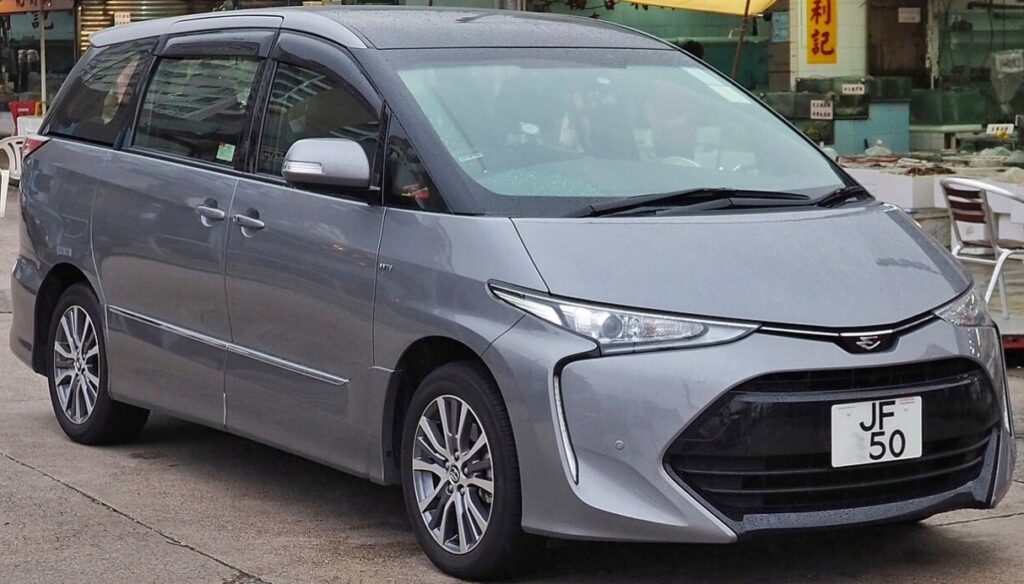
If you have spent any time browsing used Toyota people movers, you may have noticed something strange. One listing says Toyota Estima, another says Toyota Tarago, yet the vehicles can look almost identical.
So, is Toyota Estima the same as Tarago?
The short answer is mostly yes—but not completely.
The Toyota Estima and Toyota Tarago belong to the same underlying family of Toyota MPVs, with the Estima primarily associated with the Japanese domestic market and the Tarago name used in Australia. Toyota also sold closely related versions internationally under the Previa name. Toyota itself described the overseas Previa as being known in Japan as the Estima.
However, calling an Estima and Tarago completely interchangeable misses an important point. Market specifications, engines, drivetrains, trim levels, electronics, safety equipment, seating configurations, and hybrid availability can differ substantially.
Think of them as siblings rather than identical twins.
Let's untangle the names and see exactly where the Estima and Tarago match—and where they go their separate ways.
Content in this publication
- Toyota Estima vs Tarago: The Simple Explanation
- Why Does Toyota Use Different Names?
- Is a Toyota Estima Just a Japanese Tarago?
- Toyota Estima History
- Second-Generation Estima and Tarago
- Third-Generation Toyota Estima vs Tarago
- Is the Toyota Estima Hybrid the Same as a Tarago?
- Are Estima and Tarago Engines the Same?
- Do the Estima and Tarago Have the Same Interior?
- Is the Toyota Estima Bigger Than the Tarago?
- Is Toyota Estima the Same as Toyota Previa?
- Why Are There Toyota Estimas in Australia?
- Toyota Estima vs Tarago Parts Availability
- Can Toyota Service an Imported Estima?
- Toyota Estima vs Tarago Reliability
- Which Is Better: Toyota Estima or Tarago?
- Is an Estima Cheaper Than a Tarago?
- Should You Buy an Estima Instead of a Tarago?
- How to Tell a Toyota Estima From a Tarago
- What Replaced the Toyota Tarago?
- Does the Name Matter When Buying One?
- Common Misconceptions About Estima and Tarago
- Estima vs Tarago: Quick Comparison
- What Is the Biggest Difference Between Estima and Tarago?
- Is Toyota Estima the Same as Tarago? Final Verdict
- FAQs About Toyota Estima and Tarago
Toyota Estima vs Tarago: The Simple Explanation
At their core, the Toyota Estima and Toyota Tarago are regional versions of the same general Toyota people-mover platform during much of their history.
The naming primarily depended on where Toyota sold the vehicle.
In simplified terms:
- Estima: mainly the Japanese domestic-market name.
- Tarago: Australian-market name.
- Previa: name used in various other international markets.
Toyota launched the original Estima in Japan in May 1990, describing it as a new-concept vehicle combining sedan-like driving characteristics with unusually efficient interior packaging.
That common ancestry is why an Estima parked beside a comparable Tarago can resemble its reflection in a mirror.
Yet the badge isn't the only difference.
Why Does Toyota Use Different Names?
Toyota has a long history of giving closely related vehicles different names in different countries.
The practice isn't unusual in the automotive world. Marketing departments consider pronunciation, existing model recognition, dealer strategy, consumer expectations, and local brand positioning.
In Japan, Estima became the familiar name.
Australia developed a strong association with the Tarago badge.
Elsewhere, buyers encountered the Previa.
Toyota directly connected these identities in its international material. For example, when discussing the Previa at Auto Guangzhou in 2006, Toyota stated that the vehicle was known in Japan as the Estima.
So if someone tells us that an Estima, Previa, and Tarago are completely unrelated cars, that isn't an accurate way to describe their relationship.
But saying they're universally identical isn't quite right either.
Is a Toyota Estima Just a Japanese Tarago?
For many vehicles that Australians encounter on the used-import market, calling an Estima a Japanese-market relative of the Tarago is a useful shorthand.
It helps explain why they share so much.
You may see similar:
- Body shapes
- Sliding doors
- Interior layouts
- Suspension architecture
- Engines
- Transmissions
- Chassis families
- Exterior dimensions
- Mechanical components
However, Japanese-market Toyota models often received equipment combinations that Toyota Australia didn't necessarily offer.
That difference becomes particularly noticeable with the Estima Hybrid.
The Badge Doesn't Tell the Whole Story
Imagine two laptops built around the same basic chassis.
One receives the standard processor and memory configuration for Australia. The other is sold in Japan with extra technology, a different operating configuration, and options never officially offered in Australia.
Technically they're members of the same product family.
Practically, ownership can be quite different.
The Estima and Tarago relationship works in much the same way.
Toyota Estima History
Understanding the history makes the naming puzzle much easier.
Toyota officially launched the Estima in Japan on May 30, 1990. The original model was unusual for its era because Toyota positioned its 2.4-liter four-cylinder engine beneath the floor behind the front axle, inclined sharply on its side.
This clever layout helped create the Estima's distinctive rounded profile and spacious cabin.
It looked futuristic then, and frankly, it still has character today.
First-Generation Estima
The original Estima established the formula.
Rather than resembling a traditional commercial van with windows and extra seats added almost as an afterthought, it was designed around passenger comfort.
Toyota emphasized:
- Spacious cabin packaging
- Low floor
- Easy movement through the interior
- Independent suspension
- Optional four-wheel drive
- Sedan-like driving characteristics
Toyota's original documentation even highlighted its aerodynamic body and unusual drivetrain layout.
Estima Lucida and Estima Emina
Toyota expanded the Japanese lineup further in January 1992 with the Estima Lucida and Estima Emina, two smaller derivatives of the concept.
This is already one reason why the statement "every Estima is exactly a Tarago" becomes troublesome.
The Estima name existed within a broader Japanese-market ecosystem containing variations that don't map neatly onto every Australian Tarago.
Second-Generation Estima and Tarago
As Toyota moved into the next generation, the people mover became more conventional mechanically.
The dramatic underfloor-engine arrangement of the original vehicle disappeared, while front-wheel-drive-based layouts became central to the formula.
For owners, this generation matters because it marked a major evolution in comfort, practicality, and drivetrain design.
The vehicle increasingly behaved like an oversized passenger car rather than an unconventional van.
The Estima Hybrid Changes the Equation
Here's where the Japanese Estima becomes especially interesting.
Toyota introduced the Estima Hybrid in 2001, describing it as the world's first hybrid minivan. The company paired hybrid propulsion with its E-Four electric four-wheel-drive system.
That matters enormously when comparing used Estimas and Taragos.
Australia did not simply receive every Japanese Estima configuration under a Tarago badge.
So while two petrol versions may be mechanically close cousins, a Japanese Estima Hybrid is clearly more than an Australian Tarago wearing different badges.
Third-Generation Toyota Estima vs Tarago
For many modern used-car buyers, the third generation is where the question "is Toyota Estima the same as Tarago?" becomes most relevant.
Toyota launched a fully redesigned Estima in Japan in January 2006, initially offering petrol configurations including 2.4-liter and 3.5-liter versions.
A completely redesigned Estima Hybrid followed in June 2006.
The Australian Tarago of this era shared the recognizable architecture and appearance, which explains why imported Estimas can look remarkably familiar to Australian buyers.
Same Family, Different Specifications
Put the two side by side and you may struggle to identify which one you're looking at until you inspect the badges, interior equipment, chassis information, or drivetrain.
Yet specification differences can include:
- Engine choices
- Hybrid availability
- Front- or all-wheel drive
- Interior electronics
- Factory navigation
- Seating arrangements
- Trim packages
- Driver-assistance systems
- Lighting technology
- Climate controls
- Power-operated equipment
The result?
A Tarago buyer moving into an Estima will probably feel at home immediately, but shouldn't assume every switch, sensor, replacement component, or service procedure is identical.
Is the Toyota Estima Hybrid the Same as a Tarago?
This deserves its own answer.
No—not in the practical Australian-market sense.
Toyota produced dedicated Estima Hybrid models for Japan. Toyota's own historical hybrid-sales material identifies the Estima Hybrid as a Japan-focused model, and the manufacturer launched the redesigned hybrid in Japan in June 2006.
These vehicles combine petrol and electric propulsion rather than simply using the conventional petrol drivetrain most people associate with an Australian-delivered Tarago.
What Makes the Estima Hybrid Different?
Depending on generation and specification, the Estima Hybrid may incorporate:
- Petrol-electric hybrid propulsion
- High-voltage traction battery
- Electric motors
- Regenerative braking
- Electrically controlled drivetrain components
- E-Four all-wheel-drive technology
- Hybrid-specific electronic systems
Toyota noted that the original Estima Hybrid introduced E-Four electric four-wheel drive to a mass-production vehicle.
Those aren't cosmetic differences.
They're fundamental mechanical differences.
Should That Worry Used Buyers?
Not necessarily.
Toyota has extensive experience with hybrid engineering, and the existence of extra hardware doesn't automatically make an Estima Hybrid a bad purchase.
What it does mean is that we should buy one as an Estima Hybrid, not treat it as though it's simply another petrol Tarago.
Before purchase, we'd want to assess the actual vehicle's:
- Hybrid battery condition
- Diagnostic fault history
- Cooling systems
- Service records
- Electrical operation
- Import documentation
- Parts availability
Age and condition matter more than the badge alone.
You may be interested in reading BMW iX2 vs iX1: Which Electric BMW SUV Is Better?
Are Estima and Tarago Engines the Same?
Sometimes yes, sometimes not.
This is exactly why checking the year, engine code, drivetrain, and chassis code is more useful than relying on the model name.
Equivalent petrol Estima and Tarago variants can share important mechanical architecture.
But Japanese buyers had access to configurations that didn't necessarily mirror Australia's lineup.
Never Buy Parts Based Only on "Estima = Tarago"
Suppose an online forum tells us:
"Just order the Tarago part. It's the same car."
Maybe.
But "maybe" isn't particularly reassuring when the part costs hundreds of dollars and the vehicle is sitting half-disassembled in a workshop.
Instead, identify the exact:
- Model year
- Chassis code
- Engine code
- Transmission
- Drivetrain
- Production date
Then cross-reference the part number.
This tiny bit of homework can save a surprisingly large headache.
Do the Estima and Tarago Have the Same Interior?
The basic cabin architecture can be remarkably similar between equivalent versions, but interior specifications may vary considerably.
Japanese domestic-market cars are often configured around Japanese customer preferences and available option packages.
We may therefore encounter an imported Estima with equipment not fitted to the corresponding Australian Tarago.
Estima Features Can Be Different
Depending on model and year, an Estima may have equipment such as:
- Powered sliding doors
- Different seat arrangements
- Power-adjustable seating
- Japanese navigation hardware
- Premium upholstery
- Multiple cameras
- Extra parking assistance
- Japanese-language electronics
- Additional convenience equipment
Toyota's 2006 Estima launch emphasized a substantial technology package, including advanced comfort, parking, safety, and convenience equipment depending on specification.
That's one reason imported Estimas can feel surprisingly luxurious for their age.
Japanese Electronics Can Be the Catch
The shiny technology can also create one of the biggest ownership inconveniences.
A Japanese-market infotainment unit wasn't necessarily designed with Australian users in mind.
Depending on the particular vehicle, owners may encounter:
- Japanese menus
- Japanese map data
- Different radio-frequency compatibility
- Difficult-to-update navigation
- Imported aftermarket replacements
- Cameras integrated into factory electronics
This doesn't automatically make the car troublesome.
We simply shouldn't assume Australian Tarago instructions will solve every Estima-specific electronic issue.
Is the Toyota Estima Bigger Than the Tarago?
Equivalent Estima and Tarago models from the same underlying generation are generally closely related in body dimensions.
Still, we need to compare exact model codes rather than treating every vehicle carrying either badge as physically identical.
Remember the history we discussed earlier?
Toyota also produced Estima derivatives such as the Lucida and Emina in Japan.
That means broad statements like "all Estimas are the same size as all Taragos" can easily become misleading.
Compare Generation Against Generation
The useful comparison is not:
Estima vs Tarago
It is:
specific Estima generation and chassis vs specific Tarago generation and chassis.
That's the approach a serious buyer should take.
Is Toyota Estima the Same as Toyota Previa?
The same naming logic applies here.
In many international markets, Toyota used the Previa name for the vehicle family associated with the Estima.
Toyota explicitly referred to the Previa as being "known in Japan as the Estima" in its own international material.
So broadly:
Estima = Japanese-market identity
Previa = international identity in several markets
Tarago = Australian identity
But again, specification differences remain.
The names tell us where the family relationship starts—not exactly what equipment lies underneath.
Why Are There Toyota Estimas in Australia?
Because used Japanese vehicles can be imported into Australia through the country's vehicle-import system, Estimas have developed their own following alongside locally delivered Taragos.
For some shoppers, that creates an intriguing choice.
Do we buy the familiar Australian-delivered Tarago?
Or do we buy an imported Estima offering a potentially different specification?
Neither choice automatically wins.
Why Buyers Like Imported Estimas
An Estima can appeal because of its combination of:
- Flexible passenger space
- Toyota engineering
- Comfortable road manners
- Sliding-door practicality
- Interesting Japanese-market options
- Hybrid availability on certain versions
- Distinctive styling
- Potentially generous equipment
It's easy to understand the attraction.
An Estima can feel like somebody discovered a hidden menu at Toyota and ordered the version Australians weren't originally offered.
Toyota Estima vs Tarago Parts Availability
Here's where the Tarago can hold a practical advantage in Australia.
A locally delivered vehicle is generally easier for local dealerships, independent workshops, parts catalogues, insurers, and dismantlers to identify correctly.
With an imported Estima, things can require more research.
That doesn't mean parts are impossible to find.
Far from it.
Shared architecture may make many mechanical components relatively straightforward to source.
The trouble tends to appear with Estima-specific components.
Parts That May Require Extra Care
These may include:
- Hybrid components
- Electronic control modules
- Interior switches
- Japanese-market infotainment pieces
- Certain headlights
- Cameras
- Body trim
- Unique sensors
- AWD-related hardware
- Specific wiring harnesses
Before buying an imported Estima, we'd ask a local mechanic whether they're comfortable working on the particular chassis.
That's worth more than a hundred forum comments saying, "They're basically the same."
Can Toyota Service an Imported Estima?
Toyota dealerships and independent workshops may be able to perform many ordinary maintenance jobs, particularly when components overlap with locally sold Toyota models.
However, an imported Japanese-market vehicle can present additional complications involving parts catalogues, diagnostic information, software, and market-specific systems.
Toyota Australia's current ownership resources are naturally structured around vehicles supported within its Australian systems. For recalls, for example, Toyota Australia directs owners to identify vehicles using their VIN.
For an imported Estima, we'd verify support directly rather than assuming.
Independent Toyota Specialists Can Be Valuable
A workshop familiar with Japanese imports can make Estima ownership much easier.
An experienced technician may already know:
- Common chassis codes
- Compatible Australian parts
- Import-specific electronics
- Hybrid diagnostic procedures
- Common aging issues
- Reliable overseas suppliers
That knowledge can turn a seemingly obscure import into a relatively straightforward family car.
Toyota Estima vs Tarago Reliability
Because they share Toyota ancestry and considerable engineering overlap, the reliability conversation is less about which badge is "better" and more about which individual vehicle has been maintained better.
Used MPVs often live hard lives.
They carry children, luggage, airport passengers, shopping, sports equipment, pets, and enough forgotten snacks to support a small civilization.
Mileage alone doesn't tell the whole story.
What Should We Check Before Buying?
For either an Estima or Tarago, we'd inspect:
- Complete service history
- Engine operation from cold
- Transmission behavior
- Cooling system condition
- Oil leaks
- Suspension noises
- Steering condition
- Sliding-door operation
- Air-conditioning performance
- Electrical accessories
- Accident repairs
- Tire wear
- Underbody corrosion
- Warning lights
For an Estima Hybrid, we'd add a proper hybrid-system diagnostic inspection.
You may be interested in readingBMW iX2 vs iX1: Which Electric BMW SUV Is Better?You may be interested in reading
BMW iX2 vs iX: Which Electric BMW SUV Makes More Sense?A beautifully equipped vehicle with questionable history can become much more expensive than a simpler example that has been maintained carefully.
Which Is Better: Toyota Estima or Tarago?
There's no universal winner.
It depends on what we value.
Choose a Tarago If You Want Simplicity
An Australian-delivered Tarago may make more sense if our priorities are:
- Easier local identification
- Familiar Australian specifications
- Straightforward parts searches
- Simpler workshop communication
- Conventional ownership experience
- Documented local history
It's the comfortable, predictable choice.
Choose an Estima If You Want More Variety
An Estima becomes tempting if we're looking for:
- Japanese-market specifications
- Hybrid technology
- Different equipment combinations
- Additional luxury features
- AWD on certain configurations
- Something less common
It's the more adventurous option.
Neither philosophy is wrong.
Is an Estima Cheaper Than a Tarago?
Used pricing changes constantly, so sticker prices alone won't tell us which represents better value.
Imported vehicles can sometimes offer impressive equipment for the money, but the purchase price is only the opening chapter.
We should also consider:
- Insurance
- Parts availability
- Servicing
- Import-specific repairs
- Hybrid battery condition
- Resale market
- Vehicle history
- Registration requirements
A $2,000 saving disappears remarkably quickly if the car immediately needs $3,000 worth of neglected maintenance.
Price matters.
Condition matters more.
Should You Buy an Estima Instead of a Tarago?
For the right buyer, absolutely.
An Estima can be an excellent alternative to a Tarago if we understand what we're purchasing.
The mistake is assuming that because the vehicles look alike, every ownership detail must also be identical.
Questions to Ask Before Buying an Estima
Before handing over any money, ask:
- Is this vehicle a Japanese import?
- What is its exact chassis code?
- Which engine does it use?
- Is it front-wheel drive or AWD?
- Is it hybrid?
- Is complete service documentation available?
- Has the odometer history been verified?
- Does every electrical feature work?
- Can my preferred mechanic service it?
- Can key model-specific parts be sourced?
These questions tell us far more than simply asking whether an Estima is "the same as a Tarago."
How to Tell a Toyota Estima From a Tarago
The easiest clue is obviously the badging.
But badges can be changed.
For certainty, inspect the manufacturer's identification information and chassis code.
An imported Estima may also reveal its origins through Japanese labels, original infotainment equipment, unique trim, or specification combinations that weren't normally associated with Australian-delivered Taragos.
Check the Chassis, Not Just the Tailgate
This is probably the most useful rule in the entire article.
When dealing with Japanese imports, model codes speak louder than badges.
If you're ordering a water pump, transmission component, wheel bearing, sensor, or hybrid part, "2008 Estima" may not provide enough information.
The chassis and engine codes dramatically narrow the possibilities.
What Replaced the Toyota Tarago?
The Tarago eventually disappeared from Toyota's Australian new-car lineup.
That doesn't mean the basic people-mover concept disappeared from Toyota altogether. It simply meant Toyota's Australian strategy moved toward newer products and different vehicle architectures.
The important point for used buyers is that the Tarago name now belongs primarily to the used-vehicle market.
Likewise, Estima production has ended, making Japanese imports part of an aging fleet rather than a source of new Estimas.
That changes how we should shop.
The newest badge isn't the goal.
The healthiest vehicle is.
Does the Name Matter When Buying One?
Yes—but less than many buyers think.
We wouldn't choose one solely because it says Estima or Tarago on the tailgate.
Instead, we'd prioritize:
Condition > service history > specification > parts support > badge
A well-maintained Estima with strong documentation can be preferable to a neglected Tarago.
Likewise, a clean Australian-delivered Tarago can be a safer purchase than an Estima whose import history is foggy.
The emblem is the introduction.
The mechanical condition is the actual story.
Common Misconceptions About Estima and Tarago
Several myths make this comparison more confusing than necessary.
"Every Estima Is Exactly the Same as a Tarago"
No.
They're closely related, but Japanese-market specifications and Australian-market specifications can differ.
"No Estima Parts Fit a Tarago"
Also no.
There can be significant mechanical overlap between comparable vehicles.
"All Estimas Are Hybrids"
Definitely not.
Toyota sold conventional petrol Estimas as well as dedicated Estima Hybrid models. Toyota's 2006 launch material, for example, documented conventional 2.4-liter and 3.5-liter Estima configurations separately from the redesigned Estima Hybrid introduced later that year.
"An Estima Is a Fake Tarago"
No.
The Estima is an official Toyota model with its own long Japanese-market history. In fact, Toyota launched the Estima name in Japan back in 1990.
Calling it a fake Tarago would be like calling the original book a fake translation.
Estima vs Tarago: Quick Comparison
| Category | Toyota Estima | Toyota Tarago |
|---|---|---|
| Primary association | Japanese market | Australian market |
| Manufacturer | Toyota | Toyota |
| Basic vehicle family | Closely related | Closely related |
| Hybrid versions | Yes | Market availability differs |
| AWD versions | Available on certain Estimas | Depends on local specification |
| Japanese electronics | Common on imports | Usually no |
| Australian-market support | Import-dependent | Generally easier |
| Equipment | Can be extensive | Australian specification |
| Parts overlap | Often significant | Often significant |
| Exact interchangeability | Must be checked | Must be checked |
The table highlights the central lesson.
They're closely connected—but "same family" isn't the same thing as "every component is identical."
What Is the Biggest Difference Between Estima and Tarago?
If we had to reduce everything to one sentence, it would be this:
The biggest difference is market specification.
The underlying engineering may be closely related, yet Toyota tailored the vehicles for different customers.
That's why the Japanese Estima can contain equipment, drivetrains, and technology not duplicated exactly in the Australian Tarago lineup.
And that's really the answer hiding behind the badges.
Is Toyota Estima the Same as Tarago? Final Verdict
So, is Toyota Estima the same as Tarago?
Broadly speaking, yes: they are closely related regional members of Toyota's people-mover family, with the Estima strongly associated with Japan and Tarago with Australia. Toyota's international naming also connects this family with the Previa.
But we shouldn't interpret "same" as identical in every specification.
The Japanese Toyota Estima may differ from an Australian Tarago in engines, drivetrains, hybrid technology, electronics, seating, trim, safety equipment, and factory options.
That's especially important when buying parts or considering an imported Estima.
Our simplest rule is this:
Treat the Estima and Tarago as close relatives, then verify the exact chassis before assuming anything is interchangeable.
Do that and the naming confusion practically disappears.
FAQs About Toyota Estima and Tarago
1. Is Toyota Estima the Japanese version of Tarago?
Broadly, yes. The Estima is the Japanese-market member of the Toyota people-mover family closely associated with Australia's Tarago. Internationally, closely related versions have also carried the Previa name. However, Japanese and Australian specifications can differ considerably.
2. Are Toyota Estima and Tarago parts interchangeable?
Many parts may be shared between equivalent models, but we shouldn't assume universal interchangeability. Check the chassis code, engine code, transmission, drivetrain, production date, and OEM part number before ordering components.
3. Is the Toyota Estima Hybrid a Tarago Hybrid?
Not really. Toyota officially developed and sold dedicated Estima Hybrid models in Japan, including the original version introduced in 2001 and a completely redesigned version launched in 2006. An Estima Hybrid therefore contains drivetrain hardware that shouldn't simply be treated as a conventional Australian Tarago specification.
4. Is Toyota Estima the same as Toyota Previa?
They belong to the same broader model family, with Toyota using different names according to market. Toyota itself has referred to the Previa as being known in Japan as the Estima. Equipment and powertrain choices may still differ between countries.
5. Should I buy a Toyota Estima or Tarago?
Choose based on condition and your ownership priorities rather than the badge. A Tarago can offer easier Australian parts and specification support, while an Estima may provide interesting Japanese-market equipment or hybrid options. Whichever you choose, a pre-purchase inspection and accurate identification of the chassis and drivetrain are essential.
You may be interested in readingBMW iX2 vs iX1: Which Electric BMW SUV Is Better?You may be interested in reading
BMW iX2 vs iX: Which Electric BMW SUV Makes More Sense?You may be interested in reading
BMW iX2 vs Mercedes EQA: Which Electric SUV Is Better?If you want to know other articles similar to Is Toyota Estima the Same as Tarago? Complete Comparison you can visit the category Models.
Nissan Rogue Dark Armor vs Platinum: Which Trim Is Better?

Kia Sorento Models: Complete Guide to Trims, Engines and Versions
BYD Shark 6 vs Ranger vs HiLux: Which Ute Makes the Most Sense in 2026?
BYD Shark 6 vs MG U9: Which Ute Makes More Sense in 2026?
BYD Shark 6 vs Ford Ranger Raptor: Which Performance Ute Is Better in 2026?
BYD Shark 6 vs Kia Tasman: Which Ute Is Better?
Leave a Reply
More content of your interest