
Volkswagen Amarok vs Toyota Hilux: Which Pickup Is Better?

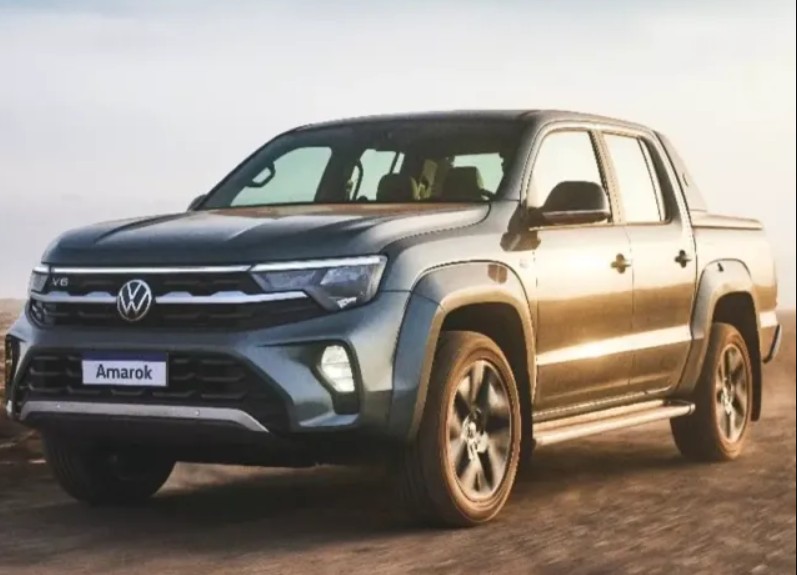
Put the Volkswagen Amarok vs Toyota Hilux side by side and we get one of the most interesting pickup battles on the market. Both can tow heavy trailers, haul serious loads, crawl through difficult terrain, and handle the daily commute without feeling completely out of place. Yet they approach the job from noticeably different directions.
The Toyota Hilux has spent decades building a reputation as the pickup that simply refuses to quit. Farms, construction sites, mines, mountain tracks, deserts—you name it, and chances are somebody has driven a Hilux through it.
The latest Volkswagen Amarok takes a different approach. It combines traditional pickup toughness with noticeably more emphasis on comfort, technology, refinement, and strong engine performance. In its current generation, it also shares its basic architecture with the Ford Ranger, although Volkswagen gives the Amarok its own styling, specifications, suspension tuning, equipment, and personality.
So, which one deserves a place in our driveway?
For buyers who want old-school durability, strong resale appeal, and a massive support network, the Hilux remains difficult to ignore. For those who want their pickup to feel almost like a premium SUV while still towing 3.5 tonnes in suitable configurations, the Amarok makes an extremely persuasive argument.
Let's dig deeper.
Content in this publication
- Volkswagen Amarok vs Toyota Hilux at a Glance
- What Makes the Volkswagen Amarok Different?
- What Makes the Toyota Hilux Different?
- Volkswagen Amarok vs Toyota Hilux Engine Performance
- Transmission: Amarok vs Hilux
- Towing Capacity: Amarok vs Hilux
- Off-Road Capability: Hilux vs Amarok
- Ride Comfort and Highway Driving
- Interior Quality: Amarok vs Hilux
- Technology and Infotainment
- Safety: Which Pickup Protects Us Better?
- Payload and Work Capability
- Reliability: Volkswagen Amarok vs Toyota Hilux
- Servicing and Parts Availability
- Fuel Economy: Which One Uses Less Diesel?
- Amarok vs Hilux Dimensions and Practicality
- Rear Seat Comfort
- Styling: Tough vs Sophisticated
- Volkswagen Amarok vs Toyota Hilux Price and Value
- Which Is Better for Towing a Caravan?
- Which Is Better for Construction or Farm Work?
- Which Is Better for Off-Road Touring?
- Which Is Better as a Daily Driver?
- Which Is Better for Long-Term Ownership?
- Volkswagen Amarok vs Toyota Hilux: Pros and Cons
- Amarok vs Hilux: Who Should Buy Which?
- Volkswagen Amarok vs Toyota Hilux: Our Verdict
- Frequently Asked Questions
- Closing Thoughts
Volkswagen Amarok vs Toyota Hilux at a Glance
Before disappearing into engines, transmissions, suspension setups, and off-road hardware, here's the broad picture.
| Category | Volkswagen Amarok | Toyota Hilux |
|---|---|---|
| Character | Refined, powerful, premium | Tough, proven, practical |
| Popular engine | 3.0L V6 turbo-diesel | 2.8L four-cylinder turbo-diesel |
| Maximum torque* | Up to 600 Nm | Up to 500 Nm automatic |
| Maximum braked towing* | Up to 3,500 kg | Up to 3,500 kg on diesel 4x4 models |
| Transmission | Up to 10-speed automatic | 6-speed manual or automatic |
| Cabin feel | More SUV-like | More traditional pickup |
| Off-road ability | Excellent | Excellent |
| Dealer/support reputation | Strong | Exceptional globally |
| Best suited to | Touring and daily driving | Work and long-term rugged use |
*Specifications vary according to country, model year, engine, and trim. For context, Volkswagen Australia currently lists up to 600 Nm for its 3.0-litre V6 Amarok and a 3.5-tonne maximum braked towing capacity. Toyota Australia lists 150 kW and 500 Nm for automatic 2.8-litre diesel Hilux variants, with 3.5-tonne braked towing on diesel 4x4 versions.
That table already tells us something important: this isn't necessarily a contest between a good pickup and a bad pickup. It is more like choosing between hiking boots and rugged premium boots. Both will cross the mountain. One simply makes a bigger effort to pamper our feet.
What Makes the Volkswagen Amarok Different?
The modern Amarok feels like Volkswagen looked at the traditional midsize pickup formula and asked, "Why does tough have to mean basic?"
The answer is a truck with substantial towing ability and off-road hardware but also large digital displays, sophisticated driver-assistance systems, strong road manners, and higher-end trim options.
In Australia, for example, Volkswagen lists Amarok power outputs ranging from 125 to 222 kW depending on the engine, with up to 600 Nm of torque. It also advertises up to 974 kg of payload, depending on configuration.
That's serious working capability wrapped in a surprisingly polished package.
The Amarok's Secret Weapon: Its V6
For many buyers, the strongest argument for choosing the Amarok is sitting under the bonnet.
The available 3.0-litre V6 turbo-diesel produces up to 600 Nm of torque in current Australian specification.
Numbers aren't everything, of course. What matters is how that torque feels.
And it feels effortless.
When we accelerate with passengers aboard, climb a steep hill, merge into highway traffic, or tow a caravan, the V6 doesn't need to be whipped like an exhausted horse. It simply leans on its torque.
That relaxed muscularity gives the Amarok a distinctly different character from most four-cylinder pickups.
A Pickup That Doesn't Feel Like Punishment
Historically, driving a work-focused pickup every day involved compromise. Empty trays could make the rear end bounce. Steering could feel agricultural. Cabin materials often reminded us that somebody expected to climb aboard wearing muddy boots.
The Amarok softens those rough edges.
It's still a body-on-frame pickup with rear leaf springs, but its driving position, steering, cabin technology, and general road refinement make it easier to imagine using one as our only vehicle.
What Makes the Toyota Hilux Different?
The Hilux plays a different card: reputation.
Ask people in remote regions what vehicle they trust when the nearest workshop is hundreds of kilometres away, and Toyota's name tends to appear quickly.
That reputation didn't emerge from clever advertising alone. The Hilux has been used extensively in commercial fleets, agriculture, mining, construction, emergency work, and extreme environments around the world.
Toyota has spent decades refining the formula.
The Hilux Prioritizes Proven Hardware
In Australia, current diesel Hilux models use Toyota's 2.8-litre four-cylinder turbo-diesel, producing as much as 150 kW and 500 Nm with the automatic transmission. Manual versions are rated at 420 Nm.
Those figures aren't as dramatic as the Amarok V6's.
But the Hilux isn't trying to win a pub argument with a torque figure.
Its appeal is straightforward: dependable power, predictable behavior, established mechanical knowledge, and proven suitability for hard use.
Why Simplicity Still Matters
Modern Hilux models are hardly primitive. They offer contemporary safety equipment, infotainment, automatic transmissions, and increasingly sophisticated trim levels.
Even so, the truck's basic philosophy remains relatively conservative.
For owners keeping a vehicle for ten or fifteen years—or taking one deep into remote country—that conservatism can be reassuring.
Volkswagen Amarok vs Toyota Hilux Engine Performance
This is one category where the Amarok can land a heavy punch.
With a V6 diesel available in many markets, the Volkswagen brings noticeably more torque than the mainstream 2.8-litre Hilux diesel.
Imagine two people dragging the same heavy suitcase up a flight of stairs. Both get it upstairs, but one looks significantly less bothered while doing it.
That's essentially the difference.
Amarok V6 Performance
The Amarok's 3.0-litre diesel provides up to 600 Nm in current Australian specification. Volkswagen also offers other engines depending on market and trim, including four-cylinder diesel units and, in some markets, a powerful petrol engine.
The V6 shines when:
- towing heavy caravans or trailers;
- overtaking at highway speeds;
- climbing hills with cargo;
- carrying passengers and equipment together;
- covering long distances.
There is simply more effortless shove available.
Hilux 2.8-Litre Performance
Toyota's 2.8-litre turbo-diesel delivers 500 Nm with its automatic transmission in Australia.
That's hardly weak.
For normal driving, off-roading, and work duties, 500 Nm is plenty. The Hilux feels muscular at low and medium speeds and generally provides exactly the kind of torque delivery pickup owners want.
But anyone switching directly from a V6 Amarok into a Hilux will probably notice the difference.
The Toyota works.
The Volkswagen flexes.
Transmission: Amarok vs Hilux
Transmission design adds another layer to the comparison.
Higher-powered Amarok versions generally pair their engines with a 10-speed automatic transmission, while the Hilux typically uses a six-speed automatic or six-speed manual depending on variant and market.
Why the Amarok Has More Gears
Ten ratios allow the Amarok to keep its engine closer to the ideal part of its power band.
On the highway, the transmission can settle into a tall gear for relaxed cruising. Hit the accelerator and it has several ratios available without requiring a dramatic leap.
The downside?
More gears can sometimes mean more shifting. Drivers who prefer an old-fashioned transmission that selects a gear and stays there may find a six-speed setup more natural.
The Hilux Six-Speed Approach
Toyota's six-speed transmission isn't trying to impress anyone with arithmetic.
It is relatively straightforward and familiar.
The broader spacing between gears can make the Hilux feel less sophisticated, but simplicity and predictable operation suit the vehicle's workhorse personality nicely.
Towing Capacity: Amarok vs Hilux
Here's where the fight gets extremely close.
The modern Amarok offers up to 3,500 kg of braked towing capacity in Australia. Volkswagen also lists Gross Combined Mass of up to 6,400 kg depending on variant.
Toyota states that diesel 4x4 Hilux models can also tow up to 3,500 kg braked, while current Australian 4x2 versions are rated up to 2,900 kg.
So on paper, suitably configured 4x4 versions can tie.
But maximum towing capacity doesn't tell the entire story.
Which One Feels Better While Towing?
For heavy towing, we'd generally give the Amarok V6 an advantage.
Why?
Torque.
With 600 Nm available, the V6 has an easier time accelerating a heavily loaded combination and maintaining speed on hills.
The Hilux can tow the same headline 3.5-tonne figure in suitable diesel 4x4 configurations, but its 500 Nm four-cylinder works harder when loads approach the upper end.
That doesn't necessarily make it less capable. It simply makes the experience different.
Don't Confuse Towing Capacity With Legal Payload
This is where buyers frequently get caught.
A pickup rated to tow 3,500 kg cannot necessarily carry a full tray of equipment, five adults, accessories, fuel, and maximum tow-ball weight at the same time.
Payload, GVM, axle ratings, tow-ball load, and GCM all matter.
Volkswagen currently advertises payload capacities of up to 974 kg for the Amarok in Australia, while Hilux payload varies substantially by body and grade. Some work-focused Hilux versions can provide considerably more usable payload than high-end leisure-oriented variants.
Always calculate the actual combination rather than shopping by the biggest number printed in the brochure.
Off-Road Capability: Hilux vs Amarok
Now things get muddy.
Both pickups can be extremely capable away from pavement.
Four-wheel-drive Amaroks offer low-range gearing, a locking rear differential, and multiple selectable drive modes on suitable versions. Volkswagen Australia lists as many as six drive modes: Normal, Eco, Slippery, Mud, Sand, and Towing.
The 4x4 Hilux also brings the essentials we expect from a serious off-roader, including low-range capability and configuration-dependent traction aids.
So which would we choose when the road disappears?
Hilux Strengths Off Road
The Hilux feels wonderfully at home in rough environments.
Its strengths include:
- proven 4x4 hardware;
- excellent aftermarket support;
- widely available suspension modifications;
- abundant recovery accessories;
- relatively compact proportions compared with larger full-size trucks;
- decades of real-world off-road experience behind the platform.
When we're hundreds of kilometres from civilization, that ecosystem matters.
Break something on a heavily travelled remote route and there's a decent chance another Hilux owner has experienced the same issue before.
Amarok Strengths Off Road
The Amarok counters with technology, strong torque, excellent traction systems, and impressive drivetrain flexibility.
That V6 is particularly useful in sand, long climbs, and situations where maintaining momentum matters.
The latest model is also more technologically sophisticated in how it manages different terrain.
Which Is Better for Extreme Remote Travel?
We'd lean toward the Hilux for extreme expeditions where simplicity, parts availability, repair familiarity, and aftermarket support matter more than refinement.
For weekend trails, towing an off-road caravan, beach driving, and mixed touring, we'd happily take the Amarok.
Ride Comfort and Highway Driving
This category belongs to the Amarok.
You may be interested in reading Volkswagen Amarok vs Mercedes X Class: Which Premium Pickup Wins?
Not by an absurd margin, but by enough to notice.
The Amarok feels more like a large SUV when cruising at speed. Road noise is well managed, the steering is composed, and the cabin creates a more premium atmosphere.
The Hilux has improved enormously over generations, especially in higher trims, yet there remains more of a working-truck flavor underneath.
Which Pickup Is Better for Long Trips?
Imagine a 900-kilometre highway drive.
At hour one, both are fine.
At hour seven, small differences become big differences.
Seat comfort, engine noise, ride quality, adaptive driver aids, cabin storage, screen usability, and overtaking power suddenly matter much more.
That is where the Amarok starts earning its higher-end reputation.
For touring families and buyers covering huge motorway distances, we'd put the Volkswagen ahead.
Interior Quality: Amarok vs Hilux
Sit inside both vehicles and their personalities become even clearer.
The Amarok's interior tries to blur the boundary between commercial vehicle and modern SUV. Depending on trim, buyers can get large digital displays, substantial infotainment systems, upscale seat materials, advanced driver aids, and numerous convenience features.
The Hilux cockpit generally feels tougher and more functional.
That isn't criticism.
Sometimes we want surfaces that look as if they'll survive work gloves, muddy boots, tools, children, dogs, coffee spills, and ten years of abuse.
Amarok Interior Advantages
The Volkswagen tends to feel:
- more premium;
- more contemporary;
- more technology-focused;
- more comfortable for daily commuting;
- closer to an SUV than a traditional work ute.
Hilux Interior Advantages
The Toyota often feels:
- simpler;
- durable;
- logical;
- easier to clean;
- less intimidating for hard commercial use.
If we're buying a truck for the building site, the Hilux's straightforward character is appealing.
If our pickup spends Monday through Friday outside an office and Saturday towing a boat, the Amarok's nicer cabin becomes harder to resist.
Technology and Infotainment
The latest Amarok pushes aggressively into modern digital territory.
Large portrait-style infotainment screens dominate many versions, while higher grades add more sophisticated displays and comfort equipment.
Toyota has also modernized the Hilux, though its technology experience generally feels more conservative.
There's an important philosophical difference here.
More technology can feel fantastic when everything works.
Less technology can feel fantastic ten years later.
Pick whichever sentence sounds more like you.
Safety: Which Pickup Protects Us Better?
Modern versions of both vehicles offer substantial active-safety technology.
Depending on the model and trim, we may encounter:
- autonomous emergency braking;
- lane-keeping assistance;
- adaptive cruise control;
- blind-spot monitoring;
- rear cross-traffic alert;
- parking sensors;
- surround-view cameras;
- trailer-related assistance systems.
Equipment varies dramatically by market and model grade, so shoppers should compare the exact versions sitting on dealership floors rather than assuming all trims contain identical features.
From a safety perspective, neither truck is stuck in the past anymore.
Payload and Work Capability
This is where buying by badge alone makes little sense.
Payload depends on body style, drivetrain, trim, accessories, and kerb weight.
Volkswagen Australia currently quotes up to 974 kg payload for the Amarok.
Toyota's Hilux range varies substantially. Toyota Australia's specifications show different GVM and kerb-weight figures across its numerous 4x2 and 4x4 body configurations, which means usable payload differs from one version to another.
Why the Hilux Can Be Better for Pure Work
The Hilux lineup traditionally offers an enormous variety of configurations.
Single cab?
Extra cab?
Double cab?
Cab chassis?
Work-focused versions?
Luxury-flavored versions?
Toyota has spent decades learning that plumbers, miners, farmers, families, and recreational 4x4 owners do not necessarily want the same truck.
That broad range can make it easier to find a Hilux tailored specifically for commercial use.
Why the Amarok Can Be Better for Work and Lifestyle
The Amarok shines when we want one vehicle to do practically everything.
It can tow.
It can carry equipment.
It can head off road.
Then we can wash the mud off, park outside a nice restaurant, and it doesn't look as though we've accidentally arrived in a piece of farm machinery.
That's a surprisingly important selling point.
Reliability: Volkswagen Amarok vs Toyota Hilux
Ah, the question everyone eventually asks.
"Which one will last longer?"
There is no honest way to guarantee the lifespan of an individual vehicle. Maintenance history, driving conditions, modifications, towing frequency, servicing, fuel quality, and sheer luck all play roles.
But reputation matters.
And here Toyota starts with a major advantage.
Toyota Hilux Reliability Reputation
The Hilux is famous for longevity.
It's one of those vehicles that has almost become a cultural shorthand for durability.
That doesn't mean every Hilux is faultless. Modern diesels still have emissions equipment, electronics, turbochargers, high-pressure fuel systems, sensors, and automatic transmissions that require proper servicing.
Still, Toyota's enormous global fleet provides reassurance.
The mechanical formula has been tested on a scale few competitors can match.
Volkswagen Amarok Reliability
Amarok reliability depends strongly on generation, engine, transmission, and maintenance.
The current Amarok is mechanically related to the Ford Ranger, which changes the equation compared with the original Volkswagen-engineered Amarok.
Its modern diesel engines and complex electronic systems demand proper servicing, especially if the truck is used for towing, dusty environments, or repeated short trips.
Would we automatically call it unreliable?
No.
Would we choose a neglected Amarok over a meticulously maintained Hilux?
Definitely not.
Maintenance history matters more than internet folklore.
Servicing and Parts Availability
Toyota has one enormous advantage: scale.
The Hilux is sold widely and used heavily in many markets. That creates a vast network of dealerships, independent specialists, replacement components, used parts, accessories, and mechanical knowledge.
In remote areas, Toyota support can become especially valuable.
Volkswagen's service network is perfectly adequate in developed regions, but parts and specialized knowledge may be less widespread in remote locations.
For City Drivers
This difference may barely matter.
If we live close to major dealerships and repair shops, either vehicle is straightforward to service.
For Remote Owners
The deeper into rural or remote territory we travel, the more Toyota's popularity becomes an asset.
It's like carrying the most common phone charger at an airport. Someone nearby probably has what we need.
Fuel Economy: Which One Uses Less Diesel?
Fuel consumption varies too much across engines, body styles, wheels, terrain, emissions regulations, and testing procedures to crown a universal winner.
Broadly speaking, though, the Hilux's four-cylinder diesel may use less fuel than a V6 Amarok under gentle conditions.
But the equation changes while towing.
A smaller engine working hard isn't automatically more efficient than a larger engine operating comfortably.
Real-World Fuel Economy Depends on Our Right Foot
Put large all-terrain tires on either vehicle.
Add a roof tent.
Install a steel bumper.
Carry 500 kg of equipment.
Tow a caravan.
Drive at 120 km/h.
Congratulations—we have just thrown laboratory fuel figures out the window.
For most buyers, we'd treat fuel economy as one factor rather than the deciding factor.
You may be interested in readingVolkswagen Amarok vs Mercedes X Class: Which Premium Pickup Wins?You may be interested in reading
 Ram 1500 vs F-150: Which Full-Size Truck Is Better?
Amarok vs Hilux Dimensions and Practicality
Both trucks occupy the midsize pickup class, although neither feels particularly "mid-sized" when we squeeze one into a supermarket parking space.
The exact dimensions vary by body style and trim.
Current Australian Hilux variants stretch beyond 5.3 metres in some configurations, with Toyota listing a 3,085 mm wheelbase for several models.
The Amarok is similarly substantial.
That large footprint brings generous cabin and cargo space, but it also means we're still driving a long vehicle with a considerable turning circle.
Parking sensors and 360-degree cameras aren't frivolous luxuries here. They're survival equipment.
Rear Seat Comfort
For families, rear-seat comfort matters almost as much as towing capacity.
Both double-cab trucks can carry five people, but neither provides the relaxed second-row experience of a large three-row SUV.
The Amarok generally feels more polished and sophisticated inside, giving it an advantage for regular family transport.
The Hilux rear compartment is perfectly usable, yet its work-oriented roots remain more obvious.
If we routinely carry teenagers or adults on long journeys, we'd test both rear seats personally.
Legs don't read spec sheets.
Styling: Tough vs Sophisticated
Styling is subjective, but these trucks send different messages.
The Hilux looks tough because toughness is practically its birthright.
Depending on trim, it can range from utilitarian work truck to aggressive lifestyle 4x4.
The Amarok looks broader, more polished, and slightly more premium.
The Amarok Makes a Strong Lifestyle Statement
Chrome, large wheels, distinctive lighting, and upscale trims make expensive Amaroks feel less like commercial equipment and more like luxury adventure vehicles.
Some buyers love that.
Others think a pickup should be able to wear scratches like medals.
The Hilux Looks Ready for Work
Even an expensive Hilux never completely forgets what it is.
There's a certain authenticity to that.
It looks right with mud on the doors.
Volkswagen Amarok vs Toyota Hilux Price and Value
Pricing depends heavily on country, taxes, equipment, and trim.
In general, entry-level Hilux versions can offer strong commercial value, while high-spec Amaroks increasingly push into premium territory.
But purchase price alone tells us very little.
We should consider:
- depreciation;
- insurance;
- scheduled servicing;
- fuel consumption;
- tires;
- replacement parts;
- finance costs;
- resale value;
- expected ownership period.
Hilux Resale Value
The Toyota badge carries enormous weight in the used pickup market.
A well-maintained Hilux can attract strong demand because second-hand buyers already understand what the vehicle is.
That reduces one of the biggest costs of vehicle ownership: depreciation.
Amarok Value Proposition
The Amarok may provide more equipment, greater engine performance, and a more luxurious cabin for buyers comparing similarly positioned premium versions.
In other words, we may get more "vehicle" rather than simply more "truck."
That can make the Volkswagen excellent value even if its resale trajectory doesn't always match Toyota's legendary strength.
Which Is Better for Towing a Caravan?
Amarok.
That's our pick.
Both can reach the same 3.5-tonne maximum braked towing figure in suitable configurations, but the Amarok V6's 600 Nm provides extra muscle.
Long-distance touring also rewards the Volkswagen's more refined cabin.
If we're spending weeks towing around the country, comfort matters.
The caveat is payload.
Large caravans can impose substantial tow-ball mass, and that weight counts against the pickup's legal load limits. Calculate everything carefully before buying.
Which Is Better for Construction or Farm Work?
Hilux.
Its durability reputation, broad model range, parts availability, straightforward cabin, and resale value make it extremely attractive as a working asset.
We also have more opportunity to find a basic configuration rather than paying for luxuries that may spend their lives coated in dust.
For fleets, familiarity matters too.
A workshop that already services twenty Hilux vehicles doesn't need to learn a new platform.
Which Is Better for Off-Road Touring?
This one is almost a tie.
We'd choose the Hilux for extreme remote expeditions where repairability and support matter enormously.
We'd choose the Amarok for mixed touring involving long highway sections, towing, family travel, and moderately challenging off-road terrain.
The Volkswagen makes the journey easier.
The Toyota makes us feel prepared for the apocalypse.
Which Is Better as a Daily Driver?
Amarok.
Its more sophisticated interior, powerful engine choices, modern infotainment, and generally polished road behavior make it easier to live with day after day.
A pickup will never shrink to hatchback dimensions, but the Amarok does a convincing job of disguising its commercial-vehicle bones.
Which Is Better for Long-Term Ownership?
If we're thinking ten years or more, we'd lean toward the Toyota Hilux.
Not because an Amarok cannot last that long.
Plenty will.
But Toyota's reputation, resale strength, parts ecosystem, and massive global ownership base create a compelling long-term proposition.
The Hilux's biggest luxury may not be leather seats.
It may be peace of mind.
Volkswagen Amarok vs Toyota Hilux: Pros and Cons
Volkswagen Amarok Pros
- Powerful V6 diesel option
- Up to 600 Nm of torque in current Australian specification
- Up to 3.5-tonne braked towing
- Refined highway manners
- Premium cabin atmosphere
- Strong safety and technology offering
- Excellent long-distance touring vehicle
- Sophisticated 4x4 systems
Volkswagen Amarok Cons
- Premium versions can become expensive
- More sophisticated systems may increase long-term repair complexity
- Toyota generally has broader remote-area support
- High-spec variants can sacrifice some payload through increased kerb weight
Toyota Hilux Pros
- Outstanding durability reputation
- Huge global service and parts network
- Strong resale value
- Proven off-road capability
- Broad range of commercial configurations
- Up to 3.5-tonne towing on diesel 4x4 models in markets such as Australia
- Excellent aftermarket support
- Familiar mechanical platform
Toyota Hilux Cons
- 2.8-litre diesel lacks the Amarok V6's effortless power
- Interior can feel more utilitarian
- Ride quality remains pickup-like
- Less premium-feeling than high-end Amarok versions
- Popularity can sometimes mean surprisingly high purchase prices
Amarok vs Hilux: Who Should Buy Which?
Here is where the comparison becomes simple.
Buy the Volkswagen Amarok If...
Choose the Amarok if we want:
- stronger engine performance;
- regular heavy towing;
- a more luxurious interior;
- better highway refinement;
- modern technology;
- a pickup that can replace an SUV without feeling like a major compromise.
The Amarok works particularly well for owners who use their truck recreationally as much as commercially.
Boat owners, caravan travelers, touring families, and people who simply enjoy having plenty of torque will appreciate it.
Buy the Toyota Hilux If...
Choose the Hilux if we prioritize:
- long-term durability;
- remote-area servicing;
- strong resale value;
- commercial work;
- aftermarket accessories;
- proven off-road use;
- straightforward ownership.
The Toyota makes the most sense when reliability and support matter more than refinement.
Volkswagen Amarok vs Toyota Hilux: Our Verdict
So, Volkswagen Amarok vs Toyota Hilux—which is better?
The answer depends on what "better" means.
If better means more powerful, more comfortable, more refined, and more enjoyable for long highway journeys, we'd choose the Volkswagen Amarok, particularly with the V6 diesel.
Its available 600 Nm of torque, 3.5-tonne maximum braked towing capability, sophisticated four-wheel-drive hardware, and SUV-like cabin create one of the most complete lifestyle pickups available.
But if better means proven, durable, easy to support, easy to modify, and likely to retain strong demand years down the road, the Toyota Hilux remains incredibly difficult to beat.
Its 2.8-litre diesel isn't as muscular as the Amarok V6, but 150 kW and up to 500 Nm remain plenty for most jobs, while diesel 4x4 versions can still tow as much as 3,500 kg in Australia.
Think of it this way.
The Amarok is the pickup we'd choose for crossing a continent comfortably.
The Hilux is the pickup we'd choose if we weren't completely sure there would be a road.
Neither philosophy is wrong.
And that's exactly why this comparison is so interesting.
Frequently Asked Questions
1. Is the Volkswagen Amarok better than the Toyota Hilux?
The Amarok is generally the stronger choice for buyers prioritizing engine performance, towing refinement, cabin comfort, and technology. The Hilux is arguably better for buyers prioritizing proven durability, resale value, remote-area support, and heavy commercial use. Neither pickup wins every category.
2. Which is more reliable, Amarok or Hilux?
The Toyota Hilux has the stronger overall historical reputation for reliability and durability, particularly in harsh commercial and remote-area conditions. Amarok reliability can still be very good when properly serviced, but the Toyota benefits from decades of widespread global use and an enormous parts and servicing network.
3. Which is better for towing, Amarok or Hilux?
Both can tow up to 3,500 kg braked in appropriate Australian configurations. However, we'd favor the V6 Amarok for frequent heavy towing because its available 600 Nm of torque gives it an advantage over the 500 Nm produced by automatic 2.8-litre diesel Hilux variants.
4. Which is better off road, Toyota Hilux or Volkswagen Amarok?
Both are highly capable. The Amarok provides sophisticated drive modes, low-range gearing, and a locking rear differential on suitable versions, while the Hilux benefits from proven 4x4 hardware and exceptionally broad aftermarket support. For extreme remote touring, we'd give the Hilux a slight advantage; for mixed highway and off-road travel, the Amarok may be more enjoyable.
5. Should we buy an Amarok or Hilux for everyday driving?
For everyday driving, we'd generally pick the Volkswagen Amarok. Its cabin, technology, road manners, and engine refinement make it feel closer to a modern SUV. The Hilux makes more sense if the vehicle spends a substantial part of its life working, carrying equipment, or operating in rugged environments.
Closing Thoughts
The Volkswagen Amarok vs Toyota Hilux debate isn't really about identifying one universal champion. It's about deciding what kind of pickup ownership we want.
The Hilux represents trust built over decades. It feels like a mechanical tool designed to show up every morning and get dirty without complaining.
The Amarok takes those basic pickup abilities and adds another layer. More torque. More comfort. More technology. More polish.
If our weekends involve towing a caravan down endless highways before turning onto a gravel trail, the Amarok feels wonderfully complete.
If our livelihood depends on a truck getting us home from somewhere that barely appears on Google Maps, the Hilux's reputation becomes difficult to put a price on.
One wears its toughness like a tailored jacket.
You may be interested in readingVolkswagen Amarok vs Mercedes X Class: Which Premium Pickup Wins?You may be interested in reading
Ram 1500 vs F-150: Which Full-Size Truck Is Better?You may be interested in reading
Ram 1500 vs Toyota Tundra: Which Full-Size Truck Wins?The other wears it like work boots.
Either can be the right choice—we just need to know which pair fits our life.
If you want to know other articles similar to Volkswagen Amarok vs Toyota Hilux: Which Pickup Is Better? you can visit the category Models.
How to Identify Your Ford Fiesta Model
Toyota RAV4 Engine Oil Capacity: Complete Guide

Vauxhall Corsa Models: Complete Guide to Generations, Trims and Versions (1993–2026)
Kia Sportage Trim Levels: Complete 2027 Comparison
Toyota Corolla Cross vs RAV4: Which SUV Is Better?
Haval Jolion vs Omoda C5: Which SUV Is Better?
Leave a Reply
More content of your interest