
Ram 1500 or Similar: Which Full-Size Truck Should We Choose?

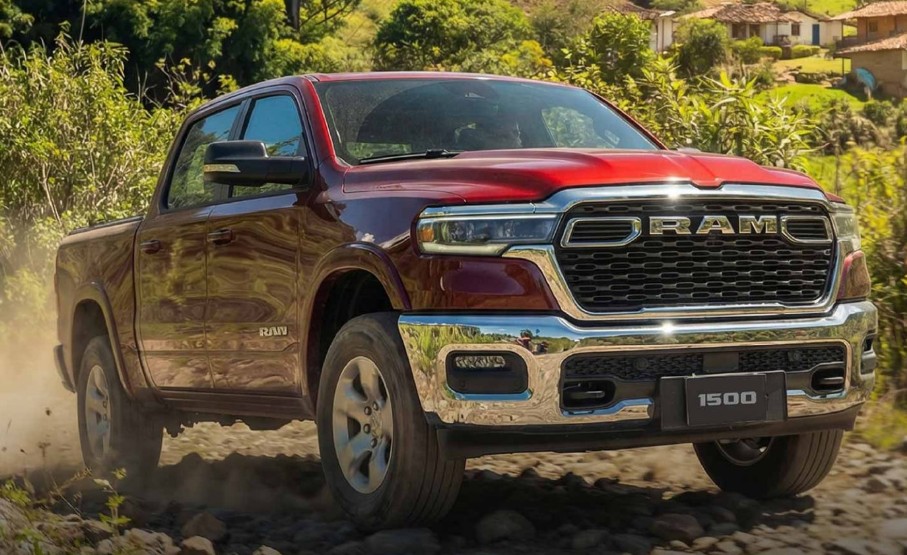
Searching for a Ram 1500 or similar truck usually means we are not simply shopping for a pickup with four doors and a bed. We want a proper full-size truck—something powerful enough to tow, practical enough for work, comfortable enough for daily driving, and spacious enough to swallow a family, luggage, tools, or weekend gear without complaining.
The Ram 1500 has carved out an interesting position in this segment. It combines traditional pickup capability with a cabin and ride that can feel surprisingly upscale. Yet it competes in one of the toughest corners of the automotive market. The Ford F-150, Chevrolet Silverado 1500, GMC Sierra 1500, and Toyota Tundra are all waiting across the parking lot, each waving a different flag.
So, should we buy the Ram? Or does one of its alternatives make more sense?
That depends on what we actually expect from the truck.
For the 2026 model year, the Ram 1500 offers up to 540 horsepower, a maximum available payload of 2,360 pounds, and maximum towing of 11,610 pounds when properly configured. It also once again offers an available 5.7-liter HEMI V8 alongside its Pentastar V6 and Hurricane inline-six engines.
Those figures make it unquestionably capable, but raw numbers are only one piece of the puzzle. Let's look at the complete picture.
Content in this publication
- What Does "Ram 1500 or Similar" Actually Mean?
- 2026 Ram 1500 at a Glance
- Ford F-150: The Most Obvious Ram 1500 Alternative
- Chevrolet Silverado 1500: The Work-Focused Alternative
- GMC Sierra 1500: Ram Luxury With a Different Flavor
- Toyota Tundra: The Alternative for Toyota Loyalists
- Which Trucks Are Truly Similar to a Ram 1500?
- Ram 1500 or Similar for Towing
- Ram 1500 or Similar for Families
- Ram 1500 or Similar for Work
- Which Ram 1500 Engine Should We Pick?
- Which Ram 1500 Alternative Has the Best Engine Selection?
- How Should We Choose Between a Ram 1500 and Similar Trucks?
- Ram 1500 vs Similar Trucks: Quick Verdict
- Is the Ram 1500 Better Than Its Alternatives?
- Conclusion: Should We Buy a Ram 1500 or Something Similar?
- Frequently Asked Questions
What Does "Ram 1500 or Similar" Actually Mean?
When rental companies, comparison websites, buyers, or dealerships say "Ram 1500 or similar," they normally mean a full-size, light-duty pickup from the same broad class.
We're not talking about compact trucks or even midsize models such as the Toyota Tacoma or Chevrolet Colorado. Those can be excellent pickups, but they're smaller machines built around somewhat different priorities.
A genuine Ram 1500 alternative should offer roughly comparable passenger space, cargo capability, available four-wheel drive, substantial towing capacity, and enough engine muscle to handle real truck duties.
That immediately brings several competitors into focus: the Ford F-150, Chevrolet Silverado 1500, GMC Sierra 1500, and Toyota Tundra.
Think of them as different interpretations of the same recipe. One chef adds more technology. Another adds luxury. Another prioritizes towing. Ram pours extra comfort into the bowl.
2026 Ram 1500 at a Glance
The Ram 1500 remains available with several distinct personalities.
At one end, we have practical trucks designed for ordinary hauling and work. At the other, trims such as the Limited and Tungsten push dangerously close to luxury-car territory. Then there are performance and off-road variants for buyers who think a dirt road looks less like an obstacle and more like an invitation.
Current 2026 specifications give us a good sense of its range.
| 2026 Ram 1500 engine | Horsepower | Torque | Maximum towing* | Maximum payload* |
|---|---|---|---|---|
| 3.6L Pentastar V6 eTorque | 305 hp | 269 lb-ft | 8,130 lb | 2,360 lb |
| 5.7L HEMI V8 eTorque | 395 hp | 410 lb-ft | 11,320 lb | 1,650 lb |
| 3.0L Hurricane I6 | 420 hp | 469 lb-ft | 11,610 lb | 1,930 lb |
| High-Output 3.0L Hurricane I6 | 540 hp | 521 lb-ft | 10,000 lb | 1,490 lb |
*Maximum ratings depend heavily on cab, drivetrain, axle ratio, equipment, passengers, and other configuration details.
The table highlights an important lesson: the most powerful engine does not automatically produce the highest towing or payload rating. Truck specifications are a balancing act between engine output, curb weight, chassis configuration, cooling, suspension, axle ratings, and equipment.
The Return of the HEMI Matters
The availability of the 5.7-liter HEMI V8 for 2026 gives traditional truck buyers something they had been asking for.
Sure, turbocharged six-cylinder engines can produce mountains of torque. Yet some of us simply like the character of a naturally aspirated-style V8 experience—the sound, response, familiarity, and mechanical personality.
The HEMI produces 395 horsepower and 410 lb-ft of torque in the 2026 Ram 1500.
It isn't necessarily the rational choice for every buyer.
But trucks have never been purchased entirely with spreadsheets.
Sometimes the engine we enjoy every morning matters almost as much as the one with the highest number printed in the brochure.
The Hurricane Is the Power Player
For maximum modern performance, however, the 3.0-liter Hurricane inline-six deserves attention.
The standard-output version produces 420 horsepower and 469 lb-ft, while the high-output version reaches 540 horsepower and 521 lb-ft.
That's serious muscle.
The 540-horsepower version also transforms the personality of performance-oriented Ram models. In the 2026 Ram 1500 RHO, Ram quotes a 0–60 mph time of 4.6 seconds.
A full-size pickup accelerating like that feels a little like watching a refrigerator win a sprint race. It shouldn't look natural, yet somehow it works.
Ford F-150: The Most Obvious Ram 1500 Alternative
If there is one truck we should automatically compare with the Ram 1500, it is the Ford F-150.
The F-150 is essentially the Swiss Army knife of this class. Ford offers an enormous spread of configurations, engines, towing solutions, work-focused features, luxury trims, off-road packages, and electrified options.
For 2026, Ford lists maximum available towing of 13,500 pounds and maximum available payload of 2,440 pounds. The 3.5-liter EcoBoost V6 reaches those headline towing figures, while the lineup also includes a 5.0-liter V8 and the PowerBoost full-hybrid V6.
On paper, that gives the F-150 an advantage over the Ram's 11,610-pound maximum towing figure.
But maximum ratings tell us what a carefully selected configuration can accomplish. They don't necessarily tell us which truck we will prefer living with on Monday morning.
Ram 1500 vs Ford F-150 for Daily Driving
This is where Ram traditionally makes a powerful argument.
The Ram 1500 has built much of its reputation around ride comfort and cabin refinement. For someone using a pickup as an everyday vehicle, those characteristics matter enormously.
We might tow eight times per year.
We'll feel the seat, suspension, road noise, visibility, controls, and steering every single day.
The F-150 often feels purpose-built around versatility. The Ram can feel more like a comfortable SUV that happens to have a pickup bed attached.
Neither philosophy is inherently better.
They're just different.
Ram 1500 vs F-150 for Towing
If our priority is chasing the highest possible conventional towing number, the F-150 currently has the advantage.
Ford advertises up to 13,500 pounds versus 11,610 pounds for the 2026 Ram 1500.
That doesn't mean every F-150 can tow 13,500 pounds, nor does every Ram tow 11,610.
Configuration matters enormously.
An off-road truck with heavy equipment and chunky tires can have a dramatically different rating from a two-wheel-drive truck configured specifically to tow.
That is why we should never shop solely by headline capacity.
Check the exact VIN-specific payload and towing information of the truck we're actually buying.
Chevrolet Silverado 1500: The Work-Focused Alternative
The Chevrolet Silverado 1500 approaches the segment with a slightly different personality.
Where the Ram often emphasizes comfort and refinement, the Silverado frequently feels like it wants to remind us that pickups still have jobs to do.
For 2026, Chevrolet lists maximum available trailering of 13,300 pounds and maximum available payload of 2,260 pounds. The Silverado also continues to offer four major engine choices, including its TurboMax four-cylinder, 5.3-liter V8, 6.2-liter V8, and 3.0-liter Duramax turbo-diesel.
That engine selection alone gives the Chevy a compelling advantage for buyers who want options.
Why Choose the Silverado Instead of the Ram?
The Silverado makes particular sense when capability and configuration flexibility sit near the top of our shopping list.
Its maximum towing capacity exceeds the current Ram 1500's headline rating, and the availability of a light-duty diesel remains a significant differentiator.
Chevrolet lists up to 13,300 pounds of trailering capacity for properly equipped 2026 Silverado 1500 models.
For someone pulling a travel trailer, equipment trailer, or boat regularly, those numbers deserve attention.
The Silverado can also appeal to buyers who simply prefer traditional truck styling and controls over the increasingly polished, almost luxury-oriented feel found in upper Ram trims.
Where the Ram Can Feel Better
Cabin experience can swing the decision back toward Ram.
That's particularly true as we climb through higher trims.
A truck may be a tool, but if we're spending 15,000 miles a year sitting inside that tool, we probably don't want the interior ambiance of a storage shed.
The Ram tends to lean heavily into materials, design, display technology, seat comfort, and quietness.
For many commuters, families, and long-distance travelers, that's not cosmetic fluff.
It's functionality of another kind.
GMC Sierra 1500: Ram Luxury With a Different Flavor
The GMC Sierra 1500 shares much of its mechanical foundation with the Silverado, but the shopping experience changes once we get into AT4, AT4X, Denali, and Denali Ultimate territory.
Now we're talking directly to the same kind of customer who might consider a Ram Limited or Tungsten.
The Sierra is essentially proof that work boots and expensive watches can occupy the same closet.
For 2026, GMC states maximum towing of 13,300 pounds when the Sierra 1500 is properly configured with its available 3.0-liter Duramax diesel and Max Trailering Package. Maximum payload varies by body style, reaching as much as 2,230 pounds in certain Regular Cab versions.
Ram 1500 vs GMC Sierra 1500
These two can become surprisingly difficult to separate.
Ram arguably leans toward plushness and smoothness.
GMC leans toward rugged luxury.
The difference sounds small until we sit inside them.
A premium Ram often feels like someone turned a luxury SUV into a pickup.
A premium Sierra still feels unapologetically like a truck, only one that happens to know where the expensive restaurants are.
You may be interested in reading BMW M5 Years: A Complete Guide to Every Generation
What About Off-Road Versions?
The Sierra AT4 and AT4X add serious off-road hardware. GMC highlights equipment such as a factory suspension lift, skid plates, specialized dampers, and locking differentials depending on trim.
Ram counters with its own off-road-focused models, including the Rebel and RHO.
The RHO uses the high-output Hurricane engine producing 540 horsepower and combines it with specialized Bilstein suspension hardware, a full-time active transfer case, a Dana 60 rear axle, and multiple drive modes.
At that point, we're no longer asking whether the truck can handle a gravel driveway.
We're asking how much dust we want to create while doing it.
Toyota Tundra: The Alternative for Toyota Loyalists
The Toyota Tundra belongs on any serious Ram 1500 alternatives list.
Its appeal is a little different.
Toyota buyers often arrive with expectations built around the brand's history, resale reputation, dealer network, and ownership experience. Modern Tundras also moved decisively toward turbocharged V6 power and available hybrid assistance rather than relying on the old-school V8 formula.
For buyers who want a modern full-size pickup without choosing one of Detroit's traditional three, the Tundra is the natural destination.
Ram 1500 vs Toyota Tundra
The Ram gives us more engine personalities for 2026, particularly now that the HEMI V8 has returned alongside both Hurricane six-cylinder options and the Pentastar V6.
The Toyota route is more streamlined.
That can actually be refreshing.
Not everyone wants to spend an evening decoding engine, cab, axle, bed, drivetrain, package, and trim combinations as if we were assembling a spacecraft.
The Tundra also has particularly strong appeal for drivers already immersed in the Toyota ecosystem.
But if interior luxury, engine diversity, or maximum personalization matters more, Ram remains extremely persuasive.
Which Trucks Are Truly Similar to a Ram 1500?
If we're creating a practical shortlist rather than comparing every pickup sold in North America, these are the trucks that belong on it:
- Ford F-150: best starting point if maximum configuration choice, strong towing figures, work technology, or a hybrid option matter most.
- Chevrolet Silverado 1500: ideal for buyers prioritizing towing, traditional truck character, V8 availability, or a light-duty diesel.
- GMC Sierra 1500: a compelling Ram alternative when we want premium appointments without losing a rugged truck identity.
- Toyota Tundra: worth considering for Toyota fans, hybrid shoppers, and buyers wanting a different take on the American full-size pickup formula.
- Ram 1500: particularly compelling when ride comfort, interior quality, strong turbocharged performance, and broad trim variety are high priorities.
Those are the closest direct rivals.
We could include trucks from slightly different categories, but once dimensions, towing expectations, and passenger room change substantially, the comparison becomes increasingly apples versus oranges.
Ram 1500 or Similar for Towing
Towing can quickly simplify the decision.
The 2026 Ram 1500 tops out at 11,610 pounds when properly equipped.
Ford advertises up to 13,500 pounds for the F-150, while Chevrolet and GMC list up to 13,300 pounds for properly configured Silverado and Sierra 1500 models.
So Ford, Chevy, and GMC win the headline numbers game.
But here's where things get interesting.
If our trailer weighs 6,000 pounds loaded, do we actually need a 13,500-pound maximum rating?
Probably not.
A truck's real-world suitability depends on payload, tongue weight, passenger load, bed cargo, wheelbase, hitch equipment, and the specific truck's ratings.
Payload Can Matter More Than Towing Capacity
Payload is one of the most misunderstood truck specifications.
Imagine our truck can theoretically pull 11,000 pounds.
Wonderful.
Now add four adults, luggage, camping equipment, a toolbox, and 900 pounds of trailer tongue weight.
Suddenly payload can become the limiting factor long before we reach maximum towing capacity.
The 2026 Ram 1500 can carry up to 2,360 pounds in its highest-payload configuration.
Ford advertises up to 2,440 pounds for the F-150, while Chevrolet lists up to 2,260 pounds for the Silverado 1500.
Again, however, those are maximum available numbers—not guarantees for every truck sitting on a dealership lot.
Never Assume the Badge Determines Capacity
A Ram 1500 Limited with extensive luxury equipment can have a different payload rating from a lighter Tradesman.
Same badge.
Different truck.
The door-jamb label matters more than internet bragging rights.
Ram 1500 or Similar for Families
This is where full-size pickups become surprisingly good at pretending they're SUVs.
Crew Cab configurations can offer generous rear-seat room, large door openings, storage compartments, multiple charging points, and enough shoulder room that three passengers in the rear aren't immediately negotiating territorial borders.
For family use, however, comfort begins to outrank maximum towing.
And that's one of Ram's strongest arguments.
A truck that rides smoothly when empty can be much easier to live with during school runs, commutes, shopping trips, and interstate travel.
Why the Ram Works Well as an Everyday Truck
The Ram 1500's appeal isn't that it stops being a truck.
It's that it doesn't constantly remind us we're driving one.
There is still a large hood in front of us.
There is still a bed behind us.
Parking structures remain more interesting than they need to be.
Yet the driving environment can feel remarkably civilized.
Upper trims add the sort of features and materials once reserved for expensive luxury SUVs.
That gives Ram a broader personality than its towing numbers alone suggest.
Ram 1500 or Similar for Work
Now turn the question around.
Suppose we're buying primarily for a construction business, landscaping company, farm, maintenance operation, or another commercial role.
The priorities shift.
We care about payload, bed dimensions, durability, towing hardware, easy-clean interiors, fleet costs, downtime, and purchase price.
Ram's Tradesman-oriented configurations fit this role well. Ram currently lists maximum payload at 2,360 pounds and maximum towing at 11,610 pounds for the 2026 truck. Available towing aids include hitch alignment assistance and telescoping tow mirrors.
But this is also where the F-150 and Silverado become particularly dangerous rivals.
Both offer enormous configuration ranges and have long histories in commercial fleets.
What Should Businesses Prioritize?
Forget the fanciest infotainment screen for a moment.
Commercial buyers should calculate total ownership cost.
Purchase price is just the opening chapter.
Fuel consumption, maintenance, tire costs, insurance, downtime, depreciation, upfitting compatibility, and resale value can eventually dwarf a relatively small difference in sticker price.
The best work truck isn't necessarily the cheapest truck.
It's the truck that costs the least to keep working.
Which Ram 1500 Engine Should We Pick?
The engine lineup now covers several very different personalities.
For ordinary driving and maximum available payload, the Pentastar V6 can make plenty of sense.
For stronger towing and everyday punch, the standard-output Hurricane becomes attractive.
For traditional V8 enthusiasts, the returning HEMI finally answers the question they kept asking.
And for anyone who reads 540 horsepower and immediately smiles, the high-output Hurricane barely needs an introduction.
3.6L Pentastar V6
At 305 horsepower, this is the sensible member of the family.
It also supports the Ram's maximum advertised 2,360-pound payload rating in the appropriate configuration.
You may be interested in readingBMW M5 Years: A Complete Guide to Every GenerationYou may be interested in reading
BMW M5 Best Year: Which Model Year Is Really the Sweet Spot?We shouldn't confuse "base engine" with "bad engine."
If we're mostly commuting, carrying moderate loads, and occasionally towing, extra horsepower may simply mean paying for capability we rarely use.
5.7L HEMI V8
The 395-horsepower HEMI is the emotional choice for many buyers.
It delivers 410 lb-ft of torque and can tow up to 11,320 pounds in the appropriate 4x2 configuration.
Its biggest advantage may be simpler to describe.
It feels like the engine some buyers believe belongs in a Ram.
3.0L Hurricane
This is arguably the sweet spot for performance-conscious shoppers.
With 420 horsepower and 469 lb-ft, it actually produces more output than the HEMI while supporting the truck's maximum 11,610-pound towing figure in the proper configuration.
For many of us, that's an impressive compromise between capability and modern turbocharged performance.
High-Output Hurricane
Then we get the 540-horsepower version.
Necessary?
For most people, absolutely not.
Desirable?
Now that's a much more entertaining question.
It delivers 521 lb-ft and turns certain Ram 1500 versions into genuinely rapid machines.
Which Ram 1500 Alternative Has the Best Engine Selection?
This depends almost entirely on what we value.
Ford gives us turbocharged V6 engines, hybrid power, V8 options, and extreme-performance versions.
Chevrolet and GMC still cater strongly to traditional truck buyers with available V8 engines while also offering a 3.0-liter turbo-diesel.
Toyota offers turbocharged V6 power and hybridization.
Ram answers with a naturally aspirated V6, turbocharged inline-six engines, and the returning HEMI V8.
There isn't one universal winner.
In fact, this is exactly why the full-size truck market remains interesting.
Each brand has resisted turning its truck into a slightly restyled copy of everyone else's.
How Should We Choose Between a Ram 1500 and Similar Trucks?
Start with our real use case rather than the truck we'd like to imagine ourselves using.
If we're never going to tow 10,000 pounds, don't build the entire decision around 13,000-pound towing ratings.
If our commute is 45 minutes each way, cabin comfort suddenly becomes incredibly important.
If we regularly haul tools, payload matters.
If we plan to keep the truck for ten years, powertrain preference, service access, reliability history, and long-term costs deserve more attention.
And if we're buying primarily because we love trucks?
That's fine too.
Vehicles are expensive. We're allowed to enjoy them.
Ram 1500 vs Similar Trucks: Quick Verdict
The Ford F-150 may be the strongest all-round alternative when we want maximum choice and higher headline towing capacity.
The Chevrolet Silverado 1500 is extremely compelling for towing and work-oriented buyers, particularly because its engine lineup includes V8 and diesel options.
The GMC Sierra 1500 makes sense when we want serious capability with a more upscale personality.
The Toyota Tundra offers a compelling alternative for buyers interested in Toyota ownership, turbocharged V6 performance, and available hybrid technology.
But the Ram 1500 remains one of the easiest trucks to recommend when comfort matters just as much as capability.
It doesn't win every specification.
It doesn't need to.
Is the Ram 1500 Better Than Its Alternatives?
"Better" only makes sense when we add the words for what?
For maximum advertised towing, competitors currently offer higher numbers.
For someone seeking a diesel half-ton, Silverado and Sierra deserve immediate attention.
For hybrid shoppers, Ford and Toyota provide especially relevant alternatives.
But for the driver who wants a strong full-size truck that can also feel refined, quick, comfortable, and genuinely upscale, the Ram makes a convincing case.
Where the Ram 1500 Stands Out
We would place ride comfort, cabin atmosphere, available power, luxury-trim execution, and overall daily usability near the top of the Ram's advantages.
Its 2026 powertrain lineup is also much broader now that the HEMI V8 has returned.
That gives buyers something they didn't previously have to the same degree: choice between traditional V8 character and modern turbocharged inline-six performance.
Where Similar Trucks Can Beat It
Competitors can make more sense when maximum towing capability, diesel availability, hybrid technology, particular bed-and-cab combinations, or fleet-oriented configurations dominate our priorities.
This is why test-driving only one truck is a mistake.
A spec sheet tells us what a vehicle can do.
The driver's seat tells us whether we actually want to do it for the next five years.
Conclusion: Should We Buy a Ram 1500 or Something Similar?
The Ram 1500 remains one of the most compelling full-size pickups because it understands something buyers figured out years ago: modern trucks don't perform just one job anymore.
We commute in them.
We tow with them.
We take children to school in them.
We load them with tools on Friday and camping gear on Saturday.
We might even clean them up and take them somewhere nice on Sunday.
The 2026 Ram 1500 supports that versatility with up to 540 horsepower, a maximum available 2,360-pound payload, towing of up to 11,610 pounds, and four distinct engine configurations including the returning HEMI V8.
Still, the competitors are formidable.
Ford's F-150 offers broader maximum towing capability. Chevrolet's Silverado combines serious work credentials with excellent engine variety. GMC's Sierra blends capability with premium positioning. Toyota's Tundra offers a distinctive alternative with turbocharged and hybrid powertrain strategies.
So if we're asking Ram 1500 or similar?, the answer isn't simply "buy the Ram."
It's this:
Buy the Ram 1500 if comfort, interior quality, powerful engine choices, and everyday refinement carry substantial weight in our decision.
Choose one of its rivals when towing requirements, diesel preference, hybrid technology, commercial configuration, or another specific capability matters more.
There is no universally perfect pickup.
There is only the truck whose compromises happen to match our life.
And in the crowded full-size segment, that's ultimately the comparison that matters.
Frequently Asked Questions
1. What vehicles are similar to a Ram 1500?
The closest alternatives are the Ford F-150, Chevrolet Silverado 1500, GMC Sierra 1500, and Toyota Tundra. All occupy the full-size light-duty pickup segment and offer comparable passenger space, towing ability, four-wheel-drive availability, and broad trim ranges.
2. Is a Ford F-150 similar in size to a Ram 1500?
Yes. The F-150 and Ram 1500 belong to the same full-size pickup class, although exact exterior dimensions vary according to cab, bed, drivetrain, and configuration. The F-150 is one of the Ram's most direct competitors.
3. Which can tow more, the Ram 1500 or Ford F-150?
For 2026, Ford advertises maximum available F-150 towing of 13,500 pounds, while the Ram 1500 reaches a maximum of 11,610 pounds when properly equipped. Actual towing capacity varies significantly by configuration.
4. Is a Chevy Silverado 1500 comparable to a Ram 1500?
Absolutely. The Silverado 1500 competes directly with the Ram and currently offers up to 13,300 pounds of maximum trailering capacity and up to 2,260 pounds of maximum payload when properly equipped. It can be particularly attractive to buyers looking for V8 or diesel engine options.
5. Which is best for daily driving, Ram 1500 or similar trucks?
The Ram 1500 is especially compelling for daily use because of its emphasis on ride comfort, interior refinement, strong engine performance, and premium trim options. However, the F-150, Silverado 1500, Sierra 1500, and Tundra are all worth driving before making a decision because seating position, controls, visibility, and ride preference are highly personal.
You may be interested in readingBMW M5 Years: A Complete Guide to Every GenerationYou may be interested in reading
BMW M5 Best Year: Which Model Year Is Really the Sweet Spot?You may be interested in reading
 Hyundai Palisade Models: Complete Trim Level Guide
If you want to know other articles similar to Ram 1500 or Similar: Which Full-Size Truck Should We Choose? you can visit the category Models.
Toyota Corolla Cross Variants: Complete Guide to Models, Features, and Differences

Toyota RAV4 Trim Levels Explained: Complete 2026 Guide to Every Model and Feature
How to Identify Your Ford Fiesta Model
Toyota RAV4 Engine Oil Capacity: Complete Guide

Vauxhall Corsa Models: Complete Guide to Generations, Trims and Versions (1993–2026)
Kia Sportage Trim Levels: Complete 2027 Comparison
Leave a Reply
More content of your interest