
BMW M5 Gas Mileage: MPG, Fuel Economy, and Real-World Costs

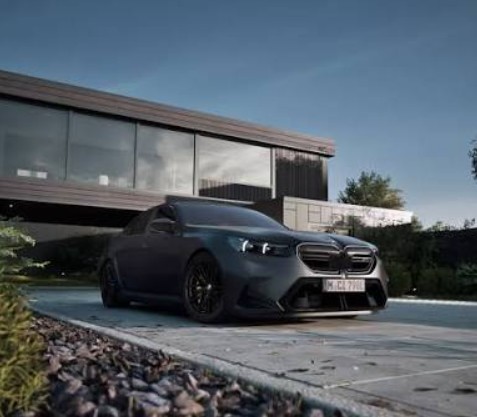
The BMW M5 has never been the car we choose because we want to squeeze every last mile from a gallon of fuel. This is a luxury sedan that has spent decades quietly dressing like an executive car while hiding serious performance underneath. Yet BMW M5 gas mileage still matters, especially now that the newest M5 combines a twin-turbo V8 with plug-in hybrid technology.
And that creates an interesting question: is the modern M5 actually economical?
Well, yes and no.
The current M5 can complete many short trips without burning gasoline at all when its battery is charged. Once that battery's usable electric range has been consumed, however, the enormous performance sedan still has quite an appetite for premium fuel.
For the 2026 BMW M5 sedan, EPA figures reported by Edmunds are 12 MPG city, 19 MPG highway, and 14 MPG combined when operating after the plug-in battery has been depleted. The same source lists a 47 MPGe combined rating and 29 miles of EPA electric range.
Those numbers only tell part of the story.
Let's dig into what BMW M5 MPG actually looks like, why newer and older M5s behave so differently, and what owners can realistically expect at the gas pump.
Content in this publication
- What Is the BMW M5 Gas Mileage?
- 2026 BMW M5 MPG Explained
- 2025 BMW M5 Gas Mileage
- How Far Can a BMW M5 Drive on Electricity?
- BMW M5 Gas Mileage Before the Hybrid Era
- Does the BMW M5 Get Good Gas Mileage?
- How Driving Style Changes BMW M5 MPG
- Does Charging the BMW M5 Actually Save Gas?
- BMW M5 Fuel Tank Capacity and Driving Range
- Does the BMW M5 Require Premium Gas?
- How Much Does It Cost to Fuel a BMW M5?
- How to Improve BMW M5 Gas Mileage
- Does Tire Pressure Affect BMW M5 MPG?
- BMW M5 MPG in Sport Mode
- BMW M5 Gas Mileage vs. Performance
- Is the Hybrid BMW M5 More Fuel Efficient Than the Old M5?
- BMW M5 Real-World MPG: What Should We Expect?
- Is BMW M5 Fuel Economy a Deal Breaker?
- Which BMW M5 Is Best for Fuel Economy?
- Final Thoughts on BMW M5 Gas Mileage
- Frequently Asked Questions
What Is the BMW M5 Gas Mileage?
If we're talking about the current 2026 BMW M5 sedan sold in the United States, the headline figures are:
| Driving condition | 2026 BMW M5 |
|---|---|
| City | 12 MPG |
| Highway | 19 MPG |
| Combined gasoline MPG | 14 MPG |
| Combined MPGe | 47 MPGe |
| EPA electric range | 29 miles |
| Fuel tank | 15.9 gallons |
| Fuel | Premium unleaded |
These specifications come from EPA-based figures compiled by Edmunds.
At first glance, 14 MPG from a plug-in hybrid sounds almost comically poor. Shouldn't adding an electric motor make a car dramatically more economical?
Usually, yes.
But the M5 isn't a Toyota Prius wearing an aggressive body kit. Its hybrid system is primarily designed to combine electrification with extraordinary performance.
The current car pairs a 4.4-liter turbocharged V8 with an electric motor and produces 717 horsepower and 738 lb-ft of torque in U.S.-spec 2025 form.
We're asking one machine to behave like an EV around town, a luxury sedan during the commute, and something bordering on a supercar when we bury the throttle. Physics eventually sends us the bill.
2026 BMW M5 MPG Explained
The 2026 BMW M5 gas mileage rating of 14 MPG combined deserves some context.
When the battery has reached its minimum usable charge and gasoline is doing most of the heavy lifting, fuel economy is roughly what we would expect from a powerful twin-turbo V8 propelling a very heavy all-wheel-drive performance sedan.
According to Edmunds, the 2026 model weighs approximately 5,390 pounds.
That's substantial.
Imagine asking an NFL offensive line to sprint every time the traffic light turns green. Even with clever electronics helping, moving that much mass quickly takes energy.
2026 BMW M5 City MPG
The official city figure is approximately 12 MPG.
Stop-and-go driving tends to punish large combustion engines because we're repeatedly accelerating thousands of pounds from a standstill.
Yet here's the twist.
If we regularly charge the M5, city driving can actually become the environment where its plug-in system makes the most sense. A commute shorter than the electric range could involve little or no gasoline use.
That's why two owners living in the same city could report wildly different fuel consumption.
One charges every night.
The other never plugs the car in.
Technically, they're driving the same M5. Economically, they're almost driving two different cars.
2026 BMW M5 Highway MPG
Highway economy rises to approximately 19 MPG according to EPA-based specifications.
Once we're cruising steadily, the car isn't constantly overcoming inertia. Aerodynamic drag becomes the bigger enemy, while the engine can operate more consistently.
Drivers taking long highway journeys may therefore see substantially better numbers than those spending most of their time crawling between traffic lights.
Some careful real-world testing has produced results above the official gasoline-only figure. Edmunds, for example, reported around 24 MPG during a long road trip while the gasoline and electric systems worked together.
That doesn't mean every owner should expect 24 MPG.
It does show why plug-in hybrid fuel economy cannot always be summarized by one neat number.
2025 BMW M5 Gas Mileage
The 2025 M5 marked the dramatic transition to the plug-in hybrid G90 generation.
Its EPA-based figures are approximately:
- 12 MPG city
- 17 MPG highway
- 14 MPG combined
- 50 MPGe combined
- 27 miles of EPA electric range
- 15.9-gallon fuel tank
So although the 2025 and 2026 cars share the same 14-MPG gasoline combined figure, the later model carries improved highway and electric-efficiency figures in published specifications.
What Does 50 MPGe Mean?
MPGe confuses plenty of people, and understandably so.
It does not mean the 2025 M5 somehow becomes a conventional car capable of traveling 50 miles on one gallon of gasoline.
MPGe—miles per gallon equivalent—is a standardized way of comparing the energy efficiency of vehicles using electricity with vehicles using gasoline.
The 2025 M5's approximately 50 MPGe combined figure represents its efficiency when electricity is incorporated into the calculation.
Once the battery's plug-in energy has been used, we're back to roughly 14 MPG combined on gasoline.
That distinction is critical when calculating ownership costs.
How Far Can a BMW M5 Drive on Electricity?
BMW currently advertises approximately 25 miles of all-electric range for the M5 Sedan under its displayed range methodology, while EPA-based third-party specifications for specific model years and configurations can differ slightly. BMW itself notes that range varies with factors including wheels, tires, driving style, traffic, temperatures, accessories, and charging frequency.
EPA-based 2026 specifications published by Edmunds list 29 miles for the sedan.
The practical takeaway matters more than arguing over a handful of miles.
A fully charged M5 can cover a meaningful short commute without depending heavily on its V8.
Suppose we drive eight miles to work and eight miles home.
That's 16 miles per day.
With routine charging and favorable conditions, a large portion—or potentially all—of that commute could fit within the car's electric capability.
Suddenly that ugly 14-MPG figure isn't describing our normal weekday routine.
Why Electric Range Changes in Real Life
Electric range isn't carved into stone.
Cold temperatures can reduce it. So can aggressive acceleration, larger wheels, heating or air-conditioning demands, hills, high speeds, and heavy loads.
BMW specifically cautions that actual range depends on driving style, traffic, wheel and tire configuration, outside temperatures, accessories, and charging frequency.
Think of the published range as a useful benchmark, not a promise stamped into the battery casing.
BMW M5 Gas Mileage Before the Hybrid Era
Here's where the comparison gets interesting.
The outgoing F90-generation M5 didn't carry around a large plug-in battery. It relied on its ferocious twin-turbocharged 4.4-liter V8.
The 2023 BMW M5 was EPA-rated at approximately:
| Driving condition | 2023 M5 |
| City | 15 MPG |
| Highway | 21 MPG |
| Combined | 17 MPG |
Yes, you read that correctly.
On gasoline alone, the older M5 actually posts better conventional MPG numbers than the newer plug-in hybrid.
That's one of those automotive facts that sounds backwards until we examine what changed.
Why Can the Older M5 Get Better Gas Mileage?
Weight is a major part of the answer.
The hybrid system adds batteries, motors, electronics, cooling hardware, and associated components. The latest M5 therefore carries considerably more mass.
Once the battery's externally supplied electricity is depleted, that extra equipment doesn't magically disappear. The combustion engine must help move it.
The hybrid system makes enormous sense when we're regularly charging because it lets electricity substitute for gasoline.
If we never plug it in, however, we lose much of the efficiency advantage while continuing to carry the hardware.
It's like hiking with a backpack full of camping equipment but refusing to use the tent.
Does the BMW M5 Get Good Gas Mileage?
By conventional standards?
No.
You may be interested in reading Hyundai Palisade Fuel Consumption: MPG, Real-World Economy, Hybrid Figures, and Running Costs
A gasoline-only rating around 14 MPG combined is objectively thirsty.
But measuring the M5 against an ordinary midsize sedan isn't especially useful. The M5 belongs to the tiny category of luxury four-doors capable of producing acceleration that would embarrass many dedicated sports cars.
Performance has a cost.
Large tires create rolling resistance. Powerful engines consume fuel. Aggressive gearing encourages acceleration. All-wheel-drive equipment adds mass and mechanical losses.
The M5's job isn't simply to minimize energy consumption.
Its trick is combining absurd speed with enough comfort that we can casually drive it to dinner afterward.
How Driving Style Changes BMW M5 MPG
We can probably influence M5 fuel economy more with our right foot than with almost anything else.
Twin-turbo V8 engines behave very differently at light throttle than they do under boost.
Cruise gently and the engine can operate relatively efficiently.
Repeatedly unleash hundreds of horsepower and fuel disappears with impressive enthusiasm.
Aggressive Acceleration
Every hard launch asks the powertrain to accelerate more than two tons of car in seconds.
Energy demand skyrockets.
Do that repeatedly and the dashboard's average MPG readout can fall rapidly.
Steady Highway Cruising
Maintain a consistent speed and fuel economy generally improves.
The transmission can select a tall gear, engine speed drops, and unnecessary acceleration disappears.
This is why highway numbers often look considerably healthier.
Short Trips
Short gasoline-engine trips can be particularly inefficient.
The engine may spend much of the journey warming up without reaching its most efficient operating conditions.
The plug-in M5 partly sidesteps this issue if we begin with sufficient battery charge and complete the trip electrically.
Does Charging the BMW M5 Actually Save Gas?
Absolutely—and charging behavior is arguably the single most important variable for current M5 efficiency.
BMW explicitly recommends charging its plug-in hybrids to maximize efficiency and performance.
Consider two hypothetical owners.
Owner A drives 20 miles per day and charges every evening.
Owner B drives the same 20 miles but rarely plugs the car in.
Owner A might complete much of the week using grid electricity.
Owner B will rely much more heavily on premium gasoline and experience something far closer to the M5's conventional 14-MPG behavior.
Same vehicle.
Same distance.
Completely different fuel bills.
BMW M5 Fuel Tank Capacity and Driving Range
The current M5 sedan uses a 15.9-gallon fuel tank according to published U.S. specifications.
At exactly 14 MPG, multiplying those figures gives a theoretical gasoline distance of roughly 223 miles.
We shouldn't expect to use every drop of the tank, of course.
Nor does that calculation include electric driving.
The official city/highway gasoline range estimates published for the 2026 model are roughly 191 miles city and 302 miles highway, reflecting the different EPA consumption figures.
Once battery energy is incorporated, total usable distance can be greater.
Previous M5 Fuel Tank Capacity
The 2023 M5 carried approximately 20.1 gallons of fuel.
Combined with its 17-MPG EPA rating, that larger tank gave the older car respectable cruising flexibility despite its appetite.
The new plug-in model trades some gasoline capacity for electrification.
That's another reason directly comparing tank-to-tank range between generations can be misleading.
Yes.
Current U.S. specifications call for premium unleaded gasoline.
That's important when estimating ownership expenses.
If we're comparing the M5 with a vehicle that uses regular gasoline, MPG alone doesn't reveal the full difference.
Suppose two cars both return 20 MPG.
If one requires premium while the other accepts regular, their fuel costs still aren't identical.
With an M5, we should budget using the local price of premium rather than the cheapest number glowing on the gas station sign.
How Much Does It Cost to Fuel a BMW M5?
We can calculate this easily.
Imagine premium gasoline costs $4.50 per gallon and we're driving the M5 primarily after its battery has been depleted.
At 14 MPG:
1,000 miles ÷ 14 MPG = about 71.4 gallons
Then:
71.4 × $4.50 = about $321
That's roughly $321 in gasoline for every 1,000 miles under those assumptions.
At 10,000 miles, we're approaching $3,214.
But here's why PHEV ownership becomes difficult to model.
If half our local mileage happens electrically because we routinely charge at home, gasoline expenditure drops dramatically. Electricity costs rise, obviously, but grid energy can be substantially cheaper per mile depending on local rates.
The modern M5 rewards an owner who actually treats it like a plug-in hybrid.
How to Improve BMW M5 Gas Mileage
Nobody buys an M5 to crawl around like we're balancing a glass of water on the dashboard. Still, modest habits can make noticeable differences without sucking every ounce of fun from the car.
We can:
- Charge the plug-in battery regularly.
- Use electric driving for short urban trips.
- Accelerate progressively when maximum performance isn't needed.
- Maintain recommended tire pressures.
- Avoid excessive idling.
- Combine short errands into longer journeys.
- Remove unnecessary heavy cargo.
- Use smoother highway speeds.
- Keep the vehicle properly maintained.
- Anticipate traffic rather than alternating between hard acceleration and hard braking.
The biggest opportunity on a modern M5 remains simple: plug it in.
Without charging, we're carrying a sophisticated hybrid system while refusing to feed it its second energy source.
Does Tire Pressure Affect BMW M5 MPG?
Definitely.
Underinflated tires increase rolling resistance, meaning the powertrain must work harder just to keep the vehicle moving.
Performance cars are particularly sensitive because they wear large, wide tires.
We shouldn't inflate them beyond BMW's recommended values in an attempt to chase MPG, though. Overinflation can negatively affect grip, braking behavior, comfort, and tire wear.
Use the pressures specified for the vehicle's load, tire setup, and operating conditions.
A few dollars saved on fuel aren't worth compromising how an M5 meets the road.
BMW M5 MPG in Sport Mode
Driving mode itself doesn't magically pour fuel into the cylinders, but it changes how readily the car responds to our inputs.
You may be interested in readingHyundai Palisade Fuel Consumption: MPG, Real-World Economy, Hybrid Figures, and Running CostsYou may be interested in reading
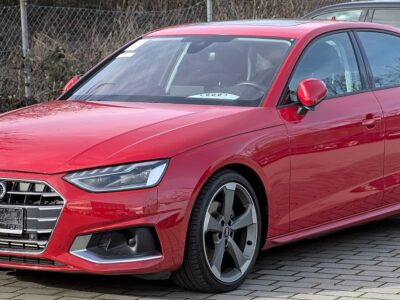
 Audi A4 MPG: Fuel Economy, Real-World Mileage, and Efficiency Guide
Sport-oriented settings can sharpen throttle response, hold lower gears longer, and encourage us to use more of the available performance.
And once we start exploring that performance, MPG becomes a rapidly shrinking number.
In calm driving, the difference may be moderate.
On an empty twisty road where we're repeatedly calling on the V8 and electric motor?
Forget the EPA label.
At that moment we're measuring smiles per gallon.
BMW M5 Gas Mileage vs. Performance
The current M5 makes the fuel-economy conversation fascinating precisely because efficiency isn't its only objective.
This is a machine designed to deliver:
luxury-car refinement,
all-wheel-drive traction,
electric commuting capability,
V8 character,
and staggering acceleration.
Trying to optimize one of those goals can undermine another.
A tiny engine would save gasoline but couldn't deliver traditional M5 character.
A huge battery might provide more electric range but add even more weight.
Removing electrification would reduce mass but eliminate electric commuting and associated efficiency advantages.
The M5 is therefore a compromise—but a spectacularly complicated one.
Is the Hybrid BMW M5 More Fuel Efficient Than the Old M5?
The answer depends on how we use it.
If We Never Charge It
The old F90 wins on conventional EPA gasoline economy.
The 2023 M5 manages 17 MPG combined, compared with approximately 14 MPG combined for the 2025-2026 plug-in sedan when operating after battery depletion.
If We Charge Every Day
The equation changes dramatically.
Short daily journeys may occur largely on electricity, meaning gallons consumed over a month can become far lower than the gasoline MPG number suggests.
That's the paradox of plug-in hybrid MPG.
The vehicle with the worse gasoline rating can consume less gasoline in actual ownership.
BMW M5 Real-World MPG: What Should We Expect?
There isn't one trustworthy number for every driver.
A reasonable expectation depends heavily on usage.
Someone making short, fully charged commutes may go days without using much gasoline.
Someone covering hundreds of interstate miles will eventually exhaust the initial plug-in charge and depend primarily on gasoline.
A driver constantly exploring full throttle will see something else entirely.
Real-world evaluations demonstrate that variation. One Edmunds long-distance test reported about 24 MPG, while CarGurus noted a test-computer average of approximately 21.9 MPG when electric operation was included.
Neither figure should be treated as a guaranteed result.
They simply demonstrate how strongly route and battery use influence this car.
Is BMW M5 Fuel Economy a Deal Breaker?
For most people seriously shopping for an M5, probably not.
Fuel isn't likely to be the largest ownership expense of a six-figure high-performance luxury sedan.
Depreciation, insurance, tires, maintenance, financing, and potential repairs can easily matter more.
Still, we shouldn't ignore gasoline consumption.
If our lifestyle involves 20,000 highway miles every year without convenient charging, the modern M5's plug-in system may deliver fewer financial benefits than expected.
If we have home charging and drive 15 or 20 miles on typical weekdays, the story becomes far more attractive.
The question isn't simply, “What MPG does the BMW M5 get?”
A better question is:
“How will I actually use my M5?”
Which BMW M5 Is Best for Fuel Economy?
If we're comparing recent U.S.-market cars purely on gasoline EPA ratings, the previous F90 generation has the advantage.
Its 2023 rating of 15 city, 21 highway, and 17 MPG combined beats the latest M5's depleted-battery gasoline rating.
But if our definition of efficiency means minimizing gasoline consumption, the current plug-in M5 can win decisively when charged consistently.
That's the distinction worth remembering.
Old M5:
better straightforward gasoline MPG.
New M5:
greater potential to avoid gasoline entirely during shorter journeys.
Who Should Choose the Plug-In M5?
The newest M5 makes particular sense if we:
- Have reliable home or workplace charging.
- Make frequent short journeys.
- Want electric operation without giving up a V8.
- Appreciate instant electric torque.
- Can maximize the battery on weekday trips.
Who Might Prefer the Previous M5?
An F90 M5 can make more sense if we:
- Frequently drive long distances.
- Cannot charge at home.
- Prefer a lighter, simpler non-plug-in drivetrain.
- Want better conventional gasoline MPG.
- Don't care about electric-only driving.
Neither choice is universally superior.
They simply optimize different ownership patterns.
Final Thoughts on BMW M5 Gas Mileage
BMW M5 gas mileage has become more complicated than a simple number printed beside a fuel-pump symbol.
The 2026 BMW M5 sedan is rated around 12 MPG city, 19 MPG highway, and 14 MPG combined on gasoline after battery depletion, while EPA-based specifications list approximately 29 miles of electric range and 47 MPGe combined.
The 2025 model posts the same 14-MPG gasoline combined figure while offering around 27 miles of EPA-rated electric range in published specifications.
Meanwhile, the older 2023 M5 achieves about 17 MPG combined, proving that electrification doesn't automatically improve conventional gasoline economy.
But those numbers miss the clever part.
Charge the latest M5 regularly, keep daily journeys within its electric envelope, and the V8 might spend surprisingly little time drinking fuel.
Ignore the charging cable and hammer the throttle everywhere, and the M5 will consume premium like there's a hole in the tank.
That's exactly what makes its fuel economy story so unusual.
The latest M5 isn't really asking us to choose between electricity and a roaring V8.
It's handing us both—and letting our driving habits decide which one pays the bills.
Frequently Asked Questions
1. What MPG does a 2026 BMW M5 get?
The 2026 BMW M5 sedan is listed at approximately 12 MPG city, 19 MPG highway, and 14 MPG combined once the plug-in battery is depleted. EPA-based specifications also list about 47 MPGe combined and 29 miles of electric range.
2. What MPG does a 2025 BMW M5 get?
The 2025 M5 sedan is rated at approximately 12 MPG city, 17 MPG highway, and 14 MPG combined on gasoline, with around 50 MPGe combined and 27 miles of EPA electric range.
3. Why does the new BMW M5 get only 14 MPG?
The new M5 combines an extremely powerful turbocharged V8, all-wheel drive, high-performance hardware, and a heavy plug-in hybrid system. When externally supplied battery energy has been consumed, the gasoline engine must move a vehicle weighing roughly 5,390 pounds. Regular charging is therefore essential to realizing the plug-in system's efficiency advantage.
Yes. U.S. specifications for the current BMW M5 specify premium unleaded gasoline. Owners should therefore calculate fuel expenses using premium rather than regular-gas prices.
You may be interested in readingHyundai Palisade Fuel Consumption: MPG, Real-World Economy, Hybrid Figures, and Running CostsYou may be interested in reading
Audi A4 MPG: Fuel Economy, Real-World Mileage, and Efficiency GuideYou may be interested in reading
 What to Expect When Driving a Fiat 500: Owner's Perspective
5. Is the new BMW M5 more fuel efficient than the previous M5?
Not when comparing gasoline-only EPA MPG. The 2023 M5 was rated at approximately 17 MPG combined, versus about 14 MPG combined for the current plug-in M5 once its battery is depleted. However, owners who charge the new M5 regularly can complete shorter trips electrically and potentially consume far less gasoline overall.
If you want to know other articles similar to BMW M5 Gas Mileage: MPG, Fuel Economy, and Real-World Costs you can visit the category Driving.
Audi A4 MPG: Fuel Economy, Real-World Mileage, and Efficiency Guide
Hyundai Palisade Fuel Consumption: MPG, Real-World Economy, Hybrid Figures, and Running Costs

Volkswagen Amarok MPG: Fuel Economy, Real-World Figures and What to Expect
Ram 1500 Fuel Economy: MPG, Engines, Real-World Efficiency, and Tips
Mazda 6 Fuel Consumption: Real-World MPG, Efficiency, and Running Costs
Toyota Sequoia Hybrid MPG: How Fuel-Efficient Is This Full-Size SUV?
Leave a Reply
More content of your interest