

Ram 1500 Fuel Economy: MPG, Engines, Real-World Efficiency, and Tips

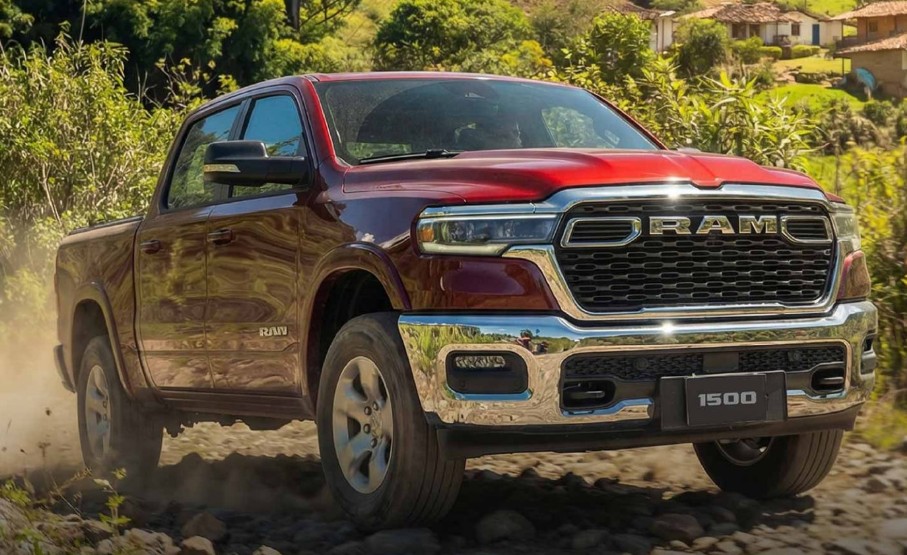
The Ram 1500 fuel economy story is more interesting than the old assumption that a full-size pickup automatically drinks fuel like water. Modern Ram 1500 models combine eight-speed transmissions, aerodynamic tricks, turbocharged engines, cylinder-management technology on certain powertrains, and the available eTorque mild-hybrid system to squeeze more distance from every gallon.
That does not suddenly turn a Ram 1500 into a compact economy car. It is still a substantial pickup designed to haul people, cargo, and trailers. Yet depending on the engine, drivetrain, trim, tires, and driving conditions, fuel consumption can vary dramatically.
For the 2026 model year, Ram offers the 1500 with several powertrain choices, including the 3.6-liter Pentastar V6 with eTorque, two versions of the 3.0-liter Hurricane inline-six, and the returning 5.7-liter HEMI V8 on selected configurations.
So which Ram 1500 gives us the best fuel economy? How much should we expect to spend on gas? And why can two seemingly identical trucks return completely different MPG figures?
Let's break it down.
Content in this publication
- What Is the Ram 1500 Fuel Economy?
- Ram 1500 MPG at a Glance
- Why Ram 1500 Fuel Economy Varies So Much
- Ram 1500 3.6L Pentastar V6 Fuel Economy
- Ram 1500 Hurricane Fuel Economy
- High-Output Hurricane Fuel Economy
- Ram 1500 HEMI V8 Fuel Economy
- Ram 1500 City MPG
- Ram 1500 Highway MPG
- Ram 1500 Fuel Economy While Towing
- Ram 1500 4x4 Fuel Economy
- Does Tire Size Affect Ram 1500 MPG?
- Does Ram 1500 eTorque Improve Fuel Economy?
- Ram 1500 Fuel Tank Size and Driving Range
- How to Calculate Real Ram 1500 MPG
- Why Your Ram 1500 MPG May Be Lower Than Advertised
- Ram 1500 Winter Fuel Economy
- Eco Driving Tips for Better Ram 1500 MPG
- Which Ram 1500 Gets the Best Gas Mileage?
- Is the Ram 1500 Fuel Efficient for a Full-Size Truck?
- Ram 1500 Fuel Economy vs Capability
- How Driving Style Changes Ram 1500 Gas Mileage
- When Poor Fuel Economy May Signal a Problem
- Should You Buy a Ram 1500 Based on Fuel Economy?
- Final Thoughts: Understanding Ram 1500 Fuel Economy
- Frequently Asked Questions About Ram 1500 Fuel Economy
What Is the Ram 1500 Fuel Economy?
Ram 1500 gas mileage depends heavily on configuration.
For the 2026 Ram 1500, manufacturer figures show some configurations reaching approximately 20 mpg city, 25 mpg highway, and 22 mpg combined in 4x2 form. Four-wheel-drive models generally consume somewhat more fuel because of their added weight and drivetrain losses.
Individual trims can differ considerably.
For example, Ram lists the 2026 Laramie at 18 mpg city, 25 mpg highway, and 21 mpg combined in the configuration displayed on its specifications page.
At the opposite end of the spectrum sits the performance-focused Ram 1500 RHO. Ram lists it at 14 mpg city, 16 mpg highway, and 15 mpg combined.
That huge spread tells us something important: asking "What MPG does a Ram 1500 get?" without specifying the engine and configuration is a little like asking how fast a boat travels without telling us whether it is a fishing skiff or a speedboat.
Ram 1500 MPG at a Glance
We can think of modern Ram 1500 fuel economy roughly like this:
- Efficient configurations can approach the low-20s in combined MPG.
- Highway mileage can reach roughly 25 mpg on selected versions.
- Four-wheel drive typically reduces economy slightly.
- High-output and off-road models sacrifice efficiency for capability and performance.
- Tire size, axle ratio, cab configuration, and equipment can change the final numbers.
- Towing can reduce MPG significantly compared with unloaded driving.
The key takeaway is that there is no single Ram 1500 MPG figure covering every truck.
Why Ram 1500 Fuel Economy Varies So Much
A full-size pickup is essentially a collection of compromises.
Want bigger tires? They usually increase rolling resistance.
Want four-wheel drive? Extra components add weight.
Want huge horsepower? That power requires fuel.
Want taller suspension and aggressive off-road tires? Aerodynamic efficiency suffers.
Manufacturers can optimize the truck, but physics still sends the bill.
Engine Choice
Engine selection is one of the biggest influences on fuel economy.
Ram's current engine lineup ranges from the naturally aspirated Pentastar V6 with eTorque to the twin-turbo Hurricane inline-six and the high-output Hurricane designed for substantially stronger performance.
An engine optimized for maximum output will generally use more fuel than one tuned around everyday efficiency.
Two-Wheel Drive vs Four-Wheel Drive
Four-wheel drive adds useful traction, but it also adds components and weight.
That usually means:
4x2 = slightly better fuel economy
4x4 = slightly greater fuel consumption
For drivers who never encounter snow, deep mud, rough trails, or other conditions requiring four-wheel drive, choosing 4x2 can therefore offer a modest efficiency advantage.
For many truck owners, though, the added versatility of 4x4 easily outweighs the extra fuel consumption.
Cab and Bed Configuration
A larger Crew Cab carrying additional equipment generally weighs more than a simpler configuration.
Likewise, changing bed length, options, wheels, suspension equipment, and accessories can alter curb weight and aerodynamic drag.
Every modification may look insignificant individually, but together they can move the MPG needle.
Ram 1500 3.6L Pentastar V6 Fuel Economy
The 3.6-liter Pentastar V6 with eTorque remains an attractive engine for buyers who do not need the strongest acceleration or maximum towing capability.
Ram rates the engine at 305 horsepower and 269 lb-ft of torque for the 2026 Ram 1500.
Its personality is fairly straightforward: adequate power, smooth operation, and a greater emphasis on everyday usability than outright muscle.
Why the V6 Can Be Efficient
Smaller displacement helps, but the eTorque system plays an important role as well.
Instead of operating exactly like a traditional hybrid, eTorque uses a belt-driven motor-generator system that can assist functions such as engine stop-start operation and energy management.
Ram itself notes that fuel-economy gains are achieved partly through the eTorque belt starter-generator system.
Think of it as giving the engine a small helping hand rather than replacing gasoline propulsion altogether.
Who Should Choose the V6?
The V6 makes particular sense when we:
- Mostly commute without a trailer.
- Use the truck for light-duty hauling.
- Value fuel economy more than maximum horsepower.
- Spend significant time driving around town.
- Want a conventional gasoline engine with relatively modest output.
For someone buying a pickup primarily because of its bed, cabin space, and versatility rather than serious towing demands, this configuration deserves attention.
Ram 1500 Hurricane Fuel Economy
The 3.0-liter Hurricane is one of the most interesting engines in the Ram 1500 lineup.
Instead of relying on large displacement, it uses a twin-turbocharged inline-six architecture to produce substantial torque and horsepower.
The standard-output 3.0-liter Hurricane produces 420 horsepower and 469 lb-ft of torque in the 2026 Ram 1500. Ram lists manufacturer-estimated 4x4 fuel economy of approximately 17 mpg city and 24 mpg highway for this engine.
That is impressive when we consider the amount of power available.
Turbocharging Changes the Equation
Turbocharging allows a relatively compact engine to generate output comparable with much larger naturally aspirated engines.
During gentle cruising, we are not constantly demanding maximum boost.
Step heavily on the accelerator, however, and the equation changes rapidly.
Those turbochargers start feeding the engine more air. More air allows more fuel to burn. More fuel creates more power.
And suddenly our efficient six-cylinder pickup develops a serious appetite.
Hurricane Highway Fuel Economy
Highway cruising is where this engine can make the strongest case for itself.
Ram's manufacturer estimate of up to 24 highway mpg in 4x4 specification for the standard Hurricane shows how modern turbocharged engines can combine strong output with reasonably restrained highway consumption.
Steady speeds, light throttle input, and limited boost are the recipe.
Drive it aggressively and those numbers become harder to reproduce.
High-Output Hurricane Fuel Economy
Now we reach the performance side of the family.
The high-output Hurricane produces as much as 540 horsepower and 521 lb-ft of torque in the Ram 1500 RHO.
Nobody creates 540 horsepower by whispering politely to a teaspoon of gasoline.
The high-output engine is designed around serious performance, and fuel economy reflects that priority.
Ram's engine page lists manufacturer-estimated 4x4 mileage of around 15 mpg city and 20 mpg highway for the high-output Hurricane in relevant applications.
The RHO, with its more aggressive performance-oriented setup, is rated even lower at 14 city, 16 highway, and 15 combined mpg.
Performance Has a Fuel Cost
If our priority is maximizing miles from every gallon, this is not the engine to choose.
If our priorities include huge horsepower, acceleration, off-road ability, and the grin that follows a hard press of the throttle, the extra gasoline may simply be part of the experience.
Ram 1500 HEMI V8 Fuel Economy
The 5.7-liter HEMI V8 returned to the 2026 Ram 1500 lineup after considerable enthusiast demand. Ram lists it among the engines available for the current truck, while specific packages such as the 2026 BackCountry can pair it with eTorque.
The HEMI remains attractive for reasons that have very little to do with maximizing MPG.
It sounds good.
It delivers familiar V8 character.
It produces satisfying low-end response.
And for some truck buyers, those qualities matter more than extracting another mile or two from every gallon.
Is the HEMI Bad on Gas?
"Bad" depends on our expectations.
Compared with a compact crossover? Certainly.
Compared with large-displacement pickup engines from earlier generations? Modern engine management, transmission gearing, and eTorque technology can make it surprisingly manageable.
Still, anyone buying a V8 pickup should budget realistically for fuel rather than expecting economy-car operating costs.
Ram 1500 City MPG
City driving is hard on pickup-truck efficiency.
Every acceleration event asks the engine to move several thousand pounds from a standstill.
Then we brake.
Then accelerate again.
Traffic lights essentially turn gasoline into heat.
Stop-and-go driving is particularly punishing because the truck rarely settles into the steady cruising conditions where its transmission, aerodynamics, and engine-management systems work most efficiently.
How to Improve Ram 1500 City Fuel Economy
Small changes matter.
Accelerate smoothly instead of flooring the throttle between lights.
Look farther ahead so we can coast toward slowing traffic rather than accelerating until the last moment.
Avoid excessive idling.
Remove unnecessary cargo.
Maintain proper tire pressure.
One aggressive launch may not matter much. Hundreds of them over a month certainly do.
Ram 1500 Highway MPG
The highway is where the Ram 1500 can surprise people.
Selected 2026 configurations are rated as high as approximately 25 mpg highway, while the standard Hurricane 4x4 is manufacturer-estimated at as much as 24 mpg highway.
Those figures are far removed from the stereotype of every full-size truck struggling to escape the mid-teens.
But speed matters enormously.
Why 70 MPH Can Cost More Than 60 MPH
Aerodynamic drag rises rapidly with speed.
A pickup already pushes a large frontal area through the air. Drive faster and the engine must spend increasingly more energy overcoming that invisible wall.
Adding a roof rack, oversized mirrors, light bar, lifted suspension, or oversized tires can make the problem worse.
Our Ram may feel relaxed at 75 or 80 mph, but the fuel gauge knows exactly what is happening.
Ram 1500 Fuel Economy While Towing
Towing completely changes the picture.
A trailer adds weight, aerodynamic drag, rolling resistance, and greater engine load.
That means the MPG displayed during normal commuting should never be used as the assumption for a towing trip.
Why Trailer Shape Matters
Weight receives most of the attention, but aerodynamics can be equally important.
A low utility trailer carrying construction materials may affect consumption far less than a tall enclosed camper.
At highway speeds, pulling a large travel trailer can feel like towing a wall.
The engine must constantly overcome that resistance.
How Much MPG Does Towing Reduce?
There is no universal percentage.
Results depend on:
- Trailer weight.
- Trailer frontal area.
- Driving speed.
- Terrain.
- Wind.
- Engine choice.
- Axle ratio.
- Tire specification.
- Payload in the truck.
- Driving technique.
Instead of expecting a precise percentage, we should plan for materially higher fuel consumption whenever towing a substantial trailer.
Ram 1500 4x4 Fuel Economy
We often buy 4x4 because we need confidence when conditions get ugly.
Snow.
Mud.
Sand.
Wet grass.
Boat ramps.
Trails.
Those benefits come with an efficiency cost because four-wheel-drive hardware adds weight and mechanical complexity.
Still, current figures show that a 4x4 Ram 1500 can remain relatively efficient. The standard 3.0-liter Hurricane, for example, is listed at up to approximately 17 city and 24 highway mpg in manufacturer-estimated 4x4 figures.
Twenty-four highway MPG from a 420-horsepower full-size 4x4 pickup would have sounded almost absurd a couple of decades ago.
Does Tire Size Affect Ram 1500 MPG?
Absolutely.
Large tires look fantastic on a pickup, but our fuel tank may not share the enthusiasm.
Bigger or heavier tires can increase:
- Rotational mass.
- Rolling resistance.
- Aerodynamic turbulence.
- Effective gearing changes.
Aggressive all-terrain or mud-terrain tread also tends to create more resistance than highway-focused tires.
Lift Kits and Fuel Economy
A lift kit can amplify the effect.
Raising the truck exposes more underbody area to airflow and may disturb the aerodynamic profile manufacturers worked hard to optimize.
Combine a lift with chunky 35-inch tires, heavy aftermarket wheels, a roof rack, and off-road accessories, and we should not be surprised when MPG falls.
The truck has not developed a mechanical problem. We have simply changed the equation.
Does Ram 1500 eTorque Improve Fuel Economy?
Yes, efficiency is one of the reasons eTorque exists.
Ram specifically attributes part of its fuel-economy improvement to the eTorque belt starter-generator system.
The system can recover energy and support smoother stop-start operation while assisting the gasoline engine under certain circumstances.
Is eTorque a Full Hybrid?
Not in the conventional sense.
We should not expect to drive around town silently for long distances using electric power alone as we might in some full-hybrid vehicles.
Instead, eTorque works behind the scenes.
It makes smaller efficiency improvements repeatedly.
That may sound less dramatic, but hundreds of small gains spread across thousands of miles can still matter.
Ram 1500 Fuel Tank Size and Driving Range
Fuel economy tells only half the road-trip story.
Tank capacity matters too.
Some 2026 Ram 1500 configurations listed by Ram use a 26-gallon fuel tank, while certain higher-end or performance-oriented configurations show a 33-gallon tank.
A truck achieving 20 mpg with a larger tank can cover a substantial theoretical distance between stops.
Of course, we should never plan a road trip around using every final drop of fuel.
Weather, traffic, detours, elevation changes, and idling can all reduce actual range.
How to Calculate Real Ram 1500 MPG
The dashboard fuel-economy display is convenient, but there is an even better way to measure consumption.
Fill the tank completely.
Reset the trip odometer.
Drive normally.
At the next fill-up, record the miles traveled and gallons required.
Then calculate:
Miles driven ÷ gallons used = MPG
For example:
420 miles ÷ 20 gallons = 21 mpg
Do this across several tanks and we start obtaining a meaningful real-world average.
One tank can be distorted by unusual traffic or weather. Ten tanks tell a much better story.
Why Your Ram 1500 MPG May Be Lower Than Advertised
Drivers occasionally assume something must be wrong when their truck does not reproduce published fuel-economy numbers.
Not necessarily.
Test-cycle figures provide standardized comparisons. Real life refuses to cooperate with laboratories.
Our results can change because of:
- Short trips.
- Cold starts.
- Winter fuel blends.
- Headwinds.
- Heavy traffic.
- Mountains.
- Aggressive acceleration.
- Idling.
- Oversized tires.
- Cargo.
- Towing.
- Low tire pressure.
- Roof-mounted accessories.
A truck regularly covering 50-mile highway journeys has a completely different life from one traveling three miles to work through downtown traffic.
Ram 1500 Winter Fuel Economy
Winter can be brutal on fuel efficiency.
Cold engines take longer to reach optimal operating temperature.
Tire pressures fall.
Winter tires add rolling resistance.
Snow and slush create drag.
Drivers idle longer while warming the cabin.
If every journey lasts only a few miles, the engine may spend much of its operating time below ideal temperature.
Should We Warm Up a Ram 1500 for 15 Minutes?
Usually, extended idling simply burns fuel while covering zero miles.
A short warm-up followed by gentle driving typically allows the entire vehicle—not only the engine—to reach operating temperature.
We should always follow the owner's manual recommendations for the specific model, especially in extreme temperatures.
Eco Driving Tips for Better Ram 1500 MPG
Want to improve efficiency without modifying the truck?
Focus on habits first.
A good Ram 1500 fuel-saving routine includes:
- Keep tire pressure correct. Underinflated tires increase rolling resistance.
- Accelerate progressively. Turbocharged engines can consume substantially more fuel under heavy boost.
- Reduce unnecessary idling. Zero miles per gallon is exactly what idling delivers.
- Keep highway speeds reasonable. Aerodynamic resistance rises as speed increases.
- Remove unnecessary cargo. Carrying weight everywhere costs fuel everywhere.
- Use the correct engine oil. Follow Ram's specified viscosity and standards.
- Keep the truck maintained. Mechanical problems can reduce efficiency.
- Use cruise control selectively. On relatively flat highways, steady speed can help.
- Avoid oversized accessories unless needed. Extra weight and drag add up.
- Measure consumption over several tanks. Accurate data helps us spot genuine changes.
Which Ram 1500 Gets the Best Gas Mileage?
The most fuel-efficient Ram 1500 generally comes from choosing a less aggressive configuration rather than simply chasing a particular trim badge.
A lighter 4x2 truck with highway-oriented tires and an efficiency-focused engine will usually outperform a lifted 4x4 off-road model with high-output power.
Ram states that selected 2026 configurations can reach approximately 20 mpg city, 25 highway, and 22 combined, making those versions the natural starting point for buyers focused primarily on gasoline consumption.
Best Setup for Fuel-Conscious Buyers
If fuel economy is our priority, we should generally look for:
- 4x2 rather than 4x4 when suitable.
- Moderate wheel and tire sizes.
- Minimal unnecessary accessories.
- A standard rather than high-output engine.
- Highway-oriented tires.
- Sensible axle gearing.
- Lower overall vehicle weight.
Sometimes the most efficient modification is simply not adding one.
Is the Ram 1500 Fuel Efficient for a Full-Size Truck?
Context matters.
Compared with a sedan or compact hybrid, no.
Compared with what full-size pickups historically consumed, modern Ram 1500 configurations can be remarkably reasonable.
A pickup capable of carrying substantial payload, towing large trailers, seating a family, and producing hundreds of horsepower while reaching roughly 25 mpg on the highway in selected configurations represents a significant evolution.
The better question is therefore not:
"Is the Ram 1500 fuel efficient?"
It is:
"Is the Ram 1500 fuel efficient enough for what we need it to do?"
That is where the decision becomes personal.
Ram 1500 Fuel Economy vs Capability
Fuel economy never exists in isolation.
Suppose Engine A saves us two MPG but cannot comfortably tow our trailer.
Engine B uses slightly more fuel but handles the load effortlessly.
Which engine is really the better choice?
The answer depends on how we use the truck.
Buying the smallest engine and forcing it to work hard every day may not be more sensible than buying excessive horsepower that we never use.
The sweet spot lies somewhere between capability and consumption.
How Driving Style Changes Ram 1500 Gas Mileage
Two people can drive identical trucks along identical roads and return noticeably different MPG.
Why?
Throttle position.
Speed.
Braking habits.
Following distance.
Anticipation.
One driver treats every green light like the starting line of a drag race. Another builds speed progressively and looks far enough ahead to avoid unnecessary braking.
Over thousands of miles, those habits matter.
The Turbocharger Temptation
The Hurricane engine deserves special mention here.
Turbocharged engines can be remarkably efficient when driven gently.
They can also consume plenty of fuel when we continuously request boost.
That addictive surge of torque is like opening the refrigerator for "just one snack."
We know where the story is going.
When Poor Fuel Economy May Signal a Problem
Not every MPG drop should be dismissed as driving conditions.
A sudden, persistent decline may justify investigation.
Possible causes include:
- Low tire pressure.
- Incorrect wheel alignment.
- Dragging brakes.
- Dirty or malfunctioning sensors.
- Ignition problems.
- Fuel-system issues.
- Poor-quality replacement components.
- Mechanical faults triggering or not yet triggering a warning light.
If fuel consumption suddenly changes without an obvious explanation, comparing several full-tank calculations can confirm whether the drop is genuine.
From there, proper diagnosis makes more sense than replacing random parts.
Should You Buy a Ram 1500 Based on Fuel Economy?
Fuel economy should be part of the buying decision, but not necessarily the entire decision.
We should also consider:
- Annual mileage.
- Local fuel prices.
- Towing frequency.
- Payload requirements.
- Commuting distance.
- 4x4 necessity.
- Engine preference.
- Purchase price.
- Maintenance costs.
- Insurance.
- Resale value.
Someone driving 5,000 miles annually may barely notice a two-MPG difference.
Someone driving 30,000 miles every year absolutely will.
That is why MPG deserves context rather than obsession.
Final Thoughts: Understanding Ram 1500 Fuel Economy
The Ram 1500 fuel economy picture is more nuanced than one MPG number printed on a specification sheet.
Selected 2026 configurations can reach roughly 20 mpg city, 25 mpg highway, and 22 mpg combined, while more powerful and aggressively configured trucks consume considerably more.
The standard Hurricane offers an intriguing middle ground, producing 420 horsepower while Ram estimates up to around 17 city and 24 highway mpg in 4x4 form.
At the performance extreme, the 540-horsepower RHO prioritizes speed and capability over fuel savings, with Ram listing 14 city, 16 highway, and 15 combined mpg.
Ultimately, engine choice matters—but so do tires, drivetrain, weight, accessories, towing, weather, speed, and the person behind the wheel.
Choose the truck that matches the work we actually perform rather than the capability we imagine we might need someday. Do that, drive intelligently, and the Ram 1500 can deliver a surprisingly reasonable balance between full-size pickup capability and everyday fuel consumption.
Frequently Asked Questions About Ram 1500 Fuel Economy
1. What is the best fuel economy of a Ram 1500?
Selected 2026 Ram 1500 configurations are listed at up to approximately 20 mpg city, 25 mpg highway, and 22 mpg combined. Actual mileage varies with engine, drivetrain, equipment, weather, terrain, and driving habits.
2. Does a Ram 1500 4x4 use more gas than a 4x2?
Generally, yes. Four-wheel-drive systems add weight and drivetrain components, so comparable 4x4 trucks normally consume slightly more fuel than 4x2 versions. The difference can vary by engine and configuration.
3. What MPG does the 3.0 Hurricane Ram 1500 get?
Ram lists the standard-output 3.0-liter Hurricane at a manufacturer-estimated 17 mpg city and 24 mpg highway in 4x4 form for the 2026 model year.
4. Why is my Ram 1500 getting poor gas mileage?
Low MPG may come from short trips, cold weather, aggressive acceleration, towing, oversized tires, low tire pressure, heavy cargo, high highway speeds, excessive idling, or mechanical problems. Track consumption over several full tanks before deciding that something is wrong.
5. How can I improve Ram 1500 fuel economy?
Maintain correct tire pressure, accelerate gradually, reduce unnecessary idling, keep highway speeds moderate, remove unused cargo, maintain the truck according to schedule, and avoid heavy accessories or oversized tires unless you genuinely need them.
If you want to know other articles similar to Ram 1500 Fuel Economy: MPG, Engines, Real-World Efficiency, and Tips you can visit the category Driving.
Can Nissan Rogue Pull a Boat? Complete Towing Guide
Can Nissan Rogue Be Flat Towed? Complete Towing Guide
Are Nissan Rogue Good on Gas? MPG, Fuel Economy, and Real-World Costs
Can Nissan Rogue Drive in Snow? Complete Winter Driving Guide

Kia Sorento Diesel Fuel Consumption: MPG, Efficiency and Real-World Range
Haval Jolion Hybrid Fuel Consumption: How Efficient Is It Really?
Leave a Reply
More content of your interest