

BMW M5 Reliability: What Owners Need to Know Before Buying

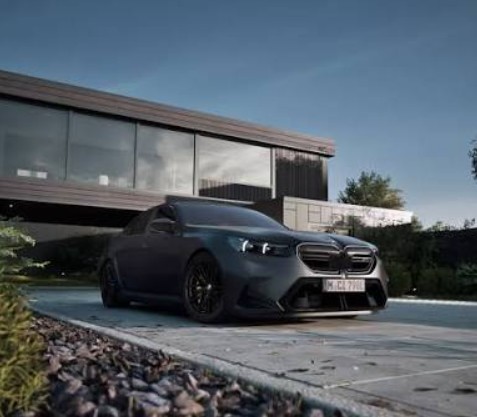
The BMW M5 has always lived in a wonderfully strange corner of the automotive world. It looks like a sophisticated executive sedan, yet beneath the sheet metal sits enough performance hardware to embarrass purpose-built sports cars. That combination is exactly why we love it—and exactly why BMW M5 reliability deserves a much closer look than the usual “German cars are expensive” answer.
So, is the BMW M5 reliable?
The short version is this: some BMW M5 generations can be reasonably dependable when maintained correctly, but no M5 should be treated like an ordinary 5 Series. The car contains high-output engines, sophisticated cooling systems, performance transmissions, adaptive suspension components, complex electronics, and, on newer generations, all-wheel-drive hardware.
That means reliability depends heavily on the generation, mileage, maintenance history, previous ownership, and whether the car has been modified.
An inexpensive used M5 can therefore be a bargain—or a financial trap wearing an M badge.
Let's break down what actually goes wrong, which generations are safer bets, how long an M5 can last, and whether buying one makes sense.
Content in this publication
- Is the BMW M5 Reliable?
- Why BMW M5 Reliability Is Different From Regular BMW Reliability
- BMW M5 Reliability by Generation
- E39 BMW M5 Reliability: The Old-School Favorite
- E60 BMW M5 Reliability: Spectacular but Risky
- F10 BMW M5 Reliability: Better, but Still Demanding
- F90 BMW M5 Reliability: The Sweet Spot?
- G90 BMW M5 Reliability: What Do We Know So Far?
- How Many Miles Can a BMW M5 Last?
- Does Modifying a BMW M5 Hurt Reliability?
- BMW M5 Maintenance Costs and Reliability
- What Makes an M5 Become Unreliable?
- BMW M5 Reliability Compared With Other Performance Sedans
- Which BMW M5 Generation Is Most Reliable?
- What to Check Before Buying a Used BMW M5
- Should You Buy an Extended Warranty for an M5?
- Is a High-Mileage BMW M5 Worth Buying?
- How to Make a BMW M5 More Reliable
- Is the BMW M5 Expensive to Own?
- BMW M5 Reliability: The Bottom Line
- Frequently Asked Questions
Is the BMW M5 Reliable?
BMW M5 reliability ranges from surprisingly good to genuinely intimidating depending on which generation we're discussing.
The newer F90 M5 generally has a much stronger reliability reputation than notorious older versions such as the E60. BMW refined its twin-turbocharged V8 architecture considerably over time, and later M5s benefit from years of improvements to cooling, engine management, transmissions, electronics, and drivetrain components.
That doesn't suddenly make them cheap cars to own.
There's an important difference between reliability and affordability.
A car can go 100,000 miles without catastrophic engine failure yet still require thousands of dollars in brakes, tires, cooling-system components, suspension work, sensors, ignition parts, and routine servicing.
An M5 is rather like owning a thoroughbred racehorse. It may be perfectly healthy, but feeding and caring for it costs considerably more than keeping an ordinary commuter alive.
BMW M5 Reliability at a Glance
If we had to summarize the generations broadly, we'd describe them this way:
| M5 Generation | General Reliability Outlook | Main Concern |
|---|---|---|
| E39 | Good with age-related caveats | Cooling system, VANOS, leaks |
| E60 | Below average | Rod bearings, SMG, throttle actuators |
| F10 | Average for a high-performance car | S63 V8 heat, oil and cooling issues |
| F90 | Good by M5 standards | Cooling, ignition and electronic systems |
| G90 | Too new for firm long-term conclusions | Hybrid complexity and future repair costs |
Those aren't guarantees. A beautifully maintained E60 could easily be a better purchase than a neglected F90.
Condition beats reputation.
Why BMW M5 Reliability Is Different From Regular BMW Reliability
We shouldn't judge an M5 using the same standards as a 530i.
BMW's M division takes the basic 5 Series formula and turns practically everything up several notches. Engines produce substantially more power. Brakes are larger. Suspension tuning is more aggressive. Cooling demands increase. Tires are wider. Drivetrain components must survive enormous torque.
Performance creates heat, and heat is rarely a mechanic's best friend.
Think of the difference between jogging around the neighborhood and running a marathon at competitive pace. Both activities use the same human body, but stress levels are wildly different.
An M5 experiences greater mechanical loads even when driven normally.
And let's be realistic: many M5s aren't always driven normally.
BMW M5 Reliability by Generation
Generation matters enormously when we're shopping for a used BMW M5.
Some engines developed well-documented weaknesses. Others have proven remarkably robust considering their performance.
Let's look at them individually.
E39 BMW M5 Reliability: The Old-School Favorite
The E39 M5, produced around the turn of the millennium, has become one of the most beloved sports sedans ever made.
Its naturally aspirated S62 4.9-liter V8 delivers character without the enormous complexity found in modern turbocharged M engines.
That simplicity doesn't mean trouble-free ownership.
Today, age is becoming as important as mileage. Rubber hoses, seals, bushings, plastic cooling components, electrical connectors, and suspension pieces inevitably deteriorate.
Common E39 M5 Problems
Typical areas worth inspecting include:
- Cooling-system components
- VANOS components
- Valve-cover and oil leaks
- Timing-chain guides
- Suspension bushings
- Clutch wear
- Aging sensors and electronics
- Differential seals
- Power-steering hoses
None automatically makes the E39 unreliable.
In fact, among enthusiast M5s, a properly maintained E39 is arguably one of the easier generations to understand mechanically.
The bigger problem is finding an untouched one.
Can an E39 M5 Be a Daily Driver?
Absolutely, assuming it has been restored and maintained properly.
But we're dealing with cars now more than two decades old. Preventive maintenance becomes essential.
Buying an E39 and expecting to simply change the oil for the next three years would be optimistic.
Buying a documented example whose cooling system, suspension, seals, and major wear components have already been refreshed is another story entirely.
That car could be remarkably satisfying.
E60 BMW M5 Reliability: Spectacular but Risky
Ah, the E60.
Few cars capture the conflict between emotion and common sense quite like it.
Its centerpiece is BMW's extraordinary S85 5.0-liter naturally aspirated V10, capable of revving beyond 8,000 rpm. It produced approximately 500 horsepower and delivered an engine note unlike almost anything else wearing four doors.
Unfortunately, its reliability reputation is considerably less glamorous.
Rod-bearing wear is perhaps the best-known concern. Throttle actuators, VANOS-related components and the SMG transmission can also create substantial repair bills. BMW-focused sources continue to identify rod bearings and SMG hydraulic failures among the E60's defining ownership risks.
E60 M5 Rod Bearing Problems
Rod bearings sit between the connecting rods and crankshaft.
When they wear excessively, the consequences can become catastrophic.
This is what makes the issue so frightening. We're not talking about a malfunctioning window switch. Severe bearing failure can damage the engine itself.
On enthusiast-owned E60s, documented preventive rod-bearing replacement is therefore a significant selling point.
Why Maintenance History Matters So Much
Warm-up habits matter as well.
High-revving engines don't particularly enjoy being thrashed while the oil is still cold. Correct oil, regular changes, responsible warm-up behavior, and preventive servicing all contribute to reducing risk.
The S85's rod-bearing reputation is sufficiently established that specialist guidance commonly treats the issue as a major inspection point on any prospective E60 purchase.
E60 M5 SMG Transmission Reliability
Many E60 M5s use the seven-speed SMG III automated manual transmission.
When everything works, it has an aggressive character that suits the car.
When something fails, enthusiasm can disappear rather quickly.
Potential trouble areas include:
- Hydraulic pump issues
- Clutch wear
- Actuator problems
- Sensors
- Hydraulic-system faults
North American buyers may encounter rare six-speed manual examples, which eliminate some SMG-related complexity.
Does that mean we'd avoid every E60?
Not necessarily.
But an E60 should be bought because we specifically want an E60—not because it's the cheapest way into M5 ownership.
F10 BMW M5 Reliability: Better, but Still Demanding
The F10 generation represented a dramatic change.
The high-revving V10 disappeared and BMW replaced it with a twin-turbocharged 4.4-liter S63 V8.
Power and torque increased dramatically, while the M5 became easier to drive every day.
Reliability, however, remained complicated.
Common F10 BMW M5 Problems
Potential trouble spots can include:
- Oil leaks
- Coolant leaks
- Ignition coils
- Spark plugs
- Fuel-system components
- VANOS-related issues
- PCV-system problems
- Valve-stem seals
- Turbocharger-related wear
- Rod-bearing concerns on some cars
The S63 engine packs considerable hardware into a hot, compact engine bay.
And heat is one of our recurring themes.
BMW-focused ownership reports regularly flag valve-stem seals, VANOS solenoids, ignition components, PCV faults and fuel pumps as areas an F10 buyer should investigate.
Is the F10 M5 Engine Reliable?
It can be.
There are plenty of well-maintained F10 M5s operating at substantial mileage.
What we wouldn't do is buy one purely because the purchase price looks attractive.
Depreciation can turn yesterday's six-figure performance sedan into today's temptingly affordable used car, but repair costs don't depreciate at the same rate.
The car might cost used-Honda money.
The engine still thinks it belongs in an expensive BMW M car.
F90 BMW M5 Reliability: The Sweet Spot?
For buyers who want outrageous performance without quite as much mechanical anxiety, the F90 M5 may represent one of the most compelling choices.
Its 4.4-liter twin-turbocharged S63 V8 evolved significantly from earlier versions, and the drivetrain proved capable of handling huge amounts of power.
The F90 also switched from the previous dual-clutch transmission to a conventional eight-speed automatic and introduced the sophisticated M xDrive all-wheel-drive system.
Despite the extra technology, its overall reliability record has been encouraging.
You may be interested in reading Hyundai Palisade Reliability: Is This Three-Row SUV Built to Last?
BMW-focused analysis in 2026 describes the F90 as relatively dependable by M-car standards while still noting potential issues involving the low-pressure fuel pump, coolant tank, ignition coils, spark plugs, oil consumption and VANOS components.
F90 M5 Coolant Expansion Tank Problems
One specific issue deserves attention.
BMW issued service information relating to leaking coolant expansion tanks on S63-equipped vehicles, including the F90 M5. A later emissions recall covered affected F90 M5s produced from November 7, 2017 through September 9, 2022.
That doesn't mean every F90 will develop coolant trouble.
It does mean buyers should verify recall completion and inspect the cooling system carefully.
Early F90 Fuel-Pump Recall
Some 2018 M5s were also subject to a fuel-pump-related recall involving engine-control software.
BMW reported that affected vehicles could potentially stall, and the remedy involved updating the relevant software.
When buying any used F90, checking its VIN for outstanding recall work is therefore a sensible part of pre-purchase research.
Is the F90 BMW M5 Reliable Enough for Daily Use?
Yes, we'd consider the F90 genuinely practical for daily driving.
It combines supercar acceleration with:
- Four usable doors
- Comfortable seating
- Excellent highway manners
- All-wheel-drive traction
- Modern safety systems
- A conventional automatic transmission
- Substantial cargo capacity
That's almost absurd when we think about it.
One moment we're sitting peacefully in traffic with heated seats. A few seconds later, the car can launch like someone fired it from a catapult.
Reliability won't equal a basic Toyota sedan, but within the world of 600-plus-horsepower luxury performance cars, the F90 is impressive.
G90 BMW M5 Reliability: What Do We Know So Far?
The latest M5 changes the formula again.
Electrification adds a plug-in hybrid system alongside the twin-turbocharged V8.
That produces extraordinary capability but also introduces another layer of hardware.
We now have an engine, turbochargers, transmission, cooling systems, battery hardware, electric components, power electronics, and sophisticated software working together.
Will that prove unreliable?
We simply can't know yet.
Long-term reliability takes years and substantial mileage to evaluate properly.
Anyone claiming with certainty that the newest M5 will either be bulletproof or a disaster is getting ahead of the evidence.
Hybrid Complexity Isn't Automatically Bad
It's tempting to assume more components equal more failures.
Sometimes they do.
But modern hybrid systems can also reduce certain engine loads and provide highly controlled power delivery.
What matters will be how components age after eight, ten, or fifteen years.
For new-car buyers under factory warranty, this is less concerning.
For someone eventually shopping for a twelve-year-old G90 M5 at a fraction of its original price?
That's where the story gets interesting.
How Many Miles Can a BMW M5 Last?
A maintained BMW M5 can potentially exceed 100,000 miles, and many examples reach considerably higher mileage.
There's no magical expiration number.
Engine longevity depends on several factors:
- Maintenance frequency
- Oil-change history
- Warm-up habits
- Driving style
- Modifications
- Cooling-system health
- Previous repairs
- Environmental conditions
A 120,000-mile M5 with meticulous documentation can be safer than a 55,000-mile car that's been tuned, launched every weekend, serviced irregularly, and passed between several owners.
Mileage tells us how far the car traveled.
Service history tells us how it lived.
Does Modifying a BMW M5 Hurt Reliability?
It certainly can.
Modern M5 engines respond extremely well to tuning, which is exactly why modified examples are everywhere.
A software tune may produce enormous power gains without requiring major mechanical changes.
That's fun.
It's also potentially dangerous when shopping used.
More Power Means More Stress
Increasing boost can raise:
- Cylinder pressure
- Turbocharger workload
- Cooling demand
- Transmission stress
- Drivetrain loads
- Heat production
A conservative, professional tune isn't automatically catastrophic.
But we should approach aggressively modified cars with caution, especially if documentation is vague.
The Used-M5 Modification Problem
Here's the tricky part.
Sometimes a seller returns a modified vehicle to stock before selling it.
Now the car looks factory standard, yet it may have spent years producing considerably more power than intended.
That's why a thorough pre-purchase inspection and diagnostic scan matter.
The cleanest engine bay on Earth cannot tell us how many drag-strip launches happened three owners ago.
BMW M5 Maintenance Costs and Reliability
Maintenance isn't technically the same thing as reliability, yet the two are closely connected.
Skip maintenance on an ordinary car and problems arrive sooner.
Skip maintenance on an M5 and the problems may arrive sooner while carrying a much larger invoice.
Routine M5 Expenses
Owners should budget for things such as:
- Synthetic engine oil
- Premium fuel
- Performance tires
- Large brake components
- Spark plugs
- Ignition coils
- Filters
- Transmission servicing
- Differential servicing
- Cooling-system maintenance
- Suspension components
High-performance tires deserve special mention.
The M5 has enormous torque and significant weight. Tire life can disappear remarkably quickly under spirited driving.
Brake costs can also be dramatically higher than on an ordinary 5 Series, especially where optional carbon-ceramic systems are involved.
What Makes an M5 Become Unreliable?
Neglect.
That's the simplest answer.
An M5 that receives preventive maintenance tends to age much better than one receiving repairs only after warning lights appear.
A few ownership habits make a particularly big difference.
1. Extending Oil Changes Too Far
Fresh oil is cheap compared with engines and turbochargers.
Many enthusiasts therefore prefer conservative oil-change intervals rather than stretching service intervals to their absolute maximum.
2. Driving Hard Before the Engine Is Warm
Engine coolant can warm relatively quickly while oil takes longer.
Giving the drivetrain time to reach operating temperature before demanding maximum performance is simply sensible mechanical sympathy.
3. Ignoring Small Coolant Losses
A minor coolant leak is rarely going to heal itself.
If the reservoir level repeatedly falls, investigate it.
Cooling problems can escalate from mildly annoying to painfully expensive.
4. Buying Cheap Replacement Parts
A cheap M5 repair can become a very expensive M5 repair when the job has to be done twice.
OEM or high-quality equivalent components generally make sense for critical systems.
5. Ignoring Warning Messages
Modern BMWs are extremely good at telling us something is unhappy.
The dashboard may occasionally feel like an overprotective parent, but warnings shouldn't simply be erased and forgotten.
Scan the car.
Find the cause.
Fix it properly.
BMW M5 Reliability Compared With Other Performance Sedans
The M5 isn't uniquely complicated.
Its natural competitors—AMG sedans, Audi RS models, and other ultra-high-performance luxury cars—also use sophisticated engines, adaptive suspension systems, complex electronics, large brakes, and expensive drivetrain hardware.
The real comparison therefore shouldn't be:
You may be interested in readingHyundai Palisade Reliability: Is This Three-Row SUV Built to Last?You may be interested in reading
 Audi A4 Reliability: How Dependable Is It Really?
“Is an M5 as reliable as a Corolla?”
Of course not.
A more useful question is:
“Is the M5 reliable enough relative to the performance it delivers?”
Recent generations, particularly the F90, make a convincing case.
Few cars can comfortably carry a family across the country and then produce performance that would have seemed exotic-car territory not long ago.
That versatility inevitably comes with complexity.
Which BMW M5 Generation Is Most Reliable?
If we were prioritizing reliability while still wanting a relatively modern M5, we'd put the F90 near the top of the list.
Its S63 engine represents years of development, and the eight-speed automatic is generally a more reassuring ownership proposition than some earlier specialized transmissions.
The E39 remains attractive for buyers who prefer mechanical simplicity and old-school character, although age itself is becoming its biggest enemy.
The F10 sits in the middle.
And the E60?
That's the emotional choice.
Buy it with your eyes open, maintenance records in your hand, and money left in the bank.
Our Rough M5 Reliability Ranking
For a typical used-car buyer, we'd roughly rank them:
- F90 M5
- Well-maintained E39 M5
- F10 M5
- E60 M5
We're deliberately leaving the G90 out because insufficient long-term ownership data exists to place it confidently.
And remember: an individual car can completely overturn this ranking.
A neglected F90 is not automatically better than a cherished F10.
What to Check Before Buying a Used BMW M5
Never buy an M5 based on appearance alone.
A polished body and spotless leather tell us very little about what's happening beneath the surface.
A proper inspection should examine mechanical, electronic, and historical factors.
Used BMW M5 Inspection Checklist
Before buying, we'd want to:
- Review complete service records
- Verify the VIN and recall status
- Scan every control module for stored faults
- Check for oil leaks
- Inspect coolant levels and leaks
- Examine suspension components
- Measure brake wear
- Inspect tire condition and matching brands
- Verify transmission behavior
- Listen for unusual cold-start noises
- Test every major electrical feature
- Look for aftermarket hardware
- Check for signs of previous tuning
- Review accident history
- Inspect underneath the vehicle
- Obtain an independent pre-purchase inspection
That final point matters more than almost anything else.
Pay for a Specialist Inspection
Spend the money.
A BMW specialist familiar with M cars may spot something in twenty minutes that would take an inexperienced buyer six months—and several thousand dollars—to discover.
The inspection shouldn't merely tell us whether the car currently runs.
We want to know what it's likely to need next.
There's a huge difference.
Should You Buy an Extended Warranty for an M5?
For newer used M5s, a legitimate comprehensive warranty can provide meaningful peace of mind.
But read the exclusions carefully.
“Powertrain coverage” sounds excellent until we discover that the component likely to fail isn't covered.
Important areas to investigate include:
- Turbochargers
- Cooling-system components
- Electronics
- Adaptive suspension
- Transfer case
- Differential
- Fuel system
- Infotainment components
Also verify labor-rate limits.
BMW M repairs aren't always labor-light.
Is a High-Mileage BMW M5 Worth Buying?
Potentially.
In fact, we'd sometimes prefer the high-mileage enthusiast-owned car with a thick folder of invoices over the mysteriously low-mileage example with practically no history.
High mileage often scares buyers, which creates opportunities.
But we need evidence that expensive maintenance wasn't postponed.
A 100,000-mile M5 could have already received:
- New cooling components
- Suspension work
- Fresh plugs and coils
- Differential service
- Transmission service
- Brake replacement
- Gaskets and seals
Meanwhile, a 60,000-mile car might be approaching all of those expenses simultaneously.
Purchase price is only chapter one.
How to Make a BMW M5 More Reliable
We can't redesign the car, but we can stack the odds heavily in our favor.
Use the correct fluids.
Stay ahead of maintenance.
Allow proper warm-up.
Investigate unusual noises quickly.
Don't ignore coolant consumption.
Keep software and recall work current.
And perhaps most importantly, resist the temptation to chase gigantic horsepower numbers simply because tuning makes them easy to achieve.
A 600-horsepower sedan is already rather quick.
Do we really need 850 horsepower to reach the supermarket?
Actually, don't answer that.
We know how M5 owners think.
Is the BMW M5 Expensive to Own?
Yes.
Even a reliable M5 is expensive compared with an ordinary sedan.
That's not a flaw so much as the price of admission.
We shouldn't walk into M5 ownership expecting economy-car running costs any more than we'd buy a speedboat and complain about fuel consumption.
The smarter approach is budgeting properly.
Set aside money for preventive maintenance and unexpected repairs before they occur.
If a $3,000 repair would make the car financially impossible to keep, an older M5 probably isn't the right purchase.
That may sound conservative, but nothing ruins the ownership experience faster than being afraid of every dashboard warning.
BMW M5 Reliability: The Bottom Line
The BMW M5 isn't inherently unreliable simply because it's complicated, nor is every generation equally dependable.
The E60 M5 carries the greatest mechanical risk, largely because of well-known S85 engine and SMG-related concerns. The F10 improves everyday usability but retains potentially expensive S63-related maintenance demands. The E39 can be wonderfully dependable when restored and maintained correctly, although age now plays a major role.
The F90 M5 is arguably the strongest modern choice for buyers balancing performance with reliability. Its engine and drivetrain have proven impressively durable by high-performance standards, though cooling components, ignition parts, fuel-system items, electronics, and ordinary M-car wear expenses still deserve attention.
The latest G90 may eventually prove just as impressive—or even better—but we need considerably more time before declaring anything about long-term durability.
Ultimately, the secret to BMW M5 reliability isn't finding a mythical version that never breaks.
It's buying the right example.
We want documentation, careful previous ownership, sensible modifications—or preferably none—consistent servicing and a clean specialist inspection.
Buy purely on price and an M5 can drain a bank account like water through an open tap.
Buy carefully, maintain it properly, and we're rewarded with one of the most extraordinary combinations of luxury, practicality and speed ever squeezed into a four-door sedan.
And that's why, despite all the warnings, people keep coming back.
Frequently Asked Questions
1. Is the BMW M5 a reliable car?
The BMW M5 can be reliable when properly maintained, particularly newer generations such as the F90. However, maintenance costs are substantially higher than those of a regular sedan, and older generations have specific known weaknesses. Reliability therefore depends heavily on generation, maintenance history and previous ownership.
2. Which BMW M5 is the most reliable?
The F90 M5 is one of the strongest choices for buyers prioritizing modern reliability. Its later-generation S63 twin-turbo V8 has generally developed a better reputation than earlier versions, although coolant-system, ignition, fuel-system and electronic problems can still occur. The E39 can also be dependable but is increasingly affected by age.
3. Which BMW M5 should we avoid?
The E60 M5 deserves the greatest caution rather than an automatic “avoid” label. Its S85 V10 is famous for rod-bearing concerns, while throttle actuators, VANOS components and the SMG transmission can create expensive repairs. A documented, specialist-maintained example can still be an excellent enthusiast car.
4. How long will a BMW M5 engine last?
A properly serviced BMW M5 engine can exceed 100,000 miles and potentially travel substantially farther. Longevity depends more on maintenance, warm-up habits, modifications, oil-change history and cooling-system health than on mileage alone. Neglected low-mileage examples can be riskier than carefully maintained high-mileage cars.
You may be interested in readingHyundai Palisade Reliability: Is This Three-Row SUV Built to Last?You may be interested in reading
Audi A4 Reliability: How Dependable Is It Really?You may be interested in reading
 Ford Edge Reliability: How Dependable Is This SUV?
5. Is a used BMW M5 worth buying?
Yes, provided we understand the running costs and have the vehicle inspected before purchase. A used M5 delivers extraordinary performance for the money, particularly after depreciation, but inexpensive purchase prices shouldn't be confused with inexpensive ownership. Service records and condition should matter more than finding the cheapest example.
If you want to know other articles similar to BMW M5 Reliability: What Owners Need to Know Before Buying you can visit the category Blog.
Does Mercedes A-Class Have a Renault Engine?

Kia Sportage Gas Tank Size: Complete Guide

BMW X1 Life Expectancy: How Long Does It Last?
Is the Toyota Yaris Cross Reliable? 2026 Guide

Kia Sportage Weight Guide: Curb, Kerb & GVWR

Toyota RAV4 Gas Tank Size (Chart & Explanation)
Leave a Reply
More content of your interest