

Ford Edge Reliability: How Dependable Is This SUV?

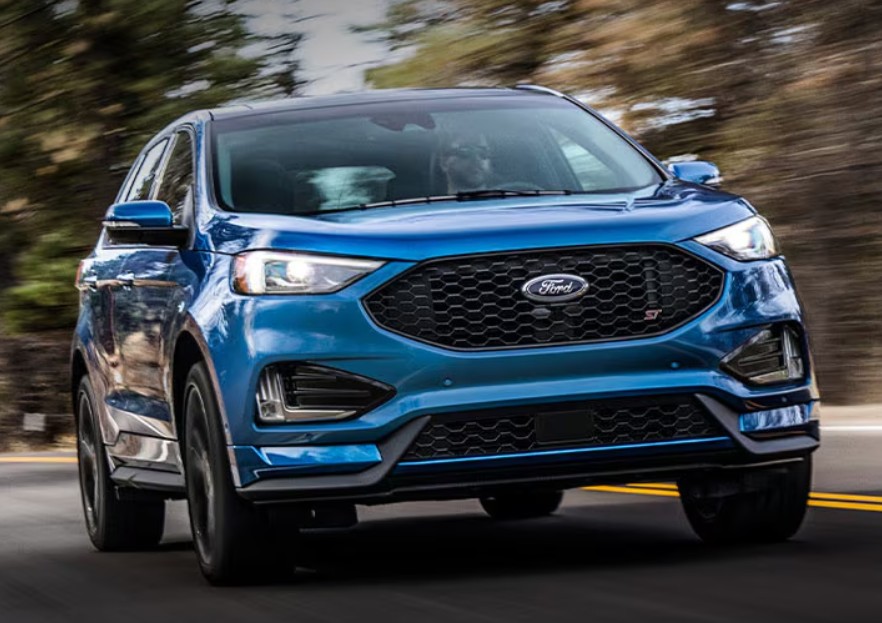
The Ford Edge has always occupied an interesting corner of the SUV market. It is bigger and roomier than a compact crossover, yet it avoids the bulk and third-row complexity of larger family SUVs. On paper, that sounds like a sweet spot. But when we start shopping for a used Edge—or wondering whether the one already sitting in our driveway has another 100,000 miles left—we inevitably arrive at one question: How good is Ford Edge reliability?
The short answer is encouraging, but there are a few catches.
Overall, the Ford Edge can be a dependable midsize SUV when we choose the right model year, engine, and maintenance history. It isn't quite the automotive equivalent of a cast-iron frying pan that survives generations without complaint, but neither is it a mechanical time bomb. Reliability varies considerably across its long production run, and certain engines, transmissions, AWD components, brake systems, and electronics deserve closer inspection.
RepairPal currently gives the Ford Edge a 3.5 out of 5 reliability rating, ranking it 11th among 26 midsize SUVs. It estimates average annual repair and maintenance costs at about $611, with approximately 0.33 unscheduled repair-shop visits per year.
Those numbers tell only part of the story, though. Let's dig deeper.
Content in this publication
- Is the Ford Edge a Reliable SUV?
- Ford Edge Reliability at a Glance
- Understanding Ford Edge Generations
- Ford Edge Engine Reliability
- Ford Edge Transmission Reliability
- Ford Edge AWD and PTU Reliability
- Ford Edge Brake Reliability
- Ford Edge Electrical Reliability
- Ford Edge Infotainment Reliability
- Ford Edge Cooling-System Reliability
- Ford Edge Suspension and Steering Reliability
- How Long Does a Ford Edge Last?
- What Mileage Becomes Risky on a Ford Edge?
- Ford Edge Repair Costs
- Are Older Ford Edges Reliable?
- Are Newer Ford Edges More Reliable?
- Ford Edge Recalls and Reliability
- Ford Edge Reliability Compared With Japanese SUVs
- Does Maintenance Make a Big Difference?
- How to Inspect a Used Ford Edge
- Should We Get a Pre-Purchase Inspection?
- Which Ford Edge Should We Buy for Reliability?
- Should We Avoid High-Mileage Ford Edge Models?
- Pros and Cons of Ford Edge Reliability
- Is a Ford Edge Expensive to Maintain?
- Can the Ford Edge Be a Good Family Vehicle Long Term?
- Final Verdict: How Good Is Ford Edge Reliability?
- Frequently Asked Questions About Ford Edge Reliability
Is the Ford Edge a Reliable SUV?
Generally, yes. A properly maintained Ford Edge can provide many years of dependable transportation.
What makes the Edge interesting is that its reliability is less about the nameplate itself and more about the particular combination sitting under the hood. Two Edges parked side by side may look nearly identical yet have very different long-term ownership prospects because of their engine, drivetrain, production year, and maintenance history.
That's why we shouldn't simply ask, "Are Ford Edges reliable?"
A better question is:
Which Ford Edge is reliable?
Later models benefited from years of refinement, while some earlier vehicles experienced recurring concerns involving brake boosters, power transfer units, transmissions, sensors, and other components. RepairPal's owner-reported problem database, for example, identifies brake-booster concerns and transmission/PTU fluid leaks among prominent Edge complaints.
None of this automatically makes the Edge unreliable. Every long-running vehicle develops patterns. The trick is knowing those patterns before money changes hands.
Ford Edge Reliability at a Glance
For shoppers who want the quick version, we would characterize the Edge like this:
- Overall dependability: Average to above average
- Typical repair frequency: Relatively low
- Average annual repair cost: Around $611 according to RepairPal
- Major areas to inspect: Transmission, PTU/AWD system, cooling system, brakes, electronics
- Best strategy when buying used: Favor a documented maintenance history over low mileage alone
- Potential lifespan: 200,000 miles can be realistic with proper care
- Biggest reliability variable: Model year and powertrain
RepairPal reports that severe repairs account for roughly 13% of Ford Edge repair events, about the same as the midsize-SUV average on its methodology.
So, statistically speaking, we're not staring at an SUV that lives permanently on a mechanic's lift.
Understanding Ford Edge Generations
The Edge has gone through two primary generations in North America, and reliability changed substantially during that evolution.
First-Generation Ford Edge: 2007–2014
The first Edge arrived for the 2007 model year.
These vehicles are mechanically simpler in several respects than later turbocharged models, which can be attractive for shoppers looking at inexpensive used SUVs. However, age is now a major factor.
Even a well-built SUV starts feeling the passage of time after more than a decade. Rubber seals harden. Bushings crack. Sensors get temperamental. Cooling components weaken. Suspension pieces wear out.
First-generation Edge models can still make sense as budget transportation, but we need to evaluate the individual vehicle rather than relying purely on its reputation.
What Should We Inspect on an Older Edge?
Before buying one, we'd pay particular attention to:
- Transmission behavior
- AWD power transfer unit condition
- Brake operation
- Oil and coolant leaks
- Wheel bearings
- Suspension noise
- HVAC operation
- Electrical accessories
- Rust underneath the vehicle
- Service records
RepairPal's historical Edge problem data specifically identifies leaks around the axle/PTU area and recurring PTU complaints among commonly reported issues.
At this age, maintenance history is king.
A meticulously serviced Edge with 140,000 miles may be a safer purchase than a neglected example showing only 90,000.
Second-Generation Ford Edge: 2015–2024
The redesigned 2015 Edge brought newer styling, technology, turbocharged engine options, more sophisticated electronics, and a considerably more modern interior.
This generation is usually what shoppers mean when researching Ford Edge reliability today.
It feels substantially newer than the original Edge, but complexity increased as well. Turbochargers, advanced infotainment equipment, additional driver-assistance technology, and increasingly complicated powertrain systems introduced more places where problems could potentially emerge.
That doesn't mean we should avoid the second generation.
Far from it.
A good later-production Edge can be an excellent used SUV.
Ford Edge Engine Reliability
The engine deserves special attention because repairs here can dwarf the cost of replacing a window switch or wheel bearing.
Across its lifetime, the Edge has been offered with several gasoline engines, including naturally aspirated V6s and turbocharged EcoBoost units.
3.5-Liter V6 Reliability
The naturally aspirated 3.5-liter V6 was widely used in earlier Ford Edge models.
Its biggest advantage is simplicity relative to turbocharged alternatives. There are no turbochargers spinning at enormous speeds or associated boost plumbing to worry about.
That doesn't make it indestructible.
Age-related cooling-system problems, oil leaks, sensors, ignition components, and other repairs can still appear. Some configurations also use a water-pump design that makes water-pump condition an important consideration during used-vehicle inspection.
Still, we like the naturally aspirated V6 conceptually for shoppers who value uncomplicated performance over maximum fuel efficiency.
Interestingly, Ford issued an emissions recall affecting certain 2015–2018 Edge vehicles equipped with the 3.5-liter engine, involving powertrain-control-module reprogramming. The affected U.S. population listed in Ford documentation was 190,573 vehicles.
As always, VIN-specific recall status matters more than assumptions based solely on model year.
2.0-Liter EcoBoost Reliability
The 2.0-liter EcoBoost became one of the Edge's most important engines.
It offers a useful combination of torque, respectable fuel economy, and everyday drivability. A healthy 2.0 EcoBoost Edge doesn't feel as though it is dragging around a body that's too big for its engine.
However, turbocharged engines reward attentive maintenance.
Oil Changes Matter More Than We Think
Turbochargers rely heavily on clean, correctly specified engine oil.
Stretching oil-change intervals endlessly because the dashboard hasn't complained yet isn't a clever way to save money. It's more like skipping dental appointments for five years because nothing hurts.
Eventually, the bill may arrive.
We would rather see an EcoBoost Edge with consistent oil-change records than one with unusually low mileage but no paperwork whatsoever.
2.7-Liter EcoBoost V6 Reliability
Performance-oriented Edge models, particularly the Sport and later ST, brought Ford's twin-turbocharged 2.7-liter EcoBoost V6 into the picture.
It transforms the Edge.
Acceleration becomes genuinely strong, highway passing feels effortless, and the SUV suddenly behaves as if somebody slipped running shoes onto a family crossover.
But performance has a price.
There are simply more components involved: turbochargers, additional plumbing, more heat, and greater mechanical stress.
That doesn't automatically make the 2.7 unreliable. It means a neglected one has more ways to become expensive.
If we're buying an Edge ST, service history matters enormously.
Ford Edge Transmission Reliability
Transmission reliability is another area shoppers regularly research.
Some owner reports mention hard shifting, clunking, and related drivetrain behavior, and RepairPal includes hard shifting among commonly reported Edge problems.
But we need to separate an occasional rough shift from an actual failing transmission.
What Does a Healthy Edge Transmission Feel Like?
During a test drive, shifts should generally feel predictable.
We would test the vehicle:
- From a cold start.
- During gentle acceleration.
- Under heavier throttle.
- When slowing back down.
- During reverse engagement.
- At highway speed.
- After the drivetrain has reached operating temperature.
A problem that hides during a five-minute drive around the dealership parking lot may reveal itself after 30 minutes.
Warning Signs We Wouldn't Ignore
Watch for:
- Delayed engagement into Drive or Reverse
- Hard banging between gears
- Repeated hesitation
- Shuddering
- RPM flare without matching acceleration
- Transmission warning messages
- Fluid leaks
- Unusual whining or grinding sounds
One strange shift doesn't condemn the transmission.
Repeated abnormal behavior does deserve investigation.
Ford Edge AWD and PTU Reliability
If there is one term potential Edge buyers should know, it is PTU, or power transfer unit.
On AWD vehicles, the PTU helps distribute power into the all-wheel-drive system.
Older Ford crossovers developed a reputation for PTU-related leaks and failures, and this issue appears prominently in RepairPal's Edge owner-complaint data.
How Can We Spot PTU Trouble?
Potential clues include:
- Burnt oil smells
- Fluid underneath the vehicle
- Growling or whining noises
- AWD warning messages
- Vibration
- Unusual drivetrain sounds
A pre-purchase inspection is particularly valuable for an AWD Edge.
A mechanic can examine an area we cannot meaningfully judge from a shiny listing photo.
Ford Edge Brake Reliability
Braking is another area where the Edge's history matters.
Brake-booster problems are among the most frequently reported Edge issues in RepairPal's database.
A booster assists us when pressing the brake pedal. When something is wrong, braking may require more effort than expected or otherwise feel abnormal.
Signs of Brake-System Problems
We should investigate:
- An unusually hard brake pedal
- Excessively soft pedal feel
- Hissing sounds when braking
- Warning lights
- Longer stopping distances
- Pulsation through the pedal
- Vehicle pulling during braking
Brake behavior isn't something to rationalize away.
You may be interested in reading BMW M5 Depreciation: How Fast Does an M5 Lose Value?
If the pedal feels wrong, we inspect it.
Ford Edge Electrical Reliability
Modern SUVs are rolling computers with cupholders.
The Ford Edge is no exception.
As vehicles gained touchscreens, powered liftgates, cameras, parking sensors, driver-assistance systems, digital displays, electronic shifters, and multiple control modules, electrical reliability became an increasingly important part of ownership.
Some electrical problems are minor annoyances.
Others can make us question whether our SUV has developed a personality.
Common Electrical Symptoms to Check
Before purchasing a used Edge, operate virtually everything:
- Infotainment screen
- Backup camera
- Power windows
- Power locks
- Liftgate
- Heated seats
- Ventilated seats, if equipped
- Power seats
- USB ports
- Parking sensors
- Climate controls
- Steering-wheel buttons
- Keyless entry
- Remote start
- Driver-assistance functions
Don't assume a malfunctioning feature "just needs a fuse."
Sometimes it does.
Sometimes it needs hundreds of dollars.
Ford Edge Infotainment Reliability
Ford's infotainment systems improved significantly over the Edge's lifespan.
Older interfaces may feel painfully dated today, while newer SYNC systems are much easier to live with. Regardless of generation, we should test the screen carefully.
Look for freezing, random reboots, delayed responses, Bluetooth connection problems, missing audio, and backup-camera issues.
A temperamental infotainment system isn't necessarily a reason to abandon a great vehicle, but it belongs in our negotiation.
Ford Edge Cooling-System Reliability
Cooling-system health is critical on any used vehicle.
Overheating can turn a manageable repair into catastrophic engine damage frighteningly quickly.
Check for:
- Low coolant
- Dried coolant residue
- Sweet smells
- Temperature fluctuations
- Visible leaks
- White exhaust smoke
- Unexplained coolant loss
If coolant is mysteriously disappearing, we don't simply refill it and hope.
Coolant doesn't evaporate by magic.
Something is happening.
Ford Edge Suspension and Steering Reliability
The Edge rides relatively comfortably for a midsize crossover, but suspension components naturally wear as mileage accumulates.
Older examples may need:
- Struts or shocks
- Control-arm bushings
- Ball joints
- Stabilizer links
- Wheel bearings
- Alignment work
This shouldn't terrify us.
Suspension wear is part of owning an aging vehicle.
What matters is whether we're paying a price that reflects the work it needs.
A $7,000 Edge requiring $1,500 of suspension work may still be reasonable.
A $15,000 Edge advertised as "perfect" shouldn't feel like a shopping cart rolling down cobblestones.
How Long Does a Ford Edge Last?
With proper maintenance, 200,000 miles is a realistic target for many Ford Edge owners, although no fixed mileage can be guaranteed.
Some vehicles will travel farther.
Others will experience expensive problems much sooner.
The vehicle's lifespan depends heavily on:
- Maintenance habits
- Engine choice
- Driving conditions
- Climate
- Accident history
- Previous repairs
- Driving style
- Oil-change frequency
- Transmission condition
- Rust exposure
Mileage alone is a poor storyteller.
It tells us how far the SUV traveled, not how it was treated along the way.
Is 100,000 Miles Too Much for a Ford Edge?
Not necessarily.
A 100,000-mile Edge may still have plenty of useful life.
But once an SUV crosses six figures, our buying strategy should change.
We stop asking whether components could wear out and start asking which components have already been replaced.
That's a major distinction.
A higher-mileage SUV with fresh brakes, tires, suspension components, battery, fluids, and documented maintenance can sometimes be more attractive than a lower-mileage vehicle approaching all those expenses simultaneously.
What Mileage Becomes Risky on a Ford Edge?
There isn't a cliff at which an Edge instantly becomes unreliable.
Instead, risk gradually rises with age and mileage.
Around 100,000–150,000 miles, we'd become increasingly interested in the condition of:
- Cooling system
- Transmission
- AWD system
- Suspension
- Engine mounts
- Wheel bearings
- Alternator
- Starter
- A/C system
- Turbo components on EcoBoost engines
- Oil and fluid seals
By 150,000 miles, buying purely on appearance becomes dangerous.
Records matter.
Ford Edge Repair Costs
RepairPal estimates average annual Ford Edge repair and maintenance spending at approximately $611, slightly above the $573 figure it lists for midsize SUVs but below the $652 average across all vehicle models in its dataset.
Of course, averages can be misleading.
If we spend $150 one year and $1,400 the next, our theoretical average may look harmless while our bank account remembers something entirely different.
That's why we suggest creating a repair reserve for any used SUV, particularly one outside warranty.
Even a reliable ten-year-old vehicle is still a ten-year-old machine.
Are Older Ford Edges Reliable?
They can be.
Older first-generation Edges have the advantage of proven mechanical systems and comparatively straightforward technology.
Their disadvantage is simply age.
Consider a 2011 Edge. RepairPal currently estimates typical repair costs for that model year between roughly $600 and $733, while examples of potentially expensive repairs include steering-rack replacement.
A 2014 Edge, meanwhile, may still be attractive to shoppers wanting a later first-generation model. RepairPal estimates typical repair costs for the 2014 around $468–$573, although individual jobs such as A/C compressor or radiator-fan replacement can cost considerably more.
The lesson?
Purchase price is merely the admission ticket.
Are Newer Ford Edges More Reliable?
Generally, later examples benefit from years of refinement, fewer age-related failures, and more modern systems.
However, "newer" doesn't automatically equal "bulletproof."
More electronics mean more modules and sensors. Turbocharging adds complexity. Modern emissions equipment can add additional failure points.
We'd still normally prefer a well-maintained later Edge over an early example if the budget allows, but condition remains more important than the number printed on the registration certificate.
Ford Edge Recalls and Reliability
A recall shouldn't automatically make us reject a vehicle.
Recalls exist precisely because manufacturers and regulators identify safety or compliance problems and establish corrective actions.
What matters is whether required work has actually been performed.
NHTSA recommends checking a specific vehicle's 17-character VIN because a VIN search can show whether that exact vehicle has unrepaired safety recalls.
This is one step we would never skip before buying.
Does a Recall Mean the Ford Edge Is Unreliable?
No.
Recall history and everyday mechanical reliability are related concepts, but they aren't identical.
A vehicle can have several recalls yet provide excellent long-term service once those campaigns have been completed.
Likewise, a vehicle with few recalls can still develop expensive age-related mechanical failures.
Think of recalls as one chapter of the reliability story—not the entire book.
Ford Edge Reliability Compared With Japanese SUVs
This is where shoppers often hesitate.
Should we buy an Edge or simply choose something like a Toyota Highlander, Honda Passport, Subaru Outback, or another rival?
Japanese brands have developed formidable reputations for longevity, particularly Toyota and Honda. That can make the Edge seem like the underdog before the test drive even starts.
You may be interested in readingBMW M5 Depreciation: How Fast Does an M5 Lose Value?You may be interested in reading
BMW M5 Insurance Cost: What Owners Should ExpectBut used-car shopping isn't conducted in a vacuum.
A comparable Toyota may cost considerably more.
If the Edge is thousands cheaper, we need to evaluate the total ownership proposition, not just reputation.
A well-maintained Edge at the right price can be an excellent deal.
A neglected SUV is a bad deal regardless of the badge.
Does Maintenance Make a Big Difference?
Absolutely.
Maintenance is where theoretical reliability meets reality.
We would prioritize:
- Correct engine-oil changes
- Cooling-system inspections
- Transmission servicing as appropriate
- AWD/PTU attention where applicable
- Brake-fluid and brake inspections
- Air-filter replacement
- Spark-plug replacement
- Tire rotations
- Battery testing
- Immediate investigation of leaks or warning lights
Ignoring a tiny leak because "the car still runs fine" is how inexpensive problems sometimes graduate into expensive ones.
Why Service Records Matter So Much
A folder full of receipts may not look exciting, but it's more attractive to us than freshly applied tire shine.
Records tell us the owner cared.
They reveal mileage intervals.
They tell us which expensive components have already been replaced.
They can expose repeated problems.
Maintenance history gives mileage context.
How to Inspect a Used Ford Edge
Before buying, we would use a systematic checklist rather than falling in love after one test drive.
Before Starting the Engine
Inspect:
- Oil level and appearance
- Coolant level
- Visible leaks
- Tire condition
- Underbody corrosion
- Body-panel alignment
- Fluid residue beneath the SUV
At Cold Start
Listen for:
- Rattles
- Knocking
- Extended cranking
- Rough idle
- Excessive exhaust smoke
During the Test Drive
Check:
- Transmission shifts
- Steering response
- Braking
- Suspension noises
- Highway vibration
- Turbo performance
- AWD warnings
- Dashboard lights
- Climate control
After the Test Drive
Open the hood again.
Why?
Some leaks become visible only after the engine warms up and the cooling system becomes pressurized.
Should We Get a Pre-Purchase Inspection?
Yes.
If there's one piece of advice we would carve into stone, it's this:
Never let a $150–$250 inspection stand between us and a potentially several-thousand-dollar repair.
A qualified independent mechanic can uncover worn suspension pieces, leaks, scan-tool trouble codes, structural repairs, tire problems, brake wear, and drivetrain issues that an ordinary buyer may completely miss.
If a seller refuses an independent inspection, we would treat that refusal as information.
There is always another Edge for sale.
Which Ford Edge Should We Buy for Reliability?
If reliability is our priority, we generally prefer a later-production example with comprehensive maintenance records over the cheapest early model we can find.
Our ideal used Edge would have:
- Documented oil changes
- Clean accident history
- Smooth transmission operation
- No coolant loss
- No drivetrain leaks
- No active warning lights
- Quiet suspension
- Fully functioning electronics
- Completed recall work
- Successful independent inspection
Notice what isn't at the top of that list?
Trim level.
Leather seats are nice.
A healthy drivetrain is nicer.
Should We Avoid High-Mileage Ford Edge Models?
Not automatically.
High mileage becomes dangerous when combined with poor maintenance.
A highway-driven Edge covering 18,000 miles a year may actually experience gentler mechanical use than an SUV driven 7,000 miles annually through endless short urban trips.
Mileage is one clue—not a verdict.
We would rather buy a properly serviced 120,000-mile Edge than a suspicious 70,000-mile example with no records, warning lights, old tires, and coolant stains.
Pros and Cons of Ford Edge Reliability
Like most vehicles, Edge ownership isn't black and white.
Reliability Advantages
- Generally reasonable repair frequency
- Moderate average maintenance costs
- Wide availability of parts and repair knowledge
- Proven naturally aspirated engines in older models
- Strong performance from EcoBoost engines
- Many examples available on the used market
Reliability Drawbacks
- Certain older vehicles have PTU concerns
- Brake-booster complaints appear in owner data
- Some transmission complaints exist
- Turbocharged versions demand disciplined maintenance
- Aging electronics can create nuisance repairs
- Neglected cooling-system problems can become expensive
The key takeaway is balance.
The Edge isn't flawless, but neither is reliability its Achilles' heel.
Is a Ford Edge Expensive to Maintain?
Compared with many premium SUVs, no.
Compared with the simplest compact cars, yes.
That's exactly what we'd expect.
The Edge is a midsize SUV with larger tires, more powerful engines, more complex drivetrains, and more equipment than an economy sedan.
RepairPal's $611 annual average supports the idea that ownership costs are fairly middle-of-the-road rather than extreme.
Still, those numbers cover many model years.
A 15-year-old AWD Edge and a nearly new Edge are completely different ownership propositions.
Can the Ford Edge Be a Good Family Vehicle Long Term?
Yes, and this may be one of its strongest arguments.
The Edge offers a useful blend of cabin space, cargo capability, comfortable road manners, highway stability, and available AWD without forcing us into a massive three-row SUV.
For a household that doesn't need seven seats, the configuration makes a lot of sense.
Reliability becomes even more appealing when we buy wisely.
Find the right one, maintain it properly, and the Edge can settle into family life almost invisibly—which is arguably the greatest compliment we can give a daily driver.
It starts every morning.
It carries everyone.
It comes home.
No drama required.
Final Verdict: How Good Is Ford Edge Reliability?
So, is the Ford Edge reliable?
Yes, generally—but model year, engine, drivetrain, and maintenance history make a substantial difference.
RepairPal's current 3.5/5 rating places the Edge in respectable territory for a midsize SUV, with repair frequency and major-repair probability broadly around segment norms.
The Edge's weaker areas shouldn't be ignored. Older AWD models deserve careful PTU inspection. Brake-system history matters. Transmission behavior deserves a thorough test drive. EcoBoost engines reward consistent oil changes, and every used example should be examined for cooling-system problems and unresolved recalls.
But we shouldn't let internet horror stories convince us that every Edge is destined for disaster.
Cars aren't statistics parked in a spreadsheet.
They have histories.
A neglected "reliable" model can become a nightmare, while a carefully maintained Edge can quietly roll past 150,000 or even 200,000 miles.
Our buying formula is simple: choose the best-maintained Ford Edge we can afford, verify its history, check its VIN for recalls, inspect it professionally, and never ignore developing symptoms.
Do that, and the Edge can be a dependable companion rather than a frequent visitor to the repair shop.
Frequently Asked Questions About Ford Edge Reliability
1. Is the Ford Edge reliable after 100,000 miles?
Yes, a Ford Edge can remain reliable beyond 100,000 miles when it has received proper maintenance. At this mileage, however, we should carefully inspect the transmission, cooling system, suspension, brakes, AWD components, and engine for leaks or deferred maintenance. Service history becomes increasingly important as mileage climbs.
2. How many miles can a Ford Edge last?
A well-maintained Ford Edge can potentially reach around 200,000 miles or more, although there is no guaranteed lifespan. Driving conditions, engine choice, previous maintenance, climate, accident history, and repair quality all influence longevity. We'd judge the individual vehicle rather than assuming every Edge will reach the same mileage.
3. What are the most common Ford Edge reliability problems?
Reported problems vary by year, but recurring areas worth inspecting include brake boosters, PTU or drivetrain leaks on some AWD vehicles, hard transmission shifting, suspension wear, electronics, and age-related mechanical issues. RepairPal lists brake-booster and PTU-related complaints among frequently reported Edge problems.
4. Is the Ford Edge expensive to repair?
Usually not exceptionally expensive for its class. RepairPal currently estimates average annual Ford Edge repair and maintenance costs at approximately $611. Individual repairs can obviously cost far more, particularly when engines, transmissions, AWD components, steering systems, or air-conditioning systems are involved.
5. Is buying a used Ford Edge worth it?
It can be. The Edge often provides substantial passenger space, comfort, performance, and equipment for the money. We would prioritize a vehicle with documented maintenance, smooth drivetrain operation, no unexplained coolant loss, no major leaks, completed recalls, and a clean pre-purchase inspection rather than simply choosing the cheapest listing.
You may be interested in readingBMW M5 Depreciation: How Fast Does an M5 Lose Value?You may be interested in reading
BMW M5 Insurance Cost: What Owners Should ExpectYou may be interested in reading
BMW M5 Qualities: What Makes the M5 So Special?If you want to know other articles similar to Ford Edge Reliability: How Dependable Is This SUV? you can visit the category Blog.
Kia Sportage Gas Tank Size: Complete Guide

BMW X1 Life Expectancy: How Long Does It Last?
Is the Toyota Yaris Cross Reliable? 2026 Guide

Kia Sportage Weight Guide: Curb, Kerb & GVWR

Toyota RAV4 Gas Tank Size (Chart & Explanation)

Toyota RAV4 Depreciation: Complete Resale Value Guide
Leave a Reply
More content of your interest