
BMW M5 vs M4: Which BMW M Car Is Better?

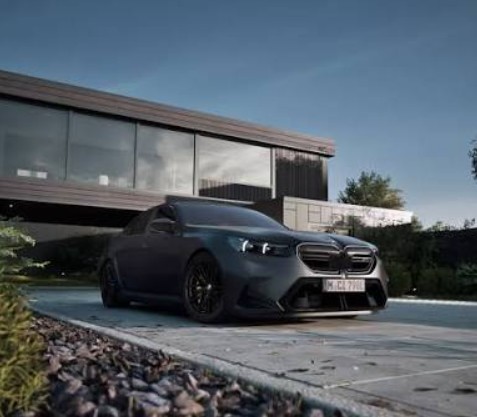
Choosing between the BMW M5 vs M4 sounds simple until we spend a little time with what these two cars are actually trying to accomplish. Both wear the famous M badge. Both are brutally fast. Both can turn an ordinary commute into something that feels suspiciously like a qualifying lap.
Yet they approach performance from very different directions.
The BMW M4 is the more compact, more focused, more traditional sports coupe. It places the driver closer to the action and generally feels like the car we would choose when a twisting road appears on the horizon.
The BMW M5, meanwhile, is the executive express. It mixes supercar-level acceleration with four doors, generous passenger space, luxury features, and the ability to cross countries without leaving us exhausted.
The latest versions make the contrast even more interesting. BMW's current M5 uses an electrified V8 plug-in-hybrid powertrain producing 717 horsepower and 738 lb-ft of torque, while the M4 lineup remains centered around a turbocharged inline-six. The M4 Competition xDrive produces 523 horsepower and can sprint from 0-60 mph in a claimed 3.4 seconds—the same official 0-60 figure BMW quotes for the much more powerful M5.
So which one actually deserves our money?
That depends on whether we want a scalpel or a sledgehammer wrapped in leather.
Content in this publication
- BMW M5 vs M4 at a Glance
- BMW M5 vs M4 Performance: Two Roads to Speed
- BMW M5 vs M4 0-60: Surprisingly Close
- BMW M5 vs M4 Engine Character
- BMW M5 vs M4 Weight: The Elephant in the Garage
- BMW M5 vs M4 Handling
- BMW M5 vs M4 Daily Driving
- BMW M5 vs M4 Interior
- BMW M5 vs M4 Exterior Design
- BMW M5 vs M4 Sound
- BMW M5 vs M4 Transmission Options
- BMW M5 vs M4 Drivetrain
- BMW M5 vs M4 Practicality
- BMW M5 vs M4 Fuel Economy
- BMW M5 vs M4 Running Costs
- BMW M5 vs M4 Comfort
- BMW M5 vs M4 for Road Trips
- BMW M5 vs M4 for the Track
- BMW M5 vs M4 for Mountain Roads
- BMW M5 vs M4 Technology
- BMW M5 vs M4 Reliability
- BMW M5 vs M4 Resale Value
- BMW M5 vs M4 Price and Value
- BMW M5 vs M4: Which Is Faster?
- BMW M5 vs M4: Which Is More Fun?
- BMW M5 vs M4 for Everyday Enthusiasts
- Who Should Buy the BMW M4?
- Who Should Buy the BMW M5?
- BMW M5 vs M4: Pros and Cons
- BMW M5 vs M4: Our Verdict
- Frequently Asked Questions
- Closing Thoughts
BMW M5 vs M4 at a Glance
Before digging into the details, here is the basic personality difference.
| Category | BMW M5 | BMW M4 |
|---|---|---|
| Body style | Four-door performance sedan | Two-door performance coupe |
| Engine concept | Twin-turbo V8 plug-in hybrid | Twin-turbo inline-six |
| Maximum output | 717 hp | Up to 523 hp in Competition xDrive |
| Torque | 738 lb-ft | 479 lb-ft in Competition xDrive |
| Drivetrain | M xDrive AWD | RWD or M xDrive AWD depending on version |
| 0-60 mph | 3.4 seconds | As quick as 3.4 seconds |
| Character | Luxury missile | Focused sports coupe |
| Passenger practicality | Excellent | Moderate |
| Best suited to | Daily driving, touring, effortless speed | Driver engagement, agility, weekend fun |
BMW currently lists the M5 at 5,390 pounds curb weight, highlighting just how substantial the new hybrid performance sedan has become. The M4's lighter, smaller format naturally gives it a different relationship with corners, braking zones, and directional changes.
In other words, comparing the M5 and M4 is not merely comparing horsepower numbers. We are comparing two interpretations of the M philosophy.
BMW M5 vs M4 Performance: Two Roads to Speed
If we judged cars exclusively by horsepower, the conversation would end quickly.
The M5 wins.
But horsepower is only one ingredient in the recipe.
BMW M5: Massive Hybrid V8 Power
The modern BMW M5 combines a 4.4-liter twin-turbocharged V8 with an electric motor. BMW rates the complete system at 717 horsepower and 738 lb-ft of torque. Power reaches all four wheels through an eight-speed automatic transmission and M xDrive system.
Those figures sound almost absurd for a luxury sedan.
Not long ago, 700 horsepower belonged to exotic supercars and heavily modified machines. Now we can have that kind of output while carrying three passengers and luggage.
The electric motor also changes the way the M5 delivers performance. Electric assistance helps provide immediate response while the V8 builds its tidal wave of power.
Plant the accelerator and the M5 does not simply accelerate. It seems to pull the horizon toward us.
BMW M4: Less Power, Less Excess
The M4 follows a more conventional performance-car formula.
BMW's M4 Competition uses a 3.0-liter twin-turbo inline-six producing 503 horsepower, while the M4 Competition xDrive increases output to 523 horsepower. BMW quotes 0-60 mph in 3.4 seconds for the xDrive version.
That means the M4 can essentially match the M5's official launch figure despite giving away nearly 200 horsepower.
How?
Weight matters.
Traction matters.
And beyond a certain point, adding horsepower does not translate directly into dramatically quicker acceleration.
The M4 feels more like it wants us involved in the process. The M5 feels like it wants to bend physics on our behalf.
BMW M5 vs M4 0-60: Surprisingly Close
Here is where the comparison becomes entertaining.
BMW lists the M5 at 3.4 seconds from 0-60 mph. The M4 Competition xDrive is also rated at 3.4 seconds.
On paper, they are tied.
Of course, acceleration beyond highway speeds tells another story. The M5's huge horsepower and torque advantage becomes increasingly relevant as speeds rise.
Think of it like two runners launching from the starting blocks. The M4 is lighter and gets moving efficiently. The M5 arrives carrying a rocket engine.
At legal road speeds, either car is astonishingly quick.
For most of us, the difference between them will matter less than the fact that both can produce acceleration that was supercar territory not very long ago.
BMW M5 vs M4 Engine Character
Numbers tell us what an engine does. Character tells us how it feels.
And here, these cars could hardly be more different.
The M5 V8 Feels Effortless
A turbocharged V8 produces the sort of low-end authority that makes overtaking almost comically easy.
Add electric assistance and the latest M5 becomes even more muscular.
There is no need to hunt through the rev range waiting for excitement. Torque arrives quickly and heavily.
The M5's personality is therefore less frantic.
It feels powerful everywhere.
Why the Hybrid System Matters
The hybrid hardware is not simply there to improve efficiency.
It also supports performance.
The electric motor fills gaps in power delivery and helps the M5 respond immediately when we request acceleration.
The downside is obvious: batteries, motors, electronics, and additional hardware contribute substantial weight.
The M4 Inline-Six Loves to Work
The M4's turbocharged six-cylinder engine feels more athletic.
Rather than overwhelming us with brute-force torque, it encourages revs and rewards aggressive driving.
There is something inherently satisfying about working an inline-six through its power band.
For enthusiasts who enjoy the mechanical rhythm of acceleration, braking, downshifting, and cornering, the M4's engine suits the experience beautifully.
BMW M5 vs M4 Weight: The Elephant in the Garage
We cannot discuss the modern M5 without addressing its weight.
BMW lists the M5 Sedan at 5,390 pounds.
That is enormous for a performance sedan.
The hybrid system contributes significantly, but so do the M5's larger dimensions, luxury equipment, structural requirements, and technology.
Does that ruin the car?
Not necessarily.
Modern chassis electronics, adaptive suspension, rear-wheel steering technologies, sophisticated differentials, and huge brakes can disguise weight remarkably well.
But physics never completely disappears.
Why the M4 Feels More Agile
The M4 is smaller and considerably lighter.
That means there is less mass to control every time we:
- turn into a corner,
- change direction,
- brake hard,
- accelerate out of a bend,
- or transition through a quick series of curves.
Imagine swinging a baseball bat versus swinging a sledgehammer.
Both can hit hard.
Only one naturally feels nimble.
That is the essence of the BMW M4 vs M5 handling difference.
BMW M5 vs M4 Handling
The M5 can corner at speeds that seem unreasonable for something its size.
The M4, however, feels more naturally at home doing it.
M4: The Driver's Choice
The shorter, lighter coupe feels eager.
Turn the steering wheel and the M4 responds with less sensation of mass moving around us.
On narrow mountain roads or technical circuits, that matters.
The M4 feels like a car designed around the driver first and passengers second.
M5: Incredible Capability Despite Its Size
The M5 takes another approach.
Instead of feeling lightweight, it uses technology to control its considerable mass.
The result can be astonishing.
Drive casually and it behaves like a refined executive sedan. Push harder and it suddenly reveals capabilities that seem completely incompatible with its dimensions.
Still, we never entirely forget that we are driving a large performance sedan.
For some drivers, that sense of momentum is part of the appeal.
BMW M5 vs M4 Daily Driving
Here the M5 begins earning back some points.
An M4 can certainly function as a daily car. Plenty of owners use one that way.
But the M5 is fundamentally designed to perform that role.
Why the M5 Is Easier to Live With
Four proper doors make a surprisingly large difference.
Passengers can enter without folding front seats forward. Rear-seat space is far more generous. Carrying children or coworkers is easier. The trunk suits longer trips.
The M5 is the sort of car we can drive to work Monday through Friday and then take on a weekend road trip without changing vehicles.
Its versatility is one of its greatest strengths.
Living With an M4 Every Day
The M4 demands more compromise.
The rear seats exist, but access is less convenient. The coupe body is wider and longer than some people expect. Large doors can become annoying in tight parking spaces.
None of this makes the M4 impractical.
It simply reminds us that the vehicle's priorities are different.
If our typical passenger count is one or two people, the M4 may provide all the practicality we actually need.
BMW M5 vs M4 Interior
Both cabins share modern BMW design themes, but the atmosphere differs.
The M4 feels like a performance car that happens to be luxurious.
The M5 feels like a luxury car that happens to possess outrageous performance.
Inside the M5
Expect more rear-seat room, greater overall comfort, and a stronger long-distance emphasis.
The M5 belongs to a segment where buyers expect performance without surrendering executive-car refinement.
That means high-quality materials, extensive technology, sophisticated climate control, comfortable seating, and serious sound insulation.
Inside the M4
The M4 places greater visual emphasis on sport.
Optional performance seats can dramatically change the character of the cabin. The lower coupe seating position also makes us feel more connected to the chassis.
The interior still feels premium, but its purpose is clearer.
The M4 wants us looking for the next empty road.
BMW M5 vs M4 Exterior Design
This section is subjective—and probably controversial.
The M4 has developed one of the most recognizable faces in BMW's modern lineup. Its oversized vertical kidney grilles sparked endless debates when introduced.
Whether we love them or hate them, nobody confuses the M4 for an ordinary coupe.
You may be interested in reading BMW M5 vs Audi RS7: Which Super Sedan Deserves Your Garage?
The M4 Looks More Aggressive
Its proportions help.
Long hood.
Low roof.
Wide rear haunches.
Short passenger compartment.
It communicates performance before the engine even starts.
The M5 Looks More Understated
The M5 is still muscular, but the sedan shape naturally gives it more visual restraint.
That can be an advantage.
An M5 possesses the strange ability to appear relatively civilized while hiding performance capable of embarrassing dedicated sports cars.
It is automotive deception at its finest.
BMW M5 vs M4 Sound
A V8 and inline-six naturally produce different soundtracks.
The M5's eight-cylinder engine provides a deeper, heavier tone.
The M4's inline-six sounds sharper and more mechanical.
Neither choice is objectively better.
Some drivers want the thunder of a V8.
Others associate BMW's historic sporting personality more strongly with six-cylinder engines.
If sound matters deeply to us, this alone might influence the decision.
BMW M5 vs M4 Transmission Options
The current M5 uses an eight-speed automatic transmission.
The M4 gives buyers more variety across the range.
BMW offers the standard M4 Coupe with a six-speed manual transmission, while Competition versions use an eight-speed automatic. The Competition xDrive adds all-wheel drive.
That manual gearbox is significant.
Why the Manual M4 Matters
Performance cars are becoming increasingly automated.
A manual M4 therefore offers something the M5 simply cannot replicate: direct mechanical involvement.
Will the manual version win every drag race?
No.
Will we care when shifting gears ourselves down a quiet back road?
Probably not.
Sometimes enjoyment matters more than tenths of a second.
BMW M5 vs M4 Drivetrain
The M5 comes with M xDrive all-wheel drive.
That helps convert its immense output into acceleration without instantly vaporizing the rear tires.
The M4 lineup is more flexible.
We can choose rear-wheel drive in certain configurations or M xDrive if maximum traction matters.
Rear-Wheel Drive Changes the Personality
For enthusiasts, rear-wheel drive often provides a simpler, purer driving experience.
The car feels more adjustable with throttle input, particularly near its limits.
AWD offers confidence and blistering acceleration.
RWD offers interaction.
Neither philosophy wins universally.
BMW M5 vs M4 Practicality
If practicality is high on the priority list, the M5 wins comfortably.
Four doors alone change everything.
Add greater passenger space and the sedan becomes genuinely family-friendly—at least by 700-horsepower standards.
The M4 works best when we do not frequently carry adults in the rear.
Who Needs the M5's Space?
The M5 makes particular sense for drivers who:
- regularly carry passengers,
- have children,
- travel long distances,
- need one car for multiple roles,
- frequently carry luggage,
- want high performance without owning a separate practical vehicle.
The M4 fits drivers who rarely need that extra space.
BMW M5 vs M4 Fuel Economy
Neither vehicle should be confused with an economy car.
However, the M5 introduces an unusual twist through its plug-in-hybrid drivetrain.
Because the M5 can operate using electric energy for shorter journeys, certain driving patterns may use surprisingly little gasoline.
That does not mean the M5 suddenly becomes inexpensive to run.
A heavy 717-horsepower performance sedan remains a complex and demanding machine.
The M4's gasoline-only powertrain is conceptually simpler, although aggressive driving will still produce aggressive fuel bills.
Does the M5 Hybrid Save Money?
Possibly, but that should not be the main reason to buy it.
If we regularly charge the battery and take short trips, electric operation can reduce gasoline consumption.
If we spend most of our time driving hard or covering long highway distances, the benefit changes significantly.
Think of the hybrid system primarily as a performance tool with efficiency benefits attached—not an economy-car transformation.
BMW M5 vs M4 Running Costs
Performance BMWs are expensive machines to operate.
There is no clever way around that.
Expect potentially high costs for:
- performance tires,
- brake components,
- insurance,
- premium fuel,
- scheduled servicing,
- performance alignment,
- and out-of-warranty repairs.
The M5's greater mechanical complexity could also become meaningful as the vehicle ages.
The M5 Has More Systems to Maintain
Hybrid battery.
Electric motor.
V8 engine.
Cooling circuits.
Sophisticated AWD.
Advanced suspension hardware.
That is an impressive technological stack, but complexity rarely makes long-term ownership cheaper.
The M4 Is Simpler—but Not Simple
Nobody should describe an M4 as mechanically basic.
It remains an advanced turbocharged performance car packed with electronics.
Still, compared with the hybrid M5, its overall drivetrain architecture is more straightforward.
Buyers planning to keep the car for many years may want to consider that difference.
BMW M5 vs M4 Comfort
The M5 takes this round.
Its longer wheelbase, larger cabin, sedan layout, and luxury orientation make it naturally better suited to long-distance travel.
The M4 can ride comfortably enough in softer drive settings, but its personality remains firmer and more focused.
Highway Driving
At highway speeds, the M5 is an extraordinary machine.
It settles down.
Noise fades.
The engine barely seems to work.
Then we press the throttle and suddenly discover that our comfortable executive sedan has become a ballistic object.
That dual personality explains much of the M5's appeal.
BMW M5 vs M4 for Road Trips
For two people traveling lightly, the M4 can be fantastic.
For four people plus luggage, the M5 wins without debate.
The M5's larger passenger compartment matters after several hours behind the wheel.
So does rear-seat accessibility.
And when the road finally becomes interesting, we still have hundreds of horsepower available.
That is what makes the M5 such an unusual proposition.
It asks us to sacrifice less.
BMW M5 vs M4 for the Track
Now the advantage swings back toward the M4.
Neither car will disappoint at a track day, but the M4 is simply closer to the traditional track-car recipe.
Lower weight and smaller dimensions help reduce strain on:
- tires,
- brakes,
- suspension,
- and the driver.
The M5 may deliver extraordinary lap times, but moving more than two tons of automobile around a circuit repeatedly requires serious energy management.
Which One Would We Rather Drive for 20 Laps?
Probably the M4.
The M5 would be fascinating.
The M4 would likely be more satisfying.
And that distinction matters.
A stopwatch cannot measure every enjoyable part of driving.
BMW M5 vs M4 for Mountain Roads
Picture an empty road climbing through the mountains.
Hairpins.
Short straights.
Elevation changes.
Fast transitions.
Which key would we grab?
You may be interested in readingBMW M5 vs Audi RS7: Which Super Sedan Deserves Your Garage?You may be interested in reading
BMW M5 vs M8: Which BMW M Car Is Better?The M4.
Its smaller footprint makes the road feel larger. We can place the car more confidently and enjoy working the chassis.
The M5 would still be devastatingly fast, but sometimes speed itself becomes the problem.
With so much power and mass, we may reach irresponsible speeds before the road has given us time to enjoy the process.
The M4 lets us stretch the experience.
BMW M5 vs M4 Technology
Modern BMW M cars give drivers enormous control over vehicle behavior.
Depending on configuration, we can adjust elements such as:
- engine response,
- transmission behavior,
- steering weight,
- suspension firmness,
- braking response,
- traction control,
- drivetrain settings,
- and configurable M driving modes.
This creates cars with multiple personalities.
Drive them gently and they become surprisingly civilized.
Start adjusting M settings and the entire character changes.
Is There Too Much Technology?
Some enthusiasts argue that modern M cars have become overly complicated.
There is some truth to that.
Older performance cars often gave us steering wheel, pedals, gearbox, and little else.
Modern machines can resemble laptops with turbochargers.
Yet that complexity also explains how a 717-horsepower M5 can remain manageable during daily driving.
Technology is what allows these cars to contain such extreme performance without constantly feeling extreme.
BMW M5 vs M4 Reliability
Neither vehicle is the obvious choice if maximum mechanical simplicity is our goal.
These are sophisticated, high-output German performance cars.
Reliability depends heavily on maintenance history, driving style, modifications, mileage, and model year.
An abused performance car can become expensive regardless of badge.
Buying Used? Service History Matters More Than Shine
A pristine paint finish tells us very little.
We would rather buy an M car with:
- complete service documentation,
- sensible modifications or none at all,
- quality tires,
- documented fluid changes,
- clean diagnostic history,
- and evidence of responsible ownership.
A suspiciously cheap M car can become the most expensive one available.
Modified Cars Require Extra Caution
Engine tunes can unlock enormous power.
They can also increase stress on cooling systems, transmissions, driveline components, and engines.
If buying used, we should understand exactly what has been modified before falling in love with horsepower claims.
BMW M5 vs M4 Resale Value
Performance BMW values vary widely depending on generation and specification.
Special versions and desirable configurations can hold value well, while ordinary examples may depreciate substantially.
The M4 may appeal to a wider enthusiast audience because coupes traditionally occupy a strong position in the performance-car market.
The M5 attracts buyers seeking something different: supercar performance hidden inside an executive sedan.
Long-term values will depend heavily on how enthusiasts eventually view the hybrid generation.
Sometimes controversial cars become highly desirable years later.
Sometimes they simply become complicated used cars.
Predicting which path today's M5 follows requires a crystal ball we unfortunately left in the glove box.
BMW M5 vs M4 Price and Value
The M5 sits higher in BMW's hierarchy.
That means we are paying for more than horsepower.
We are also paying for:
- a larger vehicle,
- additional luxury,
- greater passenger space,
- a V8 hybrid drivetrain,
- more technology,
- and flagship-level positioning.
The M4 offers a more concentrated performance experience.
If our primary question is, "Which one gives me more driving excitement for the money?" the M4 becomes extremely persuasive.
If the question changes to, "Which one can replace a luxury sedan and a sports car at the same time?" the M5 becomes easier to justify.
BMW M5 vs M4: Which Is Faster?
In a straight-line launch, the answer is surprisingly complicated.
BMW quotes both the M5 and M4 Competition xDrive at 3.4 seconds from 0-60 mph.
At higher speeds, the M5's 717 horsepower should give it a substantial advantage.
On a tight track, however, outright horsepower matters less.
The M4's lighter mass may allow it to carry speed more naturally through corners and place less stress on brakes and tires.
So "faster" depends on where we are measuring.
From a Stoplight
Near tie.
At Higher Speeds
M5 advantage.
On Tight Roads
M4 may feel faster because it is easier to exploit.
In Everyday Traffic
Both are hilariously overqualified.
BMW M5 vs M4: Which Is More Fun?
This question matters more than many specification tables admit.
Fun is not horsepower.
Fun is not acceleration.
Fun is interaction.
And for many drivers, the M4 wins here.
The coupe feels closer to the traditional sports-car formula. The driver participates more actively instead of simply commanding enormous performance.
The M5's fun comes from something else.
It comes from contradiction.
We are driving a comfortable four-door luxury sedan—and then suddenly accelerating with enough force to rearrange groceries in the trunk.
The M4 is exciting because we expect it to be.
The M5 is exciting because it constantly reminds us that it should not be able to do what it does.
BMW M5 vs M4 for Everyday Enthusiasts
For most enthusiasts without major passenger-space requirements, the M4 may be the more satisfying purchase.
It offers enough performance to make public roads feel small.
It can be configured with rear-wheel drive.
A manual transmission is available on the standard M4.
And the car is fundamentally shaped around driver involvement.
The M5 is the better option when our life requires something more versatile.
That distinction is important.
The "better" car is often simply the one that fits our routine.
Who Should Buy the BMW M4?
The BMW M4 makes the most sense if we prioritize driving engagement.
Choose the M4 if:
- we usually drive alone or with one passenger;
- cornering feel matters more than rear-seat room;
- we want a smaller performance car;
- we enjoy track days or mountain roads;
- we want the possibility of a manual gearbox;
- we prefer an inline-six;
- we want lower weight than the M5;
- or we simply love the drama of a performance coupe.
The M4 feels like a toy we can realistically use every day.
That is a powerful combination.
Who Should Buy the BMW M5?
Choose the M5 if we want one car that does almost everything.
It is particularly compelling when we need:
- four usable doors,
- genuine rear passenger space,
- luxury-sedan comfort,
- explosive acceleration,
- V8 character,
- long-distance refinement,
- all-weather traction,
- and everyday versatility.
The M5 is essentially a business-class lounge strapped to a missile.
That description sounds ridiculous until we drive one.
BMW M5 vs M4: Pros and Cons
BMW M5 Pros
- 717-horsepower hybrid V8 powertrain.
- Extraordinary high-speed acceleration.
- Four-door practicality.
- Excellent long-distance comfort.
- Spacious rear seating.
- M xDrive traction.
- Huge luxury and technology content.
- Can function as a genuine everyday family car.
BMW M5 Cons
- Very heavy.
- More mechanically complex.
- More expensive to purchase and potentially maintain.
- Less naturally agile than the M4.
- Performance can feel almost excessive on public roads.
BMW M4 Pros
- Lighter and more agile.
- More focused driving experience.
- Coupe proportions.
- Manual transmission available on the standard model.
- Up to 523 hp in Competition xDrive form.
- 3.4-second claimed 0-60 mph capability.
- Better suited to technical roads and track use.
- Generally easier to exploit at sensible speeds.
BMW M4 Cons
- Less rear-seat practicality.
- Two-door access can become inconvenient.
- Smaller cabin and cargo flexibility.
- Ride may feel firmer.
- Less effortless long-distance luxury than the M5.
BMW M5 vs M4: Our Verdict
If we strip away badges, horsepower numbers, price tags, and bragging rights, the comparison becomes surprisingly straightforward.
The BMW M4 is the better sports car.
The BMW M5 is the better all-around performance car.
The M4 feels smaller, more intimate, and more eager to involve us. Give us a winding road on an early Sunday morning and the M4 is the key we would probably grab.
But if we had to own only one vehicle?
The M5 becomes incredibly tempting.
It can carry passengers comfortably, tackle long highway trips, commute quietly, and then unleash 717 horsepower when circumstances permit. BMW's own specifications show just how extreme the modern M5 has become: 717 hp, 738 lb-ft of torque, AWD, and a claimed 3.4-second sprint to 60 mph despite weighing 5,390 pounds.
The M4 takes a more traditional path. In Competition xDrive form, its 523-horsepower inline-six still delivers the same claimed 3.4-second 0-60 mph time, but inside a smaller, more driver-focused package.
So the final decision comes down to one question:
Do we want our performance car to feel like a sports car that can handle daily life, or a luxury sedan capable of impersonating a supercar?
For the first, choose the M4.
For the second, choose the M5.
Frequently Asked Questions
Is the BMW M5 faster than the M4?
At higher speeds, the M5's substantial horsepower advantage gives it enormous performance potential. However, BMW currently quotes both the M5 and M4 Competition xDrive at 3.4 seconds from 0-60 mph. The M5 therefore does not automatically dominate every acceleration metric despite producing much more power.
Is the BMW M4 more fun to drive than the M5?
For many enthusiasts, yes. The M4's lower weight, smaller dimensions, coupe layout, and more traditional sports-car personality make it feel more interactive. The M5 is enormously capable but relies more heavily on power and technology to manage its greater size and weight.
Which is better for daily driving, BMW M5 or M4?
The M5 is generally better for daily use when we frequently carry passengers or need additional comfort and space. Its four doors and larger cabin provide much greater versatility. The M4 remains perfectly usable as a daily vehicle for one or two occupants.
Does the BMW M5 have more horsepower than the M4?
Yes. BMW rates the current M5 at 717 horsepower, while the M4 Competition xDrive produces 523 horsepower. That gives the M5 a significant advantage in outright output.
Should I buy a BMW M5 or BMW M4?
Buy the M4 if agility, driver involvement, track use, and coupe styling matter most. Buy the M5 if you want extreme performance combined with four-door practicality, luxury, passenger comfort, and long-distance usability.
Closing Thoughts
The BMW M5 vs M4 debate is ultimately not about deciding which M car is objectively superior. Their personalities are too different for that.
The M4 takes the classic enthusiast formula and turns up the volume. It is smaller, sharper, and more focused.
The M5 takes everything we expect from an executive sedan and injects it with absurd levels of performance.
One behaves like a precision knife.
The other feels like a velvet-covered hammer.
You may be interested in readingBMW M5 vs Audi RS7: Which Super Sedan Deserves Your Garage?You may be interested in reading
BMW M5 vs M8: Which BMW M Car Is Better?You may be interested in reading
BMW M5 vs Mercedes E63 AMG: Which Super Sedan Wins?Both are spectacular tools.
We simply need to decide which one fits our hands.
If you want to know other articles similar to BMW M5 vs M4: Which BMW M Car Is Better? you can visit the category Models.
How to Identify Your Ford Fiesta Model
Toyota RAV4 Engine Oil Capacity: Complete Guide

Vauxhall Corsa Models: Complete Guide to Generations, Trims and Versions (1993–2026)
Kia Sportage Trim Levels: Complete 2027 Comparison
Toyota Corolla Cross vs RAV4: Which SUV Is Better?
Haval Jolion vs Omoda C5: Which SUV Is Better?
Leave a Reply
More content of your interest