
Audi A6 MPG: Fuel Economy, Real-World Mileage, and Efficiency Explained

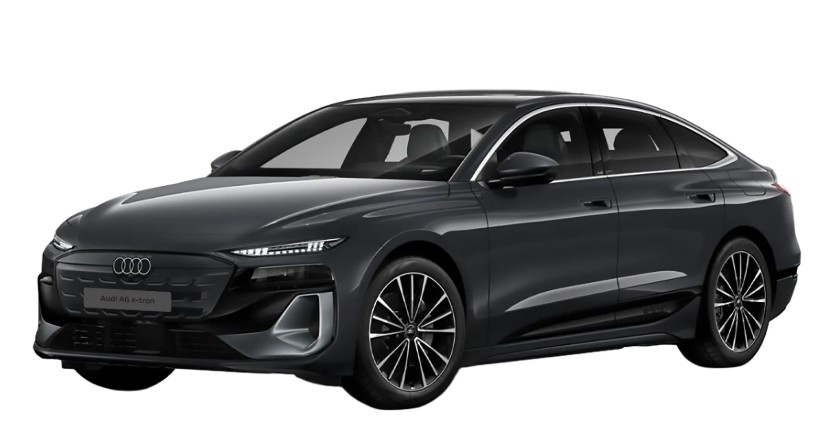
The Audi A6 MPG story is more interesting than a single number on a specification sheet. The A6 has spent decades balancing two goals that do not always play nicely together: effortless luxury and sensible fuel consumption.
That matters because an Audi A6 is not a featherweight economy car. It is a spacious executive model built to cruise quietly, carry adults comfortably, and—in many versions—deliver serious performance. Yet choose the right engine and driving conditions, and an A6 can cover surprisingly long distances without making the fuel gauge fall like a stone.
There is one important catch: asking, “What MPG does an Audi A6 get?” is a bit like asking how fast an airplane flies. Which one?
Petrol, diesel, plug-in hybrid, quattro, front-wheel drive, sedan, Avant, old generation, new generation—they can produce dramatically different figures.
So, instead of throwing one misleading MPG number at the wall, we are going to unpack the whole picture.
Content in this publication
- What Is the Audi A6 MPG?
- Why Audi A6 MPG Figures Can Be Confusing
- Audi A6 Petrol MPG
- Audi A6 Diesel MPG
- Audi A6 TFSI e MPG
- New Audi A6 e-Hybrid MPG
- What Is Real-World Audi A6 MPG?
- Audi A6 Motorway MPG
- Audi A6 City MPG
- Does Audi A6 Quattro Reduce MPG?
- Does Wheel Size Affect Audi A6 MPG?
- Audi A6 Sedan vs Avant MPG
- Which Audi A6 Engine Gets the Best MPG?
- Audi A6 MPG by Generation
- How Far Can an Audi A6 Travel on One Tank?
- What Reduces Audi A6 MPG?
- How to Improve Audi A6 MPG
- Can Audi Drive Select Change MPG?
- Is an Audi A6 Good on Fuel?
- Should We Buy an A6 Based on MPG Alone?
- Audi A6 MPG: Petrol vs Diesel vs Plug-In Hybrid
- The Future of Audi A6 Efficiency
- Conclusion: What Should We Expect From Audi A6 MPG?
- Frequently Asked Questions About Audi A6 MPG
What Is the Audi A6 MPG?
Audi A6 fuel economy varies enormously according to generation and powertrain. As a broad rule, modern conventional petrol models tend to sit somewhere around the 30–40 MPG region under European-style combined testing, while efficient diesel versions can climb into roughly the 40 MPG range or beyond, depending on specification.
The latest-generation A6 demonstrates that spread nicely. Audi has quoted combined consumption of approximately 30.2–34.1 US MPG for an entry-level petrol A6 Sedan in European WLTP testing. A newer 3.0-liter V6 diesel configuration has been rated at approximately 38.6–44.4 US MPG, despite delivering substantial power.
Those figures are impressive for a premium executive car, but they require context. European WLTP values should not be treated as interchangeable with EPA ratings, UK imperial MPG, or what we will necessarily see during a cold Monday-morning commute.
Audi A6 MPG at a Glance
Rather than treating every A6 as equal, it helps to think about fuel economy by powertrain:
| Audi A6 type | General MPG character |
|---|---|
| Smaller petrol engine | Reasonably efficient, especially on long journeys |
| V6 petrol | Strong performance but higher fuel use |
| Four-cylinder diesel | Often one of the economy sweet spots |
| V6 diesel | Excellent motorway efficiency relative to power |
| Plug-in hybrid | Extremely high official MPG when regularly charged |
| Quattro model | Usually slightly less economical than an equivalent 2WD version |
| Older A6 | Highly dependent on engine, gearbox, condition, and generation |
These are broad categories rather than guarantees. Wheel size, tyres, trim level, climate, traffic, vehicle load, and even optional equipment can affect certified figures and everyday consumption.
Why Audi A6 MPG Figures Can Be Confusing
This is where MPG discussions become messy.
We may find one website claiming that an A6 achieves 35 MPG, another showing 44 MPG, and another advertising more than 100 MPG. None necessarily has to be wrong.
They may simply be measuring different cars—or using entirely different testing systems.
US MPG vs UK MPG
A US gallon is smaller than an imperial gallon. Consequently, UK MPG numbers are higher than US MPG numbers for exactly the same fuel consumption.
That means we should always check the measurement standard before comparing figures.
Someone in Britain saying their A6 returns 45 MPG may not be contradicting an American owner reporting a significantly lower MPG number.
They might essentially be describing similar fuel consumption through two different rulers.
WLTP vs EPA Fuel Economy
European-market Audi specifications commonly use WLTP testing.
US cars typically use EPA estimates.
Although both try to offer standardized comparisons, their procedures differ. We therefore should not directly compare a WLTP MPG figure with an EPA MPG rating and assume one vehicle is automatically more efficient.
Think of them as two thermometers using different scales.
Audi A6 Petrol MPG
Petrol A6 models usually appeal to drivers who value refinement, quieter operation, smooth response, and—in more powerful versions—serious acceleration.
Fuel economy is not necessarily poor, either.
Modern turbocharging, sophisticated transmissions, aerodynamic improvements, cylinder-management strategies, and mild-hybrid technology have helped squeeze more mileage from petrol engines that would once have been noticeably thirstier.
For example, Audi published a WLTP combined consumption range of 6.9–7.8 liters per 100 km, equivalent to roughly 30.2–34.1 US MPG, for the 150-kW entry-level TFSI version of the newer A6 Sedan.
When Does a Petrol A6 Make Sense?
We would lean toward petrol when the car regularly handles:
- Shorter journeys
- Mixed urban and suburban driving
- Lower annual mileage
- Frequent cold starts
- Drivers who prioritize smoothness and performance over maximum motorway economy
That does not automatically make petrol cheaper overall, of course. Fuel prices, purchase prices, servicing, taxes, insurance, depreciation, and annual mileage all belong in the equation.
Audi A6 Diesel MPG
Now we arrive at one of the A6's traditional strengths.
Put a diesel A6 on a long motorway journey and the car often feels as though it were designed specifically for that job. Low engine speeds, abundant torque, long gearing, and efficient combustion can make diesel consumption remarkably restrained.
A previous-generation A6 50 TDI 3.0 quattro, for example, was officially quoted at around 40.6–42.8 US MPG combined under the applicable European test figures of its era.
More recently, Audi has quoted the newer 299-PS V6 diesel A6 at 5.3–6.1 L/100 km, corresponding to approximately 38.6–44.4 US MPG combined, depending on vehicle configuration.
For something with nearly 300 horsepower, those numbers are rather striking.
Why Diesel A6 Models Can Be So Efficient
Diesel engines generally produce strong torque at relatively low rpm.
That is especially useful in a big executive car. Rather than spinning frantically to maintain speed, the engine can settle into a relaxed rhythm.
Imagine an experienced cyclist using a tall gear on a flat road rather than pedaling like mad. The principle is different mechanically, but the sensation is similar: low effort, steady momentum.
City Driving Changes the Picture
Diesel's motorway advantages do not necessarily translate into spectacular urban economy.
Cold starts, short trips, congestion, diesel particulate filter regeneration, heavy acceleration, and prolonged idling can all hurt MPG.
Drivers doing almost nothing except short city runs should therefore resist choosing an A6 diesel merely because the advertised combined number looks attractive.
Audi A6 TFSI e MPG
Plug-in hybrid MPG is where things get especially strange.
An A6 TFSI e can display an official MPG figure that makes an ordinary diesel look like a tanker truck.
Older A6 50 TFSI e versions, for example, carried weighted combined figures as low as roughly 1.1–1.6 L/100 km, corresponding to approximately 147–214 US MPG in Audi's published technical data.
Audi UK has also published figures above 200 MPG for certain previous A6 TFSI e configurations.
Does that mean we can drive across the country getting 200-plus MPG indefinitely?
No.
Why Plug-In Hybrid MPG Looks So High
Official PHEV testing incorporates operation using electricity stored in the battery.
If we start with a charged battery and complete many journeys electrically, petrol use can indeed become tiny.
But once the battery's usable electric energy has largely been depleted, the combustion engine must do considerably more work.
That means two owners of identical A6 plug-in hybrids can report wildly different petrol consumption.
One charges every night and commutes 20 miles.
The other rarely plugs in and drives 300 motorway miles at a time.
Same car. Completely different MPG experience.
New Audi A6 e-Hybrid MPG
The newer-generation A6 plug-in hybrid takes the idea further.
Audi UK currently lists the A6 Saloon e-hybrid quattro with a 20.7-kWh net battery, an official electric range of around 59–64 miles, and combined consumption of approximately 113–128 MPG under the applicable official test procedure.
Again, the key phrase is official test procedure.
Audi itself emphasizes that laboratory figures exist primarily for comparison and that actual results vary according to road conditions, weather, equipment, driving style, load, vehicle condition, climate-control use, and—as particularly relevant for plug-in hybrids—battery charge.
What Is Real-World Audi A6 MPG?
Real-world MPG is the number most owners actually care about.
Unfortunately, it is also the number nobody can promise.
We can take two identical A6s and obtain surprisingly different consumption simply by changing the route.
Imagine Car A cruising at a steady speed on a mild day with properly inflated tyres.
Car B crawls through winter traffic, makes three-mile journeys, carries four passengers, runs heated accessories, and accelerates aggressively whenever the road opens.
Which car wins the MPG contest?
We already know the answer.
Why Real MPG Is Usually Different From Official MPG
Official testing creates standardized conditions so one vehicle can be compared with another.
Real roads are wonderfully uncooperative.
You may be interested in reading What to Expect When Driving a Fiat 500: Owner's Perspective
They contain hills, rain, potholes, traffic lights, headwinds, overtaking, school runs, roof boxes, underinflated tyres, impatient drivers, luggage, cold mornings, and air-conditioning.
That is why we should see official MPG as a comparison benchmark, not a personal guarantee.
Audi A6 Motorway MPG
Motorway driving tends to suit the A6 beautifully.
The car's aerodynamic body, tall gearing, efficient engines, and relaxed cruising character all work in its favor.
Diesel models particularly shine here. An economical A6 diesel covering long distances at sensible speeds can deliver fuel consumption that feels almost absurdly good considering the car's size, comfort, and performance.
But speed matters enormously.
Aerodynamic drag rises rapidly as speed increases. Going a little faster may feel harmless from behind the wheel, yet the engine must push through substantially more air.
The result?
That impressive motorway MPG can evaporate surprisingly quickly.
Audi A6 City MPG
Urban fuel economy is typically tougher.
Repeated acceleration consumes energy. Braking then throws much of that kinetic energy away—unless electrification allows some of it to be recovered through regenerative braking.
Conventional petrol and diesel A6 models also spend more time operating below their ideal efficiency range in dense traffic.
This is where hybrid assistance can help.
Can Mild-Hybrid Technology Improve Audi A6 MPG?
Many modern A6 engines incorporate mild-hybrid technology.
Unlike a full hybrid, a mild hybrid generally cannot behave like a fully electric car for meaningful distances. Instead, the electrical system supports efficiency by assisting certain vehicle functions and allowing strategies such as enhanced recuperation and engine-off coasting or stop-start operation, depending on configuration.
The gains may not transform an A6 into a tiny economy hatchback, but every little reduction counts.
Audi's latest-generation V6 diesel combines its combustion engine with MHEV plus technology, which forms part of its efficiency strategy while also providing additional electrical support.
Does Audi A6 Quattro Reduce MPG?
Usually, yes—at least when compared with an otherwise equivalent two-wheel-drive version.
All-wheel drive adds mechanical complexity and can add weight and friction.
However, Audi has spent considerable engineering effort reducing that penalty.
Some A6 quattro systems can alter how power is distributed or reduce unnecessary drivetrain losses under suitable conditions.
For many buyers, the modest efficiency cost is worthwhile for the extra traction and composed feel.
The decision becomes less about “Which gets the highest MPG?” and more about “Which package suits the way we actually drive?”
Does Wheel Size Affect Audi A6 MPG?
Absolutely.
Big wheels look fantastic on an A6. They fill those arches and give the car a muscular stance.
But physics sends us the bill.
Larger wheel and tyre combinations may bring additional weight, wider contact patches, and greater rolling resistance. Aerodynamic differences can also matter.
Audi specifically notes that optional equipment, tyre formats, weight, rolling resistance, and aerodynamic changes can influence official fuel consumption.
If economy is our obsession, the biggest available alloy wheel is rarely our best friend.
Audi A6 Sedan vs Avant MPG
The A6 Sedan generally has an aerodynamic advantage, although the actual difference depends heavily on engine and specification.
The Avant estate body provides extra practicality and a different rear profile. That may carry a small efficiency penalty in comparable configurations, although modern aerodynamic engineering keeps the gap surprisingly restrained.
Audi has invested particularly heavily in aerodynamic refinement with the newest A6 generation.
So this is not a choice where we would sacrifice enormous amounts of fuel merely because we need an estate.
For many families or business users, the added practicality comfortably outweighs a relatively modest consumption difference.
Which Audi A6 Engine Gets the Best MPG?
If we exclude plug-in hybrid weighted MPG figures and concentrate on vehicles using their combustion engines conventionally, diesel has traditionally been the efficiency champion, particularly for sustained high-mileage driving.
Smaller four-cylinder diesels can be exceptionally economical.
Modern V6 diesels can also produce a fascinating blend of power and range.
Plug-in hybrids can consume dramatically less petrol when they are charged frequently and driven within their electric capabilities.
That gives us three very different “best” answers.
Best for Long-Distance Economy
A diesel A6 remains a compelling solution where diesel versions are available and local regulations, taxation, and driving patterns make sense.
Motorway miles are where it earns its reputation.
Best for Short Daily Commutes
A regularly charged A6 plug-in hybrid can potentially complete a large portion of everyday journeys without burning much petrol at all.
The newer UK A6 e-hybrid's official electric range of as much as roughly 64 miles demonstrates how useful this approach can become for owners whose daily travel fits within that envelope.
Best for Balanced Simplicity
A smaller petrol A6 can offer a sensible middle ground.
We lose the spectacular official numbers of the plug-in hybrid and typically cannot match a diesel during extended motorway work, but petrol remains attractive for mixed driving and lower-mileage ownership.
Audi A6 MPG by Generation
Looking at A6 generations reveals just how far engine technology has moved.
Older Audi A6 Models
Older naturally aspirated petrol engines can be considerably thirstier than today's downsized turbocharged units.
Large-displacement quattro versions especially tend to favor performance over fuel economy.
Diesels from older generations often remain impressive on a long run, although age introduces another variable: mechanical condition.
A 15-year-old car's brochure MPG means relatively little if it has poor tyres, dragging brakes, sensor problems, incorrect alignment, neglected servicing, or engine faults.
C7 Audi A6 MPG
The C7 generation helped cement the modern A6's reputation for long-distance efficiency.
Four-cylinder TDI versions became especially attractive to high-mileage drivers, while larger diesel engines combined startling torque with respectable consumption.
For used-car shoppers, however, buying purely by MPG is a mistake. Maintenance history matters more than saving one or two MPG on paper.
C8 Audi A6 MPG
The C8 introduced broader electrification through mild-hybrid systems and plug-in hybrid options.
Aerodynamics, engine management, transmission calibration, thermal efficiency, and electrical recuperation all became pieces of the economy puzzle.
It is also the generation where looking at one “Audi A6 MPG” number becomes increasingly meaningless because the drivetrain choices are so diverse.
Latest Audi A6 MPG
The newest combustion-engine A6 generation continues that evolution.
Audi quoted approximately 6.9–7.8 L/100 km for the entry petrol Sedan at launch, while the subsequently introduced V6 diesel sits around 5.3–6.1 L/100 km, depending on configuration.
Those figures show something interesting.
The A6 has become larger, safer, more technologically complex, and increasingly powerful over its history, yet modern versions can still deliver respectable efficiency.
Engineering has effectively been fighting physics with better weapons.
How Far Can an Audi A6 Travel on One Tank?
Range depends on three simple things:
fuel-tank capacity × actual fuel economy × driving conditions.
A diesel A6 driven gently on open roads can travel substantially farther between fuel stops than a powerful petrol version hammered around town.
You may be interested in readingWhat to Expect When Driving a Fiat 500: Owner's PerspectiveYou may be interested in reading
 Comparing the Fiat 500e to the Traditional Fiat 500: Pros and Cons
This is one reason business drivers historically loved diesel executive cars.
A high MPG figure is nice.
Not having to stop for fuel halfway through a long journey is nicer.
Why Highway Range Can Be Better Than Expected
At a stable cruising speed, the A6 is playing to its strengths.
Gear changes are limited. Acceleration demands are low. The engine can sit in an efficient operating zone, and the aerodynamic design has a chance to earn its keep.
That is when the distance-to-empty display starts behaving like an optimist rather than a pessimist.
What Reduces Audi A6 MPG?
Fuel economy does not suddenly deteriorate for mysterious reasons. Usually, something has changed.
Common MPG killers include aggressive acceleration, high cruising speeds, low tyre pressure, winter weather, short trips, roof bars or roof boxes, excessive cargo, poor wheel alignment, frequent idling, incorrect tyres, neglected maintenance, and mechanical faults.
One culprit rarely destroys economy alone.
Usually it is death by a thousand tiny cuts.
Tyre Pressure Matters More Than We Think
Underinflated tyres increase rolling resistance.
That means the engine has to work harder simply to keep the car moving.
The correct pressure also changes according to wheel specification and vehicle load, so we should follow the pressure information specified for the actual vehicle rather than copying a random number from another A6 owner online.
Cold Weather Hurts Economy
Engines take time to warm up.
Cabin heating, heated screens, lighting, electrical accessories, denser air, winter tyres, wet roads, and colder lubricants can all contribute to higher energy consumption.
A short winter journey therefore creates something close to the perfect storm for poor MPG.
How to Improve Audi A6 MPG
We do not need to drive at walking pace behind a truck to squeeze more mileage from an A6.
Small habits can make a surprisingly large difference.
The most useful approach is smoothness: anticipate traffic, accelerate progressively, maintain correct tyre pressures, remove unnecessary external accessories, avoid needless idling, keep the car properly serviced, and resist excessive motorway speed.
In other words, preserve momentum.
Every time we accelerate a heavy car aggressively and immediately brake again, we convert expensive fuel into heat at the brakes.
Smooth driving is not merely calmer.
It is physics working in our favor.
Can Audi Drive Select Change MPG?
Drive modes can influence throttle response, transmission behavior, steering characteristics, and other vehicle systems depending on configuration.
An efficiency-oriented mode may encourage gentler throttle mapping and economical transmission strategies.
However, selecting “Efficiency” does not magically override our right foot.
Mash the accelerator at every junction and the engine will still request fuel.
The most powerful economy mode remains the driver.
Is an Audi A6 Good on Fuel?
Considering its size, luxury, equipment, and performance potential, yes—the right Audi A6 can be remarkably economical.
But we should judge it within its class.
Comparing an A6 with a tiny hybrid hatchback misses the point. The Audi carries more weight, provides significantly more cabin space, insulation, performance capability, and technology.
The fascinating comparison is how little fuel some versions need despite carrying all that hardware.
A diesel A6 delivering around the 40-MPG region in appropriate testing while producing strong power is objectively impressive. A frequently charged plug-in hybrid can reduce petrol use even further for the right owner.
Should We Buy an A6 Based on MPG Alone?
Definitely not.
Fuel consumption matters, but so do maintenance costs, reliability, depreciation, insurance, tyres, servicing, taxation, charging access, and how well a particular engine suits our driving.
Consider two buyers.
One covers 25,000 motorway miles every year.
The other drives six miles to work and can charge a plug-in hybrid every night.
Giving both buyers the same recommendation because one version has the “highest MPG” would be ridiculous.
The best A6 is not necessarily the model that wins the laboratory fuel-economy contest.
It is the one whose drivetrain matches our routine.
Audi A6 MPG: Petrol vs Diesel vs Plug-In Hybrid
If we strip everything back, the comparison becomes straightforward.
Petrol: versatile, refined, and suited to mixed or lower-mileage driving, but generally less economical on long journeys than the most efficient diesels.
Diesel: traditionally the long-distance champion, especially for motorway-heavy use, with some versions delivering excellent economy without sacrificing torque.
Plug-in hybrid: potentially uses very little petrol when regularly charged and driven frequently within electric range, but official three-digit MPG figures should never be interpreted like normal petrol-car MPG.
There is no universal winner.
The route decides the winner.
The Future of Audi A6 Efficiency
The definition of “Audi A6 MPG” is changing.
Audi now uses the A6 name across increasingly electrified products, and electric A6 models are naturally measured in energy consumption and driving range rather than conventional miles per gallon.
At the same time, combustion-powered versions continue to use hybrid technology to extract more useful movement from every unit of energy.
That makes the modern A6 family almost a snapshot of the automotive transition: traditional petrol, highly efficient diesel, plug-in hybrid technology, and fully electric propulsion existing around the same executive-car concept.
MPG is no longer the whole efficiency conversation.
But for anyone buying an A6 with a fuel tank, it remains a very important part of it.
Conclusion: What Should We Expect From Audi A6 MPG?
There is no single correct Audi A6 MPG figure.
A petrol A6 might deliver roughly 30-something MPG under one standardized test. An efficient diesel can push substantially higher. A plug-in hybrid can post triple-digit official MPG because electricity contributes heavily to the test cycle.
And the number we actually see?
That depends on us.
Route, speed, temperature, wheel size, tyre pressure, traffic, drivetrain, engine, vehicle condition, and charging habits can shift consumption dramatically.
If our journeys are mainly long and fast, an efficient diesel can make enormous sense where available. If we can charge regularly and cover modest daily distances, a plug-in hybrid can slash petrol consumption. If our mileage is lower and varied, petrol can provide the uncomplicated middle ground.
The lesson is simple: do not buy the MPG number—buy the powertrain that fits the journey.
Get that decision right, and the Audi A6 can combine luxury and efficiency far more convincingly than its size might suggest.
Frequently Asked Questions About Audi A6 MPG
1. What MPG does an Audi A6 get?
Audi A6 MPG varies substantially by engine, generation, drivetrain, and testing method. Modern conventional versions can broadly range from around the low-30s US MPG for some petrol configurations into the 40-MPG region for efficient diesels under European combined testing. Plug-in hybrids can have dramatically higher weighted official MPG figures.
2. Which Audi A6 has the best MPG?
Plug-in hybrid A6 models achieve the highest official weighted MPG figures when battery energy is included. Among conventional combustion-powered models, diesel versions have traditionally provided the strongest long-distance fuel economy.
3. Is the Audi A6 diesel fuel efficient?
Yes. Diesel A6 models can be especially economical during sustained motorway driving. Audi has quoted approximately 38.6–44.4 US MPG combined for its newer 299-PS V6 diesel A6 under WLTP-based figures, depending on specification.
You may be interested in readingWhat to Expect When Driving a Fiat 500: Owner's PerspectiveYou may be interested in reading
Comparing the Fiat 500e to the Traditional Fiat 500: Pros and ConsYou may be interested in reading
 Understanding the Fiat 500's Infotainment System and Common Issues
4. Why is my Audi A6 getting poor MPG?
Low tyre pressure, short journeys, cold weather, heavy traffic, aggressive acceleration, high motorway speeds, excessive loads, larger wheels, poor alignment, maintenance issues, or mechanical faults can all reduce fuel economy. A sudden unexplained drop deserves investigation rather than being dismissed as normal variation.
5. Can an Audi A6 plug-in hybrid really get over 100 MPG?
It can achieve three-digit official weighted MPG figures, but these include energy supplied by the charged battery. Actual petrol consumption depends heavily on how often we charge and how far we travel between charges. A regularly charged PHEV used for shorter trips can consume very little petrol; one driven primarily with a depleted battery will not continuously achieve its headline MPG figure.
If you want to know other articles similar to Audi A6 MPG: Fuel Economy, Real-World Mileage, and Efficiency Explained you can visit the category Driving.
Kia Carnival Fuel Consumption: MPG, L/100 km, Hybrid and Real-World Economy
Hyundai Palisade Diesel Fuel Economy: What Can We Really Expect?
Subaru Impreza Km Per Litre: Real-World Fuel Economy Guide
Subaru Impreza Fuel Economy: MPG, Real-World Efficiency, and Driving Tips

BMW M5 Touring MPG: Fuel Economy, Electric Range, and Real-World Efficiency
Ford Edge Fuel Economy: MPG, Engines, Costs, and Real-World Efficiency
Leave a Reply
More content of your interest