
BMW M2 vs Supra: Which Sports Car Deserves Your Money?

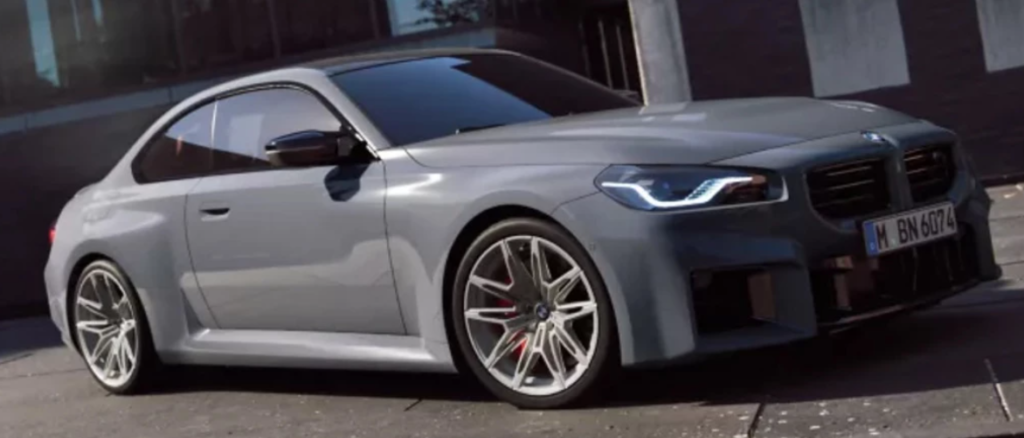
The BMW M2 vs Supra debate is fascinating because these two cars are far more closely related philosophically than their badges suggest. Both put a turbocharged inline-six engine up front, send serious power toward the rear wheels, offer a manual transmission, and promise the sort of driving experience that can turn an ordinary Sunday morning into an excuse to find the longest possible route home.
Yet they approach that mission very differently.
The Toyota GR Supra feels like a dedicated sports car. It sits low, wraps tightly around two occupants, carries relatively little unnecessary baggage, and seems designed around the idea that corners should be attacked rather than merely negotiated.
The BMW M2 takes a different route. It is heavier, bigger, substantially more powerful, and more practical. It feels like somebody took a compact luxury coupe, sent it to the BMW M gym, and refused to let it leave until its shoulders barely fitted through the door.
So which one should we buy?
If outright power, everyday practicality, rear seats and aggressive performance matter most, the BMW M2 has the broader skill set. If we prefer something smaller, lighter and more focused—with genuine two-seat sports-car character—the GR Supra remains incredibly appealing.
Let's break down the BMW M2 vs Toyota Supra battle piece by piece.
Content in this publication
- BMW M2 vs Supra at a Glance
- BMW M2 vs Supra Performance: The M2 Brings More Muscle
- Engine Character: Two Inline-Sixes With Different Personalities
- BMW M2 vs Supra Manual Transmission
- Automatic Transmission Comparison
- Handling: Supra Feels Smaller, M2 Feels Mightier
- Which Is More Fun on a Twisty Road?
- BMW M2 vs Supra Track Performance
- Steering and Driver Involvement
- Interior: BMW M2 Feels Like the More Complete Car
- BMW M2 Rear Seats vs Supra Two-Seat Layout
- Daily Driving: Which Is Easier to Live With?
- BMW M2 vs Supra Styling
- Sound: Which Inline-Six Sounds Better?
- BMW M2 vs Supra Reliability
- Fuel Economy and Running Costs
- Price and Value: Is the M2 Worth Paying More For?
- Which Car Has More Tuning Potential?
- BMW M2 vs Supra for Beginners
- BMW M2 vs Supra for Long-Term Ownership
- Who Should Buy the BMW M2?
- Who Should Buy the Toyota GR Supra?
- BMW M2 vs Supra: Final Verdict
- Frequently Asked Questions
BMW M2 vs Supra at a Glance
Using current U.S.-market specifications, the differences become clear quickly. The M2 uses BMW's 3.0-liter M TwinPower Turbo inline-six and produces 473 horsepower. Manual versions deliver 406 lb-ft of torque, while the eight-speed automatic gets 443 lb-ft. BMW quotes 0-60 mph in 4.1 seconds for the manual and 3.9 seconds for the automatic rear-wheel-drive M2.
The 2026 GR Supra uses a 3.0-liter turbocharged inline-six producing 382 horsepower and 368 lb-ft of torque. Toyota offers either a six-speed intelligent manual transmission or an eight-speed automatic, with the automatic officially rated at 3.9 seconds from 0-60 mph.
| Specification | BMW M2 | Toyota GR Supra |
|---|---|---|
| Engine | 3.0L twin-turbo inline-six | 3.0L turbo inline-six |
| Horsepower | 473 hp | 382 hp |
| Torque | 406 lb-ft manual / 443 automatic | 368 lb-ft |
| Transmission | 6-speed manual / 8-speed auto | 6-speed manual / 8-speed auto |
| Drive | RWD; M xDrive also available | RWD |
| 0-60 mph | 4.1 sec manual / 3.9 sec auto | 3.9 sec auto |
| Seats | 4 | 2 |
| Cargo space | Up to 13.8 cu ft | 10.2 cu ft |
| Character | Muscular performance coupe | Focused sports car |
Those numbers tell part of the story. They don't tell us how dramatically different these machines feel from behind the wheel.
BMW M2 vs Supra Performance: The M2 Brings More Muscle
There is no getting around it: the BMW M2 wins the horsepower battle comfortably.
With 473 horsepower on tap, the current M2 has a 91-horsepower advantage over the 382-hp Supra. The automatic M2 also produces 75 lb-ft more torque.
Plant your right foot and the BMW responds like a heavyweight boxer who happens to move like a middleweight. It builds speed ferociously, particularly once the turbocharged six-cylinder engine enters the fattest part of its powerband.
The Supra is hardly slow. Far from it.
With considerably less mass to move and an engine delivering strong torque from low rpm, the Toyota feels explosive on public roads. Its official 3.9-second 0-60 mph figure with the automatic actually matches BMW's quoted figure for the automatic rear-drive M2.
That tells us something important.
Straight-Line Speed Is Closer Than the Horsepower Numbers Suggest
If we looked only at horsepower, we might expect the M2 to disappear over the horizon.
It doesn't.
The Supra weighs around 3,400 pounds, while BMW lists curb weights of approximately 3,814 pounds for the manual M2 and 3,867 pounds for the automatic.
That's roughly 400-plus pounds of additional mass for the BMW.
The result is an interesting trade-off. The M2 has significantly more engine, but the Supra asks its engine to move significantly less car.
At highway speeds and during sustained acceleration, the M2's extra power becomes increasingly obvious. From lower speeds on a twisting road, however, the Supra rarely leaves us wishing for another 90 horsepower.
Winner for Raw Power: BMW M2
The Supra punches hard.
The M2 carries the bigger hammer.
Engine Character: Two Inline-Sixes With Different Personalities
Both cars use 3.0-liter turbocharged inline-six engines, but they do not feel identical.
The Supra's engine delivers torque smoothly and effortlessly. It has the creamy power delivery associated with BMW's modern turbocharged straight-six architecture, and the engine feels eager whether we're cruising around town or accelerating aggressively out of a bend.
The M2's engine feels angrier.
It comes from BMW M's performance-focused S58 family and encourages us to keep pushing deeper into the rev range. There's a sense that the engine is barely stretching its legs during normal driving.
Where the Supra's engine says, "We've got plenty," the M2's seems to whisper, "Are you sure that's all you want?"
BMW M2 Engine Advantages
The M2 makes more sense for drivers who prioritize:
- Maximum horsepower
- High-speed acceleration
- Track performance
- Greater tuning headroom
- A more aggressive power delivery
- Traditional BMW M character
Toyota Supra Engine Advantages
The Supra counters with:
- Lower vehicle weight
- Excellent real-world acceleration
- Strong low-rpm torque
- Less power to manage on tight roads
- A playful power-to-weight balance
For street driving, 382 horsepower in a lightweight rear-drive coupe is already more than enough to get our attention.
BMW M2 vs Supra Manual Transmission
Here's where enthusiasts can celebrate: both cars still offer three pedals.
In a world where manual transmissions increasingly belong beside cassette tapes and phone booths on the endangered-species list, this alone makes both cars special.
BMW fits the rear-drive M2 with a standard six-speed manual transmission. Toyota also offers its six-speed intelligent manual transmission on the GR Supra.
Which Manual Feels Better?
The answer depends on what we value.
The M2's manual gives the car a more traditional BMW M personality. It makes a powerful modern coupe feel slightly old-school and forces us to participate in the process.
The Supra's manual arguably fits the character of the car even better.
Because the Toyota is smaller and lighter, shifting manually amplifies its dedicated sports-car feel. The transmission also incorporates automatic rev matching, making smooth downshifts easier when we're pushing harder.
If lap times dominate the conversation, we'll choose an automatic.
If enjoyment dominates the conversation, the manual versions may be the cars to remember years from now.
Manual Transmission Winner: Slight Edge to Supra
Not because the BMW's manual is bad, but because a manual gearbox complements the Supra's compact, two-seat personality beautifully.
Automatic Transmission Comparison
Both cars offer eight-speed automatic transmissions.
They're quick, intelligent and much easier to live with in traffic. More importantly, neither automatic ruins the experience.
For the M2, the automatic allows the engine's additional torque to shine and helps produce the quicker official 0-60 mph result.
Toyota's eight-speed automatic is equally convincing. Launch control helps the Supra hit its quoted 3.9-second sprint, and manual paddle control gives us enough involvement when the road becomes interesting.
If we drive through heavy traffic five days a week and attack mountain roads on Sunday, either automatic makes plenty of sense.
Handling: Supra Feels Smaller, M2 Feels Mightier
Here we reach perhaps the most important difference.
The Supra feels like a sports car.
The M2 feels like an extremely powerful performance coupe.
There's overlap, obviously, but their physical dimensions influence almost everything we experience behind the steering wheel.
Toyota lists the Supra at approximately 172.5 inches long with a 97.2-inch wheelbase. The BMW stretches to 180.3 inches with a much longer 108.1-inch wheelbase.
That shorter footprint gives the Supra a compact, eager character.
Turn into a tight corner and it feels ready to rotate around us. We sit low, near the rear axle, and the car gives the impression of wearing itself rather than carrying us around.
The M2 Feels More Planted
The M2 trades some of that delicacy for stability.
Its wider, more substantial stance makes the car feel incredibly planted through fast bends. The adaptive M suspension gives it serious composure, and the chassis is capable of handling far more power than we're likely to deploy legally on public roads.
BMW also gives us extensive adjustability over various vehicle systems, allowing the M2's personality to change depending on how serious—or childish—we happen to feel.
The Supra dances.
The M2 attacks.
Neither philosophy is wrong.
Which Is More Fun on a Twisty Road?
For a narrow mountain road, we'd take the Supra.
Why?
Because slower cars aren't necessarily more fun, but lighter and more compact cars often allow us to access more of their character without entering ridiculous speeds.
The Toyota's dimensions encourage us to work with the chassis. There is enough power to slide the rear tires, enough grip to carry meaningful corner speed and enough feedback to keep the experience interesting.
The M2 delivers a different thrill.
Its fun comes from excess.
There's always another layer of acceleration waiting. The rear tires have a substantial workload, and punching out of a corner can feel like firing ourselves from a slingshot.
On a wider, faster road—or a racetrack—the BMW begins to make a stronger case.
You may be interested in reading BMW M2 vs Porsche Cayman: Which Sports Car Is Better?
BMW M2 vs Supra Track Performance
If track days are a serious part of our ownership plan, we'd lean toward the M2.
The reasons are straightforward:
- More horsepower
- Stronger high-speed acceleration
- Serious M-developed chassis hardware
- Larger performance envelope
- Greater cooling and performance focus
- Available carbon-focused equipment
- More sophisticated configurability
The Supra remains an excellent track platform. Its lower weight is a major advantage, and Toyota equips it with an adaptive suspension, active rear differential and powerful braking hardware.
But the M2 feels like the machine with the higher ultimate ceiling.
Supra May Be Easier on Consumables
There's another side to the track-day equation: running costs.
Heavier performance cars tend to work tires, brakes and fuel harder. With hundreds of additional pounds to control, the M2 may consume expensive performance tires and braking components faster during repeated track use.
A faster lap isn't always a cheaper lap.
That matters if we plan to attend events regularly rather than simply brag about what the car could theoretically do.
Steering and Driver Involvement
Neither car delivers the unfiltered steering feedback of a lightweight sports car from decades ago. Modern electric power steering is cleaner, quicker and more refined—but inevitably filters some texture.
Still, the Supra's compact dimensions make it feel more intimate.
Toyota lists just 2.1 turns lock-to-lock and a tight 34.1-foot turning diameter, reinforcing that agile sensation.
The BMW feels substantial through the steering wheel. There's more car around us and more tire beneath us.
If we interpret driver involvement as delicacy and intimacy, Supra wins.
If we interpret it as chassis capability and adjustability, M2 wins.
Interior: BMW M2 Feels Like the More Complete Car
The Supra's cabin provides one of the clearest reminders of its engineering relationship with BMW.
BMW-derived switchgear and infotainment architecture appear throughout the cabin, although Toyota adds enough unique design elements to create its own atmosphere.
It's snug.
Very snug.
The center console divides driver and passenger while the dashboard curves around the cockpit. That makes the Supra feel appropriately sporty but can also make taller or broader occupants feel boxed in.
The M2 is substantially more conventional.
And that's actually a compliment.
BMW Wins for Space and Usability
We get:
- Rear seats
- Easier cabin access
- More storage
- Greater visibility
- A larger cargo area
- More flexibility for daily life
BMW quotes up to 13.8 cubic feet of cargo capacity, while Toyota lists the Supra at 10.2 cubic feet. The M2 also has folding rear seatbacks, extending its practicality further.
The difference becomes enormous if we occasionally carry more than one passenger.
Because in the Supra, we can't.
BMW M2 Rear Seats vs Supra Two-Seat Layout
Nobody should buy an M2 because they need limousine-like rear accommodation.
The rear seats are small.
But small seats are infinitely more useful than seats that don't exist.
For children, short journeys or emergency passenger duty, the M2 offers flexibility the Supra cannot match.
We can also use the rear seats for bags, jackets, groceries, camera equipment or whatever else we don't want bouncing around the trunk.
The Supra makes no apology.
It's a two-seater.
If that works for our lifestyle, fantastic. In fact, removing the pretense of practicality contributes to its appeal. But if this will be our only vehicle, the M2 deserves serious consideration.
Practicality Winner: BMW M2
And this one isn't particularly close.
Daily Driving: Which Is Easier to Live With?
The answer is surprisingly nuanced.
The M2 is larger and more practical, making it the logical daily driver.
But the Supra is smaller, easier to place on the road and more efficient with physical space.
Choose the M2 for Daily Driving If We Need:
- Four seats
- More luggage capacity
- Better general visibility
- A roomier cabin
- Greater versatility
- One car that does almost everything
Choose the Supra for Daily Driving If We Value:
- Compact exterior dimensions
- A true two-seat cockpit
- Lower mass
- Easier maneuverability
- Sports-car atmosphere every time we drive
The M2 is the easier recommendation as an only car.
The Supra is the more interesting answer if practicality isn't part of the exam.
BMW M2 vs Supra Styling
Now we're entering dangerous territory.
Styling is subjective, and neither car is shy.
The Supra looks exotic.
Its roofline sweeps downward, its rear haunches flare dramatically and its long hood creates classic front-engine sports-car proportions. Park one beside an ordinary sedan and the Toyota looks like it came from another species.
The M2 is boxier, tougher and more aggressive.
Rather than flowing organically like the Supra, its design appears carved from a rectangular block with a very angry chisel.
Some people love that.
Others don't.
Supra Has More Sports-Car Theater
For pure visual drama, we'd hand this round to Toyota.
The Supra looks lower and more special than its price might suggest.
The M2 has presence, but at a glance it's still recognizable as a compact BMW coupe wearing extremely serious gym clothes.
Sound: Which Inline-Six Sounds Better?
Both cars sound good, but the M2 has the more intense personality.
BMW equips the M2 with a valve-controlled exhaust system, while Toyota also gives the Supra an active exhaust arrangement.
Neither produces the naturally metallic song of old high-revving naturally aspirated engines. Turbochargers soften the edges.
Still, both engines deliver the smooth six-cylinder rhythm enthusiasts love.
The M2 sounds tougher.
The Supra sounds slightly smoother.
Neither needs fake fireworks to feel special.
BMW M2 vs Supra Reliability
Reliability comparisons between modern performance cars require caution.
Both vehicles use sophisticated turbocharged engines, electronically controlled differentials, adaptive systems and expensive high-performance hardware. Neither should be approached with the running-cost expectations of a Corolla.
The Supra's BMW-derived powertrain has now been in production long enough to build a substantial ownership history, and the underlying inline-six architecture has been used across numerous BMW products.
The M2's S58 engine is a more aggressively tuned M unit designed for significantly higher performance.
That doesn't automatically make the M2 unreliable. It simply means ownership involves more expensive hardware and potentially higher costs when consumables or specialized components need attention.
Maintenance Costs Matter More Than the Badge
We'd budget for:
- Premium gasoline
- High-performance tires
- Expensive brakes
- Synthetic oil services
- Alignment
- Insurance
- Potential out-of-warranty electronics or suspension work
Anyone shopping used should prioritize maintenance history over internet mythology.
A carefully maintained example is usually more attractive than a cheaper car that spent its life bouncing off the rev limiter between questionable modifications.
Fuel Economy and Running Costs
Neither vehicle exists to win an economy challenge.
Nevertheless, the Supra's lower weight and less powerful state of tune give it an advantage if we're concerned about fuel use.
Toyota lists the 2026 Supra at an estimated 22 mpg city and 29 mpg highway, depending on configuration.
You may be interested in readingBMW M2 vs Porsche Cayman: Which Sports Car Is Better?You may be interested in reading
BMW M2 vs Mustang GT: Which Performance Coupe Should We Buy?Manual versions traditionally sacrifice some efficiency compared with the automatic.
Performance-car buyers may shrug at fuel economy, but annual operating costs accumulate quickly. Add insurance, tires and premium gasoline, and the Supra can be the more financially manageable proposition.
The M2 charges us for its additional performance.
Nothing unusual about that.
Horsepower has always enjoyed expensive taste.
Price and Value: Is the M2 Worth Paying More For?
The Supra and M2 occupy slightly different price territory.
For 2026, Toyota lists the GR Supra with a starting MSRP around $58,300, while BMW's current U.S. listing puts the rear-wheel-drive M2 around $69,500, before options and destination-related considerations.
That's a meaningful gap.
So what does the extra money buy?
Primarily:
- 91 additional horsepower
- More torque
- Rear seats
- More cargo space
- A more sophisticated everyday cabin
- Full BMW M engineering
- Greater overall versatility
Looking at it that way, the M2's premium isn't unreasonable.
But value isn't simply about receiving more equipment.
The Supra gives us almost identical manufacturer-quoted automatic 0-60 performance despite costing substantially less and weighing much less.
That's a compelling argument of its own.
Which Car Has More Tuning Potential?
Both cars have enormous aftermarket communities.
The Supra became a tuning favorite almost immediately, partly because the turbocharged six-cylinder powertrain responds enthusiastically to modification.
BMW's M2 offers equally serious potential.
The S58 engine arrives with greater output from the factory and has demonstrated tremendous capacity across BMW's broader M lineup.
If we're chasing extreme horsepower numbers, the M2 offers the stronger starting point.
But modification changes the equation around:
- Warranty coverage
- Cooling
- Transmission stress
- Tires
- Brakes
- Reliability
- Resale value
There's a delicious irony here.
Both cars are already fast enough to make us question our life decisions on an empty on-ramp. Chasing another 150 horsepower might be entertaining, but few owners actually need it.
BMW M2 vs Supra for Beginners
Neither car is an ideal beginner performance vehicle.
Both are powerful rear-wheel-drive machines capable of breaking rear traction quickly.
However, if we had to choose one for someone relatively new to performance driving, we'd lean toward the Supra automatic—provided that person approaches it sensibly.
Its lower weight makes reactions feel intuitive, while traction and stability systems provide an important safety net.
The M2 offers tremendous electronic assistance as well, but nearly 500 horsepower in a short performance coupe deserves respect.
Driving skill isn't measured by how quickly we can disable traction control.
Sometimes the smartest driver is the one who leaves the electronic guardian angel awake.
BMW M2 vs Supra for Long-Term Ownership
This question depends heavily on lifestyle.
The M2 ages better as our circumstances change.
Need to carry another person?
M2.
Taking a weekend trip with multiple bags?
M2.
Suddenly responsible for collecting a child?
Definitely M2.
The Supra demands more commitment to the sports-car lifestyle.
But that's also why we may become more emotionally attached to it.
Every time we lower ourselves into that two-seat cockpit, we're reminded that we chose something deliberately impractical.
Sometimes impracticality is the point.
Who Should Buy the BMW M2?
We'd choose the BMW M2 if we want one car capable of filling several roles.
It's the better choice if:
- Maximum performance matters
- We want significantly more horsepower
- We occasionally need rear seats
- We want more luggage space
- We plan frequent track use
- We prefer BMW M engineering
- We want a performance car that can function as our only vehicle
The M2 is a Swiss Army knife with a rocket strapped to it.
It can commute, travel, carry passengers and then spend Saturday terrorizing a racetrack.
Who Should Buy the Toyota GR Supra?
We'd choose the Toyota GR Supra if the driving experience itself takes priority over versatility.
It's particularly compelling if:
- We want a dedicated two-seat sports car
- Lower weight matters
- We love compact dimensions
- We don't need rear seats
- We want excellent performance for less money
- Styling matters heavily
- We want something that feels special at ordinary speeds
- We prefer agility over brute force
The Supra is the scalpel of this comparison.
The M2 can smash through the door.
The Supra would rather carve around it.
BMW M2 vs Supra: Final Verdict
So, BMW M2 vs Supra—which one wins?
If we judge them purely as overall performance cars, the BMW M2 takes the victory.
It has substantially more horsepower, more torque, greater practicality, rear seats, additional cargo capacity and a performance ceiling that extends beyond what most drivers could explore on public roads. It is the more complete machine.
But here's the twist.
The Toyota GR Supra may be the better traditional sports car.
It's lighter, shorter, lower and more intimate. We sacrifice horsepower, passenger capacity and practicality, but what remains is wonderfully focused. The Supra doesn't attempt to be our sports car, luxury coupe and occasional family car simultaneously.
It just wants to play.
And sometimes that's exactly what we want.
If we had one garage space and needed one vehicle to handle almost everything, we'd choose the BMW M2.
If another practical vehicle already occupied the driveway and we wanted something purely for enjoyment, the GR Supra would be incredibly difficult to resist.
The M2 wins with capability.
The Supra wins with simplicity.
Neither choice is wrong—and that's precisely why this comparison is so interesting.
Frequently Asked Questions
Is the BMW M2 faster than the Toyota Supra?
Generally, the BMW M2 has the stronger performance potential because its current 3.0-liter turbocharged inline-six produces 473 horsepower compared with 382 horsepower in the GR Supra. Interestingly, both manufacturers quote around 3.9 seconds from 0-60 mph for their automatic rear-wheel-drive versions, showing how effectively the lighter Supra uses its power.
Does the BMW M2 have the same engine as the Supra?
No. Although both cars use 3.0-liter turbocharged inline-six engines and share BMW engineering lineage, the M2 uses BMW M's higher-performance S58-family engine, whereas the GR Supra uses a different BMW-derived turbocharged six-cylinder architecture. Their outputs and performance characteristics are consequently very different.
Which is better for daily driving, BMW M2 or Supra?
The BMW M2 is the more practical daily driver because it provides four-seat accommodation, more cargo capacity and folding rear seatbacks. The Supra seats only two people and provides 10.2 cubic feet of cargo space, making it less versatile but more focused.
Which is more fun, the Supra or BMW M2?
The Supra arguably feels more playful on tight roads because it's considerably lighter, shorter and built around a dedicated two-seat layout. The M2 offers more explosive power and a higher performance ceiling. We'd pick the Supra for intimate back-road enjoyment and the M2 for high-speed performance and track capability.
Should I buy a BMW M2 or Toyota Supra?
Buy the BMW M2 if you need practicality, rear seats and maximum performance from one car. Buy the Toyota GR Supra if you prioritize lower weight, sports-car styling, two-seat focus and driving engagement. For an only car, we'd favor the M2. For a dedicated weekend machine, the Supra makes a remarkably strong case.
You may be interested in readingBMW M2 vs Porsche Cayman: Which Sports Car Is Better?You may be interested in reading
BMW M2 vs Mustang GT: Which Performance Coupe Should We Buy?You may be interested in reading
BMW M2 vs Porsche 911: Which Sports Car Makes More Sense?If you want to know other articles similar to BMW M2 vs Supra: Which Sports Car Deserves Your Money? you can visit the category Models.
Land Rover Defender 90 Alternative: The Best Rivals Worth Considering
Land Rover Defender 90 Models: Complete Guide to Trims, Engines and Versions
Toyota Hilux Generations: Complete History, Evolution, and Key Differences
BMW M2 vs M340i: Which BMW Performance Car Should We Buy?
BMW M2 vs Porsche 911: Which Sports Car Makes More Sense?
BMW M2 vs Mustang GT: Which Performance Coupe Should We Buy?
Leave a Reply
More content of your interest