
BMW M2 vs Mustang GT: Which Performance Coupe Should We Buy?

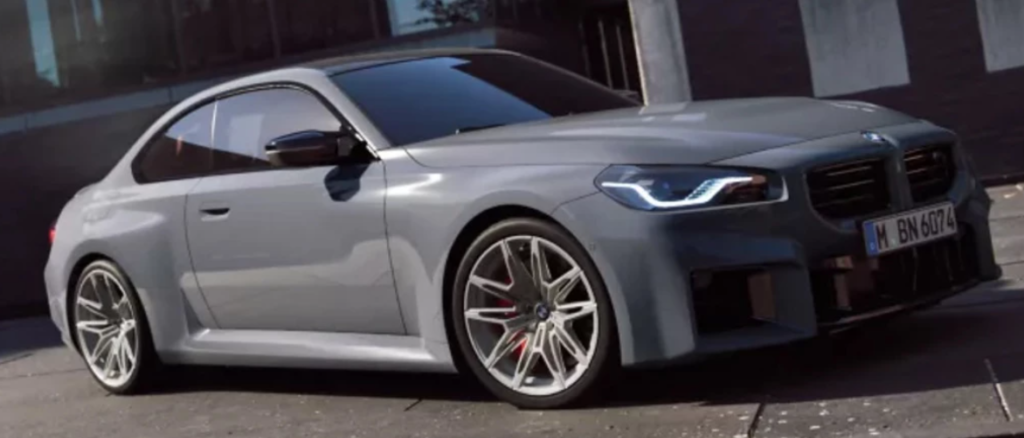
Few comparisons expose the wonderfully irrational side of car buying quite like BMW M2 vs Mustang GT. On paper, both cars follow a familiar enthusiast recipe: powerful engines up front, drive sent primarily to the rear wheels, two doors, aggressive styling, and enough performance to turn an ordinary commute into something considerably more entertaining.
Yet they approach that recipe from opposite directions.
The BMW M2 feels like a compact performance machine that has been carefully sharpened by engineers wearing stopwatch-equipped watches. The Ford Mustang GT, meanwhile, carries the spirit of the classic American muscle car into the modern age with a naturally aspirated V8, unmistakable character, and performance that can seem almost absurd for the money.
So, which should we choose?
If we judge cars purely by spreadsheets, the answer seems simple enough. But cars such as these aren't refrigerators. We buy them because of how they sound at 6,000 rpm, how the steering feels entering a corner, and whether we glance back at them after parking.
Let's break down the BMW M2 vs Ford Mustang GT comparison from performance and handling to comfort, practicality, ownership costs, and pure emotional appeal.
Content in this publication
- BMW M2 vs Mustang GT at a Glance
- The Fundamental Difference Between the BMW M2 and Mustang GT
- BMW M2 vs Mustang GT Engine Comparison
- BMW M2 vs Mustang GT Horsepower
- BMW M2 vs Mustang GT 0–60 MPH Performance
- Manual Transmission Comparison
- Automatic Transmission: Which Is Better?
- BMW M2 vs Mustang GT Handling
- Steering Feel
- BMW M2 vs Mustang GT Ride Quality
- BMW M2 vs Mustang GT Interior
- Which Interior Is Better?
- BMW M2 vs Mustang GT Seats and Driving Position
- Rear-Seat Space
- BMW M2 vs Mustang GT Cargo Space
- BMW M2 vs Mustang GT Technology
- BMW M2 vs Mustang GT Sound
- Which Car Is More Fun to Drive?
- BMW M2 vs Mustang GT for Daily Driving
- Fuel Economy
- BMW M2 vs Mustang GT Reliability
- Maintenance Costs
- BMW M2 vs Mustang GT Modification Potential
- BMW M2 vs Mustang GT Styling
- Which Has More Road Presence?
- BMW M2 vs Mustang GT on the Highway
- BMW M2 vs Mustang GT on Track
- Which Is Easier to Drive Fast?
- BMW M2 vs Mustang GT Price and Value
- BMW M2 vs Mustang GT Depreciation
- Which Car Is Better for Younger Enthusiasts?
- BMW M2 vs Mustang GT: Pros and Cons
- BMW M2 vs Mustang GT: Which One Should We Buy?
- The Enthusiast Choice: Precision or Personality?
- Conclusion: BMW M2 vs Mustang GT Final Verdict
- Frequently Asked Questions
BMW M2 vs Mustang GT at a Glance
Before digging deeper, here is the broad personality difference between these two performance cars.
| Category | BMW M2 | Ford Mustang GT |
|---|---|---|
| Engine philosophy | Turbocharged inline-six | Naturally aspirated V8 |
| Layout | Front-engine, rear-wheel drive | Front-engine, rear-wheel drive |
| Character | Compact, precise, intense | Muscular, dramatic, charismatic |
| Acceleration | Extremely quick | Very quick |
| Handling | More agile and focused | Stable, playful, less surgical |
| Engine sound | Deep turbo-six growl | Classic V8 soundtrack |
| Interior feel | More premium | Sporty but more mainstream |
| Daily usability | Very good | Very good |
| Rear-seat practicality | Limited | Limited |
| Value for horsepower | Good | Excellent |
| Best suited to | Drivers prioritizing precision | Drivers prioritizing emotion and value |
Neither car is objectively superior everywhere. Instead, we're choosing between two different philosophies of fun.
The Fundamental Difference Between the BMW M2 and Mustang GT
The BMW M2 is essentially a compact sports coupe engineered around precision.
Everything about it—from its relatively short dimensions to its chassis tuning—encourages us to attack a twisting road. Its turbocharged six-cylinder engine delivers enormous torque, and the car feels tightly wound beneath us.
The Mustang GT follows another philosophy.
Ford gives us displacement, cylinders, noise, and attitude. Its famous 5.0-liter V8 isn't merely an engine; it's almost the centerpiece of the entire experience. Press the accelerator and the Mustang doesn't whisper its intentions. It announces them.
Think of the difference like two musicians.
The M2 is a technically brilliant guitarist playing complicated solos with frightening precision.
The Mustang GT is a rock drummer smashing the kit during the encore.
Both are entertaining. We simply need to decide which performance speaks our language.
BMW M2 vs Mustang GT Engine Comparison
BMW M2: Turbocharged Six-Cylinder Muscle
At the center of the M2 is BMW's turbocharged inline-six.
Anyone familiar with modern BMW M cars will recognize the personality. There's substantial torque available across a broad portion of the rev range, meaning we rarely need to wait for the engine to wake up.
Press the throttle in almost any gear and the M2 gathers speed with serious intent.
The engine combines qualities that traditionally didn't coexist particularly well:
- Strong low-end torque
- Powerful mid-range acceleration
- Willingness to rev
- Smooth six-cylinder operation
- Considerable tuning potential
Its power delivery feels relentless rather than theatrical.
That distinction becomes important when we compare it with the Mustang.
Mustang GT: The V8 Is the Main Event
The Mustang GT's naturally aspirated 5.0-liter V8 remains one of its biggest attractions.
In an automotive world increasingly dominated by turbochargers, smaller engines, hybrids, and electrification, the Mustang's V8 feels almost rebellious.
Throttle response feels natural, power builds progressively, and the engine rewards us for exploring the upper end of the rev counter.
Then there's the sound.
Why the Mustang's V8 Matters
We could pretend engine noise doesn't influence purchasing decisions, but who are we kidding?
The Mustang's V8 soundtrack is a major part of its charm.
Start it in a quiet garage and there's a genuine sense of occasion. Accelerate through a tunnel and suddenly we're inventing reasons to turn around and drive through the tunnel again.
The BMW six sounds serious.
The Mustang V8 sounds alive.
BMW M2 vs Mustang GT Horsepower
Exact outputs depend on model year and specification, but both cars comfortably occupy serious performance territory.
Recent versions of the BMW M2 have pushed output toward the high-400-horsepower range, while contemporary Mustang GT models generally produce around the upper-400-horsepower neighborhood, depending on market and configuration.
Those numbers are close enough that horsepower alone doesn't determine the winner.
Torque delivery and gearing matter enormously.
The BMW's turbocharged engine produces substantial torque relatively early, making it feel ferocious when accelerating from normal road speeds.
The Mustang makes us work through more of the rev range to discover its personality.
For some drivers, that's actually more enjoyable.
BMW M2 vs Mustang GT 0–60 MPH Performance
Both cars are genuinely quick.
We're no longer discussing sports cars that merely feel fast. These machines can produce acceleration figures that would have embarrassed exotic cars not that long ago.
With the right transmission and conditions, an M2 can reach 60 mph in roughly the low-four-second range or better, depending on configuration and model year.
The Mustang GT is similarly capable, particularly with its quick-shifting automatic transmission and sufficient traction.
Which Feels Faster?
Interestingly, the answer isn't always whichever wins the stopwatch battle.
The BMW often feels brutally effective because torque arrives quickly. Put our foot down at moderate rpm and the M2 lunges forward almost immediately.
The Mustang builds drama.
Its V8 rises through the revs, the soundtrack becomes increasingly aggressive, and speed seems to arrive alongside an orchestral performance from eight cylinders.
The M2 can feel like being launched from a catapult.
The Mustang feels like riding an explosion.
Manual Transmission Comparison
Thankfully, both cars have traditionally offered something increasingly precious: a manual gearbox.
For enthusiasts, this factor alone may influence the decision.
BMW M2 Manual
The manual M2 gives us an old-school interaction inside an extremely modern performance car.
We control:
- Clutch engagement
- Gear selection
- Engine speed
- Downshifts
- The entire rhythm of acceleration
Is it necessarily the fastest configuration?
No.
Is it arguably more memorable?
Absolutely.
Mustang GT Manual
The manual Mustang arguably fits the personality of the car even better.
There is something satisfyingly traditional about combining a V8 engine with three pedals and rear-wheel drive.
We're participating rather than merely supervising.
For everyday performance, automatic versions may be faster and easier. For emotional involvement, the manuals deserve serious consideration.
Automatic Transmission: Which Is Better?
Automatic versions radically increase the performance potential of both cars.
The BMW's automatic transmission works exceptionally well with the turbocharged engine, delivering rapid gear changes while keeping the engine inside its strongest operating range.
The Mustang's available automatic also transforms its acceleration capability.
In a drag race, automatic transmissions usually make achieving consistent results easier.
However, we shouldn't choose solely from a 0–60 mph number.
If weekend entertainment matters more than fractions of a second, the manual gearbox may still deliver the richer experience.
BMW M2 vs Mustang GT Handling
Here's where the personality gap becomes much wider.
The M2 Loves Corners
The BMW M2 was designed around serious cornering ability.
Its relatively compact footprint, wide stance, powerful brakes, sophisticated chassis electronics, and M-developed suspension create a car that wants us to find increasingly complicated roads.
Turn into a tight bend and the nose reacts quickly.
Add throttle on the exit and the rear axle becomes part of the conversation.
The M2 isn't simply fast around corners. It encourages us to participate.
The Mustang GT Has Become Far More Sophisticated
Calling modern Mustangs crude muscle cars would be unfair.
Today's Mustang GT possesses significantly more chassis sophistication than generations of old. Independent rear suspension transformed the platform years ago, and modern versions can corner at speeds that might surprise anyone still associating Mustangs exclusively with straight roads.
Still, the Ford generally feels larger.
There's more physical car around us.
Which Wins on a Twisty Road?
For a narrow mountain road with repeated corners, we'd generally choose the BMW M2.
Its dimensions and chassis tuning make it feel more naturally suited to this environment.
Give both cars a fast, flowing road with sweeping corners, however, and the Mustang becomes considerably more convincing.
Steering Feel
BMW M cars built their reputation partly through steering.
Modern electronically assisted steering isn't as talkative as hydraulic systems from decades ago, but the M2 nevertheless offers quick responses and impressive accuracy.
We point it toward an apex and the car feels eager to obey.
The Mustang's steering is perfectly capable, but the overall experience feels slightly less intimate.
This difference isn't necessarily bad.
Some drivers don't want every drive to feel like a qualifying lap.
BMW M2 vs Mustang GT Ride Quality
Performance cars must negotiate a difficult compromise.
Make the suspension too soft and enthusiasts complain that the car lacks control.
Make it too firm and every pothole becomes a personal attack.
The M2 generally leans toward firmness.
Its suspension constantly reminds us that we're driving something performance-focused. Smooth pavement reveals excellent body control, but neglected urban roads can make the ride busy.
The Mustang GT can also ride firmly, particularly with performance-oriented suspension packages and large wheels, yet its longer wheelbase and overall character can make it feel slightly more relaxed during ordinary cruising.
If comfort dominates our priorities, neither is a luxury cruiser.
But the Mustang may feel a little more laid-back depending on specification.
BMW M2 vs Mustang GT Interior
BMW M2 Cabin
Inside, the M2 clearly reflects its premium-brand positioning.
Materials, display technology, switchgear, seats, and overall presentation typically feel more expensive.
There's also plenty of BMW technology available, including configurable performance settings and extensive infotainment functionality.
The cabin wraps around the driver.
Everything communicates seriousness.
Mustang GT Cabin
The Mustang's interior has improved enormously compared with older generations.
Large digital displays dominate newer versions, while configurable instruments allow us to alter the visual environment.
It's modern and dramatic.
But underneath the screens and performance touches, we can still identify the Mustang's mass-market roots.
You may be interested in reading BMW M2 vs Porsche 911: Which Sports Car Makes More Sense?
That isn't necessarily criticism.
Ford's approach helps keep the Mustang relatively affordable considering the amount of engine and performance we're getting.
Which Interior Is Better?
For perceived quality, we'd choose the BMW M2.
For character, the decision becomes more personal.
Some enthusiasts genuinely prefer the Mustang's less formal atmosphere.
The BMW feels like expensive performance equipment.
The Mustang feels like somewhere we're supposed to have fun.
BMW M2 vs Mustang GT Seats and Driving Position
Both provide suitably low, sporty driving positions.
The M2 makes us feel integrated into the chassis. Optional performance-oriented seats can provide excellent support, particularly during aggressive cornering.
The Mustang also provides a convincing sports-car driving position, though its longer hood dramatically changes the view.
That hood matters more than we might expect.
From behind the Mustang's wheel, we can see the muscular body stretching ahead of us. It constantly reminds us we're driving something special.
The BMW feels compact.
The Ford feels theatrical.
Rear-Seat Space
Let's be realistic.
Nobody buys either vehicle primarily because they regularly transport four adults.
Both technically provide rear seats, but their usefulness is limited compared with proper sedans or SUVs.
Children may fit reasonably well.
Adults?
They might forgive us for ten minutes.
Thirty minutes could damage the friendship.
The Mustang and M2 should therefore be viewed primarily as 2+2 coupes, with their rear seats serving as occasional passenger accommodations or additional storage.
BMW M2 vs Mustang GT Cargo Space
Neither car is especially impractical by sports-car standards.
Their trunks can accommodate everyday luggage, groceries, backpacks, or enough gear for a weekend trip.
The folding rear seats can also expand carrying ability.
This versatility matters.
Unlike dedicated two-seat sports cars, the M2 and Mustang don't force us to sacrifice basic practicality simply because we enjoy driving.
We can commute Monday through Friday and attack a country road on Saturday.
BMW M2 vs Mustang GT Technology
The M2 takes a distinctly digital approach.
BMW provides sophisticated displays, configurable driving modes, navigation and connectivity systems, plus detailed control over performance parameters.
We can adjust various characteristics depending on configuration, potentially including steering, drivetrain response, stability intervention, and suspension behavior.
The Mustang also embraces technology heavily.
Newer models feature extensive digital instrumentation and selectable driving modes, while performance-oriented features reinforce the sense that Ford designed the car for enthusiasts.
Technology isn't merely decorative in either vehicle.
It lets us alter personality.
BMW M2 vs Mustang GT Sound
Let's give this category its own section because it deserves one.
BMW M2 Sound
The turbocharged six-cylinder engine delivers a purposeful, mechanical growl.
Under acceleration it sounds aggressive without becoming completely uncivilized.
Some enthusiasts will love it.
Mustang GT Sound
Then the Mustang starts its V8.
Game over.
For pure engine soundtrack, we give the victory to the Mustang GT.
That deep idle, increasingly urgent induction note, and high-rpm V8 roar provide an experience the turbocharged BMW simply can't replicate.
Performance numbers become outdated.
Great noises don't.
Which Car Is More Fun to Drive?
This question is much more complicated than asking which is fastest.
Fun depends on what we enjoy.
Choose the M2 if our definition of fun involves:
- Precise steering
- Strong cornering performance
- Compact dimensions
- Powerful turbocharged acceleration
- Technical sophistication
- Chassis adjustability
Choose the Mustang GT if we prefer:
- Naturally aspirated power
- V8 noise
- Rear-wheel-drive attitude
- Classic pony-car styling
- Dramatic acceleration
- Performance per dollar
Neither answer is wrong.
They simply stimulate different parts of the enthusiast brain.
BMW M2 vs Mustang GT for Daily Driving
Could we daily-drive either car?
Definitely.
Living With an M2 Every Day
The M2's compact dimensions make city driving relatively easy.
Parking is manageable, visibility is reasonable for a coupe, and modern driver-assistance systems reduce the burden of everyday traffic.
Fuel consumption isn't exactly economy-car territory, of course.
Neither is tire replacement.
But that's the tax we pay for driving something interesting.
Living With a Mustang GT Every Day
The Mustang is also surprisingly usable.
The cabin is comfortable, the trunk is useful, and cruising ability is strong.
Its greater dimensions can make parking tighter, particularly in crowded urban environments.
Then there's fuel.
A naturally aspirated V8 is unlikely to become the darling of anyone trying to minimize gasoline expenses.
But every time we hear it fire up, we might stop caring for a moment.
Fuel Economy
The BMW's smaller turbocharged six-cylinder configuration theoretically gives it an efficiency advantage in certain driving conditions.
But driving style changes everything.
Use the boost repeatedly and fuel consumption can rise quickly.
The Mustang GT's large-displacement V8 naturally consumes plenty of fuel when driven aggressively.
Highway cruising can produce surprisingly respectable figures, but aggressive city driving will remind us that eight cylinders require feeding.
If fuel economy represents a major purchasing criterion, we should probably question why we're shopping for either car in the first place.
BMW M2 vs Mustang GT Reliability
Reliability is difficult to reduce to a single winner because maintenance quality, model year, mileage, driving style, modifications, and service history all matter.
BMW M2 Reliability Considerations
Modern BMW M engines are highly sophisticated.
That sophistication brings impressive performance but also complexity.
Long-term ownership can involve expensive components, electronics, specialized servicing, high-performance cooling systems, and costly consumables.
A properly maintained M2 can be an excellent ownership proposition, but neglect is rarely cheap.
Mustang GT Reliability Considerations
The Mustang's V8 formula is comparatively familiar.
Ford has produced huge numbers of Coyote-family 5.0-liter engines, and the platform benefits from substantial aftermarket and enthusiast support.
That doesn't mean every Mustang will be trouble-free.
But repairs and parts may prove less intimidating than comparable premium German performance-car expenses, depending on location.
Maintenance Costs
This category usually favors the Mustang.
BMW M ownership involves premium pricing for more than the badge.
Expect potentially higher costs for:
- Replacement brakes
- Performance tires
- Dealer servicing
- Electronic components
- Specialized parts
- Out-of-warranty repairs
The Mustang also consumes tires, brake pads, and fuel enthusiastically, particularly if driven hard.
But widespread availability of Ford components and enormous aftermarket support can make ownership easier.
For buyers thinking about keeping the car many years, this difference deserves serious consideration.
BMW M2 vs Mustang GT Modification Potential
Both cars have gigantic enthusiast communities.
Modifying an M2
Turbocharging makes additional power relatively accessible.
Depending on generation and configuration, common upgrades include:
- ECU tuning
- Exhaust systems
- Intake upgrades
- Suspension modifications
- Brake improvements
- Lightweight wheels
- Cooling upgrades
Power can increase substantially.
But more power isn't always better.
The stock M2 already operates at a level where traction becomes an increasingly important limitation.
Modifying a Mustang GT
The Mustang might have one of the broadest performance aftermarket ecosystems on Earth.
We can modify practically everything.
Want suspension?
Hundreds of options.
Different exhaust?
Pick a soundtrack.
Forced induction?
Supercharger and turbocharger solutions can transform the car into something bordering on ridiculous.
The Mustang's modification ceiling is enormous.
Which Is Better for Tuning?
For easy turbocharged gains, the M2 is extremely attractive.
For overall aftermarket variety, we'd lean toward the Mustang GT.
You may be interested in readingBMW M2 vs Porsche 911: Which Sports Car Makes More Sense?You may be interested in reading
BMW M2 vs M340i: Which BMW Performance Car Should We Buy?BMW M2 vs Mustang GT Styling
Design is subjective, but neither car hides its personality.
The M2 is compact, boxy, muscular, and controversial in exactly the way modern BMW designs often are.
Some people love its aggressive proportions.
Others need time to process them.
The Mustang follows a more recognizable evolutionary path.
Long hood.
Short rear deck.
Wide stance.
Three-bar taillight influence.
The silhouette instantly tells us what we're looking at.
If timelessness matters, the Mustang's proportions may age more gracefully.
The M2, however, certainly won't disappear in a parking lot.
Which Has More Road Presence?
The Mustang probably attracts more immediate attention from casual observers, especially when they hear the V8 before seeing the car.
The M2 attracts a different audience.
Car enthusiasts recognize it quickly. To everyone else, it can appear like a particularly angry BMW coupe.
That makes the M2 somewhat stealthier.
Whether that's an advantage depends on our personality.
BMW M2 vs Mustang GT on the Highway
Highway driving reveals another interesting difference.
The M2 feels tightly controlled at speed. There's enormous overtaking power available almost instantly, and the chassis remains planted.
The Mustang settles into a muscular grand-touring rhythm.
Its longer proportions suit extended highway journeys, and the V8 can cruise calmly before erupting when we request more acceleration.
For long-distance touring, the Mustang might actually surprise us.
It's not simply a stoplight warrior.
BMW M2 vs Mustang GT on Track
Take both cars to a circuit and the M2's intentions become obvious.
BMW developed the car with sustained performance in mind.
Braking, chassis balance, cooling, differential calibration, and suspension tuning all work together as a complete package.
The Mustang GT remains capable, especially when equipped with suitable performance options, but specification matters heavily.
Track-focused Mustang packages can dramatically improve:
- Brake performance
- Cooling
- Tire grip
- Suspension control
- Aerodynamics
In standard road-oriented configurations, though, the M2 generally feels like the more natural track weapon.
Which Is Easier to Drive Fast?
Probably the BMW.
Its turbocharged torque, sophisticated electronics, smaller footprint, strong chassis, and precise responses help us exploit its performance.
The Mustang requires slightly more respect.
There's something wonderfully old-school about managing substantial V8 power through the rear tires.
We shouldn't confuse that with inferiority.
Sometimes the car that makes us work harder becomes the car we remember longer.
BMW M2 vs Mustang GT Price and Value
This might be the decisive category.
The BMW M2 occupies the premium-performance segment. We're paying for engineering, brand positioning, cabin quality, chassis sophistication, and considerable performance.
The Mustang GT traditionally represents one of the industry's most attractive horsepower-per-dollar propositions.
We receive a proper V8 sports coupe without entering exotic-car pricing.
Optional equipment can push the Mustang's price substantially higher, but the underlying value proposition remains compelling.
Is the BMW M2 Worth the Extra Money?
It can be.
If we value:
- Precision
- Premium interior materials
- Compact dimensions
- Track capability
- German performance engineering
- Turbocharged mid-range power
then the additional expense makes sense.
But if our main goal is maximum fun per dollar, the Mustang GT becomes extremely difficult to ignore.
BMW M2 vs Mustang GT Depreciation
Performance cars sometimes behave unpredictably on the used market.
Manual transmissions, desirable specifications, special editions, production changes, and enthusiast demand can significantly influence resale values.
BMW M models often retain strong enthusiast demand, though premium German cars can experience meaningful depreciation during early ownership.
Mustangs are produced in larger numbers, so ordinary GT models may not enjoy scarcity-driven values.
However, desirable configurations can retain substantial appeal.
We shouldn't purchase either car solely as an investment.
Drive it.
Enjoy it.
That's what these machines were designed for.
Which Car Is Better for Younger Enthusiasts?
Assuming insurance and ownership costs are manageable, the Mustang provides an especially compelling entry into serious performance-car ownership.
It delivers huge personality without requiring premium-European pricing.
The BMW M2, however, makes sense for buyers wanting something more polished and compact while still retaining genuine enthusiast credibility.
Age matters less than priorities.
A 25-year-old can appreciate the M2's precision.
A 60-year-old can enjoy roasting Mustang tires.
Enthusiasm doesn't have an expiration date.
BMW M2 vs Mustang GT: Pros and Cons
BMW M2 Pros
- Excellent handling
- Compact dimensions
- Powerful turbocharged inline-six
- Extremely strong acceleration
- Premium interior
- Serious track capability
- Sophisticated chassis technology
- Available enthusiast-friendly transmission choices
BMW M2 Cons
- Higher purchase price
- Expensive maintenance potential
- Firm ride
- Limited rear-seat usefulness
- Engine soundtrack can't match a V8
- Complex mechanical and electronic systems
Mustang GT Pros
- Glorious naturally aspirated V8
- Excellent horsepower for the money
- Huge modification aftermarket
- Strong straight-line performance
- Iconic styling
- Comfortable enough for daily driving
- Manual availability
- Enormous personality
Mustang GT Cons
- Larger exterior dimensions
- Interior quality trails the BMW
- Fuel consumption
- Less agile on tight roads
- Rear seats remain cramped
- Easy to spend heavily on options
BMW M2 vs Mustang GT: Which One Should We Buy?
Here's the simplest way to decide.
Buy the BMW M2 If…
We want a compact performance coupe that behaves like a serious precision instrument.
The M2 suits us if weekends involve twisting roads, track days, quick directional changes, and exploiting a carefully tuned chassis.
It also delivers greater interior sophistication and premium-brand appeal.
Buy the Mustang GT If…
We want an emotional performance experience built around a charismatic V8.
The Mustang rewards us every time we start the engine.
It's fast, relatively attainable, easy to personalize, and deeply connected to decades of American performance-car history.
We don't simply operate the engine.
We experience it.
The Enthusiast Choice: Precision or Personality?
At this point, we've reached the philosophical heart of the BMW M2 vs Mustang GT debate.
The BMW is probably the more complete technical achievement.
It can accelerate brutally, brake hard, carve through corners, commute comfortably enough, and attack a track with impressive confidence.
Yet automobiles aren't judged exclusively by technical competence.
The Mustang GT possesses something difficult to quantify.
The V8 trembles through the car at startup. The hood stretches toward the horizon. Downshift, press the accelerator, and eight cylinders turn gasoline into noise, acceleration, and questionable decision-making.
That matters.
Why We'd Choose the M2
We'd pick the BMW when performance precision matters most.
It feels like the more focused tool.
On complicated roads, the chassis becomes addictive. Every corner invites another. Every straight feels shorter than expected.
Why We'd Choose the Mustang
We'd pick the Mustang when emotional connection matters most.
There are faster cars.
There are more sophisticated cars.
But naturally aspirated V8 coupes with manual transmissions aren't multiplying.
They're disappearing.
Sometimes the best car isn't the one that wins every measurable category.
It's the one whose keys we keep finding excuses to grab.
Conclusion: BMW M2 vs Mustang GT Final Verdict
The BMW M2 vs Mustang GT comparison gives us two fantastic interpretations of the modern performance coupe.
The M2 is the more precise machine. Its turbocharged six-cylinder engine delivers immense acceleration, its compact chassis feels eager on demanding roads, and its premium cabin makes the overall package feel expensive because, well, it is.
The Mustang GT approaches performance with more theater.
Its naturally aspirated V8 dominates the experience, delivering sound and character that smaller turbocharged engines struggle to reproduce. Add impressive performance, huge aftermarket support, unmistakable design, and relatively strong value, and the Ford makes a persuasive case.
So which one wins?
For handling, refinement, track capability, and compact performance, we'd choose the BMW M2.
For engine character, value, soundtrack, and old-fashioned driving emotion, we'd choose the Mustang GT.
If our garage opened onto a mountain road every morning, the M2 would be difficult to resist.
But if someone handed us both keys on a Friday evening and said, "Go have fun"?
We might stare at that Mustang key a little longer.
And once the V8 started, we probably wouldn't regret it.
Frequently Asked Questions
1. Is a BMW M2 faster than a Mustang GT?
The BMW M2 can be quicker in certain acceleration tests because its turbocharged inline-six produces substantial torque and modern BMW drivetrain technology deploys the power effectively. However, results depend heavily on model year, transmission, tires, road conditions, and Mustang specification. Both are legitimately fast performance cars.
2. Is the BMW M2 better around corners than the Mustang GT?
Generally, yes. The M2's smaller dimensions, performance-oriented suspension, chassis tuning, differential setup, and overall focus give it an advantage on tight and technical roads. The Mustang GT remains highly capable, particularly with performance-oriented packages, but typically feels larger and less agile.
3. Which sounds better, BMW M2 or Mustang GT?
For most enthusiasts, the Mustang GT wins the soundtrack contest. Its naturally aspirated 5.0-liter V8 delivers a deep idle and dramatic high-rpm roar. The M2's turbocharged inline-six sounds powerful and distinctive, but it can't completely reproduce the character of a traditional V8.
4. Is a Mustang GT cheaper to maintain than a BMW M2?
In many circumstances, yes. Ford parts availability, widespread specialist knowledge, and the enormous Mustang aftermarket can make servicing and repairs more affordable. BMW M cars use sophisticated premium components, and major repairs outside warranty can become expensive. Actual costs depend on location, mileage, driving habits, and maintenance history.
5. Should we buy a BMW M2 or Mustang GT as a daily driver?
Both can work surprisingly well as daily cars. Choose the M2 if compact dimensions, interior quality, handling precision, and premium technology matter most. Choose the Mustang GT if we prioritize V8 character, value, highway comfort, and a more theatrical driving experience. Either way, expect higher fuel, tire, insurance, and maintenance costs than an ordinary commuter car.
You may be interested in readingBMW M2 vs Porsche 911: Which Sports Car Makes More Sense?You may be interested in reading
BMW M2 vs M340i: Which BMW Performance Car Should We Buy?You may be interested in reading
 Toyota Hilux Generations: Complete History, Evolution, and Key Differences
If you want to know other articles similar to BMW M2 vs Mustang GT: Which Performance Coupe Should We Buy? you can visit the category Models.
Land Rover Defender 90 Alternative: The Best Rivals Worth Considering
Land Rover Defender 90 Models: Complete Guide to Trims, Engines and Versions
Toyota Hilux Generations: Complete History, Evolution, and Key Differences
BMW M2 vs M340i: Which BMW Performance Car Should We Buy?
BMW M2 vs Porsche 911: Which Sports Car Makes More Sense?
BMW M2 vs Porsche Cayman: Which Sports Car Is Better?
Leave a Reply
More content of your interest