
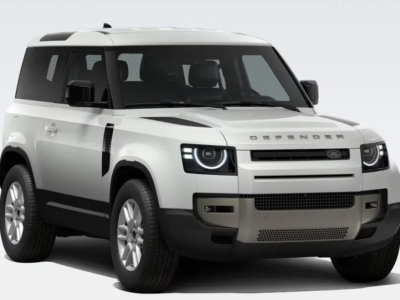
BMW M2 vs M340i: Which BMW Performance Car Should We Buy?

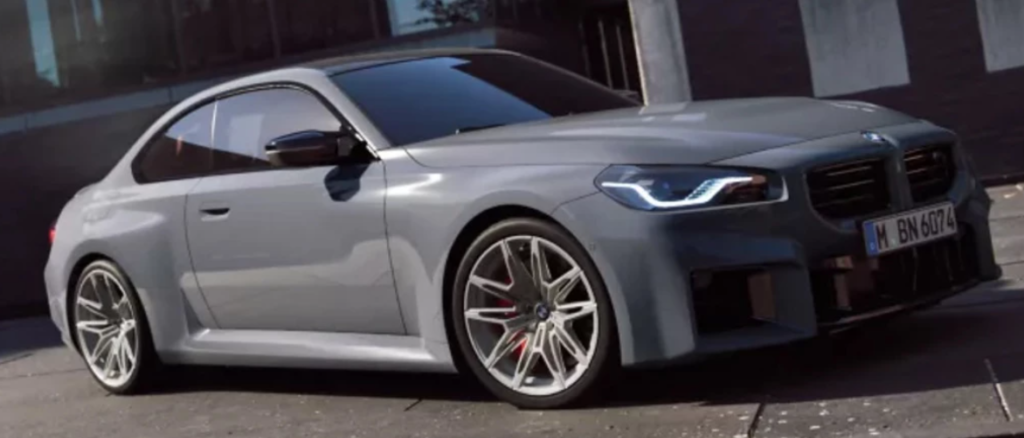
Choosing between the BMW M2 vs M340i sounds simple until we actually look beneath the badges. Both are brutally quick. Both use turbocharged inline-six power. Both can turn an ordinary highway entrance into something that feels suspiciously like a qualifying lap.
Yet they are fundamentally different cars.
The BMW M2 is the mischievous one. It sits lower, looks wider, feels more aggressive, and comes from BMW's full-fat M division. The M340i, meanwhile, is the grown-up athlete. It can carry four adults comfortably, swallow luggage, commute quietly on Monday morning, then launch itself down a back road with startling speed on Saturday.
So which one makes more sense?
For most drivers who need one car to handle everything, we'd argue that the M340i is the smarter all-rounder. However, if driving engagement, rear-wheel-drive balance, track capability, and that genuine M-car feeling matter more than practicality, the M2 is unquestionably the more exciting machine.
Let's dig much deeper.
Content in this publication
- BMW M2 vs M340i at a Glance
- BMW M2 vs M340i Performance: Two Different Philosophies
- BMW M2 vs M340i 0–60 MPH
- Handling: Where the M2 Pulls Away
- Rear-Wheel Drive vs xDrive
- BMW M2 vs M340i Dimensions
- Weight: Is the M2 Actually Much Lighter?
- Interior: M2 Drama vs M340i Refinement
- Comfort: The M340i Wins Easily
- Rear Seats: No Contest
- Cargo Space and Practicality
- M2 vs M340i Exhaust Sound
- Technology and Infotainment
- BMW M2 vs M340i Fuel Economy
- Running Costs
- Which Car Is Better on a Track?
- Which Car Is Better on a Back Road?
- Which One Is Better for Highway Driving?
- BMW M2 vs M340i in Bad Weather
- Design: Which BMW Looks Better?
- BMW M2 vs M340i Reliability
- Used BMW M2 vs Used M340i
- Which One Is More Fun?
- Which One Is Faster in the Real World?
- Who Should Buy the BMW M2?
- Who Should Buy the BMW M340i?
- BMW M2 vs M340i: Pros and Cons
- BMW M2 vs M340i: Our Verdict
- Frequently Asked Questions
- Closing Thoughts
BMW M2 vs M340i at a Glance
Before getting lost in suspension geometry, turbochargers, and tire widths, here's the basic difference.
| Category | BMW M2 | BMW M340i |
|---|---|---|
| Body style | 2-door coupe | 4-door sedan |
| Engine | 3.0L twin-turbo inline-six | 3.0L turbo inline-six |
| Power | Around 473 hp on current U.S. model | Around 386 hp on recent U.S. versions |
| Transmission | 6-speed manual or 8-speed automatic | 8-speed automatic |
| Drivetrain | RWD or available M xDrive on newer versions | RWD or xDrive depending on market/version |
| Character | Hardcore performance | Fast luxury daily driver |
| Rear-seat usability | Limited | Very good |
| Best for | Enthusiasts | Daily drivers |
BMW currently lists the M2 at 473 horsepower in the U.S., with rear-wheel-drive manual and automatic versions as well as a newer M xDrive model. The automatic rear-drive car is quoted at 3.9 seconds from 0–60 mph, while the M xDrive version drops that figure to 3.6 seconds.
Recent U.S.-spec M340i models produce 386 horsepower and 398 lb-ft of torque, with BMW quoting 0–60 mph in 4.4 seconds for the rear-drive version and 4.1 seconds for the xDrive model.
But numbers tell only half the story.
BMW M2 vs M340i Performance: Two Different Philosophies
The easiest mistake we can make is assuming that the M2 is simply an M340i with more power.
It isn't.
The M2 was engineered as a dedicated M performance car. That means stronger brakes, more aggressive suspension tuning, wider tires, structural changes, a performance-oriented differential, more adjustability, and an overall chassis philosophy centered on enthusiastic driving.
The M340i belongs to BMW's M Performance range rather than the full M lineup.
Think of it this way.
The M340i is like an excellent road-going running shoe. Fast, comfortable, adaptable.
The M2 is more like a racing spike.
You could wear both every day, but only one was designed primarily around maximum performance.
M2 Power Delivery
Under the M2's hood sits BMW's S58-derived 3.0-liter turbocharged inline-six.
Current U.S. specifications list 473 horsepower, with torque varying depending on transmission. The six-speed manual produces 406 lb-ft, while the eight-speed automatic delivers 443 lb-ft.
Press the accelerator and the engine doesn't simply push the car forward.
It attacks.
There's tremendous midrange torque followed by enough high-rpm enthusiasm that we're encouraged to keep pulling gears instead of short-shifting.
The Manual Transmission Changes Everything
One enormous advantage for enthusiasts is simple:
The M2 still offers a six-speed manual transmission.
That alone may settle the debate for some of us.
Modern automatics are quicker, smoother, and more efficient, but there's something wonderfully mechanical about operating three pedals ourselves.
A manual M2 makes every ordinary drive more interactive.
We're no longer just pointing the car down the road. We're participating.
M340i Power Delivery
The M340i uses BMW's excellent B58 3.0-liter turbocharged inline-six.
And calling it the "lesser" engine feels unfair.
It is one of those engines that makes everyday driving ridiculously effortless. Turbo lag is minimal, torque arrives early, and the eight-speed automatic seems almost telepathic.
BMW's recent U.S. specification lists the M340i at 386 horsepower and 398 lb-ft.
Interestingly, BMW has also announced an updated version for some global markets producing approximately 392 hp and 540 Nm of torque, illustrating how specifications can vary depending on model year and region.
Around town, the M340i often feels every bit as muscular as we need.
Floor it from a traffic light and there's that wonderful moment where the nose rises slightly and the scenery suddenly starts arriving much faster.
BMW M2 vs M340i 0–60 MPH
This is where things become interesting.
The current automatic rear-drive M2 is officially rated at roughly 3.9 seconds from 0–60 mph, while BMW quotes 3.6 seconds for the newer M2 M xDrive.
The M340i xDrive sits around 4.1 seconds according to BMW's published U.S. figures.
That's quick enough to make the distinction largely academic on public roads.
Still, the character differs enormously.
The M340i xDrive launches cleanly and confidently.
The rear-drive M2 feels more dramatic.
One feels like being fired from a slingshot.
The other feels like trying to control the slingshot.
Handling: Where the M2 Pulls Away
If we drive both cars calmly through town, the gap doesn't seem enormous.
Find a twisting road and everything changes.
M2 Steering and Chassis Feel
The M2 feels tighter and more focused.
Its wider stance and M-specific suspension give it an eagerness the M340i cannot quite duplicate.
Turn toward an apex and the front end responds with authority.
Lean into the throttle and the rear axle becomes part of the conversation.
That's important.
Great sports cars don't simply obey us. They communicate with us.
The M2 constantly whispers information through the steering wheel, seat, tires, and chassis.
We're not just travelling around a corner.
We're managing weight transfer, grip, throttle, and balance.
M340i Handling
The M340i is still extremely capable.
In fact, its biggest trick may be how effortlessly it carries speed.
The suspension delivers impressive body control without constantly reminding us that we're driving a performance vehicle.
That makes it brilliant on real roads.
Potholes?
No problem.
Motorway expansion joints?
Barely noticed.
Sweeping highway ramp?
Suddenly we're carrying more speed than expected.
But push harder and the differences emerge.
The M340i feels like a sports sedan being driven aggressively.
The M2 feels like a sports car doing exactly what it was born to do.
Rear-Wheel Drive vs xDrive
Drivetrain choice plays a massive role in this comparison.
Historically, the M2's personality has revolved around rear-wheel drive.
Power goes toward the rear tires, which means throttle inputs directly influence the car's attitude.
Want maximum engagement?
Rear-wheel drive wins.
Want maximum traction?
xDrive changes the equation.
BMW has expanded the M2 range with an M xDrive version, giving the car considerably stronger launch traction while retaining the performance-oriented character expected from an M model.
Meanwhile, the M340i xDrive has long been one of the easiest high-performance sedans to live with.
Rain, cold roads, imperfect surfaces—it simply finds grip and goes.
Which System Would We Choose?
For pure entertainment:
M2 rear-wheel drive.
For all-weather speed:
M340i xDrive.
For the fastest modern M2 experience:
M2 M xDrive.
BMW M2 vs M340i Dimensions
Here we find another surprisingly important difference.
The M2 measures roughly 180.3 inches long with a 108.1-inch wheelbase, while recent M340i specifications place the sedan at approximately 185.9 inches long with a wheelbase of around 112.5 inches.
That difference doesn't sound enormous.
Drive them back-to-back, though, and it becomes noticeable.
The M2 feels shorter and more compact.
The M340i feels more substantial.
Interestingly, the M2 is also considerably wider, reinforcing its planted, muscular stance.
Weight: Is the M2 Actually Much Lighter?
We might expect the small coupe to weigh dramatically less.
That's not necessarily the case.
BMW lists the manual M2 at roughly 3,814 pounds, with the rear-drive automatic around 3,867 pounds. The newer all-wheel-drive M2 climbs close to 3,988 pounds.
A recent M340i xDrive specification lists approximately 4,008 pounds.
So we're not talking about lightweight sports cars here.
They're muscular modern performance machines packed with technology, safety equipment, sound insulation, large wheels, and sophisticated drivetrains.
The M2's advantage comes less from being featherweight and more from how its chassis manages that mass.
You may be interested in reading Toyota Hilux Generations: Complete History, Evolution, and Key Differences
Interior: M2 Drama vs M340i Refinement
Open the doors and the personalities separate again.
Inside the BMW M2
The M2 cabin feels more purposeful.
Depending on specification, we can get aggressive M seats, carbon-fiber trim, M-specific displays, chunky steering controls, and visual reminders that this isn't an ordinary BMW coupe.
It's exciting.
But subtle?
Not particularly.
Especially with optional carbon bucket seats, the cockpit looks like it's waiting for somebody to wave a green flag.
Inside the BMW M340i
The M340i cabin takes a calmer approach.
It's clean, premium, technologically advanced, and easier to live with for hours at a time.
There's less theater.
But there's also less compromise.
We can slide into the seat wearing office clothes without feeling like we've accidentally entered a track-day paddock.
Comfort: The M340i Wins Easily
This may be the biggest practical separator in the BMW M2 vs M340i discussion.
The M340i is significantly easier to live with.
Its suspension remains sporty but generally more forgiving.
Its seats suit long journeys better.
The cabin is quieter.
Rear passengers have proper doors.
And entering or exiting the vehicle doesn't require an impromptu gymnastics routine.
The M2 isn't uncomfortable by sports-car standards.
But we'd certainly notice the difference after a five-hour drive.
Daily Commuting
If our routine includes:
- Heavy traffic
- Rough city roads
- Frequent passengers
- Long motorway journeys
- School runs
- Client meetings
- Grocery shopping
…the M340i starts making a powerful argument for itself.
It gives us almost absurd performance without demanding much sacrifice.
Rear Seats: No Contest
Technically, the M2 has rear seats.
Practically, they're best considered occasional seats.
Children?
Fine.
Small adults for short trips?
Possible.
Full-size passengers on a long road trip?
They probably won't send us a Christmas card afterward.
The M340i is different.
It's a proper four-door sedan capable of carrying adults in genuine comfort.
And that's why the M340i makes so much sense as an only car.
Cargo Space and Practicality
A performance car doesn't stop being a car when we need to visit the supermarket.
The M340i's traditional sedan trunk provides generous usable space, with recent U.S. specifications listing around 16.9 cubic feet.
The M2 offers enough space for everyday luggage, but access and overall practicality aren't on the same level.
Want to carry luggage for four people?
M340i.
Want to fold yourself around a helmet, weekend bag, and detailing products?
M2 owners somehow always find a way.
M2 vs M340i Exhaust Sound
Neither engine sounds boring.
That's already a victory in the modern automotive world.
The B58 in the M340i produces a deep, smooth inline-six soundtrack. Sport mode introduces more aggression, but the car still knows when to behave.
The M2 sounds rawer and more urgent.
Its exhaust note matches the car's personality.
Wake the engine, select the aggressive settings, and the entire vehicle feels more alive.
The M340i sounds fast.
The M2 sounds like it wants trouble.
Technology and Infotainment
Both models use BMW's modern digital cockpit ecosystem, combining a large central interface with a digital instrument display.
We're talking about:
- Smartphone integration
- Navigation
- Voice controls
- Configurable driving information
- Performance displays
- Connected vehicle functions
- Advanced driver assistance features, depending on specification
The M340i arguably integrates technology more naturally into its luxury-sedan identity.
The M2 uses technology differently.
Its screens aren't just for navigation and Spotify. They become command centers for configuring steering, suspension, engine response, transmission behavior, braking feel, and stability settings.
BMW M2 vs M340i Fuel Economy
Nobody buys either car because they're chasing hybrid-like fuel bills.
Still, the M340i has the advantage.
Why?
The B58 engine combines strong performance with relatively sensible efficiency, and mild-hybrid technology in recent versions further improves everyday drivability and efficiency.
BMW's full M engine in the M2 prioritizes performance.
More power, wider tires, aggressive gearing, and a more performance-focused calibration inevitably demand fuel.
If we're driving both enthusiastically, neither will behave like an economy car.
And let's be realistic: once we hear that inline-six sound, restraint becomes difficult.
Running Costs
Purchase price tells only part of the ownership story.
With either model, we should consider:
- Premium fuel
- Performance tires
- Brake replacement
- Insurance
- Routine servicing
- Depreciation
- Optional extended warranty
- Track-related wear
M2 Costs Can Escalate Quickly
The M2's wide performance tires and powerful braking hardware can become expensive.
Track use makes that difference even more dramatic.
Tires disappear.
Brake pads disappear.
Fuel disappears.
And somehow our savings account starts disappearing too.
M340i Ownership Is More Conventional
The M340i isn't cheap to maintain, but its everyday consumables can be somewhat less extreme.
More importantly, most owners won't constantly feel tempted to book a track day.
The M2 practically sends us a calendar invitation.
Which Car Is Better on a Track?
M2.
No lengthy debate required.
The M340i can absolutely perform on a circuit, but that isn't its primary mission.
The M2 receives hardware specifically intended for sustained performance driving.
Its brakes, cooling strategy, suspension calibration, tire setup, differential behavior, and M-specific controls make it the natural choice.
Would We Track an M340i?
Absolutely.
Would we choose one primarily for track use?
Probably not.
That's like entering a luxury speedboat into a rowing competition. It might be surprisingly capable, but we're using the wrong tool.
Which Car Is Better on a Back Road?
Again, we'd pick the M2.
Here, outright speed isn't even the deciding factor.
It's involvement.
The M2 feels more alive at moderate speeds.
We notice every change in road surface.
Every throttle adjustment matters.
Every corner becomes something to anticipate.
The M340i can travel down the same road remarkably quickly, but the experience feels calmer and more isolated.
Sometimes that's good.
Sometimes we want chaos.
Which One Is Better for Highway Driving?
The M340i turns the tables.
Long-distance travel suits it beautifully.
Settle into eighth gear, activate adaptive cruise features where fitted, lower the suspension aggression, and the car becomes a refined motorway cruiser.
Then somebody blocks the passing lane.
One squeeze of the accelerator reminds us there's still nearly 400 horsepower waiting underneath.
That's the M340i magic.
You may be interested in readingToyota Hilux Generations: Complete History, Evolution, and Key DifferencesYou may be interested in reading
 Land Rover Defender 90 Models: Complete Guide to Trims, Engines and Versions
It can hide its performance until we ask for it.
BMW M2 vs M340i in Bad Weather
The M340i xDrive is extremely difficult to beat here.
Its all-wheel-drive system gives us tremendous confidence in wet and slippery conditions.
The new M2 M xDrive narrows this gap significantly, but conventional rear-drive M2 versions demand more caution when conditions deteriorate.
That's not necessarily a weakness.
For enthusiasts, learning to manage rear-wheel drive is part of the attraction.
But when we're late for work on a freezing, wet morning?
Philosophy suddenly matters less than traction.
Design: Which BMW Looks Better?
This one depends entirely on taste.
The M2 Is Aggressive
The M2 is squat, muscular, and unapologetic.
Wide arches.
Chunky proportions.
Short overhangs.
Big wheels.
Large air openings.
It almost looks like someone took a normal BMW coupe, fed it protein powder, and sent it to the gym for eighteen months.
The M340i Is More Subtle
The M340i takes the sleeper approach.
Car enthusiasts know what it is.
Most other people simply see a stylish 3 Series.
Some buyers love that.
Others want their performance car to shout before the engine even starts.
BMW M2 vs M340i Reliability
Both cars use proven BMW engine families, but they're complicated modern performance vehicles.
Neither should be treated like an old naturally aspirated economy car.
The M340i's B58 engine has developed an excellent reputation among modern BMW enthusiasts.
The M2's S58-family powertrain is engineered for significantly greater performance loads but also incorporates more aggressive hardware and calibration.
Proper maintenance matters tremendously.
We'd pay close attention to:
- Oil-change history
- Coolant maintenance
- Transmission servicing
- Previous modifications
- ECU tuning
- Launch-control usage
- Track use
- Tire condition
- Brake condition
This becomes particularly important when shopping used.
Used BMW M2 vs Used M340i
The used market makes the comparison even more fascinating.
A lightly used M340i can be one of the strongest performance bargains available.
We get serious acceleration, luxury features, everyday comfort, and the excellent B58 engine.
Used M2 examples may command stronger enthusiast demand.
That can mean higher purchase prices, but potentially stronger desirability later.
Check for Modifications
Both platforms attract tuners.
That's understandable.
These turbocharged six-cylinder engines can respond dramatically to software and hardware modifications.
But somebody else's tuned performance car can also become somebody else's mechanical problem—namely ours.
A modified car isn't automatically bad.
We simply need documentation, transparency, and ideally an inspection by somebody familiar with BMW M and B58-powered vehicles.
Which One Is More Fun?
M2.
That's perhaps the shortest section in this article.
Fun isn't always measurable through horsepower, acceleration, or lateral grip.
Sometimes it comes from steering feel.
Sometimes it's the manual gearbox.
Sometimes it's hearing the rear tires work as we exit a corner.
The M2 creates more of those moments.
It turns ordinary journeys into excuses.
Suddenly we don't choose the shortest route home.
We choose the interesting one.
Which One Is Faster in the Real World?
This question is more complicated.
On paper, the M2 generally has the performance advantage.
But real roads don't look like racetracks.
Imagine wet pavement, traffic lights, imperfect surfaces, and everyday driving.
An M340i xDrive can deploy its power incredibly effectively.
There's virtually no drama.
Point.
Accelerate.
Disappear.
That makes it devastatingly quick in real-world conditions.
The M2, however, ultimately offers more performance depth when roads—or tracks—allow us to explore its potential.
Who Should Buy the BMW M2?
The M2 makes the most sense if we:
- Prioritize driving engagement
- Want a genuine M car
- Want a manual transmission
- Rarely carry rear passengers
- Enjoy track days
- Prefer rear-wheel-drive dynamics
- Want more horsepower
- Appreciate aggressive styling
- Are willing to sacrifice comfort for excitement
The M2 is fundamentally an enthusiast purchase.
We don't need one.
We want one.
And sometimes that's exactly the point.
Who Should Buy the BMW M340i?
The M340i makes more sense if we:
- Need four doors
- Regularly carry passengers
- Commute daily
- Drive long distances
- Prefer a softer ride
- Want strong fuel efficiency relative to performance
- Need all-weather capability
- Want one car that handles almost everything
- Prefer understated styling
The brilliance of the M340i is how little we sacrifice.
It might be 90 percent as entertaining in many everyday situations while being dramatically more usable the remaining 90 percent of our lives.
Yes, the math is intentionally impossible.
That's how versatile this car feels.
BMW M2 vs M340i: Pros and Cons
BMW M2 Pros
- More powerful
- Genuine M chassis
- Available manual transmission
- Sharper handling
- Better track capability
- More distinctive styling
- More engaging rear-drive character
- Strong enthusiast appeal
BMW M2 Cons
- Smaller rear seats
- Two-door layout
- Firmer ride
- Higher running costs
- Less subtle
- Lower everyday practicality
BMW M340i Pros
- Excellent B58 engine
- Strong acceleration
- Four proper doors
- Comfortable rear seating
- Better daily usability
- Strong all-weather performance with xDrive
- More relaxed ride
- Subtle appearance
- Excellent long-distance comfort
BMW M340i Cons
- No manual transmission
- Less emotionally engaging
- Not a full M model
- Softer chassis responses
- Less track-focused
- Easier to mistake for a normal 3 Series
BMW M2 vs M340i: Our Verdict
So, after everything we've compared, which one should we actually buy?
For most people, the BMW M340i is the better car.
It's breathtakingly quick, comfortable, refined, practical, and easy to use every day. We can drive it to work, carry passengers, take a road trip, visit the supermarket, and still embarrass plenty of dedicated sports cars when the road opens up.
But there's a difference between the better car and the car we'd rather drive.
And that's where the M2 wins.
The BMW M2 is the better driver's car.
It feels more special. More mischievous. More demanding. More alive.
If our heart makes the buying decision, we'd take the M2.
If our head gets the final vote, we'd choose the M340i.
And if we're lucky enough to have room for two cars in the garage?
Well, now we've solved the problem entirely.
Frequently Asked Questions
Is the BMW M2 faster than the M340i?
Generally, yes. The current M2 produces substantially more horsepower and offers stronger ultimate performance. BMW quotes the automatic rear-drive M2 at around 3.9 seconds from 0–60 mph, while the newer M2 M xDrive reaches the benchmark in approximately 3.6 seconds. The M340i xDrive remains extremely quick at around 4.1 seconds.
Is the M340i better than the M2 for daily driving?
For most drivers, yes. The M340i offers four doors, more rear-seat room, better long-distance comfort, greater cargo usability, and a more forgiving ride while retaining excellent performance.
Does the BMW M2 use the same engine as the M340i?
No. Both use 3.0-liter turbocharged inline-six engines, but the M340i uses BMW's B58 family, while the M2 uses a higher-performance S58-derived engine with hardware and tuning intended for full M applications.
Should we buy an M2 or M340i as our only car?
The M340i is usually the smarter single-car solution because it combines serious performance with genuine sedan practicality. We would choose the M2 instead if driving enjoyment outweighs passenger space and everyday comfort.
Is the M2 worth paying more for than the M340i?
It is if we value the qualities that make an M car special: sharper handling, stronger brakes, more chassis adjustability, extra power, track capability, distinctive styling, and—on rear-wheel-drive versions—the availability of a manual gearbox. If we mainly want effortless real-world speed, the M340i offers exceptional value.
Closing Thoughts
The BMW M2 vs M340i battle isn't really about deciding which car is objectively superior.
It's about deciding which compromises we prefer.
The M340i asks almost nothing from us. It's comfortable when we're tired, spacious when friends come along, quiet when we're commuting, and ferociously quick when we bury the throttle.
The M2 asks for more.
More tolerance for a firm ride.
More compromise in practicality.
More attention.
More involvement.
But it gives something back that the M340i cannot completely replicate.
Character.
The M340i is the performance BMW we'd recommend to almost everyone.
The M2 is the BMW we'd recommend to the person who already knows exactly why they want one.
And perhaps that's the cleanest way to separate them.
You may be interested in readingToyota Hilux Generations: Complete History, Evolution, and Key DifferencesYou may be interested in reading
Land Rover Defender 90 Models: Complete Guide to Trims, Engines and VersionsYou may be interested in reading
 Test Drive Review: The Fiat 500 Abarth 0-60 Acceleration
Choose the M340i if we want one brilliant car for everything. Choose the M2 if driving itself is the thing we care about most.
If you want to know other articles similar to BMW M2 vs M340i: Which BMW Performance Car Should We Buy? you can visit the category Models.
Land Rover Defender 90 Alternative: The Best Rivals Worth Considering
Land Rover Defender 90 Models: Complete Guide to Trims, Engines and Versions
Toyota Hilux Generations: Complete History, Evolution, and Key Differences
BMW M2 vs Porsche 911: Which Sports Car Makes More Sense?
BMW M2 vs Mustang GT: Which Performance Coupe Should We Buy?
BMW M2 vs Porsche Cayman: Which Sports Car Is Better?
Leave a Reply
More content of your interest