
Subaru XV vs Crosstrek: Are They Really Different Cars?

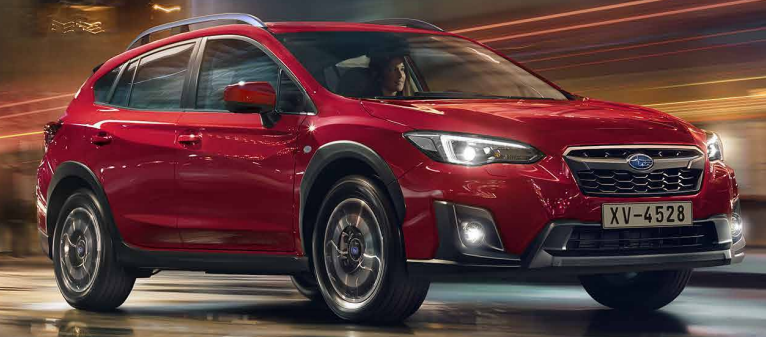
If you have been searching for a compact Subaru SUV, you have probably stumbled into one of the strangest naming situations in the brand’s lineup: Subaru XV vs Crosstrek.
At first glance, they look suspiciously similar. Same rugged hatchback-like shape. Same raised suspension. Same Subaru badge. Same adventurous personality. Put an XV beside a Crosstrek from a comparable generation and we might wonder whether Subaru simply changed the badge after lunch.
Well, that is not far from the truth.
The Subaru XV and Subaru Crosstrek belong to essentially the same vehicle family. Historically, Subaru used the Crosstrek name in markets such as North America while calling the vehicle Subaru XV in several other markets. With the introduction of the third generation, Subaru standardized the Crosstrek name globally.
But that does not mean every XV and Crosstrek are identical.
Model year, generation, engine, trim level, country, safety equipment, infotainment and suspension tuning can all create meaningful differences. So when we compare Subaru XV vs Crosstrek, the useful question is not simply, “Which badge is better?”
The better question is: which generation and specification suits us better?
Let’s untangle the names and compare everything that actually matters.
Content in this publication
- Subaru XV vs Crosstrek at a Glance
- Are the Subaru XV and Crosstrek the Same Car?
- Subaru XV vs Crosstrek Generations Explained
- Subaru XV vs Crosstrek Exterior Design
- Subaru XV vs Crosstrek Interior
- Subaru XV vs Crosstrek Cargo Space
- Subaru XV vs Crosstrek Engine Options
- Subaru XV vs Crosstrek Transmission
- Subaru XV vs Crosstrek AWD Capability
- Subaru XV vs Crosstrek Ground Clearance
- Subaru XV vs Crosstrek Ride and Handling
- Subaru XV vs Crosstrek Fuel Economy
- Subaru XV vs Crosstrek Safety
- Subaru XV vs Crosstrek Reliability
- Subaru XV vs Crosstrek Maintenance Costs
- Subaru XV vs Crosstrek for City Driving
- Subaru XV vs Crosstrek for Road Trips
- Subaru XV vs Crosstrek for Families
- Used Subaru XV vs New Crosstrek
- Subaru XV vs Crosstrek: Which Is Better Off Road?
- Subaru XV vs Crosstrek: Which Holds Its Value Better?
- Is It Worth Upgrading From an XV to a Crosstrek?
- Subaru XV vs Crosstrek: Our Verdict
- Frequently Asked Questions
Subaru XV vs Crosstrek at a Glance
Before disappearing down the rabbit hole of engines, transmissions and generations, here is the simple version.
| Category | Subaru XV | Subaru Crosstrek |
|---|---|---|
| Vehicle type | Compact crossover SUV | Compact crossover SUV |
| Relationship | Earlier/global-market name | North American and now global name |
| AWD | Commonly standard Symmetrical AWD | Standard Symmetrical AWD in major markets |
| Engine layout | Subaru Boxer engines | Subaru Boxer engines |
| Transmission | Mainly Lineartronic CVT on later models | Mainly Lineartronic CVT |
| Ground clearance | SUV-style raised clearance | SUV-style raised clearance |
| Best reason to buy | Used-value potential | Newer technology and refinement |
| Main concern | Older safety/infotainment tech | Usually higher purchase price |
| Overall character | Rugged, practical and compact | Rugged, practical and more modern |
Think of them less like two rival SUVs and more like different chapters of the same book.
Are the Subaru XV and Crosstrek the Same Car?
Broadly speaking, yes—but context matters.
Subaru itself explained during the unveiling of the third-generation model that the vehicle had previously been called either Crosstrek or Subaru XV depending on the market, and that the Crosstrek name would be adopted globally with the new generation.
That means an older Australian Subaru XV and a North American Crosstrek from a similar period may represent essentially the same underlying vehicle.
However, specifications can differ considerably between countries.
Emissions regulations, available engines, trim structures, towing ratings, safety equipment and option packages are not always identical.
So we should never assume that specifications from an American Crosstrek automatically apply to an Australian XV—or vice versa.
Why Did Subaru Use Two Names?
Automakers love regional naming strategies.
Sometimes one name tests better with buyers. Sometimes an existing badge has more recognition in a particular market. And sometimes marketing departments simply enjoy making automotive research harder than it needs to be.
For years, XV was familiar in countries including Australia, while Crosstrek had already established itself strongly in North America.
The Crosstrek name also describes the vehicle rather well. It is essentially a crossover designed to “trek” beyond ordinary urban roads.
Why Did Subaru Drop the XV Name?
The transition happened alongside the arrival of the third generation.
Rather than maintaining two identities for essentially the same product, Subaru moved toward one global Crosstrek name.
In Australia, for example, Subaru described the new Crosstrek as the next iteration of the Subaru XV, rather than an unrelated replacement.
That detail matters enormously when shopping used.
If someone tells us, “The Crosstrek replaced the XV,” that is technically understandable, but it can sound as though Subaru killed one model and invented another.
A better explanation is that the XV evolved into the globally named Crosstrek.
Subaru XV vs Crosstrek Generations Explained
This is where the comparison becomes useful.
Instead of comparing badges, we should compare generations.
First-Generation Subaru XV and Crosstrek
The XV arrived in markets such as Australia in 2012. Subaru positioned it as a compact crossover that blended hatchback dimensions with proper SUV capability.
It quickly carved out an interesting niche.
Imagine an Impreza that bought hiking boots, started camping and refused to lower itself back to ordinary hatchback height. That was basically the formula.
Subaru’s own Australian history records the first-generation XV launching there in 2012.
The early cars established the formula that would define the model: Boxer engine, all-wheel drive, useful ground clearance and manageable exterior dimensions.
Second-Generation Subaru XV and Crosstrek
The second generation arrived later in the decade and represented a significant step forward.
It moved to Subaru’s newer global architecture, improving areas such as structural rigidity, ride quality, refinement and crash performance.
This is the generation many used-car shoppers will encounter when searching for a Subaru XV.
It feels recognizably modern without necessarily commanding the price of a nearly new Crosstrek.
For many buyers, that makes it the sweet spot.
Third-Generation Crosstrek
This is where the naming confusion largely disappears.
The third-generation model adopted the Crosstrek name globally.
It did not throw away the XV formula. Instead, Subaru refined it.
Styling became more muscular. Technology improved. Driver-assistance systems evolved. Interior presentation became more contemporary, while the basic philosophy remained familiar.
In other words, Subaru did not replace the hiking boots with dress shoes. It simply bought a newer pair.
Subaru XV vs Crosstrek Exterior Design
Park an older XV beside a current Crosstrek and the family resemblance is obvious.
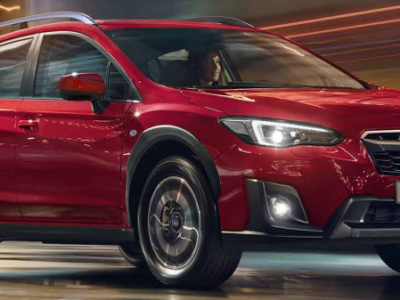
Both use that distinctive recipe of a compact body, pronounced wheel arches, black protective cladding, roof rails on many trims and generous ride height.
The Crosstrek, however, generally looks tougher and more deliberate.
XV Styling: Simple and Functional
The XV has aged reasonably well because it never tried too hard.
Its styling mixes hatchback proportions with SUV detailing rather than pretending to be a miniature truck.
That makes it particularly suitable for drivers who want an SUV driving position and versatility without owning something enormous.
Does the XV Still Look Modern?
Later second-generation versions certainly can.
A clean XV with attractive wheels and LED lighting can still look surprisingly fresh.
It is understated rather than flashy—and sometimes that ages better.
Crosstrek Styling: More Rugged Character
The latest Crosstrek pushes the adventurous theme harder.
There is more visual texture, chunkier cladding and a stronger front-end treatment.
Some people will love that extra toughness. Others may actually prefer the cleaner XV.
Design is subjective, but the Crosstrek unmistakably looks like the newer product.
Subaru XV vs Crosstrek Interior
Inside, the generational gap becomes easier to spot.
An older XV can feel perfectly functional, but the newest Crosstrek brings the cabin closer to current expectations for connectivity and digital features.
Dashboard and Infotainment
Second-generation XV models typically rely on a more traditional dashboard arrangement, with physical controls and a smaller central screen depending on trim and year.
The latest Crosstrek increasingly places infotainment at the centre of the experience.
For example, Subaru Australia highlights an available 11.6-inch central touchscreen with wireless Apple CarPlay and Android Auto in the current Crosstrek range.
That makes the newer cabin feel more contemporary almost immediately.
Whether that is automatically better depends on us.
Some drivers adore big touchscreens. Others would happily trade half the pixels for three extra physical buttons.
Passenger Comfort
The basic philosophy remains similar.
Both vehicles prioritize sensible seating, decent visibility and everyday usability rather than coupe-like styling that forces rear passengers to negotiate with the roof.
The Crosstrek benefits from later-generation refinement, but the XV was already a practical compact crossover.
If we regularly carry adults in the rear, however, we should physically test the exact model before buying. Trim, seat design and passenger expectations matter more than spec-sheet bragging.
Subaru XV vs Crosstrek Cargo Space
Neither vehicle is designed to swallow furniture like a large SUV.
That is not really the point.
Their appeal lies in combining a relatively compact footprint with a flexible cargo area.
Fold the rear seats and we gain useful space for camping equipment, luggage, sports gear or the kind of enormous box we somehow thought would fit without measuring.
You may be interested in reading Subaru XV vs Impreza: Which Subaru Should You Choose?
The Crosstrek maintains this flexible approach.
For most couples, small families and outdoor-oriented drivers, cargo practicality should be adequate.
Anyone regularly carrying three children, large dogs and half a sporting-goods store might prefer moving up to a Forester or Outback.
Subaru XV vs Crosstrek Engine Options
Now things become market-dependent.
This is where online comparisons frequently go wrong.
An Australian Crosstrek and an American Crosstrek do not necessarily share the same engine lineup.
For example, the current Australian range includes 2.0-litre Boxer petrol and hybrid variants, while the U.S. 2026 conventional Crosstrek range uses a 2.5-litre Boxer engine producing 180 horsepower.
So rather than asking which badge has the bigger engine, we need to compare the exact vehicles being sold in our country.
How Does the Subaru XV Perform?
The XV has traditionally prioritized usability and traction over outright speed.
That means acceleration can feel adequate rather than exciting.
Press the accelerator hard and we are unlikely to mistake it for a WRX.
But around town, on wet roads, on gravel and during ordinary highway driving, performance makes more sense in context.
The XV is about getting there confidently.
Is the Crosstrek Faster?
Depending on market and engine, potentially.
A larger-engine Crosstrek can deliver noticeably stronger acceleration than older 2.0-litre versions.
However, not every current Crosstrek receives the same engine globally, so we cannot make a blanket statement.
What has improved more consistently is refinement.
The latest generation feels like a more mature interpretation of the same recipe.
What About Hybrid Versions?
Hybrid technology further complicates the comparison.
Both XV and Crosstrek lineups have included electrified versions in some markets, but the hybrid systems vary by generation and country.
The important lesson is simple: compare like with like.
A petrol XV versus hybrid Crosstrek comparison tells us as much about drivetrain differences as it does about the model evolution.
Subaru XV vs Crosstrek Transmission
Later XV and Crosstrek models are strongly associated with Subaru’s Lineartronic continuously variable transmission.
CVTs divide opinion.
Some drivers appreciate their smoothness and efficiency. Others prefer the stepped sensation of a conventional automatic.
Subaru has worked to make the driving experience feel more natural over time, including simulated ratios and paddle-shift functions on certain variants.
Subaru Australia notes that petrol Crosstrek variants moved from the previous XV’s seven-speed manual mode to an eight-speed paddle-shift manual mode on relevant versions.
That is a small detail, but it illustrates the broader point: the Crosstrek is an evolution, not merely an emblem swap.
Subaru XV vs Crosstrek AWD Capability
Here we reach one of the strongest reasons to choose either vehicle.
Subaru has built much of its identity around all-wheel drive, and both XV and Crosstrek models lean heavily into that heritage.
Where some compact crossovers are fundamentally front-wheel-drive vehicles with optional AWD added later, Subaru integrates its Symmetrical AWD philosophy deeply into these vehicles.
Are They Good in Rain and Snow?
With suitable tyres, both can make excellent all-weather vehicles.
All-wheel drive does not magically defeat physics—icy roads can humble any badge—but extra traction can make a substantial difference when conditions deteriorate.
The combination of AWD, useful ground clearance and manageable dimensions is one reason these cars appeal to drivers living outside perfectly paved urban environments.
What About Light Off-Road Driving?
This is another strength.
We would not confuse either one with a hardcore body-on-frame 4x4, but gravel roads, muddy access tracks, snowy lanes and rough camping routes fit their personality nicely.
Current Crosstrek versions continue to offer X-Mode technology designed to coordinate systems such as engine, transmission, brakes and AWD when traction gets difficult.
That makes the Crosstrek feel like a Swiss Army knife: not specialized for one extreme task, but impressively useful across many situations.
Subaru XV vs Crosstrek Ground Clearance
Ground clearance has always been central to the XV/Crosstrek formula.
This is not merely a hatchback wearing plastic cladding.
The raised ride height gives us additional confidence over rough roads, deep potholes, steep driveways and light trails.
Current Australian Crosstrek specifications advertise 220 mm of ground clearance, while U.S. versions vary by specification and can offer even more in off-road-focused configurations.
Again, market matters.
But whichever badge we choose, useful clearance is one of this vehicle family’s defining advantages.
Subaru XV vs Crosstrek Ride and Handling
This is where Subaru’s experience with horizontally opposed engines and AWD pays off.
The Boxer engine layout helps keep weight relatively low in the chassis, while the AWD system provides reassuring traction.
The result is a crossover that often feels more planted than its tall stance suggests.
XV Driving Character
The XV tends to feel easy-going.
Steering is manageable, visibility is good and dimensions are friendly enough for urban life.
Its suspension also suits rougher roads surprisingly well.
That combination matters because most of us do not spend every weekend conquering mountains.
We spend Monday negotiating car parks.
A crossover needs to handle both.
Crosstrek Driving Character
The newer Crosstrek feels like the formula has been polished.
We get familiar Subaru behaviour but with incremental gains in refinement, technology and body control.
It is not a radical transformation.
And that is probably intentional.
Subaru found a recipe its customers liked and seasoned it rather than throwing the entire meal away.
Subaru XV vs Crosstrek Fuel Economy
Fuel consumption depends heavily on engine, transmission, tyre choice, driving conditions and hybrid availability.
Smaller-engined XV versions can be reasonably economical for an AWD crossover, although the constant operation of an AWD system means we should not expect tiny front-wheel-drive hatchback numbers.
Newer Crosstrek models benefit from continued powertrain development, and hybrid versions are available in selected markets.
For example, Subaru currently offers both conventional and hybrid Crosstrek configurations, although the hybrid technology and official consumption figures differ between regions.
If fuel economy is our main priority, comparing the official rating for the exact trim we plan to buy is far more useful than comparing the XV and Crosstrek names generally.
Subaru XV vs Crosstrek Safety
Safety technology may be one of the strongest arguments for choosing the newer Crosstrek.
Subaru’s EyeSight driver-assistance technology has existed across multiple generations, but like any electronic safety system, it has evolved.
The latest Crosstrek can offer a more advanced version of EyeSight plus additional driver-assistance technologies depending on market and trim.
That means a used XV can still be impressively equipped, but the exact year matters enormously.
A high-spec late-model XV could potentially offer more useful equipment than an older entry-level Crosstrek sold elsewhere.
We should therefore inspect the actual feature list rather than trusting the badge.
Subaru XV vs Crosstrek Reliability
Mechanically, the shared lineage means their reliability stories overlap considerably.
A well-maintained XV can be an appealing used purchase, particularly when it comes with documented servicing.
The newer Crosstrek has the advantage of being younger, potentially still under warranty and benefiting from later development.
You may be interested in readingSubaru XV vs Impreza: Which Subaru Should You Choose?You may be interested in reading
Subaru XV vs Forester: Which Subaru SUV Should You Choose?But age alone does not determine condition.
A carefully maintained six-year-old XV can be a smarter purchase than a neglected newer vehicle.
Service history is king.
What Should We Check on a Used XV or Crosstrek?
When inspecting a used example, the most useful checks include:
- Complete servicing records, particularly evidence that recommended fluids and maintenance intervals were followed.
- Smooth CVT behaviour without unusual shuddering, hesitation or abnormal noises.
- Consistent engine operation with no warning lights, leaks or suspicious consumption issues.
- Even tyre wear, because AWD vehicles appreciate correctly matched tyres.
- Suspension, wheel-bearing and underbody condition, especially if the vehicle has regularly travelled on rough roads.
- Proper operation of EyeSight cameras, infotainment, air conditioning, electronics and driver-assistance systems.
- Accident history and evidence of previous off-road damage.
- Confirmation that applicable recalls and manufacturer campaigns have been completed.
A pre-purchase inspection is inexpensive compared with discovering an expensive problem after the keys are already ours.
Subaru XV vs Crosstrek Maintenance Costs
Neither vehicle should be judged solely by purchase price.
AWD hardware, Boxer engines and CVT servicing mean maintenance deserves attention.
Regular servicing matters enormously.
Cheap maintenance shortcuts are like skipping dental appointments: everything seems wonderfully inexpensive until suddenly it is not.
A used XV with excellent records may therefore be worth paying more for than a suspiciously cheap example with mysterious gaps in its history.
The newer Crosstrek offers the reassurance of newer components and, depending on age and country, potentially remaining factory warranty coverage.
Subaru XV vs Crosstrek for City Driving
Despite their adventurous marketing, both vehicles make plenty of sense in cities.
Their footprint remains manageable, outward visibility is generally good and the raised seating position gives us more confidence in traffic.
The XV may be particularly attractive as an affordable urban crossover.
Meanwhile, the Crosstrek’s improved connectivity and driver-assistance technology can make everyday commuting easier.
Neither feels like driving a refrigerator through a multistorey car park.
That alone deserves appreciation.
Subaru XV vs Crosstrek for Road Trips
For road trips, both are in their element.
We get comfortable seating, AWD reassurance, reasonable cargo flexibility and enough ride height to explore beyond perfectly surfaced roads.
The newer Crosstrek wins if modern infotainment, smartphone integration and the latest safety systems rank highly on our list.
A well-kept XV fights back with value.
Spend less on the vehicle and there may be more money left for the actual adventure.
Subaru XV vs Crosstrek for Families
Small families could happily live with either.
Five seats make them practical, although families requiring huge cargo capacity may eventually find their limits.
We would lean toward the Crosstrek when safety technology and connectivity are priorities.
We might prefer a used XV when budget matters more and we can find a clean example with an excellent service history.
This is one of those comparisons where “better” depends heavily on what sits inside our wallet.
Used Subaru XV vs New Crosstrek
This is perhaps the most meaningful real-world comparison.
Suppose we are looking at a tidy second-generation XV and a brand-new Crosstrek.
The Crosstrek is clearly the more modern vehicle.
But is it automatically the smarter purchase?
Not necessarily.
The XV may cost substantially less while still providing the essential ingredients: AWD, Boxer power, high ground clearance, decent safety equipment and useful practicality.
The Crosstrek counters with newer engineering, fresher safety technology, better connectivity, warranty coverage and fewer years of accumulated wear.
Choose the Subaru XV If…
A used XV makes particular sense when purchase value is our priority, we do not need the newest infotainment system, we find a well-maintained example with documented history and we want Subaru AWD capability without paying new-car money.
Choose the Crosstrek If…
The newer Crosstrek makes more sense when we want current safety technology, modern smartphone integration, improved refinement, factory warranty coverage and the latest evolution of Subaru’s compact SUV platform.
Neither decision is inherently wrong.
The better vehicle is the one whose price, condition and equipment fit our life.
Subaru XV vs Crosstrek: Which Is Better Off Road?
If we compare an ordinary older XV against a newer Crosstrek with an advanced X-Mode configuration, the Crosstrek generally holds the advantage.
But tyres matter enormously.
A sophisticated AWD system wearing unsuitable tyres can quickly become an expensive spectator when conditions turn ugly.
For mild trails, forest roads, snow and gravel, either model can be remarkably capable.
For serious rock crawling, deep mud or extreme remote-area touring, neither would be our first choice.
They are crossover adventurers, not mountain goats wearing number plates.
Subaru XV vs Crosstrek: Which Holds Its Value Better?
Used-value performance depends on region, mileage, condition and market demand.
The Crosstrek name may now make searching easier because Subaru has standardized it globally, but older XV models remain recognizable and desirable in markets where the badge was well established.
Condition makes an enormous difference.
A spotless XV with comprehensive records can easily attract more buyer confidence than a battered newer Crosstrek.
We should treat depreciation as vehicle-specific rather than assuming one badge automatically wins.
Is It Worth Upgrading From an XV to a Crosstrek?
That depends on what frustrates us about the XV.
If our existing XV runs beautifully and already does everything we ask, upgrading purely because the badge changed makes little sense.
But moving from an older XV to the latest Crosstrek can bring tangible improvements.
Technology is newer. Safety systems have evolved. Connectivity is better. Cabin presentation feels more contemporary. Refinement has improved.
So yes, the upgrade can be worthwhile—but because we are moving forward a generation, not because “Crosstrek” is intrinsically superior to “XV.”
That distinction saves us from falling for marketing.
Subaru XV vs Crosstrek: Our Verdict
The great Subaru XV vs Crosstrek battle turns out to be less of a fight and more of a family reunion.
These are not two fundamentally different Subaru SUVs competing for the same customer.
They are different identities—and increasingly different generations—of the same compact crossover lineage.
Historically, Subaru sold the vehicle as the XV in various markets while North American buyers knew it as the Crosstrek. With the third generation, Subaru brought the lineup together under the Crosstrek name globally.
So if we are comparing similarly aged XV and Crosstrek models from different countries, they may be extremely closely related.
If we are comparing an older XV with a current Crosstrek, however, the differences become meaningful.
The XV wins on used-car value, especially when we find a clean second-generation vehicle with strong maintenance history.
The Crosstrek wins on modernity, offering the latest version of Subaru’s compact crossover formula with newer technology, improved refinement and more advanced safety equipment.
Our choice therefore comes down to something refreshingly simple.
Want the essential Subaru experience for less money? Find a good XV.
Want the newest and most polished version of that same idea? Buy the Crosstrek.
Either way, we get one of Subaru’s most versatile formulas: compact enough for Monday morning, rugged enough to make Friday afternoon feel like the start of an adventure.
Frequently Asked Questions
1. Is the Subaru XV the same as the Crosstrek?
Yes, broadly speaking. Subaru used the XV and Crosstrek names for the same compact crossover family in different markets. Subaru standardized the Crosstrek name globally with the third generation. Exact engines, trims and features still vary by market and model year.
2. Why did Subaru change the XV name to Crosstrek?
Subaru adopted the Crosstrek name globally when introducing the third generation. This created a consistent global identity for a vehicle that had previously been marketed as either XV or Crosstrek depending on the region.
3. Is a new Crosstrek better than an older Subaru XV?
Generally, the latest Crosstrek offers newer technology, more advanced driver-assistance systems, updated styling and improved refinement. However, a used XV can offer excellent value and much of the same fundamental AWD crossover capability for considerably less money.
4. Should we buy a used Subaru XV or Crosstrek?
Choose primarily by generation, condition, service history, engine and equipment rather than the badge itself. A well-maintained late-model XV can be a better purchase than a neglected Crosstrek, while a newer Crosstrek is preferable if modern technology and warranty coverage are priorities.
5. Which is better, Subaru XV or Crosstrek?
For budget-conscious used-car buyers, the Subaru XV can be the better value. For buyers wanting the newest technology, safety features and refinement, the Crosstrek is the stronger choice. Fundamentally, however, both come from the same Subaru compact crossover family.
You may be interested in readingSubaru XV vs Impreza: Which Subaru Should You Choose?You may be interested in reading
Subaru XV vs Forester: Which Subaru SUV Should You Choose?You may be interested in reading
Subaru XV vs Mitsubishi Eclipse Cross: Which Compact SUV Is Better?If you want to know other articles similar to Subaru XV vs Crosstrek: Are They Really Different Cars? you can visit the category Models.
Land Rover Defender 90 vs 110 vs 130: Which Defender Is Right for You?
Land Rover Defender 90 vs 110: Which Defender Should You Buy?
Which Toyota Hilux Is the Best? The Complete Buyer’s Guide
Subaru XV vs Nissan Qashqai: Which Crossover Is Better?
Subaru XV vs Mazda CX-30: Which Compact SUV Should We Choose?
Subaru XV vs Toyota RAV4: Which SUV Is the Better Buy?
Leave a Reply
More content of your interest