

Subaru XV vs Mitsubishi Eclipse Cross: Which Compact SUV Is Better?

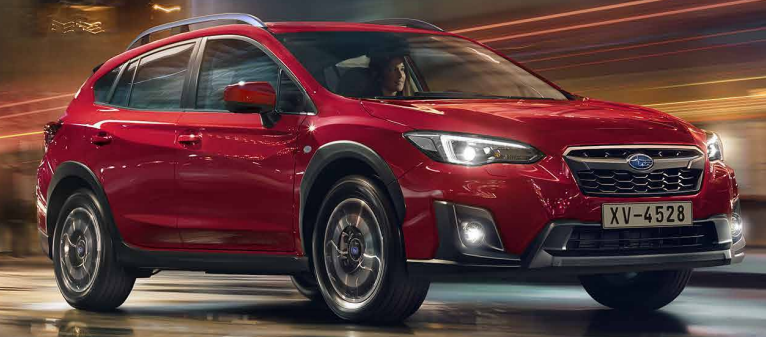
Choosing between the Subaru XV and Mitsubishi Eclipse Cross is a little like choosing between hiking boots and sporty trainers. Both can handle the daily commute, weekend errands, bad weather, and the occasional escape from civilization, but they approach those jobs from noticeably different angles.
The Subaru XV—known as the Crosstrek in some markets—has traditionally leaned into rugged simplicity. It gives us a relatively compact footprint, generous ground clearance, Subaru's distinctive Boxer engine layout, and an all-wheel-drive system designed to feel at home when the asphalt becomes slippery, muddy, or simply disappears.
The Mitsubishi Eclipse Cross takes a different route. It feels more like a conventional compact SUV with a dash of coupe-inspired styling. Depending on the market and model year, buyers may find turbocharged gasoline engines, front- or all-wheel drive, or even a plug-in hybrid powertrain.
So which one should we choose?
For buyers who regularly venture onto gravel roads, snowy routes, country tracks, or rough urban streets, the Subaru XV has a convincing argument. If we care more about turbocharged punch, a more substantial SUV feel, or plug-in hybrid capability, the Eclipse Cross can be the more interesting package.
But there is much more to the story.
Content in this publication
- Subaru XV vs Mitsubishi Eclipse Cross at a Glance
- Exterior Design: Rugged Subaru or Sharper Mitsubishi?
- Size and Practicality
- Interior Design and Cabin Quality
- Passenger Space: Which SUV Is Roomier?
- Boot Space and Cargo Capacity
- Engine Comparison
- Transmission: Two Different CVT Personalities
- Subaru XV vs Mitsubishi Eclipse Cross AWD
- Ground Clearance and Rough-Road Ability
- Ride Comfort
- Handling and Steering
- Fuel Economy
- Safety Technology
- Visibility
- Technology and Infotainment
- Reliability
- Maintenance Costs
- Subaru XV vs Eclipse Cross for City Driving
- Subaru XV vs Eclipse Cross for Highway Driving
- Which Is Better in Snow?
- Which Is Better Off Road?
- Which Is Better for Families?
- Subaru XV vs Mitsubishi Eclipse Cross: Pros and Cons
- Subaru XV vs Eclipse Cross: Which Should We Buy Used?
- Who Should Buy the Subaru XV?
- Who Should Buy the Mitsubishi Eclipse Cross?
- Final Verdict: Subaru XV or Mitsubishi Eclipse Cross?
- Frequently Asked Questions
- 1. Is the Subaru XV better than the Mitsubishi Eclipse Cross?
- 2. Which is better off road, Subaru XV or Mitsubishi Eclipse Cross?
- 3. Is the Eclipse Cross faster than the Subaru XV?
- 4. Which is more reliable, Subaru XV or Eclipse Cross?
- 5. Which is better for snow, Subaru XV or Mitsubishi Eclipse Cross?
Subaru XV vs Mitsubishi Eclipse Cross at a Glance
Before diving into the details, here is the personality of each SUV in simple terms.
| Category | Subaru XV | Mitsubishi Eclipse Cross |
|---|---|---|
| Character | Rugged compact crossover | Stylish compact SUV |
| AWD focus | Major strength | Strong with S-AWC-equipped versions |
| Engine feel | Smooth, naturally aspirated | Stronger low-end turbo punch on many versions |
| Rough-road ability | Excellent for the segment | Good, especially AWD/S-AWC |
| City driving | Easy and compact | Comfortable but feels larger |
| Fuel-saving option | Hybrid in selected markets/years | PHEV available in several markets |
| Visibility | Generally excellent | Good, though styling can affect rearward visibility |
| Ride comfort | Balanced and controlled | Softer, more relaxed |
| Best suited to | Active lifestyles and mixed terrain | Urban families and long-distance drivers |
The important word here is market. Specifications differ significantly by year and country.
Subaru's second-generation XV was introduced with Symmetrical AWD, X-Mode, Subaru's Global Platform, and available 1.6- and 2.0-liter Boxer engines depending on market. Subaru later announced that the third generation would use the Crosstrek name globally, effectively replacing the XV badge.
Likewise, Eclipse Cross specifications vary widely. Mitsubishi has offered turbo-gasoline versions and PHEV variants, while an entirely new battery-electric Eclipse Cross was announced for Europe in 2025.
For that reason, our comparison concentrates primarily on the widely sold XV generation and the familiar gasoline/PHEV Eclipse Cross rather than pretending every badge represents an identical vehicle.
Exterior Design: Rugged Subaru or Sharper Mitsubishi?
Styling is subjective, yet these two vehicles tell us quite a lot about themselves before we even turn the key.
The Subaru XV looks unapologetically outdoorsy. Black wheel-arch cladding, relatively short overhangs, roof rails on many trims, and generous ground clearance make it look ready to get dirty.
It is basically a hatchback wearing hiking equipment—and we mean that as a compliment.
The Eclipse Cross is more dramatic. Mitsubishi gave it sharper lines, a higher-looking body, an assertive nose, and a more coupe-like interpretation of the crossover formula.
The Subaru XV Looks More Adventure-Oriented
The XV does not try particularly hard to look luxurious.
Instead, its appeal comes from functionality.
Its proportions make sense when we imagine narrow mountain roads, camping trips, muddy parking areas, snowy streets, or simply navigating potholes without holding our breath every ten seconds.
Subaru officially positioned the XV as a compact crossover combining urban usability with genuine SUV capability, supported by Symmetrical AWD and X-Mode.
The Eclipse Cross Has More Visual Drama
The Mitsubishi feels more urban.
It has a stronger visual presence and generally appears larger than the XV even though both compete within broadly similar crossover territory.
Its styling may appeal more to buyers who want their SUV to look substantial rather than deliberately outdoorsy.
If we parked both outside a trendy restaurant, the Eclipse Cross might attract more glances.
Park them beside a muddy trailhead, though, and the Subaru suddenly looks completely at home.
Size and Practicality
The Subaru XV is relatively compact by SUV standards, which is one reason it works so well as an everyday car.
The second-generation global XV measured around 4,465 mm long and 1,800 mm wide in the specification Subaru presented at its 2017 international launch, though exact height and ground-clearance figures varied by market.
The Eclipse Cross is generally a little longer and gives the impression of being the more substantial vehicle.
That difference matters.
The XV feels almost hatchback-like when maneuvering through narrow streets or tight parking spaces. The Eclipse Cross gives us more of the traditional SUV experience.
Which Is Easier to Park?
We would give the advantage to the Subaru XV.
Its proportions are easy to understand from behind the wheel, and Subaru has historically prioritized outward visibility.
The Eclipse Cross is hardly enormous, but its styling creates a bulkier feeling.
For city dwellers dealing with underground garages, narrow streets, and crowded supermarket parking lots, that difference can become surprisingly important.
Interior Design and Cabin Quality
Neither vehicle is trying to imitate a luxury SUV, and that is perfectly fine.
Both cabins prioritize durability and usability over extravagant materials.
The Subaru feels functional.
Buttons tend to be where we expect them, the dashboard has a straightforward layout, and visibility is a major strength.
The Eclipse Cross tends to feel slightly more SUV-like, with a taller-feeling dashboard and greater emphasis on visual design.
Subaru XV Interior
Step inside the XV and everything feels sensible.
That might sound boring, but sensible becomes beautiful after six months of ownership.
Controls are usually easy to understand, visibility is strong, and the relatively low dashboard helps the cabin feel open rather than claustrophobic.
Material quality varies by trim, but the overall philosophy is clear: this is a vehicle designed to be used.
Throw muddy boots in it. Carry camping equipment. Bring the dog.
The XV does not feel like it will complain.
Mitsubishi Eclipse Cross Interior
The Mitsubishi's cabin feels more conventional for a compact SUV.
Depending on model year and specification, we may find larger infotainment displays, leather upholstery, heated seats, head-up displays, smartphone connectivity, and numerous comfort features.
Facelifted versions improved practicality and technology, and Mitsubishi highlights smartphone-linked navigation and flexible cargo arrangements among the model's features.
The overall design can feel slightly more substantial than the XV, particularly from the driver's seat.
Passenger Space: Which SUV Is Roomier?
Both vehicles seat five, but neither should be mistaken for a large family SUV.
Front-seat accommodation is generous enough for most adults.
The real difference appears in how the cars use their interiors.
The XV's long wheelbase relative to its compact body helps it provide respectable passenger space.
Rear-seat passengers generally have enough room for everyday journeys, although fitting three adults across the back remains a compromise.
The Eclipse Cross also provides good accommodation for four adults and can feel airier depending on specification and roof design.
For Families, the Eclipse Cross Has a Slight Edge
If we routinely carry teenagers or adults in the rear seats, the Eclipse Cross may feel more like the conventional family SUV.
If we mostly carry one or two people and occasionally fill the rear bench, the XV's compact footprint becomes more appealing.
Neither is dramatically better.
This category really comes down to whether we prioritize external compactness or that slightly larger SUV atmosphere.
Boot Space and Cargo Capacity
This is one area where buyers need to check the exact powertrain.
Why?
Hybrid batteries can change cargo-floor design.
Rear-seat configurations can change capacity.
Different measurement methods can also produce figures that look dramatically different even when the usable space feels similar in real life.
Mitsubishi stated that its redesigned gasoline Eclipse Cross increased luggage volume to 405 liters under the measurement method used for that version.
The Subaru XV is practical enough for groceries, luggage, sports equipment, and weekend trips, but it is not a cargo-space champion.
Which Is Better for Camping Gear?
Here is the interesting part.
The Eclipse Cross may offer more conventional luggage capacity, but the XV can be better suited to accessing the places where we actually want to unload that equipment.
That is why raw liters do not always tell the whole story.
If our weekend consists of suitcases and highways, we may prefer the Mitsubishi.
If it consists of backpacks, muddy boots, mountain bikes, and gravel roads, the Subaru's broader personality becomes appealing.
Engine Comparison
This is where the two SUVs really begin to separate.
The Subaru XV commonly uses naturally aspirated Boxer engines.
Depending on market, second-generation models have been sold with 1.6-liter or 2.0-liter engines, while electrified versions have also existed.
Subaru's international 2017 launch specification featured a 2.0-liter direct-injection Boxer producing approximately 156 PS and 196 Nm.
The Eclipse Cross has commonly been offered with a 1.5-liter direct-injection turbocharged gasoline engine in many markets, although powertrains vary. Mitsubishi's Japanese specification lists the 1.5 turbo at 110 kW and 240 Nm.
That torque difference helps explain how the two feel on the road.
Subaru XV: Smooth but Not Particularly Fast
Nobody buys the regular XV expecting sports-car acceleration.
Its naturally aspirated engine builds power progressively rather than delivering a sudden shove.
That is pleasant around town and easy to control on slippery roads, but drivers who regularly overtake on two-lane highways may occasionally wish for more muscle.
Press the accelerator hard and the CVT can send engine revs climbing.
We get acceleration, but not much theatre.
Eclipse Cross: Turbo Torque Feels Stronger
The turbocharged Eclipse Cross generally feels punchier at lower engine speeds.
That matters more in everyday driving than headline horsepower figures suggest.
Pulling into traffic, climbing hills, overtaking, or accelerating with passengers aboard can feel more effortless.
If performance is high on our shopping list, the turbo Mitsubishi normally has the advantage.
Transmission: Two Different CVT Personalities
Both models have commonly used continuously variable transmissions, although specifications differ by country.
CVTs sometimes get criticized because they can hold engine revs at a constant level under acceleration rather than shifting like a traditional automatic.
Neither vehicle completely escapes that characteristic.
You may be interested in reading Subaru XV vs Toyota Corolla Cross: Which Compact SUV Is Better?
However, tuning matters.
The Subaru Lineartronic transmission works smoothly when we drive normally, while simulated stepped ratios in some driving situations make it feel more conventional.
Subaru said the second-generation XV's Lineartronic offered broader ratio coverage and a seven-speed manual mode.
The Mitsubishi's CVT works particularly well with the turbo engine because the engine's broader torque delivery reduces the need to constantly chase high revs.
Subaru XV vs Mitsubishi Eclipse Cross AWD
Now we reach one of the most important sections.
Both manufacturers know a thing or two about four-wheel traction.
But their philosophies are different.
Subaru Symmetrical AWD
Subaru's identity is deeply connected to all-wheel drive.
The XV's Symmetrical AWD layout combines a longitudinal drivetrain arrangement with Subaru's horizontally opposed Boxer engine.
Subaru says the Boxer engine's compact, low-height layout contributes to a lower center of gravity, while the drivetrain's symmetrical configuration helps weight distribution.
On the road, what matters is confidence.
Wet pavement, gravel, snow, mud, and uneven surfaces rarely make the XV feel nervous.
X-Mode Adds Another Layer of Capability
X-Mode coordinates engine output, transmission behavior, AWD, braking, and other systems to improve traction on difficult surfaces.
Hill descent control can also help maintain a controlled speed downhill.
The result is not a hardcore rock-crawling 4x4.
Think mountain goat rather than bulldozer.
The XV remains a crossover, but it is a surprisingly capable one.
Mitsubishi S-AWC
Mitsubishi counters with Super-All Wheel Control, or S-AWC.
This is more sophisticated than simply sending power to four wheels.
Mitsubishi describes S-AWC as an integrated vehicle dynamics system coordinating longitudinal torque distribution, lateral torque/vectoring control, and braking to improve stability and handling.
Gasoline Eclipse Cross versions equipped with S-AWC combine electronically controlled 4WD with Active Yaw Control, stability control, ABS, and other systems.
That makes the Mitsubishi remarkably composed on slippery roads.
Which AWD System Is Better?
For rough-road use, we would lean toward the Subaru XV.
Its combination of ground clearance, compact dimensions, drivetrain calibration, and X-Mode creates an exceptionally capable package.
For high-speed stability and confident all-weather road driving, Mitsubishi's S-AWC is also excellent.
So think of it this way:
Subaru feels more trail-oriented. Mitsubishi feels more road-oriented.
Ground Clearance and Rough-Road Ability
This category strongly favors the XV.
International versions of the second-generation XV were quoted with up to approximately 220 mm of minimum ground clearance, although some Japanese-market specifications listed 200 mm.
That is serious clearance for such a compact vehicle.
It means steep driveways, deep snow, rutted roads, and uneven tracks become less intimidating.
The Eclipse Cross provides SUV-style clearance but generally emphasizes paved-road dynamics more heavily.
Winner for Bad Roads: Subaru XV
If we live somewhere with:
- frequent snow,
- gravel roads,
- farm tracks,
- mountain roads,
- potholes,
- unsealed access roads,
- or regular outdoor adventures,
the XV is difficult to ignore.
It behaves like a compact hatchback that secretly spent weekends at survival school.
Ride Comfort
The Eclipse Cross may reclaim some ground here.
Its suspension tends to deliver a relaxed, slightly more traditional SUV ride.
On long motorway journeys, that can feel pleasant.
The XV is comfortable too, but its chassis often feels tighter and more connected.
Which is preferable depends on taste.
If we want to feel what the vehicle is doing, choose Subaru.
If we want the vehicle to quietly absorb the journey, Mitsubishi may be more appealing.
Handling and Steering
Despite its rugged image, the XV can be genuinely enjoyable through corners.
The low-mounted Boxer engine helps keep mass lower in the chassis, while Subaru's Global Platform was designed to improve rigidity, steering response, and stability.
When introducing the second-generation model, Subaru said body roll had been reduced substantially compared with the previous XV.
It feels planted.
The Eclipse Cross is stable rather than playful.
S-AWC-equipped models can feel very secure through changing road conditions, and Active Yaw Control helps manage the vehicle's attitude during cornering.
If driving enjoyment matters, we give the XV a narrow advantage.
Fuel Economy
There is no universal winner because engine and hybrid availability changes by market.
A naturally aspirated XV can return respectable fuel economy, but permanent AWD and the Boxer drivetrain mean it is not always the most economical compact crossover in its class.
Turbocharged gasoline Eclipse Cross versions can consume more fuel when driven aggressively because boost encourages us to use the available torque.
Then the PHEV changes everything.
Eclipse Cross PHEV Can Be Much Cheaper for Short Trips
A plug-in hybrid Eclipse Cross can drive using stored electrical energy for portions of everyday driving, making it particularly attractive for owners who can charge at home.
Mitsubishi's system combines front and rear electric motors with four-wheel drive and S-AWC.
If our daily commute fits comfortably within the vehicle's usable electric range and we plug in consistently, petrol consumption can drop dramatically.
If we never charge it?
Then we are carrying a battery around without extracting its biggest financial advantage.
PHEV Ownership Only Makes Sense If We Plug It In
That sounds obvious, yet it is worth emphasizing.
Buying a PHEV and rarely connecting it to electricity is like buying a coffee machine and refusing to put coffee beans in it.
The technology works best when it becomes part of our routine.
Safety Technology
Both brands take safety seriously.
The XV's most recognizable technology is EyeSight, Subaru's camera-based driver-assistance suite.
Subaru describes EyeSight as using stereo cameras to identify vehicles and pedestrians while determining characteristics such as distance and movement.
Depending on specification, features may include adaptive cruise control, pre-collision braking, lane-related assistance, and other systems.
The Eclipse Cross has also offered extensive driver-assistance equipment.
Mitsubishi has listed technologies such as:
- Adaptive Cruise Control,
- Forward Collision Mitigation,
- Lane Departure Warning,
- Blind Spot Warning,
- Lane Change Assist,
- and Automatic High Beam
on relevant Eclipse Cross specifications.
Which Is Safer?
We would not declare a universal winner without comparing identical model years and regional specifications.
Crash-test standards evolve.
Safety equipment changes between trims.
Software improves.
Even headlights can affect modern safety scores.
Our recommendation is simple: compare the exact VIN-era specification of the two vehicles we are considering rather than relying purely on the badge.
Visibility
The Subaru deserves special praise here.
Large windows, relatively slim pillars, and sensible seating geometry contribute to excellent outward visibility.
That makes the XV feel smaller than it really is.
When navigating a tight junction or squeezing between parked cars, being able to clearly see the corners of the vehicle reduces stress.
The Eclipse Cross offers a higher-feeling SUV driving position, but its more aggressively styled rear bodywork can make it less transparent visually.
Cameras and parking sensors compensate, of course.
Still, sometimes the best camera system is a big piece of glass.
Technology and Infotainment
Technology dates quickly in both vehicles.
An infotainment system that looked futuristic five years ago can suddenly feel like an old tablet.
Facelifted Eclipse Cross models tend to make a stronger impression in this area, depending on trim.
Subaru's systems are generally straightforward rather than dazzling.
For used buyers, we care more about whether the car supports the features we actually use:
- Apple CarPlay,
- Android Auto,
- Bluetooth,
- navigation,
- reversing camera,
- USB charging,
- parking sensors,
- and quality speakers.
Do not pay extra for a giant feature list if we only use Spotify and Google Maps.
Reliability
Both vehicles can be dependable when maintained correctly, but neither badge gives us permission to skip inspection.
You may be interested in readingSubaru XV vs Toyota Corolla Cross: Which Compact SUV Is Better?You may be interested in reading
Subaru XV vs Forester vs Outback: Which Subaru Should You Choose?Used-car condition matters enormously.
A meticulously maintained 100,000-km crossover may be a safer purchase than a neglected vehicle showing half that mileage.
What to Check on a Used Subaru XV
Before buying, pay attention to:
- complete service history,
- CVT operation,
- wheel-bearing noise,
- suspension knocks,
- oil leaks or unusual consumption,
- battery condition,
- EyeSight warning lights,
- uneven tire wear,
- and evidence of hard off-road use.
AWD vehicles deserve particular attention to tires.
Matching tire size and similar tread depth across all four wheels help the AWD system operate as intended.
What to Check on a Used Eclipse Cross
Inspect:
- CVT behavior,
- turbocharger performance on gasoline models,
- service history,
- cooling system,
- suspension noises,
- electronic warning lights,
- S-AWC operation where fitted,
- and battery condition on PHEV models.
For a PHEV, battery health matters just as much as engine condition.
An independent diagnostic inspection can be worth every penny.
Maintenance Costs
Neither vehicle belongs in luxury-car territory, but ownership expenses can vary.
The Subaru's permanent AWD layout adds complexity compared with a simple front-wheel-drive crossover.
The Mitsubishi turbo engine adds its own complexity.
PHEV versions add an entire high-voltage electrical system.
In other words, there is no free lunch.
Which Is Cheaper to Maintain?
A basic gasoline XV may be the easiest to understand mechanically.
A front-wheel-drive gasoline Eclipse Cross can also be relatively straightforward.
The PHEV potentially saves substantial fuel but introduces battery-system considerations as it ages.
Our best approach is to compare actual dealer and independent workshop pricing in our region rather than assuming one badge is automatically cheaper.
Subaru XV vs Eclipse Cross for City Driving
This might surprise people, but we would choose the Subaru.
Why?
Its compact body and visibility make it easy to thread through traffic.
The driving position is high enough to provide useful visibility without making the vehicle feel bulky.
The naturally aspirated engine is smooth at low speeds, and AWD can be reassuring in wet conditions.
The Eclipse Cross remains comfortable in town and offers stronger acceleration, but the XV feels more nimble.
City Winner: Subaru XV
The difference is not enormous, but the Subaru's compactness gives it the edge.
Subaru XV vs Eclipse Cross for Highway Driving
Now the Mitsubishi begins to shine.
Its turbocharged engine can make overtaking feel easier, and its larger-SUV character suits long motorway journeys.
Once cruising, the Eclipse Cross feels settled.
The XV remains stable and predictable, but when heavily loaded or climbing long gradients, we may notice its more modest naturally aspirated performance.
Highway Winner: Mitsubishi Eclipse Cross
Especially if we regularly travel with passengers and luggage.
Which Is Better in Snow?
The Subaru XV.
That does not mean an S-AWC Eclipse Cross is poor in snow—far from it.
Mitsubishi's AWD technology is sophisticated and highly capable.
But the XV's entire formula feels engineered around unpredictable surfaces.
Symmetrical AWD, X-Mode, strong ground clearance, compact proportions, and predictable throttle response create an excellent winter vehicle.
However, remember something important:
AWD does not create tire grip.
A Subaru on terrible tires can perform worse than a front-wheel-drive car on proper winter tires.
Good tires remain the foundation.
Which Is Better Off Road?
Again, the XV.
But we should define "off road."
Neither model is a replacement for a body-on-frame 4x4 with low-range gearing, locking differentials, and serious underbody protection.
The XV excels on:
- gravel tracks,
- muddy paths,
- snow-covered roads,
- rough campsites,
- forest roads,
- broken pavement,
- and moderately challenging trails.
Its strengths are accessibility and confidence rather than extreme rock crawling.
The Eclipse Cross is best considered an all-weather crossover with some genuine rough-road capability, particularly in S-AWC form.
Which Is Better for Families?
The decision becomes closer.
Choose the Eclipse Cross if we prioritize:
- stronger acceleration,
- a larger SUV feel,
- rear-seat family use,
- motorway comfort,
- PHEV availability,
- and more dramatic styling.
Choose the XV if we prioritize:
- visibility,
- compact exterior dimensions,
- outdoor activities,
- bad-weather confidence,
- rough-road ability,
- and easy city maneuverability.
For a family living in the countryside, we would lean Subaru.
For a suburban family regularly commuting on highways, Mitsubishi becomes very attractive.
Subaru XV vs Mitsubishi Eclipse Cross: Pros and Cons
Subaru XV Pros
- Excellent all-wheel-drive capability
- Generous ground clearance
- Great outward visibility
- Compact and easy to maneuver
- Predictable handling
- Strong rough-road credentials
- X-Mode on relevant versions
- Practical, durable cabin
Subaru XV Cons
- Naturally aspirated engines can feel slow
- CVT becomes vocal under hard acceleration
- Cargo space is not class-leading
- Interior design can feel basic
- Fuel economy may not match some front-wheel-drive rivals
Mitsubishi Eclipse Cross Pros
- Strong turbocharged torque on gasoline versions
- Comfortable ride
- Good highway manners
- S-AWC is sophisticated
- PHEV option in relevant markets
- Distinctive design
- Useful safety technology
- Feels more like a traditional SUV
Mitsubishi Eclipse Cross Cons
- Less capable than the XV on rough terrain
- Rearward visibility can be weaker
- Styling will not appeal to everyone
- CVT behavior may divide opinion
- PHEV versions can be heavier and more complex
- Specifications vary substantially between markets
Subaru XV vs Eclipse Cross: Which Should We Buy Used?
Used vehicles change the equation.
At that point, condition matters more than theoretical superiority.
Imagine two cars:
The first is a pristine Eclipse Cross with full dealer history, fresh tires, flawless diagnostics, and one careful owner.
The second is a Subaru XV that has spent five winters dragging camping trailers down rocky trails while receiving oil changes whenever its owner remembered.
We buy the Mitsubishi.
Reverse those conditions?
We buy the Subaru.
Badge loyalty should never overpower evidence.
A Good Pre-Purchase Inspection Is Essential
Before handing over money, arrange an independent inspection.
We want someone to check:
- Engine condition
- Transmission operation
- Suspension
- Brakes
- Tires
- AWD system
- Electronic faults
- Accident repairs
- Fluid leaks
- Hybrid battery health where applicable
Ten minutes with a diagnostic scanner can reveal information that glossy paint cannot hide.
Who Should Buy the Subaru XV?
The XV makes the most sense if our weekends regularly involve dirt.
We should strongly consider it if we:
- live in a snowy region,
- drive on rough roads,
- frequently visit rural areas,
- carry outdoor equipment,
- prioritize visibility,
- want permanent AWD,
- prefer predictable handling,
- or simply enjoy the Subaru philosophy.
The XV is not flashy.
It does not need to be.
Like a good pair of hiking boots, its appeal becomes obvious when conditions get messy.
Who Should Buy the Mitsubishi Eclipse Cross?
The Eclipse Cross fits buyers who want a more conventional compact SUV experience.
It becomes particularly attractive if we value:
- stronger turbo performance,
- comfortable highway driving,
- distinctive styling,
- advanced AWD technology,
- family practicality,
- or plug-in hybrid capability.
Its personality is more polished and road-oriented.
Where the Subaru whispers, "Where does that dirt road go?"
The Mitsubishi asks, "How far are we driving today?"
Final Verdict: Subaru XV or Mitsubishi Eclipse Cross?
So, after everything, which one wins the Subaru XV vs Mitsubishi Eclipse Cross comparison?
For us, the Subaru XV is the better all-round choice for drivers who genuinely make use of a crossover's adventurous side.
Its excellent visibility, generous ground clearance, Symmetrical AWD, X-Mode capability, compact dimensions, and stable handling create a vehicle that feels unusually versatile.
We can commute Monday through Friday and disappear down a gravel road on Saturday without changing cars.
The Mitsubishi Eclipse Cross fights back with stronger turbocharged performance, good road comfort, S-AWC technology, and—where available—the compelling efficiency potential of a plug-in hybrid powertrain.
So there is no universal loser here.
Our recommendation is straightforward:
Choose the Subaru XV if traction, rough-road confidence, visibility, and versatility matter most.
Choose the Mitsubishi Eclipse Cross if turbo performance, highway comfort, SUV presence, or PHEV capability matters more.
One final buying note: Subaru announced that the Crosstrek name would be adopted globally from the third generation, so newer successors to the XV may no longer carry the XV badge. Meanwhile, Mitsubishi's Eclipse Cross name now covers significantly different powertrain concepts in some markets, including the newer European battery-electric version.
That makes model year and local specification more important than ever.
The badge gets us into the showroom.
The details decide which car belongs in our driveway.
Frequently Asked Questions
1. Is the Subaru XV better than the Mitsubishi Eclipse Cross?
The Subaru XV is generally the better choice for buyers prioritizing AWD capability, ground clearance, visibility, compact dimensions, and rough-road performance. The Eclipse Cross may be preferable for drivers who want stronger turbocharged acceleration, a more conventional SUV feel, or plug-in hybrid capability.
2. Which is better off road, Subaru XV or Mitsubishi Eclipse Cross?
The Subaru XV generally has the advantage. Its combination of Symmetrical AWD, X-Mode on relevant models, substantial ground clearance, and compact dimensions makes it especially capable on gravel, snow, mud, and moderately rough tracks. The Eclipse Cross with S-AWC remains highly capable on slippery roads but is more road-focused overall.
3. Is the Eclipse Cross faster than the Subaru XV?
Many turbocharged Eclipse Cross versions feel noticeably quicker than naturally aspirated Subaru XV models, particularly during overtaking and low-to-mid-range acceleration. Exact performance depends on engine, model year, drivetrain, and regional specification.
4. Which is more reliable, Subaru XV or Eclipse Cross?
Both can deliver dependable service when correctly maintained. Service history, previous ownership, transmission condition, tire maintenance, and overall vehicle condition matter more than simply choosing one badge over the other. Used PHEV Eclipse Cross buyers should also check high-voltage battery condition.
You may be interested in readingSubaru XV vs Toyota Corolla Cross: Which Compact SUV Is Better?You may be interested in reading
Subaru XV vs Forester vs Outback: Which Subaru Should You Choose?You may be interested in reading
Subaru XV vs Honda HR-V: Which Compact SUV Is Better?5. Which is better for snow, Subaru XV or Mitsubishi Eclipse Cross?
We would choose the Subaru XV for frequent snow driving because its Symmetrical AWD system, available X-Mode, generous ground clearance, and predictable chassis work extremely well together. An AWD Eclipse Cross equipped with S-AWC is also a strong winter vehicle, but appropriate winter tires remain essential on either model.
If you want to know other articles similar to Subaru XV vs Mitsubishi Eclipse Cross: Which Compact SUV Is Better? you can visit the category Models.
Honda Passport vs Toyota 4Runner: Which SUV Is Better?
Honda Passport vs Ford Bronco: Which SUV Is Better?
Honda Passport vs Ford Explorer: Which SUV Is Better?
Honda Passport or Pilot: Which SUV Is Better?
Honda Passport vs Jeep Grand Cherokee: Which SUV Is Better?
Honda Passport vs Nissan Pathfinder: Which SUV Is Better?
Leave a Reply
More content of your interest