

Subaru XV vs Toyota Corolla Cross: Which Compact SUV Is Better?

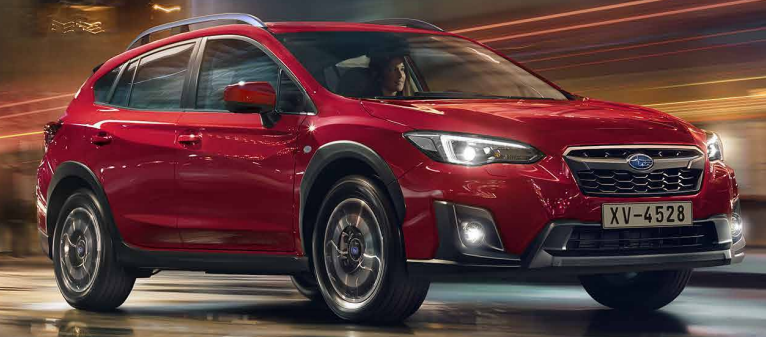
Choosing between the Subaru XV and Toyota Corolla Cross looks simple until we spend a little time with what each SUV is actually trying to achieve. Both are compact, practical, five-seat crossovers from Japanese brands with strong reputations, yet their personalities could hardly be more different.
The Subaru XV feels like the adventurous friend who keeps hiking boots permanently in the boot. Its standard Symmetrical All-Wheel Drive, generous ground clearance and X-Mode technology give it genuine confidence once smooth asphalt disappears. The Corolla Cross takes another route. It concentrates on efficiency, interior practicality, easy everyday driving and Toyota's increasingly sophisticated hybrid technology.
There is also an important naming issue. Subaru replaced the XV name with Crosstrek in markets including Australia when the new generation arrived in 2023. Subaru itself describes the Crosstrek as the next iteration of the XV. So if we're comparing a Subaru XV with a Corolla Cross today, we're generally talking about the previous-generation XV, often as a used-car purchase, against either a used or newer Corolla Cross.
So which deserves our money? If fuel economy and luggage capacity dominate the shopping list, Toyota makes a persuasive argument. If AWD capability, rough-road confidence and outdoor versatility matter more, the XV still has some serious cards to play.
Let's dig deeper.
Content in this publication
- Subaru XV vs Toyota Corolla Cross at a Glance
- What Is the Main Difference Between the Subaru XV and Corolla Cross?
- Design and Exterior Dimensions
- Interior Space and Everyday Comfort
- Cargo Space: Corolla Cross Takes the Lead
- Engine Performance: Which Feels Stronger?
- Subaru XV vs Toyota Corolla Cross Fuel Economy
- AWD and Off-Road Ability
- Ride Comfort and Handling
- Safety Technology
- Infotainment and Technology
- Hybrid vs Hybrid: Corolla Cross or XV e-Boxer?
- Towing Capacity
- Reliability and Ownership
- Subaru XV Advantages
- Toyota Corolla Cross Advantages
- Subaru XV vs Corolla Cross for Families
- Subaru XV vs Corolla Cross for City Driving
- Subaru XV vs Corolla Cross for Adventure
- Should You Buy a Used Subaru XV or a Newer Corolla Cross?
- What About the Subaru Crosstrek?
- Which SUV Is Better Value for Money?
- Subaru XV vs Toyota Corolla Cross: Our Verdict
- Frequently Asked Questions
Subaru XV vs Toyota Corolla Cross at a Glance
Before disappearing down the specification rabbit hole, here is the character of each SUV in simple terms.
| Category | Subaru XV | Toyota Corolla Cross |
|---|---|---|
| Character | Rugged, outdoors-oriented | Practical, efficient, urban-friendly |
| Seating | 5 | 5 |
| Drivetrain | AWD across Australian XV range | 2WD or AWD depending on version/market |
| Engine focus | 2.0L Boxer petrol or e-Boxer hybrid | Petrol/hybrid depending on market |
| Ground clearance | 220 mm on Australian XV | Varies by market/version |
| Cargo priority | Moderate | Stronger |
| Rough-road ability | Excellent for the class | Good, especially AWD models |
| Fuel-economy priority | Average to good | Excellent in hybrid form |
| Ideal buyer | Adventure-oriented driver | Family or efficiency-focused driver |
Specifications vary considerably between countries and model years, so we should always compare the exact vehicles available locally rather than treating one specification sheet as universal.
What Is the Main Difference Between the Subaru XV and Corolla Cross?
The biggest difference isn't horsepower, touchscreen size or even boot capacity. It is philosophy.
Subaru built the XV around an AWD drivetrain. Toyota built the Corolla Cross around mainstream crossover practicality.
That difference affects almost everything.
The XV feels relatively low and car-like from the driver's seat despite its substantial ground clearance. It uses Subaru's horizontally opposed Boxer engine layout and Symmetrical AWD system, and it was designed to remain comfortable when the road turns into gravel, mud or something resembling a road only in the loosest possible sense.
The Corolla Cross feels more like a traditional compact family SUV. It prioritises easy access, storage, fuel efficiency and everyday usability. Toyota also offers front-wheel-drive versions in many markets, meaning buyers who never leave paved roads do not necessarily have to carry the cost and complexity of AWD.
Think of the XV as a hiking shoe and the Corolla Cross as a comfortable everyday sneaker. Both work brilliantly in the right setting. We simply need to decide where we're walking.
Design and Exterior Dimensions
Subaru XV: Compact but Purposeful
The previous-generation Australian XV measures approximately 4,485 mm long, 1,800 mm wide and 1,615 mm high in petrol form, with a 2,665 mm wheelbase. More importantly, Subaru lists 220 mm of minimum ground clearance.
That clearance gives the XV much of its visual character. It isn't enormous, yet its black body cladding, elevated stance and sensible proportions make it look ready for a muddy campsite rather than merely pretending.
Visibility is another strength. Subaru has traditionally resisted overly dramatic styling that compromises glass area, and the XV's relatively upright windows help us see what's around the vehicle.
Toyota Corolla Cross: More Conventional SUV Proportions
The current Australian Corolla Cross measures about 4,460 mm long, 1,825 mm wide and 1,620 mm high, with a 2,640 mm wheelbase.
Interestingly, the two vehicles therefore occupy almost identical patches of road despite feeling quite different.
The Toyota is slightly wider and carries itself more like a conventional SUV. Recent versions also look more sophisticated than early Corolla Cross models, particularly in higher grades.
Which Looks Better?
Purely subjective, of course.
We would give the XV the edge if rugged styling matters. Its proportions communicate what the vehicle is supposed to do.
The Corolla Cross feels cleaner and more polished. Buyers wanting something that looks contemporary outside an office, school or restaurant may prefer the Toyota.
Interior Space and Everyday Comfort
Both SUVs seat five, but the way they use their cabins differs.
The XV's front cabin feels snug without becoming cramped. Its relatively low dashboard, generous glass area and supportive seating create the impression of sitting in a lifted hatchback rather than a bulky SUV.
Rear-seat space is respectable. Adults can travel comfortably, although the XV isn't a mini Forester. Three adults across the back will quickly remind us that this remains a compact crossover.
The Corolla Cross generally feels more family-oriented. Its upright body shape creates good accessibility, while the rear seating arrangement works well for children, commuting and ordinary family duties.
Neither vehicle attempts luxury-car theatre, and that's arguably a strength. Buttons are mostly where we expect them, controls are straightforward, and we can get into either SUV without needing a ten-minute tutorial.
Cargo Space: Corolla Cross Takes the Lead
This is one of the clearest differences.
Australian specifications for the previous XV list 310 litres of cargo capacity in petrol versions and 345 litres for the hybrid with the rear seats raised.
Toyota's current Australian Corolla Cross offers between approximately 380 and 425 litres, depending on grade and drivetrain.
Those numbers use manufacturer measurement methods and should not always be compared as though they were laboratory beakers, but the broader conclusion remains straightforward: the Corolla Cross provides the more useful luggage area.
That matters if we're regularly carrying:
- Pushchairs and baby gear
- Several large grocery bags
- Holiday luggage
- Sports equipment
- Work equipment
- A family's collection of bags, jackets and objects that apparently reproduce whenever nobody is watching
The XV's folding rear seats improve versatility substantially, and roof rails make external carriers an option. Still, buyers prioritising boot space should put the Toyota ahead.
Engine Performance: Which Feels Stronger?
Subaru XV Petrol Engine
The Australian petrol XV used a naturally aspirated 2.0-litre horizontally opposed four-cylinder engine producing 115 kW and 196 Nm, paired with Subaru's Lineartronic CVT.
It isn't a performance SUV.
Acceleration is adequate rather than exciting, and overtaking may require a deliberate press of the accelerator. The CVT can also allow engine revs to rise noticeably when we're asking for maximum acceleration.
Yet the XV's appeal doesn't really live at full throttle. The low centre of gravity, predictable steering and secure AWD traction make it pleasant to drive along twisting or poorly surfaced roads.
Toyota Corolla Cross Hybrid Performance
Current Australian Corolla Cross models use a 2.0-litre petrol engine combined with Toyota's hybrid system. Toyota lists 146 kW of combined maximum hybrid system power for the range.
That gives the Toyota stronger on-paper performance than the old XV and, more importantly, electric assistance makes initial acceleration feel responsive.
Around town, the Corolla Cross hybrid feels particularly natural. Pulling away from traffic lights is smooth, low-speed operation can be impressively quiet, and the petrol engine can shut down whenever operating conditions permit.
Which Is Better to Drive?
For outright acceleration and urban responsiveness, we lean toward the Corolla Cross hybrid.
For road feel, drivetrain security and confidence on loose surfaces, we'd take the XV.
Neither is pretending to be a sports car. The question is whether we want efficiency with useful punch or traction with a slightly more mechanical personality.
Subaru XV vs Toyota Corolla Cross Fuel Economy
Here's where Toyota lands one of its biggest punches.
Australian test figures for the previous XV were 7.0 L/100 km for petrol versions and 6.5 L/100 km for the e-Boxer hybrid. Real-world consumption naturally varies.
Current Australian Corolla Cross hybrid figures range from approximately 4.2 to 4.5 L/100 km, depending on drivetrain and grade, under the applicable laboratory test.
That's a substantial difference.
Why Is the Toyota Hybrid More Efficient?
Toyota has spent decades refining full-hybrid systems. The electric motor does meaningful work during low-speed driving, regenerative braking recovers energy, and the system continuously blends petrol and electric propulsion.
Subaru's earlier XV e-Boxer arrangement offered electric assistance and limited electric-only operation, but fuel economy wasn't transformed to the same degree.
Fuel Economy Winner: Toyota Corolla Cross
Drivers covering large annual mileages, commuting through congested cities or simply despising fuel stations will find the Corolla Cross considerably more attractive.
The XV isn't disastrous on fuel, especially considering its permanent AWD character. It simply meets an opponent that happens to be extremely good at this particular game.
AWD and Off-Road Ability
Here the tables turn.
You may be interested in reading Subaru XV vs Forester vs Outback: Which Subaru Should You Choose?
Subaru made Symmetrical AWD standard throughout the XV range in Australia, paired with X-Mode. The system manages the engine, transmission, drivetrain and brakes to improve traction on slippery surfaces.
Combine that with 220 mm of ground clearance and we have one of the more genuinely capable compact crossovers of its era.
No, the XV isn't a low-range 4x4. We shouldn't drive it into terrain better suited to a Land Cruiser and expect magic.
But gravel roads, snowy roads, muddy tracks, wet grass, steep driveways and rough access roads? That's exactly the territory where it begins separating itself from ordinary urban SUVs.
Can the Corolla Cross Go Off Road?
AWD Corolla Cross versions offer extra traction and can handle gravel roads, poor weather and moderate unsealed-road driving.
But its basic mission is still different.
The Toyota's AWD system is there primarily to add confidence and traction. The XV's whole chassis and drivetrain combination feels more intentionally prepared for rough-road exploration.
Off-Road Winner: Subaru XV
If weekends involve campsites, rural roads, ski trips, mountains or unpredictable surfaces, we'd take the Subaru.
This is where the XV stops looking slightly eccentric and starts making perfect sense.
Ride Comfort and Handling
The XV strikes an appealing compromise.
Its suspension absorbs rough roads well without making the body feel disconnected. Subaru's low-mounted Boxer engine also helps keep the centre of gravity relatively low despite the 220 mm clearance.
That means we get useful suspension travel without the clumsy, top-heavy feeling that some taller crossovers develop.
The Corolla Cross approaches things differently. Steering is light, controls are easy and urban driving demands very little effort. It's the sort of SUV that can disappear into our routine, which is a compliment.
Which Is Better in the City?
The Corolla Cross gets our vote.
Its hybrid drivetrain suits stop-start traffic beautifully, and the overall experience feels engineered around everyday convenience.
Which Is Better on Rough Country Roads?
The XV.
Give it broken asphalt, gravel and unpredictable weather and suddenly the Subaru feels as though someone removed its office tie.
Safety Technology
Both Subaru and Toyota place heavy emphasis on active safety.
The XV offered EyeSight Driver Assist across the Australian range, incorporating features such as adaptive cruise control, pre-collision braking and lane-related assistance. Higher variants also added technologies such as blind-spot monitoring and rear cross-traffic alert.
Toyota's newer Corolla Cross benefits from a more contemporary generation of driver-assistance technology, although specific systems differ by market and trim.
When comparing used examples, model year matters enormously. A late XV may have significantly more safety technology than an early or lower-spec competitor, while a current Corolla Cross benefits from being a newer design.
The sensible approach? Compare the exact VIN-year specification rather than assuming every XV or Corolla Cross has the same safety package.
Infotainment and Technology
This is one area where the XV's age becomes more obvious.
Previous-generation XV models offered Apple CarPlay and Android Auto, USB connectivity and touchscreen infotainment, but newer Corolla Cross versions generally provide more contemporary interfaces, digital displays and convenience technology.
Toyota's current Australian range, for example, includes wireless smartphone connectivity, with additional features such as wireless charging available on selected versions.
If our phone is effectively a sixth family member, the Corolla Cross's newer technology will probably be appreciated.
The XV's system gets the fundamentals done. The Toyota simply feels more current.
Hybrid vs Hybrid: Corolla Cross or XV e-Boxer?
This comparison deserves special attention because the word hybrid can make two very different systems sound equivalent.
They're not.
The XV e-Boxer adds an electric motor and battery to Subaru's AWD drivetrain. It can use electric propulsion in certain low-speed circumstances and electric assistance under other conditions. Subaru's system was designed to preserve the traditional characteristics of the XV while adding some electrification.
Toyota's hybrid system places much greater emphasis on reducing fuel consumption.
If we're buying a hybrid because we specifically want maximum fuel savings, Corolla Cross is the easy choice.
If we're buying an XV because we already value its AWD layout and simply want the hybrid variation, e-Boxer can make sense. But we'd hesitate to select an XV Hybrid solely because the badge says “Hybrid.”
Towing Capacity
An unexpected advantage appears for the Subaru.
Australian specifications list a maximum braked towing capacity of 1,400 kg for petrol XV variants and 1,270 kg for XV hybrids, subject to the usual equipment and regulatory requirements.
Current Australian Corolla Cross specifications list 750 kg.
Again, towing limits vary internationally and must always be checked against the exact vehicle, towbar and local regulations.
But in the Australian-spec comparison, the petrol XV wins by a substantial margin.
That can matter for owners planning to tow a small camper, lightweight trailer or recreational equipment.
Reliability and Ownership
Toyota and Subaru both have reputations that attract buyers who intend to keep cars for a long time.
Yet reputation shouldn't replace inspection.
When buying a used XV, service history matters more than the badge sitting on the grille. We would look carefully at CVT maintenance, suspension condition, oil leaks, tyre wear and evidence of rough off-road use.
An XV wearing four mismatched cheap tyres should make us particularly cautious. AWD vehicles rely on closely matched tyre circumferences, and poor tyre maintenance can create unnecessary drivetrain stress.
The Corolla Cross is newer, so many examples remain relatively young. Toyota's hybrid technology also has a long history across products such as the Prius, Corolla and RAV4.
Which Should Cost Less to Run?
For fuel, Corolla Cross Hybrid.
For used purchase price, an older XV may be substantially cheaper depending on the market.
Insurance, servicing, depreciation and parts prices are too market-specific for a universal winner, so total ownership cost deserves a local calculation.
Subaru XV Advantages
The XV still makes a convincing case because its strengths aren't cosmetic.
We particularly like its standard AWD approach, excellent ground clearance, confident rough-road behaviour, good outward visibility and surprisingly capable towing figures in certain markets.
There is also something refreshing about its honesty. The body cladding and raised stance aren't just costume jewellery. The XV can actually use them.
For buyers who frequently encounter imperfect roads, that capability may outweigh deficiencies in cargo capacity and fuel consumption.
Toyota Corolla Cross Advantages
The Corolla Cross wins in areas most families interact with every day.
You may be interested in readingSubaru XV vs Forester vs Outback: Which Subaru Should You Choose?You may be interested in reading
Subaru XV vs Honda HR-V: Which Compact SUV Is Better?It offers stronger hybrid efficiency, generally greater cargo capacity, newer infotainment technology and a polished urban driving experience.
It also gives buyers more drivetrain choice in markets where both 2WD and AWD versions are available. Someone living in a warm city who has never seen a gravel road doesn't necessarily need full-time AWD.
Toyota has essentially concentrated its effort where mainstream crossover buyers tend to care most.
And for many people, that's exactly the correct formula.
Subaru XV vs Corolla Cross for Families
We'd choose the Corolla Cross for most conventional family duties.
Its larger luggage area becomes valuable surprisingly quickly. Add a stroller, two backpacks and a week's shopping and suddenly every extra litre seems worth negotiating for.
Toyota's fuel economy can also reduce the cost of school runs and daily commuting.
The XV becomes the better family choice when the family's hobbies are part of the equation. Bikes, hiking, skiing, camping and remote weekend trips shift the balance toward Subaru.
So the question isn't simply, “Which is the better family SUV?”
A better question is, “What kind of family are we?”
Subaru XV vs Corolla Cross for City Driving
Toyota wins.
The Corolla Cross hybrid's low-speed smoothness, efficiency and easy controls fit city life extremely well.
The XV remains compact enough to use comfortably around town, but its AWD system and generous ground clearance are benefits we may rarely exploit if our biggest obstacle is a supermarket speed bump.
Buying an XV exclusively for urban commuting is a little like wearing trekking boots to walk through a shopping centre. It works. We just aren't using what makes them special.
Subaru XV vs Corolla Cross for Adventure
Subaru wins.
Its 220 mm ground clearance, standard AWD and X-Mode provide genuine capability beyond smooth roads.
For remote campsites, gravel routes and bad-weather driving, that matters more than another USB port.
The Corolla Cross AWD isn't helpless away from asphalt, but we'd see it primarily as an efficient crossover with added traction.
The XV feels more like a compact adventure vehicle that happens to be easy to live with every day.
Should You Buy a Used Subaru XV or a Newer Corolla Cross?
This may actually be the most relevant version of the comparison today.
Because Subaru has transitioned from the XV name to Crosstrek in markets such as Australia, many buyers searching “Subaru XV vs Toyota Corolla Cross” are effectively comparing a used XV with a newer Corolla Cross. Subaru officially describes Crosstrek as the continuation of the XV lineage.
That creates a price-versus-technology trade-off.
A well-maintained XV can offer lots of AWD capability for the money. Depreciation has already done some of the financial heavy lifting, and we may be able to buy a high-spec example for significantly less than a current Corolla Cross.
The Toyota counters with newer technology, much stronger hybrid efficiency, a larger cargo area and potentially more warranty coverage depending on age and market.
If budget is tight and AWD capability is important, the used XV deserves attention.
If running costs, modern equipment and daily family practicality dominate, the Corolla Cross is easier to justify.
What About the Subaru Crosstrek?
This is important.
Anyone shopping for a brand-new Subaru equivalent to the XV should compare the Toyota Corolla Cross with the Subaru Crosstrek, not an old XV brochure.
Subaru renamed the next-generation XV Crosstrek in Australia, and the current model continues the formula with standard AWD and 220 mm ground clearance.
That newer comparison narrows several of the XV's technology disadvantages.
So our verdict here applies specifically to vehicles carrying the XV badge and to the broader ownership philosophies represented by the two models.
Which SUV Is Better Value for Money?
Value depends on what we actually use.
Someone who never leaves paved roads may pay for capability in the XV without receiving much practical benefit from it.
Likewise, someone who spends weekends reaching campsites over corrugated gravel might save fuel with a Corolla Cross yet constantly wish for the XV's extra clearance and more adventure-focused AWD setup.
That's the trap with specifications: more isn't automatically better.
The best value vehicle is the one whose expensive engineering solves problems we actually have.
Choose the Subaru XV If…
The XV makes more sense when AWD traction is a priority, rough roads are common, outdoor recreation forms part of our lifestyle, towing capacity matters or we simply prefer Subaru's lower, more connected driving character.
Choose the Toyota Corolla Cross If…
The Corolla Cross is the stronger choice when fuel economy matters most, boot capacity is important, most driving happens in cities or suburbs, newer technology is a priority or we simply want an easy, efficient compact SUV.
Subaru XV vs Toyota Corolla Cross: Our Verdict
There isn't a universal winner, but there is a winner for most types of buyer.
The Toyota Corolla Cross is the stronger all-round choice for mainstream daily use. Its hybrid system delivers a dramatic fuel-economy advantage, its luggage compartment is more useful and its newer technology better suits drivers who spend most of their lives on paved roads.
But that doesn't make the Subaru XV obsolete.
Quite the opposite.
The Subaru XV remains the more convincing adventure-oriented crossover. Its standard AWD, X-Mode and 220 mm ground clearance create capability that isn't merely written into a marketing brochure. When roads become slippery, uneven or unsealed, the XV begins showing why Subaru engineered it differently.
Our choice would therefore be simple.
For commuting, family life and maximum efficiency, we'd buy the Corolla Cross.
For snow, gravel, camping, rural roads and outdoor weekends, we'd buy the XV—or, when shopping new, its Crosstrek successor.
The Corolla Cross is the smarter accountant.
The XV is the friend already waiting outside with the camping gear loaded.
Neither personality is wrong. We simply need to decide which one sounds more like us.
Frequently Asked Questions
1. Is the Toyota Corolla Cross better than the Subaru XV?
For fuel economy, luggage capacity and modern everyday technology, the Toyota Corolla Cross generally has the advantage. The Subaru XV is better suited to buyers prioritising standard AWD, generous ground clearance and rough-road capability. The right choice therefore depends heavily on how and where we drive.
2. Which is more fuel-efficient, Subaru XV or Toyota Corolla Cross?
The Toyota Corolla Cross Hybrid is significantly more economical. Australian official figures for current hybrid versions are around 4.2–4.5 L/100 km, whereas the previous Australian XV was rated at approximately 7.0 L/100 km for petrol versions and 6.5 L/100 km for the e-Boxer hybrid. Laboratory figures do not guarantee identical real-world consumption.
3. Which has more boot space, Subaru XV or Corolla Cross?
The Corolla Cross generally offers the larger cargo area. Current Australian versions provide approximately 380–425 litres depending on trim and drivetrain, while the previous Australian XV was rated at 310 litres for petrol models and 345 litres for hybrids with the rear seats raised.
You may be interested in readingSubaru XV vs Forester vs Outback: Which Subaru Should You Choose?You may be interested in reading
Subaru XV vs Honda HR-V: Which Compact SUV Is Better?You may be interested in reading
Subaru XV vs Mazda CX-3: Which Small SUV Is Better?4. Is the Subaru XV better off road than the Toyota Corolla Cross?
Yes, for typical versions we'd favour the Subaru XV. Its Symmetrical AWD system, X-Mode and 220 mm ground clearance give it excellent capability for a compact crossover. Neither vehicle should be confused with a dedicated low-range 4x4, but the XV is better prepared for gravel, snow, muddy tracks and rough access roads.
5. Is the Subaru XV still available new?
That depends on the market, but Subaru replaced the XV name with Crosstrek in countries including Australia. Subaru describes the Crosstrek as the next iteration of the XV, so buyers shopping for a new equivalent should compare the current Crosstrek with the Corolla Cross
If you want to know other articles similar to Subaru XV vs Toyota Corolla Cross: Which Compact SUV Is Better? you can visit the category Models.
Is Honda Passport Bigger Than CR-V? Full Size Comparison
Is Honda Passport Bigger Than Pilot? Full Size Comparison

Nissan Rogue Dark Armor vs Platinum: Which Trim Is Better?

Kia Sorento Models: Complete Guide to Trims, Engines and Versions
BYD Shark 6 vs Ranger vs HiLux: Which Ute Makes the Most Sense in 2026?
BYD Shark 6 vs MG U9: Which Ute Makes More Sense in 2026?
Leave a Reply
More content of your interest