

Subaru XV vs Mazda CX-3: Which Small SUV Is Better?

Choosing between the Subaru XV vs Mazda CX-3 looks simple until we spend a little time with what these two compact SUVs are actually trying to achieve. They occupy roughly the same corner of the market, yet they approach the job from opposite directions.
The Mazda CX-3 feels like a stylish city hatchback that put on a tailored SUV jacket. It is compact, relatively economical, easy to manoeuvre, and surprisingly enjoyable on a winding road. The Subaru XV, meanwhile, feels more like a small adventure vehicle that happens to be perfectly comfortable commuting Monday through Friday.
That distinction matters.
If our week consists of tight parking garages, busy urban streets, and occasional highway trips, the Mazda makes an immediate case for itself. If weekends involve gravel roads, camping equipment, bad weather, or simply carrying adults comfortably in the back, the Subaru starts pulling ahead.
There is also an important model-year wrinkle. In markets such as Australia, Subaru replaced the XV name with Crosstrek for the new generation launched in 2023. Mazda, meanwhile, continues to sell the CX-3 in Australia. That means an XV-versus-CX-3 comparison today often involves a used Subaru against either a used or newer Mazda.
So which should we buy? Let's compare them where it actually counts.
Content in this publication
- Subaru XV vs Mazda CX-3 at a Glance
- Which SUV Is Bigger?
- Exterior Design: Rugged Subaru or Stylish Mazda?
- Interior Quality and Cabin Experience
- Subaru XV vs Mazda CX-3 Boot Space
- Engine Performance
- Transmission: CVT vs Six-Speed Automatic
- AWD vs FWD: The Biggest Mechanical Difference
- Ground Clearance: Subaru Wins Easily
- Handling and Ride Comfort
- Fuel Economy
- Subaru XV Hybrid vs Mazda CX-3
- Technology and Infotainment
- Safety: Which Inspires More Confidence?
- Reliability and Used-Car Ownership
- Running Costs
- Which Is Better for City Driving?
- Which Is Better for Families?
- Which Is Better for Road Trips?
- Which Is Better Off Road?
- Subaru XV vs Mazda CX-3: Pros and Cons
- Who Should Buy the Mazda CX-3?
- Who Should Buy the Subaru XV?
- Subaru XV vs Mazda CX-3: Which Should We Buy?
- Final Verdict
- Frequently Asked Questions
Subaru XV vs Mazda CX-3 at a Glance
For a useful reference point, we can compare a late-model Australian-specification Subaru XV with the current Australian Mazda CX-3. Exact engines, trims, safety equipment, and dimensions can vary by country and model year.
| Feature | Subaru XV | Mazda CX-3 |
|---|---|---|
| Typical petrol engine | 2.0L boxer four-cylinder | 2.0L four-cylinder |
| Petrol power | 115 kW | 110 kW |
| Petrol torque | 196 Nm | 195 Nm |
| Transmission | CVT | 6-speed automatic |
| Drivetrain | AWD | FWD on current Australian models |
| Ground clearance | 220 mm | Around 145–150 mm loaded |
| Length | 4,485 mm | 4,275 mm |
| Width | 1,800 mm | 1,765 mm |
| Petrol cargo capacity | 310 L | 231–264 L depending on grade |
| Official combined consumption | 7.0 L/100 km petrol | 6.3 L/100 km |
The numbers immediately reveal the personalities involved. The engines make almost identical peak torque, yet the Subaru adds permanent all-wheel-drive capability, considerably more ground clearance, a longer body, and more luggage room. Mazda counters with a smaller footprint and better official fuel consumption.
Which SUV Is Bigger?
The Subaru XV is noticeably larger.
At roughly 4,485 mm long and 1,800 mm wide, the XV stretches about 210 mm longer than the 4,275 mm Mazda CX-3. Its wheelbase is also longer at 2,665 mm versus the Mazda's 2,570 mm.
Those numbers may sound like spreadsheet trivia, but we feel the difference as soon as passengers climb aboard.
The Mazda is easier to place in a tight urban environment. The Subaru gives that extra sheet metal back to us in the form of a roomier cabin and a more substantial SUV feel.
Mazda CX-3: Better for Tight Cities
The CX-3's dimensions are one of its greatest advantages.
It slips into parking spaces without feeling like we are docking a ship. Narrow streets are less stressful, underground car parks feel friendlier, and threading between traffic is straightforward.
For singles, couples, or drivers who rarely use the rear seats, that compactness can be more valuable than extra cabin volume.
Subaru XV: Better for Passengers
The XV uses its larger footprint more effectively when family or friends come along.
Its longer wheelbase contributes to better rear-seat accommodation, particularly around the knees, while the taller crossover proportions create a more spacious feeling.
Neither vehicle is enormous, but if we regularly carry four adults, we'd rather spend two hours in the Subaru than squeeze into the back of the Mazda.
Exterior Design: Rugged Subaru or Stylish Mazda?
Design is subjective, but these SUVs are barely speaking the same visual language.
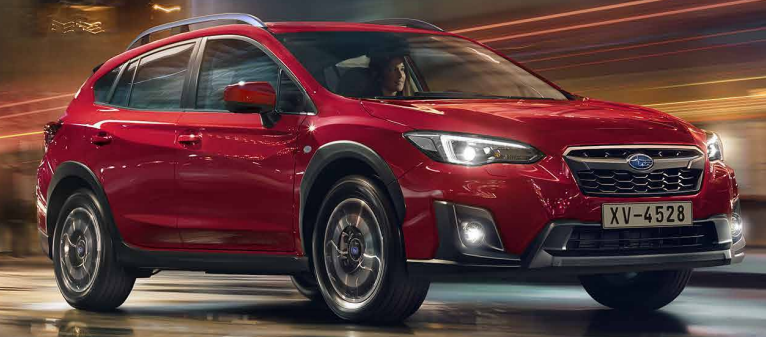
The Subaru XV has chunky wheel-arch cladding, prominent roof rails on many variants, considerable ride height, and the unmistakable stance of a crossover designed to get dirty.
The Mazda CX-3 takes the opposite path. Its proportions are lower and sleeker. The flowing bodywork and long bonnet make it appear sportier than its dimensions suggest.
Why the CX-3 Still Looks Good
The CX-3 has been around for years, yet its styling has aged rather gracefully.
That's partly because Mazda resisted filling it with gimmicks. The shapes are clean, the grille dominates without becoming cartoonish, and the cabin design follows the same restrained philosophy.
Park one beside many newer small SUVs and the Mazda can still look fresh.
Why the XV Looks More Adventurous
The Subaru doesn't try to hide its practical intentions.
Its plastic cladding looks appropriate after a muddy weekend rather than like an unfortunate design compromise. Add 220 mm of ground clearance and the XV has the visual confidence of something prepared to leave the asphalt. Subaru's own late-model XV specifications confirm that generous clearance across the range.
If the Mazda is wearing loafers, the Subaru has already laced up its hiking boots.
Interior Quality and Cabin Experience
Step into the Mazda and it makes a strong first impression.
The dashboard is simple, driver-focused, and more premium-looking than we might expect from a compact mainstream SUV. Physical controls are placed logically, and the relatively low seating position helps make the CX-3 feel like a sporty hatchback rather than a miniature off-roader.
The Subaru's cabin is less fashionable but arguably more functional. Visibility is excellent, controls are generally straightforward, and the upright layout feels designed around everyday use rather than showroom theatre.
Which Has the Better Driving Position?
We'd call this one a matter of preference.
Choose the CX-3 if we like sitting slightly lower, feeling connected to the car, and having a more intimate cockpit.
Choose the XV if we prefer upright visibility, a commanding view through large windows, and a cabin that feels airier.
Rear-Seat Comfort
Here the Subaru wins decisively.
The CX-3 can accommodate five people on paper, but adults in the rear quickly discover where Mazda saved space. Legroom is tighter, the cabin narrows around passengers, and taller occupants may feel confined.
The XV works much better as a genuine four-person family car. Its rear seats are easier to live with, particularly on longer journeys.
If we're buying a vehicle because our children are getting bigger, friends frequently come along, or grandparents need an easier cabin to enter, this difference should carry substantial weight.
Subaru XV vs Mazda CX-3 Boot Space
Small SUVs live or die by packaging, and again the Subaru has the advantage.
Late Australian XV petrol models list 310 litres of cargo capacity with the rear seat upright. Current Australian CX-3 models provide 264 litres in Pure and Evolve grades, while higher GT SP and Akari versions list 231 litres.
Neither rivals a large SUV, but 310 litres gives us more freedom when packing groceries, luggage, a stroller, or sports gear.
What the Numbers Don't Tell Us
Boot capacity measurements don't describe every real-world situation.
The Mazda is perfectly usable for ordinary shopping or a couple's weekend away. Fold the rear seats and it can swallow far more than its small exterior suggests.
However, families may reach its limits quickly.
In the XV, we're less likely to perform luggage Tetris every time we head out of town.
Engine Performance
Interestingly, neither SUV wins this comparison by throwing dramatically more horsepower at the road.
Australian-spec petrol XV models use a 2.0-litre boxer engine producing 115 kW and 196 Nm, while the current Australian CX-3's 2.0-litre Skyactiv-G produces 110 kW and 195 Nm.
On paper, they're almost twins.
On the road, they don't feel like twins at all.
Mazda CX-3 Performance
The Mazda feels lively because it is compact and its six-speed automatic gives us conventional gear changes.
Throttle response feels natural, and the drivetrain works particularly well around town. Put our foot down and the transmission can drop a gear quickly rather than producing the stretched-out engine note often associated with CVTs.
This doesn't turn the CX-3 into a hot hatch, but it makes routine driving surprisingly entertaining.
Subaru XV Performance
The XV delivers its performance more calmly.
You may be interested in reading Subaru XV vs Toyota RAV4: Which SUV Is the Better Buy?
Its Lineartronic CVT focuses on smoothness and efficiency rather than creating a dramatic sense of acceleration. Under hard throttle the engine can become vocal, but relaxed driving suits the drivetrain nicely.
Where the Subaru earns its money is not traffic-light theatre. It's the confidence created by combining the boxer engine with all-wheel drive.
Which Feels Faster?
Despite the Subaru's slight power advantage, many drivers may perceive the Mazda as the more responsive vehicle in ordinary driving.
The XV carries the hardware required for its AWD system and has a larger body, while the CX-3 feels comparatively light on its feet.
So if we're chasing engagement, Mazda takes it.
If we're chasing sure-footed progress in changing conditions, Subaru answers back.
Transmission: CVT vs Six-Speed Automatic
This is one of the strongest personality differences in the Subaru XV vs Mazda CX-3 debate.
The Mazda uses a conventional six-speed automatic. The Subaru uses a continuously variable transmission.
Mazda's unit feels familiar. Acceleration, gear changes, and engine speed generally behave as we expect.
The Subaru CVT is smoother because it isn't moving through conventional fixed ratios in the same way. During gentle driving, that's pleasant. During hard acceleration, some drivers dislike the way engine revs can rise and stay elevated.
We wouldn't reject the XV simply because it has a CVT, but prospective used buyers should drive one before signing anything.
AWD vs FWD: The Biggest Mechanical Difference
Here we arrive at perhaps the most important reason to choose the Subaru.
Late-model XVs came with Subaru's Symmetrical All-Wheel Drive, while the current Australian CX-3 range uses front-wheel drive. Subaru also equipped the XV with X-Mode to help manage traction on slippery surfaces.
Does everyone need AWD? Absolutely not.
But when we do need it, it can fundamentally change which vehicle makes sense.
Where Subaru AWD Helps
The XV becomes especially attractive when our driving frequently includes:
- Gravel and poorly maintained roads
- Wet, slippery rural routes
- Snow or icy conditions where applicable
- Steep unsealed access roads
- Camping and outdoor destinations
- Regular trips beyond well-maintained urban streets
We still need suitable tyres and sensible driving—the AWD badge does not rewrite the laws of physics—but the Subaru gives us a much stronger mechanical foundation for difficult surfaces.
Ground Clearance: Subaru Wins Easily
The difference is dramatic.
The XV offers 220 mm of ground clearance. Current Australian CX-3 specifications quote roughly 145 to 150 mm with a 75 kg driver depending on grade, or 155 to 160 mm unladen.
That's not a minor advantage. It changes what we feel comfortable driving over.
Potholes, rough entrances, uneven dirt roads, high driveway lips, and washed-out tracks are simply less intimidating in the Subaru.
The Mazda CX-3 looks like an SUV. The Subaru XV is much closer to behaving like one when the pavement disappears.
Handling and Ride Comfort
Mazda has long placed considerable emphasis on how its cars respond to steering inputs, and the CX-3 reflects that philosophy.
It changes direction eagerly and feels tidy through corners. The steering encourages us to enjoy a winding road instead of merely surviving it.
The XV isn't clumsy, though. Its boxer engine's low layout helps its centre of gravity, while the chassis feels secure and predictable. What we notice more is the ride compliance and sense of stability.
Best for Enthusiastic Drivers: CX-3
The Mazda wins if our favourite road resembles a bowl of spaghetti.
Its compact dimensions and conventional automatic help it feel energetic without needing enormous power.
Best for Broken Roads: XV
Give us rough surfaces and we'd switch keys.
Its additional suspension travel, tyre sidewall on many versions, AWD system, and high ground clearance make imperfect roads less of an event.
It feels as though the Subaru is asking, "Where are we going?" while the Mazda is asking, "How smooth is the road getting there?"
Fuel Economy
The Mazda fights back strongly at the petrol station.
The current Australian CX-3 2.0-litre automatic is officially rated at 6.3 L/100 km combined. The petrol Subaru XV's corresponding late-model Australian figure was 7.0 L/100 km, while XV hybrid versions were listed at 6.5 L/100 km. These laboratory-style figures are best used for comparison; actual consumption depends heavily on conditions and driving style.
The CX-3's advantage makes sense. Front-wheel drive requires less drivetrain hardware than the Subaru's AWD arrangement, and the Mazda is the more compact vehicle.
For a high-mileage urban driver, that difference can accumulate over several years.
Subaru XV Hybrid vs Mazda CX-3
Some XV markets also received an e-Boxer hybrid.
We might expect the hybrid to transform fuel economy, but this is where expectations deserve calibration. The system is a relatively mild form of electrification rather than the kind of hybrid arrangement that turns most city driving into electric-only motoring.
Subaru's Australian XV hybrid paired its 2.0-litre boxer engine with an electric motor and self-charging battery system. Official combined consumption was listed at 6.5 L/100 km compared with 7.0 L/100 km for the regular petrol XV.
So we'd choose the hybrid because the particular vehicle's price, condition, equipment, and driving characteristics suit us—not simply because we're expecting miraculous fuel savings.
Technology and Infotainment
The answer here depends heavily on model year and trim.
Late Subaru XV models offered Apple CarPlay and Android Auto, while Subaru EyeSight driver-assistance technology was standard across the Australian range. Selected XV variants added functions such as blind-spot monitoring and rear cross-traffic alert.
Mazda's current Australian CX-3 also offers modern conveniences including an 8-inch display, wireless Apple CarPlay, wired Android Auto, radar cruise control, blind-spot monitoring, rear cross-traffic alert, and smart braking technologies, although equipment can vary by grade and market.
The newer Mazda therefore has an obvious advantage when we're comparing it against an older XV simply because technology moves quickly.
When shopping used, compare the exact cars rather than relying on model names alone.
Safety: Which Inspires More Confidence?
Both manufacturers take safety seriously, but the XV's driver-assistance package is one of its strongest selling points.
Subaru's EyeSight system uses forward-facing cameras to support features such as pre-collision braking, adaptive cruise control, lane-departure warning, and lane assistance on the late Australian XV range.
Mazda's current CX-3 offers its own extensive suite of active safety systems, including Smart Brake Support, radar cruise control, blind-spot monitoring, rear cross-traffic alert, and lane-departure warning on Australian models.
Because safety-test criteria and equipment change over time, we wouldn't compare star ratings from different assessment years as if they were identical. Instead, check the exact production year and trim being considered.
Reliability and Used-Car Ownership
This comparison becomes especially interesting on the used market.
Both vehicles can make sensible long-term purchases when properly maintained, but the simpler question—"Which brand is more reliable?"—doesn't tell us nearly enough.
A meticulously serviced 100,000-km vehicle can be a much safer purchase than a neglected one showing 60,000 km.
What to Check on a Used Subaru XV
We'd pay close attention to CVT behaviour, service records, suspension noises, wheel bearings, tyre wear, battery condition, and the operation of EyeSight and other electronics.
Because AWD systems depend on appropriately matched tyres, we would also check that all four tyres are suitable and reasonably consistent in wear.
You may be interested in readingSubaru XV vs Toyota RAV4: Which SUV Is the Better Buy?You may be interested in reading
Subaru XV vs Mazda CX-30: Which Compact SUV Should We Choose?What to Check on a Used Mazda CX-3
With the Mazda, we'd inspect the automatic transmission's behaviour, suspension, engine mounts, infotainment hardware, air conditioning, paint condition, and evidence of complete servicing.
On either vehicle, a pre-purchase inspection is money well spent.
A shiny bonnet can hide an expensive story.
Running Costs
The Mazda should generally be cheaper to feed with petrol because of its better official consumption, and its front-wheel-drive layout eliminates some of the extra drivetrain complexity associated with an AWD Subaru.
Tyres, insurance, servicing, registration, and replacement parts can completely change the equation, however.
That's why we would calculate ownership costs around the exact vehicle rather than assuming the smaller Mazda automatically costs less.
If the Subaru is cheaper to purchase used, for example, several years of slightly higher fuel consumption may not erase that initial saving.
Which Is Better for City Driving?
For dense urban use, the Mazda CX-3 has a persuasive argument.
It's shorter, narrower, economical, responsive, and easier to position in tight places. If 90% of our driving happens alone or with one passenger, much of the Subaru's additional size and off-road capability could simply be capacity we're paying for without using.
The CX-3 is the better city tool.
Think of it as a compact hatchback with enough SUV flavour to provide the style and seating position many buyers want.
Which Is Better for Families?
The Subaru XV.
Its larger cabin, better rear-seat space, greater cargo capacity, and more versatile road manners make it easier to recommend as the household's only vehicle.
A young couple may adore the Mazda. Add two growing children, backpacks, groceries, sports equipment, and holiday luggage, and the Subaru's extra room suddenly stops looking excessive.
Space is one of those features we rarely appreciate until we've run out of it.
Which Is Better for Road Trips?
Again, we'd lean toward the XV.
Its larger cabin, improved rear-seat accommodation, more generous luggage space, substantial fuel tank on petrol variants, and relaxed highway character make it the more natural long-distance companion.
The Mazda is perfectly capable of touring, especially for one or two people. In fact, couples may prefer its smaller size and engaging driving character.
But fill every seat and the Subaru starts creating daylight between them.
Which Is Better Off Road?
Neither is a heavy-duty 4x4, so we shouldn't confuse a compact crossover with a Land Cruiser.
Within that limitation, the XV wins by a landslide.
Its 220 mm clearance, all-wheel-drive system, and X-Mode give it a clear mechanical advantage. Subaru specifically designed these systems to improve traction on slippery and loose surfaces.
The CX-3 belongs mainly on sealed roads.
It can certainly cope with a well-maintained gravel driveway or easy dirt road, but its lower clearance and front-wheel-drive configuration impose much tighter boundaries.
Subaru XV vs Mazda CX-3: Pros and Cons
The interesting thing about this comparison is that neither vehicle needs to be declared universally "better."
The Mazda wins several categories precisely because it doesn't try to imitate the Subaru. It is smaller, more economical, arguably more stylish, and more entertaining around town.
The Subaru's compromises buy capabilities the Mazda simply cannot match: substantially more ground clearance, AWD, better passenger accommodation, and stronger adventure credentials.
That makes the buying decision refreshingly straightforward once we identify how we'll actually use the car.
Who Should Buy the Mazda CX-3?
Choose the Mazda if driving pleasure and urban convenience rank higher than maximum versatility.
It makes the most sense for singles, couples, commuters, downsizers, and anyone who wants SUV styling without driving something bulky.
We'd also favour it when fuel economy and easy parking matter every single day, while rough-road ability matters perhaps twice a year.
Who Should Buy the Subaru XV?
Choose the Subaru when life is less predictable.
Maybe our commute is ordinary, but weekends aren't. Maybe we live where rain, gravel, broken roads, or snow make traction useful. Perhaps we need space for rear passengers, bicycles, hiking equipment, or a family's luggage.
That's the XV's sweet spot.
We sacrifice some fuel economy and compactness, but what comes back is versatility.
Subaru XV vs Mazda CX-3: Which Should We Buy?
For most buyers needing one vehicle to cover as many situations as possible, we'd pick the Subaru XV.
It's roomier, more practical, better suited to poor roads, considerably higher off the ground, and equipped with an AWD system that gives it abilities beyond the typical urban crossover.
The Mazda CX-3 remains the better choice for a different buyer.
If we live in the city, rarely carry rear passengers, value responsive handling, want lower fuel consumption, and prefer a smaller vehicle, the CX-3 can actually be the smarter purchase.
That's why this comparison isn't simply about scoring points.
It's about choosing the right tool.
The XV is a Swiss Army knife. The CX-3 is a beautifully balanced pocket knife. One can do more jobs; the other may be exactly what we need every day.
Final Verdict
The Subaru XV vs Mazda CX-3 battle ultimately comes down to versatility versus compact efficiency.
The Subaru is our winner for families, outdoor lifestyles, rough roads, rear-seat comfort, luggage space, ground clearance, and all-weather capability.
The Mazda wins for urban manoeuvrability, conventional automatic-transmission feel, fuel economy, styling, and driver engagement.
If we frequently ask ourselves, "What if the road gets worse?" buy the Subaru.
If the bigger question is, "Where am I going to park?" buy the Mazda.
Neither choice is wrong. But once we understand how dramatically different their personalities are, choosing between them becomes much easier.
Frequently Asked Questions
1. Is the Subaru XV bigger than the Mazda CX-3?
Yes. Using late-model Australian specifications as an example, the Subaru XV measures 4,485 mm long with a 2,665 mm wheelbase, compared with 4,275 mm and 2,570 mm respectively for the Mazda CX-3. That extra size helps the Subaru provide better rear-passenger accommodation and greater practicality.
2. Which is more fuel-efficient, Subaru XV or Mazda CX-3?
The Mazda CX-3 has the advantage in the specifications compared here. Its current Australian 2.0-litre automatic is rated at 6.3 L/100 km combined, while the late petrol XV was rated at 7.0 L/100 km. Real-world consumption will vary.
3. Is the Subaru XV better off road than the Mazda CX-3?
Yes. The XV combines Symmetrical All-Wheel Drive, X-Mode, and 220 mm of ground clearance. The current Australian CX-3 is front-wheel drive and has substantially less ground clearance, so the Subaru is far better suited to rough or slippery surfaces.
4. Which has more boot space, Subaru XV or Mazda CX-3?
The petrol Subaru XV offers 310 litres with the rear seats upright in the late Australian specification. Current Australian Mazda CX-3 capacity ranges from 231 to 264 litres depending on trim, giving the Subaru an advantage for everyday luggage.
You may be interested in readingSubaru XV vs Toyota RAV4: Which SUV Is the Better Buy?You may be interested in reading
Subaru XV vs Mazda CX-30: Which Compact SUV Should We Choose?You may be interested in reading
Subaru XV vs Nissan Qashqai: Which Crossover Is Better?5. Did Subaru discontinue the XV?
The name changed in a number of markets rather than the concept disappearing completely. In Australia, Subaru confirmed that the next-generation XV would adopt the Crosstrek name, and the new Crosstrek went on sale in 2023. That is why shoppers looking at an XV today are often comparing a used Subaru with a newer Mazda CX-3.
If you want to know other articles similar to Subaru XV vs Mazda CX-3: Which Small SUV Is Better? you can visit the category Models.
Honda Passport vs Toyota 4Runner: Which SUV Is Better?
Honda Passport vs Ford Bronco: Which SUV Is Better?
Honda Passport vs Ford Explorer: Which SUV Is Better?
Honda Passport or Pilot: Which SUV Is Better?
Honda Passport vs Jeep Grand Cherokee: Which SUV Is Better?
Honda Passport vs Nissan Pathfinder: Which SUV Is Better?
Leave a Reply
More content of your interest