

Subaru XV vs Nissan Qashqai: Which Crossover Is Better?

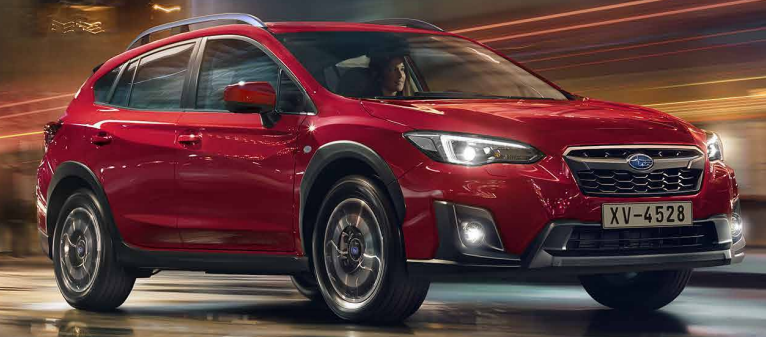
Choosing between the Subaru XV vs Nissan Qashqai sounds straightforward until we spend a little time with these two compact crossovers. On paper, they occupy similar territory: five seats, raised driving positions, practical hatchback bodies, and enough versatility to cover everything from weekday commuting to a muddy weekend escape.
Yet their personalities are remarkably different.
The Subaru XV feels as though somebody started with a rugged all-weather vehicle and then tried to make it comfortable enough for everyday life. The Nissan Qashqai approaches the problem from the opposite direction. It begins as a polished family crossover and adds just enough SUV flavour to make ordinary driving feel more versatile.
That distinction matters.
If we regularly deal with unsealed roads, steep driveways, snow, slippery surfaces, or genuine outdoor adventures, the Subaru's all-wheel-drive philosophy is difficult to ignore. If our typical week involves school runs, motorway journeys, shopping trips and crowded city streets, the Qashqai's larger boot, newer technology and efficient powertrain options can make considerably more sense.
So, which one should we buy?
Let's put them side by side and find out.
Content in this publication
- Subaru XV vs Nissan Qashqai at a Glance
- Design: Rugged Subaru or Sophisticated Nissan?
- Interior Quality and Cabin Design
- Passenger Space: Which Is Better for Families?
- Subaru XV vs Nissan Qashqai Boot Space
- Engine and Performance Comparison
- Subaru AWD vs Nissan Drivetrain
- Ground Clearance and Off-Road Ability
- Ride Comfort
- Handling and Steering
- Fuel Economy: Subaru XV vs Nissan Qashqai
- Nissan e-POWER vs Subaru e-BOXER
- Technology and Infotainment
- Safety and Driver Assistance
- Reliability and Long-Term Ownership
- Maintenance Costs
- City Driving
- Highway and Long-Distance Driving
- Subaru XV vs Nissan Qashqai for Snow
- Subaru XV vs Nissan Qashqai for Families
- Who Should Buy the Subaru XV?
- Who Should Buy the Nissan Qashqai?
- Subaru XV vs Nissan Qashqai: Pros and Cons
- Which Is Better Value for Money?
- Subaru XV vs Nissan Qashqai: Our Verdict
- Frequently Asked Questions
Subaru XV vs Nissan Qashqai at a Glance
The fastest way to understand these cars is to forget badges for a moment and think about what they were designed to accomplish.
The Subaru XV is the adventurous choice. Many XV versions combine a Boxer engine, continuously variable transmission, permanent Symmetrical All-Wheel Drive and generous ground clearance. Subaru's previous-generation XV offered approximately 220 mm of ground clearance in markets such as Australia, considerably reinforcing its rough-road credentials.
The Nissan Qashqai is the polished family choice. The current UK-market model, for example, measures 4,425 mm long and offers up to 504 litres of luggage capacity depending on specification. Nissan currently offers mild-hybrid and e-POWER versions there, placing much greater emphasis on urban efficiency and refinement.
| Category | Subaru XV | Nissan Qashqai |
|---|---|---|
| Main strength | AWD capability | Everyday practicality |
| Typical personality | Rugged and outdoorsy | Refined and family-friendly |
| Drivetrain advantage | Full-time AWD on many XV markets | Efficient 2WD powertrains on current versions |
| Ground clearance | Excellent | More road-focused |
| Cargo capacity | Relatively modest | Generally larger |
| City use | Good | Excellent |
| Rough-road use | Excellent for the class | Adequate |
| Cabin technology | Functional | Usually more modern |
| Best suited to | Adventure and poor surfaces | Family and urban driving |
The winner therefore depends less on which vehicle is objectively "better" and more on where we expect to drive it.
Design: Rugged Subaru or Sophisticated Nissan?
Park them next to one another and their priorities become visible before we even open a door.
The Subaru XV has traditionally looked like a hatchback that has spent a few months at an outdoor survival camp. Chunky plastic cladding surrounds the wheel arches, the body sits noticeably higher than an ordinary hatchback, and Subaru avoids making the XV look unnecessarily delicate.
There is a purpose behind that appearance. Scratches, dirt and rough roads somehow look natural on an XV.
The Nissan Qashqai takes a sharper approach. Recent generations feature slimmer lighting, stronger body creases and a more sophisticated crossover silhouette. It looks more expensive and arguably more contemporary.
Think hiking boots versus smart trainers.
Both can handle daily life, but their intentions are different.
Which One Looks Better?
Styling is subjective, but buyers wanting a contemporary urban SUV will probably prefer the Nissan.
Those attracted to utilitarian design may find the Subaru more appealing because its appearance matches what the vehicle can actually do.
We would call the Qashqai prettier and the XV more purposeful.
Interior Quality and Cabin Design
Step inside and the Nissan generally gains ground.
Recent Qashqai interiors feel cleaner and more modern, with digital displays, improved infotainment, attractive materials and a dashboard layout designed to compete with increasingly sophisticated compact SUVs.
The Subaru XV interior is more conservative.
That is not necessarily criticism. Subaru tends to favour straightforward usability over showroom theatrics. Controls are usually logical, visibility is excellent, and there is something reassuring about a cabin where we do not need a university degree just to change the temperature.
However, buyers comparing newer Qashqai models against an older used XV are likely to notice the Nissan's technological advantage immediately.
Subaru XV Interior Strengths
What the XV lacks in visual drama, it compensates for with usability.
Large windows provide excellent outward visibility. The driving position is natural, controls tend to sit exactly where we expect them, and the interior feels designed for people who actually intend to use their vehicle rather than polish it every Sunday.
Mud on our shoes? Camping gear in the back? Dogs climbing aboard?
The XV seems emotionally prepared for that chaos.
Nissan Qashqai Interior Strengths
The Qashqai is more likely to impress passengers.
Recent versions provide a more sophisticated multimedia experience, stronger connectivity and a cabin atmosphere closer to what buyers now expect from modern family SUVs.
For commuting and long-distance family travel, it simply feels more polished.
Passenger Space: Which Is Better for Families?
Both vehicles seat five, but the Nissan Qashqai usually makes better use of its SUV-style proportions.
Rear passenger accommodation is generous enough for children and adults, while its taller roof and wider-feeling cabin contribute to the sense that we are sitting in a traditional crossover rather than a lifted hatchback.
The Subaru XV is still perfectly usable as a family vehicle. Its wheelbase in the previous Australian specification measured 2,665 mm—interestingly, the same figure Nissan quotes for the current UK Qashqai—but cabin packaging and body shape mean the experience is not identical.
For two adults and occasional rear passengers, either works well.
For regular family duty, child seats and growing teenagers, we would lean toward the Qashqai.
Subaru XV vs Nissan Qashqai Boot Space
This is one of the clearest differences.
The Subaru XV has never been the cargo champion of its segment. Previous Australian specifications quoted around 310 to 345 litres with the rear seats raised, depending on version.
By comparison, Nissan quotes up to 504 litres for the current UK Qashqai and as much as 1,447 litres with the rear seats folded, although exact capacity varies by trim and drivetrain.
That gap matters more than it might appear.
A stroller, several suitcases, weekly groceries and children's equipment can turn 150 litres of theoretical difference into a very practical advantage.
Which Has the More Useful Boot?
The Nissan Qashqai wins.
If cargo capacity sits near the top of our priorities, this is probably enough to push us toward Nissan before we consider anything else.
The Subaru works for everyday luggage and outdoor equipment, but its drivetrain packaging and compact body reduce the amount of storage available behind the rear seats.
Engine and Performance Comparison
Here we need to be careful because Subaru XV and Nissan Qashqai engines vary significantly by country, model year and generation.
Many second-generation XV models use naturally aspirated Boxer petrol engines paired with Subaru's Lineartronic CVT, while certain markets also received e-BOXER hybrid assistance.
The latest Qashqai takes a more technology-heavy approach. In the UK, Nissan currently offers mild-hybrid petrol and e-POWER configurations. Current Nissan specifications list front-wheel drive for these models, with e-POWER using the petrol engine to generate electricity while the electric motor drives the wheels.
That creates a very different driving experience.
Subaru XV Performance
The XV is rarely about outright speed.
Its naturally aspirated engines typically deliver power progressively rather than dramatically. Put our foot down and the CVT can send engine revs climbing, producing more noise than excitement.
Around town and at moderate speeds, however, the powertrain is smooth and predictable.
More importantly, Subaru uses its drivetrain to deliver dependable traction rather than impressive traffic-light numbers.
Does the XV Feel Slow?
Some versions can.
Drivers coming from turbocharged crossovers may find the XV's acceleration modest, especially when overtaking or travelling fully loaded.
But that misses part of its appeal.
The Subaru behaves like a dependable pair of hiking boots. Nobody buys them because they make us sprint faster; we buy them because they keep working when the pavement disappears.
Nissan Qashqai Performance
The Qashqai feels more road-oriented.
Turbocharged mild-hybrid versions provide stronger low-speed torque than many naturally aspirated XVs, while e-POWER delivers the immediate response associated with an electric motor.
Nissan's current UK specifications quote up to 205 PS in Sport mode for the latest e-POWER configuration, although availability and output depend on the particular model and market.
If acceleration and urban responsiveness matter, the Qashqai generally has the edge.
Subaru AWD vs Nissan Drivetrain
Now we reach the Subaru XV's strongest argument.
Subaru built much of the XV's identity around Symmetrical All-Wheel Drive. Subaru describes the system as a permanent AWD arrangement that continuously distributes power according to available traction.
You may be interested in reading Which Toyota Hilux Is the Best? The Complete Buyer’s Guide
That matters when roads get ugly.
Loose gravel, snow, mud, wet grass and steep access roads expose differences that remain invisible during a sunny test drive around a dealership.
Current UK Qashqai versions, by contrast, are front-wheel drive. Other generations and markets have offered different drivetrain configurations, so used buyers should always check the exact car.
Is Subaru AWD Really Worth It?
Only if we use it.
A driver spending 99% of the year on well-maintained urban roads may carry the added weight and mechanical complexity of AWD without exploiting much of its benefit.
But for anyone regularly driving through poor weather, rural areas or loose surfaces, the XV's traction advantage can be transformative.
It is the difference between owning hiking equipment "just in case" and actually living somewhere that requires it.
Ground Clearance and Off-Road Ability
The XV wins this category convincingly.
Previous XV specifications list around 220 mm of ground clearance, which is impressive for a compact crossover and comparable with vehicles that look considerably more SUV-like.
Combine that clearance with AWD and Subaru's available X-Mode technology, and the XV can tackle surprisingly difficult terrain.
No, it is not a hardcore 4x4. We would not treat it like a Jeep Wrangler or Toyota Land Cruiser.
But broken access tracks, snowy roads, campsites and muddy country lanes? That is precisely where the XV starts smiling.
The Qashqai is better regarded as a road-focused crossover.
Which Is Better for Camping and Rural Driving?
Subaru XV, easily.
The irony is that the Qashqai may carry more camping equipment, while the XV is better at reaching the campsite.
Choose your problem.
Ride Comfort
The comparison becomes much closer on normal roads.
The Subaru's relatively generous suspension travel gives it an impressive ability to absorb damaged surfaces. Potholes, rough country roads and patchy asphalt rarely disturb it as much as we might expect.
The Qashqai's road manners are more sophisticated. It generally feels quieter and more polished at speed, while newer versions benefit from additional refinement that reflects their more recent development.
For badly maintained roads, we like the Subaru.
For motorway refinement, we prefer the Nissan.
Handling and Steering
Neither crossover pretends to be a sports car, which is probably a good thing.
The XV's low-mounted Boxer engine contributes to a lower centre of gravity than its ride height might suggest. The result is pleasantly stable cornering with less awkwardness than its rugged stance implies.
Its steering is easy and predictable rather than aggressively sporty.
The Qashqai feels lighter in everyday use. Around town, it is simple to manoeuvre and generally more at home negotiating roundabouts, parking spaces and suburban streets.
Drivers wanting confidence on loose surfaces should choose Subaru.
Drivers wanting effortless urban behaviour may prefer Nissan.
Fuel Economy: Subaru XV vs Nissan Qashqai
Fuel economy is another area where the Nissan can hold a meaningful advantage, particularly when comparing a newer Qashqai hybrid with a conventional petrol XV.
Permanent AWD has benefits, but physics always sends us the bill eventually. Driving four wheels adds mechanical losses and weight.
The XV's Boxer petrol/CVT combination can deliver reasonable economy, yet efficiency is not its defining talent.
Nissan has placed far greater emphasis on electrification. Its e-POWER arrangement allows the electric motor to drive the wheels while the petrol engine generates electricity, creating an EV-like response without requiring external charging.
Our decision therefore depends on priorities.
Frequent city driving strongly favours the more efficient Qashqai powertrains.
Mixed rural use, poor surfaces and traction demands make the Subaru's additional fuel consumption easier to justify.
Nissan e-POWER vs Subaru e-BOXER
The names may sound similar, but the systems should not be confused.
Subaru's e-BOXER combines its Boxer petrol engine with electric assistance while retaining the brand's AWD philosophy.
Nissan e-POWER works differently. The petrol engine generates electricity while the electric motor provides propulsion at the wheels. Nissan describes this as providing the immediate torque characteristics of electric drive without requiring the vehicle to be plugged in.
What does that mean behind the wheel?
The Nissan feels more electric.
The Subaru feels more like a conventional AWD petrol vehicle receiving hybrid assistance.
For smooth urban driving, we prefer Nissan's philosophy. For slippery-road versatility, Subaru remains more compelling.
Technology and Infotainment
Technology dates quickly, and this comparison highlights that problem.
Many XVs available on the used market belong to a generation launched well before the latest Qashqai. Consequently, the Nissan can offer larger displays, more sophisticated connectivity and a more modern digital environment.
The XV still covers the essentials in later versions, including smartphone integration on appropriately equipped vehicles. Subaru's 2021 UK facelift, for example, included an 8-inch touchscreen with Apple CarPlay and Android Auto.
It works.
It simply does not always sparkle.
If cabin technology influences our buying decision heavily, Qashqai wins.
Safety and Driver Assistance
Both manufacturers take safety seriously.
Subaru has long made EyeSight driver-assistance technology central to its offering. Depending on model and year, the system can include functions such as adaptive cruise control, pre-collision braking and lane-related assistance.
The facelifted UK XV also received a front-view monitor and was marketed with Subaru's expanded driver-assistance package.
Nissan likewise equips recent Qashqai models with a broad suite of assistance systems. Exact functions depend heavily on trim and market.
The important point for used buyers is simple: compare the equipment on the specific vehicle, not just the model name.
A high-spec older XV can have more useful assistance features than an entry-level rival, and the reverse can also be true.
Reliability and Long-Term Ownership
Reliability comparisons become tricky because engines, transmissions and electronics change between generations.
Subaru's mechanical formula is unusual but well established: Boxer engines, CVTs and AWD have been fundamental parts of the brand for years.
Maintenance matters.
A neglected AWD system or poorly serviced CVT can become expensive, so a documented service history should matter more to us than a shiny paint finish.
The Qashqai has been sold in enormous numbers across multiple generations and powertrain configurations. That makes broad statements such as "all Qashqais are reliable" or "all Qashqais have problems" essentially useless.
Different engines have different histories.
For either vehicle, a pre-purchase inspection and full maintenance record are worth more than internet folklore.
Which Used Car Would We Trust More?
Given two equally well-maintained examples, the decision would depend on the engine and year.
For the XV, we would inspect CVT behaviour, suspension condition, wheel bearings, oil leaks and evidence of proper servicing.
For the Qashqai, we would investigate the reliability record of the exact engine and transmission fitted rather than assuming one generation represents them all.
You may be interested in readingWhich Toyota Hilux Is the Best? The Complete Buyer’s GuideYou may be interested in reading
 Land Rover Defender 90 vs 110: Which Defender Should You Buy?
Condition beats reputation.
Every time.
Maintenance Costs
The Qashqai's popularity can help when sourcing routine service parts, particularly in markets where Nissan has a large dealer and independent repair network.
Subaru ownership can occasionally be more specialised. Its Boxer engine layout and AWD drivetrain mean certain jobs are different from those on conventional front-wheel-drive crossovers.
That does not automatically make an XV expensive to own.
It means choosing a mechanic familiar with Subaru can be worthwhile.
Tyres are especially important on AWD vehicles. We would keep tyre sizes, brands and tread depths reasonably matched because substantial differences between wheels can place unnecessary stress on AWD components.
City Driving
If our world consists mainly of traffic lights, underground car parks and supermarket spaces, the Qashqai is the easier recommendation.
It offers the raised driving position crossover buyers enjoy without constantly reminding us that it has outdoor ambitions.
Recent powertrains are also especially well suited to stop-start driving.
The XV remains easy enough to drive in cities, but its greatest strengths are being wasted there.
Buying an XV only to drive five kilometres through urban traffic every day is rather like buying waterproof hiking boots and never leaving the shopping centre.
They work.
We are simply paying for capability we rarely use.
Highway and Long-Distance Driving
The Qashqai generally feels more refined over long distances.
Its cabin technology, passenger space, larger luggage compartment and road-oriented design combine nicely for family trips.
The XV fights back with comfortable suspension, supportive seating and reassuring stability in poor weather.
If our long journeys regularly involve mountain roads, snow or rough destinations, Subaru may still be the smarter companion.
For conventional motorway travel, Nissan gets our vote.
Subaru XV vs Nissan Qashqai for Snow
Subaru.
This is where the XV's engineering philosophy earns its keep.
Permanent AWD cannot create grip where none exists—appropriate tyres remain crucial—but distributing power across four wheels gives the XV a meaningful advantage when accelerating on slippery surfaces.
Ground clearance also helps when snow becomes deeper.
A front-wheel-drive Qashqai on excellent winter tyres can still perform very well, and tyres often matter more than people realise.
Nevertheless, given equivalent tyres and conditions, we would rather face a snowy mountain road in the XV.
Subaru XV vs Nissan Qashqai for Families
Here the pendulum swings toward Nissan.
Families tend to care about space, luggage capacity, rear-seat accessibility, connectivity and quiet motorway driving.
Those are exactly the areas where the Qashqai performs strongly.
The Subaru makes more sense for an active family whose weekends include bikes, trails, remote cabins, ski trips or unsealed roads.
So our family winner depends on what "family life" looks like.
If Saturday means a shopping centre, choose Nissan.
If Saturday means looking at a muddy road and saying, "I think we can make it," choose Subaru.
Who Should Buy the Subaru XV?
The XV makes the most sense when capability matters more than glamour.
We would place it at the top of our shortlist if we regularly encounter poor roads, snow, loose surfaces or rural conditions; value permanent AWD; want generous ground clearance; enjoy outdoor activities; prefer straightforward controls; and can accept a smaller boot and relatively modest acceleration.
The Subaru is not trying to win every category.
Its appeal comes from being unusually good at a few things that many compact crossovers merely pretend to do.
Who Should Buy the Nissan Qashqai?
The Qashqai suits a broader mainstream audience.
It is the model we would choose when passenger and luggage space, fuel efficiency, modern technology, road refinement and easy urban driving matter more than serious traction or ground clearance.
That explains much of the Qashqai's appeal.
It asks very little from its owner.
Get in, load the family, connect the phone and go.
Sometimes convenience beats character.
Subaru XV vs Nissan Qashqai: Pros and Cons
The differences become remarkably simple once we strip away the marketing.
| Subaru XV | Nissan Qashqai | |
|---|---|---|
| Biggest advantage | AWD and rough-road capability | Practicality and refinement |
| Biggest compromise | Smaller cargo area | Less adventurous drivetrain |
| City driving | Good | Better |
| Bad roads | Better | Good |
| Snow | Better | Depends heavily on configuration |
| Fuel economy | Adequate | Typically stronger in newer hybrid versions |
| Technology | Functional | More modern |
| Boot space | Smaller | Larger |
| Driving character | Rugged and reassuring | Smooth and easy |
| Family appeal | Active lifestyles | Mainstream family use |
Which Is Better Value for Money?
This question changes dramatically when shopping used.
A well-priced XV can represent excellent value because we receive AWD, strong ground clearance and substantial standard safety equipment without stepping into a larger SUV.
A Qashqai can offer even more value to mainstream buyers because we are not paying for off-road capability we may never need.
Purchase price alone is not value.
Value means paying for features we actually use.
If AWD saves us from struggling up an icy road every winter, Subaru's premium becomes worthwhile.
If that AWD system spends ten years driving exclusively to supermarkets and office buildings, Nissan probably makes more financial sense.
Subaru XV vs Nissan Qashqai: Our Verdict
So, which wins the Subaru XV vs Nissan Qashqai comparison?
For most urban families, we would choose the Nissan Qashqai.
It is roomier where it matters, offers considerably more luggage capacity in current versions, feels more contemporary inside and provides sophisticated mild-hybrid or e-POWER options. As an everyday crossover, it is extremely easy to understand.
But we would choose the Subaru XV without hesitation for rough roads, snow, rural driving and outdoor lifestyles.
Its 220 mm ground clearance on previous-generation specifications and permanent Symmetrical All-Wheel Drive give it abilities the road-focused Qashqai cannot simply reproduce with SUV styling.
That leaves us with a wonderfully simple decision.
The Qashqai is the better crossover.
The XV is the better adventure crossover.
One feels designed around everyday life and occasionally ventures beyond it. The other seems permanently ready for the moment when the asphalt ends.
Choose the one that matches the road ahead.
Frequently Asked Questions
Is the Subaru XV better than the Nissan Qashqai?
The Subaru XV is better for drivers who prioritise all-wheel-drive traction, ground clearance, snow performance and rough-road ability. The Nissan Qashqai is generally better for urban families because it offers more cargo space, newer technology and efficient modern powertrain options. Neither is universally better; they simply prioritise different types of driving.
Which has more boot space, Subaru XV or Nissan Qashqai?
The Nissan Qashqai generally has substantially more luggage capacity. Nissan quotes up to 504 litres for the current UK Qashqai, while previous Australian XV specifications listed approximately 310–345 litres depending on version. Exact figures vary by model year, drivetrain and measurement method.
Which is better in snow, Subaru XV or Nissan Qashqai?
We would choose the Subaru XV. Its permanent Symmetrical All-Wheel Drive and generous ground clearance make it particularly well suited to slippery and snowy conditions. Tyres remain extremely important, however, and good winter tyres can make a major difference regardless of drivetrain.
You may be interested in readingWhich Toyota Hilux Is the Best? The Complete Buyer’s GuideYou may be interested in reading
Land Rover Defender 90 vs 110: Which Defender Should You Buy?You may be interested in reading
Land Rover Defender 90 vs 110 vs 130: Which Defender Is Right for You?Is the Nissan Qashqai more fuel-efficient than the Subaru XV?
In many comparable versions, yes. Newer Qashqai mild-hybrid and e-POWER models place greater emphasis on fuel efficiency, whereas the XV's permanent AWD system prioritises traction. Actual consumption depends on engine, year, traffic, weather and driving style, so buyers should compare the exact versions available in their market.
Which should we buy used: Subaru XV or Nissan Qashqai?
Buy the XV if AWD capability, ground clearance and poor-road performance are major priorities. Buy the Qashqai if space, urban comfort, cargo capacity and refinement matter more. With either used vehicle, service history, engine choice, transmission condition and a professional pre-purchase inspection should influence the decision more than the badge alone.
If you want to know other articles similar to Subaru XV vs Nissan Qashqai: Which Crossover Is Better? you can visit the category Models.
Honda Passport vs Toyota 4Runner: Which SUV Is Better?
Honda Passport vs Ford Bronco: Which SUV Is Better?
Honda Passport vs Ford Explorer: Which SUV Is Better?
Honda Passport or Pilot: Which SUV Is Better?
Honda Passport vs Jeep Grand Cherokee: Which SUV Is Better?
Honda Passport vs Nissan Pathfinder: Which SUV Is Better?
Leave a Reply
More content of your interest