

Subaru XV vs Honda HR-V: Which Compact SUV Is Better?

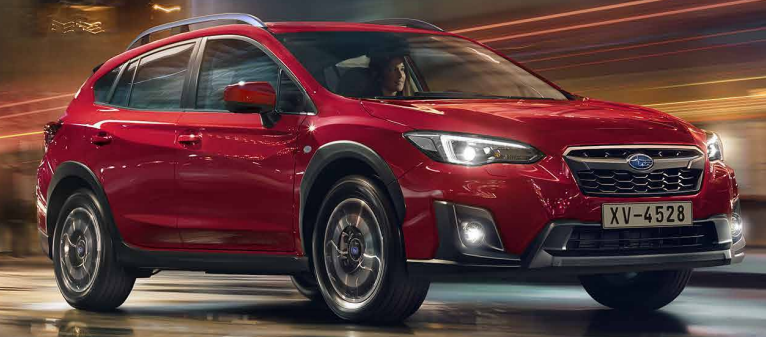
Choosing between the Subaru XV and Honda HR-V looks simple until we actually start comparing how these two compact SUVs behave in the real world.
Both are practical. Both come from Japanese manufacturers with strong reputations. Both fit easily into city life without feeling hopelessly small when we point them toward a weekend road trip. Yet their personalities could hardly be more different.
The Subaru XV is the outdoorsy one. It wears its hiking boots everywhere, combining generous ground clearance with Subaru's familiar all-wheel-drive philosophy. The Honda HR-V approaches the same problem from another direction. It is generally more urban-minded, emphasizing efficiency, clever packaging, comfort, and easy everyday driving.
So which one should we put in our driveway?
For many buyers, the short answer is simple: choose the Subaru XV if AWD capability, rough-road confidence, and ground clearance matter most. Choose the Honda HR-V if fuel efficiency, urban comfort, and everyday practicality rank higher.
But there is much more hiding beneath that simple conclusion.
Before diving in, there is one important naming issue. Subaru now uses the Crosstrek name for the model that succeeded the XV in markets including Australia; Subaru itself describes the Crosstrek as the "next iteration" of the XV. That means shoppers comparing a used Subaru XV with a newer Honda HR-V should pay particularly close attention to model year and market.
Let's break everything down.
Content in this publication
- Subaru XV vs Honda HR-V at a Glance
- Subaru XV vs Honda HR-V: The Fundamental Difference
- Exterior Design: Rugged XV or Sleek HR-V?
- Interior Quality and Cabin Design
- Passenger Space and Everyday Comfort
- Boot Space and Cargo Practicality
- Engine Performance
- Fuel Economy: Honda HR-V Takes the Lead
- AWD and Bad-Weather Traction
- Ground Clearance and Rough-Road Ability
- Ride Comfort
- Handling and Steering
- Subaru XV vs Honda HR-V Safety
- Infotainment and Technology
- Visibility and Ease of Parking
- Reliability: Subaru XV vs Honda HR-V
- Maintenance Costs
- Subaru XV vs Honda HR-V for City Driving
- Subaru XV vs Honda HR-V for Country Roads
- Subaru XV vs Honda HR-V for Families
- Which Is Better for Long Road Trips?
- Subaru XV Hybrid vs Honda HR-V Hybrid
- Used Subaru XV vs Used Honda HR-V
- Resale Value
- Subaru XV vs Honda HR-V: Pros and Cons
- Who Should Buy the Subaru XV?
- Who Should Buy the Honda HR-V?
- Subaru XV vs Honda HR-V: Which One Should We Buy?
- Closing Thoughts: Honda HR-V or Subaru XV?
- Frequently Asked Questions
Subaru XV vs Honda HR-V at a Glance
If we strip away trim names, equipment packages, and marketing language, the two SUVs reveal very different priorities.
| Category | Subaru XV | Honda HR-V |
|---|---|---|
| Best for | Adventure and mixed roads | Urban and everyday driving |
| Drivetrain strength | AWD capability | Efficiency and simplicity |
| Ground clearance | Excellent | More road-oriented |
| Fuel economy | Good | Usually better, especially hybrid |
| Cabin usability | Practical | Clever and flexible |
| Driving character | Secure and planted | Light and easy |
| Rough-road ability | Strong | Moderate |
| City friendliness | Good | Excellent |
| Long-distance comfort | Very good | Very good |
| Overall personality | Rugged | Refined |
Of course, specification varies considerably by generation and country.
That matters especially with the HR-V. For example, the current Australian HR-V range includes 1.5-litre petrol and e hybrid versions, while the 2026 North American HR-V uses a 2.0-litre petrol engine and offers AWD as an option.
So throughout this comparison, we will focus on the fundamental strengths of each vehicle rather than pretending every HR-V or XV is mechanically identical.
Subaru XV vs Honda HR-V: The Fundamental Difference
Think of the XV and HR-V as two people arriving at the same campsite.
The Honda brings neatly packed luggage, comfortable shoes, snacks organized into containers, and a carefully planned route.
The Subaru turns up wearing muddy boots with a kayak strapped to the roof.
That difference tells us almost everything.
The Subaru XV Prioritizes Capability
The XV's architecture and character have traditionally revolved around Subaru's Symmetrical All-Wheel Drive, Boxer engine layout, useful ground clearance, and confidence on slippery or poorly maintained roads.
Older Australian-market XV petrol versions, for example, paired a 2.0-litre Boxer engine with AWD and a Lineartronic CVT.
We notice the benefit most when conditions become unpleasant rather than perfect.
Wet roads?
Loose gravel?
A steep cottage driveway?
A muddy campsite after three days of rain?
That's where the XV starts making sense.
The Honda HR-V Prioritizes Everyday Usability
Honda has traditionally taken a more road-focused approach with the HR-V.
Instead of trying to create a miniature off-roader, Honda asks another question: how useful can a compact SUV be during the 95% of journeys we actually make?
That philosophy produces an SUV that generally feels effortless around town.
It's easy to park, easy to drive, easy to understand, and—depending on the version—remarkably economical.
Current Australian e models reinforce that efficiency-first philosophy with Honda's two-motor hybrid system.
Exterior Design: Rugged XV or Sleek HR-V?
Styling may not appear on a specification sheet, but we're going to see our SUV every morning.
It matters.
Subaru XV Design
The XV has traditionally leaned heavily into adventure styling.
Expect elements such as:
- Chunky body cladding
- Raised ride height
- Strong wheel arches
- Roof rails on many variants
- Compact dimensions
- A deliberately rugged stance
It doesn't pretend to be a luxury crossover.
Instead, the XV looks ready to leave the asphalt.
Why the XV's Design Works
There's honesty to it.
The body cladding isn't merely decoration when we're regularly driving down gravel roads. Higher clearance isn't just visual theatre either.
The design supports the vehicle's personality.
Honda HR-V Design
The newer HR-V generations look cleaner and more sophisticated.
Rather than shouting "adventure," the Honda whispers "modern crossover."
Its smoother bodywork, restrained detailing, and more road-oriented silhouette can make it look more expensive than its position in the market suggests.
If our driveway is part of the decision, the HR-V arguably wins the fashion contest.
Interior Quality and Cabin Design
Step inside and the personality split continues.
Inside the Subaru XV
The XV cabin tends to favor function over drama.
Controls are usually straightforward, visibility is excellent, and the driving position gives us a strong sense of what's happening around the vehicle.
That's valuable.
Some interiors photograph beautifully but become annoying after three weeks. Subaru generally takes the opposite approach: perhaps less showroom theatre, but controls that make sense once we're actually living with the car.
Inside the Honda HR-V
The HR-V typically feels more minimalist.
Honda has become particularly good at designing dashboards that look modern without turning basic functions into a treasure hunt.
Depending on specification, newer HR-V versions offer large infotainment displays, smartphone connectivity, digital features, and increasingly premium interior finishes.
Which Cabin Feels Better?
For perceived sophistication, we'd lean toward the Honda.
For visibility and straightforward functionality, the Subaru fights back strongly.
Neither approach is wrong.
The question is whether we want our SUV to feel like a clever urban tool or a durable piece of outdoor equipment.
Passenger Space and Everyday Comfort
Compact SUVs are supposed to perform a magic trick.
They must remain small outside while somehow becoming large inside.
Honda has historically been particularly good at this.
Honda HR-V Passenger Space
The HR-V makes excellent use of its footprint.
Depending on generation, Honda's clever seat packaging can make the interior remarkably adaptable. Current Australian HR-V material continues to highlight Honda's versatile seating approach on selected versions.
Rear-seat accommodation is useful for adults, although taller passengers should still test the exact generation they're considering.
Subaru XV Passenger Space
The XV also accommodates four adults comfortably enough for ordinary journeys.
Its greatest interior advantage, however, may be the sense of openness.
Thin pillars, a relatively upright seating position, and good window area reduce the claustrophobic feeling we sometimes encounter in style-heavy crossovers.
Boot Space and Cargo Practicality
This category is trickier than it appears.
Cargo figures change dramatically across generations, markets, hybrid systems, and measuring standards, so blindly comparing two numbers from different specification sheets can mislead us.
Instead, look at shape and usability.
Honda HR-V Cargo Advantages
Honda generally prioritizes efficient packaging.
The load floor tends to be usable, rear seating is practical, and the cabin offers thoughtful places for everyday objects.
Groceries, luggage, gym bags, backpacks, and shopping trips are its natural territory.
Subaru XV Cargo Advantages
The XV may not always dominate on outright boot volume, but its broader adventure credentials matter.
Roof rails and available accessories allow owners to expand capacity with:
- Roof boxes
- Bike carriers
- Kayak mounts
- Ski carriers
- Camping equipment
So while the Honda can be the smarter interior packer, the Subaru can become the more versatile adventure platform.
Engine Performance
Neither SUV exists primarily to win drag races.
That's worth remembering.
We're buying compact crossovers, not sports cars.
How the Subaru XV Feels
The familiar 2.0-litre naturally aspirated Boxer engine found in many XV versions provides adequate rather than explosive performance.
Push the accelerator hard and the CVT can allow engine revs to rise noticeably.
Around town, however, the combination generally works smoothly.
The appeal isn't raw acceleration.
It's predictable traction.
How the Honda HR-V Feels
Performance depends heavily on market.
Current Australian HR-V buyers can choose between petrol and hybrid versions, whereas the U.S. 2026 HR-V uses a 158-hp 2.0-litre four-cylinder engine.
You may be interested in reading Subaru XV vs Mazda CX-3: Which Small SUV Is Better?
The hybrid is especially interesting for urban drivers because electric assistance provides immediate low-speed response.
We press the accelerator and the car moves without the delayed, breathless feeling sometimes associated with small naturally aspirated engines.
Fuel Economy: Honda HR-V Takes the Lead
Here's one category where Honda has a convincing argument.
If our daily life consists of traffic lights, commuting, school runs, shopping, and congested city streets, the HR-V—particularly the hybrid—can be impressively economical.
For illustration, Honda Australia lists a combined consumption figure of 4.3 L/100 km for the 25-model-year HR-V e variants and 6.2 L/100 km for the petrol Vi X under its applicable test standard.
Those numbers should not be transplanted blindly to another country or model year, but they show what Honda is trying to achieve.
The XV's permanent AWD hardware and more adventure-focused setup generally come with an efficiency penalty.
Fuel Economy Winner: Honda HR-V
For high-mileage urban drivers, that difference can become meaningful over several years.
AWD and Bad-Weather Traction
Now the pendulum swings sharply toward Subaru.
Why Subaru's AWD Matters
AWD is not magic.
It won't allow us to ignore physics, worn tires, ice, or stupid driving.
But a well-integrated AWD system can provide useful traction when pulling away on slippery surfaces or navigating loose terrain.
That is a fundamental part of the XV's identity.
Subaru continues the same philosophy with its XV successor, the Crosstrek, which combines standard Symmetrical AWD with substantial ground clearance in markets such as Australia.
What About Honda HR-V AWD?
Again, market matters.
North American HR-V models offer Honda's Real Time AWD system, whereas HR-V configurations elsewhere can be front-wheel-drive focused. Honda's official 2026 U.S. specifications list AWD as available across the current range.
So don't assume every HR-V is front-wheel drive.
Still, if rough-road confidence is the primary purchase criterion, the Subaru remains our preferred tool.
Ground Clearance and Rough-Road Ability
This may be the XV's biggest practical advantage.
The Subaru sits relatively high for a compact crossover.
That gives us additional confidence when dealing with:
- Deep potholes
- Dirt tracks
- Uneven campsite entrances
- Snow buildup
- Rutted roads
- Steep driveways
- Rocky surfaces
Modern Australian Crosstrek models that carry on the XV lineage advertise 220 mm of ground clearance, showing just how central this capability remains to the model's DNA.
The HR-V is an SUV, but we'd describe it primarily as a road-biased crossover.
Off-Pavement Winner: Subaru XV
No complicated debate here.
Ride Comfort
Interestingly, rugged doesn't necessarily mean uncomfortable.
Subaru XV Ride
The XV generally absorbs poor surfaces well.
Its suspension must deal with terrain beyond smooth asphalt, and that pays dividends when urban streets begin resembling lunar landscapes.
We may notice a little more body movement, but the chassis usually feels composed.
Honda HR-V Ride
The HR-V's road-focused setup can feel polished and controlled.
It tends to make easy work of commuting, suburban roads, and motorway cruising.
If we're never leaving paved roads, Honda's approach may actually feel more appropriate.
Handling and Steering
The XV's Boxer engine layout helps keep major mechanical mass relatively low, while AWD provides a planted feeling.
The result is reassuring rather than exciting.
The steering communicates enough information to place the SUV accurately, and the chassis usually feels secure through sweeping bends.
The Honda HR-V feels lighter on its feet.
Urban maneuverability is one of its greatest strengths.
It slips through traffic like a smaller vehicle, which is exactly what many compact-SUV buyers want.
Which Is Better to Drive?
We'd call it according to environment:
Twisting country roads and mixed surfaces: XV.
Dense urban traffic: HR-V.
Long-distance cruising: close enough that seat comfort and trim specification should decide it.
Subaru XV vs Honda HR-V Safety
Both manufacturers place substantial emphasis on active safety.
Higher-specification XV models have long been available with Subaru's EyeSight driver-assistance suite, including features such as adaptive cruise control and pre-collision braking.
Honda counters with Honda Sensing, which on current models can include systems such as collision mitigation braking, adaptive cruise control, and lane-keeping assistance.
Never Compare Safety by Brand Name Alone
This is crucial for used buyers.
A 2017 XV and a 2026 HR-V obviously don't have equivalent technology simply because both brands advertise advanced safety.
Check the exact:
- Model year
- Trim level
- Local specification
- Safety rating date
- Number of airbags
- Driver-assistance equipment
- Crash-test protocol
Safety standards evolve.
Compare vehicles, not badges.
Infotainment and Technology
Technology is another category where age matters enormously.
A late-generation HR-V can feel dramatically more modern than an older XV.
Wireless smartphone integration, larger displays, remote connectivity, improved cameras, and more advanced digital interfaces have become increasingly common.
If we're comparing used vehicles of roughly equal age, the gap is smaller.
Technology Winner
For buyers who prioritize interface design and cabin modernity, we'd usually lean Honda.
For buyers who simply want essential technology without turning the dashboard into an iPad showroom, the XV remains perfectly serviceable.
Visibility and Ease of Parking
This category deserves more attention than reviewers usually give it.
We interact with visibility every single time we drive.
The Subaru XV's generous glass area makes judging its corners relatively straightforward.
That reduces stress in car parks and improves confidence on narrow roads.
The HR-V remains easy to maneuver because of its compact dimensions, and reversing cameras or parking assistance on suitably equipped versions make life even easier.
It's nearly a draw, although we'd give Subaru a tiny advantage for natural outward visibility.
Reliability: Subaru XV vs Honda HR-V
Here we need to avoid lazy stereotypes.
"Honda never breaks."
"Subaru always has engine problems."
Neither statement is a useful buying strategy.
Both can deliver long service lives when maintained correctly, and both can become expensive when neglected.
What Matters More Than the Badge?
For a used vehicle, we'd investigate:
- Complete service history
- Oil-change consistency
- CVT maintenance
- Cooling-system condition
- Suspension wear
- Accident history
- Tire condition
- Warning lights
- Battery health
- Recall completion
- Previous owner behavior
A meticulously maintained XV is a better purchase than an abused HR-V.
The reverse is equally true.
Used-Car Rule
Condition beats reputation.
Every time.
Maintenance Costs
Honda's simpler front-wheel-drive variants can theoretically have fewer drivetrain components demanding attention than an AWD Subaru.
But actual ownership cost depends enormously on location, labor prices, parts availability, mileage, and service schedules.
Subaru's AWD system doesn't automatically make the XV expensive to own.
It simply means we should understand what we're buying.
For Australian context, Subaru specifies 12-month/12,500 km servicing for model-year 2018–2022 XV vehicles, whichever comes first.
Check the correct schedule for your own vehicle rather than relying on generic internet advice.
Subaru XV vs Honda HR-V for City Driving
This is Honda territory.
The HR-V is easy to maneuver, efficient, comfortable, and well suited to repetitive urban driving.
A hybrid HR-V becomes even more attractive in stop-start conditions.
Choose the HR-V for the City If You Value:
- Fuel economy
- Easy maneuverability
- Quiet low-speed driving
- Clever interior packaging
- Modern cabin design
- Simple daily usability
The XV isn't difficult in the city.
Far from it.
You may be interested in readingSubaru XV vs Mazda CX-3: Which Small SUV Is Better?You may be interested in reading
Subaru XV vs Toyota RAV4: Which SUV Is the Better Buy?But buying an XV exclusively for city driving is a little like buying hiking boots to walk around a shopping mall.
They'll work perfectly.
We're just not using their biggest advantage.
Subaru XV vs Honda HR-V for Country Roads
Now Subaru starts stretching its legs.
Poorly surfaced roads expose weaknesses that stay hidden during a dealership test drive.
That's where the XV's ground clearance, AWD system, suspension tuning, and predictable traction become valuable.
If we frequently visit rural properties, mountain areas, gravel roads, ski resorts, or remote campsites, we'd pick the Subaru.
Subaru XV vs Honda HR-V for Families
This depends on the family.
Parents with one or two young children may find either vehicle perfectly adequate.
The HR-V's flexible cabin makes everyday errands easy.
The XV's outdoorsy character works beautifully for families who spend weekends carrying sporting or adventure equipment.
Before Buying, Bring the Child Seats
Seriously.
Put them in the car.
Then check:
- Front-seat space with child seats installed
- Rear-door opening angle
- Stroller fit
- Boot accessibility
- ISOFIX/LATCH locations
- Rear air vents, where equipped
- Storage for bottles and small items
Brochure dimensions don't reveal whether our particular stroller fits without playing luggage Tetris.
Which Is Better for Long Road Trips?
This one is close.
The Subaru offers confidence when a road trip includes unpredictable surfaces or weather.
The Honda counters with potentially superior fuel efficiency, especially in hybrid form.
If our road trip looks like this:
Motorway → hotel → motorway → city, we'd prefer the HR-V.
If it looks like:
Motorway → mountain pass → dirt road → cabin → trailhead, we'd take the XV.
Simple.
Subaru XV Hybrid vs Honda HR-V Hybrid
Hybrid badges can create false equivalence.
Not all hybrid systems pursue the same objective.
Subaru's earlier XV e-Boxer approach combined electrification with the brand's AWD-focused architecture. Honda's newer e approach puts much greater emphasis on efficient electric-assisted driving, particularly in urban conditions.
For pure fuel-saving priorities, we'd favor the Honda hybrid.
For an owner who wants hybrid assistance while retaining the XV's adventure-oriented character, the Subaru remains interesting.
Used Subaru XV vs Used Honda HR-V
For many shoppers, this is where the comparison becomes most relevant because plenty of XVs now live on the used market.
What to Check on a Used Subaru XV
Pay particular attention to:
- CVT operation
- Uneven tire wear
- Wheel bearings
- Suspension noises
- Oil leaks
- Battery condition
- EyeSight warnings
- Full service history
- Evidence of hard off-road use
AWD also makes matching tires especially important. Four tires with substantially different wear levels can create unnecessary drivetrain stress.
What to Check on a Used Honda HR-V
Inspect:
- CVT behavior
- Electrical equipment
- Infotainment operation
- Air-conditioning
- Suspension noises
- Brake condition
- Service history
- Interior wear
- Warning lights
- Previous accident repairs
Don't buy either because the seller says, "They're Japanese—they run forever."
Cars don't read internet comments.
They need maintenance.
Resale Value
Both names tend to enjoy decent buyer recognition in markets where they are established.
Subaru attracts a particularly loyal audience among buyers wanting AWD and outdoor capability.
Honda benefits from a broad reputation for sensible, dependable vehicles.
Vehicle condition, mileage, trim, service history, color, and local demand can influence resale value far more than the badge alone.
A spotless one-owner XV with complete records can sell quickly.
So can a clean HR-V.
Subaru XV vs Honda HR-V: Pros and Cons
Subaru XV Pros
- Strong AWD credentials
- Excellent ground clearance
- Confident bad-weather traction
- Comfortable over rough surfaces
- Good visibility
- Adventure-friendly character
- Useful roof-carrying potential
Subaru XV Cons
- Fuel economy may trail the HR-V
- Performance can feel modest
- CVT may become noisy under hard acceleration
- Older interiors can feel dated
- AWD complexity isn't necessary for everyone
Honda HR-V Pros
- Excellent everyday usability
- Strong fuel economy potential
- Hybrid option in numerous markets
- Smart interior packaging
- Easy city maneuverability
- Clean cabin design
- Comfortable road manners
Honda HR-V Cons
- Less convincing on rough terrain
- Lower adventure capability
- Specifications vary significantly by region
- Performance in some petrol versions is merely adequate
- AWD isn't universal globally
Who Should Buy the Subaru XV?
The Subaru XV makes more sense if we regularly encounter conditions beyond pristine asphalt.
It's especially compelling for:
- Outdoor enthusiasts
- Skiers
- Hikers
- Rural drivers
- Owners living on gravel roads
- Drivers facing snow or frequent heavy rain
- People carrying bikes or outdoor gear
- Buyers who genuinely benefit from AWD
The operative word is genuinely.
If we never leave smooth city streets, we may be paying in fuel consumption for capability we rarely use.
Who Should Buy the Honda HR-V?
The Honda HR-V suits buyers whose lives revolve primarily around towns, suburbs, highways, and commuting.
It's an excellent fit for:
- Urban professionals
- Small families
- Commuters
- Retirees
- Efficiency-conscious drivers
- Buyers interested in hybrid technology
- Drivers wanting easy everyday operation
The HR-V is less about conquering terrain and more about eliminating hassle.
And there's something deeply appealing about a car that simply makes normal life easier.
Subaru XV vs Honda HR-V: Which One Should We Buy?
Here's the simplest way to decide.
Choose the Subaru XV if our priorities look like this:
AWD → ground clearance → rough-road ability → outdoor lifestyle → fuel economy.
Choose the Honda HR-V if they look like this:
Fuel economy → city driving → cabin practicality → refinement → off-road ability.
That's the entire comparison compressed into two lines.
Our Winner for Adventure: Subaru XV
The XV wins whenever the road gets worse.
Its combination of ground clearance, AWD, visibility, and rugged road manners makes it the more convincing crossover for people who actually exploit the "utility" part of SUV.
Our Winner for Everyday Driving: Honda HR-V
The HR-V is easier to recommend to the average urban buyer.
Its efficiency, packaging, comfort, and road-focused personality make it a polished everyday companion.
Overall Winner: It Depends on Where We Drive
We wouldn't declare one universally better.
That would miss the point.
The Subaru XV is the more capable tool.
The Honda HR-V is the more efficient everyday tool.
And the best tool is the one designed for the job we're actually doing.
Closing Thoughts: Honda HR-V or Subaru XV?
The Subaru XV vs Honda HR-V debate isn't really about identifying the objectively superior compact SUV. It's about understanding two different interpretations of what a compact SUV should be.
Subaru gives us something resembling a small adventure vehicle. The XV feels happiest when the weather deteriorates, the pavement disappears, or Saturday morning involves loading muddy gear into the boot.
Honda gives us a beautifully sensible everyday crossover. The HR-V asks less from its driver, particularly in urban environments, and hybrid versions can deliver impressive efficiency.
If we regularly head beyond the suburbs, we'd lean toward the Subaru XV.
If most journeys consist of commuting, shopping, school runs, and paved-road travel, we'd lean toward the Honda HR-V.
Neither decision should be made from a badge alone, especially when buying used. Model year, trim level, drivetrain, service history, condition, and local specifications matter enormously.
Drive both.
Take the route you normally drive.
Bring the family.
Load the boot.
Park them.
Then ask the only question that ultimately matters:
Which one makes our life easier?
Frequently Asked Questions
1. Is the Subaru XV better than the Honda HR-V?
The Subaru XV is better for buyers who prioritize AWD capability, substantial ground clearance, poor-road performance, and outdoor activities. The Honda HR-V is generally better suited to drivers who prioritize fuel economy, urban usability, cabin refinement, and everyday practicality. Neither is universally superior; they simply serve slightly different priorities.
2. Which is more fuel-efficient, Subaru XV or Honda HR-V?
The Honda HR-V generally has the advantage, particularly when comparing newer HR-V hybrid variants with petrol-powered Subaru XV models. Actual consumption varies by engine, drivetrain, market, model year, traffic, weather, and driving style. Buyers should compare official figures for the exact variants they're considering.
3. Is the Subaru XV better off-road than the Honda HR-V?
Yes, in most comparable configurations. The XV's combination of Subaru Symmetrical AWD, generous ground clearance, and adventure-oriented suspension makes it more suitable for gravel tracks, snow, muddy access roads, and moderately rough terrain. Neither vehicle should be mistaken for a hardcore 4x4, however.
4. Which is more reliable, Honda HR-V or Subaru XV?
Both can provide dependable long-term ownership when serviced correctly. For a used SUV, maintenance history and previous treatment matter more than general brand stereotypes. A pre-purchase inspection is strongly recommended, particularly on older or high-mileage vehicles.
5. Is the Subaru XV the same as the Subaru Crosstrek?
They are closely related names within the same model lineage. Subaru used the XV name in markets including Australia before transitioning to Crosstrek, and Subaru officially describes the Crosstrek as the next iteration of the XV. Buyers should still compare specific generations because equipment, engines, safety systems, and technology have evolved.
You may be interested in readingSubaru XV vs Mazda CX-3: Which Small SUV Is Better?You may be interested in reading
Subaru XV vs Toyota RAV4: Which SUV Is the Better Buy?You may be interested in reading
Subaru XV vs Mazda CX-30: Which Compact SUV Should We Choose?If you want to know other articles similar to Subaru XV vs Honda HR-V: Which Compact SUV Is Better? you can visit the category Models.
Land Rover Defender 90 vs 110 vs 130: Which Defender Is Right for You?
Land Rover Defender 90 vs 110: Which Defender Should You Buy?
Which Toyota Hilux Is the Best? The Complete Buyer’s Guide
Subaru XV vs Nissan Qashqai: Which Crossover Is Better?
Subaru XV vs Mazda CX-30: Which Compact SUV Should We Choose?
Subaru XV vs Toyota RAV4: Which SUV Is the Better Buy?
Leave a Reply
More content of your interest