
BMW i7 Problems: Common Issues, Recalls, and Reliability

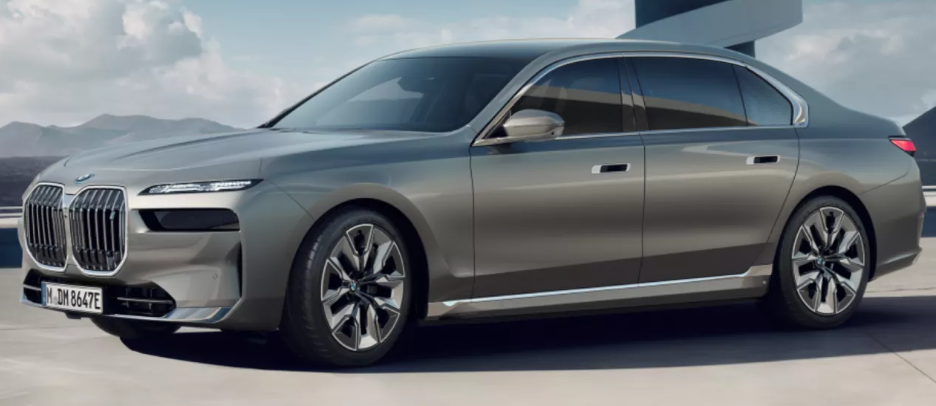
The BMW i7 is what happens when a traditional luxury sedan decides electricity is no longer optional. It is quiet, absurdly comfortable, loaded with technology, and capable of accelerating with the sort of effortless force that makes a large luxury car feel surprisingly light on its feet.
But complexity has a price.
When we look at BMW i7 problems, we find a mixture of software-related concerns, charging interruptions, brake-system recalls, drivetrain issues, electrical faults, and a handful of hardware problems affecting certain production batches. That does not automatically make the i7 unreliable. However, it does mean potential owners should know exactly what they are buying.
The important thing is separating internet chatter from documented problems.
As of September 2026, BMW and safety regulators have identified several legitimate issues affecting selected i7 vehicles. Some require nothing more than a software update. Others, particularly those involving the integrated braking system, deserve much more attention.
So, is the BMW i7 becoming an expensive technological headache, or are its problems simply the growing pains of an exceptionally sophisticated electric luxury sedan?
Let’s dig into it.
Content in this publication
- BMW i7 Problems at a Glance
- 1. Integrated Brake System Problems
- 2. Electric Drive Motor Software Can Cause Loss of Power
- 3. High-Voltage Battery Module Recall
- 4. BMW i7 Charging Problems
- 5. Rear Axle and Electric Drive Unit Problems
- 6. Steering Spindle Recall
- 7. A/C Wiring Harness Short-Circuit Risk
- 8. Software and Electronic Glitches
- 9. BMW i7 Brake Pedal Creaking
- 10. Driver Monitoring System Recall
- 11. BMW i7 12-Volt Electrical Problems
- 12. Door and Comfort-Electronics Complexity
- 13. Suspension and Tire Costs
- 14. Regenerative Braking Can Feel Different
- 15. Range Drops in Cold Weather
- 16. BMW i7 Recall History: Why the VIN Matters
- 17. Are Early BMW i7 Models More Problematic?
- 18. Is the BMW i7 Expensive to Repair?
- 19. What to Check Before Buying a Used BMW i7
- 20. Is the BMW i7 Reliable?
- 21. Which BMW i7 Problems Should Concern Us Most?
- 22. How to Reduce the Chances of BMW i7 Problems
- Closing Thoughts: Should BMW i7 Problems Stop You Buying One?
- Frequently Asked Questions
BMW i7 Problems at a Glance
Before going deep into each issue, here is the short version.
| BMW i7 issue | Mainly affected vehicles | Severity | Typical solution |
|---|---|---|---|
| Integrated brake system faults | Selected 2023–2025 cars | High | Inspection/module replacement |
| Electric drive software shutdown | Selected 2023–2024 cars | High | Software update |
| High-voltage battery module defect | Very small number of 2023–2024 cars | High | Battery module replacement |
| Charging interruptions | Some 2024–2025 vehicles | Medium | Diagnosis/software update |
| Rear axle/drivetrain failure | Certain BEVs including i7 | High | Axle/drive-unit repair |
| Steering spindle problem | Small batch of 2024 i7s | High | Steering joint replacement |
| A/C wiring harness damage | Selected 2023–2025 i7s | Medium/High | Harness inspection/repair |
| Electronic/software glitches | Various | Low/Medium | Reset/software update |
| Brake pedal noises | Some vehicles | Low | Dealer inspection |
| Reduced DC charging speed | Various conditions | Low | Battery preconditioning/diagnosis |
Remember that a recall covering the BMW i7 does not mean every i7 has the defect. Recall eligibility is normally determined by VIN, production date, equipment configuration, and component batch.
1. Integrated Brake System Problems
Among all documented BMW i7 problems, the integrated braking system deserves the most attention.
BMW has issued multiple recall campaigns involving its Integrated Brake system across several models, including selected i7 vehicles.
The system combines several braking functions electronically. When working properly, it delivers the smooth, powerful braking expected from a flagship luxury sedan. When it malfunctions, however, drivers can potentially experience reduced power assistance along with problems involving ABS and Dynamic Stability Control.
A July 2026 U.S. recall again included certain 2023–2025 BMW i7 vehicles. The concern was that the Integrated Brake system could malfunction, reducing brake assistance or disabling functions such as ABS or DSC. BMW's remedy involves inspecting the system and replacing it where required. Some vehicles previously repaired under earlier brake recalls also require the newer remedy.
What Does an Integrated Brake Failure Feel Like?
Potential symptoms may include:
- A noticeably harder brake pedal
- Brake-system warnings on the dashboard
- ABS warning lights
- DSC or stability-control warnings
- Greater pedal effort when stopping
- A longer stopping distance
- Messages instructing the driver to drive carefully
This is not the sort of warning we would ignore until the next scheduled service.
Is Mechanical Braking Still Available?
A fault does not necessarily mean the brake pedal suddenly becomes useless. However, losing power assistance, ABS, or stability-control functions can substantially change how the vehicle behaves.
In a car weighing well over two tonnes, that matters.
If an i7 displays a serious brake-system warning, we would treat it as a safety issue rather than assuming it is another harmless software notification.
2. Electric Drive Motor Software Can Cause Loss of Power
Software is effectively part of the drivetrain in a modern EV.
That sounds slightly strange until we remember that a BMW i7 contains huge numbers of electronic processes constantly deciding how the battery, motors, thermal-management system, traction control, charging hardware, and other components interact.
In 2025, BMW recalled certain 2023–2024 i7 vehicles because electric-drive motor software could incorrectly shut down the high-voltage system.
That could result in a loss of propulsion.
NHTSA documentation indicates approximately 5,484 BMW i7 vehicles were potentially involved in the U.S. portion of that recall. BMW's remedy was a software update that could be completed over the air or at a dealership.
Possible Warning Signs
A driver may see:
- A drivetrain warning
- Reduced propulsion
- A high-voltage system message
- Fail-safe operation
- Loss of drive power
The encouraging part is that this particular problem does not necessarily require replacing motors, batteries, or other expensive hardware.
Software is the cause, and updated software is the remedy.
That is one advantage of the modern EV: sometimes the equivalent of major mechanical surgery is essentially solved with new code.
3. High-Voltage Battery Module Recall
Battery failure is naturally one of the first things prospective EV buyers worry about.
And yes, the BMW i7 has been included in a high-voltage battery recall.
But the scale matters.
A 2025 U.S. safety campaign covered certain BMW EVs where high-voltage battery cell modules might not have been assembled to specification. Improper assembly could stress the module structure, potentially causing module failure.
Such failure could shut down the high-voltage system and, according to the recall documentation, increase the risk of fire.
Sounds frightening.
Yet in the U.S. filing, only four BMW i7 vehicles from the affected 2023–2024 production population were listed as potentially involved.
Does This Mean BMW i7 Batteries Are Unreliable?
Not really.
It would be misleading to take a four-vehicle manufacturing campaign and conclude that the entire i7 battery platform is defective.
We would interpret it differently: it demonstrates why checking a particular vehicle's VIN is far more valuable than simply searching “BMW i7 battery problems” online.
A recall tied to a particular production batch can be serious while still being extremely limited in scale.
What Should Used Buyers Check?
Before purchasing a used i7, verify:
- Whether the VIN has outstanding battery recalls
- Whether recall repairs were completed
- Whether there are persistent high-voltage warnings
- Whether charging completes normally
- Whether the battery warranty remains active
- Whether the car has unexplained drivetrain fault history
Documentation matters almost as much as mileage here.
4. BMW i7 Charging Problems
Charging problems can be particularly frustrating because they tend to appear at the worst possible moment.
Plug in at home overnight and discover the next morning that your supposedly charging luxury sedan stopped after twenty minutes? Not exactly the flagship experience BMW advertises.
BMW issued technical guidance in 2026 concerning charging sessions that may fail to start or may stop unexpectedly on some battery-electric models, including certain i7 vehicles.
The issue may occur with Level 2 AC charging or Level 3 DC fast charging. BMW's technical information describes situations where charging begins normally and then stops, sometimes without the sort of stored fault code technicians would normally expect.
BMW i7 Charging Stops Unexpectedly
If this happens, several possibilities need to be separated.
The problem could involve:
- Vehicle software
- Charging communication
- High-voltage charging electronics
- The charger itself
- Charging-station configuration
- Battery temperature
- Battery state of charge
This last point is important.
Not every case of “slow charging” represents a fault.
Why the BMW i7 May Charge Slower Than Expected
BMW has previously issued technical information explaining that DC charging speed can be reduced by factors such as:
- High battery state of charge
- Battery temperature
- Charging-station limitations
- Charging settings
- Repeated rapid-charging attempts
- Battery ageing
BMW specifically published guidance to help technicians distinguish actual charging-system failures from normal charging behavior.
Preconditioning Makes a Big Difference
A cold battery is rather like an athlete being asked to sprint immediately after getting out of bed.
It can do the job, but not at its best.
Using navigation to route to a fast charger can allow the i7 to prepare the battery temperature for rapid charging. Owners who continually arrive at high-power chargers without preconditioning may see lower charging speeds and assume the car is defective.
5. Rear Axle and Electric Drive Unit Problems
Here is one BMW i7 problem that receives less attention but is worth knowing about.
BMW issued a service bulletin covering some battery-electric vehicles, including the i7, concerning rear axle shaft failure.
The described symptom is dramatic: the vehicle may no longer move after being shifted into gear, potentially accompanied by a loud noise from the electric drivetrain or rear axle.
BMW identified failure of the rear axle shaft around the splined section connecting to the differential as the cause in the affected scenario.
Technicians are instructed to inspect the differential and electric-drive unit for damage. Depending on what they find, the repair can involve replacing both rear axles or, in more serious cases, the electric drive unit as well.
How Serious Is It?
Potentially very serious.
A failed axle can leave the car unable to move under its own power.
However, a service bulletin should not be interpreted like a recall. Technical service bulletins give dealerships diagnosis and repair procedures for known situations; they do not establish that most vehicles will develop the problem.
That distinction is important.
6. Steering Spindle Recall
A relatively small number of BMW i7 vehicles were also affected by a steering recall.
Certain 2024 i7 eDrive50, xDrive60, and M70 xDrive vehicles were manufactured with a steering spindle whose double universal joint might not meet the necessary specifications.
Damage to the joint could result in an unexpected increase in steering effort.
The U.S. recall documentation identified approximately 21 i7 vehicles within the affected production population, built between June 18 and July 3, 2024.
What Happens If the Steering Component Fails?
The steering does not simply disappear.
Instead, the driver may suddenly need significantly more force to turn the wheel.
Imagine expecting to move the steering wheel with one finger and suddenly needing both arms. That unexpected change can become dangerous precisely because it catches the driver by surprise.
BMW's remedy involves replacing the affected steering-spindle joint.
Again, VIN verification tells us far more than model year alone.
7. A/C Wiring Harness Short-Circuit Risk
Not every BMW i7 electrical problem originates in the electric drivetrain.
A 2026 recall involving certain 2023–2025 i7 vehicles concerns wiring associated with the air-conditioning system.
BMW determined that the electrical wiring harness could potentially be damaged during cabin air-filter replacement because of its position near the filter housing.
Damaged wiring could short-circuit and increase the risk of fire.
The U.S. recall filing identified approximately 7,503 i7 vehicles within the recall population. Dealers inspect the wiring and, where necessary, repair or replace the harness and install additional retention hardware.
Why Routine Maintenance Matters Here
This problem is interesting because the vehicle may leave the factory perfectly healthy.
The vulnerability can emerge during service.
That makes service quality particularly important. With highly integrated luxury EVs, even replacing something as ordinary as a cabin filter can involve components sitting near delicate wiring.
The days when routine maintenance meant little more than oil, filters, plugs, and belts are fading fast.
8. Software and Electronic Glitches
The BMW i7 is essentially a rolling network of computers wrapped in leather, glass, metal, and extremely expensive sound insulation.
That brings incredible capability.
It also creates opportunities for glitches.
Drivers may occasionally encounter warning messages, delayed interfaces, connectivity interruptions, driver-assistance notifications, or settings that behave differently after software updates.
Are BMW i7 Software Problems Serious?
Sometimes yes, usually no.
We need to separate three categories.
Harmless Convenience Glitches
Examples may include temporary:
- Smartphone connection problems
- App synchronization issues
- Infotainment lag
- User-profile loading errors
- Digital-feature interruptions
These are annoying but generally do not affect the vehicle's basic operation.
Warnings That Need Diagnosis
Messages involving:
- Drivetrain
- High voltage
- Brakes
- Steering
- Battery temperature
- Charging hardware
should not be placed in the same basket as a frozen Spotify screen.
A reboot may fix a display glitch.
It should not become our universal solution for every warning the car presents.
9. BMW i7 Brake Pedal Creaking
Not every brake-related complaint means catastrophic brake failure.
BMW technical documentation has also addressed a creaking noise that can occur when the integrated brake pedal is pressed or released.
A creak can sound expensive in a car this quiet because there is so little engine or drivetrain noise to disguise minor cabin sounds.
Should We Worry About the Noise?
A simple noise and a loss of brake assistance are completely different situations.
If the pedal merely creaks while brake performance feels normal, dealer diagnosis is appropriate.
If the brake pedal becomes unusually hard or the car displays ABS, DSC, or braking-system warnings, the situation deserves immediate attention.
Context is everything.
10. Driver Monitoring System Recall
Certain early i7 models were also included in a recall involving the steering-wheel hands-on detection system.
An incorrectly attached ground connection could prevent the system from properly detecting whether the driver's hands were on the steering wheel.
That matters because the associated emergency assistance system relies on correct driver-monitoring information.
BMW's solution was to inspect and correctly attach the electrical ground connection where necessary.
Why ADAS Problems Matter More Than They Seem
Modern driver-assistance features operate like an orchestra.
A camera talks to software. Software communicates with steering sensors. Those sensors interact with stability control, braking, driver monitoring, and navigation.
One faulty instrument can throw off the entire performance.
That is why apparently small sensor faults sometimes trigger surprisingly large warning messages.
11. BMW i7 12-Volt Electrical Problems
Like virtually every modern EV, the BMW i7 still relies on a low-voltage electrical system alongside its enormous high-voltage traction battery.
This surprises some owners.
A giant battery capable of moving a luxury sedan hundreds of miles does not eliminate the need for conventional low-voltage electronics.
Can a Weak 12-Volt System Cause Strange Errors?
Absolutely.
Across modern vehicles generally, low-voltage instability can produce seemingly unrelated warnings because control modules require stable electrical supply.
Possible symptoms can resemble:
- Multiple warning messages appearing together
- Comfort functions refusing to operate
- Connectivity problems
- Doors or accessories behaving strangely
- Vehicle systems failing to initialize correctly
That does not mean every cluster of warnings is caused by the 12-volt battery.
But low-voltage testing is often a sensible early diagnostic step.
12. Door and Comfort-Electronics Complexity
One reason buyers love the i7 is the theatrical way it does ordinary things.
Power-operated doors, soft-close functions, enormous displays, powered blinds, elaborate seats, multiple screens, sophisticated climate control, and rear-cabin entertainment can make the interior feel closer to a private aircraft than a traditional sedan.
Unfortunately, every electric motor, sensor, switch, and control module creates another potential failure point.
Luxury Features Can Become Luxury Repair Bills
This is perhaps the biggest long-term reliability question surrounding the i7.
The electric motors themselves may prove durable.
But what happens when the car is ten years old and a powered door sensor, rear entertainment display, seat module, motorized sunshade, or sophisticated climate-control component fails?
A simple luxury car ages gracefully.
A technological flagship can age like a smart home: fantastic while everything communicates, irritating when one small component decides to stop talking.
That makes extended warranty coverage particularly attractive for long-term ownership.
13. Suspension and Tire Costs
The i7 is heavy.
Very heavy.
Mass is unavoidable when we combine a huge battery with flagship-sedan dimensions, enormous wheels, sound insulation, luxury seating, and sophisticated suspension hardware.
That weight places considerable demands on tires and suspension components.
Does the BMW i7 Wear Tires Quickly?
Driving style makes an enormous difference.
Instant electric torque plus a heavy luxury sedan can punish tires if we regularly exploit the car's acceleration.
Owners should watch for:
- Uneven tire wear
- Inner-edge wear
- Steering vibration
- Alignment changes
- Reduced tread life
Large premium EV-rated tires are not inexpensive.
The M70 Deserves Extra Attention
The i7 M70 can produce tremendous torque.
Use it aggressively and physics eventually sends an invoice.
Fast launches feel effortless from the driver's seat, but tires, axles, bushings, and drivetrain components are dealing with serious forces underneath.
14. Regenerative Braking Can Feel Different
Drivers coming from combustion vehicles sometimes interpret regenerative-braking behavior as a fault.
The i7 constantly blends regeneration with conventional friction braking.
The objective is to recover energy while still making the brake pedal feel natural.
When Is Brake Feel Actually Abnormal?
Slightly different braking behavior as regeneration changes is not necessarily a problem.
What deserves investigation is:
- Dramatically increased pedal effort
- Persistent brake warnings
- Pulling while braking
- Unusual stopping distances
- ABS or DSC warnings
- Sudden changes in pedal feel
Given the i7's documented integrated-brake recalls, we would be particularly cautious about dismissing new brake warnings.
15. Range Drops in Cold Weather
Reduced winter range is frequently described online as an EV “problem,” but it is primarily a characteristic of lithium-ion batteries.
Cold conditions increase energy consumption while cabin heating also demands power.
The result?
Your estimated range can fall noticeably.
Is Winter Range Loss a BMW i7 Defect?
No, not by itself.
Things that can help include:
- Preconditioning while connected to a charger
- Keeping the car plugged in before departure
- Using seat heating strategically
- Preconditioning the battery before DC fast charging
- Maintaining correct tire pressure
If range suddenly drops far beyond what weather and driving style can explain, however, battery diagnostics may be worthwhile.
16. BMW i7 Recall History: Why the VIN Matters
Perhaps the most useful advice in this entire article is simple:
Do not judge recall status by model year alone.
BMW i7 recall campaigns often apply only to certain production dates or specific component batches.
A 2024 i7 sitting beside another 2024 i7 may have a completely different recall history.
For U.S. cars, NHTSA recommends checking the individual VIN to identify outstanding safety recalls.
Major Documented i7 Safety Issues Through 2026
The most noteworthy campaigns have involved:
- Integrated brake-system failures
- Electric-drive software capable of shutting down propulsion
- A limited high-voltage battery-module manufacturing defect
- Steering-spindle hardware
- Driver hands-on detection
- Air-conditioning wiring-harness damage
That list looks intimidating in isolation.
Context matters, though. Some recalls involve thousands of i7 vehicles, while others cover only a tiny number.
17. Are Early BMW i7 Models More Problematic?
First-generation flagship vehicles naturally make us cautious.
The 2023 i7 introduced BMW's latest luxury EV architecture to consumers while simultaneously debuting huge amounts of new electronics.
Early vehicles therefore deserve closer inspection.
That does not mean every 2023 i7 is troublesome.
In fact, an early car that has already received all applicable software updates and recall repairs may be less concerning than a later vehicle with neglected campaigns.
The Service History Is More Important Than the Badge
When shopping used, we would rather buy an i7 with:
- Complete BMW service history
- Completed recalls
- Current software
- Healthy charging behavior
- Clean diagnostic records
- Remaining warranty
than a slightly newer example with mystery warnings and no paperwork.
Maintenance records turn uncertainty into information.
18. Is the BMW i7 Expensive to Repair?
Potentially, yes.
Nobody should approach an i7 expecting economy-car repair costs after the warranty expires.
The vehicle contains:
- Air suspension
- Sophisticated braking electronics
- Complex climate systems
- Advanced driver-assistance sensors
- Multiple control modules
- High-voltage battery hardware
- Large infotainment displays
- Power-operated luxury equipment
- Complex electric drivetrain components
Fortunately, an EV eliminates many traditional engine-related maintenance items.
There are no spark plugs, turbochargers, fuel injectors, engine oil changes, exhaust systems, or traditional multi-speed automatic transmissions to worry about.
But complexity has not disappeared.
It has moved.
19. What to Check Before Buying a Used BMW i7
A used i7 can offer spectacular value because luxury EV depreciation can be substantial.
But cheap purchase price and cheap ownership are two different things.
We would check the following before signing anything:
- Run the VIN through the appropriate national recall database.
- Confirm every applicable recall has been completed.
- Test both AC and DC charging if possible.
- Inspect the tires carefully.
- Test every powered door and comfort feature.
- Operate all seats and rear-cabin electronics.
- Check the infotainment system.
- Look for drivetrain or high-voltage warnings.
- Confirm software is current.
- Request complete dealer service history.
- Verify remaining battery and vehicle warranty.
- Have the car scanned for stored fault codes.
Do Not Skip the Electronics Test
Sit in the car and press buttons.
All of them.
Open doors. Move seats. Raise blinds. Operate climate zones. Pair a phone. Test cameras. Try driver assistance. Use the rear screen. Test charging.
Buying an i7 after a five-minute walkaround is like buying a mansion after checking only the front door.
20. Is the BMW i7 Reliable?
The answer depends on what we mean by reliable.
If reliability means, “Has the i7 experienced documented safety recalls and technical issues?” then yes, it certainly has.
If reliability means, “Are BMW i7s universally plagued by catastrophic battery and motor failures?” the available evidence does not support such a sweeping conclusion.
The most important verified concerns involve specific production populations rather than every car.
Our View of BMW i7 Reliability
The i7 feels less like an inherently fragile EV and more like an exceptionally complicated flagship that requires attentive ownership.
Its biggest risks are complexity and repair cost.
That distinction matters.
A simple car has fewer things capable of breaking.
The i7 has enough electronics to make a laptop look under-equipped.
21. Which BMW i7 Problems Should Concern Us Most?
Not every issue deserves equal attention.
If we were prioritizing problems by potential safety impact, we would pay closest attention to:
- Brake-system warnings
- High-voltage or propulsion shutdown warnings
- Steering faults
- Charging-system failures accompanied by vehicle faults
- Loud drivetrain noises or inability to move
- Electrical burning smells or wiring-related concerns
A temporarily frozen entertainment screen belongs much farther down the list.
Understanding that difference prevents both panic and complacency.
22. How to Reduce the Chances of BMW i7 Problems
We cannot eliminate every potential fault, but good ownership habits help.
Keep software updated. Complete recalls promptly. Precondition before fast charging. Avoid ignoring warning lights. Maintain proper tire pressure. Use competent BMW technicians. Keep detailed service records.
And perhaps most importantly, listen to the car.
Luxury vehicles are extremely good at telling us something is wrong.
We simply need to avoid treating every dashboard message as an optional notification.
Closing Thoughts: Should BMW i7 Problems Stop You Buying One?
The BMW i7 is an extraordinary machine precisely because it is complicated.
That complexity gives us near-silent acceleration, limousine comfort, sophisticated driver assistance, huge displays, intelligent suspension, rapid charging, and an interior that can make an ordinary commute feel strangely ceremonial.
Complexity also creates vulnerabilities.
The most significant documented BMW i7 problems include integrated-brake system faults, electric-drive software capable of causing loss of propulsion, charging interruptions, certain rear-axle failures, a narrowly scoped high-voltage battery recall, steering hardware concerns, and electrical wiring issues.
Some sound alarming because they genuinely deserve attention.
Others affect only a very small production population.
The sensible approach is therefore neither “the i7 is unreliable” nor “there is nothing to worry about.”
We check the VIN. We review the service history. We confirm the software and recalls are current. We thoroughly test the technology. And if buying used, we pay close attention to warranty coverage.
Think of the BMW i7 like a five-star hotel that happens to travel at highway speed. When every system works, it is magnificent.
But there are a lot of light switches behind the walls.
Frequently Asked Questions
1. What are the most common BMW i7 problems?
The most important documented BMW i7 issues involve the integrated brake system, electric-drive software, charging interruptions, selected steering components, certain rear-axle failures, and some electrical-system concerns. Several of these affect only specific VINs or production periods, so they should not be assumed to affect every i7.
2. Does the BMW i7 have battery problems?
A high-voltage battery-module recall has affected certain i7 vehicles, but the U.S. 2025 recall population included only four i7s in the relevant production batch. That should not be interpreted as evidence of widespread i7 battery failure.
3. Does the BMW i7 have charging problems?
Some BMW battery-electric vehicles, including certain i7s, have technical documentation covering charging sessions that may fail to start or stop unexpectedly. Charging speed can also fall because of battery temperature, high state of charge, charger limitations, or lack of battery preconditioning.
4. Are there BMW i7 brake problems?
Yes. Selected BMW i7 vehicles have been involved in multiple safety recalls concerning the Integrated Brake system. A malfunction can reduce power brake assistance and may affect ABS or Dynamic Stability Control. Because recall eligibility depends on the individual vehicle, owners should check their VIN rather than relying solely on model year.
5. Is a used BMW i7 worth buying?
A well-maintained i7 with completed recalls, current software, healthy charging behavior, strong service records, and meaningful remaining warranty coverage can be attractive, especially after depreciation. We would be much more cautious about cars showing unresolved brake, drivetrain, charging, or high-voltage warnings.
If you want to know other articles similar to BMW i7 Problems: Common Issues, Recalls, and Reliability you can visit the category Common Problems.
Peugeot RCZ Engine Fault Repair Needed: Causes, Diagnosis, and Fixes
Peugeot RCZ Problems: Common Faults, Warning Signs, and What to Check

Mazda CX-8 Issues: Common Problems, Warning Signs, and What Owners Should Know
Mazda CX-8 Engine Problems: Causes, Symptoms, and What Owners Should Know
Mazda CX-8 Diesel Problems: What Owners Should Know

Infiniti QX60 Problems: Common Issues, Symptoms, and What Owners Should Know
Leave a Reply
More content of your interest