
Toyota Hilux vs Tundra: Which Toyota Pickup Fits Your Life?

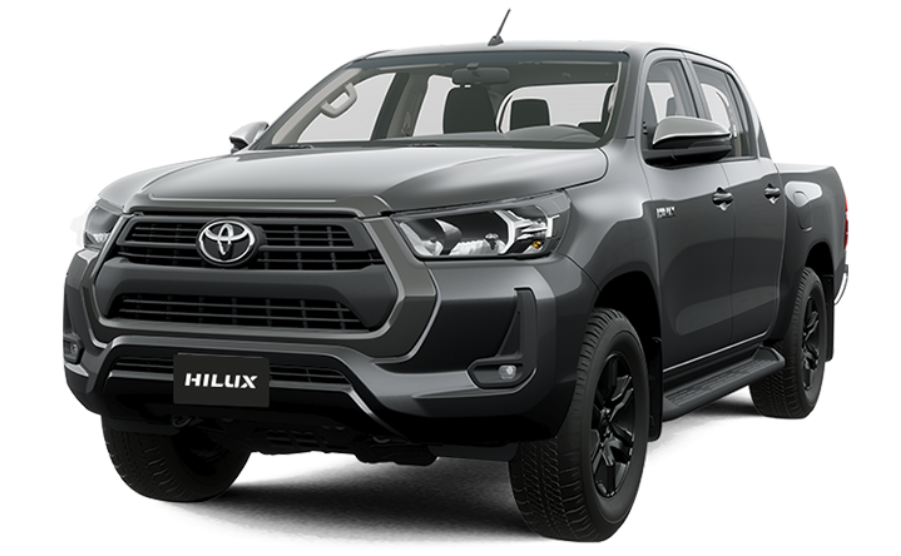
Put the Toyota Hilux vs Tundra side by side and one thing becomes obvious almost immediately: although both wear Toyota badges and both are built to work, they come from very different worlds.
The Hilux is the lean, globally proven workhorse. It has spent decades crawling through farms, mines, construction sites, deserts, muddy tracks, and crowded cities. The Tundra, meanwhile, is Toyota's full-size pickup aimed primarily at North America. It is wider, considerably more powerful, more spacious, and designed around heavier towing and highway use.
Think of it this way: the Hilux is a hiking boot. The Tundra is a steel-toe boot with an electric massage function.
Neither philosophy is inherently better.
For 2026, the contrast is especially interesting. Toyota Australia's current Hilux uses a 2.8-liter turbo-diesel four-cylinder across its diesel range, producing up to 150 kW and 500 Nm in regular automatic variants. Diesel 4x4 models can tow as much as 3,500 kg braked.
The 2026 Toyota Tundra takes a very different route. Toyota offers a twin-turbocharged V6 and an available i-FORCE MAX hybrid system producing as much as 437 hp and 583 lb-ft of torque, while maximum towing reaches 12,000 lb.
So, which one makes more sense?
Let's dig much deeper.
Content in this publication
- Toyota Hilux vs Tundra Quick Comparison
- Are the Toyota Hilux and Tundra Really Competitors?
- Toyota Hilux vs Tundra Engine Comparison
- Toyota Hilux vs Tundra Towing Capacity
- Toyota Hilux vs Tundra Payload
- Toyota Hilux vs Tundra Size
- Hilux vs Tundra Interior Space
- Toyota Hilux vs Tundra Bed Size
- Toyota Hilux vs Tundra Off Road
- Toyota Hilux vs Tundra Fuel Economy
- Toyota Hilux vs Tundra Ride Comfort
- Toyota Hilux vs Tundra Reliability
- Toyota Hilux vs Tundra Technology
- Hilux vs Tundra for Work
- Toyota Hilux vs Tundra for Family Use
- Toyota Hilux vs Tundra Price
- Hilux vs Tundra Modification Potential
- Toyota Hilux vs Tundra Pros and Cons
- Toyota Hilux vs Tundra: Which Is Better for Overlanding?
- Toyota Hilux vs Tundra: Which One Should We Choose?
- Toyota Hilux vs Tundra: Final Thoughts
- Frequently Asked Questions
Toyota Hilux vs Tundra Quick Comparison
Before getting lost in trim levels, tires, transfer cases, and torque figures, here is the basic picture.
| Feature | Toyota Hilux | Toyota Tundra |
|---|---|---|
| Pickup class | Midsize/global utility pickup | Full-size pickup |
| Typical engine | 2.8L turbo-diesel 4-cylinder | 3.4L twin-turbo V6 |
| Maximum regular output* | 150 kW / 500 Nm | 437 hp / 583 lb-ft with hybrid |
| Transmission | 6-speed manual or automatic | 10-speed automatic |
| Maximum towing* | 3,500 kg / 7,716 lb, diesel 4x4 | 12,000 lb / about 5,443 kg |
| Maximum payload* | Configuration dependent | Up to 1,850 lb |
| Drivetrain | 4x2 or 4x4 depending on version | 4x2 or 4x4 depending on version |
| Main strength | Efficiency, maneuverability, rugged work | Power, towing, cabin space |
| Best environment | Worksites, trails, narrow roads | Highways, towing, open roads |
| Global availability | Very broad | Mainly selected markets |
*Figures vary according to model, body style, trim and market.
Toyota lists maximum payload for the 2026 Tundra at 1,850 lb and offers 5.5-, 6.5- and 8.1-foot beds depending on configuration.
That table already tells us something important: comparing these trucks purely by horsepower misses the point.
Are the Toyota Hilux and Tundra Really Competitors?
Not exactly.
This is probably the biggest misconception surrounding the Toyota Hilux vs Toyota Tundra debate.
The Hilux sits in a smaller pickup category. Depending on the country, its more natural rivals include vehicles such as the Ford Ranger, Isuzu D-Max and Mitsubishi Triton.
The Tundra competes in the American full-size pickup arena.
That places it against much larger trucks.
So why compare them?
Because many buyers aren't necessarily shopping within a predefined segment. They're asking a simpler question: If we want a Toyota pickup, which type of Toyota truck makes more sense?
That's where this comparison becomes genuinely useful.
Toyota Hilux vs Tundra Engine Comparison
Hilux: Diesel Torque Over Drama
The current Australian-market Hilux keeps things relatively simple.
Toyota's 2026 range centers on a 2.8-liter four-cylinder turbo-diesel, producing 150 kW and up to 500 Nm with the automatic transmission. Manual variants produce 420 Nm.
That's roughly 201 hp.
On paper, it sounds modest beside the Tundra.
But horsepower is only half the story.
A Hilux diesel isn't trying to launch itself down an interstate like a sports sedan wearing work boots. Instead, it delivers useful torque low in the rev range, where we actually want it while climbing, towing, negotiating rough tracks, or carrying equipment.
Why the Hilux Engine Makes Sense
Its relatively small diesel engine can provide a useful blend of pulling ability and fuel efficiency.
For remote travel or commercial operation, that matters.
Fuel is money. Range is freedom.
And when a truck spends eight hours moving between job sites rather than towing a huge trailer across Texas, efficiency can matter more than an enormous horsepower number.
Tundra: Twin-Turbo Muscle
The Tundra plays another game entirely.
The 2026 model offers Toyota's twin-turbocharged i-FORCE V6 producing as much as 389 hp and 479 lb-ft, while the available i-FORCE MAX hybrid raises output to 437 hp and 583 lb-ft.
That's serious output.
Press the accelerator and the Tundra doesn't merely gather speed. It brings a wave of torque with it.
The Hybrid Isn't Just About Saving Fuel
It's worth understanding the purpose of the Tundra hybrid.
The i-FORCE MAX system isn't designed solely as an economy-focused hybrid in the traditional sense. The electric motor supplements the turbocharged gasoline engine, contributing to stronger output and immediate torque delivery.
In other words, Toyota uses electrification partly as a performance tool.
Toyota Hilux vs Tundra Towing Capacity
Here's where the difference in size begins turning into a difference in capability.
Current Australian diesel 4x4 Hilux models are rated to tow as much as 3,500 kg braked, equivalent to around 7,716 lb. Toyota's 4x2 versions can tow up to 2,900 kg depending on specification.
That's plenty for many caravans, work trailers, boats, and recreational loads.
The Tundra raises the ceiling considerably.
Toyota quotes maximum towing capacity of 12,000 lb, or roughly 5,443 kg, for the 2026 Tundra when correctly configured.
When Tundra's Extra Towing Capacity Matters
If we're regularly hauling a large travel trailer, heavy boat, car trailer, or substantial equipment, the Tundra's extra mass, torque and towing capacity become meaningful.
It's not simply about bragging rights.
A heavier tow vehicle can feel more settled when dealing with a substantial trailer, although actual stability still depends on configuration, load distribution, tires, trailer brakes, hitch equipment and legal weight limits.
When the Hilux Is More Than Enough
Suppose we're pulling a moderate caravan several weekends each year.
Do we actually need a 12,000-lb towing ceiling?
Maybe not.
Buying the bigger truck solely because its maximum number is higher can be like buying a commercial oven to make toast.
Useful capacity is the capacity we genuinely use.
Toyota Hilux vs Tundra Payload
Payload gets overlooked because towing figures make better advertisements.
Yet for a working pickup, payload can be even more important.
Toyota lists the 2026 Tundra's maximum payload at 1,850 lb, approximately 839 kg.
Hilux payload varies significantly because Toyota offers numerous body styles, including cab-chassis models that prioritize work capability.
For example, Toyota Australia's specification sheet shows significant differences in kerb weight and GVM across the Hilux lineup. A 4x4 WorkMate single-cab automatic can have a maximum kerb weight around 1,830 kg against a 3,065 kg GVM, illustrating why certain work-oriented versions offer substantial carrying potential before accessories and passengers are considered.
Payload Isn't Just What's in the Bed
Remember that payload can include:
- passengers;
- luggage;
- tools;
- aftermarket accessories;
- cargo;
- tow-ball or tongue weight;
- camping equipment.
That's why maximum advertised payload shouldn't automatically be treated as the amount we can throw into the bed while simultaneously carrying five adults and towing a trailer.
Real-world load calculations matter.
Toyota Hilux vs Tundra Size
Perhaps the most dramatic everyday difference isn't under the hood.
It's visible from the driver's seat when we're trying to park.
The Hilux is considerably easier to place on narrow roads.
For reference, Toyota lists a 2026 Hilux SR double-cab pickup at roughly 5,320 mm long and 1,855 mm wide, with a 3,085 mm wheelbase. Dimensions vary by grade.
A recent-generation Tundra CrewMax with the short bed measures around 233.6 inches long, approximately 5.93 meters, and 80.2 inches wide, or around 2.04 meters.
That's not a small difference.
Driving the Hilux in Town
In urban environments, the Hilux tends to feel far less cumbersome.
Narrow parking garages?
No problem compared with a full-size truck.
Tight supermarket parking spaces?
Still a pickup, but manageable.
Old mountain roads where two cars can barely squeeze past each other?
This is where the Hilux's smaller footprint starts feeling like an advantage rather than a compromise.
Driving the Tundra in Town
The Tundra can obviously function as a daily driver, and thousands of owners use trucks this size every day.
But geography matters.
You may be interested in reading Toyota Hilux vs Mitsubishi Triton: The Complete 2026 Comparison
A pickup designed around broad North American streets feels perfectly normal in Dallas or Phoenix.
Put that same vehicle into narrow streets, underground parking structures or dense European-style cities and suddenly every trip feels like steering a small yacht through a bathtub.
Hilux vs Tundra Interior Space
Now the pendulum swings toward the Tundra.
Big exterior dimensions buy us something: room.
Tundra Cabin Comfort
CrewMax versions are particularly spacious.
Recent Toyota specifications list CrewMax rear legroom at approximately 41.6 inches, making it genuinely accommodating for adult rear passengers.
The cabin also offers the sort of width we expect from a full-size American pickup.
Shoulders aren't fighting for territory. Storage is generous. Front occupants get that commanding, lounge-like feeling large pickups are famous for.
Hilux Cabin Comfort
A double-cab Hilux can still serve perfectly well as a five-seat family vehicle.
But the cabin is narrower, and the rear seating area generally feels more compact than a full-size Tundra CrewMax.
For kids, colleagues or occasional passengers, that's rarely a deal-breaker.
For four or five adults covering 1,000 kilometers in a day?
The Tundra's extra room starts earning its keep.
Toyota Hilux vs Tundra Bed Size
Here's another interesting twist.
Bigger truck doesn't automatically mean we get the exact bed configuration we want.
Toyota offers the Tundra with 5.5-, 6.5- and 8.1-foot beds, depending on cab and specification.
The long-bed Tundra is an absolute equipment-hauling machine, but combine a large cab and long bed and the truck becomes enormous.
The Hilux, by comparison, is available globally in multiple cab and cab-chassis configurations.
That makes it tremendously flexible for commercial users.
Want a custom aluminum tray?
Service body?
Farm setup?
Mining specification?
The Hilux's commercial heritage shines here.
Toyota Hilux vs Tundra Off Road
This comparison gets fascinating once the asphalt disappears.
Bigger isn't always better off road.
Why the Hilux Works So Well on Tight Trails
A shorter and narrower truck has obvious advantages.
We can thread it through trees more easily, choose better lines between rocks and navigate narrow tracks without constantly wondering whether our mirror is about to become part of the scenery.
The Hilux's global reputation was built partly in harsh environments where roads are optional.
Its ladder-frame construction, four-wheel-drive availability and work-focused configuration make it naturally suited to this role.
Where the Tundra Shines Off Road
The Tundra isn't helpless once the road ends.
Quite the opposite.
Toyota offers off-road-focused configurations including the TRD Off-Road package and TRD Pro, while the current truck uses a coil-spring multi-link rear suspension rather than a traditional leaf-spring setup.
TRD Pro versions add hardware intended for serious recreational off-road use.
The Tundra's major disadvantage is geometry created by sheer size.
Wide tracks and long wheelbases can make narrow trails challenging.
Open Desert Versus Forest Trail
Imagine two different landscapes.
On a wide desert trail, the Tundra's power, suspension travel and broad stance can feel fantastic.
On a narrow jungle route full of sharp turns?
We'd appreciate every centimeter the Hilux doesn't occupy.
Toyota Hilux vs Tundra Fuel Economy
No comparison between these trucks is complete without discussing the fuel bill.
Hilux Diesel Economy
Toyota Australia's 2026 specification sheet lists combined-cycle figures around 7.1-7.6 L/100 km for several 4x4 Hilux configurations, although the exact figure varies by grade and official laboratory consumption shouldn't be confused with guaranteed real-world economy.
Real driving can change dramatically with terrain, load, towing, speed, tires and accessories.
Still, the Hilux's diesel powertrain is fundamentally designed around efficiency and useful torque.
Tundra Fuel Consumption
The 2026 Tundra's official US ratings vary.
Toyota lists several conventional gasoline trims around 18 mpg city and 23 mpg highway, while a Limited i-FORCE MAX is listed at up to 20 mpg city and 24 mpg highway in its applicable configuration.
Again, towing can change everything.
Put a large trailer behind either truck and fuel consumption rises.
But when both pickups are running lightly loaded, the Hilux's smaller dimensions and diesel engine generally make it the more efficiency-minded tool.
Toyota Hilux vs Tundra Ride Comfort
Older pickups could bounce along an empty road like an excited goat.
Modern trucks are much better.
The Hilux still maintains a distinctly work-oriented character in many configurations, particularly where leaf-spring rear suspension is used.
Load the bed and the suspension begins making more sense.
The Tundra approaches the problem differently.
Its multi-link rear suspension with coil springs is designed to improve ride comfort, stability and handling while maintaining pickup capability.
Long-Distance Highway Driving
For long highway journeys, the Tundra has several natural advantages.
There's more cabin space, considerably more engine power and the relaxed character of a full-size pickup.
The Hilux counters with easier maneuverability and potentially lower fuel use.
One feels like a large touring machine.
The other feels like a durable multitool.
Toyota Hilux vs Tundra Reliability
Reliability discussions need nuance.
Both carry Toyota badges, but that doesn't mean they use identical mechanical systems.
The Hilux's reputation has been built over decades of use in demanding environments. Farms, mines, developing regions and commercial fleets have all contributed to its image as a durable vehicle.
The Tundra also has a long-standing name in the North American pickup market, but the modern generation uses sophisticated twin-turbocharged and hybridized powertrains rather than the naturally aspirated V8 layout associated with older Tundras.
That means we shouldn't assume historical reliability automatically predicts the ownership experience of every newer model.
Maintenance Environment Matters
There's another factor people rarely consider: support.
A Hilux can be remarkably easy to own in countries where it is everywhere.
Parts supply is strong. Mechanics know it. Dealers see hundreds of them.
Import a Tundra into a country where it isn't widely supported and the ownership equation can change.
Likewise, in the United States, Toyota's dealer network is prepared for the Tundra, whereas the Hilux isn't part of Toyota USA's normal new-vehicle lineup.
Reliability isn't merely whether something breaks.
It's also how easy it is to fix when it does.
Toyota Hilux vs Tundra Technology
The days when a work truck meant wind-up windows and an AM radio are fading.
You may be interested in readingToyota Hilux vs Mitsubishi Triton: The Complete 2026 ComparisonYou may be interested in reading
Toyota Hilux vs Nissan Navara: Which Ute Makes More Sense?The latest Hilux has received significant technology improvements, including updated multimedia, safety systems and electric power steering in the new Australian generation.
Higher-grade versions move well beyond traditional work-truck simplicity.
But the Tundra can climb further into luxury territory.
Large multimedia displays, premium audio, leather upholstery, panoramic roofs, advanced towing aids and high-end trims turn some versions into vehicles that feel closer to luxury SUVs with cargo beds.
Do We Actually Need All That Technology?
That depends on the job.
A contractor stepping into the cabin covered in dust may prefer durable surfaces and simple controls.
Someone using the truck for commuting, road trips and family duty might happily pay for heated seats, a giant screen and every camera Toyota can squeeze into the body.
Different lives. Different priorities.
Hilux vs Tundra for Work
If we're choosing strictly as a working vehicle, we should think beyond maximum horsepower.
The Hilux deserves serious consideration when the truck needs to operate efficiently, squeeze into confined sites and accept commercial conversions.
The Tundra becomes appealing when the work involves heavier trailers, long highway distances or bulky equipment.
Choose the Hilux Work Style When
The truck spends its life bouncing between job sites, carrying moderate loads, entering narrow construction areas, traveling long distances economically and tackling rough terrain.
Choose the Tundra Work Style When
The job revolves around towing heavier equipment, covering high-speed highways, carrying a crew comfortably or simply needing the physical size of a full-size pickup.
Toyota Hilux vs Tundra for Family Use
This category belongs much more naturally to the Tundra if space is the priority.
A CrewMax Tundra can swallow adults, child seats and road-trip gear with relative ease.
The Hilux double cab works as a family truck too, especially when vehicle dimensions matter.
Indeed, if we live somewhere with narrow streets, the theoretically "less spacious" Hilux could actually be easier to live with every day.
A vehicle's usefulness doesn't stop at the cabin door.
Parking matters too.
Toyota Hilux vs Tundra Price
Direct price comparisons can be misleading because these vehicles are often sold in completely different countries, currencies and tax structures.
In the United States, Toyota lists the 2026 Tundra from $41,260 MSRP, with high-end trims moving far beyond that figure.
In Australia, the new-generation Hilux range begins at A$33,990 before on-road costs for the entry-level 4x2 WorkMate single cab-chassis manual, according to Toyota Australia's launch information.
But currency conversion alone doesn't create a useful comparison.
Import duties, equipment levels, registration costs, taxes, insurance and local availability can dramatically alter ownership costs.
Hilux vs Tundra Modification Potential
Both trucks have enormous aftermarket ecosystems, although the products reflect different cultures.
Hilux accessories often focus heavily on expedition and commercial use.
Bull bars, snorkels, canopies, long-range tanks, suspension upgrades and service bodies are common.
Tundra modifications frequently revolve around towing, off-road suspension, larger tires, bed accessories, overlanding and visual customization.
Either truck can become an expensive adult Lego set surprisingly quickly.
Toyota Hilux vs Tundra Pros and Cons
No truck gets everything right.
The Hilux's strengths come largely from restraint. It gives us enough truck without turning every parking maneuver into a geometry exam. Its smaller diesel engine, manageable dimensions and work-focused engineering suit global conditions extremely well.
But that compactness also means less interior room and considerably less outright power.
The Tundra flips that equation.
Its generous cabin, enormous torque and stronger maximum towing capability make it feel effortless in situations where the Hilux works harder.
The price is physical size, greater fuel demand and reduced maneuverability.
That's the central theme of this entire comparison.
What looks like "more truck" on paper isn't automatically more useful.
Toyota Hilux vs Tundra: Which Is Better for Overlanding?
This depends heavily on where we're traveling.
For remote routes with tight tracks, limited fuel availability and long distances between towns, the Hilux's efficiency and global support network can be extremely attractive.
It's also widely used in regions where expedition travel commonly occurs.
The Tundra makes a different kind of overlander.
Its huge cabin can carry plenty of gear, its gasoline and hybrid powertrains provide abundant performance, and North America's aftermarket can turn it into an exceptionally capable camping machine.
However, its width and length demand more attention on narrow terrain.
Want to cross broad western American landscapes?
The Tundra makes a convincing case.
Want to thread through remote tracks in regions where Hilux parts seem to exist in every second workshop?
The smaller Toyota begins looking very sensible.
Toyota Hilux vs Tundra: Which One Should We Choose?
We shouldn't decide based solely on which truck has the bigger engine.
Instead, picture an ordinary Tuesday.
Where are we parking?
What are we towing?
How many people are coming?
How much fuel are we buying?
What does the road look like?
Where will the truck be serviced?
Those answers tell us more than horsepower ever will.
The Hilux makes the most sense when compact dimensions, diesel efficiency, rugged utility, off-road maneuverability and international parts availability matter most.
The Tundra makes more sense when our priorities are full-size cabin space, substantially greater power, stronger maximum towing capacity and relaxed highway performance.
Neither needs to defeat the other.
They're tools from the same manufacturer designed for different toolboxes.
Toyota Hilux vs Tundra: Final Thoughts
The Toyota Hilux vs Tundra comparison proves that bigger numbers don't necessarily create a better pickup.
The Tundra unquestionably brings more muscle. With up to 437 hp from its available hybrid powertrain and maximum towing of 12,000 lb, it operates on another level when heavy trailers and effortless acceleration enter the conversation.
The Hilux answers with something harder to express on a specification sheet: practicality through moderation.
It is narrower, lighter, more economical in diesel form and easier to maneuver. Current Australian 4x4 diesel versions still offer up to 3,500 kg of braked towing capacity, which is substantial for a midsize pickup.
So imagine these two trucks as traveling companions.
The Tundra arrives carrying the barbecue, refrigerator and half the house.
The Hilux arrives with exactly what it needs and somehow still finds a shortcut through the mountains.
Which approach works better?
That depends entirely on the journey.
Frequently Asked Questions
1. Is a Toyota Tundra bigger than a Hilux?
Yes. The Tundra is a full-size pickup and is substantially wider, longer and generally heavier than the Hilux. A representative Tundra CrewMax short-bed configuration is around 5.93 meters long and 2.04 meters wide, while a current Hilux SR double-cab pickup is around 5.32 meters long and 1.855 meters wide. Exact dimensions vary by configuration.
2. Which can tow more, Hilux or Tundra?
The Tundra has the higher maximum rating. Toyota quotes up to 12,000 lb, approximately 5,443 kg, for the properly configured 2026 Tundra. Current Australian diesel 4x4 Hilux variants are rated up to 3,500 kg braked.
3. Is the Tundra more powerful than the Hilux?
Yes, by a substantial margin. The available 2026 Tundra i-FORCE MAX hybrid delivers up to 437 hp and 583 lb-ft of torque. Regular automatic versions of the current Australian Hilux diesel produce 150 kW and 500 Nm.
4. Which is better off road, Toyota Hilux or Tundra?
They excel in different environments. The Hilux's narrower body and shorter overall footprint can make it easier to maneuver on technical or confined trails. The Tundra offers specialized off-road equipment through options such as TRD Off-Road and TRD Pro, but its larger dimensions can become a disadvantage on narrow tracks.
You may be interested in readingToyota Hilux vs Mitsubishi Triton: The Complete 2026 ComparisonYou may be interested in reading
Toyota Hilux vs Nissan Navara: Which Ute Makes More Sense?You may be interested in reading
Toyota Hilux or Ford Ranger: Which Ute Makes More Sense?5. Why doesn't the Hilux compete directly with the Tundra?
Because they occupy different pickup categories. The Hilux is a smaller global utility vehicle focused strongly on commercial work, efficiency and rough-road versatility. The Tundra is a North American-style full-size pickup built around greater power, towing capability, passenger space and long-distance comfort. Comparing them therefore makes the most sense when deciding between two different styles of Toyota pickup ownership rather than two equivalent models.
If you want to know other articles similar to Toyota Hilux vs Tundra: Which Toyota Pickup Fits Your Life? you can visit the category Models.
Peugeot RCZ Models: Complete Guide to Versions, Trims and Engines
Toyota Hilux Like Cars: The Best Alternatives Worth Considering
Toyota Hilux and Fortuner Same Engine: Are They Really Identical?
Toyota Hilux vs Mazda BT-50: Which Ute Makes More Sense?
Toyota Hilux vs Prado: Which Toyota 4WD Makes More Sense?
Toyota Hilux vs Land Cruiser: Which Toyota 4x4 Makes More Sense?
Leave a Reply
More content of your interest