
Toyota Hilux vs Tacoma: Which Toyota Pickup Makes More Sense?

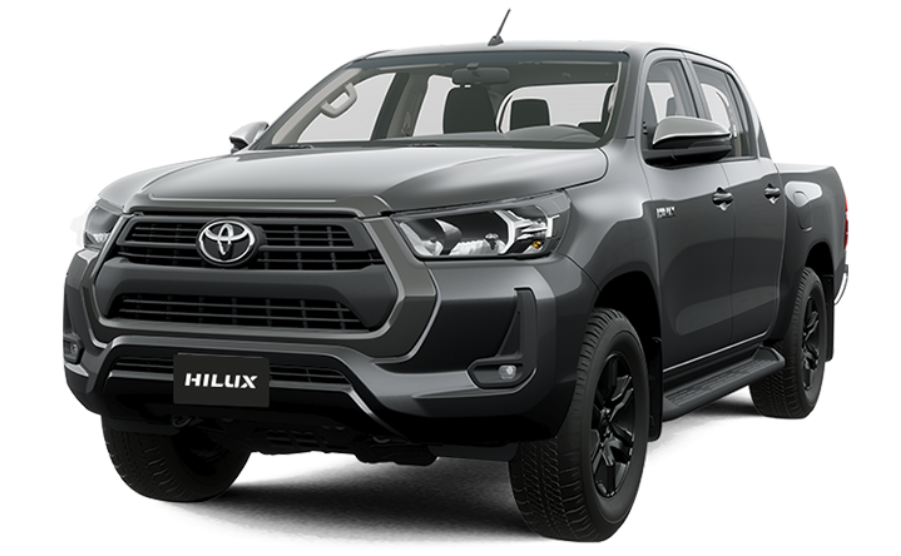
Put the Toyota Hilux vs Tacoma side by side and, at first glance, they look like two branches of the same family tree. Both wear Toyota badges, both have serious reputations for toughness, and both can haul gear, tackle dirt roads, and survive the sort of treatment that would make a normal crossover beg for mercy.
Yet they are surprisingly different trucks.
The Toyota Hilux has traditionally been designed around the needs of global markets, where diesel torque, payload, durability, compact dimensions, and commercial use matter enormously. The Toyota Tacoma, meanwhile, has been shaped primarily for North America, where buyers expect stronger acceleration, bigger cabins, sophisticated off-road technology, automatic transmissions, larger infotainment screens, and increasingly luxurious trim levels.
So asking whether the Hilux or Tacoma is better is a little like comparing hiking boots with heavy-duty work boots. Both can get muddy, but they were designed with slightly different jobs in mind.
In this Toyota Hilux vs Tacoma comparison, we will examine engines, towing, payload, dimensions, comfort, reliability, off-road performance, running costs, technology, and everyday usability to work out where each truck really shines.
Content in this publication
- Toyota Hilux vs Tacoma at a Glance
- What Is the Main Difference Between a Hilux and Tacoma?
- Toyota Hilux vs Tacoma Engine Comparison
- Toyota Hilux vs Tacoma Towing Capacity
- Hilux vs Tacoma Payload
- Toyota Hilux vs Tacoma Size
- Toyota Hilux vs Tacoma Interior
- Hilux vs Tacoma Rear Seat Space
- Toyota Hilux vs Tacoma Off-Road
- Toyota Tacoma Trailhunter vs Hilux
- Hilux vs Tacoma Fuel Economy
- Toyota Hilux vs Tacoma Reliability
- Hilux vs Tacoma Maintenance Costs
- Toyota Hilux vs Tacoma for Work
- Toyota Hilux vs Tacoma as a Daily Driver
- Tacoma vs Hilux Transmission Choices
- Toyota Hilux vs Tacoma Modification Potential
- Toyota Hilux vs Tacoma Resale Value
- Toyota Hilux vs Tacoma Price
- Who Should Choose the Toyota Hilux?
- Who Should Choose the Toyota Tacoma?
- Toyota Hilux vs Tacoma: The Practical Comparison
- Conclusion: Toyota Hilux vs Tacoma
- Frequently Asked Questions
Toyota Hilux vs Tacoma at a Glance
Before digging into the details, here is the basic personality of each pickup.
| Category | Toyota Hilux | Toyota Tacoma |
|---|---|---|
| Primary markets | Global | Mainly North America |
| Typical engine focus | Turbo-diesel | Turbo petrol / hybrid |
| Character | Workhorse | Lifestyle/adventure truck |
| Cab configurations | Extensive | XtraCab / Double Cab |
| Towing emphasis | Very strong | Strong |
| Payload emphasis | Strong | Moderate to strong |
| Highway refinement | Good | Generally more refined |
| Off-road capability | Excellent | Excellent |
| Technology | Practical | More sophisticated |
| Modification culture | Huge globally | Huge in North America |
| Fuel-efficiency focus | Strong diesel economy | Petrol/hybrid performance |
| Luxury trims | Available | Extensive |
The interesting part is that neither truck is simply a rebadged version of the other. They sit on different platforms and have been developed around different customer expectations.
What Is the Main Difference Between a Hilux and Tacoma?
The easiest way to understand the difference is to consider where they live.
The Hilux has to work virtually everywhere.
It might spend Monday carrying construction materials in Australia, Tuesday crawling through rough terrain in Africa, and Wednesday serving as a family vehicle in Southeast Asia. Toyota therefore gives the Hilux a strong commercial backbone.
The Tacoma has evolved around the American midsize pickup market.
Its competitors include trucks such as the Ford Ranger, Chevrolet Colorado, GMC Canyon, and Nissan Frontier. Buyers in that segment increasingly want their pickup to function simultaneously as an off-road toy, commuter vehicle, family car, and weekend adventure machine.
That changes everything from engine tuning to suspension design.
Hilux Philosophy: Function First
The Hilux formula has traditionally emphasized:
- Diesel torque
- High payload capability
- Simple, durable construction
- Strong towing ratings
- Wide commercial configurations
- Long-distance efficiency
- Repairability in remote regions
It is the truck that shows up wearing work boots.
Tacoma Philosophy: Adventure First
The Tacoma emphasizes:
- Turbocharged performance
- Hybrid availability
- Advanced off-road systems
- Larger interior technology
- Trail-oriented trims
- Greater cabin refinement
- Lifestyle accessories
The Tacoma shows up wearing hiking boots, carrying a rooftop tent and probably a mountain bike.
Different priorities, same Toyota DNA.
Toyota Hilux vs Tacoma Engine Comparison
This is where the personalities separate dramatically.
Current Hilux offerings vary considerably between countries, but diesel remains central to the model in major markets.
For example, Toyota Australia's current Hilux range uses a 2.8-liter four-cylinder turbo-diesel in many variants, producing up to 150 kW and 500 Nm with the automatic transmission. Some versions incorporate Toyota's V-Active 48V technology.
The 2026 Tacoma takes another route.
Its lineup centers around Toyota's 2.4-liter turbocharged i-FORCE petrol engine, while higher versions can use the i-FORCE MAX hybrid powertrain. Toyota quotes up to 326 horsepower and 465 lb-ft of torque for the hybrid configuration.
Hilux Diesel Character
Diesel changes how the Hilux feels.
You do not necessarily get the same urgent acceleration as a powerful Tacoma, but torque arrives in the sort of way that feels useful when:
- climbing steep hills,
- pulling trailers,
- crawling over obstacles,
- carrying substantial loads,
- or travelling long distances.
Instead of shouting, the diesel simply rolls up its sleeves and gets to work.
Tacoma Turbo and Hybrid Character
The Tacoma feels more performance-oriented.
Particularly with the i-FORCE MAX hybrid, there is considerably more power available than most traditional Hilux configurations.
That makes the Tacoma feel happier when accelerating onto highways, overtaking, climbing quickly, or simply enjoying the engine.
Which Engine Is Better?
It depends entirely on what we are asking it to do.
For long-distance work, fuel efficiency and diesel torque, the Hilux formula remains extremely attractive.
For power, acceleration and modern hybrid performance, the Tacoma has the stronger hand.
Toyota Hilux vs Tacoma Towing Capacity
Here we need to be careful.
Towing ratings are certified differently between countries, and equipment, drivetrain, body style, trailer brakes, payload and local regulations can alter what a specific truck can legally tow.
That means comparing headline towing figures between an Australian Hilux and American Tacoma is not perfectly apples-to-apples.
Still, the published figures reveal their priorities.
Toyota Australia currently lists up to 3,500 kg of braked towing capacity for diesel Hilux 4x4 variants.
Toyota quotes the 2026 Tacoma at up to 6,500 lb, approximately 2,950 kg, depending on configuration.
On those published ratings, the Hilux carries the larger headline figure.
Why Maximum Towing Is Not Everything
Maximum towing figures make fantastic advertising material, but we should never evaluate a towing vehicle using that number alone.
We also need to consider:
- Payload
- Gross vehicle mass
- Gross combined mass
- Trailer tongue weight
- Passengers
- Accessories
- Bull bars
- Canopies
- Camping equipment
- Local regulations
A truck theoretically capable of towing a large trailer may hit another weight limit first once four passengers and hundreds of kilograms of equipment are added.
Tacoma Towing Technology
Where the Tacoma fights back is technology.
Toyota offers features such as Trailer Back Up Guide, Straight Path Assist, an available trailer brake controller, camera systems, and trailer-related blind-spot assistance on suitable configurations.
So while the Hilux can look stronger on raw published towing capacity, the Tacoma may offer the more sophisticated towing experience.
Hilux vs Tacoma Payload
Payload is another area where the Hilux's commercial roots become obvious.
Hilux specifications differ enormously between single-cab, extra-cab and double-cab models. Some work-focused versions are configured to carry substantial loads, while lifestyle models carrying additional equipment naturally sacrifice some payload.
Tacoma's 2026 maximum published payload reaches approximately 1,705 lb, or around 773 kg, depending on configuration.
The lesson here is simple: never assume the expensive off-road trim carries the most.
Heavy bumpers, larger wheels, hybrid components, skid plates and comfort equipment all consume available payload.
If hauling weight is the priority, look at the certification plate of the exact vehicle rather than relying on a model-wide headline.
Toyota Hilux vs Tacoma Size
Park them beside one another and the Tacoma generally gives off the larger impression.
The Hilux remains relatively manageable because many international customers regularly drive through narrower streets, construction sites and trails where a full-width American-style truck becomes awkward.
Current Australian Hilux double-cab pickup configurations sit around 5.32 metres long, with a wheelbase of approximately 3.085 metres, although dimensions vary by variant.
Tacoma dimensions depend heavily on cab and bed configuration, particularly because buyers can combine Double Cab arrangements with different bed lengths.
Why Hilux Dimensions Can Be an Advantage
Smaller exterior dimensions help when we are:
- navigating narrow trails,
- parking in cities,
- working on construction sites,
- driving through older streets,
- squeezing between trees,
- or travelling in countries where roads were never designed around wide trucks.
Sometimes smaller really is smarter.
Why Tacoma Size Can Be an Advantage
The Tacoma uses its footprint differently.
A longer wheelbase and wider stance can improve stability and provide additional cabin and cargo flexibility.
If our roads, garage and parking spaces can accommodate it, the Tacoma's extra scale may feel more comfortable rather than cumbersome.
Toyota Hilux vs Tacoma Interior
Climb inside and the Tacoma's North American focus becomes obvious.
Modern Tacoma trims can feel much more like rugged SUVs than basic work trucks. Large displays, advanced camera systems, digital instrumentation, premium audio options and sophisticated off-road controls are all part of the recipe.
The Hilux cabin has improved dramatically over generations, but it generally maintains a stronger focus on durability.
That can actually be a benefit.
Hilux Interior Strengths
A Hilux cabin often makes sense when muddy work boots, tools, dust and rough usage are part of normal life.
Controls tend to be straightforward, visibility is good, and lower grades avoid unnecessary complexity.
You may be interested in reading Toyota Hilux vs Ford Raptor: Which Pickup Fits Your Life?
Higher-spec Hilux models still bring plenty of comfort, but the overall atmosphere remains more utilitarian.
Tacoma Interior Strengths
The Tacoma generally feels more lifestyle-focused.
Depending on specification, buyers can find:
- Large touchscreens
- Digital instrument displays
- Multiple cameras
- Wireless smartphone integration
- Premium audio
- Heated and ventilated seating
- Advanced power outlets
- Trail-specific displays
It feels more like a modern adventure vehicle.
Hilux vs Tacoma Rear Seat Space
This becomes important if our pickup doubles as the family car.
Neither vehicle should automatically be expected to deliver limousine-like second-row accommodation. Pickup packaging forces compromises because the cabin shares wheelbase space with the cargo bed.
Still, Double Cab versions make family use entirely realistic.
Tacoma's cabin can feel wider, while Hilux rear accommodation tends to be more compact.
If adults regularly travel in the back, sitting in both trucks before buying matters far more than studying a specification sheet.
A measurement cannot tell us whether our knees will complain after three hours.
Toyota Hilux vs Tacoma Off-Road
Now things get interesting.
Both trucks can be extremely capable off-road, but once again they approach the problem differently.
The Hilux brings traditional toughness.
The Tacoma brings traditional toughness plus an enormous amount of electronic assistance.
Hilux Off-Road Advantages
Depending on market and specification, Hilux 4x4 models can provide features such as:
- Low-range four-wheel drive
- Rear differential lock
- Strong underbody clearance
- Durable suspension architecture
- Excellent low-speed diesel torque
- Off-road driving modes on selected grades
Its relatively compact dimensions are also useful on tight trails.
The Hilux often feels like a mechanical tool.
Tacoma Off-Road Advantages
The Tacoma takes things further on dedicated off-road versions.
Toyota's current lineup includes TRD Off-Road, TRD Pro and Trailhunter variants, with technology such as Multi-Terrain Select, CRAWL Control, available electronically locking rear differential, Multi-Terrain Monitor cameras and Stabilizer Disconnect Mechanism on relevant configurations.
Then we have specialist hardware.
TRD Pro and Trailhunter models can bring substantial suspension upgrades, larger all-terrain tires, additional protection and equipment developed specifically for recreational off-roading.
Hilux vs Tacoma for Serious Trails
On remote expeditions, simplicity can be priceless.
The Hilux's global support network, diesel range and proven work-truck personality make it appealing where the nearest workshop may be hundreds of kilometres away.
On recreational North American trails, however, the Tacoma's factory off-road packages are extremely compelling.
It arrives from the showroom almost ready to play.
Toyota Tacoma Trailhunter vs Hilux
The Trailhunter demonstrates just how far Tacoma has moved toward the overlanding market.
Toyota equips it specifically for extended off-road travel rather than simply styling it to look adventurous.
The 2026 Trailhunter uses the i-FORCE MAX hybrid powertrain and includes specialized suspension and protection hardware.
A Hilux can absolutely become an extraordinary overlanding machine.
In fact, the global aftermarket contains everything from long-range tanks to snorkels, suspension kits, trays, canopies and complete camper conversions.
But the difference is philosophical.
With the Tacoma Trailhunter, Toyota has done more of that thinking before we arrive.
Hilux vs Tacoma Fuel Economy
Fuel economy is difficult to compare directly because the trucks use different fuels and are certified under different national testing systems.
Still, diesel Hilux models usually have a natural advantage when long-distance efficiency becomes the priority.
Toyota Australia, for example, publishes combined laboratory fuel-consumption figures around the low-to-mid 7 L/100 km range for several current diesel Hilux configurations, although actual consumption varies significantly with load, driving and equipment.
The Tacoma's petrol and hybrid configurations operate under American EPA methodology, so placing their MPG figures directly beside Australian L/100 km numbers without context would be misleading.
The Real-World Question
Instead of asking which truck wins the laboratory test, we would ask:
Where will we actually drive?
A diesel Hilux can make tremendous sense for long rural journeys.
A Tacoma hybrid may make more sense for someone who wants stronger performance while reducing the fuel penalty associated with a powerful petrol truck.
Toyota Hilux vs Tacoma Reliability
Both names carry strong reputations, but reliability cannot simply be inherited from a badge.
Generation, engine, transmission, maintenance quality and driving environment matter.
The Hilux has accumulated decades of credibility in extremely demanding conditions. Mining operations, farms, remote communities and commercial fleets have effectively conducted enormous real-world durability experiments on it.
Tacoma has built its own impressive reputation, particularly in North America.
However, modern versions of both trucks are more complicated than their ancestors.
Turbochargers, emissions equipment, hybrid systems, cameras, sensors and electronic driver aids bring benefits, but they also mean today's trucks should not be evaluated as if they were simple pickups from the 1990s.
Which One Is Simpler?
Traditional diesel Hilux configurations tend to maintain a comparatively work-focused philosophy.
Tacoma's latest turbo and hybrid systems are considerably more sophisticated.
That does not automatically make one reliable and the other unreliable.
It simply means they achieve durability through different engineering approaches.
Hilux vs Tacoma Maintenance Costs
Location may matter more than the truck itself.
If we own a Hilux in Australia, Thailand, South Africa, Colombia or another major Hilux market, parts availability and technician familiarity can be excellent.
Try owning one somewhere it was never officially sold and the story changes.
The reverse applies to Tacoma.
In the United States and Canada, Tacoma parts, specialists and accessories are everywhere.
Import one into a market where Toyota never officially offered that configuration and even an ordinary component might become expensive.
Our Rule for Imported Trucks
Before importing either pickup, check:
- Parts availability.
- Dealer diagnostic capability.
- Engine compatibility with local fuel.
- Emissions regulations.
- Insurance availability.
- Registration requirements.
- Warranty validity.
Buying the truck is only the first chapter.
Living with it writes the rest of the book.
Toyota Hilux vs Tacoma for Work
For pure commercial duty, the Hilux usually makes more sense.
Why?
Because Toyota offers it in configurations designed around businesses rather than enthusiasts.
Depending on market, buyers can find single-cab, extra-cab, double-cab, cab-chassis and pickup arrangements.
That flexibility matters tremendously.
A plumber may want a tray.
A mining company may want a stripped-out single cab.
You may be interested in readingToyota Hilux vs Ford Raptor: Which Pickup Fits Your Life?You may be interested in reading
Toyota Hilux vs Land Cruiser: Which Toyota 4x4 Makes More Sense?A farm may want a dual-purpose double cab.
A recreational buyer may want an upmarket 4x4.
The Hilux can wear all of those uniforms.
Where Tacoma Still Works Well
Do not mistake luxury for weakness.
The Tacoma can absolutely haul equipment, tow trailers and perform genuine truck duties.
But its range is increasingly centered on the owner who wants a truck both for work and recreation.
Toyota Hilux vs Tacoma as a Daily Driver
Here we would lean toward the Tacoma's design philosophy.
Modern Tacoma variants can provide more sophisticated suspension setups, quieter cabins and more extensive convenience technology.
The Hilux remains perfectly usable every day, but its commercial roots occasionally peek through.
An unloaded leaf-sprung pickup can never completely forget that it was designed to carry weight.
City Driving
The Hilux's dimensions can make it easier in congested environments.
The Tacoma's size may become noticeable in:
- tight parking structures,
- narrow streets,
- small garages,
- crowded urban centers.
On big American roads, that barely matters.
On narrow European or Latin American streets, it certainly can.
Tacoma vs Hilux Transmission Choices
Current Hilux availability depends on market, but manual transmissions remain available in selected versions alongside six-speed automatics.
Toyota's current Australian range, for example, includes both manual and automatic diesel configurations.
Tacoma buyers can also still find something increasingly rare: a manual gearbox.
The 2026 Tacoma offers a six-speed manual on applicable configurations, while an eight-speed automatic is used elsewhere.
That deserves applause.
Manual pickup trucks are becoming an endangered species.
Toyota Hilux vs Tacoma Modification Potential
Trying to decide which has the larger aftermarket is almost impossible because geography changes the answer.
Hilux Aftermarket
Globally, Hilux modification options are staggering.
Popular upgrades include:
- Suspension lifts
- Bull bars
- Winches
- Snorkels
- Canopies
- Tray systems
- Long-range fuel tanks
- Rooftop tents
- Underbody protection
- Auxiliary batteries
In Australia especially, building a Hilux can become a hobby all by itself.
Tacoma Aftermarket
In North America, Tacoma modification culture is equally enormous.
There are bumpers, rock sliders, bed racks, suspension systems, wheels, skid plates, camper shells, lighting systems and practically every overlanding accessory imaginable.
Want to transform a Tacoma into something resembling a moon rover?
Someone probably sells the parts.
Toyota Hilux vs Tacoma Resale Value
Both trucks can hold value well in markets where demand is strong.
The bigger factor is usually whether the vehicle is officially supported locally.
A mainstream Hilux in a major Hilux market may attract buyers immediately.
An imported Tacoma might command a premium because of rarity—or struggle because buyers fear parts availability.
Likewise, a Hilux imported into the United States may be fascinating to enthusiasts but nowhere near as straightforward to sell as a locally supported Tacoma.
Rarity and desirability are not always the same thing.
Toyota Hilux vs Tacoma Price
Comparing MSRP directly makes little sense because Toyota does not position these pickups in identical markets.
Taxes, import duties, equipment and currency differences can overwhelm the base price.
What we should compare is value within each truck's intended market.
The Hilux range typically stretches from basic commercial vehicles to premium recreational grades.
Tacoma follows a similar ladder but pushes further into expensive specialist territory with versions such as TRD Pro and Trailhunter.
In the United States, the 2026 Tacoma lineup spans everything from comparatively simple SR models to highly equipped off-road versions costing dramatically more.
Who Should Choose the Toyota Hilux?
The Hilux makes particular sense when we prioritize:
- Heavy-duty everyday work
- Diesel fuel economy
- High published towing capacity
- Payload
- Rural use
- Commercial configurations
- Global parts availability
- Long-distance touring
- Simpler functionality
- Tight roads and trails
It is particularly convincing in countries where Toyota dealers, independent mechanics and parts suppliers already understand it.
The Hilux's biggest strength might not be one spectacular specification.
It is how many different jobs it can quietly perform.
Who Should Choose the Toyota Tacoma?
The Tacoma makes more sense when we prioritize:
- Strong acceleration
- Turbo petrol performance
- Hybrid power
- Factory off-road technology
- Interior technology
- Recreational off-roading
- North American parts support
- Extensive lifestyle accessories
- Everyday comfort
- Premium off-road trims
If our truck spends Monday commuting, Saturday climbing a rocky trail and Sunday carrying mountain bikes, the Tacoma's personality fits beautifully.
Toyota Hilux vs Tacoma: The Practical Comparison
Strip away the marketing and this comparison becomes surprisingly simple.
The Hilux is fundamentally a work truck that has learned how to be comfortable.
The Tacoma is fundamentally a midsize lifestyle truck that remains capable of serious work.
Those sentences are not absolute—there are luxurious Hilux models and very practical Tacomas—but they explain the engineering priorities remarkably well.
Choose Based on Environment, Not Ego
A 326-hp hybrid Tacoma sounds irresistible until diesel availability, payload or parts support becomes more important.
A 3,500-kg-rated diesel Hilux sounds unbeatable until we realize our actual life consists of commuting, weekend trails and carrying camping gear.
Specifications tell us what a truck can do.
Our lifestyle tells us what it needs to do.
Conclusion: Toyota Hilux vs Tacoma
The Toyota Hilux vs Tacoma debate does not produce one universal winner because Toyota designed these pickups for different worlds.
The Hilux remains an extraordinarily versatile global workhorse. Its diesel torque, commercial configurations, useful dimensions, strong payload potential and impressive published towing ratings make it especially attractive for demanding work, remote travel and long-distance touring.
The Tacoma takes Toyota's truck durability philosophy and wraps it in a more modern North American adventure package. Turbocharged engines, an available hybrid drivetrain, advanced trail technology and specialized models such as the TRD Pro and Trailhunter make it enormously appealing for drivers who treat a pickup as both transportation and recreation.
If we picture our truck covered in tools, towing equipment and dust five days a week, the Hilux formula is compelling.
If we picture it commuting during the week and disappearing into the mountains every Saturday morning, Tacoma starts making a great deal of sense.
Both trucks can get dirty.
They simply arrive at the trailhead from different directions.
Frequently Asked Questions
1. Is the Toyota Hilux the same as the Toyota Tacoma?
No. The Hilux and Tacoma are separate pickup models developed around different markets and customer requirements. The Hilux is sold widely around the world and has a strong commercial focus, while the Tacoma is primarily targeted at the North American midsize pickup market.
2. Is the Toyota Hilux bigger than the Tacoma?
Generally, no. The Tacoma typically has a larger footprint, particularly in longer cab and bed configurations. The Hilux's more compact dimensions can make it easier to operate on narrow roads, trails and crowded urban streets.
3. Which can tow more, Toyota Hilux or Tacoma?
Published ratings depend on configuration and country. Current Australian diesel Hilux 4x4 models can be rated to tow up to 3,500 kg with a braked trailer, while Toyota quotes the 2026 Tacoma at up to 6,500 lb, or roughly 2,950 kg. Certification standards differ between markets, however, so those headline figures should not be treated as a perfectly direct comparison.
4. Is the Tacoma more powerful than the Hilux?
In their mainstream current configurations, the most powerful Tacoma is substantially stronger on paper. The 2026 Tacoma i-FORCE MAX hybrid produces up to 326 hp and 465 lb-ft of torque, while Toyota Australia's 2.8-liter diesel Hilux produces up to 150 kW and 500 Nm. Their engines serve different purposes: Tacoma emphasizes horsepower and acceleration, while Hilux diesel tuning emphasizes usable low-speed torque and efficiency.
5. Which is better off-road, Hilux or Tacoma?
Both are highly capable when properly equipped. The Hilux combines compact dimensions, diesel torque and traditional 4x4 toughness, while Tacoma models such as TRD Off-Road, TRD Pro and Trailhunter provide more specialized factory off-road hardware and electronic assistance. The better choice depends on whether we value rugged simplicity and global support or advanced trail technology and factory-built recreational capability.
You may be interested in readingToyota Hilux vs Ford Raptor: Which Pickup Fits Your Life?You may be interested in reading
Toyota Hilux vs Land Cruiser: Which Toyota 4x4 Makes More Sense?You may be interested in reading
Toyota Hilux vs Prado: Which Toyota 4WD Makes More Sense?If you want to know other articles similar to Toyota Hilux vs Tacoma: Which Toyota Pickup Makes More Sense? you can visit the category Models.
Peugeot RCZ Models: Complete Guide to Versions, Trims and Engines
Toyota Hilux Like Cars: The Best Alternatives Worth Considering
Toyota Hilux and Fortuner Same Engine: Are They Really Identical?
Toyota Hilux vs Mazda BT-50: Which Ute Makes More Sense?
Toyota Hilux vs Prado: Which Toyota 4WD Makes More Sense?
Toyota Hilux vs Land Cruiser: Which Toyota 4x4 Makes More Sense?
Leave a Reply
More content of your interest