

Toyota Hilux vs Prado: Which Toyota 4WD Makes More Sense?

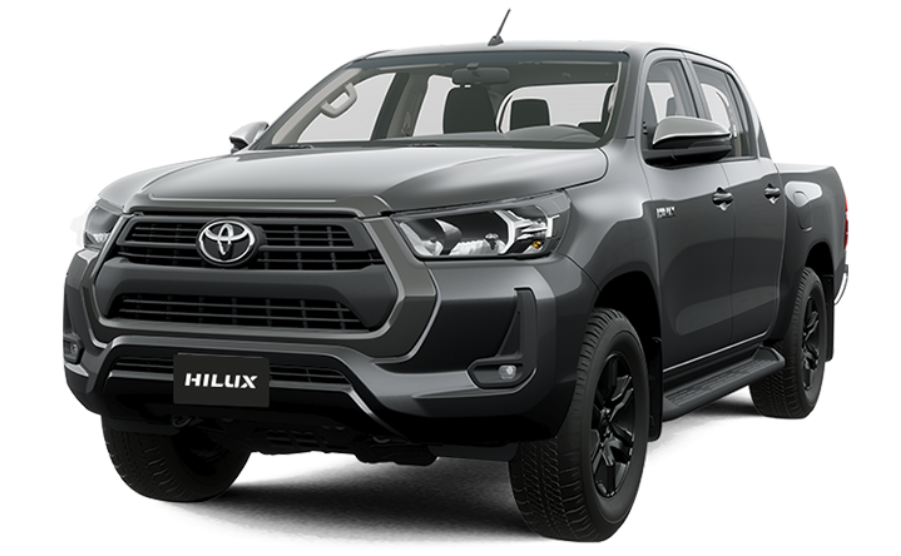
The Toyota Hilux vs Prado debate looks simple until we actually start comparing what these two vehicles are built to do. Both wear the Toyota badge. Both have serious off-road credibility. Both can tow, travel long distances, deal with rough roads, and survive the sort of conditions that would make an ordinary crossover turn around and go home.
Yet they approach those jobs from completely different directions.
The Toyota Hilux is fundamentally a ute. Its tray, chassis, suspension and broad model range are designed around work, cargo and versatility. The Toyota LandCruiser Prado, meanwhile, is a body-on-frame SUV designed to carry people comfortably while retaining genuine four-wheel-drive capability.
Think of them as two people wearing the same hiking boots. One arrives carrying a toolbox; the other has a family, camping gear and a road-trip playlist.
So which one should we choose?
Let's break down the Toyota Hilux vs Prado comparison across performance, towing, off-road capability, comfort, practicality, fuel economy, family use and long-distance touring.
Content in this publication
- Toyota Hilux vs Prado: Quick Answer
- Toyota Hilux vs Prado Specifications at a Glance
- Shared Toyota DNA, Completely Different Jobs
- Toyota Hilux vs Prado Engine Performance
- Toyota Hilux vs Prado Towing Capacity
- Toyota Hilux vs Prado Payload and Cargo Space
- Toyota Hilux vs Prado Ride Comfort
- Toyota Hilux vs Prado Off-Road Capability
- Which Is Better in Difficult Terrain?
- Toyota Hilux vs Prado Dimensions
- Toyota Hilux vs Prado Interior
- Toyota Hilux vs Prado for Families
- Toyota Hilux vs Prado for Work
- Toyota Hilux vs Prado Fuel Economy
- Toyota Hilux vs Prado Reliability
- Toyota Hilux vs Prado Maintenance Costs
- Toyota Hilux vs Prado for Camping
- Toyota Hilux vs Prado for Long-Distance Touring
- Toyota Hilux vs Prado for Towing a Caravan
- Toyota Hilux vs Prado for City Driving
- Toyota Hilux vs Prado Resale Considerations
- Toyota Hilux vs Prado: Which One Should We Buy?
- Toyota Hilux vs Prado: Closing Thoughts
- Frequently Asked Questions
Toyota Hilux vs Prado: Quick Answer
For buyers who regularly carry tools, dirty equipment, building materials, motorcycles or bulky loads, the Toyota Hilux makes more sense. Its separate cargo tray and work-oriented design give it an advantage that an SUV simply cannot replicate.
The Toyota Prado makes more sense when passenger comfort, cabin storage, long-distance touring and family practicality matter more than an open load bed.
Interestingly, current Australian versions can be surprisingly similar mechanically. Automatic HiLux diesel variants produce up to 150 kW and 500 Nm, while the current Prado's 2.8-litre turbo-diesel also produces 150 kW and 500 Nm. Diesel 4x4 HiLux models and the Prado can also be rated to tow up to 3,500 kg braked, depending on the exact specification and regulatory requirements.
The engines may speak a similar language, then, but everything surrounding them changes the conversation.
Toyota Hilux vs Prado Specifications at a Glance
Using current Australian-market models as a reference gives us a useful idea of how differently these Toyotas are packaged.
| Feature | Toyota Hilux | Toyota Prado |
|---|---|---|
| Vehicle type | Ute / pickup | Body-on-frame SUV |
| Main purpose | Work, cargo, towing, recreation | Family touring, towing, off-road travel |
| Typical seating | Up to 5 | 5 or 7 depending on grade |
| Diesel engine | 2.8L turbo-diesel | 2.8L turbo-diesel |
| Max output on relevant automatic grades | 150 kW | 150 kW |
| Max torque | 500 Nm | 500 Nm |
| Automatic transmission | 6-speed | 8-speed |
| 4WD type | Part-time on 4x4 models | Full-time 4WD |
| Maximum braked towing | Up to 3,500 kg | Up to 3,500 kg |
| Rear suspension concept | Rigid axle with leaf springs | Four-link solid/rigid rear axle |
| Cargo concept | Separate tray | Enclosed luggage area |
| Best suited to | Work and mixed-use driving | Touring and passenger use |
Exact specifications vary considerably by country, model year, body configuration and trim, so we should always check the specifications of the particular vehicle we are buying.
Current Australian Toyota specifications show the HiLux range using 2.8-litre turbo-diesel power, with selected automatic variants adding 48V V-Active technology. The Prado uses a 2.8-litre turbo-diesel with Toyota's 48V V-Active system and an eight-speed automatic transmission.
The Hilux Starts Life as a Workhorse
The Hilux has spent decades building its reputation around one basic idea: it needs to work.
That's visible everywhere.
Behind the cabin sits a separate tray or load area. Underneath, the rear suspension has traditionally been engineered with load carrying in mind. Toyota's current HiLux continues to use an independent front suspension and rigid leaf-sprung rear arrangement, with different suspension tuning depending on whether a version is focused more heavily on work or recreational use.
That matters enormously.
Throw muddy tools, bags of cement, firewood or mountain bikes into the tray and we don't have to worry about destroying expensive interior carpeting.
For tradespeople and rural owners, that alone can settle the Toyota Hilux vs Prado argument.
The Prado Starts Life as a Touring SUV
The Prado's priorities are different.
It still uses a tough ladder-frame architecture, but everything above it has been designed primarily around carrying passengers.
Current Prado models combine a double-wishbone front arrangement with a four-link solid rear axle, and higher grades can add adaptive suspension technology.
Why the Difference Matters
A leaf-sprung ute generally feels happiest when it has work to do.
An SUV suspension can be tuned more heavily toward passenger comfort.
That's why an empty ute may sometimes feel busy or firm over broken pavement, while the Prado tends to settle into the road more calmly.
The Hilux is wearing steel-toe boots.
The Prado has hiking boots with better insoles.
Toyota Hilux vs Prado Engine Performance
Here's where things become surprisingly close.
2.8-Litre Turbo-Diesel Power
In current Australian specifications, both vehicles can use Toyota's familiar 2.8-litre four-cylinder turbo-diesel family.
The Prado produces:
- 150 kW of power
- 500 Nm of torque
- Eight-speed automatic transmission
- 48V V-Active technology
Current automatic diesel HiLux variants can similarly deliver:
- 150 kW of power
- 500 Nm of torque
- Six-speed automatic transmission
- 48V V-Active technology on selected variants
Toyota lists 420 Nm for relevant manual HiLux versions, while automatic versions reach the full 500 Nm figure.
So why doesn't a Hilux feel identical to a Prado?
Because an engine doesn't drive on its own.
Weight, gearing, tyres, suspension, aerodynamics and drivetrain calibration all shape the experience.
The Gearbox Makes a Noticeable Difference
The Prado's eight-speed automatic gives Toyota more ratios to work with.
That can help keep the diesel engine operating within a useful rev range while improving refinement at highway speeds.
The HiLux's six-speed automatic takes a simpler, work-oriented approach.
Neither philosophy is automatically superior. They're simply aimed at different jobs.
Toyota Hilux vs Prado Towing Capacity
Towing is one of the biggest reasons buyers cross-shop these vehicles.
And on paper, there may be almost nothing separating them.
Current Australian diesel 4x4 HiLux models can offer up to 3,500 kg braked towing capacity, while the Prado is also rated to tow up to 3,500 kg braked.
But maximum towing capacity isn't the whole story.
Understanding Real-World Towing
Before attaching a 3.5-tonne caravan and disappearing into the horizon, we also need to consider:
- Gross Vehicle Mass
- Gross Combined Mass
- Tow-ball download
- Passenger weight
- Accessories
- Luggage
- Fuel
- Actual trailer mass
- Local regulations
A vehicle's advertised towing maximum doesn't necessarily mean we can simultaneously load the vehicle to its maximum payload.
That's where buyers need to perform the maths for their specific combination.
Hilux for Working Trailers
The Hilux feels completely at home pulling equipment trailers, machinery, boats and work gear.
Its tray also gives us somewhere to put additional dirty equipment without filling the passenger compartment.
Prado for Touring Trailers
The Prado feels more naturally suited to the family-caravan lifestyle.
Passengers sit inside an enclosed SUV cabin, luggage stays protected from weather, and the suspension is oriented more toward passenger comfort.
For occasional towing, both can be compelling.
For long caravan trips with several passengers, the Prado's SUV layout becomes particularly attractive.
Toyota Hilux vs Prado Payload and Cargo Space
This is where the Hilux starts throwing punches.
A ute exists partly because people need to carry things.
Hilux Tray Advantages
The cargo tray can swallow items that would be awkward, messy or impossible to carry inside the Prado.
We're talking about:
- Tools
- Construction materials
- Camping equipment
- Dirt bikes
- Bicycles
- Firewood
- Gardening supplies
- Large coolers
- Fuel containers
- Recovery equipment
Height isn't restricted by an SUV roof either.
Put a suitable rack system above the tray and the Hilux becomes even more versatile.
Prado Cargo Advantages
The Prado counters with security and weather protection.
Our groceries don't get rained on.
Our bags aren't exposed.
Expensive electronics aren't sitting visibly in a tray.
And when we're travelling with children, being able to access luggage from inside an enclosed SUV is simply more convenient.
Which Cargo Setup Is Better?
That depends entirely on what we're carrying.
The Hilux provides a working area.
The Prado provides a luggage area.
That tiny wording difference explains almost everything.
Toyota Hilux vs Prado Ride Comfort
Spend 20 minutes on a rough road and the vehicles begin revealing their personalities.
Hilux Ride Quality
A modern Hilux is much more comfortable than the agricultural utes of decades past.
Even so, its suspension must still cope with substantial loads.
With an empty tray, bumps can therefore make themselves known more clearly.
Adding weight often settles a ute's rear suspension.
Prado Ride Quality
The Prado's passenger-oriented suspension gives it an important advantage when we're driving empty.
You may be interested in reading Toyota Hilux vs Mazda BT-50: Which Ute Makes More Sense?
Potholes, expansion joints and corrugated roads generally feel less intrusive.
Higher Prado grades can also include additional suspension technology aimed at balancing comfort and control.
If we're regularly travelling several hundred kilometres in a day, those small differences become big differences.
Comfort works like compound interest: hardly noticeable during the first hour and enormously important after eight.
Toyota Hilux vs Prado Off-Road Capability
Now things get interesting.
Neither vehicle is pretending to be an off-roader.
They're proper 4WD machines.
Hilux Part-Time 4WD
Current HiLux 4x4 models use a part-time four-wheel-drive system with high and low ranges. Toyota has also expanded features such as rear differential locking and Multi-Terrain Select across relevant grades.
Part-time 4WD is wonderfully straightforward.
On normal sealed surfaces we drive using the appropriate road mode. When loose terrain arrives, four-wheel drive becomes available.
Prado Full-Time 4WD
The Prado takes a more sophisticated approach.
Current models use permanent/full-time four-wheel drive with low-range gearing and a centre differential, giving the Prado continuous four-wheel-drive operation rather than reserving it primarily for slippery terrain.
Full-Time vs Part-Time 4WD
This difference matters more than many horsepower comparisons.
The Prado gives us the security of four driven wheels during normal road use.
The Hilux preserves the classic ute formula of selectable part-time 4WD.
Both solutions work.
They just suit different priorities.
Which Is Better in Difficult Terrain?
A heavily modified Hilux can be extraordinarily capable.
So can a Prado.
Tyres, ground clearance, driver experience, vehicle weight and modifications often matter more than small differences in specification sheets.
Where the Hilux Shines
The ute format works wonderfully when the adventure itself is messy.
Mud-covered recovery straps?
Throw them in the tray.
Wet tent?
Tray.
Dirty boots?
Tray.
Firewood?
You know the answer.
Where the Prado Shines
The Prado makes difficult terrain feel more civilised.
Our luggage stays enclosed, passengers remain comfortable, and full-time 4WD provides a highly integrated touring setup.
Some current Prado grades also include systems such as Multi-Terrain Select, while the off-road-oriented Altitude adds Toyota's Stabiliser Disconnect Mechanism to increase wheel articulation.
Toyota Hilux vs Prado Dimensions
Here's an interesting twist.
A double-cab Hilux can actually be longer than a Prado.
For example, Toyota's current Australian SR5 HiLux measures approximately 5,320 mm long and has a 3,085 mm wheelbase, while the current Prado measures roughly 4,990 mm long with a 2,850 mm wheelbase. The Prado, however, is wider at approximately 1,980 mm.
That produces two very different urban experiences.
The Hilux's length can make tight parking spaces awkward.
The Prado's extra width can make narrow streets and car parks feel snug.
Neither is a tiny city runabout.
Toyota Hilux vs Prado Interior
Interior expectations have changed dramatically.
Buyers now expect their rugged 4WD to offer smartphone connectivity, large displays, safety technology and comfortable seating.
Both vehicles have moved with the times.
Hilux Cabin
Modern higher-grade Hilux interiors no longer feel purely commercial.
Current versions can include large touchscreen displays, smartphone integration, cameras, connected services and modern driver-assistance technology.
Still, we're sitting in a vehicle whose architecture must remain useful for work.
Prado Cabin
The Prado makes passenger accommodation one of its defining features.
Depending on grade, current models can provide five or seven seats, along with increasingly sophisticated convenience and infotainment equipment.
Second-Row Comfort
If adults frequently occupy the second row, we'd generally prefer the Prado.
A double-cab ute's rear seat must coexist with the packaging requirements of its separate cargo tray.
The Prado doesn't face that compromise to the same degree.
Toyota Hilux vs Prado for Families
For pure family duty, the Prado's SUV packaging has several natural advantages.
We get an enclosed boot, potentially seven seats, easier integration between passengers and luggage, and suspension focused more heavily on comfort.
A Hilux can absolutely serve as a family vehicle.
Thousands do.
But there's an important question we should ask:
Do we actually need the tray?
If the answer is yes, buying a Prado may create constant compromises.
If the answer is no, buying a Hilux can mean accepting ute compromises without receiving much benefit in return.
Toyota Hilux vs Prado for Work
Here the Hilux makes its strongest case.
A plumber, electrician, farmer, builder, landscaper or field technician can configure a Hilux around the job.
Canopies, drawers, racks, trays and toolboxes transform it into a mobile workspace.
We can finish work on Friday, remove or rearrange some gear, and head camping Saturday morning.
That dual personality is the secret behind the ute's popularity.
The Prado can tow equipment and carry plenty of gear, but we'd hesitate before throwing bags of concrete or oily mechanical parts into its carpeted luggage area.
Toyota Hilux vs Prado Fuel Economy
Fuel consumption varies heavily with grade, tyres, accessories, load, driving conditions and towing.
Still, official figures give us a useful baseline.
Toyota currently lists approximately 7.4 L/100 km for certain HiLux SR5 diesel configurations and 7.6 L/100 km for the Prado under laboratory test conditions. Toyota explicitly notes that laboratory figures may not reflect real-world consumption.
In practice, add a bull bar, roof rack, larger all-terrain tyres, camping gear and a caravan and those brochure numbers can quickly become distant memories.
Prado Touring Range
The current Australian Prado also has a substantial 110-litre fuel capacity, reinforcing its long-distance touring focus.
That's especially valuable where petrol stations are separated by hundreds of kilometres.
Toyota Hilux vs Prado Reliability
Toyota's reputation is a major reason both models remain popular.
But we shouldn't fall into the trap of assuming every Hilux or Prado will automatically run forever.
Reliability depends heavily on:
You may be interested in readingToyota Hilux vs Mazda BT-50: Which Ute Makes More Sense?You may be interested in reading
Toyota Hilux and Fortuner Same Engine: Are They Really Identical?- Service history
- Engine version
- Model year
- Previous use
- Towing history
- Off-road exposure
- Modifications
- Maintenance quality
A carefully maintained vehicle that has spent most of its life travelling highways may be a very different proposition from one that has spent years towing near maximum capacity through mines or farms.
Used Hilux Inspection Priorities
When looking at a used Hilux, we'd pay close attention to signs of commercial abuse.
Check the tray, chassis, suspension, underbody, tow equipment and service records.
Heavy wear on the tray can tell a story that a freshly detailed cabin tries to hide.
Used Prado Inspection Priorities
With a Prado, we'd investigate towing history and off-road use just as carefully.
A shiny seven-seat SUV may have spent years dragging a heavy caravan across the country.
Service history matters more than polished paint.
Toyota Hilux vs Prado Maintenance Costs
Neither is a small economy car.
Large tyres cost money.
Diesel servicing costs money.
Brakes, suspension components, fluids and four-wheel-drive systems require maintenance.
And modifications can dramatically alter ownership costs.
The biggest difference may come from how each vehicle is used.
A Hilux working commercially every day naturally accumulates wear faster than a Prado travelling to school and taking occasional holidays.
Conversely, a Prado towing a large caravan thousands of kilometres per year isn't living an easy life either.
The badge doesn't determine maintenance costs.
The workload does.
Toyota Hilux vs Prado for Camping
This one could go either way.
Choose the Hilux Camping Setup When…
We love carrying dirty equipment.
A canopy-equipped Hilux can become a brilliant touring machine.
We can build drawers, refrigeration, water storage, batteries and cooking equipment directly into the rear setup.
It's like carrying a miniature workshop behind us.
Choose the Prado Camping Setup When…
We want simplicity.
Fold or configure the seats, load the luggage area, attach the trailer if needed and go.
There is less separation between passenger and luggage spaces, which can make organising family trips easier.
Toyota Hilux vs Prado for Long-Distance Touring
For pure road touring, we'd generally expect the Prado layout to be more relaxing.
Its full-time 4WD system, passenger-focused suspension, enclosed luggage area and SUV seating make it naturally suited to covering huge distances.
The Hilux fights back with flexibility.
If our trip involves tools, motorcycles, fishing gear, hunting equipment, muddy camping equipment or work at the destination, the tray becomes invaluable.
This comparison isn't really about distance.
It's about what we're doing when we arrive.
Toyota Hilux vs Prado for Towing a Caravan
Both can have impressive towing ratings, but we shouldn't choose between them using the 3,500 kg figure alone.
We need to calculate the complete setup.
A family, bull bar, winch, fridge, roof rack, luggage and tow-ball download all consume available weight capacity.
With either vehicle, serious caravan buyers should examine the precise:
- Kerb weight
- GVM
- Payload
- GCM
- Tow-ball limit
- Trailer ATM
- Axle limits
Do the maths before buying accessories, not after.
For a family touring setup, the Prado's cabin has obvious attractions.
For towing while also carrying work equipment or bulky gear, the Hilux's tray may be more useful.
Toyota Hilux vs Prado for City Driving
Neither is the obvious weapon for crowded parking garages.
But each presents a different challenge.
The Hilux is notably long in popular double-cab configurations.
The Prado is shorter but wide.
Parking sensors and camera systems therefore become more than luxury gadgets; they can genuinely make daily ownership easier.
If most of our life happens downtown and we go off-road twice a year, we should also ask whether we need either vehicle.
Sometimes the smartest 4WD decision is admitting that our daily commute isn't the Dakar Rally.
Toyota Hilux vs Prado Resale Considerations
Both names enjoy strong recognition in many markets.
However, resale depends on much more than the badge.
Condition, kilometres, specification, maintenance history, local demand and modifications all matter.
Tasteful touring accessories may appeal to one buyer but scare another.
Aggressive lifts, giant tyres and extensive aftermarket changes can narrow the future buyer pool.
A mostly standard vehicle with comprehensive servicing is often easier for buyers to evaluate.
Toyota Hilux vs Prado: Which One Should We Buy?
Here's the simplest way to decide.
Buy the Toyota Hilux If:
- We genuinely need an open tray.
- We carry tools or bulky equipment.
- Our vehicle doubles as a work machine.
- We frequently transport muddy or dirty gear.
- Load versatility matters more than maximum passenger comfort.
- We like building custom canopy or tray setups.
- Commercial practicality is important.
Buy the Toyota Prado If:
- Passenger comfort is a priority.
- We travel long distances with family.
- We want an enclosed cargo compartment.
- We need five or potentially seven seats depending on grade.
- Full-time 4WD appeals to us.
- Touring matters more than commercial load carrying.
- We want an SUV rather than a ute.
The Question That Makes the Decision Easier
Forget horsepower for a moment.
Forget towing.
Forget even off-road performance.
Ask this instead:
Do we need a tray or an enclosed SUV cabin?
Once we answer that honestly, the rest of the Toyota Hilux vs Prado comparison usually falls into place.
Toyota Hilux vs Prado: Closing Thoughts
Comparing the Toyota Hilux vs Prado isn't really about discovering which Toyota is universally superior.
They're cousins with different careers.
The Hilux is the worker who arrives early wearing dirty boots, throws equipment in the back and gets straight to business.
The Prado is the experienced traveller who can cross rough terrain in the morning and carry the family comfortably to dinner that evening.
Their capability overlaps considerably. Both can deliver serious diesel torque. Both can tow substantial loads in appropriate configurations. Both belong far beyond smooth suburban streets.
But their priorities remain fundamentally different.
For work, cargo and maximum tray versatility, the Hilux makes a compelling argument.
For family travel, passenger comfort and long-distance touring, the Prado's SUV architecture has obvious advantages.
Instead of asking which is the better Toyota, we should ask which one solves our problem.
That's where the real answer lives.
Frequently Asked Questions
1. Is a Toyota Prado better than a Hilux?
It depends on how we use the vehicle. The Prado is generally more passenger-focused, with an enclosed SUV body, full-time 4WD and available seven-seat configurations. The Hilux is better suited to buyers who need a separate tray for tools, equipment or bulky cargo.
2. Does the Hilux have the same engine as the Prado?
Current Australian versions can use closely related 2.8-litre turbo-diesel powertrains. Automatic diesel HiLux variants and the current Prado can both produce up to 150 kW and 500 Nm, although their transmissions, drivetrain systems and calibrations differ. Specifications vary in other countries and model years.
3. Can a Toyota Hilux tow more than a Prado?
Not necessarily. Current Australian diesel 4x4 HiLux variants can be rated for up to 3,500 kg braked towing, while the Prado is also rated for up to 3,500 kg. Real towing capability also depends on payload, GVM, GCM, tow-ball load and the specific vehicle configuration.
4. Is the Hilux or Prado better off-road?
Both are highly capable, but their systems differ. The Hilux uses part-time 4WD on 4x4 models, while the Prado uses permanent/full-time 4WD with low range and a centre differential. Tyres, terrain, grade, vehicle setup and driver experience can influence real-world off-road performance as much as the basic drivetrain design.
5. Is the Hilux or Prado better for long trips?
For long-distance family travel, the Prado's passenger-oriented suspension, enclosed cargo area and SUV seating generally make it the more natural touring vehicle. The Hilux becomes especially attractive when those trips involve carrying dirty, tall or bulky equipment that benefits from a separate tray.
You may be interested in readingToyota Hilux vs Mazda BT-50: Which Ute Makes More Sense?You may be interested in reading
Toyota Hilux and Fortuner Same Engine: Are They Really Identical?You may be interested in reading
Toyota Hilux Like Cars: The Best Alternatives Worth ConsideringIf you want to know other articles similar to Toyota Hilux vs Prado: Which Toyota 4WD Makes More Sense? you can visit the category Models.
Honda Passport vs Toyota 4Runner: Which SUV Is Better?
Honda Passport vs Ford Bronco: Which SUV Is Better?
Honda Passport vs Ford Explorer: Which SUV Is Better?
Honda Passport or Pilot: Which SUV Is Better?
Honda Passport vs Jeep Grand Cherokee: Which SUV Is Better?
Honda Passport vs Nissan Pathfinder: Which SUV Is Better?
Leave a Reply
More content of your interest