
Toyota Hilux and Fortuner Same Engine: Are They Really Identical?

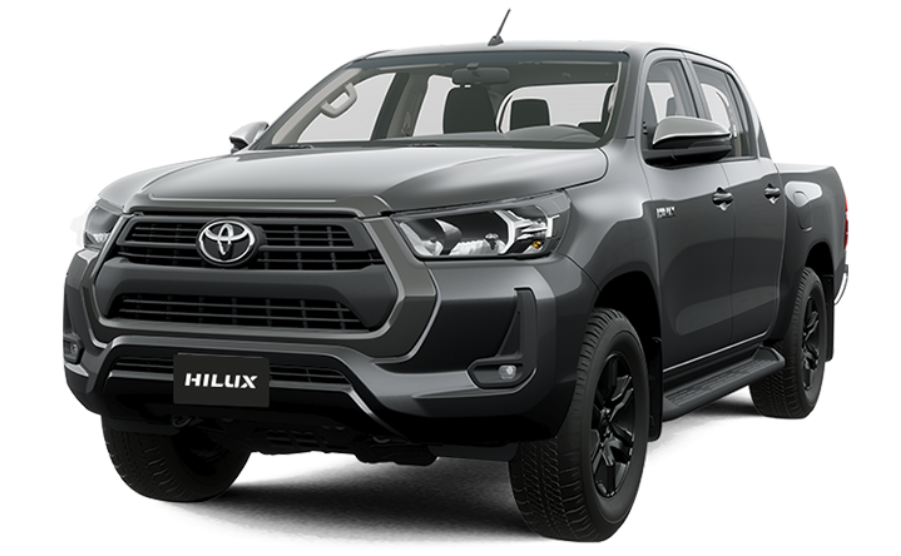
If you have ever looked under the bonnet of a Toyota Hilux and then checked the specifications of a Toyota Fortuner, one question probably jumped into your head: do the Toyota Hilux and Fortuner have the same engine?
In many markets, the answer is yes.
The Hilux and Fortuner have long shared important parts of Toyota's diesel powertrain family, most notably the 2.8-liter 1GD-FTV turbo-diesel and, in several countries, the smaller 2.4-liter 2GD-FTV turbo-diesel.
Toyota's own specifications provide a clear example. Recent Philippine-market specifications list the 1GD-FTV 2.8-liter diesel and 2GD-FTV 2.4-liter diesel in both vehicle ranges.
But that does not mean a Fortuner is simply a Hilux wearing an SUV body.
Two vehicles can share an engine code while behaving very differently. Transmission calibration, differential ratios, suspension, weight, aerodynamics, emissions equipment, software tuning, and even engine output can change.
Think of it like two chefs using the same oven. The hardware may be identical, but what comes out of it depends heavily on how everything else is configured.
So, let's dig deeper into the Toyota Hilux and Fortuner same engine question and discover exactly what they share—and what they don't.
Content in this publication
- Do the Toyota Hilux and Fortuner Use the Same Engine?
- Toyota Hilux vs Fortuner Engine Comparison
- What Is the Toyota 1GD-FTV Engine?
- What Is the Toyota 2GD-FTV Engine?
- Do the Hilux and Fortuner 2.8 Have the Same Engine?
- Do the Hilux and Fortuner 2.4 Have the Same Engine?
- Why Do the Hilux and Fortuner Share Engines?
- If the Engine Is the Same, Why Do They Feel Different?
- Hilux Leaf Springs vs Fortuner Coil-Spring Rear Suspension
- Does the Fortuner Use a Hilux Engine?
- Are Hilux and Fortuner Engine Parts Interchangeable?
- Do Hilux and Fortuner Engines Produce the Same Horsepower?
- Is the Hilux Faster Than the Fortuner?
- Is Fortuner Fuel Economy the Same as Hilux?
- Is the Hilux Engine More Durable Than the Fortuner Engine?
- Hilux vs Fortuner 1GD Reliability
- Can You Put a Hilux 1GD Engine Into a Fortuner?
- What About Petrol Hilux and Fortuner Engines?
- Does the New Hilux Still Use the 1GD Engine?
- Toyota Hilux or Fortuner: Which Makes Better Use of the Engine?
- Why the Shared Engine Is Good News for Owners
- The Biggest Mistake When Comparing Hilux and Fortuner Engines
- How to Check Whether Your Hilux and Fortuner Have the Same Engine
- Toyota Hilux and Fortuner Same Engine: Final Thoughts
- Frequently Asked Questions
- 1. Do Toyota Hilux and Fortuner use the same 2.8 diesel engine?
- 2. Is the Fortuner engine exactly the same as the Hilux engine?
- 3. Do the Hilux and Fortuner 2.4 use the same engine?
- 4. Why does a Hilux have different horsepower from a Fortuner with the same engine?
- 5. Can Hilux engine parts fit a Toyota Fortuner?
Do the Toyota Hilux and Fortuner Use the Same Engine?
Yes, many Toyota Hilux and Fortuner versions use engines from the same Toyota GD diesel family.
The two most important examples are:
- 1GD-FTV — 2.8-liter turbo diesel
- 2GD-FTV — 2.4-liter turbo diesel
Toyota originally introduced its GD diesel engine family as a new generation of direct-injection turbo-diesel engines designed to improve torque, fuel efficiency, refinement, and emissions performance.
Toyota's technical information identifies the 1GD-FTV as a roughly 2.8-liter engine and the 2GD-FTV as a roughly 2.4-liter engine.
These engines have subsequently appeared across several Toyota body-on-frame vehicles.
The Short Answer
If we want to make things simple:
A 2.8-liter Hilux and 2.8-liter Fortuner can use the same 1GD-FTV engine family.
Likewise:
A 2.4-liter Hilux and 2.4-liter Fortuner can use the same 2GD-FTV engine family in markets where both versions are offered.
However, always check the engine code, model year, transmission, market, and trim before assuming every mechanical component is interchangeable.
Toyota Hilux vs Fortuner Engine Comparison
Here is the basic relationship.
| Specification | Toyota Hilux | Toyota Fortuner |
|---|---|---|
| Common 2.8 diesel | 1GD-FTV | 1GD-FTV |
| Displacement | About 2,755 cc | About 2,755 cc |
| Configuration | Inline-four turbo diesel | Inline-four turbo diesel |
| Common 2.4 diesel | 2GD-FTV | 2GD-FTV |
| Displacement | About 2,393 cc | About 2,393 cc |
| Turbocharging | Variable-nozzle turbo, depending on specification | Variable-nozzle turbo, depending on specification |
| Typical transmissions | Manual and automatic, depending on market | Manual and automatic, depending on market |
| Vehicle type | Pickup | Body-on-frame SUV |
Current Toyota Philippines material, for example, identifies the Fortuner's 2.8 as the 1GD-FTV and its 2.4 as the 2GD-FTV. Toyota's Hilux specifications use those same engine designations.
That is strong evidence that we're not simply talking about engines that happen to have the same displacement. They belong to the same Toyota engine families.
What Is the Toyota 1GD-FTV Engine?
The 1GD-FTV is Toyota's 2.8-liter four-cylinder turbo-diesel engine.
It belongs to Toyota's GD engine family and was introduced as part of Toyota's move toward smaller, more efficient diesel engines with strong low-speed torque.
Toyota's original GD-engine announcement listed the 1GD-FTV at 2,754 cc, while later regional specifications commonly describe it as 2,755 cc because of market-specific specification conventions and rounding.
Basic 1GD-FTV Characteristics
Depending on market and generation, the engine includes technologies such as:
- Common-rail direct injection
- Turbocharging
- Intercooling
- Four-cylinder layout
- DOHC cylinder head
- 16 valves
- Variable-nozzle turbo technology on many applications
- Modern diesel emissions-control systems
Toyota originally emphasized improved thermal efficiency, stronger low-speed torque and better fuel efficiency when introducing the GD family.
Why Toyota Uses the 1GD in Different Vehicles
The formula makes sense.
A pickup needs strong torque when carrying loads or towing. A large body-on-frame SUV also benefits from generous low-rpm torque, particularly when climbing hills, overtaking, towing, or driving off road.
Instead of developing completely separate engines, Toyota can adapt one durable diesel platform for several vehicles.
What Is the Toyota 2GD-FTV Engine?
The 2GD-FTV is the smaller sibling.
It is a roughly 2.4-liter, four-cylinder turbo-diesel that shares much of the design philosophy of the 1GD.
Toyota's original technical specifications listed a displacement of 2,393 cc.
In current Toyota Philippines specifications, the 2GD-FTV remains available in versions of both the Hilux and Fortuner.
Why Choose the 2.4 Instead of the 2.8?
The smaller engine generally targets buyers who prioritize:
- Lower purchase costs
- Everyday driving
- Fleet operation
- Reasonable fuel consumption
- Adequate rather than maximum performance
- Lower-output commercial applications
The 2.8 usually sits farther up the range when greater torque or performance is required.
Do the Hilux and Fortuner 2.8 Have the Same Engine?
This is where the answer becomes particularly clear.
A Hilux carrying the 1GD-FTV engine code and a Fortuner carrying the 1GD-FTV code fundamentally use the same engine family.
For example, recent standard specifications in the Philippines have listed a Hilux 2.8 1GD-FTV at approximately 204 PS and 500 Nm in certain versions. Toyota's Fortuner documentation also lists a 2.8 1GD-FTV configuration producing 204 PS and 500 Nm.
Now things get interesting.
Those figures can change on performance-oriented or market-specific variants.
Toyota Can Tune the Same Engine Differently
The engine code being identical does not guarantee identical power.
A perfect example is the higher-output GR Sport treatment offered in certain markets.
Toyota Philippines has listed the Hilux GR-S 2.8 1GD-FTV at 224 PS and 550 Nm in one specification, rather than the lower figures associated with some regular 2.8 variants.
Toyota has also offered a Fortuner GR-S specification producing 224 PS and 550 Nm from its 2.8-liter diesel in that market.
Same basic engine family. Different calibration.
And that's exactly why engine codes tell us more than simply reading the badge on the tailgate.
Do the Hilux and Fortuner 2.4 Have the Same Engine?
Again, in markets where both are offered with the 2.4 diesel, the answer can be yes.
The common engine is the 2GD-FTV.
Toyota Philippines currently identifies 2.4-liter versions of the Fortuner with the 2GD-FTV engine, while Hilux models and fleet versions also use the 2GD family.
2GD Output Can Still Vary
Here's another trap worth avoiding.
Not every 2GD-powered Hilux has exactly the same output.
Toyota offers different configurations—including higher- and lower-output versions—depending on variant and commercial requirements.
So saying, "It has a 2GD, therefore every part and setting must be identical," is going too far.
The engine family may be shared while its application differs.
There is a bigger story behind all of this.
The Hilux and Fortuner aren't two unrelated Toyota vehicles that accidentally ended up with the same motor.
They belong to a closely related family of utility vehicles.
Toyota describes its IMV series as including vehicles such as the Hilux, Innova and Fortuner.
The IMV Connection
IMV stands for Innovative International Multi-purpose Vehicle.
The concept allowed Toyota to develop several products for different purposes while sharing important engineering foundations.
The Hilux covers the pickup side of the family.
The Fortuner transforms the formula into a passenger-focused SUV.
One Family, Two Personalities
Imagine siblings.
They might share DNA, but one wears steel-toe boots to work while the other puts on hiking shoes for a weekend road trip.
That's roughly how the Hilux and Fortuner relationship feels.
You may be interested in reading Toyota Hilux Like Cars: The Best Alternatives Worth Considering
The Hilux focuses heavily on:
- Payload
- Utility
- Cargo carrying
- Commercial durability
- Towing
- Rough-road capability
The Fortuner shifts the emphasis toward:
- Passenger comfort
- Seven-seat practicality in many markets
- Family travel
- SUV refinement
- Interior equipment
- On-road comfort
Shared engineering reduces development complexity while allowing Toyota to tune each vehicle for a different job.
If the Engine Is the Same, Why Do They Feel Different?
This is perhaps the most important part of the entire discussion.
You can drive a Hilux and Fortuner equipped with the same engine and still come away thinking they feel surprisingly different.
That's perfectly normal.
The engine is only one piece of the puzzle.
1. Vehicle Weight Makes a Difference
Acceleration depends on more than engine output.
A vehicle's:
- Kerb weight
- Passenger load
- Cargo
- Wheel size
- Accessories
all influence how fast it feels.
A heavily equipped Fortuner carrying several passengers may make an engine work differently from an unloaded Hilux.
Conversely, load a Hilux tray with hundreds of kilograms of equipment and the situation changes immediately.
2. Aerodynamics Are Different
Neither vehicle is exactly a slippery sports car.
Still, body shape influences highway performance and fuel consumption.
A pickup has an open cargo bed and a different rear airflow profile. The Fortuner has a continuous SUV body.
Those differences affect aerodynamic drag and high-speed efficiency.
3. Transmission Calibration Matters
Even when two vehicles use similar six-speed transmissions, software programming can make one feel sharper or more relaxed.
The gearbox decides:
- When to change gear
- How long to hold a gear
- How aggressively to downshift
- How quickly the torque converter locks
- How the vehicle responds to throttle input
It's like giving two people identical bicycles but fitting different gearing. Suddenly, the experience isn't identical anymore.
Hilux Leaf Springs vs Fortuner Coil-Spring Rear Suspension
Now we arrive at one of the biggest differences.
The Hilux is engineered as a pickup, so many versions use a rear leaf-spring rigid axle.
Current regional Hilux specifications continue to show that arrangement.
The Fortuner, meanwhile, uses a more passenger-oriented rear suspension arrangement; Toyota Philippines lists a multi-link rear suspension on current models.
Why That Changes the Driving Experience
Leaf springs are fantastic for dealing with payload.
They are tough, relatively simple and well suited to commercial work.
But an unloaded pickup can sometimes feel firmer over broken pavement.
The Fortuner's suspension is designed more around passenger comfort.
As a result, two vehicles using the same 1GD engine can feel like they belong to entirely different worlds once the road becomes bumpy.
Does the Fortuner Use a Hilux Engine?
People frequently phrase the question this way, but technically it is better to say:
The Fortuner and Hilux share Toyota engine families.
Calling the 1GD a "Hilux engine" suggests it was designed exclusively for the pickup and borrowed later by the SUV.
That isn't really the full picture.
Toyota has installed the 1GD engine family in multiple models over the years. Toyota documentation has identified 1GD applications in vehicles including the Hilux, Fortuner and other Toyota products.
The engine is therefore better understood as a Toyota powertrain used across multiple platforms and applications.
Are Hilux and Fortuner Engine Parts Interchangeable?
Some are.
But we wouldn't buy parts based purely on the words "1GD-FTV" or "2GD-FTV."
Depending on year and specification, common components can include parts associated with:
- Internal engine architecture
- Pistons
- Connecting rods
- Cylinder block
- Cylinder head
- Seals and gaskets
- Sensors
- Filters
- Fuel-system components
However, even seemingly identical engines can use different part numbers.
Parts That Can Differ
Differences may occur in:
- Turbocharger specification
- Engine-control software
- Intake plumbing
- Exhaust systems
- Emissions equipment
- Cooling systems
- Wiring harnesses
- Engine mounts
- Accessory brackets
- Oil pans
- Intercooler plumbing
- Fuel-system calibration
Always Verify the VIN
If we're ordering a component, the safest approach is simple:
Use the vehicle identification number and exact Toyota part number.
Matching displacement alone isn't enough.
"2.8 diesel" tells us the neighborhood.
The VIN gives us the street address.
Do Hilux and Fortuner Engines Produce the Same Horsepower?
Sometimes.
But not always.
We have already seen that Toyota can calibrate the 1GD differently between variants.
For ordinary versions, output may be very similar or identical.
Higher-performance grades can receive additional power and torque.
Manual and automatic versions can also have different torque ratings in certain markets.
Why Torque May Be Limited
A manufacturer doesn't tune an engine in isolation.
Toyota has to consider:
- Transmission torque limits
- Clutch durability
- Driveline strength
- Thermal management
- Emissions regulations
- Fuel quality
- Reliability targets
More torque isn't automatically better if the rest of the drivetrain wasn't designed to handle it continuously.
Is the Hilux Faster Than the Fortuner?
There is no universal answer.
Acceleration varies by:
- Engine
- Transmission
- Drivetrain
- Trim level
- Weight
- Tires
- Final-drive ratios
- Market specification
A higher-output Hilux might outperform a lower-output Fortuner, while two vehicles with nearly identical output could deliver very similar straight-line performance.
More importantly, neither vehicle is primarily built around winning traffic-light races.
Their diesel engines prioritize the thick wave of low-rpm torque that makes towing, overtaking and climbing easier.
Is Fortuner Fuel Economy the Same as Hilux?
Not necessarily.
Even with the same engine, real-world fuel use can differ.
Factors Affecting Fuel Consumption
We need to consider:
- Vehicle weight
- Driving style
- Road conditions
- Tires and pressure
- Gear ratios
- Aerodynamics
- Payload
- Four-wheel-drive use
- Emissions specification
- Traffic conditions
A lightly loaded diesel driven steadily on a highway may return impressive efficiency.
Throw in a roof rack, aggressive all-terrain tires, heavy accessories and stop-start traffic, and the numbers can shift quickly.
That applies to both vehicles.
Is the Hilux Engine More Durable Than the Fortuner Engine?
If we're comparing two vehicles carrying the same engine code, it doesn't make much sense to declare one engine inherently more durable simply because of the vehicle badge.
You may be interested in readingToyota Hilux Like Cars: The Best Alternatives Worth ConsideringYou may be interested in reading
 Peugeot RCZ Models: Complete Guide to Versions, Trims and Engines
Operating conditions matter more.
A Hilux May Have a Harder Life
Hilux vehicles are frequently used for:
- Construction
- Mining
- Agriculture
- Towing
- Off-road work
- Heavy payloads
- Fleet service
That can mean longer idle periods, dust exposure and higher mechanical loads.
A Fortuner Can Have an Easier—or Equally Hard—Life
Many Fortuners spend most of their lives carrying families on paved roads.
Others tow caravans, cross deserts or tackle difficult trails.
Maintenance history ultimately tells us much more than whether "Hilux" or "Fortuner" appears on the badge.
Hilux vs Fortuner 1GD Reliability
The 1GD has become an important engine across Toyota's body-on-frame range, but like any modern diesel, it depends heavily on correct servicing.
We should pay attention to:
- Correct oil specification
- Oil-change intervals
- Fuel quality
- Cooling-system condition
- Injector performance
- Turbo health
- Diesel particulate filter operation where fitted
- Emissions systems
- Warning lights
- Abnormal oil level changes
Modern diesels are considerably more sophisticated than the agricultural-feeling engines of decades past.
Treat one properly and that sophistication can deliver excellent performance.
Neglect it, and the repair bill can become uncomfortable quickly.
Can You Put a Hilux 1GD Engine Into a Fortuner?
Mechanically, the shared engine family can make such a swap more realistic than replacing it with a completely unrelated engine.
But we shouldn't interpret "same engine code" as "plug it in and drive away."
Potential complications include:
- ECU compatibility
- Immobilizer programming
- Wiring
- Sensors
- Emissions equipment
- Engine mounts
- Transmission compatibility
- Exhaust configuration
- Local registration rules
For a replacement engine, matching the exact engine specification—or confirming compatibility through Toyota part information—is far safer than assuming every 1GD is identical.
What About Petrol Hilux and Fortuner Engines?
Another reason we need to avoid sweeping statements is that Hilux and Fortuner powertrains vary enormously around the world.
Certain generations and markets have offered petrol engines alongside diesel options.
Consequently, the statement "Hilux and Fortuner have the same engine" should always be followed by one question:
Which market, model year and engine?
That's the key.
A 2.8 diesel comparison can be straightforward.
Comparing every Hilux ever produced with every Fortuner ever sold is impossible without narrowing down the specification.
Does the New Hilux Still Use the 1GD Engine?
Toyota continues to use the 1GD in recent Hilux applications.
For example, Toyota's May 2026 Japanese launch information for the redesigned Hilux specifies a 1GD-FTV 2.8-liter diesel paired with a six-speed automatic transmission.
That illustrates how important the engine family remains even as Toyota expands the Hilux range into alternative powertrains.
Toyota has also announced broader Hilux electrification strategies, so future powertrain availability will increasingly depend on the region.
Toyota Hilux or Fortuner: Which Makes Better Use of the Engine?
This question is more interesting than asking which engine is "better" because the answer depends on what we need the vehicle to do.
Choose the Hilux Formula If We Need
- A pickup bed
- Serious payload capacity
- Commercial versatility
- Work-site durability
- Easy transport of dirty or bulky equipment
- A vehicle built around utility
Choose the Fortuner Formula If We Need
- Enclosed cargo space
- More passenger-focused suspension
- SUV practicality
- Additional seating in relevant versions
- Family-road-trip usability
- A more conventional passenger-vehicle cabin
The engine can be nearly the same while the mission is completely different.
Shared engines can create several practical advantages.
Broader Mechanical Knowledge
Because the GD engine family appears in multiple popular Toyota products, independent specialists often gain substantial experience working on it.
Parts Availability
Widespread engine use can improve the availability of routine service components, although exact part numbers still need verification.
Known Maintenance Practices
A widely used engine tends to accumulate a large body of maintenance knowledge.
Owners, technicians and Toyota service departments become familiar with its behavior.
Resale Familiarity
Buyers may also feel more comfortable with a powertrain that has been widely deployed rather than an obscure engine fitted to only one short-lived model.
The Biggest Mistake When Comparing Hilux and Fortuner Engines
The biggest mistake is assuming:
Same engine = same vehicle.
It doesn't.
The Hilux is still a pickup.
The Fortuner is still an SUV.
Their shared engine is more like a common heartbeat inside two bodies built for different lifestyles.
The Hilux wants to wake up early, put on work gloves and carry a load of equipment.
The Fortuner would rather fill its seats, load luggage behind them and head down the highway.
Both can go far beyond those stereotypes, of course, but their engineering priorities remain different.
How to Check Whether Your Hilux and Fortuner Have the Same Engine
Before comparing two specific vehicles, check these details:
- Model year
- Country of sale
- Engine displacement
- Engine code
- Transmission
- Two-wheel drive or four-wheel drive
- Trim level
- Power output
- Torque rating
- Emissions standard
Look for the Engine Code
If both vehicles show 1GD-FTV, they belong to the same 2.8-liter GD engine family.
If both show 2GD-FTV, they belong to the same 2.4-liter family.
If the codes are different, we're dealing with different engine specifications regardless of how similar the vehicles may appear.
Don't Rely Only on the Badge
A "2.8" badge is useful.
The actual engine code is better.
And when buying replacement components, the VIN and official parts information are better still.
Toyota Hilux and Fortuner Same Engine: Final Thoughts
So, do the Toyota Hilux and Fortuner have the same engine?
In many popular diesel versions, yes.
The 2.8-liter 1GD-FTV turbo diesel is shared between Hilux and Fortuner applications, while the 2.4-liter 2GD-FTV is also used by both vehicles in a number of markets. Official Toyota specifications confirm these shared engine codes.
But we shouldn't confuse a shared engine family with two mechanically identical vehicles.
Power output may change. Transmission tuning may change. Cooling, emissions systems, driveline components and accessories can differ. Most importantly, the Hilux and Fortuner are engineered around different purposes.
The Hilux wraps the GD diesel engine in a hardworking pickup platform.
The Fortuner places it inside a passenger-focused SUV.
Same heart?
Often, yes.
Same personality?
Not even close.
Frequently Asked Questions
1. Do Toyota Hilux and Fortuner use the same 2.8 diesel engine?
Yes, many Hilux and Fortuner 2.8 diesel models use Toyota's 1GD-FTV four-cylinder turbo-diesel engine. Exact output and equipment can vary by model year, transmission, trim and country.
2. Is the Fortuner engine exactly the same as the Hilux engine?
The core engine family can be the same, but that does not mean every component, ECU calibration, turbo specification, emissions device or accessory is identical. Always verify the exact engine and part numbers when repairing or replacing components.
3. Do the Hilux and Fortuner 2.4 use the same engine?
In several markets, yes. Both have been offered with Toyota's 2GD-FTV 2.4-liter turbo-diesel. Availability varies considerably by country and model year.
4. Why does a Hilux have different horsepower from a Fortuner with the same engine?
Toyota can change ECU calibration, turbo operation, transmission pairing and other parameters according to the vehicle's intended role. Different trims can also receive different states of tune even while retaining the same basic engine code.
You may be interested in readingToyota Hilux Like Cars: The Best Alternatives Worth ConsideringYou may be interested in reading
Peugeot RCZ Models: Complete Guide to Versions, Trims and EnginesYou may be interested in reading
 Test Drive Review: The Fiat 500 Abarth 0-60 Acceleration
5. Can Hilux engine parts fit a Toyota Fortuner?
Some components may be shared when both vehicles use the same GD engine family, but compatibility should never be assumed from displacement or engine code alone. Confirm the VIN, production date, engine specification and Toyota part number before purchasing replacement parts.
If you want to know other articles similar to Toyota Hilux and Fortuner Same Engine: Are They Really Identical? you can visit the category Models.
Peugeot RCZ Models: Complete Guide to Versions, Trims and Engines
Toyota Hilux Like Cars: The Best Alternatives Worth Considering
Toyota Hilux vs Mazda BT-50: Which Ute Makes More Sense?
Toyota Hilux vs Prado: Which Toyota 4WD Makes More Sense?
Toyota Hilux vs Land Cruiser: Which Toyota 4x4 Makes More Sense?
Toyota Hilux vs Ford Raptor: Which Pickup Fits Your Life?
Leave a Reply
More content of your interest