

Toyota Hilux vs Mazda BT-50: Which Ute Makes More Sense?

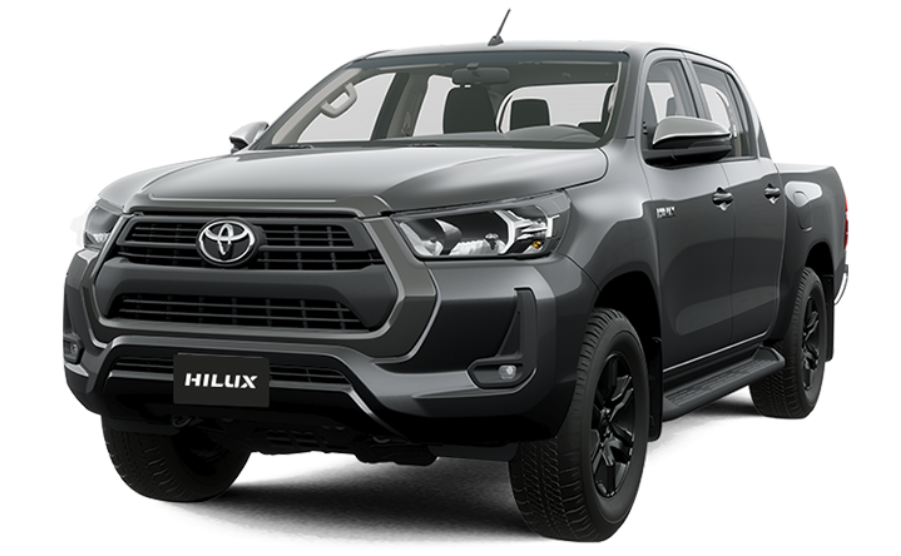
Choosing between the Toyota Hilux vs Mazda BT-50 sounds simple until we actually start comparing them.
Both are tough, diesel-powered utes designed to handle jobs that would make an ordinary SUV sweat. Both can tow serious weight, tackle rough roads, carry family gear, and spend Monday hauling tools before disappearing into the bush on Saturday morning.
Yet they approach the ute formula differently.
The Toyota Hilux feels like the old hand at the worksite—the ute everybody knows, mechanics understand, and buyers instinctively trust. The Mazda BT-50 takes a slightly different route. It wraps genuine workhorse capability in styling and cabin presentation that often feel a little more polished.
So which one deserves space in our driveway?
Let's dig into the Hilux vs BT-50 battle properly.
Content in this publication
- Toyota Hilux vs Mazda BT-50 at a Glance
- Hilux vs BT-50: Two Different Interpretations of the Same Idea
- Toyota Hilux Engine Performance
- Mazda BT-50 Engine Performance
- Toyota Hilux vs Mazda BT-50 Towing Capacity
- Which Is Better for Towing: BT-50 or Hilux?
- Toyota Hilux vs Mazda BT-50 Payload
- Off-Road Capability
- Hilux vs BT-50 on Rough Roads
- Toyota Hilux vs Mazda BT-50 Interior
- Comfort and Everyday Driving
- Steering and Handling
- Fuel Economy
- Reliability and Long-Term Ownership
- Servicing and Parts Availability
- Toyota Hilux vs Mazda BT-50 for Work
- Toyota Hilux vs Mazda BT-50 for Families
- Design: Rugged Hilux or Stylish BT-50?
- Aftermarket Accessories and Customisation
- Resale Value
- Toyota Hilux vs Mazda BT-50: Major Strengths
- Who Should Choose the Toyota Hilux?
- Who Should Choose the Mazda BT-50?
- Toyota Hilux vs Mazda BT-50: Which Is Better for You?
- Final Thoughts
- Frequently Asked Questions
Toyota Hilux vs Mazda BT-50 at a Glance
For a meaningful comparison, it makes sense to concentrate primarily on comparable turbo-diesel versions rather than treating every cab, drivetrain and trim as identical.
| Category | Toyota Hilux | Mazda BT-50 |
|---|---|---|
| Main diesel engine | 2.8L turbo-diesel | 3.0L turbo-diesel |
| Maximum power | 150 kW | 140 kW |
| Maximum torque | Up to 500 Nm | 450 Nm |
| Automatic transmission | 6-speed | 6-speed |
| Maximum braked towing | Up to 3,500 kg on diesel 4x4 variants | Up to 3,500 kg |
| Unbraked towing | Up to 750 kg | Up to 750 kg |
| Drivetrain choices | 4x2 and 4x4 | 4x2 and 4x4 |
| Main personality | Rugged, proven, work-focused | Refined, capable, lifestyle-friendly |
Toyota currently quotes 150 kW and 500 Nm for automatic diesel Hilux variants, while Mazda lists 140 kW and 450 Nm for its 3.0-litre BT-50 turbo-diesel. Both can reach a 3,500 kg braked towing rating in appropriate configurations.
Those numbers give us the headline. They do not tell the whole story.
Hilux vs BT-50: Two Different Interpretations of the Same Idea
At heart, both vehicles belong to the same species.
They are body-on-frame utility vehicles designed around durability, carrying ability and towing strength rather than sports-car handling or luxury-car isolation.
But personality matters.
The Hilux tends to put toughness front and centre. Even when Toyota adds comfort, technology and premium trim, there is usually a sense that utility remains its foundation.
The BT-50 feels more interested in blurring the boundary between work ute and everyday family vehicle. Mazda gives it a distinctly Mazda-like exterior rather than making it look like a rolling toolbox.
We could put it this way: the Hilux walks into the room wearing steel-cap boots. The BT-50 arrives wearing those same boots, but somebody has polished them first.
Toyota Hilux Engine Performance
The 2.8-Litre Turbo-Diesel Remains the Main Attraction
For most buyers comparing these two utes, Toyota's 2.8-litre turbo-diesel is the engine that matters.
Current automatic Hilux diesel variants produce 150 kW and 500 Nm, while manual versions produce up to 420 Nm.
That 500 Nm figure is particularly important when accelerating with passengers, climbing hills or towing.
The engine isn't about theatrical speed. Nobody buys a Hilux because they want to chase lap records.
Its strength is the thick shove available low in the rev range.
Press the accelerator and we get the feeling that the engine would rather move a mountain than scream toward the redline.
How the Hilux Feels Under Load
Torque matters most when there is something behind us.
A trailer, camper, boat or loaded tray quickly exposes the difference between an engine that looks powerful on paper and one that feels comfortable doing real work.
Here the Hilux's extra torque gives it a useful advantage.
It does not magically make heavy trailers disappear, but it gives the Toyota a strong, muscular feel when accelerating or maintaining speed uphill.
Mazda BT-50 Engine Performance
The 3.0-Litre Turbo-Diesel
The BT-50's main 3.0-litre turbo-diesel produces 140 kW and 450 Nm, with maximum torque delivered from 1,600 to 2,600 rpm. Mazda also offers a 2.2-litre diesel producing 120 kW and 400 Nm on selected variants.
On paper, therefore, the 3.0-litre Mazda trails the automatic Hilux 2.8 by 10 kW and 50 Nm.
Should we care?
Yes—but not nearly as much as spec-sheet warriors might suggest.
The BT-50 still has plenty of low-down diesel muscle. In normal urban driving, highway cruising and general recreational use, 450 Nm remains substantial.
Does the Hilux Feel Faster Than the BT-50?
The Toyota has the numerical advantage, particularly when we compare its automatic 2.8-litre diesel with Mazda's 3.0-litre.
However, real-world performance depends on more than peak output.
Vehicle weight, gearing, throttle calibration, tyres, cargo and road gradient all influence how quick a ute feels.
Neither vehicle is designed primarily around acceleration.
We would describe the Hilux as having the stronger punch on paper, while the BT-50 still delivers the sort of relaxed diesel torque most ute owners actually need.
Toyota Hilux vs Mazda BT-50 Towing Capacity
Towing is one area where the contest becomes extremely close.
Toyota rates its diesel 4x4 Hilux variants to tow up to 3,500 kg braked, while Mazda also quotes 3,500 kg braked towing capacity for applicable BT-50 variants.
That sounds like a tie.
Not quite.
Why a 3,500 kg Rating Doesn't Tell the Whole Story
Maximum towing capacity is only one part of the equation.
We also need to consider GVM, GCM, kerb weight, payload, tow-ball download, passengers, accessories and cargo.
This is where towing maths suddenly becomes less exciting than buying a caravan—but far more important.
A ute rated to tow 3.5 tonnes cannot automatically carry its maximum payload at the same time.
Mazda explicitly notes that trailer weight and tow-ball download can reduce the payload available to the vehicle.
Before Towing Heavy Loads, Check These Numbers
- Vehicle GVM
- Vehicle GCM
- Actual kerb weight
- Available payload
- Trailer ATM/GTM where applicable
- Tow-ball download
- Passenger weight
- Accessories such as bull bars, canopies and roof racks
- Cargo carried in the tub or tray
This matters for both vehicles.
A bull bar here, canopy there, four adults in the cabin and 300-plus kilograms pushing down on the tow ball can eat through payload surprisingly quickly.
Which Is Better for Towing: BT-50 or Hilux?
If we look purely at maximum braked towing capacity, appropriately configured versions are effectively level at 3.5 tonnes.
The Toyota's 500 Nm gives it a useful powertrain advantage compared with the 450 Nm Mazda when we're hauling something substantial.
But that does not automatically make every Hilux configuration a better tow vehicle.
A buyer planning regular towing should compare the exact variant against the trailer rather than treating the model badge as the specification.
That boring spreadsheet could save us a very expensive headache.
Toyota Hilux vs Mazda BT-50 Payload
Payload is another area where trim level matters enormously.
Mazda advertises up to roughly 1.2 tonnes of payload depending on configuration, while its current payload calculator illustrates how figures change according to body style, drivetrain, grade and accessories.
The Hilux also offers substantial load-carrying ability, but capacity varies across its large range of cab-chassis and pickup configurations.
Payload Matters More Than Most Buyers Think
Suppose our ute officially has a payload slightly above one tonne.
Sounds enormous.
Then we add passengers, fuel where relevant to the calculation, a canopy, drawers, recovery gear, fridge, roof rack, tow-ball load and camping equipment.
That tonne starts disappearing like ice on hot asphalt.
For tradespeople and touring owners, payload should therefore be one of the first specifications we compare—not something we discover after buying the vehicle.
Off-Road Capability
Toyota Hilux Off Road
Few modern utes have an off-road reputation as deeply embedded as the Hilux.
Its formula is familiar: useful ground clearance, low-range gearing on 4x4 versions, substantial suspension travel and the sort of rugged construction expected from a serious dual-cab.
More importantly, Hilux development has always needed to account for places where smooth asphalt simply stops.
On corrugated gravel, muddy tracks and uneven terrain, that heritage matters.
You may be interested in reading Toyota Hilux and Fortuner Same Engine: Are They Really Identical?
Mazda BT-50 Off Road
The BT-50 is not some soft crossover wearing hiking boots for the photograph.
Mazda's 4x4 versions offer genuine off-road hardware, with features including hill descent control, hill start assistance and a locking rear differential.
That makes it more than capable of tackling serious recreational terrain in appropriate specification.
Low Range and Rear Differential Lock
For casual dirt-road driving, neither low range nor a rear locker may seem especially important.
Drive into deep mud, loose sand, steep rocky climbs or heavily rutted terrain, though, and suddenly those tools become priceless.
A proper 4x4 ute should give us mechanical options when traction becomes scarce.
Both vehicles understand that assignment.
Hilux vs BT-50 on Rough Roads
This is where the difference between toughness and comfort becomes interesting.
An unladen ute with leaf springs can behave like an excited puppy over broken surfaces. The rear end has been designed to carry weight, so an empty tray doesn't always give the suspension enough work to settle down.
Both vehicles are still utes.
We should not expect limousine manners.
Yet suspension tuning, wheel size and tyre selection can dramatically affect comfort.
More aggressively styled high-spec variants often wear larger wheels and lower-profile tyres, which may look fantastic outside a café but are not always our first choice for endless corrugated tracks.
If rough-road touring is the priority, sensible tyres may matter more than shiny wheels.
Toyota Hilux vs Mazda BT-50 Interior
The Hilux Cabin
The Hilux cabin generally reflects its workhorse roots.
Controls tend to be easy to understand, materials are chosen with durability in mind, and the overall layout feels built for people who may climb aboard wearing muddy boots.
That's not criticism.
In a ute, practicality is luxury.
A beautifully finished surface that scratches the first time we throw work equipment beside it is not especially beautiful anymore.
Higher Hilux grades add considerably more comfort and convenience, making the vehicle much easier to live with as a family car.
The BT-50 Cabin
This is where the Mazda often makes its strongest emotional argument.
The BT-50 has a more lifestyle-oriented flavour, particularly in better-equipped grades.
Mazda has spent years building a brand around interiors that look more considered than their price or vehicle category might suggest, and the BT-50 benefits from that philosophy.
We still know we're sitting inside a ute, but it doesn't necessarily shout WORK TRUCK every time we look at the dashboard.
For buyers who will commute five days a week and head off-road twice a month, that distinction can matter enormously.
Comfort and Everyday Driving
Which Feels Better Around Town?
Utes are huge compared with ordinary hatchbacks.
We notice that immediately in tight car parks, narrow streets and multi-storey parking garages.
Both require some adjustment if we're stepping out of a small car.
Once acclimatised, however, their elevated driving positions can make them easy to place on the road.
The BT-50 tends to appeal strongly to buyers who want their ute to double as an everyday family vehicle, while the Hilux carries a more utilitarian character.
Neither approach is inherently better.
The important question is what percentage of our driving happens while the tray is carrying tools versus the cabin carrying children.
Steering and Handling
Modern dual-cab utes have become dramatically more civilised, but physics remains stubborn.
These are tall vehicles with ladder-frame construction and suspensions designed to carry heavy loads.
We should expect more body movement than in a conventional SUV.
The newest Hilux specification also brings electric power steering across relevant current variants, another sign of Toyota continuing to modernise the everyday driving experience.
The BT-50 similarly feels far removed from the crude commercial vehicles of decades past.
Still, neither should be bought because we're searching for razor-sharp cornering.
A ute should feel stable and predictable rather than playful.
Fuel Economy
Fuel consumption sounds straightforward until reality walks through the door.
Official figures are produced under standardised test conditions.
Our actual consumption can change dramatically depending on tyres, accessories, payload, trailer weight, terrain, traffic and driving style.
A lifted ute carrying a roof tent, bull bar, canopy and all-terrain tyres is pushing considerably more mass and air than a showroom-standard vehicle.
Which One Uses Less Fuel?
There is no universal Hilux-versus-BT-50 answer because both ranges contain different body styles, drivetrains and specifications.
Instead of obsessing over a difference of a few tenths of a litre on a brochure, we should consider how the vehicle will actually be used.
Someone towing 2.5 tonnes every weekend has a completely different fuel-economy profile from someone commuting alone with an empty tray.
Reliability and Long-Term Ownership
This section needs nuance.
Toyota's Hilux name has spent decades building recognition in commercial fleets, remote areas and recreational 4x4 circles.
That history has enormous value.
People know the Hilux. Workshops know it. Aftermarket suppliers know it.
The BT-50 is also built around proven utility-vehicle engineering and has established itself as a serious alternative rather than a niche lifestyle experiment.
Which Is More Reliable?
We should avoid declaring that every example of one model will outlast every example of the other.
Maintenance history matters enormously.
So does operating environment.
A carefully serviced BT-50 that spends most of its life on highways may be a safer used purchase than a neglected Hilux that has spent years towing at maximum weight through dust and mud.
When shopping used, condition wins arguments that brand loyalty cannot.
Servicing and Parts Availability
Toyota's enormous Hilux presence gives it an obvious practical strength.
In markets where the Hilux sells in large numbers, mechanical knowledge, replacement parts and aftermarket accessories are usually easy to find.
That matters if our ute is going to travel far from major metropolitan areas.
The BT-50 also has strong dealer and parts support in markets such as Australia, but Toyota's sheer Hilux footprint remains difficult to ignore.
For remote touring, dealer coverage can matter almost as much as engine output.
A ute producing another 10 kW does us little good if we're stranded hundreds of kilometres from somebody who can diagnose it.
Toyota Hilux vs Mazda BT-50 for Work
Tradespeople usually care about a completely different set of priorities from lifestyle buyers.
You may be interested in readingToyota Hilux and Fortuner Same Engine: Are They Really Identical?You may be interested in reading
Toyota Hilux Like Cars: The Best Alternatives Worth ConsideringA work ute needs to earn its keep.
It needs practical load capacity, sensible operating costs, durability and a configuration that suits the job.
This is one reason the Hilux range remains attractive: Toyota offers a broad spread of configurations aimed at everything from fleet work to recreational dual-cab ownership.
The BT-50 also provides single-cab, freestyle-cab and dual-cab choices in relevant markets, so it should not be dismissed as the prettier recreational alternative.
Mazda's current lineup includes both 2.2-litre and 3.0-litre diesel configurations depending on grade.
Toyota Hilux vs Mazda BT-50 for Families
The family equation changes everything.
Suddenly rear-seat room, storage, infotainment, child-seat installation, ride comfort and safety technology become as important as towing capacity.
Here the BT-50's more polished character can become particularly appealing.
It manages to feel less like something we've borrowed from a construction company.
The Hilux counters with familiarity, practicality and the confidence that comes with driving one of the world's most recognisable utility vehicles.
If we're transporting children every day, we would test-drive both on ordinary suburban roads rather than making the decision in a showroom.
A thirty-minute drive over speed bumps tells us more about family comfort than thirty minutes reading brochures.
Design: Rugged Hilux or Stylish BT-50?
Style is subjective, but these two vehicles clearly speak different visual languages.
The Hilux looks purposeful.
Even in premium grades, there is usually a squared-off toughness to its appearance.
It seems ready to get dirty.
The Mazda is more sculpted.
Its front-end treatment follows Mazda's broader design philosophy, producing a ute that looks surprisingly polished considering it may spend tomorrow carrying concrete bags.
Which works better?
That depends on us.
Some owners want their ute to look industrial. Others want capability without making every trip to dinner feel as though they're still at the job site.
Aftermarket Accessories and Customisation
For anyone interested in modifying a ute, the Hilux is almost an ecosystem unto itself.
Bull bars, snorkels, suspension upgrades, trays, canopies, roof platforms, underbody protection, long-range tanks and touring accessories are widely available.
The BT-50 is also well supported, particularly in markets with strong 4x4 communities.
But the Hilux's enormous global popularity gives accessory manufacturers plenty of incentive to develop products for it.
That is worth considering if our vision involves turning the vehicle into a serious remote-tourer rather than leaving it stock.
Resale Value
Resale depends on age, mileage, condition, specification, local demand and used-car market conditions, so there is no permanent number we can attach to either vehicle.
However, Hilux demand has traditionally been helped by strong brand recognition and its reputation among private, commercial and recreational buyers.
The Mazda can still retain value well, particularly desirable 4x4 dual-cab grades, but buyers should examine current local used listings rather than assuming yesterday's depreciation pattern will continue forever.
Resale is ultimately a moving target.
Toyota Hilux vs Mazda BT-50: Major Strengths
The Hilux makes a compelling case with its stronger 2.8-litre automatic diesel output, enormous recognition, extensive aftermarket and wide range of work and recreational configurations.
The BT-50 responds with competitive 3.5-tonne towing capability, serious 4x4 hardware, strong payload potential and a presentation that can feel more sophisticated.
This is not a contest between one good ute and one bad ute.
It's a contest between two different priorities.
Who Should Choose the Toyota Hilux?
The Hilux makes particular sense for buyers prioritising heavy-duty reputation, remote-area familiarity, aftermarket choice and strong diesel torque.
It is especially easy to understand for owners who view their vehicle as equipment first and transport second.
That doesn't mean the Hilux cannot work brilliantly as a family vehicle.
It simply never lets us forget its workhorse DNA.
Who Should Choose the Mazda BT-50?
The BT-50 makes a persuasive case for someone who needs genuine ute capability but doesn't want their everyday vehicle to feel unnecessarily industrial.
It can tow, carry and travel off road while presenting a slightly different personality from the traditional workhorse formula.
For families, recreational buyers and owners who split their time between city streets and weekend adventures, that balance may be exactly what they're looking for.
Toyota Hilux vs Mazda BT-50: Which Is Better for You?
Forget the badge for a moment.
Ask how the ute will actually spend its life.
If we regularly carry heavy equipment, travel into remote areas, modify our vehicles extensively or simply prefer the established Hilux formula, Toyota's ute is extremely difficult to ignore.
If we want comparable serious-ute fundamentals with a more polished character, the BT-50 deserves a close look.
The power difference is meaningful but not enormous. The towing headline is essentially equal in suitable configurations. Off-road capability is serious in both.
The bigger differences appear in personality, configuration, cabin feel, aftermarket ecosystem and the way each vehicle fits into our routine.
That's why a test drive matters so much.
Specifications tell us what a ute can do.
Living with one tells us whether we actually enjoy doing it.
Final Thoughts
The Toyota Hilux vs Mazda BT-50 comparison is closer than brand loyalists on either side may want to admit.
Toyota brings serious advantages to the table. Its 2.8-litre automatic diesel produces more power and torque, the Hilux name is deeply established, and few vehicles can match the breadth of its aftermarket ecosystem.
Mazda counters intelligently.
The BT-50 still delivers 3.5-tonne towing capability in relevant configurations, useful payload capacity, real 4x4 hardware and a cabin and exterior that may appeal more strongly to drivers who use their ute as everyday transport.
Our decision should therefore come down to use rather than reputation alone.
Need a hard-working platform with huge aftermarket support and muscular diesel torque? The Hilux has a powerful argument.
Want genuine workhorse capability combined with a more lifestyle-focused character? The BT-50 makes just as much sense.
Either way, compare the exact variants—not merely the badges on the tailgate.
That's where the smartest buying decision begins.
Frequently Asked Questions
1. Is the Toyota Hilux better than the Mazda BT-50?
Neither is universally better. The Hilux offers more peak power and torque from its main automatic 2.8-litre diesel and benefits from enormous market familiarity and aftermarket support. The BT-50 counters with strong towing and payload capability plus a more lifestyle-oriented presentation. The better choice depends on how we intend to use the vehicle.
2. Which has more power, the Hilux or BT-50?
Current Australian-market automatic diesel Hilux variants produce up to 150 kW and 500 Nm. The BT-50's 3.0-litre turbo-diesel produces 140 kW and 450 Nm. Therefore, the Hilux has the higher peak output in this comparison.
3. Can the Mazda BT-50 tow 3.5 tonnes?
Yes. Applicable BT-50 variants are rated to tow up to 3,500 kg with a braked trailer. Actual legal load limits still depend on GVM, GCM, tow-ball download, vehicle load, accessories and trailer specifications.
4. Can a Toyota Hilux tow 3.5 tonnes?
Toyota states that its current diesel 4x4 Hilux variants can tow up to 3,500 kg braked. Some other versions have lower ratings, so buyers should always verify the exact model and configuration.
You may be interested in readingToyota Hilux and Fortuner Same Engine: Are They Really Identical?You may be interested in reading
Toyota Hilux Like Cars: The Best Alternatives Worth ConsideringYou may be interested in reading
 Peugeot RCZ Models: Complete Guide to Versions, Trims and Engines
5. Which is better for off-roading, Hilux or BT-50?
Both offer genuine 4x4 capability when properly specified. The Hilux benefits from an enormous off-road following and aftermarket ecosystem, while the BT-50 provides useful equipment such as low-range 4WD capability, hill-descent assistance and a locking rear differential on appropriate versions. Tyres, driver experience and vehicle setup can matter just as much as the badge.
If you want to know other articles similar to Toyota Hilux vs Mazda BT-50: Which Ute Makes More Sense? you can visit the category Models.
Honda Passport vs Toyota 4Runner: Which SUV Is Better?
Honda Passport vs Ford Bronco: Which SUV Is Better?
Honda Passport vs Ford Explorer: Which SUV Is Better?
Honda Passport or Pilot: Which SUV Is Better?
Honda Passport vs Jeep Grand Cherokee: Which SUV Is Better?
Honda Passport vs Nissan Pathfinder: Which SUV Is Better?
Leave a Reply
More content of your interest