
Toyota Hilux vs Ford Raptor: Which Pickup Fits Your Life?

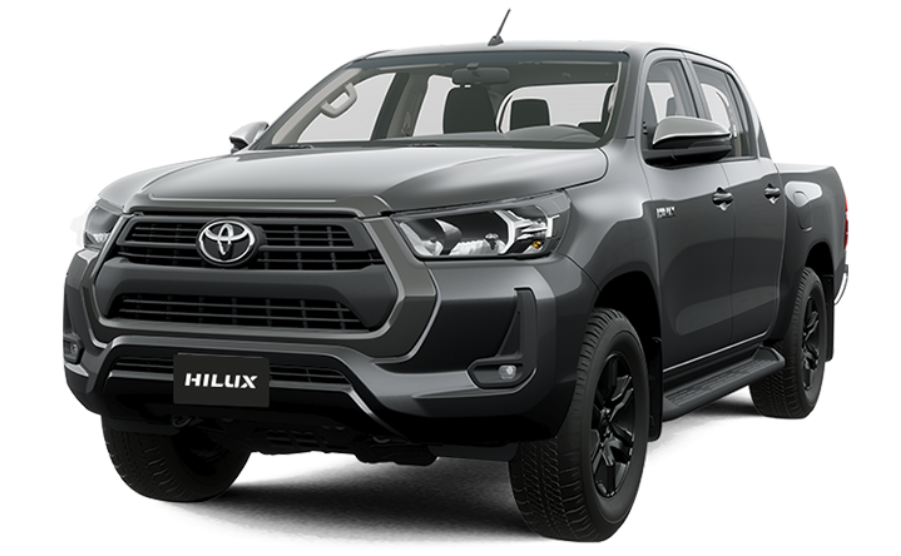
Put a Toyota Hilux and Ford Raptor side by side and, at first glance, they seem to be chasing the same customer. Both are muscular pickups, both can leave paved roads behind without breaking a sweat, and both have enough presence to make an ordinary SUV look rather timid.
Spend some time with them, though, and we discover something important: these trucks were designed with very different priorities.
For this comparison, when we say Ford Raptor, we're referring to the Ford Ranger Raptor, the midsize performance pickup that competes most directly with the Hilux in global markets.
The Toyota Hilux remains fundamentally a rugged, practical workhorse. In the current Australian range, its 2.8-litre turbo-diesel produces up to 150 kW and 500 Nm with the automatic transmission, while diesel 4x4 versions can tow as much as 3,500 kg braked.
The Ranger Raptor takes a different path. Its Australian-market specification uses a 3.0-litre twin-turbo petrol V6 producing 292 kW and 583 Nm, backed by sophisticated FOX suspension, multiple off-road modes and full-time four-wheel drive. Ford currently lists 272 mm of ground clearance and an 850 mm maximum wading depth.
One feels like a dependable pair of steel-toe boots. The other feels more like rally shoes with mud still stuck to them.
So, Toyota Hilux vs Ford Raptor: which one makes more sense? Let's break it down properly.
Content in this publication
- Toyota Hilux vs Ford Raptor at a Glance
- Performance: The Raptor Brings Serious Firepower
- Transmission: Six Speeds vs Ten
- Off-Road Capability: Where the Comparison Gets Interesting
- Ground Clearance and Water Crossings
- Towing Capacity: Hilux Takes the Practical Approach
- Payload and Worksite Practicality
- Ride Quality: The Raptor's Secret Weapon
- Fuel Economy: Diesel Hilux vs Petrol Raptor
- Toyota Hilux vs Ford Raptor Interior
- Technology and Driving Modes
- Styling: Subtle Strength vs Full-On Attitude
- Reliability and Long-Term Ownership
- Parts, Servicing and Remote Travel
- Modification Potential
- Toyota Hilux vs Ford Raptor for Touring
- Toyota Hilux vs Ford Raptor for Work
- Toyota Hilux vs Ford Raptor for Weekend Fun
- What About a Hilux GR Sport?
- Advantages of Each Pickup
- Toyota Hilux vs Ford Raptor: Which Is Better Off Road?
- Toyota Hilux vs Ford Raptor: Which Is Better for Towing?
- Toyota Hilux vs Ford Raptor: Which Costs More to Run?
- Who Should Buy the Toyota Hilux?
- Who Should Buy the Ford Ranger Raptor?
- Closing Thoughts
- Frequently Asked Questions
Toyota Hilux vs Ford Raptor at a Glance
Before diving beneath the bodywork, here's the basic personality difference.
| Category | Toyota Hilux | Ford Ranger Raptor |
|---|---|---|
| Primary focus | Work, towing, durability, versatility | High-performance off-roading |
| Typical engine | 2.8L turbo-diesel | 3.0L twin-turbo petrol V6 |
| Max power in cited Australian spec | 150 kW | 292 kW |
| Max torque | 500 Nm automatic | 583 Nm |
| Transmission | 6-speed manual/automatic depending on version | 10-speed automatic |
| Drivetrain | 4x2 or 4x4 depending on version | Full-time 4WD |
| Maximum braked towing | Up to 3,500 kg on diesel 4x4 models | 2,500 kg |
| Rear suspension philosophy | Load-oriented leaf springs | Performance-focused FOX setup |
| Character | Tough working pickup | Off-road performance truck |
| Best suited to | Work, touring and towing | Fast recreational off-roading |
The towing difference deserves particular attention. Toyota lists up to 3,500 kg braked towing capacity for diesel 4x4 Hilux variants, while Ford specifies 2,500 kg for the Ranger Raptor.
That alone tells us these trucks are playing different games.
Performance: The Raptor Brings Serious Firepower
Let's deal with the elephant wearing BFGoodrich tyres.
The Ranger Raptor is dramatically more powerful.
Ford's 3.0-litre twin-turbo EcoBoost petrol V6 develops 292 kW and 583 Nm in Australian specification. Those numbers put it in another league compared with the Hilux's 2.8-litre turbo-diesel, which delivers up to 150 kW and 500 Nm with the automatic transmission.
We aren't talking about a tiny advantage that only appears on a dyno sheet. The difference shapes the whole driving experience.
Press the accelerator in the Raptor and the truck lunges forward with genuine urgency. It encourages us to enjoy the engine, listen to the exhaust and chase the next open section of road.
The Hilux feels calmer. Its diesel engine concentrates on accessible low- and mid-range pulling power rather than theatrical acceleration.
Hilux Diesel Torque Feels Made for Work
Horsepower doesn't tell the entire story.
A diesel Hilux delivers its performance in the sort of situations pickup owners encounter constantly: climbing hills, carrying equipment, crawling over rough surfaces and pulling trailers.
The 500 Nm available in automatic variants gives the Toyota reassuring strength without requiring the engine to feel highly strung.
Imagine two athletes. The Hilux is the person who quietly carries heavy boxes all afternoon. The Raptor is the person asking whether anyone wants to race up the stairs.
Both are strong. They simply express that strength differently.
Raptor Acceleration Changes the Experience
The Raptor's extra output matters when driving for enjoyment.
Overtaking feels easier, throttle response is more entertaining and its powertrain complements the chassis instead of simply moving it.
That makes the Raptor unusually exciting for something this large.
A Hilux can travel quickly enough for everyday life. A Raptor actively makes us want to accelerate.
There is a difference.
Transmission: Six Speeds vs Ten
Most automatic Hilux variants use a six-speed automatic transmission, whereas the Raptor employs Ford's 10-speed automatic.
More gears don't automatically make a gearbox better, but here they contribute to the Raptor's performance character.
The Ford can keep its twin-turbo V6 closer to the useful part of its rev range while providing closely spaced ratios during acceleration.
The Hilux transmission feels simpler and more traditional. It isn't trying to imitate a sports vehicle. Instead, its job is to deliver predictable performance while dealing with work, trails and everyday traffic.
Which Gearbox Suits Long-Term Ownership?
The answer depends partly on what we value.
Drivers who enjoy responsive performance will appreciate the Ford's extra ratios and sophisticated programming. Buyers who favour mechanical simplicity may find the Hilux's conventional six-speed arrangement more appealing.
Neither philosophy is inherently wrong.
One is a Swiss Army knife. The other has brought an entire toolbox.
Off-Road Capability: Where the Comparison Gets Interesting
We might assume the Hilux dominates anything involving mud simply because of its reputation.
Not so fast.
The Ranger Raptor isn't merely a Ranger wearing oversized tyres and aggressive graphics. Ford Performance made meaningful changes to the suspension, chassis, drivetrain and electronic control systems.
Current Australian specifications include FOX 2.5-inch Live Valve dampers, seven drive modes including Baja and Rock Crawl, full-time 4WD, substantial ground clearance and serious all-terrain tyres.
The Hilux approaches difficult terrain more traditionally.
Its strengths include robust construction, low-range 4WD availability, practical suspension architecture and the sort of slow-speed toughness that has helped build the Hilux name over decades.
Slow Technical Trails
On rocks, deeply rutted trails and awkward climbs, outright horsepower becomes less important.
What matters is control.
A properly equipped Hilux feels natural in this environment. Its diesel torque arrives progressively, and the truck doesn't encourage us to attack every obstacle as if we're qualifying for the Dakar Rally.
The Raptor is also extremely capable at low speeds, particularly with Rock Crawl mode and its advanced drivetrain.
Yet its biggest party trick lies elsewhere.
Fast Dirt Roads and Desert Driving
This is Raptor territory.
FOX Live Valve dampers continuously adapt to changing conditions, while Baja mode alters vehicle behaviour for faster driving on loose surfaces. Ford specifically positions the truck around high-performance off-road driving.
Imagine a rough dirt road covered with corrugations, dips and loose gravel.
The Hilux asks us to respect the terrain.
The Raptor seems to ask whether that's all the terrain has got.
That doesn't mean physics disappear. A heavy pickup can still get into trouble spectacularly. But the Ford's suspension gives it an unusual ability to maintain composure where conventional work-focused pickups begin bouncing and pitching.
Ground Clearance and Water Crossings
The Ranger Raptor currently offers 272 mm of ground clearance in Australian specification, with Ford quoting an 850 mm maximum water-wading capability under the specified conditions.
Those are useful numbers for serious recreational off-roading.
Hilux dimensions and clearances differ across grades and markets, so anyone preparing a vehicle for deep-water crossings should check the exact specification of the model being considered rather than assuming every Hilux is identical.
And whichever truck we're driving, advertised wading depth isn't an invitation to launch into unknown water. Current, underwater obstacles, entry speed and water depth still matter enormously.
Towing Capacity: Hilux Takes the Practical Approach
This may be the section that decides the comparison for caravan and trailer owners.
Current Australian diesel 4x4 Hilux variants are rated to tow up to 3,500 kg braked. The Ranger Raptor is rated at 2,500 kg braked.
That's a 1,000 kg difference in headline capacity.
Ford could have engineered the Raptor primarily around towing, but doing so would compromise the attributes that make it a Raptor. Its specialised suspension and overall setup favour high-performance recreation.
So if we're regularly hauling a substantial caravan, boat, machinery trailer or horse float, the Hilux's higher towing ceiling deserves serious consideration.
Remember That Towing Capacity Isn't Everything
Maximum trailer weight is only part of towing mathematics.
We still need to consider tow-ball mass, payload, passengers, accessories, GVM and GCM. Adding a bull bar, canopy, roof rack, recovery equipment and several adults can eat into available capacity surprisingly quickly.
Always calculate the complete loaded combination rather than shopping purely by the biggest number in a brochure.
Payload and Worksite Practicality
The Toyota philosophy becomes even clearer when we examine how the broader Hilux lineup is structured.
There are work-focused body styles and grades intended to carry equipment and handle commercial duties. Toyota offers configurations ranging from straightforward utility models to more adventure-oriented versions.
You may be interested in reading Toyota Hilux vs Land Cruiser: Which Toyota 4x4 Makes More Sense?
The Raptor is far more specialised.
Ford's published Australian towing guide lists a Raptor maximum tare-based payload figure of approximately 708 kg, highlighting the compromise involved in transforming a Ranger into a heavily equipped performance vehicle.
If we're loading construction materials, tools, camping equipment and accessories day after day, a suitable Hilux configuration can make considerably more practical sense.
The Raptor carries things.
The Hilux can be configured around carrying things.
That's an important distinction.
Ride Quality: The Raptor's Secret Weapon
Performance pickups used to follow a predictable formula: big tyres, aggressive styling, stiff suspension and a ride that made every pothole feel personal.
The Ranger Raptor breaks that stereotype.
Its FOX adaptive dampers are designed to respond rapidly to terrain changes.
That sophistication benefits more than desert driving. On imperfect roads, the chassis can feel remarkably composed for an off-road-focused pickup.
The Hilux retains a stronger work-truck flavour, particularly in configurations designed around substantial payloads. An unloaded leaf-sprung pickup can feel firm over sharp bumps because the rear suspension is designed to cope with weight that isn't always sitting in the tray.
Load it up, though, and the logic starts making sense.
Daily Commuting
If we use our pickup as a family car Monday through Friday, refinement becomes important.
The Raptor's sophisticated suspension, supportive seats and performance-oriented cabin make everyday driving surprisingly enjoyable.
The Hilux remains perfectly usable as daily transport, particularly in higher grades, but we're generally more aware that we're driving something with a commercial-vehicle backbone.
Whether that's a weakness depends on expectations.
Some owners actually prefer that straightforward truck-like feeling.
Fuel Economy: Diesel Hilux vs Petrol Raptor
This is one area where engineering philosophy arrives directly at the fuel pump.
A turbo-diesel Hilux is designed around efficiency and low-speed torque. Toyota currently quotes 7.6 L/100 km for the Australian Hilux Rugged X, while stressing that laboratory consumption figures don't necessarily reflect real-world driving.
The Ranger Raptor's twin-turbo petrol V6 prioritises performance.
Unsurprisingly, feeding almost twice the Hilux's power requires more fuel.
Real-world consumption will vary dramatically according to terrain, tyre pressures, vehicle load and driving style, but owners covering enormous annual distances should think carefully about the difference.
Drive 10,000 km per year and fuel consumption matters.
Drive 40,000 km per year and it starts shouting.
Toyota Hilux vs Ford Raptor Interior
Climb inside and the different personalities continue.
Modern Hilux cabins are much more comfortable than the agricultural pickups many of us remember. Depending on trim, buyers can get modern infotainment, driver-assistance technology, comfortable seating and useful convenience equipment.
The Raptor goes further toward creating a sense of occasion.
Its cabin includes Raptor-specific seats and steering-wheel details, while current Australian models also feature a 12-inch digital instrument display and available premium equipment such as a 10-speaker B&O audio system.
It feels deliberately sporty.
The Hilux interior tells us, "We've got a job to do."
The Raptor says, "The job can wait five minutes. Look at this Baja button."
Technology and Driving Modes
This is another Ford strong point.
The Ranger Raptor offers seven drive modes, including dedicated Baja and Rock Crawl settings, along with a 360-degree camera and off-road display functions in the current Australian specification.
These systems don't magically replace driving skill, but they help tailor the vehicle's throttle, drivetrain and chassis behaviour to different surfaces.
The Hilux takes a less theatrical approach.
Depending on trim and region, modern versions still provide plenty of useful safety and off-road technology, but the truck's underlying identity remains comparatively straightforward.
If we enjoy menus, selectable modes and configurable performance settings, the Raptor scratches that itch beautifully.
Styling: Subtle Strength vs Full-On Attitude
Nobody accidentally buys a Ranger Raptor.
Its swollen arches, huge FORD grille, chunky tyres and wide stance announce themselves from halfway across a supermarket car park.
It isn't shy.
The Hilux looks tough too, particularly in aggressive upper grades, but most versions maintain a more restrained identity.
This can matter more than we'd think.
A dramatic truck may be exactly what an enthusiast wants. For someone using the vehicle to visit clients, run a business or operate a fleet, however, the quieter visual personality of the Hilux may fit more naturally.
One wears hiking clothes to dinner.
The other arrives wearing a racing suit.
Reliability and Long-Term Ownership
Toyota Hilux durability has become part of the truck's global identity, but reliability should never be treated as a magical property attached to a badge.
Maintenance still matters.
Driving conditions matter.
Modifications matter.
Service history matters enormously when buying used.
The Raptor is mechanically more complex in several areas, combining a high-output twin-turbo petrol engine with electronically controlled performance suspension and extensive drivetrain technology. That complexity delivers abilities the simpler truck cannot imitate, but it also means prospective long-term owners should budget realistically for performance-vehicle servicing and eventual component replacement.
The Hilux's comparatively conventional formula will appeal to buyers who prioritise straightforward long-distance ownership.
Parts, Servicing and Remote Travel
Here's something spec sheets struggle to quantify.
A vehicle can be brilliant in a showroom yet inconvenient when we're 600 kilometres from the nearest major city.
Hilux models have been sold extensively across numerous markets for decades, so the platform has a huge ecosystem of servicing knowledge, accessories and aftermarket support.
That makes the Toyota especially attractive for remote touring and commercial environments.
The Ranger family also enjoys substantial dealer and aftermarket support, particularly in markets such as Australia, but specialised Raptor parts can naturally be more specific than components for ordinary work-focused pickups.
When planning serious remote expeditions, availability can matter almost as much as capability.
Modification Potential
Both trucks have enthusiastic aftermarket communities, but owners typically modify them for different reasons.
A Hilux often becomes a touring or work build.
Think bull bars, snorkels, canopies, drawer systems, long-range fuel solutions, roof tents, communications equipment and upgraded suspension.
Raptor owners are more likely to start with an already highly capable performance platform.
That's important because modifying a Raptor carelessly can actually spoil some of the engineering we've paid for. Randomly changing suspension geometry or fitting excessively heavy accessories may blunt the very characteristics that make it special.
With either truck, modifications should solve a genuine problem rather than simply empty the accessories catalogue.
Toyota Hilux vs Ford Raptor for Touring
If our dream involves crossing enormous distances with camping equipment in the back, the Hilux makes a compelling case.
You may be interested in readingToyota Hilux vs Land Cruiser: Which Toyota 4x4 Makes More Sense?You may be interested in reading
Toyota Hilux vs Prado: Which Toyota 4WD Makes More Sense?Diesel efficiency, towing capability, practical load-carrying configurations and established aftermarket support all work in its favour.
The Raptor can absolutely tour, and it may be wonderfully comfortable on broken roads. But its priorities are different. Fuel requirements and lower towing capacity can become relevant when journeys stretch far beyond weekend adventures.
For remote exploration, we would ask ourselves one question:
Do we want a vehicle built primarily to carry the expedition, or one designed primarily to make the rough parts of the expedition incredibly entertaining?
Toyota Hilux vs Ford Raptor for Work
For ordinary commercial duties, the Hilux is the more natural tool.
That's hardly surprising.
Toyota offers the Hilux in configurations designed around genuine utility, including cab-chassis and pickup forms in the Australian lineup.
The Raptor can certainly carry tools and handle a dirty worksite, but buying one primarily to haul equipment is a little like buying trail-running shoes to work in a warehouse. They'll do the job, but that's not really why they exist.
Tradespeople prioritising towing and load-carrying capacity should examine the Hilux range closely.
Toyota Hilux vs Ford Raptor for Weekend Fun
Now reverse the priorities.
Suppose our trailer is light, we don't carry a mountain of tools and weekends involve sand, dirt tracks and open countryside.
Suddenly the Raptor makes much more sense.
The combination of its 292 kW V6, full-time 4WD, adaptive FOX dampers, dedicated drive modes and aggressive off-road hardware creates an experience the normal Hilux simply isn't designed to replicate.
This isn't about whether one truck can physically reach a destination the other can't.
Often, both will arrive.
The difference is how much fun we have getting there.
What About a Hilux GR Sport?
In markets where the Hilux GR Sport is offered, this becomes a much closer conceptual comparison.
A GR Sport adds a more aggressive presentation and market-dependent chassis or powertrain enhancements, giving the Hilux considerably more attitude than mainstream versions.
Even so, we shouldn't assume the badges mean the same thing.
Ford developed the Ranger Raptor around a dedicated high-performance off-road philosophy, particularly its specialised suspension and powerful petrol V6.
A sporting Hilux remains rooted more heavily in the underlying Hilux workhorse formula.
That's not necessarily worse. In fact, buyers wanting toughness with a sporty flavour rather than an outright off-road performance machine may prefer exactly that balance.
Advantages of Each Pickup
When we strip away the branding and focus on actual ownership priorities, the strengths become fairly clear:
- Choose the Toyota Hilux when your priorities revolve around: stronger headline towing capacity in diesel 4x4 form, work-oriented configurations, diesel efficiency, remote touring, practical load carrying, broad aftermarket support and traditional pickup simplicity.
- Choose the Ford Ranger Raptor when your priorities revolve around: substantially stronger acceleration, sophisticated high-speed off-road suspension, petrol V6 performance, advanced drive modes, a sportier cabin and recreational driving excitement.
- Look closely at your usage rather than appearance: towing a large caravan and blasting across a desert demand very different engineering.
- Check local specifications before buying: engines, payloads, towing ratings, trim names and equipment can change significantly between countries and model years.
- Calculate total ownership costs: fuel, tyres, insurance, accessories and servicing can matter as much as the purchase price.
Toyota Hilux vs Ford Raptor: Which Is Better Off Road?
This question needs context.
For high-speed off-road driving, the Ranger Raptor's specialised hardware gives it a clear technical advantage. Its adaptive FOX suspension, Baja mode, wide stance and powerful V6 were deliberately engineered around that environment.
For slower touring, remote travel and traditional four-wheel-drive use, the gap becomes less meaningful. A properly equipped Hilux remains an extremely capable vehicle, while its practical strengths become more important when we start carrying expedition equipment.
Capability isn't always about attacking an obstacle faster.
Sometimes it's about reaching somewhere remote, setting up camp, sleeping eight hours and doing the whole thing again tomorrow.
Toyota Hilux vs Ford Raptor: Which Is Better for Towing?
This one is simpler.
Using the current Australian figures, diesel 4x4 Hilux variants can tow up to 3,500 kg braked, compared with 2,500 kg for the Ranger Raptor.
Anyone towing heavy caravans or trailers should therefore pay particularly close attention to the Hilux.
Remember, however, that rated towing capacity is not permission to ignore GVM, GCM, axle limits or payload.
Always calculate the entire combination.
Toyota Hilux vs Ford Raptor: Which Costs More to Run?
Actual costs depend heavily on location, insurance profile, annual mileage and servicing arrangements, but the underlying engineering gives us a useful clue.
The Hilux combines a relatively efficient turbo-diesel engine with work-focused mechanicals.
The Raptor uses a substantially more powerful twin-turbo petrol V6, performance tyres and specialised suspension components.
Those characteristics naturally push the Ford toward performance-vehicle operating costs.
If our annual mileage is high, the difference can become meaningful.
If we only drive occasionally and value entertainment above fuel economy, that equation changes.
Who Should Buy the Toyota Hilux?
The Hilux suits buyers who think of a pickup primarily as equipment.
Maybe we're towing.
Maybe we're carrying tools.
Maybe we're travelling enormous distances through remote regions.
Maybe we simply want something practical enough to work Monday morning and disappear into the mountains Friday afternoon.
That's where the Hilux formula shines.
It may not turn every journey into an event, but that isn't its mission. Its attraction comes from being dependable, versatile and comparatively uncomplicated.
Who Should Buy the Ford Ranger Raptor?
The Raptor is for the person who looks at a perfectly sensible pickup and thinks, "Yes, but what if it had nearly 300 kW and rally-inspired suspension?"
We understand.
It delivers capabilities most owners probably don't strictly need, and that's precisely part of its appeal.
If towing 3.5 tonnes isn't essential, fuel consumption isn't the dominant concern and off-road driving is something we actively enjoy rather than occasionally tolerate, the Raptor offers an unusual combination of practicality and genuine performance.
It turns the pickup itself into part of the adventure.
Closing Thoughts
The Toyota Hilux vs Ford Raptor comparison isn't really a battle between two versions of the same idea.
It's a choice between two philosophies.
The Hilux is the traditional pickup refined over generations: useful, durable, tow-friendly and comfortable getting dirty for practical reasons. It suits owners who need their vehicle to earn its place in the driveway.
The Ranger Raptor takes the basic pickup recipe and injects adrenaline into it. Its twin-turbo V6, FOX suspension, drive modes and aggressive chassis setup transform rough terrain from an obstacle into entertainment.
If our days involve heavy trailers, tools, long-distance touring and commercial duties, the Hilux's practical abilities become difficult to ignore.
If we're chasing performance, sophisticated suspension and the sheer grin factor of driving quickly across rough terrain, the Raptor offers something much more specialised.
Neither truck makes the other irrelevant.
They simply answer different questions.
And that's probably the most useful thing to understand before spending serious money on either one.
Frequently Asked Questions
Is a Toyota Hilux better than a Ford Ranger Raptor?
It depends on what we need from the truck. A Hilux is generally more focused on work, towing and practical ownership, while the Ranger Raptor prioritises powerful acceleration and high-performance off-road driving. In current Australian specification, diesel 4x4 Hilux models can also tow more than the Raptor.
Is the Ford Raptor more powerful than the Toyota Hilux?
Yes, when comparing the Australian-market Ranger Raptor with the current 2.8-litre diesel Hilux. The Raptor's 3.0-litre twin-turbo petrol V6 develops 292 kW and 583 Nm, whereas automatic Hilux diesel variants produce up to 150 kW and 500 Nm.
Which is better for off-roading, Hilux or Raptor?
For fast recreational off-roading, the Ranger Raptor has specialised equipment such as FOX Live Valve dampers, Baja mode, Rock Crawl mode and full-time 4WD. The Hilux remains highly capable for traditional 4WD touring and slow technical terrain, with the exact capability depending on the model and equipment.
Can a Toyota Hilux tow more than a Ranger Raptor?
In current Australian specifications, yes. Diesel 4x4 Hilux models are rated for up to 3,500 kg braked towing, while the Ranger Raptor is rated for 2,500 kg. Actual allowable loads still depend on configuration, GVM, GCM and other limits.
Which is better for daily driving, Hilux or Ford Raptor?
The Raptor can feel surprisingly refined because of its sophisticated suspension and performance-oriented cabin, while higher-spec Hilux models also make comfortable daily vehicles. The Hilux generally maintains a stronger work-truck character, whereas the Raptor feels more like a performance vehicle wearing a pickup body.
You may be interested in readingToyota Hilux vs Land Cruiser: Which Toyota 4x4 Makes More Sense?You may be interested in reading
Toyota Hilux vs Prado: Which Toyota 4WD Makes More Sense?You may be interested in reading
Toyota Hilux vs Mazda BT-50: Which Ute Makes More Sense?If you want to know other articles similar to Toyota Hilux vs Ford Raptor: Which Pickup Fits Your Life? you can visit the category Models.
Peugeot RCZ Models: Complete Guide to Versions, Trims and Engines
Toyota Hilux Like Cars: The Best Alternatives Worth Considering
Toyota Hilux and Fortuner Same Engine: Are They Really Identical?
Toyota Hilux vs Mazda BT-50: Which Ute Makes More Sense?
Toyota Hilux vs Prado: Which Toyota 4WD Makes More Sense?
Toyota Hilux vs Land Cruiser: Which Toyota 4x4 Makes More Sense?
Leave a Reply
More content of your interest