
BMW i7 vs Porsche Taycan: Luxury EVs With Very Different Personalities

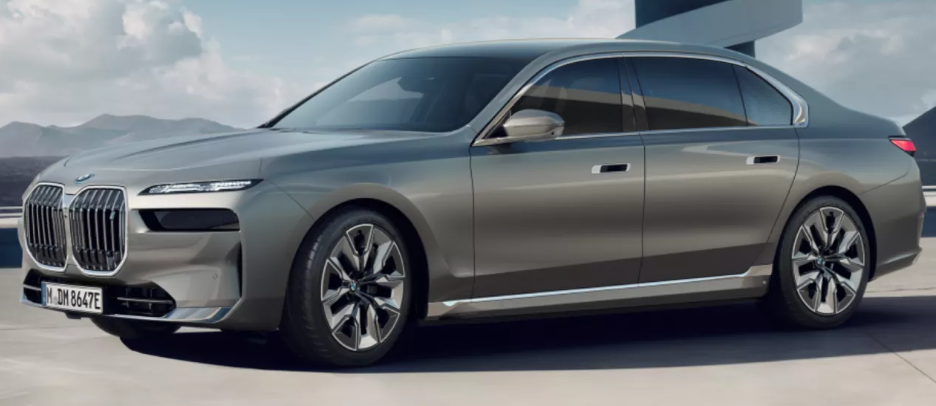
Choosing between the BMW i7 vs Porsche Taycan is a little like choosing between a first-class private lounge and a tailored racing suit. Both are expensive. Both are electric. Both are German. Both can cross a continent without making their occupants feel as though they have survived an endurance event.
Yet they approach the luxury EV formula from opposite directions.
The BMW i7 starts with the traditional flagship luxury sedan and asks, “How comfortable, quiet, spacious, and technologically extravagant can we make an electric car?”
The Porsche Taycan begins somewhere else entirely. It asks, “How much of a Porsche sports-car experience can we preserve while removing the combustion engine?”
That difference shapes practically everything: seating position, suspension tuning, steering feel, acceleration, cabin design, charging architecture, rear-seat comfort, and even the way we feel approaching the cars in a parking lot.
For the current U.S. market, BMW's latest i7 specifications include 449-hp and 536-hp versions, while Porsche's Taycan family stretches from comparatively sensible models to the outrageous 1,019-hp Turbo GT. BMW's latest i7 technical data also lists DC charging at up to 240 kW for newer 50 xDrive and 60 xDrive versions, while Porsche's 800-volt Taycan architecture supports up to 320 kW under suitable conditions.
So this isn't simply a numbers game. Let's dig into what actually separates them.
Content in this publication
- BMW i7 vs Porsche Taycan at a Glance
- BMW i7 vs Porsche Taycan Performance
- BMW i7 vs Porsche Taycan Range
- Charging Speed: Taycan's 800-Volt Advantage
- Ride Comfort: The BMW i7's Natural Habitat
- Handling: Where the Porsche Taycan Comes Alive
- Interior Comparison: Private Jet vs Sports Lounge
- Rear-Seat Comfort
- Technology and Infotainment
- Practicality and Cargo Space
- Exterior Design: Presence vs Elegance
- BMW i7 vs Porsche Taycan Price and Value
- BMW i7 vs Porsche Taycan for Daily Driving
- BMW i7 vs Porsche Taycan for Road Trips
- Reliability, Maintenance and Ownership Considerations
- Which BMW i7 Version Makes the Most Sense?
- Which Porsche Taycan Version Makes the Most Sense?
- BMW i7 vs Porsche Taycan: Which One Suits Different Buyers?
- Closing Thoughts: Two Brilliant Answers to Different Questions
- Frequently Asked Questions
BMW i7 vs Porsche Taycan at a Glance
Before getting lost in batteries, suspension systems, and screens, here's the broad picture.
| Category | BMW i7 | Porsche Taycan |
|---|---|---|
| Core personality | Flagship luxury limousine | Electric sports sedan |
| Seating emphasis | Front and rear passengers | Driver first |
| Ride character | Plush and isolated | Firm, controlled and athletic |
| Performance range | Strong to extremely fast | Fast to supercar-fast |
| Charging focus | Long-range luxury touring | Ultra-fast road-trip charging |
| Interior atmosphere | Lounge-like and theatrical | Sporty and cockpit-focused |
| Rear-seat experience | Exceptional | Adequate to good |
| Handling | Stable and surprisingly agile | Major strength |
| Best suited to | Luxury, comfort and executive travel | Enthusiastic driving |
The interesting thing is that neither car is bad at the other's specialty.
The Taycan can cruise quietly for hours. The i7 can hustle along a winding road far faster than a limousine of its size has any business doing.
But their priorities remain obvious.
BMW i7 vs Porsche Taycan Performance
Performance is where the Taycan begins flexing its muscles.
The BMW i7 Takes the Effortless Approach
BMW's latest i7 50 xDrive produces 449 hp, while the 60 xDrive develops 536 hp. BMW quotes 4.6 seconds from 0–60 mph for the 2027 i7 60 xDrive.
That's already seriously quick.
In normal driving, the more meaningful characteristic is how easily the i7 delivers that performance. Push the accelerator and this enormous luxury sedan simply gathers speed. There is little drama and almost no need to plan an overtake.
It's acceleration served on a silver tray.
Previous/current-performance i7 M70 variants push the concept much further, but even ordinary i7 versions have more performance than most luxury buyers could realistically need.
The Porsche Taycan Turns Speed Into Entertainment
Porsche takes a more aggressive approach.
The current U.S. 2027 Taycan lineup includes:
- Taycan: 402 hp, 0–60 mph in 4.5 seconds
- Taycan 4: 402 hp, 0–60 mph in 4.4 seconds
- Taycan 4S: up to 536 hp, 0–60 mph in 3.5 seconds
- Taycan GTS: up to 690 hp, 0–60 mph in 3.1 seconds
- Taycan Turbo: up to 871 hp, 0–60 mph in 2.5 seconds
- Taycan Turbo S: up to 938 hp, 0–60 mph in 2.3 seconds
- Taycan Turbo GT: up to 1,019 hp, 0–60 mph in 2.2 seconds
The Turbo GT with Weissach Package cuts that figure to a claimed 2.1 seconds.
Those numbers border on absurdity.
But Acceleration Isn't the Taycan's Real Trick
Plenty of modern electric cars accelerate violently.
What makes the Taycan special is what happens afterward.
The steering remains communicative. The chassis feels eager rather than merely planted. Body movements are carefully controlled, and the driving position creates the impression that we're sitting inside the car rather than on top of it.
The Taycan isn't simply an EV that happens to be quick.
It feels engineered by people who care about the 30 miles of twisting road after the highway exit.
BMW i7 vs Porsche Taycan Range
Electric-car comparisons inevitably reach the same question: how far can we go?
The answer is becoming increasingly complicated because model year, wheels, tires, battery configuration, weather, and testing methodology can change the figure dramatically.
BMW's latest technical data lists preliminary estimated ranges of 354–373 miles for the i7 50 xDrive and 344–362 miles for the i7 60 xDrive, depending on configuration. BMW warns that these figures remain affected by factors such as wheel choice, temperature, traffic and driving style.
Porsche's latest published U.S. EPA range table for the 2026 Taycan family lists:
- Taycan: 318 miles
- Taycan 4: 294 miles
- Taycan 4S: 295 miles
- Taycan GTS: 293 miles
- Taycan Turbo: 317 miles
- Taycan Turbo S: 298 miles
- Taycan Turbo GT: 276 miles
- Turbo GT Weissach: 269 miles
Porsche's current 2027 configurator is already live, so buyers should verify the exact EPA figure on the window sticker for the specific car they're considering.
Which One Feels Better for Long Distances?
Range alone doesn't tell the whole story.
The i7's personality makes long journeys almost suspiciously easy. The cabin is quiet, the seats are generous, and the suspension filters away the repetitive punishment of rough highway surfaces.
The Taycan can also cover huge distances comfortably, but it constantly reminds us that we're in a sports sedan.
One encourages us to arrive relaxed.
The other makes us want to take the scenic road.
Charging Speed: Taycan's 800-Volt Advantage
This is an area where Porsche has invested heavily.
Porsche Taycan Charging
The Taycan uses an 800-volt electrical architecture. Porsche states that compatible versions can charge at up to 320 kW and move from 10% to 80% in about 18 minutes under optimal conditions.
That's extremely useful on long journeys.
Think about it this way: range determines how frequently we stop, but charging speed helps determine how annoying those stops become.
A car that charges quickly can sometimes be the better road-trip machine even if another EV travels slightly farther between stops.
BMW i7 Charging
BMW's newest i7 50 xDrive and 60 xDrive technical specifications list 240-kW maximum DC charging and approximately 29 minutes for 10–80% charging under ideal conditions. BMW also estimates roughly 105–110 miles can be added during 10 minutes of high-power charging.
That's perfectly competitive for a large luxury sedan.
It simply isn't as aggressive as the Taycan's peak charging capability.
Charging Speed in the Real World
Peak numbers deserve context.
A 320-kW claim doesn't mean we'll continuously see 320 kW. Battery temperature, charger voltage, state of charge, weather, charger congestion and the station itself can reduce charging speed.
Likewise, a 240-kW BMW charger session won't necessarily feel meaningfully slower during every road trip.
But if we're repeatedly covering huge interstate distances and have access to powerful 800-volt charging stations, the Taycan's charging architecture is an important advantage.
Ride Comfort: The BMW i7's Natural Habitat
If the Porsche's heart lives on a mountain road, the BMW's lives somewhere between a five-star hotel and an airport business-class lounge.
The i7's standard mission is comfort.
BMW uses adaptive two-axle air suspension, and the car's considerable wheelbase gives the suspension room to smooth out surface imperfections. The result is the kind of isolation we'd traditionally associate with flagship sedans rather than performance EVs.
The i7 Feels Designed Around Human Fatigue
This matters more than spec sheets suggest.
After four hours behind the wheel, raw horsepower stops being particularly interesting.
Seat comfort matters.
Wind noise matters.
Ride quality matters.
Whether the car gently absorbs a broken expansion joint instead of sending a thump through our spine matters.
The i7 understands this.
The Taycan Isn't Uncomfortable
We shouldn't mistake sportiness for punishment.
The Taycan's available adaptive air suspension is sophisticated, and Porsche's optional Active Ride system can actively manage body motion while combining impressive ride control with handling precision.
It's simply calibrated around a different philosophy.
The road is something the BMW tries to hide from us.
The Porsche wants us to know the road is there.
You may be interested in reading Toyota Corolla AE86 Engine Swap – The Ultimate Guide
Handling: Where the Porsche Taycan Comes Alive
Point both cars toward a sequence of bends and their personalities become impossible to confuse.
The BMW remains remarkably composed. Rear-wheel steering, clever suspension technology and electronic chassis systems can make its enormous body feel smaller than expected.
But physics has not retired.
The i7 is still a gigantic flagship sedan.
The Taycan feels more natural when the road begins twisting.
Lower, Tighter and More Communicative
The Porsche has the visual proportions of a sports car stretched into a four-door body.
Its seating position is lower. Its reactions feel sharper. Its body control inspires more confidence when we begin carrying serious speed.
Acceleration is only one ingredient.
The bigger difference is how willing the Taycan feels to change direction.
What Enthusiasts Will Notice
Drivers coming from traditional Porsche models may notice:
- more direct steering responses;
- tighter control of vertical body movement;
- a stronger sensation of sitting low in the chassis;
- more confidence during rapid direction changes;
- greater involvement when braking into a corner;
- a drivetrain calibrated around performance rather than pure smoothness.
This is arguably the defining advantage of the Taycan.
Interior Comparison: Private Jet vs Sports Lounge
Opening the doors tells us nearly everything we need to know.
BMW i7 Interior
The BMW goes big.
Really big.
BMW offers high-grade Merino leather, decorative lighting, extensive digital interfaces and an available 31.3-inch 8K Theatre Screen that folds down for rear passengers. Rear-door 5.5-inch touchscreens can control entertainment, climate, seating and other functions.
It's gloriously excessive.
And that's the point.
The i7 is not attempting Scandinavian restraint. It wants every passenger to know they're sitting in the flagship.
Porsche Taycan Interior
Porsche keeps the cabin centered around the driver.
The dashboard is low and horizontal. Displays follow the cockpit rather than dominating the entire architecture. The seating position makes the car feel intimate.
Where the BMW says, “Look what we can give you,” the Porsche says, “Look where we're going.”
Neither approach is inherently better.
It depends on whether our definition of luxury is indulgence or focus.
Rear-Seat Comfort
Here's one category where the differences are substantial.
The i7 is over 212 inches long in current BMW specifications, with a 126.6-inch wheelbase. That footprint provides enormous room for passengers and helps create the limo-like experience BMW is targeting.
The Taycan is a usable four-door sedan, but rear passengers simply aren't the central characters.
The BMW Makes the Rear Seat an Event
Depending on specification, the i7 can surround rear occupants with:
- electrically adjustable luxury seating;
- extensive climate controls;
- powered sun protection;
- ambient lighting;
- individual door-mounted displays;
- a giant roof-mounted entertainment screen;
- available premium surround sound;
- vast legroom.
We could comfortably spend a journey in the back and forget there is a driver.
The Taycan Keeps Its Priorities Clear
Adults can use the Taycan's rear seats, and its four-door layout makes it dramatically more practical than a 911.
Still, tall passengers may find the low roof and sporty packaging less generous.
If a chauffeur is part of the ownership equation, this contest isn't especially close.
Technology and Infotainment
The two manufacturers treat digital technology differently too.
BMW treats technology almost like interior architecture.
Screens, ambient lighting, entertainment systems, driver-assistance features and connected services form part of the visual drama.
For the 2027 i7, BMW introduces its Panorama iDrive concept, panoramic information display and Operating System X, while current U.S. models also move to a native NACS charging port for easier Tesla Supercharger access.
Porsche generally places more emphasis on making technology support driving.
The Taycan still offers plenty of displays and digital functions, but its user experience feels less like a rolling cinema.
Which Interface Makes More Sense?
If we're gadget lovers, the BMW is the more theatrical proposition.
If we'd rather the interface fade into the background once the road becomes interesting, Porsche's philosophy can be appealing.
Practicality and Cargo Space
Luxury EV buyers still have luggage.
BMW's latest technical data lists 17.7 cubic feet of cargo capacity for its current 50 xDrive and 60 xDrive i7 specifications.
The shape of the i7 also works well for conventional luxury-sedan use: airport bags, business luggage, shopping and long-distance travel.
The Taycan sedan's lower roof and performance-led packaging create a different sort of practicality. It remains useful enough for everyday life but won't disguise its sports-car proportions.
Don't Forget the Taycan Cross Turismo
There's an important wrinkle.
Anyone attracted to Taycan performance but needing considerably more flexible cargo space should also investigate the Taycan Cross Turismo.
That variation changes the practicality discussion dramatically without turning the Taycan into an SUV.
Exterior Design: Presence vs Elegance
Design is subjective, but these cars don't exactly whisper their intentions.
The i7 is imposing.
Its huge body, upright front end, split lighting treatment and illuminated details aim to create presence. It looks expensive before anyone checks the badge.
Some buyers will adore that confidence.
Others may consider it too theatrical.
The Taycan takes the opposite route.
Its curved fenders, low hood, sweeping roof and wide rear haunches visually connect it to Porsche's sports-car heritage. Porsche describes the sedan's silhouette around its sporty sloping roofline and pronounced rear shoulders.
The Cars Send Different Messages
Park the i7 outside a luxury hotel and it looks completely at home.
Park the Taycan at the entrance to a mountain road and the same thing happens.
One announces status.
The other announces motion.
BMW i7 vs Porsche Taycan Price and Value
Prices change by market, model year, specification and options, so buyers should always verify current local pricing.
The U.S. 2027 Taycan currently starts at $111,900, while higher trims rise dramatically: $131,800 for the 4S, $184,600 for the Turbo, $221,400 for the Turbo S and $243,700 for the Turbo GT before options and applicable fees.
BMW's pricing similarly varies considerably according to i7 version and specification.
But value is unusually difficult to judge here because these cars don't chase the same experience.
We're Buying More Than Hardware
With an i7, money buys:
- enormous interior space;
- flagship-level materials;
- exceptional rear-seat comfort;
- sophisticated suspension;
- luxury-focused technology;
- dramatic passenger entertainment.
With the Taycan, money increasingly buys:
You may be interested in readingToyota Corolla AE86 Engine Swap – The Ultimate GuideYou may be interested in reading
 Does the Toyota Camry Have CVT Transmission?
- chassis sophistication;
- stronger performance;
- higher-performance variants;
- ultra-fast charging capability;
- sharper steering;
- Porsche's sports-car engineering philosophy.
That means comparing two cars purely by horsepower-per-dollar misses the entire point.
BMW i7 vs Porsche Taycan for Daily Driving
Here's where things become more nuanced.
BMW i7 Around Town
The BMW is wonderfully relaxing but undeniably enormous.
Parking garages, narrow streets and tight urban spaces can make its dimensions impossible to ignore.
Driver-assistance systems help tremendously, yet we never completely forget how much car surrounds us.
Once space is available, though, the i7 becomes effortless.
Porsche Taycan Around Town
The Taycan is lower and sportier, which can make entry and exit slightly less relaxed.
However, its more compact-feeling proportions and driver-focused controls create a stronger connection to the road.
If the daily commute includes interesting corners, the Porsche makes routine journeys feel less routine.
The Question We Should Ask
Would we rather arrive at work calmer?
Or would we rather enjoy getting there?
That question may tell us more than any specification table.
BMW i7 vs Porsche Taycan for Road Trips
Both are credible grand tourers, but for different reasons.
The BMW combines substantial range, excellent seating comfort, quiet cruising and an interior that can make hours disappear.
The Taycan counters with excellent charging capability and a chassis that makes unfamiliar roads tempting.
If our trip involves 600 motorway miles, the i7's tranquility has obvious appeal.
If the destination includes the Alps, Rockies or another ribbon of twisting pavement, we may suddenly understand why the Porsche sacrifices some limousine softness.
Reliability, Maintenance and Ownership Considerations
Both vehicles are technologically complex luxury EVs.
Electric motors reduce some conventional maintenance requirements because there are no engine-oil changes, spark plugs or traditional multi-speed combustion-engine servicing schedules.
BMW itself notes that its electric models generally require less routine maintenance because EV powertrains contain fewer moving parts and fluids.
That doesn't mean either car will be inexpensive to own.
Large wheels, premium tires, sophisticated adaptive suspension systems, advanced electronics and luxury replacement parts can be costly.
Before Buying, Consider More Than the Monthly Payment
We'd investigate:
- insurance premiums;
- tire replacement costs;
- local dealer access;
- warranty coverage;
- home-charger installation;
- public charging availability;
- depreciation;
- wheel-and-tire protection;
- expected annual mileage.
Performance versions deserve particular attention because wide, high-performance tires are rarely cheap.
Which BMW i7 Version Makes the Most Sense?
For many luxury buyers, the regular i7 variants may actually make more sense than the most powerful versions.
Why?
Because maximum acceleration is not the i7's main attraction.
A 536-hp 60 xDrive already reaches 60 mph in around 4.6 seconds, which is more than enough to make passengers question their decision to hold an open cup of coffee.
Choosing a configuration that emphasizes range, ride quality and equipment may therefore produce a more coherent flagship.
Which Porsche Taycan Version Makes the Most Sense?
The Taycan lineup creates a different problem.
Every jump upward becomes increasingly tempting.
The standard model provides the basic chassis experience. The Taycan 4 adds all-wheel drive. The 4S introduces substantially stronger performance. The GTS moves deeper into enthusiast territory.
Then the Turbo models become absurdly fast.
The Taycan 4S Is an Interesting Middle Ground
A current Taycan 4S provides up to 536 hp with Launch Control and reaches 60 mph in a claimed 3.5 seconds.
That's already faster than almost anyone needs on public roads while retaining the central qualities that make the Taycan appealing.
The Turbo GT is spectacular engineering, but few owners need four-digit horsepower to reach the supermarket.
BMW i7 vs Porsche Taycan: Which One Suits Different Buyers?
Rather than pretending one car universally defeats the other, it's more useful to match their personalities to different priorities.
The BMW i7 makes more sense when our priorities include:
- rear-seat space;
- limousine-level comfort;
- silent motorway cruising;
- passenger entertainment;
- dramatic luxury;
- long-distance relaxation;
- a commanding road presence.
The Porsche Taycan makes more sense when our priorities include:
- steering feel;
- cornering ability;
- acceleration;
- sports-car seating position;
- fast DC charging;
- driver engagement;
- performance-oriented design.
What If We Want Both?
That's the fascinating part.
Neither car is one-dimensional.
The i7 can be astonishingly fast.
The Taycan can be impressively comfortable.
We're really choosing where we want the engineers to make their final 10% of effort.
BMW spends it on refinement.
Porsche spends it on involvement.
Closing Thoughts: Two Brilliant Answers to Different Questions
The BMW i7 vs Porsche Taycan comparison proves how broad the electric luxury-car market has become.
A decade ago, many EV discussions revolved around whether an electric car could travel far enough or accelerate quickly enough.
Those questions almost feel quaint now.
The i7 and Taycan are battling over subtler territory.
How should a luxury EV feel?
BMW answers with silence, space and spectacle. The i7 behaves like an executive lounge capable of moving at ridiculous speed. It's enormous, serene and unashamedly indulgent.
Porsche answers with involvement. The Taycan shrinks around its driver and transforms electric propulsion into something emotional. Its acceleration is spectacular, but its handling is what gives it character.
So our decision becomes surprisingly personal.
Do we want the journey to disappear beneath us?
Choose the philosophy represented by the BMW.
Do we want every interesting mile to announce itself?
That's what the Porsche was built for.
Neither approach makes the other obsolete. In fact, their differences are precisely what make this comparison worth having.
Frequently Asked Questions
1. Is the BMW i7 faster than the Porsche Taycan?
Some BMW i7 versions are extremely quick, but the Taycan offers substantially more extreme performance at the top of its range. Porsche's current Taycan Turbo S produces up to 938 hp and reaches 60 mph in a claimed 2.3 seconds, while the Turbo GT reaches 1,019 hp and as little as 2.1 seconds in Weissach Package specification.
2. Does the BMW i7 have more range than the Porsche Taycan?
Depending on specification and testing methodology, BMW's latest i7 range estimates can exceed current published U.S. Taycan EPA figures. BMW's latest technical data lists preliminary estimates reaching into the mid-300-mile range for newer i7 configurations, while Porsche's published 2026 EPA table peaks at 318 miles. Exact real-world range depends strongly on model, wheels, temperature and driving conditions.
3. Which charges faster, BMW i7 or Porsche Taycan?
The Porsche Taycan has the higher peak DC charging capability. Porsche's 800-volt system supports up to 320 kW and can deliver an optimal 10–80% session in about 18 minutes. BMW's newer i7 50 xDrive and 60 xDrive specifications list up to 240 kW and approximately 29 minutes for 10–80%. Actual public-charging performance varies.
4. Is the Porsche Taycan comfortable enough for long trips?
Yes. The Taycan combines supportive seats, adaptive suspension technology and strong high-speed refinement. However, its suspension, seating position and overall personality remain more sporting than the BMW i7's. Anyone prioritizing maximum isolation and rear-seat comfort will probably appreciate the BMW's luxury-sedan approach more.
You may be interested in readingToyota Corolla AE86 Engine Swap – The Ultimate GuideYou may be interested in reading
Does the Toyota Camry Have CVT Transmission?You may be interested in reading
 Toyota Camry Trim Levels 2014: A Detailed Guide to Choosing the Best
5. Is the BMW i7 or Porsche Taycan better for everyday use?
It depends on what everyday driving looks like. The i7 offers superior rear-passenger luxury, generous cargo capacity and exceptional comfort, but its enormous dimensions can be inconvenient in crowded cities. The Taycan feels more compact and engaging from behind the wheel, although its low seating position and tighter rear packaging make it less limousine-like. Both work as daily EVs; they simply make daily driving enjoyable in very different ways.
If you want to know other articles similar to BMW i7 vs Porsche Taycan: Luxury EVs With Very Different Personalities you can visit the category Models.
BMW i7 vs 7 Series: Which BMW Flagship Makes More Sense?
BMW i7 vs Mercedes EQS: The Ultimate Luxury EV Comparison
BMW i7 vs M760e: Electric Luxury or Plug-In Hybrid Power?
NFINITI QX60 or Similar: Luxury SUVs Worth Comparing
Infiniti QX60 vs VW Atlas: Which Three-Row SUV Makes More Sense?
Infiniti QX60 vs QX80: Which Luxury SUV Makes More Sense?
Leave a Reply
More content of your interest