

Honda Passport Years to Avoid: A Used Buyer’s Complete Guide

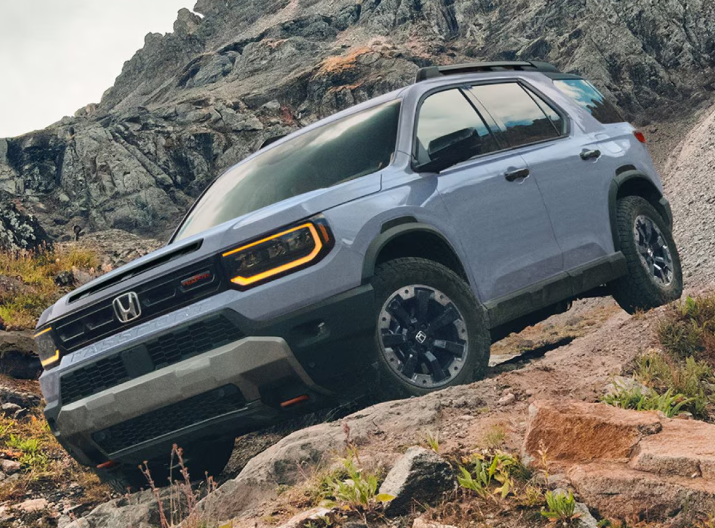
The Honda Passport looks like exactly the sort of SUV we should be able to buy used without losing sleep. It carries the Honda badge, uses a naturally aspirated V6 in most modern versions, offers generous interior space, and avoids some of the mechanical complexity found in turbocharged rivals. But does that mean every Passport model year deserves equal confidence?
Not quite.
When we investigate the Honda Passport years to avoid, a few model years deserve more scrutiny than others. The important word here is scrutiny. A troublesome model year does not mean every Passport built that year is a disaster waiting in the driveway. Recalls can be completed, defective components can be replaced, and a well-maintained example from a supposedly problematic year may be a considerably safer purchase than a neglected vehicle from a stronger year.
Still, patterns matter.
For shoppers interested in the modern Passport, the 2019 model year deserves the most caution, followed by the 2020 model, while 2021 Passports should also receive careful inspection, particularly for infotainment and electrical-network problems. Earlier 1998–2002 Passports deserve a separate warning because of a documented corrosion recall affecting rear suspension mounting areas in certain regions.
Let’s dig beneath the badge, separate serious problems from internet noise, and figure out which Passport actually makes sense in your garage.
Content in this publication
- Quick Answer: Which Honda Passport Years Should We Avoid?
- Why the 2019 Honda Passport Deserves the Most Caution
- 2020 Honda Passport: Better, But Not Trouble-Free
- The Infotainment Issue Affecting Early Honda Passports
- 2019 vs 2020 vs 2021 Honda Passport
- What About the 2022 Honda Passport?
- Are 2023 Honda Passports Reliable?
- Should We Avoid the 2024 Honda Passport?
- What About the 2025 Passport?
- The 2026 Honda Passport Is a Completely Different Conversation
- Older Honda Passport Years: 1998–2002 Need Special Attention
- Does a Recall Mean We Should Avoid the Vehicle?
- Honda Passport Problems We Would Check Before Buying
- How to Buy a 2019–2021 Passport Safely
- Mileage vs Model Year: Which Matters More?
- Should High-Mileage Honda Passports Scare Us?
- Which Honda Passport Years Are the Safer Used Choices?
- How Much Should Recall History Affect the Price?
- Honda Passport Reliability: The Bigger Picture
- Final Verdict: Honda Passport Years to Avoid
- Frequently Asked Questions
Quick Answer: Which Honda Passport Years Should We Avoid?
If we want the condensed version before diving into the mechanical details, our used-car shopping priorities would look something like this:
| Model Year | Our Level of Caution | Main Reason to Inspect |
|---|---|---|
| 1998–2002 | High on rusty examples | Rear suspension/frame corrosion |
| 2019 | Highest modern-model caution | First-year issues, fuel pump, hood latch, electronics |
| 2020 | Above average caution | Fuel pump and electrical/infotainment recalls |
| 2021 | Moderate caution | MOST network/audio/display problems |
| 2022 | Moderate | Verify recall completion and electronics |
| 2023 | Moderate | Network recall and certain fuel-system concerns |
| 2024 | Moderate | Certain vehicles affected by fuel filler recall |
| 2025 | Lower based on current evidence | Still inspect history and VIN |
| 2026 | Too new to judge long-term | New-generation vehicle |
This isn't a rigid blacklist. Think of it more like a weather forecast. If one year shows storm clouds, we bring an umbrella and inspect carefully rather than automatically canceling the trip.
Why the 2019 Honda Passport Deserves the Most Caution
The 2019 Passport marked the return of the nameplate to the U.S. market after a long absence. Mechanically, the modern Passport shared plenty with Honda's Pilot and Ridgeline, which should have reduced the risks associated with an entirely new platform.
Even so, 2019 was the first model year of this version of the Passport, and first-year vehicles often expose issues that don't become obvious during factory testing.
Several documented campaigns make 2019 particularly noteworthy.
2019 Passport Fuel Pump Problems
Honda issued a major fuel-pump recall covering certain 2019 and 2020 Passport vehicles. The problem involved an improperly manufactured fuel-pump impeller that could swell and cause the pump to stop functioning.
That's considerably more serious than a glitchy touchscreen.
A failed fuel pump can prevent the engine from starting or, more concerningly, cause a loss of motive power while driving. Honda's recall documentation specifically identifies the possibility of engine hesitation, difficulty starting, warning lights and vehicle stalling.
If we're considering a 2019 Passport today, checking whether this recall has been completed should sit near the top of our list.
Symptoms Worth Watching For
During a test drive, we would pay attention to:
- Extended engine cranking
- Hesitation under acceleration
- Sudden power loss
- Check-engine warning lights
- Irregular starting behavior
- Records showing recent fuel-pump replacement
A properly repaired Passport should not automatically be rejected simply because it was included in the recall.
Documentation changes the story.
2019 Honda Passport Hood Latch Recall
The 2019 Passport also appeared in a separate Honda safety recall involving the hood.
Honda determined that the hood latch striker could become damaged over time, potentially separating from the hood. In an extreme situation, the hood could open while the vehicle was moving and obstruct the driver's view. The recall covered certain 2019 Passport vehicles along with related Honda models.
That's exactly the kind of problem we want addressed before purchase.
During inspection, we'd look for unusual hood vibration, looseness, evidence of repair around the striker area, or incomplete recall documentation.
2019 Passport Transmission Behavior
The Passport's nine-speed automatic transmission has also generated discussion among owners because its behavior can feel unusual compared with a conventional six-speed automatic.
Some hesitation or busy shifting doesn't automatically equal transmission failure. Modern transmissions constantly chase fuel economy, emissions targets and smooth power delivery, sometimes producing behavior that feels awkward without being mechanically catastrophic.
Honda did publish software-related transmission service information for certain 2019 Passport configurations, showing that calibration updates have been part of the model's history.
For us, that means the test drive matters enormously.
The transmission should shift consistently without violent engagement, prolonged slipping, repeated warning lights or severe hesitation when moving from a stop.
2020 Honda Passport: Better, But Not Trouble-Free
Normally, the second model year of a vehicle improves upon the first.
The 2020 Passport did benefit from another year of production experience, but it didn't completely escape problems associated with the early modern Passport.
Most importantly, 2020 remained within the fuel-pump recall population affecting certain Passport vehicles.
That alone doesn't make it a bad SUV. It simply means we wouldn't hand over our money until we'd checked the VIN.
2020 Gauge Cluster and Camera Concerns
Honda also recalled certain 2019–2020 Passports for software-related instrument-display issues. A malfunction could cause the gauge display to reboot or temporarily go blank.
Honda's 2020 recall announcement also covered rearview-camera-related concerns on affected vehicles.
In isolation, software updates might sound relatively minor.
But used-car ownership is all about accumulation.
One unresolved campaign might be easy to handle. Several unresolved campaigns, electrical symptoms and missing service records together tell us something very different.
That is why a 2020 Passport with extensive dealer documentation could be a smarter purchase than an apparently cheaper one sold with nothing but two keys and a handshake.
The Infotainment Issue Affecting Early Honda Passports
One of the most widely documented annoyances among early modern Passports involves the vehicle's multimedia network.
Honda issued service bulletins addressing popping or crackling speakers, loss of audio, network-loss messages and display problems on Passport vehicles. Honda identified loose or problematic connections in the MOST bus network as the source.
MOST stands for Media Oriented Systems Transport.
We don't need an engineering degree to understand the practical consequence: different entertainment and vehicle-display components communicate through this network. When connections misbehave, the cabin can suddenly feel like a haunted electronics store.
What MOST Network Failure Can Feel Like
Possible symptoms include:
- Popping from speakers
- Crackling audio
- Complete audio loss
- Frozen infotainment screens
- Display interruptions
- Network error messages
- Intermittent rear camera operation
Honda eventually issued a broader recall involving FAKRA/MOST network connections on certain 2019–2023 Passport vehicles, because communication failures could also affect rearview-camera operation.
That is important because it changes how we interpret an early Passport with previous infotainment repairs.
A replaced screen alone may not tell the whole story.
2021 Honda Passport: Should We Avoid It?
The 2021 Passport is harder to place on an absolute avoid list.
Mechanically, it had already benefited from a couple of years of production experience. However, Honda continued documenting MOST network problems for the 2021 Passport, including popping speakers, audio failure, network-loss messages and display issues.
Therefore, we would classify 2021 as a buy carefully year rather than an automatic skip.
If the vehicle has:
- Completed recall work
- Clean electronics operation
- Complete maintenance records
- Smooth transmission behavior
- No unexplained warning lights
then the model year itself wouldn't scare us away.
If the dashboard behaves like a Christmas tree during the test drive, that's another story.
2019 vs 2020 vs 2021 Honda Passport
When these three years appear together in used listings, mileage and condition matter just as much as the badge on the registration.
2019 Passport
The biggest advantage is often price.
Because it's older and carries first-year stigma, a 2019 Passport can look tempting on the used market.
But we'd expect a meaningful discount before accepting the additional homework associated with fuel-pump, hood-latch and electronics history.
2020 Passport
The 2020 moves slightly farther away from first-year production but retains exposure to several important early-model recalls.
We'd still investigate it carefully rather than assuming Honda had ironed everything out.
2021 Passport
The 2021 escapes some earlier year-specific issues but still sits within the period where infotainment/network faults were documented.
Of these three, a properly repaired and well-documented 2021 could make a compelling used option—but individual condition remains more important than the year printed on the title.
What About the 2022 Honda Passport?
By 2022, the Passport received styling changes and had several years of real-world development behind it.
That makes the 2022 model appealing to shoppers wanting the established V6-based generation without jumping all the way to a brand-new vehicle.
Yet we shouldn't treat it as immune from recalls.
Honda's later MOST-network safety campaign included certain Passport vehicles from this broader generation.
You may be interested in reading Honda Passport Competitors: The Midsize SUVs Worth Cross-Shopping
The good news is that recall completion is straightforward to verify by VIN.
This illustrates something important: recall count alone doesn't define reliability.
A recall with a proven dealer repair may concern us less than a chronic mechanical problem for which no permanent solution exists.
Are 2023 Honda Passports Reliable?
The 2023 Passport generally sits on the later side of the established generation, which can be appealing because manufacturers have had time to refine production.
However, certain 2023 Passports were still included in Honda's FAKRA/MOST network campaign.
Certain 2023–2024 Passports were also included in a later recall associated with an incomplete connection between the fuel filler neck tube and fuel filler pipe.
Again, context matters.
We wouldn't look at that information and declare every 2023 Passport unreliable. We would use it as a checklist item.
That distinction can save us from both extremes: buying blindly because "Honda is reliable" and rejecting an otherwise excellent SUV because somebody discovered a recall notice online.
Should We Avoid the 2024 Honda Passport?
There isn't strong evidence supporting a blanket recommendation to avoid the 2024 model year.
We would, however, check whether a candidate VIN falls within the fuel-system recall affecting certain 2023–2024 Passports. Honda's notification states that an incomplete connection could exist between components of the fuel-filler system.
Beyond that, the normal used-car rules apply.
Check the underside.
Check the tires.
Scan the modules.
Test every button.
Service history is often where a Passport quietly tells us whether its previous owner loved it or merely tolerated it.
What About the 2025 Passport?
The 2025 Passport represents a mature stage of the outgoing architecture.
Later production years often benefit from accumulated manufacturing improvements, although that doesn't guarantee perfection.
Because relatively young vehicles haven't experienced the same amount of aging as a 2019 example, long-term comparisons must be made carefully. Six years of accumulated road use can reveal things that one or two years simply cannot.
So rather than declaring the 2025 Passport flawless, we'd call it a lower-risk candidate based on available age and campaign history, assuming the individual vehicle checks out.
The 2026 Honda Passport Is a Completely Different Conversation
Honda substantially redesigned the Passport for 2026.
The latest model uses a 285-hp 3.5-liter V6, a 10-speed automatic transmission and second-generation i-VTM4 all-wheel drive. Honda also repositioned the model toward a more rugged, trail-focused identity.
That sounds attractive.
But if we're researching long-term reliability, there's one unavoidable problem: time.
A new generation hasn't spent enough years accumulating high mileage for us to make the same reliability judgments we can make about a 2019 Passport.
Why We Don't Call New Models “Reliable” Yet
New vehicles can perform beautifully during warranty years while issues emerge later.
Transmission longevity, cooling-system durability, suspension wear, electronics aging and interior hardware quality become clearer after owners cross 60,000, 100,000 or even 150,000 miles.
For that reason, we'd call the 2026 Passport too new for a meaningful long-term verdict, not a year to avoid.
Older Honda Passport Years: 1998–2002 Need Special Attention
There's another Honda Passport family entirely.
Long before the modern Honda-built Passport arrived, Honda sold earlier Passports developed alongside Isuzu SUVs.
Anyone shopping at the inexpensive end of the used market needs to understand that these vehicles share very little mechanically with today's Passport.
More importantly, the 1998–2002 Passport was involved in a safety recall related to rear suspension mounting-point corrosion in regions where road salt was heavily used. Excessive corrosion could allow the rear suspension lower-link bracket to separate from the frame and affect vehicle control.
Rust Matters More Than Mileage Here
A 100,000-mile older Passport from a dry climate could potentially have a healthier structure than a 70,000-mile vehicle that survived two decades of salted winter roads.
For these vehicles, we would insist on examining:
- Rear suspension mounting points
- Frame rails
- Crossmembers
- Brake lines
- Fuel lines
- Body mounts
- Areas previously coated with underseal
Fresh black undercoating can sometimes protect a chassis.
It can also hide rust.
Bring a flashlight.
Does a Recall Mean We Should Avoid the Vehicle?
No.
This is where used-car advice often becomes misleading.
A recall proves that a safety defect or regulatory problem was identified in a specific population of vehicles. It doesn't prove that every individual vehicle experienced the failure.
More importantly, recall repairs are designed to remedy the problem.
NHTSA allows consumers to search a vehicle's VIN to identify open safety recalls, and manufacturers are responsible for providing recall remedies without charging the owner.
Therefore, a Passport with three historical recalls—all completed—may be preferable to one with only one recall that has never been addressed.
Paperwork beats assumptions.
Honda Passport Problems We Would Check Before Buying
No matter which year we're considering, there are several areas we'd examine.
Transmission Operation
Drive the Passport when cold and again once fully warmed.
Pay attention to:
- Delayed engagement into Drive or Reverse
- Hard shifts
- Repeated hunting between gears
- Shuddering
- Warning messages
- Unusual vibration under acceleration
Some shift characteristics may simply reflect transmission programming, but harsh or inconsistent behavior deserves investigation.
Infotainment and Audio
Turn the stereo on.
Turn it up.
Try Bluetooth.
Use Apple CarPlay or Android Auto if equipped.
Shift into Reverse repeatedly and check the camera.
Then drive over rough pavement.
Why rough pavement?
Because intermittent wiring or connector problems sometimes reveal themselves when vibration enters the equation.
Engine Performance
Honda's 3.5-liter V6 is one of the Passport's biggest attractions.
We want smooth idle, clean acceleration and predictable throttle response.
Any misfire, hesitation, unusual ticking, fuel smell or warning light warrants diagnosis rather than optimism.
AWD System
Many Passports use Honda's i-VTM4 all-wheel-drive system.
During inspection, look for drivetrain warnings, leaks and abnormal noises while turning tightly at low speed.
If service records show rear differential-fluid maintenance, that's a reassuring sign that someone actually read the maintenance requirements instead of only changing engine oil.
You may be interested in readingHonda Passport Competitors: The Midsize SUVs Worth Cross-ShoppingYou may be interested in reading
Honda Passport RTL vs TrailSport: Which 2026 Passport Is Right for You?How to Buy a 2019–2021 Passport Safely
Suppose we find a gorgeous 2020 Elite with reasonable mileage and a price thousands below a newer example.
Do we walk away because it's on an “avoid” list?
Not necessarily.
We simply make the car prove itself.
Our Used Passport Checklist
Before purchase, we would:
- Obtain the VIN.
- Check NHTSA and Honda recall databases.
- Confirm recall repairs with documentation.
- Review maintenance history.
- Scan the vehicle for stored diagnostic codes.
- Test every infotainment function.
- Test the backup camera several times.
- Listen for speaker popping or crackling.
- Evaluate transmission behavior cold and warm.
- Inspect underneath for fluid leaks or collision damage.
- Check tire wear for alignment or suspension clues.
- Arrange an independent pre-purchase inspection.
That last step may be the best money we spend during the whole transaction.
Mileage vs Model Year: Which Matters More?
Imagine two Passports.
One is a 2019 with 45,000 miles, detailed Honda-dealer history and every recall completed.
The other is a 2022 with 90,000 miles, mismatched tires, no service receipts and overdue maintenance.
Which should we automatically choose?
Exactly.
Model-year reputation provides context, not a substitute for inspecting the actual SUV.
Mileage tells us how much use a vehicle has seen. Service records tell us how that mileage happened. Condition tells us how well the vehicle survived it.
We need all three pieces.
Should High-Mileage Honda Passports Scare Us?
Not automatically.
Highway miles are often comparatively gentle. Repeated short trips, cold starts and stop-and-go driving can sometimes place more strain on a vehicle than long interstate journeys.
Rather than obsessing over the odometer alone, we'd ask:
Was the transmission serviced?
Were fluids changed?
Were recalls completed?
Was the vehicle towing regularly?
Did it live in the rust belt?
Was it involved in a major crash?
A 120,000-mile Passport with meticulous care can feel younger than a neglected SUV showing half that mileage.
Which Honda Passport Years Are the Safer Used Choices?
When we want to reduce uncertainty, later examples from the established generation generally make more sense than the earliest production years.
The biggest reasons are simple.
Later vehicles have more production maturity, and buyers are less exposed to the cluster of first-year issues associated with 2019.
That doesn't mean we'd blindly purchase a 2022, 2023, 2024 or 2025 Passport.
We'd simply begin the shopping process with fewer historical reasons for concern than we would with the first model year.
The Sweet Spot Depends on Price
Value matters.
If a 2019 Passport costs almost the same as a comparable 2022, we'd lean toward investigating the later vehicle first.
But suppose the 2019 is dramatically cheaper, beautifully maintained and fully updated through Honda campaigns.
Suddenly the equation changes.
Reliability isn't merely about failure probability.
It's about what we're paying to assume that risk.
How Much Should Recall History Affect the Price?
A completed recall shouldn't automatically reduce a vehicle's value.
In fact, documentation proving the work was completed can be reassuring.
An open recall, however, gives us another task to resolve.
And unresolved symptoms associated with that recall matter far more.
For example, if a Passport covered by a network recall already shows camera failures and crackling audio, we shouldn't assume everything will magically disappear after purchase.
Have the problem evaluated first.
Buying a used SUV should feel like investigating a house before signing the mortgage—not falling in love with the kitchen and discovering the foundation later.
Honda Passport Reliability: The Bigger Picture
The modern Passport's underlying formula is refreshingly straightforward by today's standards.
We have a large naturally aspirated V6 rather than a tiny turbocharged engine pushed to its limits. The Passport also shares technology with other high-volume Honda models, meaning independent shops and dealers are familiar with much of its mechanical architecture.
Its weak points are not enough for us to label the entire Passport lineup unreliable.
What the evidence does tell us is more nuanced:
The 2019 Passport deserves the greatest caution, mostly because multiple campaigns converge on the first model year.
The 2020 Passport remains worth inspecting carefully, especially for fuel-pump and electronics history.
The 2021 Passport improves the picture but remains associated with documented infotainment/network concerns.
Later versions still require VIN-specific recall checks, particularly because Honda's FAKRA/MOST campaign reached into later Passport model years.
That's far more useful than simply declaring one year “bad” and another “good.”
Final Verdict: Honda Passport Years to Avoid
If we're shopping for a modern used Honda Passport and want to minimize potential headaches, 2019 is the year we'd approach with the most caution. It combines first-year production status with documented fuel-pump, hood-latch and electronics-related campaign history.
The 2020 Passport would be our second major inspection priority, particularly because certain vehicles share the 2019 fuel-pump recall exposure while also belonging to the early electrical/software campaign period.
The 2021 Passport isn't necessarily a year we'd avoid, but we'd thoroughly test its infotainment system and confirm network-related repairs.
For the original-generation Passport, 1998–2002 models from road-salt regions deserve serious structural inspection because of the documented rear suspension/frame corrosion recall.
Above everything else, remember this:
We buy the vehicle, not the model year.
A neglected “good year” can empty our wallet faster than a meticulously repaired “bad year.”
Check the VIN. Examine the service records. Test every feature. Get a pre-purchase inspection.
Do those things and the Passport becomes much easier to judge—not as an internet statistic, but as the actual SUV sitting in front of us.
Frequently Asked Questions
1. What is the worst year for the Honda Passport?
Among modern Passports, the 2019 model year deserves the most caution because it was the first year of the revived model and was involved in multiple documented campaigns, including fuel-pump and hood-latch recalls as well as electrical/network-related concerns. That doesn't mean every 2019 Passport is unreliable. A properly maintained vehicle with completed recalls can still be worth considering.
2. Should we avoid a 2020 Honda Passport?
Not automatically. Certain 2020 Passports were included in the fuel-pump recall, while early Passports also experienced gauge, camera and multimedia-network campaigns. Before buying one, check the VIN, confirm that applicable recall work has been completed, test the electronics carefully and evaluate transmission behavior.
3. Is the 2021 Honda Passport a good used SUV?
A well-maintained 2021 Passport can be an attractive used SUV, but we would check its multimedia system carefully. Honda documented MOST-network issues that could cause speaker crackling, audio loss, network messages and display problems. Recall or service history can help establish whether those concerns were addressed.
You may be interested in readingHonda Passport Competitors: The Midsize SUVs Worth Cross-ShoppingYou may be interested in reading
Honda Passport RTL vs TrailSport: Which 2026 Passport Is Right for You?You may be interested in reading
Honda Passport Best Years: Which Model Years Are Worth Buying?4. Are older Honda Passports reliable?
Condition is critical. The original Passport is fundamentally different from the modern Honda-built model. Certain 1998–2002 Passports were recalled because excessive corrosion around rear suspension lower-link mounting brackets could affect vehicle control. Cars from regions that heavily use road salt deserve especially careful frame inspections.
5. What should we check before buying a used Honda Passport?
Start with the VIN and verify outstanding recalls through NHTSA or Honda. Then review maintenance records, inspect the chassis, test the transmission, backup camera, audio system and infotainment equipment, and look for warning lights or drivetrain leaks. Finish with an independent pre-purchase inspection. NHTSA's VIN lookup can identify unrepaired safety recalls associated with a specific vehicle.
If you want to know other articles similar to Honda Passport Years to Avoid: A Used Buyer’s Complete Guide you can visit the category Models.
Honda Passport Best Years: Which Model Years Are Worth Buying?
Honda Passport RTL vs TrailSport: Which 2026 Passport Is Right for You?
Honda Passport Competitors: The Midsize SUVs Worth Cross-Shopping
Honda Passport Trims: Complete 2026 Guide to Every Model
Nissan Rogue Generations: Complete Guide to Every Model Era
Nissan Rogue Trim Levels: Complete Guide to S, SV, Dark Armor, Rock Creek, and Platinum
Leave a Reply
More content of your interest