
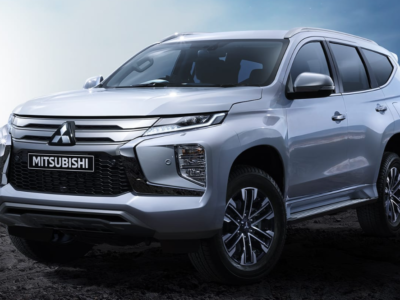
Mitsubishi Pajero Sport vs Pajero: What’s the Difference and Which One Suits You?

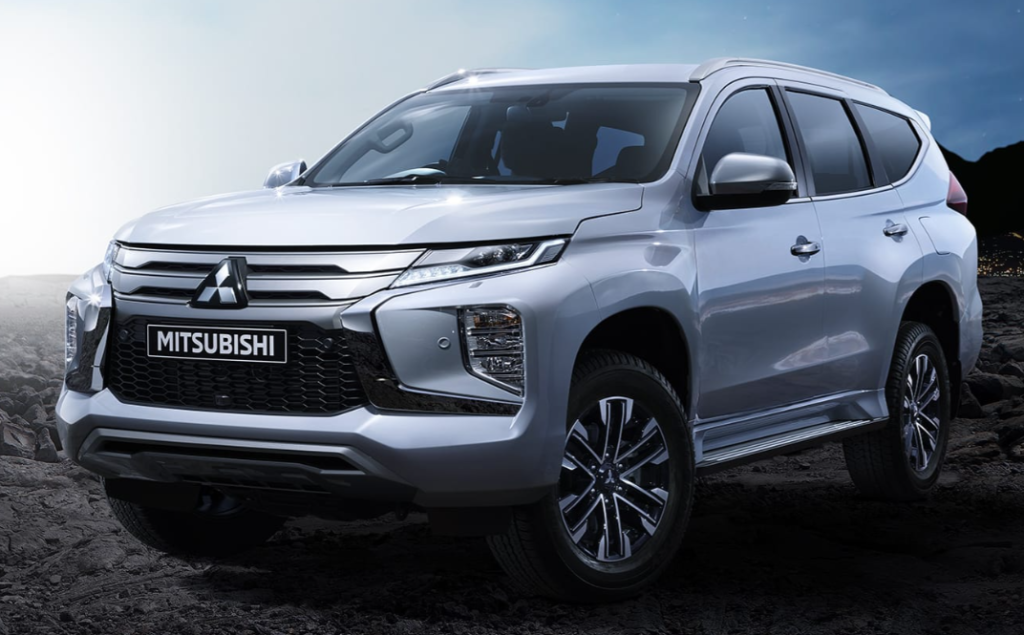
The Mitsubishi Pajero Sport vs Pajero comparison can be confusing at first. Their names make them sound like closely related versions of the same SUV, yet the reality is quite different. The Pajero is the older, larger off-road icon that helped build Mitsubishi’s 4WD reputation, while the Pajero Sport is a newer, ute-based SUV designed to combine serious off-road ability with everyday family practicality.
There is another important distinction for buyers today: the original Mitsubishi Pajero has been discontinued, while the Pajero Sport remains part of Mitsubishi’s SUV range in markets such as Australia. Mitsubishi says production of the Pajero ended after the closure of the Pajero Manufacturing Corporation was announced in 2020.
So, should we hunt for a used Pajero or choose the newer Pajero Sport? Let’s compare them properly.
Content in this publication
- Mitsubishi Pajero Sport vs Pajero at a Glance
- What Is the Mitsubishi Pajero?
- What Is the Mitsubishi Pajero Sport?
- Mitsubishi Pajero Sport vs Pajero Platform
- Pajero Sport vs Pajero Engine Performance
- Pajero Sport vs Pajero Fuel Economy
- Mitsubishi Pajero Sport vs Pajero Towing Capacity
- Pajero vs Pajero Sport Off-Road
- Super Select 4WD
- Pajero Sport vs Pajero Interior
- Pajero Sport vs Pajero Size
- Seating and Family Practicality
- Pajero Sport vs Pajero Ride Comfort
- Pajero vs Pajero Sport Reliability
- Pajero Sport vs Pajero Maintenance
- Pajero vs Pajero Sport Used Prices
- Pajero Sport vs Pajero for Touring
- Pajero Sport vs Pajero for City Driving
- Pajero Sport vs Pajero Safety
- Pajero vs Pajero Sport: Major Advantages
- Mitsubishi Pajero Sport vs Pajero: Key Disadvantages
- Is the Pajero Sport the Same as the Pajero?
- Did the Pajero Sport Replace the Pajero?
- Mitsubishi Pajero Sport vs Pajero for Off-Road Touring
- Mitsubishi Pajero Sport vs Pajero: Which Is Better for Families?
- Should You Buy a Used Pajero?
- Should You Buy a Pajero Sport?
- Final Thoughts on Mitsubishi Pajero Sport vs Pajero
- Frequently Asked Questions
Mitsubishi Pajero Sport vs Pajero at a Glance
For a useful real-world comparison, we can look at one of the final Australian Pajero models alongside the current-generation Pajero Sport.
| Specification | Mitsubishi Pajero | Mitsubishi Pajero Sport |
|---|---|---|
| Typical reference model | Pajero Final Edition | Current Pajero Sport |
| Engine | 3.2L turbo-diesel | 2.4L turbo-diesel |
| Power | 141 kW | 133 kW |
| Torque | 441 Nm | 430 Nm |
| Transmission | 5-speed automatic | 8-speed automatic |
| Drive | 4WD | 4WD on relevant variants |
| Seats | Up to 7 | Up to 7 |
| Fuel economy | Around 9.1 L/100 km | Around 8.0 L/100 km |
| Braked towing capacity | Around 3,000 kg | 3,100 kg |
| Status | Discontinued | Still sold in Australia |
Comparable specification data published for the Australian market lists the Pajero Final Edition at 141 kW and 441 Nm, while the Pajero Sport uses a 133 kW/430 Nm 2.4-litre turbo-diesel.
That tells us something immediately: bigger engine does not automatically mean dramatically stronger performance. The two vehicles are surprisingly close in output.
What Is the Mitsubishi Pajero?
The Mitsubishi Pajero is one of the brand’s most recognisable 4WDs. The first generation arrived in 1982, and over several decades the Pajero built a reputation for durability, touring ability and serious off-road performance.
It also introduced technology that was unusual among large 4WDs of its era.
Mitsubishi highlights features such as monocoque construction, independent rear suspension and its Super Select four-wheel-drive system as important parts of the Pajero’s development.
Rather than feeling like a converted commercial vehicle, later Pajeros offered a surprisingly civilised combination of ruggedness and passenger-car comfort.
Why the Pajero Became So Popular
The Pajero found a sweet spot between hardcore 4WD and family wagon.
Owners could drive one to work during the week, pack seven people into it when necessary, tow a caravan and then head onto rough tracks at the weekend.
Its appeal came from several characteristics:
- Proven diesel engines
- Genuine low-range four-wheel drive
- Spacious cabin
- Strong long-distance touring ability
- Large fuel tank on many versions
- Excellent visibility
- Practical seven-seat configuration
- Long-standing off-road reputation
It was never the most luxurious SUV available, but that almost became part of its charm.
What Is the Mitsubishi Pajero Sport?
Despite the name, the Pajero Sport isn't simply a sporty Pajero.
It belongs to a different vehicle family.
The Pajero Sport is closely related to the Mitsubishi Triton pickup. It uses a ladder-frame architecture and converts that rugged commercial-vehicle foundation into a family SUV.
That puts it in the same broad category as vehicles such as the Ford Everest, Toyota Fortuner and Isuzu MU-X.
The current Australian Pajero Sport uses a 2.4-litre MIVEC turbo-diesel engine and eight-speed automatic transmission. Mitsubishi lists 3.1-tonne braked towing capacity for current 4WD versions.
Pajero Sport Engine
The current-generation model produces:
- 133 kW
- 430 Nm
- 2.4-litre four-cylinder turbo-diesel
- Eight-speed automatic transmission
Those numbers may seem modest compared with some newer six-cylinder SUVs, yet they are adequate for touring and off-road driving.
More importantly, the transmission has significantly more ratios than the Pajero's old five-speed automatic.
That allows the Sport to keep the diesel engine closer to its useful torque range.
Mitsubishi Pajero Sport vs Pajero Platform
Here lies one of the biggest differences.
Pajero Construction
Later Pajeros use Mitsubishi's integrated monocoque-style construction.
This is unusual because many serious 4WDs traditionally rely on a separate ladder-frame chassis.
The Pajero therefore tends to feel relatively planted and composed for an old-school off-roader.
Pajero Sport Construction
The Pajero Sport is based on Mitsubishi's pickup architecture.
Its relationship with the Triton gives it the rugged foundation buyers often want for:
- Towing
- Off-roading
- Touring
- Rough roads
- Remote-area travel
It also uses coil springs at the rear rather than retaining the Triton's pickup-oriented rear suspension arrangement, helping make the Pajero Sport more comfortable as a passenger vehicle.
Pajero Sport vs Pajero Engine Performance
The engine comparison is interesting because the numbers are much closer than their displacement suggests.
Pajero 3.2 Diesel
One of the most popular late-model Pajero engines is the 3.2-litre turbo-diesel.
In Australian Final Edition specification it produced approximately:
141 kW and 441 Nm.
It was paired with a five-speed automatic transmission.
The engine developed a reputation for strong low-speed torque and relatively relaxed highway performance.
Pajero Sport 2.4 Diesel
The Pajero Sport's smaller 2.4-litre diesel generates:
133 kW and 430 Nm.
Despite losing almost a litre of displacement, it gives away only a small amount of torque.
Its eight-speed gearbox also helps compensate.
Which Feels Stronger?
The Pajero's larger diesel can feel muscular and relaxed because of its displacement.
The Pajero Sport can feel busier when pushed hard, particularly when towing or accelerating uphill. A recent Pajero Sport review also noted that its powertrain refinement now trails some newer rivals.
Neither is particularly fast.
These vehicles were built to haul families and equipment across difficult terrain, not chase sports cars.
Pajero Sport vs Pajero Fuel Economy
This is where the newer drivetrain earns some points.
Comparable Australian figures put the Pajero's combined fuel consumption around 9.1 L/100 km, versus approximately 8.0 L/100 km for the Pajero Sport.
That difference might not look enormous on paper.
However, imagine driving 20,000 km every year.
Even a 1 L/100 km difference means hundreds of litres of diesel over several years.
Why Is the Pajero Sport More Efficient?
Several factors help:
- Smaller displacement engine
- Eight-speed transmission
- Newer engine management
- Lower fuel consumption targets
- More modern drivetrain calibration
Real-world fuel consumption will naturally change with towing weight, tyres, roof racks, terrain and driving style.
Mitsubishi Pajero Sport vs Pajero Towing Capacity
Both vehicles make capable tow cars.
The late Pajero is generally rated at around 3,000 kg braked, while Mitsubishi lists 3,100 kg braked towing capacity for current Pajero Sport 4WD variants.
So the difference is relatively small.
Pajero Sport Towing Advantage
On paper, the Pajero Sport wins by approximately 100 kg.
More importantly, buyers looking for a newer tow vehicle can still purchase and service the Pajero Sport within Mitsubishi's current model ecosystem.
That matters if we plan to tow regularly.
Pajero Towing Character
The larger 3.2-litre engine can make the Pajero feel relaxed when pulling weight.
The Pajero also has a well-established reputation among caravan owners, which explains why so many examples remain on Australian roads.
Pajero vs Pajero Sport Off-Road
This may be the most interesting part of the comparison.
Both SUVs are legitimate off-road vehicles.
Neither is merely wearing plastic body cladding and pretending to be adventurous.
Super Select 4WD
One important Mitsubishi feature is Super Select 4WD.
You may be interested in reading Mitsubishi Pajero Sport vs Toyota Fortuner: Which 7-Seat SUV Is Better?
Depending on specification, it allows drivers to select different drive modes for different conditions.
Current Pajero Sport 4WD models use Super Select 4WD-II.
The system helps combine everyday road use with genuine off-road capability.
Pajero Off-Road Strengths
The Pajero offers:
- Proven 4WD hardware
- Low-range gearing
- Strong ground clearance
- Good wheel articulation
- Excellent visibility
- Independent suspension
- Long history of off-road use
Its shorter-looking, boxier body also makes placing the vehicle on difficult tracks relatively intuitive.
Pajero Sport Off-Road Strengths
The Pajero Sport offers:
- Ladder-frame architecture
- Low-range four-wheel drive
- Super Select 4WD-II
- Rear differential lock on applicable specifications
- Modern terrain modes
- Strong towing capability
The combination creates a very competent touring vehicle.
Pajero Sport vs Pajero Off Road
The answer depends heavily on tyres, driver skill and modifications.
A well-maintained Pajero on quality all-terrain tyres can go remarkably far.
A Pajero Sport can do the same while offering newer technology and greater availability of younger used examples.
Pajero Sport vs Pajero Interior
Step inside both vehicles and their age becomes more obvious.
Pajero Interior
The Pajero interior feels spacious and functional.
Its dashboard design belongs to an earlier generation of SUVs, but that simplicity can be appealing.
Large controls are easy to operate.
Visibility is excellent.
And there is generally a sense that the cabin was designed for practical travel rather than impressing someone in a showroom for five minutes.
Pajero Sport Interior
The Pajero Sport feels more contemporary.
Current Australian versions can offer features including:
- Dual-zone climate control
- Satellite navigation
- Power tailgate
- Adaptive cruise control
- Leather-appointed seating on higher grades
- Multi Around Monitor
- Heated front seats on Exceed versions
- Blind Spot Warning
- Rear Cross Traffic Alert
Equipment varies by trim, but Mitsubishi currently lists many of these features on GLS and Exceed variants.
Pajero Sport vs Pajero Size
Both vehicles are large family SUVs, but their proportions feel different.
The Pajero has the traditional tall, square appearance of a classic 4WD.
The Pajero Sport is longer and sleeker.
Mitsubishi currently lists the Pajero Sport at approximately 4,825 mm long.
The Sport's tapered rear design helps give it a more modern profile, although some owners may prefer the Pajero's boxier layout when carrying bulky equipment.
Seating and Family Practicality
Both models can carry up to seven people depending on specification.
However, buyers should remember that seven-seat SUVs rarely provide enormous luggage space when every seat is occupied.
Pajero
The Pajero's tall body gives passengers a strong sense of space.
Older children and adults generally appreciate its generous dimensions.
Pajero Sport
The Pajero Sport also provides up to seven seats and is marketed today as both a family SUV and off-road vehicle.
Its interior design feels newer, but the shape of the rear body can affect cargo packaging compared with the boxier Pajero.
Pajero Sport vs Pajero Ride Comfort
These SUVs have noticeably different personalities.
Pajero Road Manners
The Pajero's independent suspension helps it feel less like a traditional truck-based SUV than we might expect.
On long highway journeys it can be exceptionally comfortable.
Its broad footprint and substantial weight contribute to a planted feeling.
Pajero Sport Road Manners
The Pajero Sport still reveals some of its ute ancestry.
It can feel firmer over broken surfaces, particularly when lightly loaded.
Independent reviews have also noted that while the Pajero Sport remains perfectly usable as a daily vehicle, its ride and drivetrain can feel more old-school than newer competitors.
Pajero vs Pajero Sport Reliability
Both models have developed generally strong reputations among 4WD owners, but reliability depends heavily on maintenance.
That is particularly important when buying a Pajero.
Every Pajero is now a used vehicle.
Age therefore matters just as much as the model itself.
What to Check on a Used Pajero
We would inspect:
- Complete service records
- Cooling system condition
- Turbocharger behaviour
- Diesel injection system
- Transmission servicing
- Suspension bushes
- 4WD system operation
- Oil leaks
- Underbody damage
- Rust
- Previous towing history
A heavily modified off-road vehicle deserves especially careful inspection.
What to Check on a Pajero Sport
Important areas include:
- Service history
- Diesel particulate filter operation
- Automatic transmission behaviour
- Super Select operation
- Suspension condition
- Battery health
- Electronics
- Previous off-road damage
A pre-purchase inspection remains worthwhile for either vehicle.
Pajero Sport vs Pajero Maintenance
The Pajero's age works against it here.
Parts availability remains relatively good because so many Pajeros were sold, but older examples may begin requiring age-related repairs even when mileage isn't enormous.
Rubber components deteriorate.
Suspension bushes wear.
Cooling hoses age.
Electrical connectors corrode.
The Pajero Sport benefits from still being part of Mitsubishi's current Australian support network.
Mitsubishi currently offers capped-price servicing programs for eligible Pajero Sport model years, with service intervals listed as 12 months or 15,000 km, whichever comes first.
Pajero vs Pajero Sport Used Prices
The Pajero can be attractive because depreciation has already done much of its work.
However, clean examples with strong service histories can retain surprisingly high values because enthusiasts continue to want them.
The Pajero Sport offers a much wider age spread.
We can choose:
- Older affordable models
- Mid-life facelift models
- Recent low-mileage vehicles
- Near-new examples
That flexibility makes shopping easier.
Pajero Sport vs Pajero for Touring
For long-distance touring, both deserve consideration.
Why Choose a Pajero for Touring?
The Pajero offers:
- Spacious cabin
- Comfortable highway ride
- Proven diesel drivetrain
- Strong aftermarket support
- Genuine 4WD capability
- Established touring reputation
It feels like the automotive equivalent of an old hiking boot: maybe not fashionable anymore, but comfortable, familiar and difficult to intimidate.
Why Choose a Pajero Sport for Touring?
The Pajero Sport offers:
- Newer technology
- Better official fuel economy
- Eight-speed transmission
- 3.1-tonne towing capacity
- Strong off-road ability
- Modern safety equipment
- Access to newer examples
For someone crossing thousands of kilometres each year, those improvements become meaningful.
You may be interested in readingMitsubishi Pajero Sport vs Toyota Fortuner: Which 7-Seat SUV Is Better?You may be interested in reading
Mitsubishi Pajero Sport vs Isuzu MU-X: Which 7-Seat 4WD Is Better?Pajero Sport vs Pajero for City Driving
Neither vehicle is small.
Parking garages and narrow streets will remind us of that quickly.
However, the Pajero Sport's newer cameras, parking assistance features and driver aids can make urban driving easier.
Higher Pajero Sport variants can include the Multi Around Monitor, which provides additional visibility when manoeuvring.
The old Pajero counters with excellent natural visibility and a relatively square body that is easy to judge from the driver's seat.
Pajero Sport vs Pajero Safety
Safety is one area where newer design generally has an advantage.
The Pajero was engineered in a very different era.
Even late examples trace their fundamental architecture back many years.
The Pajero Sport can provide modern driver-assistance technologies such as:
- Adaptive cruise control
- Blind Spot Warning
- Lane Change Assist
- Rear Cross Traffic Alert
- Multi Around Monitor
Availability depends on trim level.
For families comparing a much older Pajero with a relatively recent Pajero Sport, this difference deserves serious consideration.
Pajero vs Pajero Sport: Major Advantages
Mitsubishi Pajero Advantages
The Pajero remains appealing because of its:
- Larger 3.2-litre diesel
- 441 Nm torque in late versions
- Spacious cabin
- Comfortable long-distance ride
- Excellent visibility
- Proven off-road ability
- Legendary reputation
- Strong enthusiast following
Mitsubishi Pajero Sport Advantages
The Pajero Sport counters with:
- Newer vehicles available
- Lower claimed fuel consumption
- Eight-speed automatic
- 3.1-tonne towing capacity
- Modern infotainment
- More driver-assistance technology
- Super Select 4WD-II
- Ongoing manufacturer support
Mitsubishi Pajero Sport vs Pajero: Key Disadvantages
Neither vehicle is perfect.
Pajero Weaknesses
The largest disadvantage is unavoidable: age.
Even the newest Pajeros are now used vehicles.
Buyers may encounter ageing electronics, suspension components and diesel systems.
Fuel consumption is also higher than in the Pajero Sport.
Pajero Sport Weaknesses
The Pajero Sport's 2.4-litre diesel is relatively modest by modern standards.
Its ride can reveal the ladder-frame chassis beneath it, and the powertrain is beginning to feel dated beside newer large SUVs.
That doesn't make it ineffective.
It simply means refinement has moved forward.
Is the Pajero Sport the Same as the Pajero?
No.
This is probably the single most important answer in the entire comparison.
The Pajero Sport isn't a trim level of the Pajero.
They use different platforms, engines, transmissions and suspension philosophies.
Think of them as relatives rather than twins.
The Pajero is Mitsubishi's historic flagship off-roader.
The Pajero Sport is a Triton-derived body-on-frame SUV carrying part of the famous Pajero name.
Did the Pajero Sport Replace the Pajero?
Not exactly.
The Pajero Sport existed alongside the Pajero for years.
However, because the full-size Pajero has been discontinued while Pajero Sport remains in Mitsubishi's range, the Sport now effectively occupies Mitsubishi's traditional rugged family-SUV role in markets such as Australia.
That still doesn't make it a direct technical successor.
Mitsubishi Pajero Sport vs Pajero for Off-Road Touring
Suppose we want an SUV for camping, towing and remote touring.
A Pajero can make a lot of sense when we find an exceptionally well-maintained example with documented history.
Its comfortable suspension and spacious interior make highway kilometres disappear surprisingly easily.
The Pajero Sport becomes attractive when we prefer newer safety equipment, lower fuel consumption and access to newer vehicles.
For many buyers, the choice therefore isn't really about which design is theoretically more capable.
It becomes:
Do we want older, proven Pajero character or newer Pajero Sport technology?
Mitsubishi Pajero Sport vs Pajero: Which Is Better for Families?
Families should think beyond engine specifications.
Consider how the SUV will actually be used.
For school runs, holidays, highways and occasional off-road trips, a newer Pajero Sport offers a compelling combination of seven-seat practicality and more modern equipment.
Families prioritising maximum cabin space and long-distance comfort may still love the Pajero.
However, vehicle condition becomes critical.
A 15-year-old SUV with neglected maintenance can quickly erase any saving made at purchase.
Should You Buy a Used Pajero?
A used Pajero can still be an excellent choice.
The key is buying the condition, not simply the badge.
A carefully maintained vehicle with complete records is more attractive than a cheaper example carrying unknown mechanical history.
We would prioritise:
- Service history.
- Mechanical inspection.
- 4WD system condition.
- Cooling system health.
- Transmission behaviour.
- Evidence of heavy towing.
- Previous off-road damage.
- Quality of modifications.
Buying the cleanest example within budget is usually more sensible than chasing the cheapest listing.
Should You Buy a Pajero Sport?
The Pajero Sport makes sense for buyers wanting a traditional diesel 4WD without moving into an extremely large or expensive SUV.
Its current Australian specification still provides a 2.4-litre turbo-diesel, eight-speed automatic, Super Select 4WD-II and up to 3.1-tonne braked towing capacity.
It isn't cutting-edge anymore, but its straightforward mechanical formula is part of the attraction.
Final Thoughts on Mitsubishi Pajero Sport vs Pajero
The Mitsubishi Pajero Sport vs Pajero debate isn't simply old versus new.
The vehicles come from different engineering philosophies.
The Pajero is the more distinctive Mitsubishi 4WD icon. Its 3.2-litre diesel, spacious interior, independent suspension and legendary touring reputation continue to make well-maintained examples desirable.
The Pajero Sport takes a different route. Built around a Triton-derived ladder-frame platform, it provides newer technology, better official fuel economy, an eight-speed transmission and slightly greater towing capacity.
Today, the purchasing decision is also shaped by availability. Mitsubishi has discontinued the original Pajero, whereas Pajero Sport remains part of the brand's current SUV lineup in Australia.
For buyers evaluating them on the used market, vehicle condition may ultimately matter more than model reputation. A beautifully maintained Pajero can still be a fantastic touring machine, while a newer Pajero Sport offers an easier path into modern family 4WD ownership.
Frequently Asked Questions
Is Pajero Sport better than Pajero?
They serve slightly different priorities. The Pajero offers a larger 3.2-litre diesel, spacious cabin and well-established touring reputation, while the Pajero Sport provides newer technology, an eight-speed transmission, better claimed fuel economy and availability of much younger vehicles.
What is the main difference between Pajero and Pajero Sport?
The biggest difference is architecture. The Pajero developed as Mitsubishi's standalone flagship 4WD, while the Pajero Sport is derived from Mitsubishi's Triton pickup platform.
Does Pajero Sport have the same engine as Pajero?
No. Late Australian Pajeros commonly used a 3.2-litre turbo-diesel producing 141 kW and 441 Nm, while current Pajero Sport models use a 2.4-litre turbo-diesel producing 133 kW and 430 Nm.
You may be interested in readingMitsubishi Pajero Sport vs Toyota Fortuner: Which 7-Seat SUV Is Better?You may be interested in reading
Mitsubishi Pajero Sport vs Isuzu MU-X: Which 7-Seat 4WD Is Better?You may be interested in reading
Mitsubishi Pajero Sport vs SsangYong Rexton: Which 4WD SUV Is Right for You?Which can tow more, Pajero or Pajero Sport?
Typical late Pajeros have a braked towing capacity around 3,000 kg, while current Pajero Sport 4WD variants are rated to 3,100 kg.
Is Mitsubishi Pajero still being made?
No. Mitsubishi says Pajero production ended following the announced closure of the dedicated Pajero manufacturing plant. Pajero Sport, however, remains part of Mitsubishi's SUV range in Australia.
If you want to know other articles similar to Mitsubishi Pajero Sport vs Pajero: What’s the Difference and Which One Suits You? you can visit the category Models.
Mitsubishi Pajero Sport vs Ford Everest: Which 4WD SUV Makes More Sense?
Mitsubishi Pajero Sport vs SsangYong Rexton: Which 4WD SUV Is Right for You?
Mitsubishi Pajero Sport vs Isuzu MU-X: Which 7-Seat 4WD Is Better?
Mitsubishi Pajero Sport vs Toyota Fortuner: Which 7-Seat SUV Is Better?
Mitsubishi Pajero Sport vs Outlander: Which SUV Is Right for You?

Honda Passport Best Years: Which Model Years Are Worth Buying?
Leave a Reply
More content of your interest