
BMW M4 Generations: Complete History, Changes, and Evolution

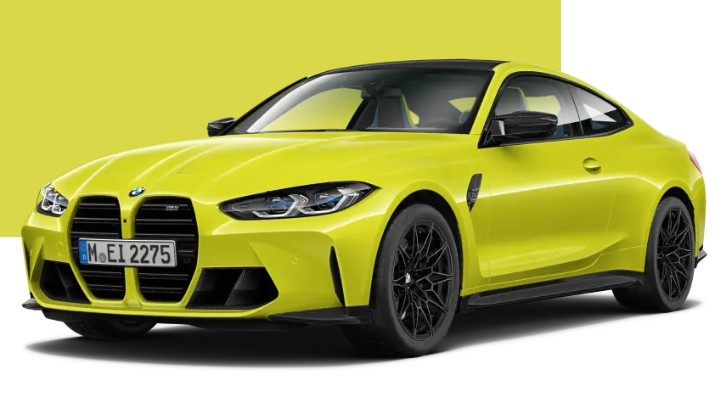
The BMW M4 has not been around for as many decades as names like the Porsche 911 or Ford Mustang, yet it already feels like a permanent fixture in the performance-car world. Search for BMW M4 generations, however, and the story can get surprisingly confusing. Is the F82 really the first generation? Does the old M3 Coupe count? When did the G82 arrive? And where exactly do versions such as Competition, CS, GTS, and CSL fit?
We can clear that up quickly: there have officially been two main BMW M4 generations so far. The first-generation F82 M4 Coupe arrived in 2014, accompanied by the F83 Convertible. The second-generation G82 Coupe followed for the 2021 model year, alongside the G83 Convertible. BMW created the M4 badge when it separated the coupe and convertible versions of the 3 Series into the new 4 Series family. BMW itself describes the 2014 M4 as the first M4, launched alongside the F80 M3.
Simple enough? On paper, yes. In reality, each M4 generation contains a fascinating collection of Competition models, facelifts and increasingly extreme special editions.
Let's work through the entire BMW M4 timeline and see how the car evolved from a relatively traditional rear-wheel-drive sports coupe into today's brutally quick, technologically sophisticated M machine.
Content in this publication
- How Many BMW M4 Generations Are There?
- Before the BMW M4: The M3 Coupe Connection
- First BMW M4 Generation: F82 and F83
- F82 M4 Driving Character
- 2016 BMW M4 Competition Package
- 2017 BMW M4 Facelift
- BMW M4 GTS: The Wild F82
- BMW M4 CS F82
- What Made the F82 Generation Special?
- Second BMW M4 Generation: G82 and G83
- The S58 Engine Takes Over
- The Arrival of M xDrive
- G82 M4 Interior and Technology
- G82 M4 vs F82 M4: The Personality Shift
- BMW M4 CSL: The G82 Goes Extreme
- 2025 BMW M4 Update: The G82 Evolves
- The Ultra-Rare M4 CS Edition VR46
- BMW M4 Generations by Year
- Which BMW M4 Generation Is More Reliable?
- Which BMW M4 Generation Sounds Better?
- Which BMW M4 Generation Is Faster?
- Which BMW M4 Generation Looks Best?
- Best BMW M4 Generation for Daily Driving
- Best BMW M4 Generation for Enthusiasts
- Which BMW M4 Generation Should You Buy Used?
- Will There Be a Third BMW M4 Generation?
- Conclusion: Two BMW M4 Generations, Two Very Different Personalities
- Frequently Asked Questions About BMW M4 Generations
How Many BMW M4 Generations Are There?
As of 2026, there are two primary BMW M4 generations:
| Generation | Chassis | Approximate Era | Main Character |
|---|---|---|---|
| First generation | F82 Coupe / F83 Convertible | 2014–2020 | Raw, lighter, rear-drive-focused |
| Second generation | G82 Coupe / G83 Convertible | 2021–present | Faster, more powerful and technology-heavy |
The first-generation M4 established the name. The second transformed what buyers expected from it.
There is an important wrinkle, though. The M4 didn't appear from thin air in 2014. Its spiritual family tree stretches directly back through several generations of the BMW M3 Coupe.
If BMW had never changed its naming strategy, the modern M4 could easily have continued wearing an M3 Coupe badge.
Before the BMW M4: The M3 Coupe Connection
To understand the BMW M4 generations properly, we need to rewind.
For decades, BMW sold high-performance two-door versions of the 3 Series under the M3 name. Cars such as the E30, E36, E46 and E92 M3 helped build BMW M's reputation.
Then BMW reorganized its model lineup.
The traditional 3 Series sedan continued as the 3 Series, while the coupe and convertible migrated into the newly created 4 Series family. BMW M followed the same logic. The four-door performance car remained the M3, but the two-door version became the M4.
That naming shift occurred with the F80-generation M3 and F82-generation M4. BMW confirms that the first M4 debuted in 2014 when the company separated the coupe and convertible names from the M3 sedan.
Was the E92 M3 the First M4?
Technically, no.
The E92 is an M3 Coupe and was never officially called an M4.
Spiritually? Absolutely.
Think of the E92 M3 as the M4's immediate ancestor. It occupied essentially the same place in BMW's range: compact enough to feel agile, usable enough for everyday driving, and powerful enough to scare your passenger when an empty on-ramp appears.
But the mechanical philosophy changed dramatically during the transition.
The E92 M3 used a naturally aspirated V8. The F82 M4 switched to a turbocharged inline-six. That wasn't merely a badge change. It represented a new chapter in BMW M engineering.
First BMW M4 Generation: F82 and F83
The first-generation BMW M4 introduced the world to the M4 name in 2014.
The Coupe carried the F82 chassis designation, while the convertible was known as the F83. The closely related sedan remained the F80 M3.
This generation immediately established several characteristics that continue to define the M4 today: a turbocharged six-cylinder engine, aggressive bodywork, serious chassis hardware and the ability to function as both a daily driver and weekend weapon.
BMW lists the broader F80 M3/F82 M4 production era as 2014–2020 and notes that these models introduced M TwinPower Turbo technology to this branch of the M family.
The F82 M4 Engine Changed Everything
Under the hood sat BMW's S55 3.0-liter twin-turbocharged inline-six.
For long-time M3 fans, this was controversial.
Naturally aspirated engines had become part of the M3 identity. The screaming inline-six in the E46 and high-revving V8 in the E92 produced their power with drama. The F82's turbocharged engine behaved differently.
It delivered a thick surge of torque far earlier in the rev range.
Put your foot down and the M4 didn't gradually gather momentum like a roller coaster climbing toward the first drop. It punched forward almost immediately.
The standard F82 produced roughly 425 horsepower in many markets, with output increasing as BMW introduced Competition, CS and GTS variants.
Why Turbocharging Made Sense
Enthusiasts could debate soundtrack and throttle response all day, but turbocharging delivered obvious advantages.
BMW gained more torque, easier performance tuning and improved efficiency potential while meeting increasingly stringent emissions requirements.
More importantly, the engine provided a platform BMW could continuously develop.
And develop it did.
F82 M4 Driving Character
The original M4 could feel edgy.
Its rear-wheel-drive layout, abundant torque and relatively compact dimensions gave the car a mischievous personality. On a dry road with warm tires, it could generate huge grip. Turn off enough electronic assistance on a slippery surface, though, and the rear axle could become enthusiastic very quickly.
That's part of why enthusiasts still adore the F82.
Modern performance cars can sometimes feel as though several computers are negotiating every corner before the driver gets involved. The F82 sits closer to the old-school side of that divide.
It has technology, of course, but the sensations are less filtered than in many newer high-performance coupes.
Manual vs Dual-Clutch F82 M4
BMW offered enthusiasts something increasingly rare: a manual transmission.
Drivers who wanted maximum interaction could choose a six-speed manual, while those chasing quicker shifts could select BMW's seven-speed M dual-clutch transmission.
The DCT was impressively fast and suited aggressive driving wonderfully, but the manual provided the more traditional sports-car experience.
Neither choice is inherently wrong.
The question is whether we want the car to behave like a precision instrument or a dance partner.
2016 BMW M4 Competition Package
BMW didn't wait for an entirely new generation before sharpening the M4.
From 2016, the M3 and M4 became available with a Competition version. BMW increased output to approximately 450 hp while adding chassis and suspension changes. Adaptive M Suspension became standard on the Competition model, and BMW also revised its equipment and exhaust characteristics.
The difference wasn't simply a larger number on the specification sheet.
The Competition Package helped refine the chassis and created a version that many buyers now see as one of the sweet spots of the first M4 generation.
It retained everyday usability without going completely into track-car territory.
2017 BMW M4 Facelift
The F82 received a facelift in 2017.
BMW updated details rather than reinventing the car. According to BMW M's historical overview, revisions included LED rear lights, a sharper headlight signature, additional colors and new wheel designs.
That's important when shopping for used BMW M4 generations because two F82 cars built several years apart can look similar at first glance while having meaningful specification differences.
Later cars generally feel more mature.
BMW had several years to polish software, suspension calibration and equipment options while expanding the range.
BMW M4 GTS: The Wild F82
Then things became considerably more serious.
The BMW M4 GTS took the F82 formula and pushed it toward track use.
This wasn't simply an M4 with louder exhaust pipes and flashy trim. BMW reduced weight, increased performance and introduced track-focused technology.
The GTS showed what the M4 platform could achieve once comfort stopped being the main priority.
It also laid the groundwork for a pattern we'd see repeatedly: BMW would build the normal M4, create a sharper Competition version, and occasionally unleash a far more extreme derivative.
The GTS helped establish the M4 name as something independent from its M3 heritage.
BMW M4 CS F82
The F82 M4 CS arrived as a fascinating middle ground.
BMW positioned it between the Competition model and hardcore GTS. According to BMW M, production ran from July 2017 until June 2019. The CS produced 460 hp and 600 Nm of torque, and BMW records an official Nürburgring Nordschleife lap time of 7:38.
That placement made enormous sense.
Not everyone who wanted a faster M4 wanted a near-race-car experience.
The CS blended improved performance with enough everyday usefulness that we could drive to work Monday morning after spending Sunday attacking mountain roads.
In many ways, that's the M4 philosophy distilled into one car.
What Made the F82 Generation Special?
Looking back, the first-generation M4 occupies an interesting period in automotive history.
It combines modern turbocharged performance with comparatively traditional sports-car ingredients.
We still get hydraulic-feeling mechanical feedback in places where newer cars increasingly rely on layers of electronic interpretation. We still have rear-wheel drive. We can still choose a manual transmission. And visually, the F82 remains relatively restrained compared with its successor.
For many enthusiasts, it hits a Goldilocks zone.
It's modern, but not overwhelmingly digital.
It's brutally fast, but we can exploit more of its performance on ordinary roads than we can with some newer super-sedan-level machines.
And crucially, it established the M4 badge strongly enough that by the end of production nobody was wondering why BMW had stopped calling it an M3 Coupe.
Second BMW M4 Generation: G82 and G83
The second BMW M4 generation arrived for the 2021 model year.
The Coupe became the G82, while the Convertible became the G83.
And yes, everybody immediately talked about the grille.
BMW gave the second-generation M4 enormous vertical kidney grilles that looked radically different from the restrained nose of the F82. Internet comment sections erupted. Photos became memes. Some enthusiasts acted as though civilization itself had entered its final chapter.
Then people drove the car.
Suddenly the conversation became more complicated.
Because underneath that controversial nose sat an enormously capable performance machine.
The S58 Engine Takes Over
The G82 abandoned the previous S55 engine in favor of BMW M's newer S58 3.0-liter twin-turbocharged inline-six.
You may be interested in reading BMW M4 Years: Complete Guide to Generations, Changes, and the Best Years to Buy
Power increased substantially.
Depending on version and market, outputs vary, but the basic lesson is simple: the second-generation M4 is considerably more muscular.
The engine delivers explosive acceleration while maintaining the smoothness expected from BMW's inline-six architecture.
Where the F82 sometimes feels aggressive and unruly, the G82 feels like it has been given bigger muscles and a degree in mechanical engineering.
Base M4 vs M4 Competition
BMW initially offered the G82 in standard and Competition forms.
The regular M4 preserved something enthusiasts desperately wanted: rear-wheel drive combined with a six-speed manual transmission.
The Competition model increased power and used an automatic transmission.
This divided the range neatly.
Want maximum driver involvement? The manual M4 makes a compelling argument.
Want maximum acceleration? The Competition moves the needle.
And then BMW complicated the decision even further.
The Arrival of M xDrive
One of the biggest changes in BMW M4 history was the introduction of M xDrive all-wheel drive to the M4 Competition.
For purists, an all-wheel-drive M4 once sounded almost contradictory. Rear-wheel drive had been woven into the identity of BMW M coupes for decades.
But modern horsepower created a simple problem: putting all that performance onto the road.
M xDrive gave the M4 astonishing traction.
Launch the car hard and it claws at the pavement instead of converting expensive rear tires into smoke.
Importantly, BMW designed its M xDrive system with a strong rear-drive bias, maintaining much of the traditional M character.
The result is a car that's dramatically easier to deploy quickly in real-world conditions.
Rain? Cold road? Imperfect pavement?
The G82 shrugs and gets on with it.
G82 M4 Interior and Technology
Another major difference between BMW M4 generations appears when we step inside.
The F82 interior is recognizably modern BMW, but the G82 moves much further into the digital era.
Depending on model year, equipment evolved from traditional separate instrument and infotainment screens toward BMW's large curved-display arrangement.
Driver-assistance technology expanded.
Connectivity improved.
Cabin materials and visual drama increased.
Optional carbon-fiber bucket seats can completely change the atmosphere. They look as though BMW stole them from a race paddock, wrapped them in expensive leather and somehow convinced regulators that ordinary humans should be allowed to commute in them.
They're spectacular.
Whether we'd want to climb across their aggressive bolsters twice a day is another matter.
G82 M4 vs F82 M4: The Personality Shift
Comparing the two BMW M4 generations reveals just how much performance cars changed in less than a decade.
The F82 generally feels smaller, lighter on its feet and more playful.
The G82 feels more planted, more substantial and considerably more powerful.
Imagine two boxers.
The F82 is the quick middleweight bouncing around the ring, constantly encouraging us to react.
The G82 is the heavyweight who has somehow learned the same footwork.
That doesn't automatically make the newer car better.
Drivers who prioritize steering feel, compact dimensions, traditional styling and a slightly rawer character may prefer the F82.
Drivers who prioritize outright speed, traction, technology, refinement and everyday capability will probably gravitate toward the G82.
BMW M4 CSL: The G82 Goes Extreme
If the standard G82 demonstrated how capable the platform had become, the M4 CSL demonstrated how far BMW M was willing to take it.
BMW lists the G82 M4 CSL as part of its modern M heritage, introduced in 2022.
CSL stands for a historically significant concept within BMW performance cars, associated with lightweight construction and uncompromising performance.
The G82 M4 CSL followed that philosophy aggressively.
BMW increased power, stripped weight and turned the car into one of the most focused road-going M models of the modern era.
The rear seats disappeared.
Carbon-fiber components proliferated.
Chassis tuning became sharper.
Comfort moved several seats backward on the priority list.
This wasn't the M4 we'd choose for relaxed interstate commuting.
But that wasn't the point.
The CSL existed to demonstrate what the G82 architecture could become when lap times took precedence over compromise.
2025 BMW M4 Update: The G82 Evolves
BMW updated the G82 generation for the 2025 model year rather than replacing it with an entirely new generation.
This distinction matters for people searching for BMW M4 generations by year.
A facelift does not create a third generation.
The underlying car remains part of the G82 family, even when lighting, power, infotainment or equipment changes.
So if you see a newer M4 with updated headlights and other revisions, it remains a second-generation M4.
BMW M4 CS G82
BMW also revived the CS badge for the second M4 generation.
The 2025 BMW M4 CS uses a more powerful version of the 3.0-liter twin-turbocharged inline-six, producing 543 hp in U.S. specification. BMW combined that additional performance with targeted weight reduction, extensive carbon-fiber-reinforced plastic components, specific chassis tuning and M xDrive. Production began at BMW Group Plant Dingolfing in July 2024.
Once again, the CS occupies clever territory.
It's more extreme than an M4 Competition without being quite as uncompromising as the CSL.
BMW effectively created a ladder:
- Standard M4: traditional enthusiast choice, including a manual transmission in applicable markets.
- M4 Competition: more performance and greater everyday speed.
- M4 Competition xDrive: serious all-weather traction and acceleration.
- M4 CS: lighter, sharper and more exclusive.
- M4 CSL: the most uncompromising track-oriented interpretation of the G82 formula.
That variety helps explain the M4's success.
BMW doesn't really sell one M4 anymore.
It sells several interpretations of the same idea.
The Ultra-Rare M4 CS Edition VR46
The G82 story even includes an unusual collector model.
In 2025, BMW announced the M4 CS Edition VR46, created around motorcycle racing legend and BMW M works driver Valentino Rossi.
BMW limited production to just 92 cars globally—46 cars in each of two design versions—and incorporated Rossi's famous number 46 throughout the design.
This isn't a separate M4 generation, of course.
It's better understood as a rare branch growing from the G82 family tree.
But it highlights how far the M4 badge has come.
Barely a decade after its introduction, BMW could already use the M4 as the foundation for highly collectible special editions without needing to rely completely on the older M3 name.
BMW M4 Generations by Year
If we want the BMW M4 history reduced to its easiest possible timeline, think of it this way.
2014: The M4 name debuts with the F82 Coupe alongside the F80 M3.
2016: Competition versions become available, increasing performance and sharpening the chassis.
2016 era: The F82-based M4 GTS pushes the platform toward serious track use.
2017: The regular F82 receives facelift updates.
2017–2019: The first M4 CS sits between the Competition and GTS in the range.
2020: The original F82/F83 generation reaches the end of its run.
2021: The second-generation G82 M4 Coupe arrives with the new S58 engine and dramatically different styling.
Early G82 era: Competition and M xDrive versions broaden the lineup.
2022: The G82 M4 CSL arrives as a highly focused lightweight special.
You may be interested in readingBMW M4 Years: Complete Guide to Generations, Changes, and the Best Years to BuyYou may be interested in reading
 Hyundai Palisade vs Santa Fe: Which Hyundai SUV Is Better?
2025 model year: Updated M4 models continue the G82 generation, while the G82 M4 CS adds 543 hp in U.S. specification and track-focused chassis upgrades.
2025: BMW launches the extremely limited M4 CS Edition VR46.
And that's the important distinction: numerous versions, two core generations.
Which BMW M4 Generation Is More Reliable?
Reliability isn't determined purely by chassis code.
Maintenance history matters enormously with high-performance BMWs.
An immaculate F82 owned by an enthusiast who warmed the engine properly, followed service intervals and used quality parts may be a safer purchase than a newer G82 that endured repeated abuse.
The F82 does have age working against it.
Early examples are now old enough for rubber components, suspension parts, cooling-system pieces, electronics and previous-owner modifications to become significant considerations.
The G82 is newer, but its extra technology and mechanical complexity can mean expensive components if problems eventually occur.
When buying either generation, we should care less about finding the cheapest advertisement and more about finding the best-maintained car.
A bargain M4 can become breathtakingly expensive after the purchase.
Which BMW M4 Generation Sounds Better?
This question could start an argument at almost any BMW meet.
Neither M4 generation provides the naturally aspirated soundtrack of the E92 M3 V8.
Between the actual M4 generations, many enthusiasts prefer the rawer character of earlier F82 cars, while others appreciate the deeper and more polished behavior of the S58-powered G82.
Exhaust systems, emissions equipment and market regulations also affect sound considerably.
Modified cars complicate comparisons even further.
Sound is subjective, but one conclusion is easy: if engine music sits at the top of our priority list, we should drive both generations before buying.
Specification sheets can't reproduce goosebumps.
Which BMW M4 Generation Is Faster?
The G82 wins.
Power increased, chassis technology improved and M xDrive transformed launch performance.
The F82 is hardly slow. Even today, its acceleration can embarrass plenty of sports cars.
The G82 simply lives in another performance era.
Especially in Competition xDrive form, it can deploy its horsepower with almost absurd effectiveness.
The fascinating question isn't whether the G82 is quicker.
It's whether we actually need the extra speed.
On ordinary roads, the older F82 already provides more performance than most drivers can routinely exploit.
Which BMW M4 Generation Looks Best?
Now we enter dangerous territory.
The F82 has the safer design.
Its proportions are muscular without becoming outrageous. The traditional kidney grille, swollen wheel arches and relatively clean profile have aged gracefully.
The G82 is intentionally provocative.
Its vertical grille dominated the conversation at launch, yet familiarity has softened the shock. Aggressive colors, carbon accessories and wide wheels can make the G82 look genuinely menacing.
We'd describe the F82 as handsome.
The G82 is theatrical.
Which one works better depends on whether we want our M4 to whisper about its performance or shout from the opposite side of the parking lot.
Best BMW M4 Generation for Daily Driving
The G82 arguably wins as a daily driver.
It's newer, more refined and filled with more modern convenience technology. Versions equipped with M xDrive also provide greater traction when road conditions deteriorate.
Yet there's an argument for the F82.
It's smaller-feeling, relatively straightforward and provides enough comfort without making us feel disconnected from the road.
A well-optioned F82 Competition can still be a superb commuter.
Neither is a luxury limousine, particularly with aggressive suspension or carbon bucket seats, but that's part of the deal.
We're buying an M4, not a rolling sofa.
Best BMW M4 Generation for Enthusiasts
This is where the F82 fights back.
Drivers wanting a more traditional BMW M experience may find the first M4 generation more rewarding.
Rear-wheel drive, a manual option, comparatively restrained dimensions and slightly less isolation give it character.
Meanwhile, the G82 manual car deserves significant credit because BMW continued offering a traditional gearbox when many rivals abandoned manuals altogether.
So we'd split the recommendation.
For old-school flavor, pick the F82.
For a blend of old-school interaction and modern capability, consider a manual G82.
For maximum usable performance, the G82 Competition xDrive is exceptionally hard to beat.
Which BMW M4 Generation Should You Buy Used?
The best used BMW M4 depends on what we value.
A clean standard F82 provides the most accessible route into M4 ownership and already delivers enormous performance.
An F82 Competition adds desirable upgrades without becoming wildly extreme.
The first-generation CS and GTS appeal more strongly to collectors and serious enthusiasts, with pricing typically reflecting their rarity.
Move into the G82 and the equation changes. We're paying more, but receiving more power, a newer cabin, better technology and—in selected versions—the tremendous traction of M xDrive.
Rather than asking, "Which M4 generation is best?" we should ask, "What type of M4 experience do we actually want?"
That's the question that leads to the right car.
Will There Be a Third BMW M4 Generation?
Eventually, almost certainly in some form—but predicting exactly what it will look like is more difficult.
BMW M is moving deeper into electrification, advanced chassis electronics and increasingly powerful hybrid or electric architectures across its wider performance lineup.
What that means for a future third-generation M4 remains a question until BMW formally unveils its successor.
The key lesson is not to mistake continued G82 updates for a new generation.
Facelifts, CS models and limited editions can significantly change a car without changing its core generation.
Until BMW replaces the G82 architecture with a true successor, we're still living in the second chapter of the M4 story.
Conclusion: Two BMW M4 Generations, Two Very Different Personalities
The history of BMW M4 generations is surprisingly compact.
There have been only two core generations, but BMW squeezed an extraordinary amount of evolution into them.
The F82 established the M4 identity. It introduced the badge in 2014, brought turbocharged inline-six performance to BMW's two-door M formula and spawned memorable variants such as the Competition, GTS and CS.
The G82 took that formula and turned up almost every dial.
More power.
More technology.
More traction.
More controversial styling.
More speed than most of us realistically need.
And yet the fundamental idea remains recognizable.
An M4 should make a boring journey entertaining. It should carry luggage on Friday and attack corners on Saturday. It should feel special before we even press the starter button.
The F82 accomplishes that with a slightly rawer, more traditional personality.
The G82 accomplishes it with astonishing capability.
Neither generation makes the other irrelevant.
Instead, they show two different interpretations of the same performance-car philosophy—and that may be the most interesting thing about the M4's evolution.
Frequently Asked Questions About BMW M4 Generations
1. How many generations of the BMW M4 are there?
There have been two main BMW M4 generations so far. The first is the F82 Coupe/F83 Convertible generation introduced in 2014. The second is the G82 Coupe/G83 Convertible generation introduced for the 2021 model year.
2. What years are the F82 BMW M4?
The F82 belongs to the first BMW M4 generation, which began in 2014 and continued through 2020. BMW's historical material lists the F80 M3/F82 M4 era as 2014–2020.
3. What year did the G82 BMW M4 start?
The G82 is the second-generation BMW M4 Coupe and arrived for the 2021 model year. It replaced the F82 and introduced the S58 turbocharged inline-six, radically different styling and, in selected Competition versions, M xDrive all-wheel drive.
You may be interested in readingBMW M4 Years: Complete Guide to Generations, Changes, and the Best Years to BuyYou may be interested in reading
Hyundai Palisade vs Santa Fe: Which Hyundai SUV Is Better?You may be interested in reading
Hyundai Palisade vs Kia Carnival: Which Family Vehicle Is Better?4. Is the M4 CS a separate BMW M4 generation?
No. CS identifies a more focused performance variant rather than an entirely separate generation. BMW produced an F82 M4 CS during the first generation and later introduced a G82 M4 CS during the second. BMW's own CS history includes both versions.
5. Which BMW M4 generation is best?
The F82 is arguably better for drivers seeking a rawer and more traditional M-car experience, while the G82 offers greater power, traction, technology and overall capability. A clean F82 Competition can be a particularly appealing enthusiast choice, while a G82 Competition xDrive suits buyers prioritizing maximum real-world performance.
If you want to know other articles similar to BMW M4 Generations: Complete History, Changes, and Evolution you can visit the category Models.
Haval Jolion vs Omoda C5: Which SUV Is Better?
Haval Jolion vs Chery Tiggo 4 Pro: Full Comparison
Haval Jolion vs H6: Which SUV Is Better in 2026?
Haval Jolion vs Toyota Corolla Cross: Which SUV Is Better?
Haval Jolion vs Jaecoo J5: Which SUV Is Better?
Volkswagen T-Cross vs Volkswagen T-Roc: Which Is Better?
Leave a Reply
More content of your interest