
Can Mitsubishi Outlander Tow Caravan? Capacity, Limits, and Practical Advice

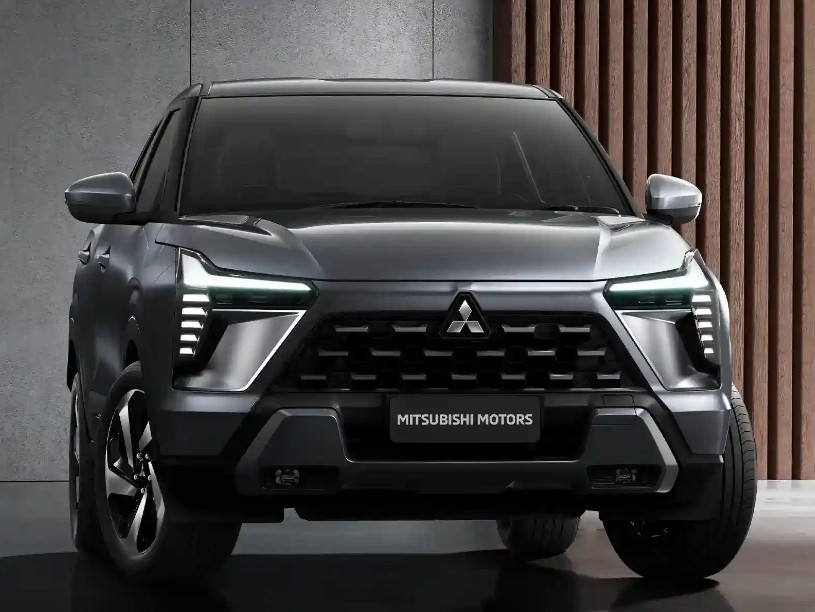
Yes, a Mitsubishi Outlander can tow a caravan—but that answer comes with an important asterisk. The caravan must remain within the towing limit assigned to your exact Outlander model, powertrain, production year, and market.
Depending on the version, current official ratings range from approximately 1,500 pounds to 2,000 pounds in North America, while some Australian and UK petrol models are rated to tow as much as 1,600 kg with trailer brakes. The North American Outlander PHEV generally has a lower maximum than the petrol model.
That means the Outlander can work well with a lightweight caravan, compact camper, folding trailer, or teardrop caravan. It is not usually the right vehicle for a large family caravan packed with water, bicycles, awnings, gas bottles, and enough luggage to survive a month in the wilderness.
Think of the Outlander as a capable middle-distance runner rather than a heavyweight powerlifter. It can pull a sensible load confidently, but we should not ask it to perform the job of a large diesel SUV or pickup truck.
In this guide, we will explain how much an Outlander can tow, how caravan weight should be calculated, whether the PHEV is suitable, and what to inspect before leaving home.
Content in this publication
- How Much Can a Mitsubishi Outlander Tow?
- Can an Outlander Tow a Full-Size Caravan?
- Can Mitsubishi Outlander PHEV Tow Caravan?
- Understanding Braked and Unbraked Towing Limits
- Kerb Weight Is Not the Same as Towing Capacity
- How to Calculate Whether Your Caravan Is Safe to Tow
- Should We Tow at the Maximum Capacity?
- Can the Outlander Handle Hills While Towing?
- Does S-AWC Make the Outlander Better for Towing?
- Trailer Stability Assist and Caravan Sway
- How Much Tow-Ball Weight Can an Outlander Carry?
- How Towing Affects Fuel Consumption
- What Tow Bar Does the Outlander Need?
- Pre-Towing Inspection Checklist
- How to Load the Caravan Correctly
- Driving Techniques for Towing With an Outlander
- Is an Older Mitsubishi Outlander Good for Caravan Towing?
- When Is the Outlander Not the Right Tow Vehicle?
- Advantages of Towing a Caravan With an Outlander
- Disadvantages to Consider
- Can Mitsubishi Outlander Tow Caravan Safely? Final Verdict
- Frequently Asked Questions
How Much Can a Mitsubishi Outlander Tow?
The towing capacity varies significantly by country and configuration. We should never assume that a figure found for an Australian model applies to a vehicle sold in the United States, Canada, New Zealand, or the United Kingdom.
Official examples include:
| Mitsubishi Outlander version | Maximum advertised towing capacity |
|---|---|
| Australian-market petrol Outlander | Up to 1,600 kg braked |
| Australian-market petrol Outlander | Up to 750 kg unbraked |
| UK petrol Outlander | Up to 1,600 kg braked |
| 2026 US petrol Outlander | Up to 2,000 lb |
| 2026 US Outlander PHEV | Up to 1,500 lb |
| Older US Outlander PHEV examples | Up to 1,500 lb |
Mitsubishi Australia lists a 1,600 kg braked towing capacity, a 750 kg unbraked limit, and a maximum tow-ball load of 160 kg for the relevant Outlander specification. The current UK towing guide also advertises a 1,600 kg braked rating.
In the United States, Mitsubishi advertises the 2026 petrol Outlander with a maximum towing capacity of 2,000 pounds, or roughly 907 kg. Its published maximum trailer tongue weight is 200 pounds.
The 2026 US Outlander PHEV has a lower advertised towing capacity of 1,500 pounds, provided it has the appropriate factory-installed towing hitch.
These differences are not minor. A caravan that fits comfortably within a 1,600 kg rating could exceed a 1,500-pound limit by hundreds of kilograms.
Why Does Towing Capacity Vary by Country?
Regional towing ratings may differ because of:
- Vehicle specifications
- Engine and transmission combinations
- Cooling-system design
- Hitch certification
- Local testing procedures
- Trailer-brake regulations
- Suspension or tyre specifications
- Vehicle homologation requirements
Two Outlanders may look almost identical in a car park yet have different legal towing limits.
For that reason, the number printed in the owner’s manual, compliance label, towing supplement, or official specification sheet for the exact vehicle should always overrule a general figure found online.
Can an Outlander Tow a Full-Size Caravan?
Usually, the Mitsubishi Outlander is better suited to a small or lightweight caravan than a conventional full-size model.
Many large caravans can weigh well above 1,600 kg once loaded. Even when a caravan’s empty weight appears acceptable, optional equipment and holiday supplies can push its actual weight beyond the Outlander’s limit.
A seemingly light caravan can gain weight quickly when we add:
- Fresh water
- Waste water
- Gas cylinders
- Leisure batteries
- Solar equipment
- Bedding and clothing
- Food and cooking equipment
- Camping chairs and tables
- Bicycles
- Outdoor awnings
- Spare wheels
- Tools and recovery equipment
A caravan listed at 1,300 kg empty might not remain a 1,300 kg caravan for long. Once loaded, it could approach or exceed 1,500 kg.
That is why checking the caravan’s empty weight alone is like checking an airline suitcase before packing it. The number tells us where we started—not what we will actually take onto the road.
What Caravan Size Is Realistic?
The most realistic matches are typically:
- Lightweight teardrop caravans
- Compact two-berth caravans
- Pop-top caravans
- Folding campers
- Small fibreglass caravans
- Lightweight single-axle touring caravans
- Micro caravans
- Small off-road campers within the rated limit
A caravan comfortably below the maximum rating leaves more flexibility for passengers, luggage, hills, wind, and changing road conditions.
Can Mitsubishi Outlander PHEV Tow Caravan?
Yes, the Mitsubishi Outlander PHEV can tow a caravan when properly equipped, but its capacity must be checked carefully.
In the United States, the current Outlander PHEV is advertised with a maximum towing rating of 1,500 pounds when fitted with the factory-installed towing hitch. Earlier US-market PHEV specifications also listed a 1,500-pound maximum.
The PHEV’s electric motors can deliver smooth initial torque, which may make pulling away feel surprisingly effortless. However, smooth acceleration should not be confused with unlimited capacity.
Towing affects:
- Electric driving range
- Fuel economy
- Battery consumption
- Petrol-engine operation
- Regenerative-braking behaviour
- Hill-climbing performance
- Charging strategy
- Brake and tyre temperatures
The system may run the petrol engine more frequently to support propulsion and maintain battery charge. Mitsubishi has previously described Battery Charge Mode as useful for preserving additional power for demanding situations such as hill climbing or towing.
Does Towing Damage the Outlander PHEV Battery?
Towing within the manufacturer’s limits should not inherently damage a healthy battery or hybrid system. The vehicle is designed to manage battery temperature, engine involvement, and electric-motor output.
Problems become more likely when the vehicle is:
- Overloaded
- Used outside its official towing limit
- Driven aggressively on long climbs
- Poorly maintained
- Fitted with incorrect tyres
- Operated with an unsuitable hitch
- Forced to tow with unresolved cooling or drivetrain faults
The main practical consequence is reduced efficiency. Electric range can fall sharply because aerodynamic drag and total mass rise substantially.
Should We Save Battery Power for Hills?
On a route containing long climbs, maintaining some battery charge can improve the driving experience. A fully depleted traction battery does not necessarily make the vehicle unusable, but the system may depend more heavily on the petrol engine and its energy-management strategy.
The correct driving mode and operating technique can vary by generation. Owners should follow the manual rather than relying on a universal internet formula.
Understanding Braked and Unbraked Towing Limits
A braked trailer has its own braking system. An unbraked trailer relies primarily on the tow vehicle’s brakes.
This distinction matters because the Outlander’s unbraked capacity is generally much lower than its braked capacity.
For example, Mitsubishi Australia identifies a 1,600 kg braked capacity and a 750 kg unbraked limit for the applicable Outlander.
Almost any conventional caravan approaching the upper end of the Outlander’s rating will need effective trailer brakes.
Why Trailer Brakes Matter
Trailer brakes help:
- Reduce stopping distance
- Limit strain on the vehicle’s brakes
- Improve control during emergency braking
- Reduce pushing from the caravan
- Improve downhill stability
- Support legal compliance
A caravan can pull beautifully on a flat road and still be dangerous when it is time to stop. Towing is not only about whether the engine can move the load. Braking, directional stability, cooling, and tyre capacity matter just as much.
Kerb Weight Is Not the Same as Towing Capacity
Towing terminology can feel like alphabet soup. Yet understanding a few figures can prevent an overloaded combination.
Kerb Weight
Kerb weight is generally the vehicle’s weight with standard equipment and operating fluids, though the exact definition can vary by market.
It does not usually represent a fully loaded car carrying every passenger, suitcase, accessory, and snack box.
Payload
Payload is the amount of weight the vehicle can carry. It may include:
- Driver and passengers
- Luggage
- Roof-mounted equipment
- Tow-ball load
- Aftermarket accessories
- Cargo inside the cabin
- Cargo in the luggage area
The tow-ball load is especially easy to overlook. It presses down on the rear of the vehicle and normally counts against the Outlander’s available payload.
Gross Vehicle Mass
Gross vehicle mass, often shortened to GVM, GVWR, or a similar regional term, is the maximum permitted weight of the loaded tow vehicle.
The Outlander can remain below its trailer limit and still exceed its vehicle-weight limit if we load too many passengers and supplies inside it.
Gross Combination Mass
Gross combination mass refers to the permitted combined weight of the loaded vehicle and loaded trailer.
Not every market presents this figure in the same way, but when it is specified, it can become the controlling limit.
Caravan Tare Weight
Tare weight is broadly the caravan’s empty or minimally equipped weight under a defined standard.
It is useful for comparison, but it does not reveal what the caravan weighs during a real holiday.
You may be interested in reading Is Mazda BT-50 a Good Car? A Complete Ownership Guide
Loaded Caravan Weight
The loaded weight is the number that truly matters. It should include everything carried in or attached to the caravan.
The terminology may include ATM, GVWR, MAM, MTPLM, or another region-specific abbreviation.
How to Calculate Whether Your Caravan Is Safe to Tow
We can use a simple step-by-step process.
Step 1: Find the Outlander’s Exact Limit
Check the:
- Owner’s manual
- Vehicle identification label
- Towing supplement
- Official Mitsubishi specification sheet
- Approved tow-bar documentation
Match the information to the exact:
- Model year
- Engine
- Drivetrain
- Trim
- Transmission
- Country of sale
Step 2: Find the Caravan’s Actual Loaded Weight
Do not rely only on the brochure’s empty figure.
The best approach is to weigh the caravan in travel-ready condition at a certified weighbridge or another approved weighing facility.
Step 3: Measure the Tow-Ball or Tongue Weight
The vertical load on the hitch must remain within the limits for:
- The vehicle
- The tow bar
- The tow ball
- The caravan coupling
The lowest applicable rating wins.
Step 4: Add Vehicle Occupants and Cargo
Count every person, bag, child seat, accessory, and piece of cargo carried by the Outlander.
Step 5: Check All Relevant Limits
Confirm that you remain within:
- Braked or unbraked towing capacity
- Maximum tow-ball load
- Vehicle payload
- Gross vehicle mass
- Gross combination limit
- Tow-bar rating
- Caravan axle rating
- Tyre load ratings
A Simple Example
Imagine an Outlander rated to tow 1,600 kg braked.
The caravan weighs:
- 1,180 kg empty
- 70 kg of water
- 40 kg of gas and batteries
- 80 kg of food and clothing
- 45 kg of camping equipment
- 35 kg of accessories
Its estimated loaded weight is now 1,450 kg.
On paper, that remains below 1,600 kg. However, we must still verify ball weight, vehicle payload, axle limits, and the real weight at a weighbridge.
The remaining 150 kg is not permission to add another 150 kg blindly. It is breathing room, and breathing room is valuable.
Should We Tow at the Maximum Capacity?
A manufacturer’s maximum is a boundary, not necessarily the ideal everyday target.
Towing near the limit may produce:
- Slower acceleration
- Longer stopping distances
- Higher fuel consumption
- More engine noise
- Increased transmission load
- Greater sensitivity to crosswinds
- More pronounced movement from passing trucks
- Reduced performance on steep hills
- Faster brake and tyre wear
- Less room for packing errors
Leaving a sensible margin below the official capacity generally makes towing calmer and more forgiving.
A rig that is technically legal can still feel unpleasant if it is poorly balanced or constantly working at the edge of its abilities.
The 85 Percent Guideline
Some caravan communities use an informal guideline suggesting that inexperienced drivers choose a loaded caravan weighing no more than about 85 percent of the tow vehicle’s kerb weight.
That is not a universal legal rule and does not replace the manufacturer’s towing limits. It is simply a conservative matching idea used in some markets.
We must still comply with every official weight limit even when an informal ratio appears favourable.
Can the Outlander Handle Hills While Towing?
A correctly loaded Outlander can tow a suitable caravan through hilly terrain, but speed may fall on long or steep climbs.
The experience depends on:
- Engine type
- Hybrid battery state
- Caravan weight
- Road gradient
- Altitude
- Outside temperature
- Headwind
- Passenger and cargo load
- Vehicle condition
We should avoid demanding full acceleration for long periods when a lower, steadier pace will do the job.
If the transmission offers a manual-selection or lower-range function, the owner’s manual may recommend using it to control gear hunting or support downhill braking.
What About Mountain Descents?
Descending can be more demanding than climbing.
Use an appropriate lower gear or drive setting when recommended, maintain a generous gap, and avoid riding the brake pedal continuously. Trailer brakes must be correctly adjusted and fully operational.
Regenerative braking in a PHEV may help manage speed, but it should never be treated as a substitute for functional vehicle and caravan brakes.
Does S-AWC Make the Outlander Better for Towing?
Mitsubishi’s Super All-Wheel Control system can improve traction and directional control, particularly on wet roads, loose surfaces, or slippery launches.
It may help when:
- Pulling away on wet grass
- Leaving a gravel campsite
- Driving on snow-covered roads
- Starting on a damp incline
- Manoeuvring on loose ground
However, all-wheel drive does not increase the official towing limit unless Mitsubishi specifically assigns a different rating to that configuration.
It also cannot overcome poor weight distribution, excessive speed, worn tyres, or an overloaded caravan.
Traction helps us start moving. Physics still decides how we stop and turn.
Trailer Stability Assist and Caravan Sway
Some Outlander specifications include trailer-stability assistance as part of the vehicle’s stability-control system. Mitsubishi’s current US material also references Trailer Stability Assist in connection with Outlander towing.
The system may detect instability and apply braking or reduce power to help control trailer movement.
It is a useful safety layer, but it is not a magic wand.
Caravan sway can be encouraged by:
- Excessive speed
- Incorrect nose weight
- Heavy items stored behind the caravan axle
- Sudden steering inputs
- Strong crosswinds
- Passing large trucks
- Underinflated tyres
- Poor suspension condition
- Uneven loading
If sway begins, avoid panicked steering or acceleration. Follow the emergency procedure recommended for the vehicle and caravan braking system.
How Much Tow-Ball Weight Can an Outlander Carry?
Tow-ball or tongue-weight limits vary by market.
The Australian 24MY Outlander brochure lists a maximum tow-ball load of 160 kg, while the 2026 US specification lists a maximum trailer tongue weight of 200 pounds, roughly 91 kg.
This is another reason we cannot mix specifications from different countries.
Too little nose weight can contribute to instability. Too much can overload:
- The rear axle
- Rear suspension
- Tyres
- Tow bar
- Vehicle payload
- Caravan coupling
The goal is not to chase a random percentage from a forum. We should use the caravan manufacturer’s loading guidance while remaining below every component limit.
How Towing Affects Fuel Consumption
Towing a caravan can increase fuel consumption considerably.
The extra weight matters, but aerodynamic drag is often the bigger villain. A tall, box-shaped caravan pushes through the air like a wardrobe caught in a storm.
Fuel use depends on:
You may be interested in readingIs Mazda BT-50 a Good Car? A Complete Ownership GuideYou may be interested in reading
How Long Does a Mazda BT-50 Last? Lifespan, Mileage, and Reliability Explained- Caravan height and width
- Speed
- Wind direction
- Terrain
- Tyre pressure
- Total weight
- Roof accessories
- Driving style
- Petrol or PHEV powertrain
- Frequency of stops
Reducing cruising speed moderately can improve consumption and stability. Rapid acceleration followed by heavy braking wastes fuel and adds stress.
What Happens to PHEV Electric Range?
The PHEV’s electric range can fall significantly while towing.
At lower urban speeds, the system may still use electric propulsion effectively. At motorway speeds, the caravan’s aerodynamic drag demands much more energy, encouraging greater petrol-engine involvement.
A route that is easy on battery power without a trailer may become a predominantly hybrid journey with one attached.
That is normal. The vehicle is balancing performance, battery protection, and efficiency.
What Tow Bar Does the Outlander Need?
Use a tow bar approved for:
- The exact Outlander generation
- The vehicle’s powertrain
- The required trailer weight
- The intended tongue or ball load
- Local regulations
A suitable installation may also require:
- Correct electrical wiring
- Trailer-light connector
- Brake controller
- Safety-chain attachment points
- Breakaway system
- Software coding
- Trailer-stability integration
- Cooling or equipment upgrades where specified
In North America, Mitsubishi states that its advertised maximum ratings depend on appropriate factory-installed towing equipment.
An aftermarket hitch with a high number stamped onto it does not increase the vehicle’s legal towing capacity. The vehicle rating remains the ceiling.
Pre-Towing Inspection Checklist
Before every caravan trip, check the following:
- Tyre pressures: Adjust the Outlander and caravan tyres according to their manufacturers’ towing guidance.
- Tyre condition: Look for cracking, bulges, uneven wear, or insufficient tread.
- Wheel fasteners: Confirm they are tightened to the correct specification.
- Trailer lights: Test indicators, brake lights, tail lights, and number-plate lighting.
- Coupling: Make sure it is fully locked.
- Safety chains or cables: Attach them correctly.
- Breakaway system: Test it where fitted.
- Trailer brakes: Confirm proper operation.
- Mirrors: Fit legal towing mirrors when the caravan blocks the normal rearward view.
- Load security: Prevent heavy items from moving.
- Fluid levels: Check coolant, brake fluid, engine oil, and washer fluid.
- Warning lights: Resolve unexplained dashboard warnings before departure.
- Charging cable: Remove and store it before moving a PHEV.
- Roof load: Include it in the vehicle’s weight calculation.
- Route: Review steep gradients, narrow roads, charging stops, and fuel availability.
How to Load the Caravan Correctly
Place heavy items:
- Low in the caravan
- Close to the axle
- Evenly distributed from side to side
- Secured against movement
Avoid piling heavy equipment at the rear. Rear-heavy loading can act like a pendulum and increase sway.
Water tanks deserve attention too. Depending on their location, travelling with them full or empty can alter ball weight and balance. Partial tanks may also allow liquid to surge unless they are designed with effective internal baffles.
Do Passengers Reduce Towing Capacity?
Passengers may not directly change the published trailer limit, but they consume vehicle payload and increase total combination weight.
A family of five, luggage, a roof box, and a heavy tow-ball load can use the Outlander’s available payload surprisingly quickly.
This is why “the caravan is under the towing limit” is only the first sentence of the calculation—not the conclusion.
Driving Techniques for Towing With an Outlander
Good technique can make a modest tow vehicle feel composed.
Accelerate Progressively
Apply the throttle smoothly and allow the vehicle to build speed. Full-throttle starts create unnecessary stress and may disturb the caravan.
Brake Earlier
The combination is heavier and needs more distance to stop. Begin slowing sooner than normal.
Leave a Larger Gap
A generous following distance provides space for gradual braking and helps us see traffic changes earlier.
Reduce Speed in Wind
Crosswinds can push the caravan sideways. Slowing down reduces aerodynamic force and gives the stability systems more room to help.
Allow Passing Vehicles Space
Large trucks create pressure waves that can first push and then pull the caravan. Hold the steering wheel steadily and avoid sharp corrections.
Take Wider Turns
A caravan follows a tighter line than the tow vehicle. Allow extra clearance around kerbs, signs, and parked cars.
Practise Reversing
Before the holiday, practise in an empty, legal area. Small steering inputs work better than dramatic ones.
Stop and Inspect the Rig
After the first few kilometres, stop somewhere safe and check:
- Coupling security
- Safety chains
- Electrical plug
- Load movement
- Tyres
- Wheel temperature
- Unusual smells
- Trailer-brake behaviour
Repeat these checks during longer journeys.
Is an Older Mitsubishi Outlander Good for Caravan Towing?
An older Outlander may tow perfectly well, but condition becomes more important than the badge on the grille.
Inspect:
- Transmission service history
- Cooling-system condition
- Engine-oil history
- Suspension bushes
- Shock absorbers
- Wheel bearings
- Brake pads and discs
- Tyre age
- Battery health
- Tow-bar corrosion
- Electrical connections
- Previous towing damage
For a used PHEV, battery condition and hybrid-system service history also matter.
Older generations may have very different towing capacities. Never apply a current 1,600 kg figure to an older Outlander without verifying its own documentation.
When Is the Outlander Not the Right Tow Vehicle?
We should consider a larger or more specialised vehicle when:
- The loaded caravan exceeds the Outlander’s rating
- The caravan is close to the maximum before packing
- The route contains frequent steep mountains
- The vehicle will tow every week
- The caravan has a high nose-weight requirement
- The family uses most of the available payload
- The combination feels unstable
- The Outlander repeatedly struggles with cooling or braking
- We expect to carry heavy equipment inside the vehicle
- The journey includes demanding off-road terrain
A Mitsubishi Triton or another appropriately rated tow vehicle may be more suitable for heavier caravans. Mitsubishi Australia, for example, advertises the current Triton with a maximum braked towing capacity of 3,500 kg, far above the Outlander’s 1,600 kg figure.
Buying a heavier tow vehicle is not admitting defeat. It is choosing the right tool before the trip turns into a mechanical endurance test.
Advantages of Towing a Caravan With an Outlander
When properly matched, the Outlander offers several attractions:
- Comfortable family-friendly cabin
- Available all-wheel drive
- Manageable dimensions
- Smoother daily driving than many large tow vehicles
- Useful luggage capacity
- Petrol and PHEV options
- Trailer-stability technology on relevant versions
- Easier parking when the caravan is detached
- Potentially lower running costs than a large pickup
- Practicality for people who tow occasionally
For a family using a lightweight caravan several times a year, an Outlander can be a sensible compromise.
Disadvantages to Consider
Its limitations include:
- Lower capacity than large SUVs and pickups
- Limited suitability for heavy caravans
- Noticeable fuel-consumption increase
- Reduced PHEV electric range
- Payload pressure when carrying a full family
- Greater sensitivity near maximum capacity
- Different limits between markets and generations
- Less performance reserve on steep climbs
The Outlander is versatile, but versatility does not mean it is unlimited.
Can Mitsubishi Outlander Tow Caravan Safely? Final Verdict
Yes, the Mitsubishi Outlander can safely tow a caravan when the caravan is light enough, correctly loaded, properly braked, and compatible with the exact vehicle specification.
Current official ratings illustrate how widely the answer can vary. Some Australian and UK petrol versions are rated to tow up to 1,600 kg braked, while the 2026 US petrol Outlander is rated to 2,000 pounds and the 2026 US PHEV to 1,500 pounds with the specified towing equipment.
For a teardrop, folding camper, or lightweight touring caravan, the Outlander can be an appealing companion. It provides everyday comfort without feeling like we are driving a work truck from Monday to Friday.
For a large or heavily equipped caravan, however, the numbers may become too tight. Once the vehicle is full of passengers and the caravan is loaded for a real journey, the theoretical margin can disappear like ice under the summer sun.
The safest approach is simple: identify the vehicle’s exact limit, weigh the loaded caravan, calculate payload and ball weight, and leave a reasonable margin. When every figure agrees, the Outlander can turn a modest caravan into a very capable ticket to the open road.
Frequently Asked Questions
1. Can a Mitsubishi Outlander tow a 1,500 kg caravan?
Some Outlanders with a 1,600 kg braked towing rating may legally tow a caravan weighing 1,500 kg when fully loaded. However, this leaves a narrow margin. We must also verify ball weight, vehicle payload, gross vehicle mass, tow-bar capacity, and any combined-weight restriction.
A US-market Outlander with a 2,000-pound rating cannot tow a 1,500 kg caravan because 1,500 kg is approximately 3,307 pounds—far beyond its published limit.
2. Can an Outlander PHEV tow a small caravan?
Yes. A properly equipped Outlander PHEV can tow a lightweight caravan within its official rating. In the United States, Mitsubishi lists the 2026 PHEV with a maximum capacity of 1,500 pounds when equipped with the appropriate factory-installed hitch.
Expect reduced electric range and increased petrol-engine use.
3. Does towing a caravan affect the Outlander warranty?
Towing within the manufacturer’s published limits and following the required operating and maintenance instructions should not automatically invalidate the entire vehicle warranty. However, damage caused by overloading, incorrect equipment, or improper use may not be covered.
Warranty terms vary by country, so owners should review their warranty booklet or obtain written guidance from Mitsubishi.
You may be interested in readingIs Mazda BT-50 a Good Car? A Complete Ownership GuideYou may be interested in reading
How Long Does a Mazda BT-50 Last? Lifespan, Mileage, and Reliability ExplainedYou may be interested in reading
Are Mazda BT-50 Reliable? A Complete Ownership Guide4. Do I need trailer brakes when towing with an Outlander?
That depends on the trailer’s weight and local law. Heavier caravans will generally require their own braking system. The applicable Outlander may have a much lower unbraked limit; Australian specifications, for example, list 750 kg unbraked compared with 1,600 kg braked.
5. Is AWD necessary for towing a caravan?
AWD is not always necessary for normal sealed-road towing, but it can improve traction on wet grass, gravel, snow, and slippery inclines. It does not automatically increase the legal towing capacity, and it cannot compensate for poor caravan loading or excessive speed.
If you want to know other articles similar to Can Mitsubishi Outlander Tow Caravan? Capacity, Limits, and Practical Advice you can visit the category Blog.
Volvo S90 Reliability: Problems, Costs & Best Years
Is Haval Jolion a Good Car? Honest Review, Reliability, Pros and Cons
How to Start Haval Jolion With Spare Key: Complete Guide
How to Calculate Per Diem on an Auto Loan

How to Calculate the Residual Value of a Car
Is the Honda Passport Selling Well? Sales Numbers Tell the Story
Leave a Reply
More content of your interest