

Chevrolet Silverado Gas Tank Size: Complete Guide by Model and Configuration

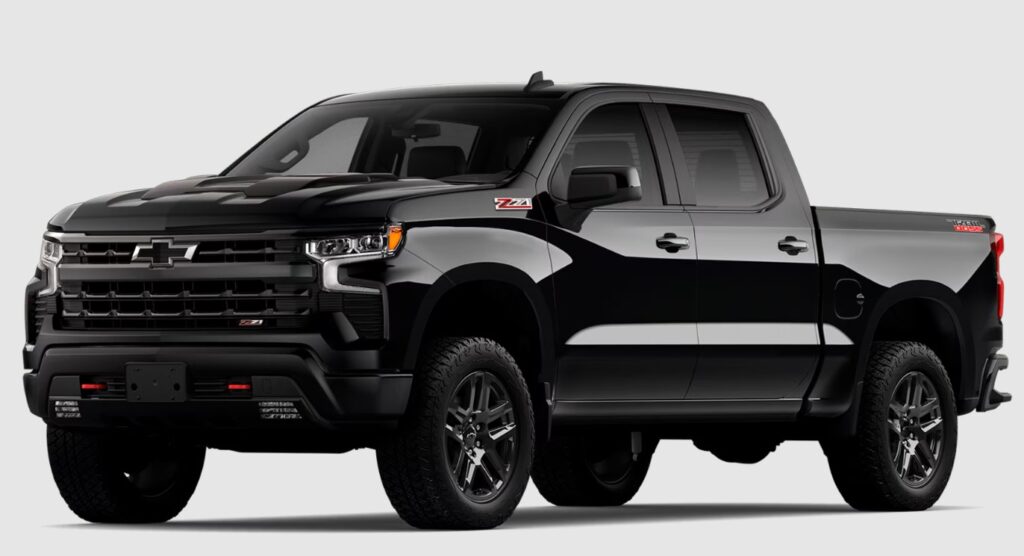
The Chevrolet Silverado gas tank size is not represented by one universal number. Depending on the model year, duty rating, cab style, bed length, drivetrain, and chassis configuration, a Silverado may carry roughly 24 gallons or more than 60 gallons of fuel.
That is quite a spread.
A daily-driven Silverado 1500 Crew Cab does not need the same fuel storage as a commercial 3500 HD Chassis Cab hauling equipment across several counties. One truck is built around everyday practicality. The other treats a fuel station like an inconvenient interruption.
For most newer Silverado 1500 configurations, the fuel tank holds approximately 24 or 28 gallons. Many older 1500 models use tanks in the 26-to-36-gallon range, while Silverado HD and commercial configurations may offer substantially larger capacities.
However, model names alone do not tell the entire story. Two trucks from the same year can have different tanks because one has a longer bed, a different wheelbase, or a chassis designed for commercial equipment.
In this guide, we will examine the common Chevrolet Silverado fuel tank capacities, explain why they vary, estimate driving range, convert gallons into liters, and show you how to confirm the exact capacity of your truck.
Content in this publication
- Chevrolet Silverado Gas Tank Size at a Glance
- Why Chevrolet Silverado Fuel Tank Capacity Varies
- Chevrolet Silverado 1500 Gas Tank Size
- Chevrolet Silverado 2500 HD Fuel Tank Size
- Chevrolet Silverado 3500 HD Fuel Tank Size
- Silverado Medium-Duty Fuel Capacity
- Chevrolet Silverado Fuel Tank Size by Generation
- How Many Liters Does a Silverado Hold?
- How Far Can a Silverado Travel on One Tank?
- How Much Does It Cost to Fill a Silverado?
- Why the Silverado Takes Less Fuel Than Its Rated Capacity
- How to Find Your Silverado’s Exact Tank Size
- Can You Install a Larger Fuel Tank?
- Common Silverado Fuel Tank Problems
- Which Silverado Tank Size Is Best?
- Final Thoughts on Chevrolet Silverado Gas Tank Size
- Frequently Asked Questions
Chevrolet Silverado Gas Tank Size at a Glance
Here is a practical overview of commonly encountered capacities. These figures should be treated as general guidance because Chevrolet has produced numerous combinations across different years and markets.
| Silverado version | Common approximate capacity |
|---|---|
| Newer Silverado 1500 Short Bed | 24 gallons |
| Newer Silverado 1500 Standard or Long Bed | 28 gallons |
| Older Silverado 1500 | 26–36 gallons |
| Silverado 2500 HD | Around 36 gallons |
| Silverado 3500 HD Pickup | Around 36 gallons |
| Silverado 3500 HD Chassis Cab | Up to approximately 63 gallons |
| Silverado Medium Duty | Varies by wheelbase and tank option |
| Silverado EV | No gasoline tank |
A 24-gallon tank equals approximately 90.8 liters, while a 28-gallon tank holds about 106 liters. A 36-gallon tank equals approximately 136.3 liters.
Chevrolet currently advertises two tank choices for certain Silverado 3500 HD Chassis Cab configurations, including an available tank with an approximate capacity of 63 gallons.
The Silverado EV, meanwhile, belongs in a different conversation. It stores electrical energy in a battery rather than gasoline or diesel in a conventional fuel tank. Chevrolet currently offers the electric Silverado alongside its combustion-powered 1500 and HD trucks.
Why Chevrolet Silverado Fuel Tank Capacity Varies
Why does Chevrolet not simply install the largest possible tank in every Silverado?
Because a pickup is a puzzle of tightly packed components. The fuel tank must share space beneath the truck with the frame, driveshaft, exhaust system, suspension, spare tire, emissions equipment, transmission, transfer case, and other hardware.
A larger tank adds range, but it also adds:
- Weight
- Manufacturing cost
- Refueling expense
- Packaging complexity
- Additional fuel load
- Potential reductions in available payload
One U.S. gallon of gasoline weighs roughly six pounds. Therefore, four additional gallons may add around 24 pounds when the tank is full. That is not enormous on a full-size pickup, but engineers still account for every pound when calculating payload, axle ratings, handling, and emissions performance.
Cab Style Can Affect Tank Size
The Silverado has been offered in Regular Cab, Double Cab, Extended Cab, and Crew Cab layouts, depending on the generation.
A Regular Cab leaves more frame length available behind the passenger compartment. A Crew Cab uses more of the wheelbase for rear-seat space. That difference can influence which bed, wheelbase, and tank combinations Chevrolet can install.
However, cab style does not determine capacity by itself. It works together with bed length and wheelbase.
Bed Length Often Makes the Biggest Difference
Silverado beds are commonly described as:
- Short bed
- Standard bed
- Long bed
A short-bed Crew Cab is compact enough for daily use and parking, but the shorter wheelbase may provide less room for a large tank. Standard-bed and long-bed trucks often have space for a larger-capacity unit.
Think of the truck’s frame like a kitchen counter. The longer it is, the easier it becomes to arrange everything without stacking the toaster on top of the coffee maker.
Drivetrain May Change Packaging
A four-wheel-drive Silverado includes a transfer case and front-drive components that are not required on a two-wheel-drive truck. These parts can affect underbody packaging, although they do not always result in a different listed fuel capacity.
Owners should never assume that a 2WD and a 4WD version automatically have identical tanks merely because the trucks share an engine and trim.
Heavy-Duty Trucks Have Different Priorities
Silverado 2500 HD and 3500 HD models are designed for greater towing, hauling, and commercial workloads. Their frames, suspension systems, wheelbases, and body configurations differ from those of the Silverado 1500.
Long-distance towing can drain a tank with astonishing speed. A trailer turns the truck into a metal athlete running uphill while carrying a refrigerator. A larger tank does not improve fuel economy, but it allows the driver to travel farther between stops.
Chevrolet Silverado 1500 Gas Tank Size
The Silverado 1500 is the light-duty model and the version most private owners encounter. It is available in numerous trims, including WT, Custom, LT, RST, LT Trail Boss, LTZ, High Country, and ZR2 on current U.S. models. Chevrolet’s current Silverado 1500 range also includes multiple gasoline engines and an available 3.0-liter Duramax turbo-diesel.
For many late-model Silverado 1500 trucks, the most common capacities are:
- Approximately 24 gallons on many short-bed configurations
- Approximately 28 gallons on selected standard-bed or long-bed configurations
Those capacities convert to:
| U.S. gallons | Approximate liters |
| 24 gallons | 90.8 liters |
| 28 gallons | 106.0 liters |
The difference is four gallons, which may not seem dramatic. Yet at 20 mpg, those extra four gallons theoretically represent another 80 miles of travel.
That can be the difference between completing a highway trip comfortably and staring nervously at the low-fuel warning while searching for the next exit.
Does the Silverado 1500 Engine Determine Tank Size?
Not necessarily.
The Silverado 1500 has been sold with four-cylinder, V6, V8, and diesel engines. Current models offer the TurboMax four-cylinder, 5.3-liter V8, 6.2-liter V8, and available 3.0-liter Duramax turbo-diesel, depending on trim and configuration.
The engine affects how quickly the truck consumes fuel, but the cab, bed, wheelbase, drivetrain, and market specification frequently have a greater influence on physical tank capacity.
A diesel Silverado may travel considerably farther on one tank than a gasoline V8 even when both trucks carry the same amount of fuel. The advantage comes from fuel efficiency, not necessarily from a larger tank.
Silverado 1500 Short-Bed Fuel Tank
Many newer Silverado 1500 Short Bed configurations use a tank of approximately 24 gallons.
The Short Bed is popular with Crew Cab buyers because it keeps overall truck length relatively manageable. It provides generous passenger space without turning every parking garage into a geometry exam.
Its smaller footprint, however, may be paired with the smaller of the commonly available 1500 tanks.
Silverado 1500 Standard-Bed Fuel Tank
Selected Standard Bed models commonly have an approximate capacity of 24 or 28 gallons, depending on year and configuration.
This is where assumptions become dangerous. A seller may advertise a truck as having the larger tank simply because it has a longer bed. Before relying on that claim, confirm it through the vehicle documentation or build data.
Silverado 1500 Long-Bed Fuel Tank
Long-bed Silverado 1500 models frequently receive the larger tank available for that generation. On many newer trucks, that may mean approximately 28 gallons.
Older models can differ and may have tanks exceeding 30 gallons. Long-bed trucks are commonly chosen for work, towing, or hauling, so additional range makes practical sense.
Chevrolet Silverado 2500 HD Fuel Tank Size
The Silverado 2500 HD moves beyond light-duty pickup territory. It is designed for demanding trailers, heavy payloads, snowplows, fifth wheels, and commercial use.
Many Silverado 2500 HD pickups have a tank capacity of approximately 36 gallons, although the exact number can vary by year, cab, wheelbase, bed, and market.
A 36-gallon tank equals approximately 136 liters.
That sounds enormous until we connect a heavy trailer.
Suppose a gas-powered 2500 HD returns 10 mpg while towing. A 36-gallon tank provides a simple theoretical range of 360 miles. After leaving a sensible reserve, the practical distance between stops may be closer to 300 miles.
This is why HD drivers care about both tank capacity and towing fuel economy. The tank may be large, but a loaded truck can drink from it like water through a fire hose.
Gas and Diesel 2500 HD Tanks
Gasoline and diesel versions may share similar physical tank capacities in many configurations, but their real-world ranges can differ.
Chevrolet currently offers a 6.6-liter Duramax turbo-diesel on Silverado 2500 HD and 3500 HD models.
A diesel engine may deliver better highway efficiency under certain conditions, especially while carrying steady loads. Nevertheless, diesel fuel economy depends heavily on:
- Trailer weight
- Trailer height and aerodynamics
- Road gradient
- Driving speed
- Tire pressure
- Wind
- Regeneration cycles
- Idling
- Temperature
- Vehicle gearing
A 36-gallon diesel tank does not promise a fixed number of miles. It simply gives the engine 36 gallons with which to work.
Chevrolet Silverado 3500 HD Fuel Tank Size
Many Silverado 3500 HD pickup configurations use a fuel tank in the neighborhood of 36 gallons. However, dual-rear-wheel trucks, long-wheelbase models, and chassis-cab versions deserve separate attention.
The 3500 HD is not merely a 1500 with tougher springs. It is built around much higher working demands. Some owners use it for recreational towing, while others install flatbeds, service bodies, dump bodies, cranes, or other commercial equipment.
Silverado 3500 HD Pickup Tank
A conventional 3500 HD pickup with a factory bed commonly carries around 36 gallons, although owners must verify the capacity for their exact year and configuration.
Both Single Rear Wheel and Dual Rear Wheel versions have appeared across the model’s history. The rear-wheel arrangement alone does not provide enough information to identify the tank.
Silverado 3500 HD Chassis Cab Tank
Chassis-cab trucks are sold without a traditional pickup bed so businesses can install specialized bodies. Because these trucks may spend entire days traveling between job sites, Chevrolet offers configurations with significantly more fuel capacity.
For the current Silverado 3500 HD Chassis Cab, Chevrolet describes two fuel tank choices, including an available capacity of approximately 63 gallons.
Sixty-three gallons equals approximately 238.5 liters.
At 12 mpg, that amount of fuel could theoretically support 756 miles of driving. Real operating range would be lower after accounting for reserve fuel, idling, payload, terrain, and auxiliary equipment.
Still, it is a vast improvement over stopping every few hours—especially for contractors working far from major highways.
Silverado Medium-Duty Fuel Capacity
The Silverado name also appears on commercial medium-duty trucks, including the 4500 HD, 5500 HD, and 6500 HD Chassis Cab.
These vehicles are built for upfits such as:
- Tow trucks
- Utility bodies
- Dump bodies
- Delivery bodies
- Mobile workshops
- Construction vehicles
- Municipal equipment
- Ambulances and emergency units
Chevrolet offers medium-duty Silverado chassis in multiple wheelbases, cab layouts, and drivetrain configurations.
Fuel capacity varies substantially because the final truck is often tailored to its job. A buyer may select different tank arrangements depending on frame length, equipment placement, and body design.
For that reason, a generic internet specification is especially unreliable for a 4500 HD, 5500 HD, or 6500 HD. The factory build sheet and upfitter documentation should be considered the primary references.
Chevrolet Silverado Fuel Tank Size by Generation
Silverado capacities have changed across generations. The following ranges summarize commonly encountered sizes rather than promising that every truck within a year group uses the same tank.
First-Generation Silverado: 1999–2006
First-generation Silverado 1500 trucks commonly appear with tanks in the approximate 26-to-34-gallon range, depending on cab, bed, wheelbase, and series.
Some configurations used smaller tanks because of frame packaging, while long-bed or heavy-duty versions could carry more fuel.
Silverado Classic Models
Chevrolet continued selling the older body style under the Silverado Classic name during the transition to the next generation.
A Silverado Classic may therefore share more hardware with the preceding generation than with the redesigned truck sold in the same calendar period. When ordering a tank or fuel pump, knowing whether the vehicle is a Classic model is essential.
Second-Generation Silverado: 2007–2013
Second-generation Silverado trucks frequently use capacities around 26 gallons, with larger tanks available in selected long-bed and heavy-duty configurations.
Certain extended-range arrangements may reach approximately 34 or 36 gallons.
Once again, “2008 Silverado 1500” is not enough information to identify a replacement tank. We would also need to know the cab, bed, drivetrain, wheelbase, and often the vehicle identification number.
Third-Generation Silverado: 2014–2018
Many 2014–2018 Silverado 1500 trucks were equipped with tanks around 26 gallons, while selected configurations used larger capacities.
This generation also introduced different engine and body combinations, including V6 and V8 gasoline engines, along with special fuel and efficiency technologies.
A truck’s dashboard range estimate may lead an owner to believe the tank is smaller than advertised. In reality, the display calculates range from recent fuel economy and available fuel rather than measuring a permanent number of miles. Chevrolet manuals explain that estimated range is influenced by recent driving history and the fuel remaining in the tank.
Fourth-Generation Silverado: 2019–Present
Many fourth-generation Silverado 1500 trucks use 24- or 28-gallon tanks, depending largely on configuration.
Chevrolet currently offers several Silverado 1500 trims and four main engine choices in the U.S. lineup, making configuration details more important than ever.
A Crew Cab Short Bed may carry less fuel than a longer-wheelbase work truck, even when both trucks have the same 5.3-liter V8.
What About the Silverado EV?
The Silverado EV does not have a conventional gas tank. Instead, it uses a large battery system and electric motors.
Its range is expressed in miles per charge, not miles per gallon or gallons per tank. Chevrolet advertises current Silverado EV configurations with estimated ranges that depend on version and equipment.
How Many Liters Does a Silverado Hold?
Drivers outside the United States may prefer liters. Here are the most useful conversions:
| Capacity in U.S. gallons | Approximate capacity in liters |
| 24 gallons | 90.8 liters |
| 26 gallons | 98.4 liters |
| 28 gallons | 106.0 liters |
| 34 gallons | 128.7 liters |
| 36 gallons | 136.3 liters |
| 40 gallons | 151.4 liters |
| 63 gallons | 238.5 liters |
These are conversions from U.S. gallons, not Imperial gallons.
That distinction matters. One Imperial gallon is larger than one U.S. gallon. Most Chevrolet documentation for the American market uses U.S. gallons.
How Far Can a Silverado Travel on One Tank?
Fuel capacity is only half of the range equation. Fuel economy supplies the other half.
The basic formula is:
Estimated range = tank capacity × fuel economy
For example:
- 24 gallons × 18 mpg = 432 miles
- 28 gallons × 20 mpg = 560 miles
- 36 gallons × 15 mpg = 540 miles
- 63 gallons × 12 mpg = 756 miles
These are mathematical estimates, not guaranteed driving distances.
Chevrolet currently lists up to 28 mpg highway for properly equipped Silverado 1500 models with the available 3.0-liter Duramax diesel.
Using the full rated tank capacity in a range calculation is also unrealistic. Drivers normally refuel before the tank is completely empty, and a portion of the fuel may remain after the gauge reaches its lowest point.
Estimated Range With a 24-Gallon Tank
At different fuel economy figures:
| Fuel economy | Theoretical range |
| 15 mpg | 360 miles |
| 18 mpg | 432 miles |
| 20 mpg | 480 miles |
| 24 mpg | 576 miles |
| 28 mpg | 672 miles |
Estimated Range With a 28-Gallon Tank
| Fuel economy | Theoretical range |
| 15 mpg | 420 miles |
| 18 mpg | 504 miles |
| 20 mpg | 560 miles |
| 24 mpg | 672 miles |
| 28 mpg | 784 miles |
Estimated Range With a 36-Gallon Tank
| Fuel economy | Theoretical range |
| 10 mpg | 360 miles |
| 12 mpg | 432 miles |
| 15 mpg | 540 miles |
| 18 mpg | 648 miles |
| 20 mpg | 720 miles |
Why Towing Range Drops So Quickly
A trailer increases total weight, rolling resistance, and aerodynamic drag. A tall travel trailer can behave like a giant wall being pulled through the air.
Speed also matters. Aerodynamic resistance climbs rapidly as speed increases. Driving a few miles per hour slower may noticeably improve towing range, particularly with a large enclosed trailer.
How Much Does It Cost to Fill a Silverado?
To estimate a fill-up, multiply the tank capacity by the local price per gallon.
For example, with fuel priced at $3.50 per gallon:
- 24-gallon tank: $84.00
- 28-gallon tank: $98.00
- 36-gallon tank: $126.00
- 63-gallon tank: $220.50
The actual amount paid is usually lower because the tank is rarely completely empty.
A large fill-up can feel painful, but tank size does not determine operating cost on its own. A driver with a 36-gallon tank does not automatically spend more per mile than someone with a 24-gallon tank. The larger-tank driver simply buys more fuel at once and may stop less often.
Why the Silverado Takes Less Fuel Than Its Rated Capacity
An owner may drive until the warning light appears, fill the tank, and discover that the pump stops several gallons below the advertised capacity.
That does not necessarily indicate a problem.
The Low-Fuel Warning Appears Before Empty
Manufacturers design the warning to provide time to find a station. Waiting until the engine runs dry can damage components, create a dangerous roadside situation, and leave the fuel pump without adequate cooling or lubrication.
The Gauge Is Not a Laboratory Instrument
Fuel moves as the truck accelerates, brakes, climbs, descends, and turns. The tank shape is also irregular because it must fit around the frame and other components.
The gauge smooths these movements rather than displaying every splash.
Usable Capacity May Differ From Total Capacity
Published capacity can refer to the tank’s approximate total volume. The amount a driver can pump during an ordinary fill may be smaller because some fuel remains in the tank.
The Pump May Shut Off Early
A fuel nozzle can click off prematurely because of:
- Nozzle angle
- Pump flow speed
- Vapor-recovery design
- Filler-neck restriction
- Fuel foaming
- Vent-system issues
Do not repeatedly force additional fuel into the tank after the nozzle automatically stops. Overfilling can send liquid fuel into the evaporative-emissions system.
How to Find Your Silverado’s Exact Tank Size
Because the Silverado has so many variations, the safest method is to identify the truck precisely.
Check the Owner’s Manual
The owner’s manual may list fuel capacity in the technical specifications section. Chevrolet provides access to manuals and guides through its owner-support resources.
Be certain the manual matches the correct:
- Model year
- Silverado series
- Country
- Engine
- Body configuration
Use the Vehicle Identification Number
A Chevrolet dealer can use the VIN to view factory equipment information. This is often the most reliable approach when purchasing replacement parts.
The VIN helps distinguish between trucks that look almost identical but use different fuel-system components.
Check the Build Sheet or Parts Catalog
A factory build record may identify the tank, wheelbase, and relevant production codes.
A GM parts department can also search for the correct replacement tank using the VIN.
Measure a Typical Fill-Up Carefully
Repeated fill-up records can provide a clue, but they do not prove total capacity.
For example, if a truck consistently accepts 22 gallons shortly after the low-fuel warning, it may have a 24-, 26-, or even 28-gallon tank. The remaining reserve is unknown.
Inspect the Tank and Part Number
A visible label or stamped number may help identify the installed tank. This can be useful on older trucks that may have received replacement parts.
However, do not crawl beneath an unsupported vehicle. Use proper lifting equipment and safety procedures whenever underbody inspection is necessary.
Can You Install a Larger Fuel Tank?
Aftermarket replacement and auxiliary tanks are available for certain Silverado configurations, especially diesel HD trucks.
A larger tank may appeal to drivers who:
- Tow long distances
- Work in remote areas
- Travel through regions with few fuel stations
- Want fewer stops
- Operate commercial fleets
- Use the truck for overlanding
Yet the upgrade is not as simple as finding a metal container that fits.
The tank must be compatible with the truck’s:
- Frame and wheelbase
- Fuel type
- Fuel pump or sending unit
- Emissions system
- Filler neck
- Vent system
- Gauge calibration
- Exhaust routing
- Driveshaft clearance
- Spare-tire placement
A full 60-gallon tank of diesel also carries substantial weight. That weight counts against the vehicle’s available payload.
Before installing an oversized or auxiliary tank, check local regulations, warranty implications, axle ratings, and manufacturer instructions.
Common Silverado Fuel Tank Problems
Tank capacity questions sometimes begin because the truck is behaving strangely rather than because the owner is merely curious.
Fuel Gauge Reads Incorrectly
A faulty sending unit, wiring issue, instrument-cluster problem, or damaged float can cause inaccurate readings.
The gauge may remain full, drop suddenly, or show empty even when fuel remains.
Truck Is Difficult to Fill
If the nozzle repeatedly shuts off, possible causes include a restricted vent line, damaged filler neck, blocked evaporative-emissions component, or a poorly positioned nozzle.
Fuel Smell Near the Truck
A persistent gasoline or diesel odor should never be ignored. Possible sources include:
- Damaged tank
- Loose fuel cap
- Cracked filler hose
- Leaking line
- Faulty pump seal
- Evaporative-emissions leak
- Overfilled tank
Park the vehicle away from ignition sources and arrange an inspection when a leak is suspected.
Tank Appears to Hold Too Little Fuel
Before assuming that the tank has collapsed or become damaged, confirm:
- The official capacity for the VIN
- How much fuel remained before filling
- Whether the pump shut off early
- Whether the gauge is accurate
- Whether the tank was previously replaced
Which Silverado Tank Size Is Best?
The ideal capacity depends on how we use the truck.
A 24-gallon tank is usually sufficient for commuting, errands, and moderate highway travel. It costs less to fill from near empty and carries less fuel weight.
A 28-gallon tank provides a useful range advantage without becoming excessive for a light-duty pickup.
A 36-gallon tank makes sense for HD owners who tow, travel long distances, or work in areas where stations are scarce.
A 63-gallon commercial tank is designed for serious duty cycles. It reduces downtime, but a complete fill is expensive and heavy.
The largest tank is not automatically the best. It is simply the best for drivers who genuinely need the extra range.
Final Thoughts on Chevrolet Silverado Gas Tank Size
The Chevrolet Silverado gas tank size depends on much more than the badge attached to the tailgate.
Most newer Silverado 1500 trucks carry approximately 24 or 28 gallons, while many Silverado HD pickups hold around 36 gallons. Older 1500 models may use tanks ranging from roughly 26 to 36 gallons, and selected commercial chassis-cab configurations can carry approximately 63 gallons.
The important lesson is simple: never purchase a replacement tank, calculate a long-distance route, or trust a seller’s claim without confirming the truck’s exact configuration.
Cab style matters. Bed length matters. Wheelbase matters. Model year matters. Even the country in which the truck was sold can matter.
When precision is required, use the VIN, factory build information, Chevrolet documentation, or a qualified parts department. The internet can point us toward the answer, but the truck’s own identity provides the final word.
Frequently Asked Questions
1. How many gallons does a Chevrolet Silverado 1500 hold?
Many newer Chevrolet Silverado 1500 configurations hold approximately 24 or 28 gallons. The exact capacity depends on the model year, cab style, bed length, wheelbase, drivetrain, and market.
2. How many liters is a 24-gallon Silverado tank?
A 24-U.S.-gallon tank holds approximately 90.8 liters. A 28-gallon tank holds about 106 liters, while a 36-gallon tank holds around 136.3 liters.
3. Does a Silverado diesel have a larger fuel tank?
Not always. Gasoline and diesel trucks may share the same tank capacity in certain configurations. The diesel may still travel farther because of better fuel efficiency, especially during steady highway driving.
4. Why can I not put the rated number of gallons into my Silverado?
Fuel normally remains when the low-fuel warning appears. The pump may also shut off early because of nozzle position, fuel foaming, filler-neck design, or a venting problem. Published tank capacity does not mean every fill-up will accept that exact amount.
5. What is the largest Chevrolet Silverado fuel tank?
Capacity varies by model and configuration, but Chevrolet currently advertises an available tank of approximately 63 gallons for certain Silverado 3500 HD Chassis Cab trucks. Medium-duty and specially upfitted vehicles may use other tank arrangements.
If you want to know other articles similar to Chevrolet Silverado Gas Tank Size: Complete Guide by Model and Configuration you can visit the category Service and Parts.
Volvo S90 Engine Oil: Type, Capacity & Change Guide
Volvo S90 Boot Space: Size, Capacity and Practicality
SEO Title: Volvo S90 Oil Capacity: Complete Guide by Engine

Kia Sorento Oil Type: Complete Guide by Year & Engine
Kia Sorento Engine Capacity: Complete Guide by Year
Peugeot 308 Clutch Replacement Cost: Complete UK Guide for 2026
Leave a Reply
More content of your interest