
Ford Edge vs Kuga: Which Ford SUV Is the Better Choice?

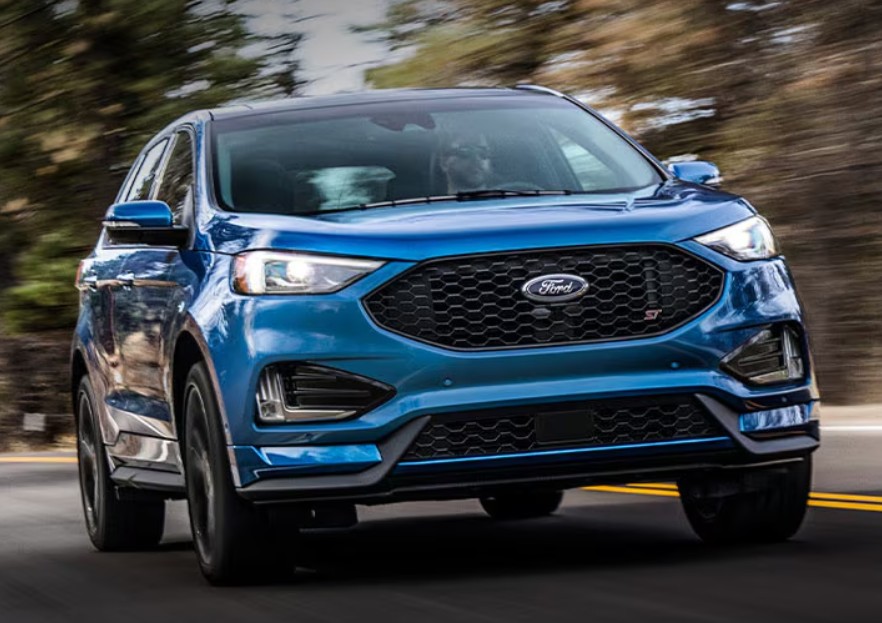
Put the Ford Edge vs Kuga side by side and, at first glance, we might assume we're comparing two variations of essentially the same Ford SUV recipe. Both have five doors, five seats, elevated driving positions, practical boots, and enough versatility to handle everything from commuting to family holidays.
Look closer, though, and the personalities quickly separate.
The Ford Edge is the bigger SUV. It feels broader, heavier, more substantial, and more influenced by North American tastes. The Ford Kuga, meanwhile, is the more compact and agile proposition, designed around European roads, tighter parking spaces, greater efficiency, and increasingly electrified powertrains.
Think of it this way: if the Kuga is a comfortable pair of running shoes, the Edge is a sturdy pair of hiking boots. Both can take us a long way, but they approach the journey differently.
There's another important wrinkle. A new-for-new comparison isn't really possible in markets such as the UK because the Edge disappeared from Ford's local new-car range years ago, whereas the Kuga remains a current model. That means many buyers considering an Edge today will be comparing a used Edge against either a used or substantially newer Kuga.
So which one actually deserves our money?
Let's dig in.
Content in this publication
- Ford Edge vs Kuga at a Glance
- Ford Edge vs Ford Kuga: Are They the Same Size?
- Interior Space: Edge Takes the Spacious Approach
- Ford Edge vs Kuga Boot Space
- Engine Choices: This Is Where the Generations Really Show
- Ford Edge vs Kuga Fuel Economy
- Driving Experience: Big Cruiser or Agile All-Rounder?
- Ride Comfort
- Ford Edge vs Kuga Technology
- Ford Edge vs Kuga Towing Capacity
- Ford Edge AWD vs Kuga AWD
- Practicality for Families
- Ford Edge vs Kuga Reliability
- Running Costs
- Used Ford Edge vs Used Ford Kuga
- Ford Edge vs Kuga for City Driving
- Ford Edge vs Kuga for Motorway Driving
- Which Looks Better?
- Ford Edge vs Kuga: Which Has the Better Interior?
- Who Should Buy the Ford Edge?
- Who Should Buy the Ford Kuga?
- Ford Edge vs Kuga: Pros and Cons
- Ford Edge vs Kuga: Which Offers Better Value?
- Which One Would We Choose?
- FAQs About Ford Edge vs Kuga
Ford Edge vs Kuga at a Glance
The simplest distinction is size.
European-market Ford documentation for the later Edge lists an overall length of approximately 4,834 mm, a width of 1,928 mm excluding mirrors, and luggage capacity of 602 litres beneath the parcel shelf.
The modern Kuga is noticeably smaller. Ford lists current-generation dimensions of approximately 4,604–4,645 mm long, depending on configuration, and 1,882 mm wide excluding mirrors.
That difference affects almost everything: cabin feel, parking, motorway manners, cargo flexibility, fuel use, and even how substantial each vehicle feels from behind the wheel.
Here is the basic picture:
| Category | Ford Edge | Ford Kuga |
|---|---|---|
| Vehicle type | Larger five-seat SUV | Compact/midsize five-seat SUV |
| Character | Spacious, substantial, relaxed | Efficient, agile, versatile |
| Best environment | Motorways and long journeys | Mixed driving and cities |
| Powertrain focus | Mainly diesel in later UK models | Petrol, hybrid and PHEV |
| Cabin feel | Wider and roomier | More compact but flexible |
| Parking | More demanding | Easier |
| Used-market appeal | Large SUV for the money | Broad choice and lower running demands |
| Best for | Space and road presence | Everyday practicality |
There isn't an automatic winner. Instead, we have two SUVs designed around noticeably different priorities.
Ford Edge vs Ford Kuga: Are They the Same Size?
No. This is probably the most important misconception to clear up.
The Edge sits above the Kuga in physical size. Even though both are five-seat SUVs in the European context, the Edge gives us more of that large-SUV sensation. Its body is longer and wider, and the cabin feels correspondingly generous.
According to Ford's published specifications, the later Edge stretches to roughly 4.83 metres, whereas today's Kuga sits around 4.60 to 4.65 metres, depending on version.
A difference of around 20 centimetres may not sound enormous on paper.
In a supermarket car park, it suddenly does.
Ford Edge Dimensions
The Edge's approximate dimensions include:
- Length: 4,834 mm
- Width without mirrors: 1,928 mm
- Width with mirrors: 2,184 mm
- Height: about 1,732 mm
- Boot capacity with five seats: 602 litres beneath the load cover
- Maximum luggage volume with seats folded: up to roughly 1,688 litres on later specification figures
Ford's own documentation confirms these measurements can vary depending on specification and equipment.
The important part isn't obsessing over every millimetre. It's recognizing the Edge as a genuinely broad vehicle.
Ford Kuga Dimensions
The current-generation Kuga comes in at around:
- Length: 4,604–4,645 mm
- Width without mirrors: 1,882 mm
- Width including mirrors: 2,177 mm
- Height: approximately 1,651–1,683 mm
- Wheelbase: 2,711 mm
Ford's current owner's information confirms those dimensions.
Which Is Easier to Park?
The Kuga, without much debate.
We still get a proper family SUV, but its smaller footprint makes multi-storey car parks, residential streets, garages, and narrow lanes considerably less intimidating.
The Edge isn't unmanageable, especially with parking sensors and cameras, but we are always more aware of its shoulders.
Interior Space: Edge Takes the Spacious Approach
Walk from a Kuga into an Edge and the difference isn't just measured with a ruler.
We feel it.
The Edge gives passengers more of that spread-out sensation associated with larger SUVs. The dashboard stretches farther across the cabin, the centre console feels substantial, and the front occupants don't feel packed together.
Rear passengers benefit as well.
For families with taller teenagers or adults regularly sitting behind adults, that extra breathing room can make long journeys much more pleasant.
Is the Kuga Cramped?
Not remotely.
This is where the comparison needs some nuance.
The current Kuga was engineered specifically to improve passenger accommodation over its predecessor. When Ford introduced the generation, it highlighted increases in shoulder, hip, and rear passenger room despite reducing the vehicle's overall height.
So the Kuga uses its footprint cleverly.
It simply can't manufacture the extra physical width available in the Edge.
Which SUV Is Better for Five Adults?
We would favour the Edge.
Five adults in a Kuga is perfectly realistic, but five adults spending several hours on a motorway will appreciate the Edge's broader cabin.
For two parents and three younger children, either vehicle can work nicely.
Ford Edge vs Kuga Boot Space
Here's another area where the Edge's size pays dividends.
Ford quoted 602 litres of luggage capacity beneath the cover with all five Edge seats available, rising to 800 litres when loaded to the roof in the relevant specification.
Fold the rear seats and there's considerably more room available.
That's excellent for suitcases, pushchairs, camping equipment, dogs, bulky shopping, or the strange collection of possessions a family somehow accumulates before every holiday.
Kuga Cargo Space Is More Flexible Than It Looks
The Kuga fights back with clever packaging rather than sheer bulk.
Depending on specification and measurement method, Ford documentation lists 456 litres behind the rear seats with the mini spare-wheel configuration, while maximum space behind the front seats can exceed 1,600 litres in the referenced specification.
Different Kuga variants, hybrid hardware, spare-wheel arrangements, and rear-seat positions can alter available luggage volume, so buyers should compare the exact version they intend to purchase rather than relying on one universal number.
Our Boot-Space Winner: Ford Edge
If our priority is simply carrying more stuff without folding seats or playing suitcase Tetris, the Edge has the advantage.
Engine Choices: This Is Where the Generations Really Show
Comparing engines requires care because we're not generally shopping for brand-new examples of both vehicles from the same showroom.
Later European Ford Edge models became strongly associated with diesel power.
The current Kuga represents a completely different period in Ford's product strategy.
Today, the UK Kuga lineup includes conventional petrol, full hybrid, and plug-in hybrid choices. Ford's published pricing and technical information, for example, has included a 1.5-litre EcoBoost petrol alongside 2.5-litre full-hybrid configurations.
That's a massive philosophical difference.
Ford Edge Engine Character
The Edge makes the most sense when driven the way a big diesel SUV likes to be driven.
Settle onto a motorway, let the engine work through its torque, and cover distance.
That's its natural habitat.
The vehicle feels substantial rather than frantic. It isn't trying to convince us that it's a hot hatch wearing an SUV costume.
Ford Kuga Engine Character
The Kuga offers much greater variety.
A petrol Kuga suits buyers wanting simplicity and moderate annual mileage.
A full hybrid can make more sense where journeys involve regular town driving without convenient charging.
A plug-in hybrid potentially works extremely well when we can charge frequently and complete plenty of shorter journeys electrically.
That's flexibility the older Edge simply cannot match.
Ford Edge vs Kuga Fuel Economy
If efficiency sits near the top of our shopping list, the Kuga has the stronger hand.
Its smaller dimensions, lower mass in comparable configurations, newer drivetrain technology, and electrified options give us far more opportunities to reduce fuel consumption.
Ford's published figures for the 2025-era Kuga lineup showed the 1.5 EcoBoost petrol at roughly 42.2–44.1 mpg UK WLTP, while front-wheel-drive full hybrids reached approximately 49.6–52.3 mpg UK WLTP, depending on specification.
Real-world consumption naturally varies with weather, traffic, speed, load, tyres, journey length, and driving style.
The Edge can still be a perfectly sensible motorway cruiser, especially for owners covering long distances. But physics never takes a holiday. We're moving a larger body through the air and carrying more vehicle everywhere we go.
Which Is Better for High-Mileage Drivers?
This depends on the journeys.
A well-maintained diesel Edge can appeal to someone covering long motorway distances.
For mixed urban, suburban, and motorway use, however, a modern hybrid Kuga is generally the more adaptable solution.
Driving Experience: Big Cruiser or Agile All-Rounder?
Here's where personality matters more than specifications.
The Edge feels planted and substantial. On faster roads, that weight and width can provide a reassuring sense of stability.
The Kuga feels lighter on its feet.
It changes direction more readily and is easier to thread down narrower roads. We don't have to mentally calculate whether every parked van is about to consume half our lane.
Ford Edge on the Motorway
This is where we'd expect most Edge owners to understand the vehicle.
Give it an open motorway and it relaxes into the journey.
You may be interested in reading Ford Edge Versus Jeep Grand Cherokee: Which SUV Is Better?
The commanding driving position, larger body, strong cruising character, and roomy cabin suit long-distance travel extremely well.
It's the automotive equivalent of a large sofa that happens to travel at 70 mph.
Ford Kuga Around Town
The Kuga earns points as soon as streets become crowded.
Its smaller footprint requires less attention when parking or squeezing between obstacles, while hybrid versions can make stop-start urban driving feel more appropriate for a modern SUV.
Which Is More Fun to Drive?
The Kuga probably takes it for most drivers because it feels more agile.
But if our definition of enjoyable driving involves quiet, effortless cruising rather than attacking bends, the Edge may actually be more satisfying.
Ride Comfort
Both vehicles were created with comfort in mind, but the Edge has a natural advantage in its sense of isolation.
Its larger dimensions and road-biased personality make it feel like a relaxed cruiser.
Wheel choice matters, though.
Large alloy wheels look fantastic in dealership photographs, but they can make potholes introduce themselves rather enthusiastically.
The same principle applies to sportier Kuga specifications.
If comfort matters more than appearance, we'd always test the exact wheel-and-tyre combination rather than assuming every trim rides identically.
Ford Edge vs Kuga Technology
This category can be misleading because age matters more than model hierarchy.
When the Edge was newer, it could be generously equipped with driver assistance, infotainment, premium audio, heated equipment, cameras, and convenience technology depending on specification.
But infotainment ages like smartphones.
What felt sophisticated several years ago can suddenly seem ancient beside a newer interface.
Why the Newer Kuga Has an Advantage
A newer Kuga benefits from Ford's continuing development of infotainment, connectivity, driver assistance, and electrification.
Ford's current Kuga offering also highlights newer technology such as BlueCruise availability on suitable versions and roads.
So when comparing a 2018 or 2019 Edge with a much newer Kuga, we shouldn't assume the more expensive or physically larger vehicle automatically has better technology.
Age can completely reverse the hierarchy.
Ford Edge vs Kuga Towing Capacity
This section surprises people.
Bigger doesn't always automatically mean better for towing.
Towing limits depend heavily on engine, gearbox, drivetrain, homologation, and model year.
Some Kuga configurations have historically offered strong towing capability. Ford stated that the third-generation Kuga could tow up to 2,250 kg depending on powertrain configuration when the model was introduced.
Older Kuga technical documentation likewise shows significant variation between individual engines, with some versions rated substantially higher than others.
The lesson?
Never buy either SUV for towing based only on the model name.
Check the Exact Vehicle
Before towing, verify:
the exact engine, transmission, drivetrain, gross train weight, permitted trailer weight, tow-bar specification, and the legal requirements applicable where we live.
A generic internet comparison cannot replace the VIN-specific vehicle documentation.
Ford Edge AWD vs Kuga AWD
The Edge suits all-wheel drive naturally.
Ford offered an intelligent AWD system designed to transfer drive according to conditions rather than behaving like a permanently locked four-wheel-drive system.
The Kuga has also been available with AWD in various generations and powertrain combinations, including newer hybrid configurations.
But neither should automatically be mistaken for a rugged body-on-frame off-roader.
They're road-oriented SUVs first.
Which Is Better in Bad Weather?
Tyres matter enormously.
A front-wheel-drive Kuga wearing excellent winter tyres can be more confidence inspiring on snow than an AWD SUV wearing inappropriate tyres.
AWD helps us deploy traction. It doesn't rewrite the laws of braking and cornering.
Practicality for Families
If we're buying one vehicle to handle school runs, groceries, holidays, grandparents, muddy shoes, and weekend adventures, both make convincing cases.
The Edge gives us room.
The Kuga gives us adaptability.
That's the recurring theme.
Choose the Edge for Family Life If…
We regularly carry older children or adults, value a generous boot, spend a lot of time on faster roads, and don't mind the larger exterior dimensions.
Choose the Kuga for Family Life If…
We need enough room rather than maximum room, regularly drive in cities, want better drivetrain variety, or appreciate the possibility of hybrid operation.
Ford Edge vs Kuga Reliability
Reliability isn't something we should reduce to “Model A is reliable, Model B isn't.”
By the time most shoppers encounter an Edge today, condition matters enormously.
A carefully maintained Edge with complete records can be a better purchase than a neglected Kuga with fewer miles.
Likewise, an immaculate Kuga can be far less risky than a suspiciously cheap Edge whose service history seems to have vanished into another dimension.
What Should We Check on a Used Ford Edge?
Pay close attention to service history, diesel-emissions equipment where fitted, transmission operation, AWD servicing where applicable, electrical equipment, suspension wear, tyres, cooling-system condition, and evidence that recall or service campaigns were completed.
Because repairs on a physically larger vehicle can become expensive, preventative maintenance matters.
What Should We Check on a Used Kuga?
Again, model year and engine are crucial.
Check service records carefully, test all electronics, inspect tyres and brakes, verify gearbox behaviour, research the particular engine and hybrid system fitted, and ensure outstanding recalls or campaigns have been addressed.
Service History Beats Mileage Alone
We'd rather see 80,000 well-documented miles than 50,000 mysterious ones.
Mileage tells us how far a vehicle has travelled.
Maintenance history tells us how it was treated along the way.
Running Costs
The Kuga is usually the easier vehicle to justify financially.
Why?
Because consumables, fuel use, insurance, tax, servicing, and depreciation can all be influenced by engine, age, size, emissions, trim, and local market conditions.
The Edge gives us a lot of metal for our money on the used market, but cheap purchase prices can hide premium-sized running expenses.
Tyres are a classic example.
Four large SUV tyres can turn what looked like a bargain purchase into an uncomfortable afternoon with a credit card.
Is the Ford Edge Expensive to Run?
Relative to the Kuga, usually yes.
That doesn't automatically make it a bad buy.
If we genuinely benefit from its larger cabin, comfort, and luggage capacity, paying somewhat more to operate it may be completely rational.
The mistake is buying the Edge because it's cheap and then expecting compact-SUV running costs.
Used Ford Edge vs Used Ford Kuga
Now the comparison gets interesting.
Depreciation can turn a former flagship-style SUV into a surprisingly affordable used vehicle.
An Edge may deliver an impressive amount of space and equipment for the purchase price.
The Kuga, meanwhile, gives us a much broader used selection because of its longer-running presence and greater popularity in many European markets.
Why a Used Edge Can Be Tempting
There is something satisfying about buying a large, comfortable SUV for the price of a smaller new vehicle.
We get road presence, a substantial interior, a big luggage compartment, and relaxed long-distance manners.
But we must budget based on what the Edge is, not what we paid for it.
Why a Used Kuga Is the Safer Default
The Kuga fits more households without requiring compromise.
It is easier to park, easier to place on narrow roads, available with more diverse powertrains, and comes from a much larger pool of ages and specifications.
It's simply easier to find a Kuga that fits a specific budget and lifestyle.
You may be interested in readingFord Edge Versus Jeep Grand Cherokee: Which SUV Is Better?You may be interested in reading
Ford Edge Versus Honda CR-V: Which SUV Is Better?Ford Edge vs Kuga for City Driving
Kuga wins.
No dramatic debate required.
The Edge can certainly operate in a city, but doing so feels slightly like wearing hiking boots around the kitchen. Possible? Absolutely. Optimal? Not really.
The Kuga's smaller dimensions are easier to live with every single day.
Parking spaces feel larger.
Narrow streets feel wider.
Fuel stops can become less frequent with the right powertrain.
For primarily urban and suburban use, we'd pick the Kuga.
Ford Edge vs Kuga for Motorway Driving
Here the Edge comes charging back.
Long-distance motorway driving plays beautifully to its strengths.
The wider cabin, substantial road presence, relaxed character, and large luggage compartment turn it into an accomplished road-trip machine.
If our week involves hundreds of motorway miles rather than repeated city-centre parking, the Edge becomes considerably more attractive.
The Kuga remains perfectly comfortable on longer journeys, of course.
The distinction is that the Edge feels designed to swallow them.
Which Looks Better?
Now we're firmly in subjective territory.
The Edge has a bold, wide stance.
It looks like a vehicle designed before SUVs began trying to disguise themselves as coupés.
There's something satisfyingly straightforward about that.
The Kuga is more athletic and contemporary, particularly in sportier trims.
Which is better?
We'd call it personality rather than superiority.
Choose Edge if we want presence.
Choose Kuga if we want something sleeker.
Ford Edge vs Kuga: Which Has the Better Interior?
Again, age complicates things.
The Edge wins on physical spaciousness.
A sufficiently newer Kuga can win on interface design, connectivity, displays, and modern convenience features.
That's why comparing interiors from photographs alone can be deceptive.
Sit inside both.
Connect a phone.
Adjust the seat.
Try the infotainment.
Sit behind your own driving position.
Open the boot.
The vehicle that feels better after twenty minutes of doing ordinary things is often the one we'll appreciate after twenty months.
Who Should Buy the Ford Edge?
The Edge makes the strongest case for buyers who genuinely use its advantages.
We'd put it high on the shortlist if we want a large five-seat SUV, regularly carry adults in the rear, need generous luggage capacity, drive long distances, prefer diesel-style motorway cruising, and have enough parking space to accommodate its dimensions comfortably.
It can also represent attractive used value.
But we'd avoid buying one merely because depreciation has made it inexpensive.
A big SUV remains a big SUV after the purchase price falls.
Who Should Buy the Ford Kuga?
The Kuga is better suited to the average family.
That's not faint praise.
Quite the opposite.
It provides enough space without becoming cumbersome, gives us more recent powertrain technology, offers hybrid possibilities, fits European roads neatly, and remains capable of longer journeys when needed.
It's the Swiss Army knife here.
Maybe it doesn't have the Edge's imposing presence, but it adapts effortlessly to far more situations.
Ford Edge vs Kuga: Pros and Cons
Ford Edge Advantages
The Edge gives us a roomier-feeling cabin, bigger-SUV road presence, excellent long-distance character, substantial luggage capacity, and potentially excellent value on the used market.
Ford Edge Disadvantages
Its greater dimensions make parking harder, operating costs can be higher, older infotainment may feel dated, and shoppers in markets where it was discontinued cannot simply order a new one.
Ford Kuga Advantages
The Kuga is easier to manoeuvre, generally more economical, available with modern hybrid technology, better suited to mixed everyday driving, and offered across a broader selection of model years and specifications.
Ford Kuga Disadvantages
It cannot quite recreate the Edge's spacious, big-SUV ambience. Buyers frequently carrying five adults or huge amounts of luggage may eventually wish they had chosen something larger.
Ford Edge vs Kuga: Which Offers Better Value?
This depends on how we define value.
If value means maximum vehicle for the purchase price, a depreciated Edge can be extremely compelling.
If value means lowest overall burden of ownership, the Kuga probably wins.
That's an important distinction.
Buying price is only the entry ticket.
Fuel, tyres, insurance, maintenance, depreciation, servicing, and unexpected repairs determine what ownership actually costs.
Which One Would We Choose?
For most households, we'd choose the Ford Kuga.
It hits the sweet spot more accurately.
We get family-friendly practicality without dragging a large SUV through every narrow street and parking bay. The availability of petrol, full-hybrid, and plug-in-hybrid configurations also makes it easier to match the powertrain to how we actually drive. Ford's current UK range continues to offer the Kuga with conventional petrol and electrified options.
But that's not the entire story.
If our priorities are interior space, luggage capacity, motorway comfort, and that relaxed big-SUV sensation, the Edge can be the more appealing machine.
Neither choice is irrational.
They're just answers to different questions.
Conclusion: Ford Edge or Kuga?
The Ford Edge vs Kuga contest isn't really about finding one objectively superior Ford.
It's about deciding how much SUV we actually need.
The Edge is the bigger, broader, more substantial vehicle. Its approximately 4.83-metre body and 602-litre five-seat luggage compartment highlight exactly where its priorities lie: space and long-distance practicality.
The Kuga shrinks the package, becomes easier to manoeuvre, and adds the flexibility of newer petrol and electrified powertrains. It sacrifices some of the Edge's commanding character but compensates with efficiency and everyday usability.
Our decision would therefore be simple.
Choose the Ford Edge if space, motorway comfort, and big-SUV presence matter most.
Choose the Ford Kuga if efficiency, easier parking, newer technology, and everyday versatility matter most.
Sometimes bigger really is better.
Other times, carrying around extra SUV is like bringing a suitcase on a trip that only required a backpack.
The smartest vehicle is the one whose strengths we actually use.
FAQs About Ford Edge vs Kuga
1. Is the Ford Edge bigger than the Ford Kuga?
Yes. The Edge is significantly larger. Later European Edge specifications list a length of about 4,834 mm and width of 1,928 mm excluding mirrors, while the current-generation Kuga is approximately 4,604–4,645 mm long and 1,882 mm wide excluding mirrors.
2. Which has more boot space, Ford Edge or Kuga?
The Edge generally gives us the more generous conventional luggage area. Ford lists 602 litres beneath the luggage cover for the later Edge with five seats in use. Kuga cargo volume varies according to powertrain, seating position, and equipment configuration.
3. Is the Ford Kuga more fuel-efficient than the Edge?
Generally, yes, particularly when we're comparing a modern Kuga hybrid with an older diesel Edge. Ford has offered full-hybrid Kuga variants with official WLTP combined figures exceeding 50 mpg UK in certain configurations, although real-world consumption varies considerably.
You may be interested in readingFord Edge Versus Jeep Grand Cherokee: Which SUV Is Better?You may be interested in reading
Ford Edge Versus Honda CR-V: Which SUV Is Better?You may be interested in reading
 BMW M4 Trims: Complete Guide to Every Version
4. Which is better for families, Ford Edge or Kuga?
The Kuga is probably better for most families because it balances passenger space, economy, manoeuvrability, and practicality. The Edge becomes more attractive when we frequently carry taller passengers, lots of luggage, or spend substantial time on long motorway journeys.
5. Should I buy a used Ford Edge instead of a Kuga?
A used Edge can make excellent sense if we specifically want its larger cabin, boot and motorway character. However, we should account for potentially higher running costs and carefully inspect service history. If our priorities are efficiency, easier parking, newer technology, and broader powertrain choice, the Kuga is usually the stronger all-rounder.
If you want to know other articles similar to Ford Edge vs Kuga: Which Ford SUV Is the Better Choice? you can visit the category Models.
Haval Jolion vs Omoda C5: Which SUV Is Better?
Haval Jolion vs Chery Tiggo 4 Pro: Full Comparison
Haval Jolion vs H6: Which SUV Is Better in 2026?
Haval Jolion vs Toyota Corolla Cross: Which SUV Is Better?
Haval Jolion vs Jaecoo J5: Which SUV Is Better?
Volkswagen T-Cross vs Volkswagen T-Roc: Which Is Better?
Leave a Reply
More content of your interest