

Honda Accord Generations: A Complete Evolution Guide From 1976 to Today

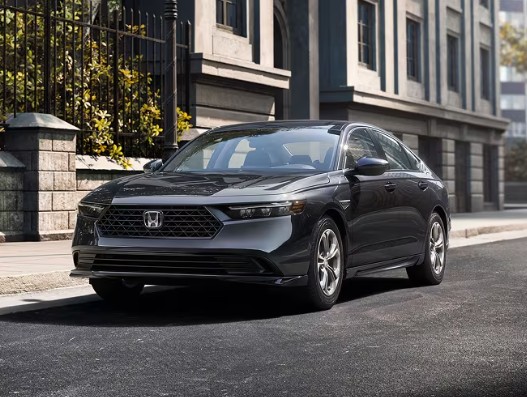
The Honda Accord is more than just a midsize sedan. It is a rolling timeline of automotive innovation, a vehicle that has consistently adapted to changing driver expectations while maintaining its reputation for reliability, efficiency, and value. Over nearly five decades, the Accord has transformed from a compact hatchback into one of the most respected family cars in the world.
When we explore Honda Accord generations, we are not simply looking at different model years. We are witnessing the evolution of engineering philosophy, consumer preferences, and automotive technology. Each generation reflects a distinct chapter in Honda’s journey toward creating one of the industry's most successful vehicles.
Let's travel through every Honda Accord generation and discover how this iconic car became a benchmark in its segment.
Content in this publication
- The Birth of the Honda Accord
- First Generation Honda Accord (1976–1981)
- Second Generation Honda Accord (1982–1985)
- Third Generation Honda Accord (1986–1989)
- Fourth Generation Honda Accord (1990–1993)
- Fifth Generation Honda Accord (1994–1997)
- Sixth Generation Honda Accord (1998–2002)
- Seventh Generation Honda Accord (2003–2007)
- Eighth Generation Honda Accord (2008–2012)
- Ninth Generation Honda Accord (2013–2017)
- Tenth Generation Honda Accord (2018–2022)
- Eleventh Generation Honda Accord (2023–Present)
- How Honda Accord Generations Compare
- Major Design Trends Across Honda Accord Generations
- Why the Honda Accord Remains Popular
- Collectible Honda Accord Generations
- What We Can Learn From the Accord's Evolution
- Conclusion
- Frequently Asked Questions
The Birth of the Honda Accord
Before examining each generation individually, it is important to understand the environment that gave birth to the Accord.
During the 1970s, fuel crises reshaped the automotive landscape. Consumers wanted smaller, more efficient vehicles that could still provide comfort and practicality. Honda answered that demand with the Accord, introducing a vehicle that balanced economy with refinement.
What began as a modest compact car would eventually become one of the best-selling automobiles in North America and beyond.
First Generation Honda Accord (1976–1981)
A Compact Car With Big Ambitions
The first-generation Honda Accord debuted in 1976 as a three-door hatchback. It featured a simple yet effective design focused on fuel efficiency and practicality.
Key highlights included:
- Compact dimensions
- Excellent fuel economy
- Front-wheel drive layout
- Hatchback versatility
- Reliable four-cylinder engine
At a time when many competitors struggled with emissions regulations and fuel consumption, the Accord stood out as a refreshing alternative.
Why the First Generation Was Important
This generation established Honda's reputation for building dependable and economical vehicles. It laid the foundation for everything that followed.
Second Generation Honda Accord (1982–1985)
Growing Up Quickly
The second-generation Accord represented a significant step forward in refinement.
Honda introduced:
- More interior space
- Improved ride quality
- Enhanced styling
- Better technology features
Most importantly, the Accord became the first Japanese vehicle produced in the United States when manufacturing began in Ohio.
A New Era of Manufacturing
This move helped Honda gain trust among American buyers while reducing costs and improving market presence.
Third Generation Honda Accord (1986–1989)
The Generation That Changed Everything
Many enthusiasts consider the third generation one of the most influential Accord models ever produced.
Its sleek, aerodynamic design helped distinguish it from boxier competitors.
The Pop-Up Headlight Era
One of the most memorable features was the pop-up headlights found on certain versions.
These headlights gave the Accord a sporty personality rarely seen in family-oriented vehicles.
Technological Advancements
Honda introduced:
- Double-wishbone suspension
- Improved fuel injection systems
- Better handling dynamics
The Accord was no longer simply practical—it became enjoyable to drive.
Fourth Generation Honda Accord (1990–1993)
Moving Toward the Midsize Segment
As customer expectations evolved, Honda increased the Accord's size.
This generation marked the transition from compact car status toward the midsize segment.
Key improvements included:
- Larger cabin
- Greater comfort
- Enhanced safety
- Smoother ride
The Accord was beginning to appeal to families seeking premium-like qualities without premium prices.
Fifth Generation Honda Accord (1994–1997)
Refinement Becomes the Priority
The fifth generation focused on balance.
Honda refined nearly every aspect of the vehicle:
- Cabin materials improved
- Noise insulation increased
- Ride comfort enhanced
- Styling became more sophisticated
The Introduction of V6 Power
One of the biggest developments was the arrival of a V6 engine option.
This gave buyers access to stronger performance while maintaining Honda's reputation for reliability.
Sixth Generation Honda Accord (1998–2002)
Entering the Mainstream Spotlight
The sixth-generation Accord arrived during a period of intense competition.
Honda responded by delivering a vehicle that excelled in nearly every category.
Notable Features
- Improved crash safety
- More powerful engines
- Higher-quality interiors
- Better fuel economy
The Accord became a top choice for commuters, families, and long-distance travelers alike.
You may be interested in reading Honda Accord Years to Buy: The Best Model Years for Reliability and Value
Why It Became a Best Seller
The sixth generation offered something rare: a vehicle with virtually no major weaknesses.
Seventh Generation Honda Accord (2003–2007)
This generation elevated the Accord's status considerably.
The exterior design became more upscale, while the interior introduced advanced technology features.
Performance Models Gain Attention
Honda expanded performance offerings through:
- V6 engines
- Manual transmission options
- Enhanced suspension tuning
The Accord demonstrated that practicality and excitement could coexist.
Industry Recognition
Numerous awards and positive reviews cemented its reputation as one of the finest sedans available.
Eighth Generation Honda Accord (2008–2012)
Bigger, Bolder, and More Comfortable
The eighth generation arrived with significantly larger dimensions.
For some buyers, it felt almost like a full-size sedan.
Major Improvements
- Increased passenger space
- Better safety ratings
- More standard equipment
- Stronger engine lineup
The Accord became a comfortable highway cruiser capable of accommodating growing families.
Safety Takes Center Stage
Honda invested heavily in safety technologies, helping the Accord earn excellent crash-test scores.
Ninth Generation Honda Accord (2013–2017)
Returning to Efficiency
After years of growth, Honda shifted focus toward weight reduction and fuel efficiency.
The ninth generation delivered:
- Improved aerodynamics
- Better fuel economy
- Reduced weight
- Enhanced technology integration
Hybrid Models Become More Important
Honda strengthened its hybrid offerings during this generation.
The Accord Hybrid demonstrated that efficiency could coexist with strong performance.
Technology Evolution
Features such as:
- Lane departure warning
- Forward collision warning
- Smartphone connectivity
became increasingly common.
Tenth Generation Honda Accord (2018–2022)
A Radical Redesign
The tenth generation represented one of the most dramatic transformations in Accord history.
The design became sleeker, lower, and more athletic.
Turbocharged Engines Arrive
Honda replaced many traditional engine options with turbocharged powerplants.
Benefits included:
- Improved fuel efficiency
- Strong performance
- Lower emissions
Interior Excellence
The cabin showcased:
- Modern digital displays
- Premium materials
- Advanced infotainment systems
The Accord felt closer to a luxury sedan than ever before.
Honda Sensing Expands
Safety technology became a central selling point.
Honda Sensing included:
- Adaptive cruise control
- Collision mitigation braking
- Lane keeping assist
These systems significantly improved everyday driving confidence.
Eleventh Generation Honda Accord (2023–Present)
The Modern Accord
The current Accord generation embraces electrification and advanced technology.
Honda focused on creating a sophisticated vehicle for modern drivers.
Hybrid Power Becomes Central
Unlike previous generations where hybrids were optional alternatives, hybrid technology now plays a major role in the lineup.
Benefits include:
- Exceptional fuel economy
- Smooth acceleration
- Reduced emissions
Advanced Connectivity
Modern drivers expect seamless digital integration.
Current Accord models offer:
You may be interested in readingHonda Accord Years to Buy: The Best Model Years for Reliability and ValueYou may be interested in reading
Honda Accord 7th Gen vs 8th Gen: Which Generation Is the Better Buy?- Large touchscreen displays
- Wireless smartphone connectivity
- Advanced driver-assistance systems
- Over-the-air software updates
A More Mature Design Philosophy
The latest Accord adopts a clean, elegant appearance rather than aggressive styling.
It resembles a tailored suit rather than a flashy sports jacket—confident without needing to shout.
How Honda Accord Generations Compare
Best Generation for Reliability
Several generations stand out:
- Sixth Generation (1998–2002)
- Seventh Generation (2003–2007)
- Ninth Generation (2013–2017)
These models have earned particularly strong reputations for long-term dependability.
Best Generation for Performance
Performance enthusiasts often favor:
- Seventh Generation V6
- Tenth Generation 2.0 Turbo
- Certain Sport and Touring trims
These versions combine everyday usability with impressive driving dynamics.
Best Generation for Fuel Economy
The leaders include:
- Eleventh Generation Hybrid
- Tenth Generation Hybrid
- Ninth Generation Hybrid
Hybrid technology has dramatically improved efficiency over the years.
Major Design Trends Across Honda Accord Generations
From Compact to Midsize
The Accord has steadily grown in size.
What began as a compact hatchback now occupies a prominent position within the midsize sedan category.
Technology Expansion
Each generation introduced new innovations:
- Fuel injection
- Electronic safety systems
- Hybrid powertrains
- Driver assistance technologies
- Digital connectivity
The Accord continually evolved without abandoning its core identity.
Safety Evolution
Safety advancements include:
- Airbags
- Stability control
- Collision mitigation systems
- Adaptive cruise control
- Lane-centering technology
Modern Accords are significantly safer than their early predecessors.
Why the Honda Accord Remains Popular
Consistency Across Decades
Few vehicles maintain relevance for nearly fifty years.
The Accord succeeds because Honda consistently delivers:
- Reliability
- Efficiency
- Comfort
- Practicality
- Resale value
Adapting Without Losing Identity
Many vehicles change dramatically and lose their character.
The Accord has evolved while preserving its essential mission: providing dependable transportation with a touch of sophistication.
Collectible Honda Accord Generations
Emerging Classics
Certain generations are attracting growing interest among collectors.
Examples include:
- First-generation models
- Third-generation pop-up headlight versions
- Seventh-generation V6 coupes
- Manual transmission variants
These vehicles represent unique milestones in Accord history.
Future Collectibles
The tenth-generation 2.0T models may become future enthusiast favorites due to their performance and limited production window.
What We Can Learn From the Accord's Evolution
The history of Honda Accord generations mirrors broader automotive trends.
We see the industry's shift toward:
- Greater efficiency
- Improved safety
- Increased technology
- Electrification
- Enhanced comfort
Yet through all these changes, the Accord remains recognizable. Like a river changing course while still reaching the same destination, each generation reflects progress while maintaining continuity.
Conclusion
The Honda Accord's journey from a humble 1976 hatchback to today's sophisticated hybrid sedan is one of the automotive world's greatest success stories. Every generation contributed something meaningful, whether it was groundbreaking engineering, enhanced safety, improved comfort, or cutting-edge technology.
As we examine Honda Accord generations, one thing becomes clear: Honda never stood still. The company continually refined and reinvented the Accord while preserving the qualities that made it successful in the first place. Whether you admire the simplicity of the first generation, the iconic styling of the third generation, the reliability of the sixth generation, or the advanced technology of the latest models, there is an Accord generation that resonates with nearly every automotive enthusiast.
Frequently Asked Questions
1. How many Honda Accord generations are there?
There have been eleven Honda Accord generations since the model was first introduced in 1976.
2. Which Honda Accord generation is considered the most reliable?
The sixth, seventh, and ninth generations are widely regarded as some of the most reliable Accord models ever produced.
3. What is the newest Honda Accord generation?
The eleventh generation, introduced for the 2023 model year, is the latest Honda Accord generation.
4. Which Honda Accord generation had pop-up headlights?
The third-generation Honda Accord, produced from 1986 to 1989, featured pop-up headlights on certain models.
You may be interested in readingHonda Accord Years to Buy: The Best Model Years for Reliability and ValueYou may be interested in reading
Honda Accord 7th Gen vs 8th Gen: Which Generation Is the Better Buy?You may be interested in reading
Which Honda Accord Model Is the Best? The Ultimate Guide to Choosing the Right Accord5. When did hybrid Honda Accord models become available?
Hybrid Accord models first appeared in the mid-2000s, but they became significantly more important starting with later generations, particularly the ninth generation and beyond.
If you want to know other articles similar to Honda Accord Generations: A Complete Evolution Guide From 1976 to Today you can visit the category Models.
Honda Passport vs Toyota 4Runner: Which SUV Is Better?
Honda Passport vs Ford Bronco: Which SUV Is Better?
Honda Passport vs Ford Explorer: Which SUV Is Better?
Honda Passport or Pilot: Which SUV Is Better?
Honda Passport vs Jeep Grand Cherokee: Which SUV Is Better?
Honda Passport vs Nissan Pathfinder: Which SUV Is Better?
Leave a Reply
More content of your interest