
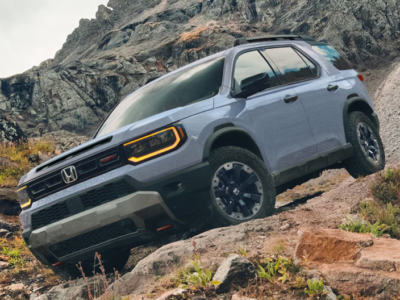
Honda Passport vs Pilot vs CR-V: Which Is Best?

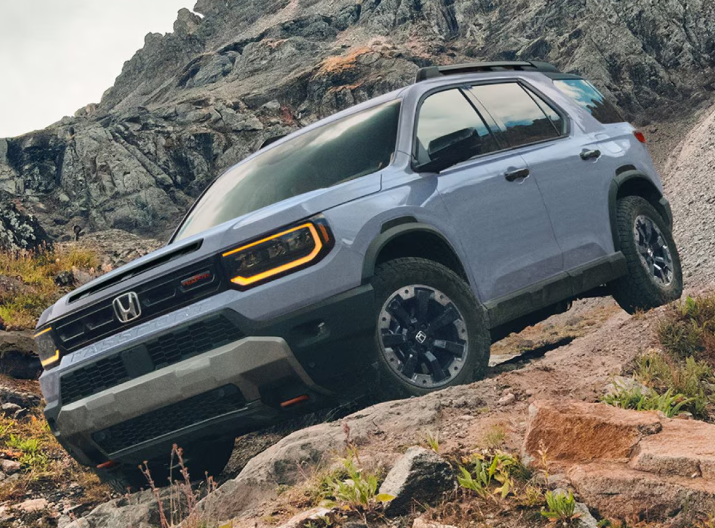
Choosing between the Honda Passport vs Pilot vs CR-V can be surprisingly difficult. All three SUVs offer Honda's practical engineering, comfortable interiors, modern safety features, and everyday versatility. However, they target different types of drivers.
The Honda CR-V is a compact SUV designed around affordability, fuel efficiency, and daily commuting. The Honda Passport is a rugged two-row midsize SUV with more power, impressive cargo capacity, and greater off-road capability. Meanwhile, the Honda Pilot is a spacious three-row SUV built primarily for families needing additional seating and flexibility.
But which Honda SUV should we actually buy?
Is the Passport worth the extra money over the CR-V? Does the Pilot offer enough advantages to justify its larger dimensions? And which vehicle is better for long-distance driving, reliability, and overall ownership costs?
In this comprehensive comparison, we'll examine the 2026 Honda Passport, Pilot, and CR-V using U.S.-market specifications, covering everything from performance and interior space to fuel economy and towing capacity.
Content in this publication
- Honda Passport vs Pilot vs CR-V: Quick Comparison
- Understanding the Three Honda SUVs
- Honda Passport vs Pilot vs CR-V Dimensions
- Interior Space and Passenger Comfort
- Honda Passport vs Pilot vs CR-V Cargo Space
- Engine Performance Comparison
- Honda Passport vs Pilot vs CR-V Fuel Economy
- Is the Honda CR-V Hybrid Worth Buying?
- Driving Experience and Ride Comfort
- Honda Passport vs Pilot vs CR-V Off-Road Capability
- Honda Passport vs Pilot vs CR-V Towing Capacity
- Interior Technology and Infotainment
- Safety Features and Driver Assistance
- Honda Passport vs Pilot vs CR-V Reliability
- Maintenance and Ownership Costs
- Honda Passport vs Pilot vs CR-V Price
- Which Honda SUV Is Best for Families?
- Which SUV Is Better for Road Trips?
- Honda Passport vs Pilot: Which Should You Buy?
- Honda Passport vs CR-V: Is Bigger Better?
- Honda Pilot vs CR-V: Which Is Better?
- Which Honda SUV Should We Buy?
- Frequently Asked Questions
- Final Verdict: Honda Passport vs Pilot vs CR-V
Honda Passport vs Pilot vs CR-V: Quick Comparison
Before examining the details, let's compare the most important specifications.
| Feature | Honda Passport | Honda Pilot | Honda CR-V |
|---|---|---|---|
| SUV category | Midsize | Midsize, three-row | Compact |
| Seating capacity | 5 | 7–8 | 5 |
| Standard engine | 3.5L V6 | 3.5L V6 | 1.5L turbo |
| Horsepower | 285 hp | 285 hp | 190 hp |
| Hybrid available | No | No | Yes |
| Hybrid horsepower | — | — | 204 hp |
| Transmission | 10-speed automatic | 10-speed automatic | CVT / hybrid direct drive |
| Drivetrain | AWD | FWD or AWD | FWD or AWD |
| Maximum towing | 5,000 lbs | 5,000 lbs | 1,500 lbs |
| Maximum cargo volume | Up to 104.6 cu ft | Up to 113.7 cu ft | Up to 76.5 cu ft |
| Starting MSRP | $44,950 | $42,395 | $30,920 |
| Main advantage | Outdoor capability | Family versatility | Efficiency and value |
Specifications reflect 2026 U.S. models. Maximum cargo figures may depend on trim and measurement configuration. The CR-V Hybrid has different cargo and towing ratings. Prices exclude destination charges, taxes, and optional equipment.
Which Honda SUV Wins Overall?
Our initial recommendations are straightforward:
- Best for everyday driving: Honda CR-V.
- Best for large families: Honda Pilot.
- Best for outdoor adventures: Honda Passport.
- Best fuel economy: Honda CR-V Hybrid.
- Best towing versatility: Honda Passport or AWD Pilot.
- Best overall affordability: Honda CR-V.
The CR-V is arguably the most sensible choice for the average driver. However, the Passport and Pilot offer significant advantages depending on how we intend to use our SUV.
Understanding the Three Honda SUVs
Honda CR-V: The Practical Choice
The Honda CR-V has become one of the most recognizable compact SUVs in America.
Its popularity comes from combining a spacious cabin, manageable exterior dimensions, competitive fuel economy, and practical technology.
The CR-V is particularly attractive for commuters, couples, and smaller families.
Its available hybrid powertrain makes it even more appealing to drivers who spend substantial time in city traffic.
However, the CR-V isn't designed for heavy towing or challenging off-road adventures.
Honda Passport: The Adventure-Focused SUV
The Honda Passport occupies an interesting position in Honda's SUV lineup.
It's bigger and more powerful than the CR-V but doesn't include the Pilot's third row.
Instead, the Passport emphasizes cargo capacity, passenger comfort, and outdoor versatility.
The redesigned 2026 Passport brings rugged styling, a 285-horsepower V6 engine, standard all-wheel drive, and available TrailSport equipment.
For drivers who enjoy camping, mountain roads, or recreational activities, the Passport offers a compelling combination of comfort and capability.
Honda Pilot: The Family SUV
The Honda Pilot prioritizes passenger capacity and flexibility.
Its three-row configuration accommodates seven or eight occupants, depending on the trim.
The Pilot also offers a powerful V6 engine, generous cargo capacity, and available all-wheel drive.
For larger households, these features make a substantial difference.
While the Passport may be more focused on outdoor recreation, the Pilot is generally the more versatile choice when regularly transporting several passengers.
Honda Passport vs Pilot vs CR-V Dimensions
Exterior dimensions influence parking convenience, passenger comfort, and everyday maneuverability.
| Dimension | Passport | Pilot | CR-V |
|---|---|---|---|
| Length | 191.5 inches | 200.1–200.4 inches | 184.8 inches |
| Width | 79.4 inches | 78.5 inches | 73.5 inches |
| Wheelbase | 113.6 inches | 113.8 inches | 106.3 inches |
| Ground clearance | 8.3 inches | 7.3–8.3 inches | 7.8–8.2 inches |
The CR-V is noticeably shorter and narrower than its siblings.
This makes it particularly convenient when navigating narrow streets or parking garages.
The Passport is shorter than the Pilot but actually wider, contributing to its substantial road presence.
Meanwhile, the Pilot's additional length helps accommodate its third row and larger overall passenger compartment.
Which Honda Is Easier to Park?
The CR-V is our clear favorite for urban environments.
Its smaller footprint simplifies parallel parking and maneuvering in crowded parking lots.
The Passport and Pilot require more consideration in tight spaces, especially where parking bays are narrow.
However, available parking sensors and camera systems can reduce some of these challenges.
If we live in a congested city, the CR-V's manageable dimensions could become one of its biggest advantages.
Interior Space and Passenger Comfort
Honda CR-V Interior
Despite being a compact SUV, the CR-V offers impressive passenger accommodation.
Front legroom measures approximately 41.3 inches, while rear passengers receive around 41 inches.
That makes the CR-V comfortable for four adults on longer journeys.
A fifth passenger can fit, although shoulder room is naturally more limited than in the larger Honda SUVs.
The cabin also features useful storage compartments and an intuitive dashboard layout.
For most small families, the CR-V provides sufficient space without requiring a substantially larger vehicle.
Honda Passport Interior
The Passport offers a wider cabin and generous room for five occupants.
Second-row legroom measures approximately 40.9 inches.
Although this figure is similar to the CR-V's, the Passport provides considerably more shoulder room.
That extra width can make three-adult seating more comfortable.
The Passport also includes practical storage solutions and a spacious cargo compartment that appeals to travelers and outdoor enthusiasts.
For buyers who never need a third row, the Passport can provide an excellent balance between passenger space and utility.
Honda Pilot Interior
The Pilot is the winner when maximum seating capacity matters.
Its three rows can accommodate up to eight occupants, with some configurations seating seven.
The second row provides approximately 40.8 inches of legroom, while the third row offers around 32.5 inches.
The third row is useful for children, teenagers, and occasional adult passengers.
Nevertheless, adults traveling long distances may prefer the first two rows.
One particularly useful Pilot feature on select trims is its removable second-row center seat, allowing owners to adjust the seating layout.
Our verdict: The Pilot wins for families needing three rows, while the Passport is excellent for five passengers and the CR-V remains surprisingly spacious for its size.
Honda Passport vs Pilot vs CR-V Cargo Space
Cargo capacity is one of the most important differences between these SUVs.
| Cargo configuration | Passport | Pilot | CR-V |
|---|---|---|---|
| Behind second row | 44.0 cu ft | 48.5 cu ft standard | 39.3 cu ft gas / 36.3 hybrid |
| Maximum cargo capacity | Up to 104.6 cu ft | Up to 113.7 cu ft | 76.5 gas / 71.8 hybrid |
| Third-row cargo area | Not applicable | 18.6 cu ft standard | Not applicable |
Honda publishes both standard and maximum cargo measurements for certain configurations, so comparisons should use the same measurement method wherever possible.
Is the Passport Bigger Than the CR-V Inside?
Yes, especially regarding cargo flexibility and cabin width.
The Passport provides considerably more maximum cargo capacity, making it particularly useful for carrying bulky equipment.
Camping supplies, bicycles, luggage, and recreational gear can be easier to accommodate.
However, the CR-V remains highly practical for everyday grocery shopping, luggage, and family errands.
Does the Pilot Have More Cargo Space?
The Pilot offers the highest maximum cargo capacity of these three SUVs.
However, its advantage depends on how many seats we use.
With all three rows upright, cargo space is significantly reduced.
Folding the third row opens up a generous loading area, while folding both rear rows provides maximum hauling flexibility.
Families who frequently carry both passengers and substantial luggage should carefully consider this trade-off.
Engine Performance Comparison
The differences in engine performance become clear when comparing the powertrains.
Honda Passport Engine
The Passport uses a naturally aspirated 3.5-liter V6 engine producing:
- 285 horsepower.
- 262 lb-ft of torque.
- A 10-speed automatic transmission.
- Standard i-VTM4 all-wheel drive.
This combination delivers smooth, predictable acceleration and confident highway performance.
The V6 engine also makes the Passport suitable for towing and driving in mountainous areas.
Honda Pilot Engine
The Pilot uses a 3.5-liter V6 producing the same 285 horsepower and 262 lb-ft of torque.
It also features a 10-speed automatic transmission.
Unlike the Passport, front-wheel drive is available on certain Pilot trims, while all-wheel drive is standard on others.
The Pilot's V6 provides strong performance for a three-row family SUV.
However, its size and weight mean it doesn't necessarily feel significantly quicker than the smaller Passport.
Honda CR-V Engine
The conventional CR-V uses a turbocharged 1.5-liter four-cylinder engine.
It produces:
- 190 horsepower.
- 179 lb-ft of torque.
- A continuously variable transmission.
The CR-V Hybrid combines a 2.0-liter gasoline engine with electric motors for a total system output of 204 horsepower.
Although the CR-V produces less power than the Passport and Pilot, it also weighs less.
For normal commuting and highway travel, the CR-V delivers sufficient acceleration.
Which Honda SUV Has the Best Engine?
If we value V6 refinement and stronger towing performance, the Passport and Pilot are preferable.
If fuel efficiency and everyday responsiveness matter more, the CR-V Hybrid makes a compelling argument.
The best engine isn't necessarily the most powerful. It's the one that matches how we drive.
Honda Passport vs Pilot vs CR-V Fuel Economy
Fuel consumption is one of the biggest reasons buyers choose the CR-V instead of its larger siblings.
You may be interested in reading Honda Passport vs Toyota Land Cruiser: Which SUV Wins?
2026 EPA Fuel Economy Comparison
| Vehicle | City MPG | Highway MPG | Combined MPG |
|---|---|---|---|
| CR-V 1.5T FWD | 28 | 33 | 30 |
| CR-V 1.5T AWD | 27 | 31 | 29 |
| CR-V Hybrid FWD | 43 | 36 | 40 |
| CR-V Hybrid AWD | 40 | 34 | 37 |
| CR-V TrailSport Hybrid AWD | 38 | 33 | 35 |
| Passport RTL AWD | 19 | 25 | 21 |
| Passport TrailSport AWD | 18 | 23 | 20 |
| Pilot FWD | 19 | 27 | 22 |
| Pilot AWD | 19 | 25 | 21 |
| Pilot TrailSport AWD | 18 | 23 | 20 |
These figures demonstrate the CR-V Hybrid's significant advantage.
Its electric motors help improve efficiency during slower driving, where frequent braking and acceleration would otherwise increase fuel consumption.
The Passport and Pilot have similar economy because both use 3.5-liter V6 engines.
Which SUV Is Cheapest to Fuel?
The CR-V Hybrid is the clear winner.
Its lower fuel consumption can produce meaningful savings for drivers who accumulate substantial annual mileage.
The conventional gasoline CR-V is also significantly more efficient than the V6-powered models.
For commuters driving primarily in urban traffic, choosing the CR-V Hybrid could reduce operating expenses considerably.
Is the Honda CR-V Hybrid Worth Buying?
For many buyers, yes.
The CR-V Hybrid combines improved fuel efficiency with responsive electric-motor assistance.
It is particularly attractive for drivers who encounter:
- Heavy urban traffic.
- Frequent stop-and-go commuting.
- Long annual driving distances.
- Higher local gasoline prices.
- Mixed city and highway driving.
However, hybrid models generally cost more upfront than comparable gasoline versions.
We should calculate potential fuel savings against the additional purchase price.
For drivers covering relatively few miles annually, the gasoline CR-V may offer better overall value.
Importantly, the conventional CR-V Hybrid does not need to be plugged into an external charger.
Its battery is charged through the vehicle's hybrid system, including regenerative braking.
Driving Experience and Ride Comfort
Honda CR-V: Easy Everyday Driving
The CR-V feels naturally suited to daily transportation.
Its steering is manageable, its dimensions are compact enough for urban environments, and its suspension emphasizes passenger comfort.
The conventional turbocharged model uses a CVT, which delivers smooth acceleration but can feel different from a traditional automatic transmission.
The hybrid system provides a different driving character, particularly during lower-speed acceleration.
For everyday usability, the CR-V is difficult to overlook.
Honda Passport: Rugged but Comfortable
The Passport delivers a more substantial driving experience.
Its wider body, V6 engine, and all-wheel-drive system create a confident feel on highways and uneven roads.
The TrailSport versions add equipment designed for more demanding surfaces.
However, their all-terrain tires and off-road-oriented suspension may produce different ride characteristics than the road-focused RTL models.
For buyers who spend most of their time on paved roads, the RTL may be the more appropriate starting point.
Honda Pilot: Comfortable Family Transportation
The Pilot focuses on stability, comfort, and carrying passengers.
Its longer body and spacious interior make it an appealing choice for extended family trips.
Despite its larger dimensions, the Pilot remains designed primarily for conventional road use.
Drivers moving from a smaller SUV may notice its size when parking or maneuvering through narrow streets.
Nevertheless, the additional passenger accommodation is a worthwhile benefit for many households.
Honda Passport vs Pilot vs CR-V Off-Road Capability
If outdoor capability is a major priority, these vehicles differ substantially.
Honda Passport TrailSport
The Passport TrailSport is the most adventure-focused option in this comparison.
Its equipment includes features such as:
- Standard i-VTM4 all-wheel drive.
- All-terrain tires.
- Off-road-tuned suspension.
- Underbody protection.
- Trail-oriented driving technology.
- Hill descent control.
The 2026 Passport provides approximately 8.3 inches of ground clearance.
Its combination of traction technology and rugged equipment makes it particularly attractive for dirt roads, camping routes, and moderately challenging terrain.
However, the Passport remains a unibody SUV rather than a dedicated rock-crawling vehicle.
Honda Pilot TrailSport
The Pilot TrailSport also offers off-road-oriented equipment.
Its advantages include all-terrain tires, additional underbody protection, and a specially tuned suspension.
It also provides approximately 8.3 inches of ground clearance.
The Pilot TrailSport is particularly appealing to families who want to combine three-row seating with occasional outdoor adventures.
Honda CR-V TrailSport Hybrid
The CR-V TrailSport Hybrid introduces more adventurous styling and all-terrain tires to Honda's efficient compact SUV.
However, it shouldn't be confused with the larger Passport TrailSport.
The Passport features a more capability-focused AWD system and additional off-road-oriented engineering.
For ordinary gravel roads and light outdoor recreation, the CR-V may be sufficient.
For more demanding recreational driving, we would choose the Passport TrailSport.
Honda Passport vs Pilot vs CR-V Towing Capacity
Towing is another category where the larger Honda SUVs have a clear advantage.
| Honda SUV | Maximum towing capacity |
|---|---|
| Passport AWD | 5,000 lbs |
| Pilot AWD | 5,000 lbs |
| Pilot FWD | 3,500 lbs |
| CR-V gasoline | 1,500 lbs |
| CR-V Hybrid | 1,000 lbs |
Maximum ratings assume appropriate equipment and operating conditions. Actual permissible trailer weights depend on the vehicle, occupants, cargo, and Honda's towing instructions.
Which SUV Is Better for Towing?
The Passport is especially attractive for recreational towing because it combines a 5,000-pound rating with a two-row layout and standard AWD.
The AWD Pilot also provides up to 5,000 pounds of towing capacity.
This makes it suitable for families needing extra seating alongside recreational towing ability.
The CR-V is better suited to smaller trailers and lighter loads.
We should always check trailer weight, tongue weight, equipment requirements, and the owner's manual before towing.
Interior Technology and Infotainment
Modern technology plays an important role in all three SUVs.
Honda Passport Technology
The redesigned Passport includes a 12.3-inch touchscreen and Google built-in functionality.
Additional features include wireless smartphone integration, a wireless phone charger, and available premium audio equipment.
Its technology is designed to be useful both during normal commuting and outdoor travel.
Honda Pilot Technology
The 2026 Pilot offers a 12.3-inch touchscreen, Google built-in, and a range of comfort features.
Higher trims add equipment such as premium audio, advanced camera systems, and luxury-oriented interior features.
The Pilot's technology is particularly useful for families because multiple occupants may need connectivity, charging access, and convenient controls.
Honda CR-V Technology
The CR-V offers a modern infotainment system and convenient smartphone connectivity.
For 2026, a 9-inch touchscreen and wireless Apple CarPlay and Android Auto compatibility are standard across the U.S. lineup.
Higher trims offer additional convenience and premium equipment.
Although the CR-V is the most affordable vehicle in this comparison, it still includes the technology most drivers use regularly.
Safety Features and Driver Assistance
Safety is an important consideration when choosing between the Honda Passport, Pilot, and CR-V.
All three offer Honda Sensing driver-assistance technology, including systems designed to help drivers recognize and respond to potential hazards.
Depending on the model and configuration, features include:
- Collision Mitigation Braking System.
- Adaptive Cruise Control.
- Lane Keeping Assist System.
- Road Departure Mitigation System.
- Traffic Sign Recognition.
- Blind-spot monitoring.
- Rearview cameras and available parking assistance.
The redesigned 2026 Passport also earned the IIHS TOP SAFETY PICK+ designation under the organization's 2026 criteria.
However, we shouldn't assume that all three models have identical crash-test ratings merely because they share a manufacturer.
Crashworthiness, headlights, restraint systems, and collision-prevention performance can differ between vehicles.
We recommend comparing the latest independent crash-test results for the exact model year before purchasing.
Driver-assistance technologies can reduce certain risks, but they do not replace attentive driving.
Honda Passport vs Pilot vs CR-V Reliability
Honda has a long-established reputation for producing practical vehicles, but reliability varies by model year, powertrain, maintenance, and usage.
Therefore, we should avoid assuming that every Honda SUV will experience identical ownership outcomes.
Honda Passport Reliability
The Passport's naturally aspirated V6 is appealing to buyers who prefer a traditional gasoline engine.
However, the redesigned 2026 Passport includes updated mechanical and electronic systems.
Because it is a relatively recent redesign, its long-term reliability cannot yet be established from years of owner data.
Prospective owners should follow maintenance requirements carefully and investigate recalls or service campaigns affecting their exact vehicle.
Honda Pilot Reliability
The Pilot has an established history as a family SUV.
Its V6 engine and conventional automatic transmission may appeal to buyers who prefer this configuration.
However, its additional seating, larger body, and range of comfort features also introduce components that may eventually require maintenance.
When shopping for a used Pilot, we should pay attention to service records, transmission operation, suspension condition, and recall completion.
Honda CR-V Reliability
The CR-V is a popular option among buyers seeking long-term practical transportation.
You may be interested in readingHonda Passport vs Toyota Land Cruiser: Which SUV Wins?You may be interested in reading
Honda Passport vs Toyota Highlander: Which Is Better?The gasoline and hybrid versions use different powertrains, which means their maintenance and potential repair profiles are not identical.
The hybrid system may reduce certain mechanical loads through regenerative braking, but it also adds high-voltage components.
Neither configuration should automatically be considered maintenance-free.
Our assessment: All three can be reasonable long-term ownership choices, but a definitive reliability winner cannot be established from brand reputation alone.
Maintenance and Ownership Costs
Purchase price is only part of the cost of owning an SUV.
We also need to consider insurance, servicing, tires, fuel, depreciation, financing, and potential repairs.
Why the CR-V May Cost Less to Own
The CR-V has several natural cost advantages:
- Lower initial purchase price.
- Better fuel efficiency.
- Smaller overall dimensions.
- Generally less expensive replacement tires than comparable large-SUV specialty tires.
- Lower financial exposure if purchased with a smaller loan.
Actual insurance and maintenance costs depend on location, trim, driver profile, and service requirements.
Passport Ownership Considerations
The Passport's V6 engine consumes more fuel than the CR-V's available powertrains.
Its larger tires and more specialized TrailSport equipment may also affect replacement costs.
For drivers who frequently use its towing or off-road capabilities, these expenses may be justified.
However, buyers who spend nearly all their time commuting should consider whether they will genuinely use those additional capabilities.
Pilot Ownership Considerations
The Pilot shares some mechanical characteristics with the Passport.
Its larger size and three-row interior can mean additional expenses associated with tires, cleaning, and certain vehicle components.
However, its ability to transport more people can make it exceptionally practical for larger families.
Honda Passport vs Pilot vs CR-V Price
Here are the starting MSRPs for the 2026 U.S. models.
| Honda SUV | Starting MSRP |
|---|---|
| CR-V LX | $30,920 |
| CR-V Sport Hybrid | $35,630 |
| Pilot Sport | $42,395 |
| Passport RTL | $44,950 |
These prices exclude destination charges, taxes, registration, and optional equipment.
Is the Honda Passport More Expensive Than the Pilot?
Interestingly, the Passport starts at a higher price than the Pilot.
This may initially seem unusual because the Pilot offers three rows instead of two.
However, the Passport comes standard with all-wheel drive and emphasizes rugged capability.
The entry-level Pilot, meanwhile, uses front-wheel drive.
When comparing similarly equipped AWD versions, the pricing relationship becomes more meaningful.
Therefore, we shouldn't base our decision solely on passenger capacity or starting MSRP.
Is the Honda CR-V Better Value?
For buyers who don't require heavy towing, larger cargo capacity, or a third row, the CR-V often represents the better financial choice.
It costs significantly less while still delivering a comfortable interior and modern safety technology.
The hybrid version adds an especially appealing combination of efficiency and usability.
Which Honda SUV Is Best for Families?
The Pilot is our preferred choice for households regularly transporting six or more people.
Its third row eliminates the need to squeeze additional passengers into a five-seat vehicle.
Families with several children may also appreciate its flexible seating arrangements.
However, not every family needs a three-row SUV.
For households with one or two children, the CR-V may offer all the practical space required.
The Passport makes sense for smaller families carrying substantial recreational equipment or luggage.
What About Child Seats?
The Pilot's multiple seating rows provide extra flexibility, although child-seat installation depends on the available anchors and seating positions.
The CR-V and Passport can also accommodate child seats in their second rows.
Before purchasing, we recommend installing the specific child seats we intend to use.
The best vehicle isn't necessarily the one with the most seats, but the one that safely accommodates our passengers and equipment.
Which SUV Is Better for Road Trips?
Long-distance driving highlights different strengths.
The CR-V Hybrid offers excellent fuel economy, making it particularly attractive for extended highway travel.
The Passport provides a wider interior and generous cargo space without sacrificing its second row.
The Pilot is ideal when traveling with several passengers.
For two adults carrying camping equipment, we would lean toward the Passport.
For four people prioritizing lower fuel costs, the CR-V Hybrid is difficult to beat.
For six or seven passengers, the Pilot becomes the natural choice.
Honda Passport vs Pilot: Which Should You Buy?
The Passport and Pilot are the closest competitors in this comparison.
Both use 285-horsepower V6 engines and 10-speed automatic transmissions.
They also offer similar maximum towing capacity when properly equipped.
However, their priorities differ.
Choose the Passport if:
- We never need a third row.
- Outdoor adventures are important.
- We want standard AWD.
- We regularly carry bulky recreational equipment.
- We prefer a more rugged exterior design.
Choose the Pilot if:
- We need seating for more than five people.
- Passenger flexibility is essential.
- We frequently take family road trips.
- We want a three-row SUV with V6 power.
- We need substantial interior versatility.
Neither SUV is universally better. The right choice depends primarily on whether we value two-row utility or three-row passenger accommodation.
Honda Passport vs CR-V: Is Bigger Better?
The Passport offers more engine power, greater maximum cargo capacity, and substantially higher towing capability.
However, the CR-V is less expensive, more fuel-efficient, and easier to maneuver.
For drivers who rarely leave paved roads, the CR-V may satisfy nearly every practical requirement.
The Passport becomes worthwhile when its additional capabilities are genuinely useful.
Buying a larger SUV simply because it is bigger doesn't necessarily create a better ownership experience.
Honda Pilot vs CR-V: Which Is Better?
The Pilot wins on passenger capacity, maximum cargo volume, and towing ability.
The CR-V wins on fuel efficiency, affordability, and compact maneuverability.
For a family of three or four, the CR-V could be the more rational choice.
For a family of six, the Pilot provides a level of flexibility the CR-V cannot match.
The third row is ultimately the biggest deciding factor.
Which Honda SUV Should We Buy?
Here is how we would approach the decision based on different driving needs.
Best for City Driving: Honda CR-V
The CR-V offers the ideal balance of comfortable seating, manageable dimensions, and fuel economy.
Its hybrid powertrain is especially appealing for heavy traffic.
Best for Large Families: Honda Pilot
The Pilot is the most versatile choice when regularly transporting more than five passengers.
Its combination of three-row seating and generous cargo capacity makes it a strong family vehicle.
Best for Outdoor Adventures: Honda Passport
The Passport offers robust standard AWD capability, useful ground clearance, and a rugged TrailSport configuration.
It's our preferred choice for buyers focused on recreational driving rather than additional passenger seating.
Best for Fuel Savings: Honda CR-V Hybrid
The CR-V Hybrid delivers the strongest fuel economy in this comparison.
For long-term commuters, that advantage can become financially meaningful.
Best for Five-Passenger Road Trips: Honda Passport
The Passport provides a spacious two-row interior and substantial luggage capacity.
It's particularly appealing when we prioritize comfort, equipment storage, and occasional adventures.
Frequently Asked Questions
1. Is the Honda Passport Bigger Than the CR-V?
Yes. The 2026 Honda Passport is approximately 191.5 inches long, compared with 184.8 inches for the Honda CR-V. The Passport is also wider and offers greater maximum cargo capacity. However, both SUVs accommodate five passengers.
2. Is the Honda Pilot Better Than the Passport?
The Honda Pilot is better for drivers who need three-row seating and maximum passenger flexibility. The Passport is better suited to buyers who prioritize a spacious two-row layout and rugged outdoor capability. Both offer V6 power and substantial towing capacity.
3. Which Is More Reliable: Passport, Pilot, or CR-V?
There isn't a definitive reliability winner across all model years and configurations. Each SUV has different mechanical components and ownership considerations. The redesigned Passport, in particular, needs more long-term owner data before firm reliability conclusions can be made.
4. Which Honda SUV Gets the Best Gas Mileage?
The Honda CR-V Hybrid offers the best fuel economy. The 2026 front-wheel-drive hybrid achieves an EPA-estimated 40 mpg combined, substantially exceeding the fuel economy of the V6-powered Passport and Pilot.
5. Is the Honda Passport Worth More Than the CR-V?
The Passport can justify its higher purchase price for drivers needing stronger towing capability, additional cargo volume, and more advanced outdoor-driving equipment. However, for daily commuting and ordinary family transportation, the CR-V generally provides better value.
Final Verdict: Honda Passport vs Pilot vs CR-V
After comparing the Honda Passport vs Pilot vs CR-V, we believe each SUV has a distinct purpose.
The Honda CR-V is the best all-around choice for most buyers because it combines competitive pricing, impressive fuel efficiency, comfortable seating, and practical everyday usability. Its available hybrid powertrain makes it especially attractive for drivers who prioritize reducing fuel expenses.
The Honda Passport is our preferred choice for outdoor enthusiasts who want V6 performance, generous cargo capacity, and greater capability on rough roads. Its rugged personality makes it particularly appealing to buyers who regularly travel beyond conventional paved routes.
The Honda Pilot is the winner for larger families because its three-row seating configuration provides flexibility the other two SUVs simply cannot offer.
Ultimately, the decision comes down to three questions:
Do we want maximum efficiency, more outdoor capability, or additional passenger seating?
You may be interested in readingHonda Passport vs Toyota Land Cruiser: Which SUV Wins?You may be interested in reading
Honda Passport vs Toyota Highlander: Which Is Better?You may be interested in reading
Honda Passport vs CR-V: Which SUV Is Better?If efficiency and affordability matter most, choose the CR-V. If outdoor adventures are our priority, choose the Passport. And if accommodating a larger family is essential, the Pilot is the strongest option.
Rather than buying the biggest or most powerful SUV, we should choose the Honda that best matches our driving habits, passenger needs, and long-term budget.
If you want to know other articles similar to Honda Passport vs Pilot vs CR-V: Which Is Best? you can visit the category Models.
Honda Passport vs Toyota 4Runner: Which SUV Is Better?
Honda Passport vs Ford Bronco: Which SUV Is Better?
Honda Passport vs Ford Explorer: Which SUV Is Better?
Honda Passport or Pilot: Which SUV Is Better?
Honda Passport vs Jeep Grand Cherokee: Which SUV Is Better?
Honda Passport vs Nissan Pathfinder: Which SUV Is Better?
Leave a Reply
More content of your interest