Hyundai i40 warning lights tell us which systems need attention and which functions are currently operating. A useful first check is to look at the colour, identify the symbol and read the dashboard message. A red oil can while the engine is running demands a different response from an amber oil-level reminder or a green AUTO HOLD indicator.
In this guide, we explain the main Hyundai i40 dashboard symbols with illustrations and practical next steps. We cover petrol and diesel warnings, electronic parking brakes, exhaust filters, tyre pressure and the normal indicators that can easily be mistaken for faults.
Applicability: this guide uses Hyundai’s i40 owner’s manual available through its UK manual library. The manual covers equipment that is not fitted to every car. Sedan and Tourer/Wagon models, different years, markets and engine types can have different graphics and messages. Illustrations are representative standard symbols, including shared Hyundai and Kia artwork, rather than exact reproductions of every instrument cluster. Always use your own vehicle’s handbook for the precise operating or repair procedure.
A potentially urgent fault or safety condition. Stop safely when the warning concerns oil pressure, overheating or compromised braking. Seat belts and an applied parking brake also use red indications.
Amber or yellow
A condition needing attention, a disabled system or a fault requiring diagnosis. Read the message before deciding whether to continue.
Green or white
Usually operating or standby status. For example, AUTO HOLD uses different colours for selected and holding states.
Blue
Normally identifies main-beam headlights.
Flashing
Its meaning depends on the system. Flashing ESC can be normal traction intervention; flashing engine or filter warnings can require investigation.
The ignition self-check brings on several lamps before the engine starts. Some go out after a few seconds, while others remain until the engine is running. We should investigate lights that fail the expected check, stay on unexpectedly or return during a journey, rather than assuming every illuminated symbol at start-up is a fault.
Red warning lights: stop and assess the situation
Engine oil pressure warning
Red oil canOil pressure keeps the engine’s moving parts lubricated. If this warning stays on after starting or appears while driving, pull over safely and switch the engine off. Do not continue running it while trying to decide whether the warning is genuine.Check the oil level as instructed in the handbook. Low oil may need correcting, but a normal level does not prove that pressure is adequate. If the warning persists, arrange assistance before running the engine again.
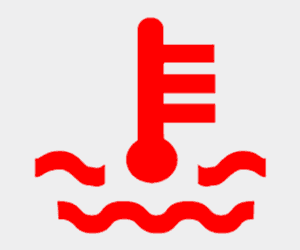
Engine coolant temperature warning
Red thermometer or overheating messageThe temperature warning indicates that the engine may be overheating. Stop safely and follow the i40’s overheating instructions. A temperature gauge moving into its hot region should also be taken seriously, even before a separate lamp appears.Never remove a hot coolant cap. Keep clear of escaping steam and allow the system to cool before any permitted inspection. A leak, repeated temperature rise or persistent warning needs professional attention rather than a quick top-up followed by normal driving.
Parking brake and brake fluid warning
Red brake symbolA red brake indicator can simply mean the parking brake is applied. Confirm that it releases fully before driving. When the warning remains with the parking brake released, the brake-fluid level or braking system needs checking.Stop somewhere safe. Do not continue with a leak, an unusually soft or long-travel pedal, reduced stopping power or an unresolved warning. Adding fluid does not fix its underlying loss. We should have the cause assessed before relying on the brakes for another journey.
Charging system warning
Red battery symbolThis warning concerns the vehicle’s electrical charging system. It can involve the generator, its drive belt or electrical connections; the battery icon is not proof that the battery itself is defective.Move to a safe location and switch off before inspecting anything accessible under the bonnet. Do not touch moving belts or continue with a damaged drive belt. A persistent warning needs diagnosis, and failing electrical power or additional critical warnings are reasons to arrange recovery.
Airbag and SRS warning
Red restraint-system symbolThe SRS lamp checks the supplementary restraint system. If it remains illuminated after its normal start-up sequence, returns while driving or does not illuminate when expected, the system needs inspection.A restraint fault may affect airbags or belt pretensioners without changing how the car drives. Arrange attention promptly. Do not unplug connectors, probe airbag circuits or install warning-suppression devices. A dashboard lamp that has been hidden is not evidence that the protection system works.
Seat belt warning
Red belt reminderThe belt symbol and chime remind us to check the monitored seating positions. Make sure every occupant has correctly fastened their belt, including passengers who have only just joined the journey.Heavy objects on a passenger seat can sometimes trigger occupancy detection. Move belongings into suitable storage and check that the buckle is properly latched. If the warning continues with the seat empty or belt correctly fastened, have the sensing circuit checked instead of bypassing it.
Brake, steering and tyre-pressure symbols
ABS warning light
Amber ABSAn isolated ABS warning means anti-lock assistance may be unavailable. The basic brakes can still work, but wheel lock can occur more readily during hard braking. Increase following distance and avoid abrupt manoeuvres.Have the system checked promptly. If the red brake warning also appears or braking feels different, stop safely and obtain assistance. A wheel-speed signal or electrical problem can affect ABS, so we should not assume the control unit must be replaced without testing.
ABS and brake lights together: EBD warning
Amber ABS plus red brake warningThese lights together can indicate a problem affecting brake-force distribution and normal braking operation. This is more serious than treating the amber ABS light as an isolated loss of anti-lock assistance.Reduce speed smoothly and stop safely. Avoid sudden braking and arrange professional assessment. If the pedal feels abnormal or the fluid level is low, do not drive on. We should not test the system with repeated hard stops to see whether the warning clears.
Electronic parking brake warning
Amber EPB — where fittedThe EPB warning concerns the electronic parking brake. It is distinct from the red lamp confirming that the brake is applied. Stability-control faults can also bring on an EPB warning, so the full set of messages matters.Confirm that the vehicle is secure before leaving it. If the brake will not release, do not force the car to move against it. A persistent warning or unreliable application needs inspection, particularly when other braking warnings accompany it.
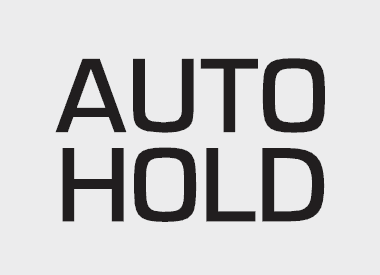
AUTO HOLD indicator
White standby, green holding, yellow fault — where fittedAUTO HOLD keeps the car stationary after a stop when its operating conditions are met. White generally means the function is selected, green confirms holding and yellow indicates a problem.Watch for messages when the system transfers holding responsibility to the electronic parking brake. Keep the brake pedal under control if operation is uncertain. AUTO HOLD is a convenience feature, not a replacement for selecting the correct parking gear and applying the parking brake before leaving the vehicle.
Electric power steering warning
EPS or steering-wheel warningA steering-assistance fault can make the wheel substantially heavier, especially at parking speeds. This warning needs attention even if the car still responds to steering inputs.Keep control of the wheel and move to a safe location. Arrange inspection; if the effort or behaviour makes safe driving difficult, request recovery. The i40’s electric power steering should not be diagnosed as a low hydraulic-fluid problem merely because another car uses a hydraulic steering system.
Low tyre pressure and TPMS warning
Amber tyre symbol with an exclamation markInspect the tyres and measure their pressures when this symbol appears. Use the vehicle’s cold-pressure specification, adjusted for the stated load conditions, rather than the maximum pressure moulded into the tyre sidewall.Flashing followed by steady illumination can indicate a TPMS fault. Inflation will not necessarily repair a faulty monitoring system. Do not drive on a visibly flat or damaged tyre, and avoid clearing a warning before finding out whether the problem is pressure loss or monitoring.
Electronic stability control indicator
Amber slipping-car symbolESC helps manage traction and stability. A flashing symbol during acceleration or cornering usually indicates intervention, so ease off and adapt to the road’s grip. The system cannot overcome unsuitable speed or worn tyres.A steady light after the normal self-check can indicate a fault. Have it diagnosed and recognise that assistance may be reduced. Other warnings, recent tyre changes and the conditions in which the light appeared are useful information for the workshop.
ESC OFF indicator
Amber disabled-function statusThis symbol identifies a reduced or switched-off stability-control setting. Its appearance is not the same as the ESC symbol flashing while it controls wheel slip. Check whether someone deliberately changed the setting.For everyday road driving, restore the normal assistance mode according to the handbook. If the indication appears unexpectedly or cannot be cleared, arrange a check. Disabling ESC should not be used to conceal an underlying tyre, braking or stability-system fault.
Engine management, oil level and diesel warning lights
Check engine or malfunction indicator
Amber engine-shaped symbolThe malfunction indicator reports a detected engine-control or emissions problem. A steady light needs prompt diagnosis even when starting, acceleration and fuel consumption seem unchanged. It cannot identify one failed component on its own.Flashing, rough running, unusual combustion noise or significant power loss increases the urgency. Reduce engine load and stop safely if normal progress is not possible. Petrol and diesel warning behaviour differs, so do not apply a generic regeneration drive to every engine warning.
Engine oil level warning
Amber oil-level symbol — where fittedThe oil-level warning asks us to check the quantity of oil, unlike the red pressure warning that can require an immediate shutdown. Park level and measure using the procedure for your engine.Add only the correct approved oil, in small amounts, and recheck rather than guessing a refill quantity. Do not exceed the maximum mark. The indication may not update immediately on every version; follow the handbook and investigate a warning that persists despite a verified correct level.
Diesel glow plug indicator
Amber coil — diesel enginesThe coil normally illuminates while the engine is being preheated before starting. Wait for it to go out as instructed. A cold engine may need a different preheating time from a warm one.Continuous illumination or abnormal flashing after warm-up or while driving needs diagnosis. It does not automatically prove that every glow plug has failed. If the car is difficult to start or has another engine warning, report those symptoms together when arranging the inspection.
Water in diesel fuel filter warning
Fuel-filter symbol — applicable diesel versionsThis warning indicates that water may have collected in the diesel fuel filter. It is unrelated to the ordinary low-fuel reminder and should be addressed promptly to protect fuel-injection components.Have the filter drained or serviced using the correct procedure. Continued operation with contaminated fuel can cause reduced power and costly damage. Adding diesel, pouring in an additive or erasing fault codes does not remove water already trapped in the filter assembly.
Diesel particulate filter warning
Amber filter or associated engine warning — where fittedThe DPF traps diesel soot and requires suitable conditions to regenerate. Repeated short trips can make those conditions difficult to achieve. The i40’s indication depends on its engine and display version.Consult the exact handbook before attempting a prescribed regeneration drive. Only follow it when the car is otherwise operating normally and road conditions permit. Persistent flashing, a continuing exhaust-system message or reduced power calls for inspection rather than repeated attempts to drive the warning away.
Petrol particulate filter warning or message
Filter/exhaust warning — petrol versions with GPF; representative artworkCertain versions covered by the i40 handbook have a petrol particulate filter. A filter-related message on a petrol car is therefore not necessarily a mistaken diesel warning. Read the displayed wording and confirm the equipment fitted.Use the GPF instructions for that engine instead of a diesel DPF procedure. Do not force a regeneration attempt when the engine runs badly or another urgent warning is present. A persistent exhaust-system warning needs diagnosis, even if performance seems acceptable.
SCR or AdBlue warning
Urea-system warning — equipped diesel modelsOn diesel i40 versions with SCR, a low-urea warning asks for the correct AdBlue/urea solution to be replenished. A separate system-fault message is not necessarily resolved by topping up.Follow the displayed instructions and any remaining-distance or restart warning. Use the dedicated filler and approved fluid; never add AdBlue to the diesel tank. If a fault persists after a correct refill, arrange diagnosis rather than repeatedly adding more solution to an already full tank.
Low fuel warning
Amber fuel-pump symbolThe fuel warning means we should refuel soon. The remaining-range estimate changes with driving conditions and should not be treated as a guaranteed distance we can still travel.Avoid running the tank dry or repeatedly driving with very little fuel. If the gauge is erratic or the warning stays on after refuelling, check the fuel-level system rather than assuming the tank is still empty. The exact reserve quantity varies, so use your own handbook for that detail.
Key, assistance and visibility warnings
Immobiliser and smart key indicator
Key/vehicle symbol — behaviour depends on key typeBrief illumination can mean that the immobiliser has recognised the key. Unusual flashing, a key-not-detected message or failure to start can point to a recognition problem or a weak remote battery.Check that the correct key is inside the vehicle and follow the handbook’s emergency starting procedure if needed. Replace a weak key battery with the specified type. Do not diagnose a failed engine starter from a no-start symptom before checking what the key-system message actually says.
Lane Keeping Assist indicator
Standby/active status or yellow fault — where fittedLane Keeping Assist uses lane information to provide warnings or assistance within its operating limits. Indicator colours distinguish selected, available and fault states, with details varying by cluster.Keep your hands on the wheel and watch the road. Poor markings, visibility and camera obstruction can reduce availability. A persistent yellow malfunction warning needs inspection. We should not interpret a normal standby indication as proof of a broken camera, or an active indication as permission to stop steering.
Forward Collision-Avoidance Assist warning
Amber assistance-system warning — where fittedAn FCA warning can indicate a problem with the collision-assistance system on equipped i40 models. Read the display and check the appropriate settings and accessible sensor areas as described in the handbook.Do not rely on automatic braking while the system reports a fault or limitation. Keep a safe following distance and control speed yourself. If the warning remains after obvious obstruction is removed, have it inspected rather than repeatedly switching the function off and on.
Icy road warning
Snowflake or low-temperature symbol — where fittedThe icy-road warning highlights a low outside temperature that can coincide with slippery surfaces. It is normally an environmental reminder, not a cooling-system fault.Drive smoothly, leave more space and take particular care on bridges and shaded sections. The temperature sensor cannot measure every patch of road. Ice may exist without the warning, and the symbol does not confirm that ice is present everywhere; our driving should reflect the actual conditions.
Front passenger airbag OFF indicator
Passenger-airbag status — where fittedThis indicator confirms that the front passenger airbag is deactivated on an appropriately equipped car. It should not be confused with the main SRS warning that reports a possible restraint fault.Verify that the setting matches the occupant or child-restraint arrangement. Never place a rear-facing child seat in front of an active passenger airbag. Follow the vehicle handbook and the restraint instructions, and investigate any unexpected status before using the seating position.
Normal operating and lighting indicators
AUTO STOP and ISG indicator
Automatic stop/start status — where fittedThis indicator relates to Idle Stop and Go operation. An engine stopped automatically at traffic lights is different from a mechanical stall, and it can restart as operating conditions change.Battery condition, temperature and other requirements can prevent an automatic stop without indicating a fault. Read any explicit malfunction message separately. When leaving the vehicle, complete the normal parking and engine-shutdown procedure instead of relying on the temporary stop to remain in effect.
High beam indicator
Blue headlamp symbolThe blue headlamp confirms that main beam is on. It normally needs no repair; it tells us which lighting mode is being used.Dip the headlights for other road users and whenever conditions require. If automatic high-beam equipment is fitted, keep supervising it and intervene manually when needed. The blue lamp is different from a headlight fault indication, so check the colour and symbol before treating an ordinary lighting selection as a malfunction.
Dipped beam indicator
Green headlamp symbol — where displayedThe dipped-beam indication confirms low-beam headlight operation. It is a normal function light rather than a sign of low electrical power.Check the actual lighting when darkness or poor visibility develops. Daytime running lights and illuminated instruments do not prove that the correct exterior lights are on. We should choose the appropriate switch setting for the conditions and periodically check the lamps themselves rather than relying entirely on dashboard indicators.
Front fog light indicator
Green fog-lamp symbol — where fittedThis indicator means the front fog lamps are selected. It is distinct from the rear-fog indication, which typically uses amber and points in the opposite direction.Use the lamps when conditions and local regulations justify them, then switch them off when no longer needed. A dashboard indication confirms the selected function but does not replace a physical lamp check. Repair a failed exterior lamp even if the dashboard symbol appears normal.
Rear fog light indicator
Amber fog-lamp symbolThe amber rear-fog indicator is normally a status light, not a fault. It confirms that the bright rear fog lamp is operating.Switch it off when visibility improves. Unnecessary use can dazzle traffic behind and make brake lights less obvious. If the symbol remains despite changing the controls, consult the lighting-switch instructions and check the actual lamp before assuming that a relay or wiring component has failed.
Turn signal and hazard indicators
Green flashing arrowsOne arrow generally confirms a turn signal; both sides flash with the hazard lights. Normal flashing is an operating indication rather than a warning requiring a reset.A rapid flash, missing indication or arrow that stays on can suggest a lamp or circuit problem. Check exterior operation from a safe position. A familiar ticking noise alone does not prove other drivers can see the signal, so investigate any abnormal behaviour promptly.
What if several Hyundai i40 warning lights appear together?
Start with safe control of the car. Changes in braking, steering, engine temperature or power are more urgent than identifying every symbol. Stop safely when required and record the messages once stationary. Note whether the problem began at start-up, during a manoeuvre or after recent repair work.
Linked systems can share sensors, communication and electrical power, so several warnings do not necessarily mean several independent parts have failed. However, we should not dismiss the display as “just the battery”. A workshop may need to examine brake, steering and engine modules together, rather than relying on a generic engine-code reader.
Can we reset Hyundai i40 warning lights ourselves?
Some reminders disappear when we correct the cause: buckle a belt, release the parking brake or close an open door. Other conditions need a model-specific update process after the underlying issue has been corrected. Tyre monitoring and oil-level indications should be handled according to the correct handbook.
For system faults, clearing codes is not a repair. Disconnecting the battery can erase useful diagnostic information without resolving the problem. Read and record fault information first, repair the cause and confirm normal operation. Resetting a maintenance reminder also has no effect on real oil pressure or a damaged emissions component.
How to choose the right action for your i40
Check the model year, engine and equipment before following online instructions. An SCR warning applies only to a car with that system; a petrol GPF and diesel DPF have different procedures. The dashboard message is often more specific than a picture of the icon.
When arranging help, provide the exact wording, colours, whether the light flashes and any symptoms. A clear description such as “amber EPB and ESC remain on after starting” is more useful than “the handbrake light is broken”. Photograph the display only when safely parked.
Conclusion
Understanding Hyundai i40 warning lights means separating urgent faults, conditions needing service and normal function indicators. Oil pressure, overheating and compromised braking deserve immediate attention. Oil level, filter warnings, smart-key messages and assistance faults need the correct version-specific response. By reading the message and checking the handbook, we can avoid guessing at repairs or overlooking a warning that matters.
References: Hyundai i40 owner’s manual, particularly the instrument-cluster, braking and emissions sections; Hyundai UK owner’s manual library. The manual covers optional equipment, so not every entry applies to every i40. Illustrations use representative shared dashboard artwork from their linked original sources.
Frequently asked questions
1. What is the difference between the i40 oil-pressure and oil-level lights?
The red pressure warning concerns lubrication pressure and calls for a safe stop and engine shutdown. An amber level warning asks us to check the oil quantity. A correct oil level does not prove that a persistent pressure warning is safe.
2. Why are EPB and AUTO HOLD warnings showing together?
These functions are related to braking and can be affected by associated system faults. The warnings do not identify one failed part by themselves. Secure the car, read the messages and arrange inspection, especially if the parking brake does not apply or release correctly.
3. Can I drive with the Hyundai i40 check engine light on?
A steady light with otherwise normal operation requires prompt diagnosis. Flashing, rough running or substantial power loss needs greater urgency. Reduce load and stop safely if necessary. Do not assume every engine warning will clear after a regeneration drive.
4. What does the diesel fuel-filter warning mean?
It can indicate water accumulated in the fuel filter. Arrange correct draining and inspection promptly. It is different from low fuel, and adding diesel or clearing the warning does not remove the trapped water.
5. Does an amber AdBlue light mean the i40 has an engine fault?
On an equipped diesel, it can simply mean the urea solution needs replenishing. Read the message because an SCR malfunction is a different condition. Follow refill and restart instructions, and seek diagnosis if a fault remains after a correct refill.
If you want to know other articles similar to Hyundai i40 Warning Lights you can visit the category Service and Parts.
Auto Guide
I show you the best reviews of all car brands, the information we collect and show is verified by our mechanics, we hope that everything you read here is useful to buy the car of your dreams







.png)





.png)






.png)


.png)









More content of your interest