
Hyundai Santa Fe Not Starting but Lights Come On: Causes, Fixes, and Troubleshooting Guide

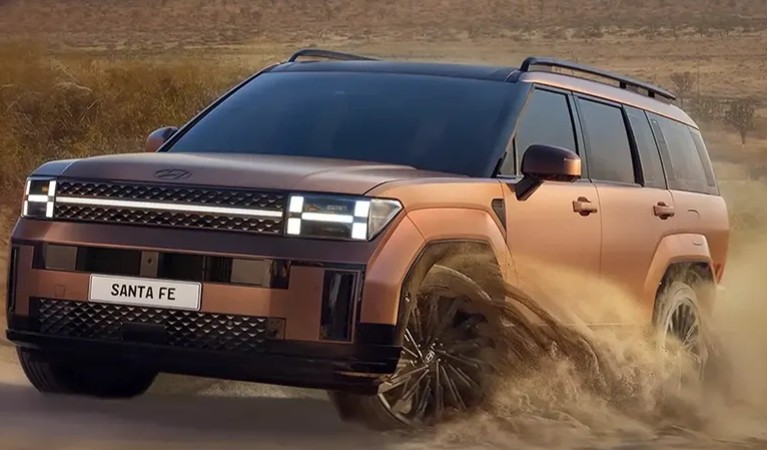
You climb into your Hyundai Santa Fe, press the start button or turn the key, and expect the engine to spring to life. Instead, nothing happens. The dashboard lights illuminate, the radio may work, perhaps the headlights shine brightly, yet the engine refuses to start.
It is confusing because the vehicle clearly has electrical power. So how can the Hyundai Santa Fe not start but lights come on at the same time?
The answer is surprisingly simple: powering dashboard lights requires far less electricity than cranking an engine. Think of it like having enough battery left on a phone to illuminate the screen but not enough power to perform a demanding task. Your Santa Fe can appear electrically alive while still lacking the voltage, current, fuel, spark, or electronic authorization required to start.
Fortunately, many causes are relatively straightforward to diagnose.
In this guide, we will walk through the most common reasons a Hyundai Santa Fe won't start but has power, how to distinguish one failure from another, what we can safely check ourselves, and when professional diagnosis becomes the smarter move.
Content in this publication
- Why Does a Hyundai Santa Fe Have Power but Not Start?
- Listen Carefully When You Try to Start It
- Weak Battery: The Most Common Starting Point
- Check the Battery Terminals
- Try Jump-Starting the Hyundai Santa Fe
- Starter Motor Failure
- Starter Relay or Fuse Problems
- Automatic Transmission Park/Neutral Switch
- Brake Pedal Switch on Push-Button Start Models
- Hyundai Smart Key Battery Problems
- Immobilizer or Anti-Theft System Problems
- What If the Engine Cranks Normally but Will Not Fire?
- Fuel Pump Failure
- Crankshaft Position Sensor Failure
- Camshaft Position Sensor Problems
- Ignition Problems
- Engine Control Module and Electrical Communication Faults
- Blown Main Fuse or Fusible Link
- Could the Alternator Cause a No-Start?
- What About the Timing Chain or Internal Engine Problems?
- Hyundai Santa Fe Starts Sometimes but Not Others
- Hyundai Santa Fe Won't Start After Sitting Overnight
- Hyundai Santa Fe Won't Start After Battery Replacement
- Step-by-Step Hyundai Santa Fe No-Start Checklist
- Common Symptoms and Likely Causes
- What Should We Avoid Doing?
- When Should We Call a Mechanic?
- How Much Can a Hyundai Santa Fe No-Start Repair Cost?
- Can Preventive Maintenance Reduce Starting Problems?
- Final Thoughts: Why Your Hyundai Santa Fe Has Lights but Won't Start
- Frequently Asked Questions
- 1. Why won't my Hyundai Santa Fe start even though the dashboard lights work?
- 2. Can a Hyundai Santa Fe battery be dead if the lights still turn on?
- 3. Why does my Hyundai Santa Fe click but not start?
- 4. Why does my Santa Fe crank but not start?
- 5. Should I replace the starter if my Santa Fe won't start?
Why Does a Hyundai Santa Fe Have Power but Not Start?
A vehicle needs several systems to cooperate before the engine can run. Electricity is only one piece of the puzzle.
A gasoline-powered Santa Fe generally needs:
- Adequate battery voltage and cranking amperage
- A functioning starter motor and starter circuit
- Fuel delivery
- Ignition spark
- Proper engine timing and compression
- Immobilizer authorization
- Reliable crankshaft and camshaft sensor signals
- Correct communication between electronic modules
If even one of these ingredients disappears, the dashboard can still light up while the engine remains silent.
The first clue is therefore not simply whether the lights work.
We need to ask a more useful question: What happens when we actually try to start the Santa Fe?
Listen Carefully When You Try to Start It
The sound the vehicle makes—or does not make—can dramatically narrow the possibilities.
The Santa Fe Makes One Click
A single heavy click often points toward:
- A weak battery
- Corroded battery terminals
- A bad starter solenoid
- A failing starter motor
- A poor engine ground
The starter solenoid may be engaging, but the starter itself cannot rotate the engine.
You Hear Rapid Clicking
Rapid clicking is one of the classic symptoms of insufficient battery power.
The dashboard may glow normally, but the battery voltage collapses when the starter demands several hundred amps.
In many cases, a jump-start will temporarily solve the problem.
There Is Absolutely No Clicking
Silence can indicate a different family of problems.
Possible causes include:
- Starter relay failure
- Brake pedal switch problem
- Park/Neutral safety switch issue
- Push-button start system fault
- Immobilizer problem
- Ignition switch issue
- Wiring fault
- Blown fuse
- Dead starter solenoid
Silence does not automatically mean the starter itself is bad.
The Engine Cranks but Does Not Start
This is another situation entirely.
If the engine spins normally but refuses to fire, the starter and battery are probably doing their jobs.
We then need to investigate:
- Fuel delivery
- Ignition
- Sensors
- Immobilizer operation
- Engine management
- Mechanical timing
That distinction is enormously important.
Weak Battery: The Most Common Starting Point
When a Hyundai Santa Fe is not starting but lights come on, the battery should still be near the top of our checklist.
Why?
Because interior electronics require relatively little current.
The starter motor requires a massive burst of electrical power.
A battery can therefore operate the lights, infotainment system, power windows, and instrument cluster while still being too weak to crank the engine.
Signs of a Weak Santa Fe Battery
Common symptoms include:
- Rapid clicking when starting
- Dashboard lights dimming during a start attempt
- Slow engine cranking
- Electronics resetting
- Clock or radio settings disappearing
- Intermittent starting problems
- Vehicle starting normally after a jump
Cold temperatures can make an already weak battery reveal itself almost overnight.
Test the Battery Instead of Guessing
Battery voltage offers a useful first clue.
With the engine off and the vehicle resting, a healthy fully charged 12-volt battery is generally around 12.6 volts.
A reading significantly lower suggests reduced charge.
However, static voltage alone does not tell the whole story.
A worn battery may display acceptable voltage while resting and then collapse dramatically under starter load.
That is why a proper load test or conductance test provides a better picture.
Do Not Forget Battery Age
Car batteries are consumable components.
If the battery is already several years old and the Santa Fe suddenly develops starting trouble, replacement may be more sensible than repeatedly charging a battery that is approaching the end of its service life.
Check the Battery Terminals
Sometimes the battery itself is perfectly capable of starting the engine, but its energy cannot travel where it needs to go.
Loose or corroded battery connections can create resistance.
Imagine trying to push a large amount of water through a hose that has nearly collapsed. The water supply exists, but the restriction prevents enough flow.
Electrical resistance works similarly.
Look for:
- White or bluish corrosion
- Loose terminal clamps
- Damaged battery cables
- Frayed wiring
- Dirty connection points
A terminal should not rotate easily by hand.
If the connection moves, tighten it properly.
Inspect the Ground Connection
The negative battery cable eventually connects the electrical system to the vehicle body and engine.
A poor ground can mimic a weak battery or failed starter.
Symptoms may include:
- Intermittent no-start conditions
- Clicking
- Flickering lights
- Strange electrical behavior
- Slow cranking
Ground issues can be frustrating because the vehicle may start perfectly one day and act completely dead the next.
Try Jump-Starting the Hyundai Santa Fe
A jump-start is one of the quickest diagnostic tests available.
If the Santa Fe immediately starts when connected to a healthy battery or jump pack, our suspicion shifts strongly toward:
- Low battery charge
- Failing battery
- Poor battery connections
- Charging system issues
But there is an important caveat.
If the vehicle starts after a jump but dies again later, we should investigate why the battery became discharged.
The battery might simply be worn out, but the alternator could also be failing to recharge it properly.
A parasitic electrical draw is another possibility.
Starter Motor Failure
What if the battery tests well, the terminals are clean, and the vehicle still refuses to crank?
The starter deserves attention.
The starter motor physically turns the engine fast enough for combustion to begin. When it fails, the electrical accessories may continue operating normally.
Common Starter Failure Symptoms
We may notice:
- One loud click
- No crank despite strong dashboard lights
- Intermittent starting
- Starter working after several attempts
- Grinding or unusual mechanical noises
- Starting failure when the engine is hot
Starter motors can fail gradually.
One morning the Santa Fe starts normally. Later, it hesitates. Eventually, pressing the start button produces nothing except a click.
Starter Solenoid Problems
The solenoid acts like a heavy-duty electrical switch.
When we start the vehicle, it connects battery power to the starter motor.
A faulty solenoid may click without delivering enough current to operate the starter.
Because the starter and solenoid are commonly assembled together, replacement of the complete starter unit is often recommended when internal failure is confirmed.
Starter Relay or Fuse Problems
Before condemning an expensive starter motor, check simpler components.
A starter relay allows a relatively low-current control signal to activate the high-current starter circuit.
If the relay fails, the starter may never receive the command to operate.
The same applies to certain fuses.
What Should We Check?
Using the fuse-box diagram for the specific Santa Fe model year, identify circuits related to:
- Starter
- Ignition
- Engine control module
- Fuel pump
- Smart key system
Never replace a blown fuse with a higher-amperage fuse.
A fuse is there to protect the wiring. Installing an oversized one can turn an electrical problem into a far more serious safety issue.
Automatic Transmission Park/Neutral Switch
Modern Hyundai Santa Fe models will normally start only when the transmission recognizes Park or Neutral.
If the range sensor or related switch fails, the vehicle may believe it is still in gear.
As a result, the starting circuit stays disabled.
Try Starting in Neutral
Move the transmission selector from Park to Neutral and attempt to start the engine.
If the vehicle starts in Neutral but not Park, the transmission range switch, shifter mechanism, or related wiring deserves inspection.
This little test can save a lot of unnecessary battery and starter replacement.
Push-button Santa Fe models typically require the brake pedal to be pressed before the engine starts.
A faulty brake switch may prevent the vehicle from recognizing that we are pressing the pedal.
The dashboard still powers up, but the starting command may not be authorized.
Check the Brake Lights
Have someone stand behind the vehicle while you press the brake pedal.
If the brake lights do not illuminate, the brake switch or related circuit may be faulty.
The absence of brake lights does not prove the switch is responsible for the no-start condition, but it provides an important clue.
Hyundai Smart Key Battery Problems
Sometimes the problem is not under the hood.
It is in your pocket.
If the key fob battery becomes weak, a push-button Santa Fe may struggle to recognize the smart key.
You might see messages such as:
- Key not detected
- Insert key
- Press start button with key
- Check smart key system
Many push-button vehicles allow emergency starting by holding the key fob directly against or extremely close to the Start/Stop button while pressing the brake.
If the vehicle starts this way, replace the key fob battery.
It is inexpensive, quick, and far easier than chasing an imaginary starter problem.
Immobilizer or Anti-Theft System Problems
The immobilizer is designed to prevent unauthorized starting.
Unfortunately, legitimate owners sometimes get caught in the middle when the system fails to recognize the key.
A malfunctioning immobilizer can allow dashboard electronics to operate while preventing the engine from starting.
Watch for Security Warning Lights
A security or key-shaped indicator behaving abnormally may suggest:
- Unrecognized key
- Transponder problem
- Smart key communication issue
- Immobilizer module fault
- Antenna problem
If you have a second programmed key, try it.
If the Santa Fe starts normally with the spare key, the original key may be the problem.
What If the Engine Cranks Normally but Will Not Fire?
Suppose the starter spins the engine at normal speed.
Now we know something important.
The battery and starter circuit are probably functional enough to crank.
The problem moves deeper into engine operation.
We need three primary elements:
fuel, spark, and correct timing.
Remove one, and the engine becomes little more than a very expensive air pump.
Fuel Pump Failure
The fuel pump sends fuel from the tank toward the engine.
If it stops working, the engine may crank strongly but never start.
Listen for the Fuel Pump
Turn the ignition on without immediately cranking the engine.
On many vehicles, we can briefly hear a humming sound from the rear as the fuel pump primes the system.
No sound does not automatically prove the pump is dead, but it is worth investigating.
Potential causes include:
- Failed fuel pump
- Fuel pump relay
- Blown fuse
- Wiring problem
- Low fuel pressure
- Engine management issue
Yes, Check the Fuel Gauge Too
It sounds painfully obvious, yet fuel gauges can be inaccurate and drivers occasionally run out of fuel while chasing much more complicated explanations.
Before diving into relays and sensors, make sure there is actually fuel in the tank.
Sometimes the simplest answer really is the answer.
Crankshaft Position Sensor Failure
The crankshaft position sensor tells the engine computer where the crankshaft is positioned and how fast it is rotating.
Without this information, the computer may not properly control spark and fuel injection.
The result can be an engine that cranks endlessly but refuses to start.
Possible Crankshaft Sensor Symptoms
Before complete failure, we may notice:
- Intermittent stalling
- Difficult hot starts
- Sudden engine shutdown
- Check-engine light
- Rough operation
- Extended cranking
A diagnostic scan tool may reveal related trouble codes.
Because sensor failures sometimes happen intermittently, professional live-data testing can be more valuable than simply replacing parts.
Camshaft Position Sensor Problems
The camshaft sensor works alongside the crankshaft sensor to help manage ignition timing and fuel injection.
Failure can produce:
- Long cranking
- Difficult starting
- Rough running
- Reduced performance
- Check-engine light
- Occasional no-start conditions
Some engines may still run with a failed cam sensor, while others can become extremely difficult or impossible to start depending on the failure and engine management strategy.
Ignition Problems
Gasoline engines need spark.
A failure affecting ignition coils, wiring, power supply, or engine control can cause a crank-but-no-start condition.
Individual ignition coil failure usually causes misfiring rather than a total no-start.
However, a shared electrical problem affecting all coils can prevent the engine from firing completely.
This is why diagnostic testing matters.
Replacing six components because one shared fuse failed is like replacing every lamp in a house because the circuit breaker tripped.
Engine Control Module and Electrical Communication Faults
Modern Santa Fe models are networks on wheels.
The engine control module communicates with the immobilizer, transmission system, body electronics, keyless entry system, and other modules.
A communication failure can interfere with starting even when the battery, starter, and engine are mechanically healthy.
Possible causes include:
- Low system voltage
- Water intrusion
- Damaged wiring
- Loose connectors
- Failed control module
- CAN-bus communication problem
These faults often require professional scan equipment capable of accessing more than generic engine codes.
Blown Main Fuse or Fusible Link
A high-current fusible link protects major electrical circuits.
If one fails, some systems can remain powered while others—including components required for starting—lose electricity.
That creates confusing symptoms.
The cabin appears alive, yet the engine remains unresponsive.
Main electrical protection components should be tested properly rather than judged only by appearance.
Could the Alternator Cause a No-Start?
Yes, but usually indirectly.
The alternator does not normally start the vehicle. The battery does.
However, once the engine is running, the alternator recharges the battery and supplies electrical power.
If the alternator fails, the battery gradually drains.
Eventually, the battery becomes too weak to start the Santa Fe.
Clues Pointing Toward Alternator Trouble
Look for a history of:
- Battery warning light while driving
- Dimming headlights
- Electrical accessories behaving strangely
- Vehicle dying while driving
- Repeated dead batteries
- New battery becoming discharged quickly
If the vehicle repeatedly needs jump-starts despite having a healthy battery, test the charging system.
What About the Timing Chain or Internal Engine Problems?
Mechanical failures are less common than battery, starter, or electrical problems, but they cannot be ignored.
If the engine cranks unusually fast, unevenly, or sounds completely different from normal, there could be a compression or timing problem.
Potential causes include:
- Timing chain failure
- Internal engine damage
- Loss of compression
- Valve timing issue
These conditions generally require professional mechanical diagnosis.
Continuing to crank an engine suspected of having a timing failure can potentially make matters worse.
Hyundai Santa Fe Starts Sometimes but Not Others
Intermittent failures are among the most frustrating problems because the vehicle may behave perfectly when we finally bring it to a technician.
Common intermittent culprits include:
- Weak battery
- Loose terminal
- Failing starter
- Starter relay
- Crankshaft sensor
- Smart key issue
- Park/Neutral switch
- Ground cable
- Brake pedal switch
Notice a pattern?
If the problem occurs only when the engine is hot, suspect components affected by heat expansion or electrical resistance.
If it happens after the vehicle sits overnight, battery condition or parasitic drain becomes more suspicious.
Details matter.
Hyundai Santa Fe Won't Start After Sitting Overnight
A vehicle that starts normally during the day but goes dead overnight may have a parasitic battery drain.
This means some electrical device continues consuming power after the vehicle is turned off.
Possible causes include:
- Interior light remaining on
- Faulty door switch
- Aftermarket alarm
- Dash camera
- Phone charger
- Infotainment issue
- Module failing to enter sleep mode
- Wiring fault
Professional parasitic-draw testing measures current consumption after the vehicle's electronic modules have gone to sleep.
Do Not Automatically Blame the Battery
A new battery will also go dead if something keeps draining it overnight.
Replacing the battery without finding the source can simply restart the same cycle.
Hyundai Santa Fe Won't Start After Battery Replacement
This situation feels particularly annoying.
We install a brand-new battery expecting the problem to disappear, yet the Santa Fe still refuses to start.
Possible explanations include:
- Battery terminals are not tight
- New battery is undercharged
- Starter is faulty
- Starter relay has failed
- Smart key is not detected
- Transmission is not recognized in Park
- Brake switch is faulty
- Main fuse is damaged
- Ground cable is poor
A new battery eliminates only one possibility. It does not prove the remainder of the starting system is healthy.
Step-by-Step Hyundai Santa Fe No-Start Checklist
Instead of randomly replacing parts, we can troubleshoot logically.
Step 1: Observe the Dashboard
Check whether the lights illuminate normally.
Look for:
- Security indicators
- Battery warnings
- Key-not-detected messages
- Check-engine light
- Transmission warnings
Step 2: Listen During the Start Attempt
Determine whether you hear:
- Rapid clicking
- One click
- Complete silence
- Normal engine cranking
Each sound sends us down a different diagnostic road.
Step 3: Test the Battery
Check voltage and, ideally, battery load capacity.
Jump-start the vehicle if appropriate.
Step 4: Inspect the Connections
Look at:
- Positive terminal
- Negative terminal
- Ground cables
- Starter connections where accessible
Step 5: Try Neutral
If the vehicle will not crank in Park, shift to Neutral and try again.
Step 6: Test the Spare Key
On smart-key models, try another programmed key if one is available.
Step 7: Check the Brake Lights
If the vehicle uses push-button start, confirm the brake switch appears to be functioning.
Step 8: Scan for Diagnostic Trouble Codes
Even if the check-engine light is not permanently illuminated, stored codes can reveal sensor or communication problems.
Step 9: Investigate Fuel and Ignition
If the engine cranks normally, move toward fuel pressure, ignition, sensor, and immobilizer diagnosis.
Common Symptoms and Likely Causes
Here is a quick troubleshooting reference.
| Santa Fe symptom | Possible causes |
|---|---|
| Rapid clicking | Weak battery, poor battery connection |
| One click | Starter, battery, solenoid, ground |
| No click | Relay, ignition circuit, brake switch, Park/Neutral switch |
| Cranks but won't start | Fuel, spark, sensor, immobilizer |
| Starts with jump | Weak/discharged battery, charging issue |
| Starts in Neutral only | Transmission range switch |
| Key not detected | Key fob battery, smart key system |
| Starts intermittently | Starter, relay, sensor, wiring |
| Battery repeatedly dies | Battery, alternator, parasitic drain |
| Cranks unusually fast | Possible compression or timing problem |
This table is not a substitute for testing, but it gives us a sensible starting point.
What Should We Avoid Doing?
When a vehicle refuses to start, frustration makes random part replacement tempting.
That approach quickly becomes expensive.
Avoid:
- Replacing the starter without testing the battery
- Assuming illuminated lights mean the battery is healthy
- Installing larger fuses
- Continuously cranking the engine for long periods
- Disconnecting electrical modules randomly
- Buying sensors solely because an internet forum mentioned them
- Ignoring security-system warnings
Diagnosis beats guessing.
Every time.
When Should We Call a Mechanic?
Some starting problems are perfectly reasonable DIY projects.
Cleaning battery terminals or replacing a key fob battery takes very little technical expertise.
Other faults deserve professional tools.
Consider professional diagnosis when:
- The battery tests healthy but the vehicle will not crank
- The engine cranks normally but does not start
- The immobilizer warning remains active
- Starting problems are intermittent
- Fuses repeatedly blow
- Wiring damage is visible
- The starter circuit requires testing
- Fuel pressure needs measurement
- Sensor data must be analyzed
- The engine makes abnormal mechanical noises
A technician with a capable scan tool can see information that a basic code reader cannot.
That can turn hours of guessing into a much shorter diagnostic process.
How Much Can a Hyundai Santa Fe No-Start Repair Cost?
Repair cost varies enormously depending on what failed.
A key fob battery might cost only a few dollars.
A vehicle battery costs considerably more.
Starter replacement can climb further once labor is included.
Electronic diagnosis, fuel pump replacement, wiring repair, or control-module problems can become substantially more expensive.
This enormous range is precisely why diagnosis matters.
Would we rather spend a little money identifying the fault or spend hundreds replacing perfectly good components?
The answer practically writes itself.
Can Preventive Maintenance Reduce Starting Problems?
We cannot prevent every electrical or mechanical failure, but we can reduce the odds of being stranded.
Check the Battery Periodically
Especially before extreme weather or long trips.
Keep Terminals Clean
Corrosion creates resistance and can shorten component life.
Address Slow Cranking Early
A Santa Fe that suddenly starts slower than normal is telling us something.
Listen before it becomes completely silent.
Replace Aging Key Fob Batteries
A weak smart-key battery is cheap to fix before it creates inconvenience.
Do Not Ignore Warning Lights
Repeated battery, immobilizer, or engine warnings deserve attention.
Small Symptoms Often Arrive Before Large Failures
Vehicles rarely speak in words.
Instead, they whisper through slower cranking, occasional clicks, flickering lights, warning icons, and intermittent hesitation.
The sooner we notice those whispers, the less likely they are to become a tow-truck conversation.
Final Thoughts: Why Your Hyundai Santa Fe Has Lights but Won't Start
When a Hyundai Santa Fe is not starting but the lights come on, the illuminated dashboard does not rule out battery trouble.
In fact, a weak battery remains one of the most common explanations because the starter motor requires dramatically more current than interior electronics.
Our troubleshooting should begin with the basics: observe what happens during the start attempt, listen for clicking, test the battery, inspect the terminals, and try a jump-start.
If the engine does not crank despite a healthy battery, investigate the starter circuit, relays, Park/Neutral switch, brake switch, smart key system, and immobilizer.
If the engine cranks normally but will not fire, shift attention toward fuel delivery, ignition, crankshaft and camshaft sensors, electronic communication, and mechanical timing.
The key lesson is simple: power at the dashboard does not necessarily mean sufficient power—or permission—to start the engine.
Work through the symptoms logically rather than replacing parts blindly, and the mystery becomes much easier to solve.
Frequently Asked Questions
1. Why won't my Hyundai Santa Fe start even though the dashboard lights work?
The battery may still be too weak to operate the starter even though it has enough power for dashboard lights. Other possibilities include a faulty starter, starter relay, brake switch, transmission range sensor, smart key system, immobilizer, fuel system, or engine sensor.
2. Can a Hyundai Santa Fe battery be dead if the lights still turn on?
Yes. Dashboard lights require far less electrical current than the starter motor. A weak battery can illuminate the dashboard normally while failing as soon as the starter places a heavy load on it.
3. Why does my Hyundai Santa Fe click but not start?
Rapid clicking usually suggests low battery voltage or a poor battery connection. A single click can indicate a starter motor, starter solenoid, battery cable, or ground problem.
4. Why does my Santa Fe crank but not start?
If the engine cranks normally but does not fire, possible causes include low fuel pressure, fuel pump failure, ignition problems, a crankshaft or camshaft sensor fault, immobilizer issues, or mechanical timing problems.
5. Should I replace the starter if my Santa Fe won't start?
Not automatically. Test the battery and connections first. We should also check the starter relay, Park/Neutral switch, brake switch, key recognition system, and wiring before replacing the starter.
If you want to know other articles similar to Hyundai Santa Fe Not Starting but Lights Come On: Causes, Fixes, and Troubleshooting Guide you can visit the category Common Problems.
Nissan Rogue AC Not Working? Causes, Diagnosis, and Fixes

Kia Sorento Issues: Common Problems, Reliability and What to Watch For

Honda Passport Not Starting: Causes, Symptoms, and How to Fix It
Honda Passport Keyless Remote Battery Low: What It Means and How to Fix It
Nissan Rogue Apple CarPlay Not Working: Causes and Fixes
Nissan Rogue No Key Detected: Causes, Fixes, and What to Do
Leave a Reply
More content of your interest