

Mazda CX-9 Generations: Complete Guide From 2007 to 2023

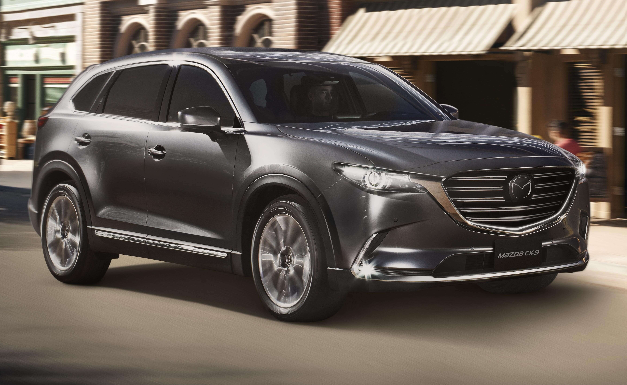
The Mazda CX-9 generations tell a surprisingly interesting story. At first glance, this is simply Mazda's large three-row crossover—the family hauler that sits quietly beside sportier models in the showroom. Look a little closer, though, and we find a vehicle that changed dramatically during its life.
Mazda only produced two main generations of the CX-9, but those two versions feel almost like vehicles from different eras. The first-generation CX-9 was a big, naturally aspirated V6 crossover developed when Mazda still had strong technical ties with Ford. The second generation arrived with Mazda's own SKYACTIV philosophy, a turbocharged four-cylinder engine, Kodo styling, a noticeably more upscale cabin, and a completely different personality.
Production of the original CX-9 began in October 2006, with North American sales beginning in early 2007. Mazda then revealed the second-generation vehicle in November 2015 and began producing it in February 2016.
Mazda eventually discontinued the CX-9 in the United States following the 2023 model year, making way for the larger and more premium CX-90.
So, which CX-9 generation is better? Which years belong to each generation? And if we're shopping used, where is the sweet spot?
Let's break the family tree down branch by branch.
Content in this publication
- Mazda CX-9 Generations at a Glance
- First-Generation Mazda CX-9: 2007-2015
- 2007 Mazda CX-9: The Original Formula
- 2008-2009 Mazda CX-9: More V6 Muscle
- 2010 Mazda CX-9 Facelift
- 2013 Mazda CX-9: The Big Visual Change
- First-Generation CX-9 Interior
- Second-Generation Mazda CX-9: 2016-2023
- Why Mazda Abandoned the V6
- 2016 Mazda CX-9: A New Design Philosophy
- 2017-2018 Mazda CX-9: Refining the New Formula
- 2019 Mazda CX-9 and the Move Upmarket
- 2020 Mazda CX-9: Technology Keeps Moving
- 2021 Mazda CX-9: A More Mature Second Generation
- 2022 Mazda CX-9
- 2023 Mazda CX-9: The Final Model Year
- What Replaced the Mazda CX-9?
- Mazda CX-9 First Generation vs Second Generation
- Which Mazda CX-9 Generation Is Best?
- Best Mazda CX-9 Generation for Families
- Best Mazda CX-9 Generation for Budget Buyers
- Which Mazda CX-9 Years Should We Consider?
- How Long Did Each Mazda CX-9 Generation Last?
- How the CX-9 Changed Mazda's SUV Identity
- What to Check Before Buying Any Used Mazda CX-9
- Is the Mazda CX-9 Still Worth Buying After Discontinuation?
- Final Thoughts on Mazda CX-9 Generations
- Frequently Asked Questions About Mazda CX-9 Generations
Mazda CX-9 Generations at a Glance
Before digging into the details, here's the simplest way to understand the CX-9 timeline.
| Generation | Approximate Model Years | Main Engine | Character |
|---|---|---|---|
| First generation | 2007-2015 | 3.5L/3.7L V6 | Large, powerful, traditional crossover |
| Second generation | 2016-2023 | 2.5L turbo four-cylinder | Refined, efficient, premium-feeling SUV |
That's it—only two Mazda CX-9 generations.
But don't mistake simplicity for a lack of change. Both generations received substantial updates, especially the first one. A 2007 CX-9 and a 2015 CX-9 share the same basic architecture, yet they don't look identical. Likewise, a 2016 CX-9 feels considerably different technologically from one of the final 2023 models.
First-Generation Mazda CX-9: 2007-2015
The Beginning of Mazda's Three-Row Crossover
The original CX-9 emerged during an era when almost every manufacturer wanted a piece of the booming crossover market.
Mazda began production in Hiroshima in October 2006 and described the CX-9 as a seven-seat crossover designed and engineered specifically for North America. It reached North American dealerships in early 2007.
That North American focus matters.
Unlike smaller Mazda models, the CX-9 wasn't trying to squeeze through medieval European streets or become an economical urban runabout. It was designed for highways, families, luggage, school runs, road trips, and the spacious expectations of American buyers.
Think of the original CX-9 as Mazda putting running shoes on a family SUV. It was large, but Mazda wanted it to feel more athletic than the average three-row crossover.
What Made the First CX-9 Different?
At the time, many midsize SUVs still behaved like tall boxes on wheels. Mazda tried to inject some personality into the formula.
The CX-9 emphasized:
- Seven-passenger seating
- Car-like road manners
- Strong V6 performance
- Available all-wheel drive
- A six-speed automatic transmission
- A comparatively sporty suspension setup
- More flowing exterior styling than traditional SUVs
Mazda itself later reflected that the original model introduced a more streamlined design and stronger dynamic performance into a segment dominated by relatively boxy vehicles.
That philosophy became one of the CX-9's defining traits throughout its life.
2007 Mazda CX-9: The Original Formula
The earliest CX-9 models used a 3.5-liter V6.
For its time, the combination worked well. Buyers got plenty of power for freeway merging and family hauling without moving into a truck-based SUV.
The cabin was also surprisingly stylish by mid-2000s crossover standards. It wasn't a luxury SUV, but Mazda avoided making the interior feel like the dashboard had been designed with a ruler and a box of gray plastic.
Still, these earliest examples are now getting old.
If we're shopping for a first-generation CX-9 today, condition and maintenance history matter far more than simply finding the cheapest 2007 listing on the internet.
2008-2009 Mazda CX-9: More V6 Muscle
Mazda soon moved to a larger 3.7-liter V6, giving the CX-9 the extra low-end muscle that suited its size better.
This engine became closely associated with the first-generation CX-9.
The result was a crossover that could pull away confidently with passengers aboard and didn't feel breathless when climbing highway grades.
Of course, there was a trade-off.
Fuel economy was not the CX-9 V6's strongest party trick. That becomes especially obvious when we compare it with the turbocharged four-cylinder second generation.
Was the First Generation Really Sporty?
“Sporty” is relative.
Nobody climbs into a seven-seat CX-9 expecting an MX-5 Miata wearing hiking boots. Yet compared with many large family crossovers of the period, the Mazda often felt remarkably composed.
Steering response was reasonably quick, body movements were controlled, and the vehicle didn't feel completely detached from the road.
That's important because Mazda preserved this philosophy in the second generation. Driving enjoyment wasn't a marketing garnish sprinkled on top—it became part of the CX-9 recipe.
2010 Mazda CX-9 Facelift
The first generation didn't simply sit unchanged for nine years.
Mazda refreshed the CX-9 during its lifecycle, adjusting styling and technology to keep the vehicle from aging too quickly.
Updates around this period brought revised exterior details, particularly around the front end.
The result remained recognizable as the original CX-9, but Mazda gradually sharpened the design.
How to Recognize Early and Later First-Generation Models
We can loosely divide the first generation into several visual phases.
Early CX-9 models have a softer, more restrained front-end treatment. Later models gained a more expressive Mazda face, while the final facelift became considerably more aggressive.
If you're browsing used-car advertisements, the grille is usually the quickest clue.
2013 Mazda CX-9: The Big Visual Change
The most obvious redesign within the first generation came for the later model years.
Mazda introduced styling influenced by its newer design direction, giving the CX-9 a much more distinctive front fascia.
This didn't create a new generation underneath, but visually it almost felt like one.
The nose became sharper. The grille became bolder. The overall appearance moved closer to Mazda's emerging modern design language.
Why the 2013-2015 Models Matter
For used-CX-9 buyers who like the simplicity and V6 power of the first generation but don't want something that looks obviously mid-2000s, these later vehicles can be particularly appealing.
They offer the mature version of the original platform.
You essentially get the final chapter after Mazda had spent years polishing the formula.
First-Generation CX-9 Interior
Step inside an original CX-9 today and its age becomes more noticeable.
That's not necessarily criticism. Car technology developed enormously between 2007 and 2023.
Early first-generation vehicles naturally lack many features modern drivers now take for granted. Touchscreens were smaller or absent, smartphone integration was primitive by modern standards, and active driver-assistance technology was much less sophisticated.
Yet the basic family-friendly layout remains useful.
Three rows of seating, substantial passenger space and usable cargo capacity were central to the CX-9's mission from day one.
First-Generation Advantages
Why would anyone still consider one?
Price is the obvious reason, but not the only one.
The naturally aspirated V6 has a smooth, traditional power delivery some drivers genuinely prefer. There isn't much waiting around for boost. Press the accelerator and the engine builds power predictably.
The first-generation CX-9 can therefore make sense for buyers who value:
- V6 smoothness
- Lower used purchase prices
- A relatively conventional drivetrain
- Seven-seat practicality
- Strong highway performance
- Older-school mechanical character
First-Generation Disadvantages
Age is the elephant in the garage.
Even the youngest first-generation examples are now significantly older than the final second-generation vehicles.
Wear can affect suspension components, seals, electronics, cooling systems and other age-sensitive parts regardless of how reliable the basic design may be.
Fuel consumption is another consideration. The V6 simply comes from a different efficiency era.
And technology? That's where the newer generation runs away like it has stolen the last slice of pizza.
Second-Generation Mazda CX-9: 2016-2023
A Completely Different CX-9 Arrives
This is where the CX-9 story takes its sharpest turn.
Mazda unveiled the second-generation CX-9 in November 2015, and production began in Hiroshima in February 2016. Mazda said the model was developed principally with North America in mind, which it expected to account for roughly 80 percent of projected global sales.
Instead of merely refining the old vehicle, Mazda effectively pressed reset.
Out went the big naturally aspirated V6.
In came SKYACTIV engineering, Kodo design and a 2.5-liter turbocharged four-cylinder engine.
Mazda had begun manufacturing the SKYACTIV-G 2.5T alongside production of the new CX-9.
That engine change alone makes identifying the generations simple:
V6 CX-9? First generation.
2.5 turbo CX-9? Second generation.
Why Mazda Abandoned the V6
At first, replacing a 3.7-liter V6 with a 2.5-liter four-cylinder sounds like trading a steak dinner for a salad.
But turbocharging changes the equation.
Mazda focused heavily on torque—the muscular shove we feel during everyday acceleration rather than simply chasing a dramatic horsepower number at high rpm.
That made sense for a large crossover.
Families don't routinely rev their engine toward redline while driving children to school. They need usable power when merging, climbing hills and accelerating with passengers aboard.
The turbocharged engine delivered exactly that type of response.
You may be interested in reading Mazda CX-90 vs CX-9: Which Three-Row Mazda Is Better?
2016 Mazda CX-9: A New Design Philosophy
The exterior transformation was dramatic.
The second-generation CX-9 adopted Mazda's Kodo – Soul of Motion design philosophy. Mazda also described it as part of its new-generation lineup using the full range of SKYACTIV technologies.
Gone was much of the bulky, conventional crossover appearance.
The new CX-9 looked lower, longer and more sculpted. Its grille projected forward. The hood stretched back gracefully. The cabin appeared visually pushed toward the rear.
It almost looked like Mazda designers had taken a sporty sedan and inflated it carefully until seven seats fitted inside.
The interior took an equally large step.
Mazda began moving steadily upmarket during this period, and the CX-9 became one of the clearest examples.
Materials improved.
Dashboard design became cleaner.
Controls felt more deliberately arranged.
Higher trim levels added richer leather, premium audio and additional comfort features.
Rather than competing solely on how many cupholders could be squeezed between three rows of seats, Mazda tried to sell an atmosphere.
2017-2018 Mazda CX-9: Refining the New Formula
After introducing an entirely new generation, manufacturers typically spend the following years smoothing rough edges.
The CX-9 followed that pattern.
Equipment availability evolved, safety technology expanded and cabin refinements continued.
This is why buyers searching the used market shouldn't automatically assume the first year of a generation offers the best value.
Sometimes paying slightly more for a model built a couple of years into production gets us a vehicle with incremental improvements while still avoiding the higher prices of late-model examples.
Second-Generation Driving Experience
This generation continued the CX-9 tradition of feeling smaller from behind the wheel than it looked from the outside.
That's one of its strongest characteristics.
The steering feels more deliberate than we'd expect from a large three-row crossover. Body control is disciplined, and the turbo engine's torque makes normal acceleration effortless.
The CX-9 never became a sports car.
It simply remembered that parents still enjoy driving.
And that's a distinction many rivals forgot.
2019 Mazda CX-9 and the Move Upmarket
By the late 2010s, Mazda's ambitions had become obvious.
The company increasingly positioned its vehicles between mainstream and premium brands.
The CX-9 suited that strategy beautifully because large crossovers are precisely where buyers notice cabin quality, refinement and comfort.
Higher specifications could feel surprisingly luxurious without wearing a traditional luxury badge on the grille.
Why the CX-9 Never Became a Full Luxury SUV
Despite the premium design, Mazda kept the CX-9 fundamentally within mainstream territory.
That meant buyers could get an elegant cabin and enjoyable road manners without necessarily facing the purchase price associated with established luxury marques.
There were compromises.
Third-row packaging wasn't always as expansive as some larger competitors, while the elegant exterior sacrificed a little of the squared-off practicality offered by boxier alternatives.
That's the price of tailoring the suit.
2020 Mazda CX-9: Technology Keeps Moving
As the second generation aged, infotainment, connectivity and driver-assistance systems became increasingly important.
A family crossover launched in 2016 could not survive into the early 2020s without evolving technologically.
Mazda continued updating equipment and safety features rather than completely redesigning the platform.
That creates an important distinction for used buyers.
Two CX-9s belonging to the same generation can have noticeably different technology depending on model year and trim.
Don't Shop by Generation Alone
This deserves emphasis.
Knowing the generation gives us the broad mechanical picture, but it doesn't tell us everything.
When comparing used CX-9s, check:
- Exact model year
- Trim level
- Front- or all-wheel-drive configuration where applicable
- Infotainment equipment
- Driver-assistance features
- Service history
- Recall completion
- Tire condition
- Accident history
- Local-market specification
A generation guide gives us the map. The individual vehicle inspection tells us whether the bridge ahead is still standing.
2021 Mazda CX-9: A More Mature Second Generation
By 2021, the second-generation CX-9 was well established.
The basic recipe remained recognizable: turbocharged 2.5-liter power, three rows, elegant styling and Mazda's driving-focused chassis tuning.
But later examples benefited from years of gradual specification changes.
For buyers seeking a used CX-9 today, these middle-to-late second-generation vehicles may occupy an appealing zone between age and price.
They're new enough to feel contemporary while potentially costing substantially less than the final-year examples.
2022 Mazda CX-9
The CX-9 entered its closing years without receiving a third generation.
Instead, Mazda continued evolving the existing model.
By this point, the larger question wasn't whether the CX-9 would receive another facelift.
It was what Mazda would do next.
The answer arrived in the form of the CX-90.
2023 Mazda CX-9: The Final Model Year
And here we arrive at the end of the road.
The 2023 CX-9 was the final U.S.-market model year. Mazda officially announced in June 2023 that the CX-9 would be discontinued in the United States after that model year.
For 2023, Mazda listed the CX-9 with standard i-Activ AWD in the U.S. and continued emphasizing the model's combination of premium character and driving dynamics.
There was no 2024 Mazda CX-9 generation waiting backstage.
Instead, the curtain opened on something new.
What Replaced the Mazda CX-9?
Mazda CX-90 Takes Over
Mazda identified the 2024 CX-90 as part of the new generation of vehicles following the CX-9's departure.
The CX-90 represents more than a name change.
It belongs to Mazda's newer large-product architecture and moves the company's premium ambitions further forward.
So although people sometimes think of the CX-90 as a “third-generation CX-9,” that's not technically the best way to describe it.
The CX-9 has two generations.
The CX-90 is a separate model and successor.
Mazda CX-9 First Generation vs Second Generation
Now we reach the comparison most used-car shoppers actually care about.
Engine
First-generation CX-9 models use naturally aspirated V6 power, while the second generation switched to Mazda's 2.5-liter turbocharged SKYACTIV-G engine.
The V6 feels smooth and traditional.
The turbo four offers abundant low-rpm torque and better represents Mazda's newer efficiency philosophy.
Design
This isn't even close.
The second generation looks considerably newer and more sophisticated.
The first generation has aged reasonably gracefully—especially later facelifted examples—but the second generation introduced proportions and styling that still look modern today.
Interior Quality
Again, second generation.
Mazda dramatically improved material quality, dashboard architecture and overall presentation.
If the cabin matters heavily to us, the 2016-2023 CX-9 is the clear winner.
Technology
Second generation wins comfortably, especially in later model years.
Modern infotainment, smartphone-era connectivity and more advanced driver aids increasingly separate newer vehicles from the original CX-9.
Purchase Price
First generation wins.
You may be interested in readingMazda CX-90 vs CX-9: Which Three-Row Mazda Is Better?You may be interested in reading
Mazda CX-9 Best Years: Which Models Are Worth Buying?Older CX-9s can represent a lot of three-row SUV for relatively little money.
But a low sticker price isn't always the same thing as low ownership cost.
An older vehicle may require more maintenance simply because rubber, seals, suspension pieces and electronics do not have eternal youth.
Driving Character
Both generations are good by family-SUV standards.
The first generation has that satisfying V6 character.
The second feels lighter on its feet, more sophisticated and more aligned with Mazda's modern driving philosophy.
Which Mazda CX-9 Generation Is Best?
For most buyers, we'd choose the second-generation CX-9.
It feels newer because it is newer—but that's only part of the story.
The second generation represents a much more cohesive product. Engine, chassis, cabin and styling all seem to speak the same language.
It's elegant without trying too hard.
Practical without feeling like an appliance.
Comfortable without becoming numb.
The first generation remains worth considering when budget is the primary concern or when we specifically prefer naturally aspirated V6 power.
Best Mazda CX-9 Generation for Families
The second generation is generally the stronger family choice.
Why?
Because family vehicles aren't judged solely by engine output.
We interact with seats, climate controls, infotainment, safety systems, doors, storage compartments and cabin materials every single day.
Newer CX-9s simply operate in a more modern ecosystem.
That becomes especially relevant when we use the vehicle for long-distance travel.
A cabin that feels comfortable for ten minutes during a test drive can become either our best friend or our sworn enemy four hours into a road trip.
Best Mazda CX-9 Generation for Budget Buyers
This is where the first generation fights back.
A well-maintained late first-generation CX-9 can potentially provide considerable space and performance for the money.
The important phrase is well-maintained.
Buying solely according to advertised price can be dangerous with older crossovers.
A neglected cheap SUV can transform into an expensive SUV remarkably quickly.
We'd rather buy a properly maintained example with documentation and slightly higher mileage than a suspiciously inexpensive one whose service history appears to have vanished into another dimension.
Which Mazda CX-9 Years Should We Consider?
There's no universal magic year because vehicle condition, trim and maintenance matter enormously.
Still, we can think about the lineup in broad groups.
2007-2009: Earliest examples. Usually inexpensive, but age deserves serious consideration.
2010-2012: More developed versions of the original generation.
2013-2015: Final and most modern-looking first-generation models.
2016-2018: Early second-generation CX-9s with the new turbocharged platform.
2019-2021: Mature second-generation examples offering a compelling balance between modernity and depreciation.
2022-2023: Newest CX-9s and likely the most appealing choices for buyers prioritizing age and contemporary equipment.
Don't treat those brackets as guarantees of reliability. Individual maintenance history can easily matter more than one or two years of age.
How Long Did Each Mazda CX-9 Generation Last?
The first generation covered roughly nine model years in the U.S., from 2007 through 2015.
The second ran from 2016 through 2023.
That's a remarkably simple lineage compared with vehicles that jump through three or four generations during a similar time span.
Mazda's strategy was evolutionary rather than frantic.
The company allowed each CX-9 platform to mature instead of reinventing the vehicle every few years.
How the CX-9 Changed Mazda's SUV Identity
Perhaps the CX-9's biggest contribution wasn't one specific engine or styling feature.
It demonstrated that a practical Mazda didn't need to drive like a household appliance.
The first generation injected athletic behavior into the family-crossover formula.
The second generation layered refinement and design sophistication on top.
And the CX-90 subsequently carried Mazda's premium ambitions farther.
Viewed that way, the CX-9 forms a bridge.
The first-generation model connects to Mazda's Ford-influenced past.
The second-generation model belongs unmistakably to the SKYACTIV/Kodo era.
The CX-90 points toward the company's next chapter.
That's what makes the Mazda CX-9 generations more interesting than a simple production-date table.
What to Check Before Buying Any Used Mazda CX-9
Generation guides are useful, but the actual vehicle sitting in front of us deserves the final vote.
Before buying, arrange a proper inspection and investigate the vehicle's service and recall history.
Pay particular attention to:
- Service records: Regular maintenance tells us more than shiny paint.
- Cooling system condition: Look for leakage, unusual smells or evidence of previous overheating.
- Transmission behavior: Shifts should feel consistent rather than harsh or hesitant.
- Suspension noises: Listen over rough roads and during low-speed turns.
- AWD operation: If equipped, confirm there are no warning messages or driveline noises.
- Electronics: Test every switch, camera, seat function and infotainment feature.
- Air conditioning: A three-row SUV needs effective cooling throughout the cabin.
- Bodywork: Uneven panel gaps or mismatched paint can reveal previous repairs.
- Tires: Uneven wear may indicate alignment or suspension issues.
- Recall status: Verify recall completion using the VIN in the country where the vehicle is registered.
A pre-purchase inspection is especially valuable on older first-generation examples.
Saving a small amount by skipping inspection can sometimes be like refusing to buy an umbrella because the rain hasn't started yet.
Is the Mazda CX-9 Still Worth Buying After Discontinuation?
Absolutely—provided the individual vehicle makes sense.
Discontinued doesn't automatically mean undesirable.
Mazda stopped selling the CX-9 in the U.S. because its lineup was moving toward vehicles such as the CX-90, not because three-row SUVs suddenly became useless. Mazda specifically described the outgoing CX-9 as paving the way for its next generation of vehicles.
Used buyers can actually benefit from this.
The CX-9's absence from new-car showrooms may encourage depreciation while the underlying qualities that made the vehicle appealing remain intact.
The trick is buying based on condition and ownership costs rather than nostalgia or badge value.
Final Thoughts on Mazda CX-9 Generations
The history of the Mazda CX-9 is refreshingly straightforward.
There are two true Mazda CX-9 generations.
The first generation, sold from 2007 through 2015, introduced Mazda's large seven-seat crossover formula with V6 power and unusually engaging road manners.
The second generation, sold from 2016 through 2023, transformed the CX-9 with SKYACTIV technology, a turbocharged 2.5-liter engine, Kodo styling and a noticeably more premium character.
Then the CX-9 story ended.
Mazda discontinued the model in the U.S. after 2023 and moved forward with the CX-90.
Which generation should we buy?
For most people, it's the second.
It delivers the better combination of design, technology, refinement, efficiency and modern safety equipment. Late first-generation models still make sense for value-conscious shoppers—particularly those who prefer the smooth character of a naturally aspirated V6—but age and maintenance become increasingly important.
In the end, the CX-9 followed an unusual automotive path. It only needed two generations to evolve from a sporty mainstream family crossover into something that could knock surprisingly hard on the door of the premium segment.
And perhaps that's the best summary of the CX-9 itself: practical enough for school runs, sophisticated enough for date night, and just sporty enough to make us occasionally choose the longer road home.
Frequently Asked Questions About Mazda CX-9 Generations
1. How many generations of the Mazda CX-9 are there?
There are two Mazda CX-9 generations. The first-generation CX-9 covered the 2007-2015 model years in North America, while the redesigned second generation arrived for 2016 and continued through the 2023 model year. Mazda ended U.S. sales after 2023.
2. What year did the second-generation Mazda CX-9 start?
The second-generation Mazda CX-9 started with the 2016 model year. Mazda unveiled the new generation in November 2015 and began production in Hiroshima in February 2016, with North American sales commencing in spring 2016.
3. Which Mazda CX-9 generation has a V6?
The first-generation CX-9 uses V6 power. Early versions used a 3.5-liter engine, followed by the 3.7-liter V6 associated with most first-generation vehicles. The second generation abandoned the V6 in favor of Mazda's turbocharged 2.5-liter SKYACTIV-G four-cylinder engine.
You may be interested in readingMazda CX-90 vs CX-9: Which Three-Row Mazda Is Better?You may be interested in reading
Mazda CX-9 Best Years: Which Models Are Worth Buying?You may be interested in reading
Mazda CX-9 Trim Levels: Complete Guide to Every Version4. What is the best Mazda CX-9 generation?
For most used-car buyers, the second-generation Mazda CX-9 is the better all-around choice because it provides newer technology, more modern styling, a more sophisticated interior and Mazda's turbocharged SKYACTIV powertrain. Buyers prioritizing affordability or naturally aspirated V6 character may still prefer a late first-generation CX-9.
5. Is the Mazda CX-90 the third-generation CX-9?
No. The Mazda CX-90 is a separate model and successor, not officially the third-generation CX-9. Mazda discontinued the CX-9 in the U.S. following the 2023 model year and specifically pointed to the 2024 CX-90 as part of its next generation of vehicles.
If you want to know other articles similar to Mazda CX-9 Generations: Complete Guide From 2007 to 2023 you can visit the category Models.
Honda Passport vs Toyota 4Runner: Which SUV Is Better?
Honda Passport vs Ford Bronco: Which SUV Is Better?
Honda Passport vs Ford Explorer: Which SUV Is Better?
Honda Passport or Pilot: Which SUV Is Better?
Honda Passport vs Jeep Grand Cherokee: Which SUV Is Better?
Honda Passport vs Nissan Pathfinder: Which SUV Is Better?
Leave a Reply
More content of your interest