
Ram 1500 8 Speed Transmission Problems: Symptoms, Causes, and Fixes

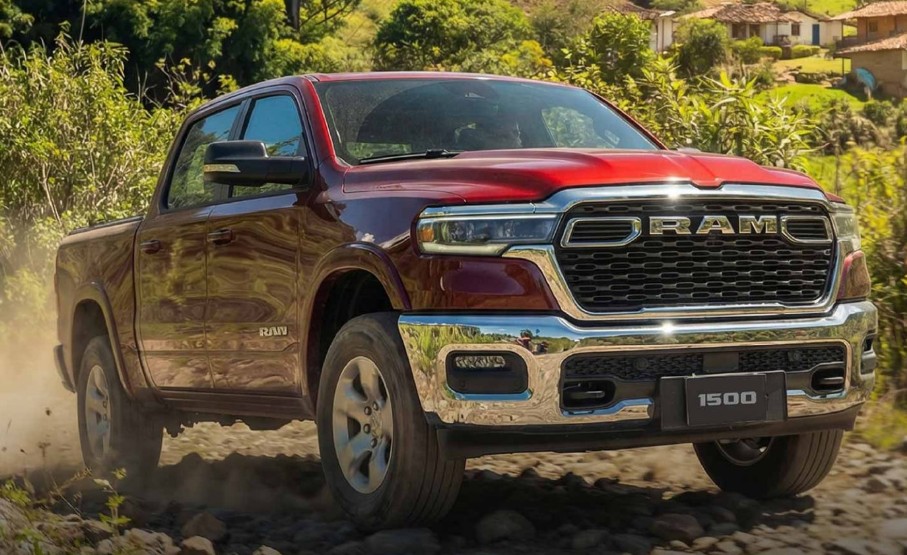
The Ram 1500's eight-speed automatic transmission has become a major part of the truck's personality. When everything works correctly, gear changes can feel almost invisible, highway cruising is relaxed, and the transmission keeps the engine in a useful part of its powerband without drawing much attention to itself.
But when something goes wrong? The transmission suddenly becomes impossible to ignore.
Owners searching for Ram 1500 8 speed transmission problems commonly describe hard shifts, hesitation, strange downshifts, delayed engagement, shuddering, leaks, warning messages, or a truck that simply doesn't behave the way it used to.
The tricky part is that an odd shift doesn't automatically mean the transmission is dying. Eight-speed Ram transmissions are electronically controlled systems in which software, adaptation values, fluid condition, temperature, sensors, engine operation, and mechanical components all interact. Stellantis has issued service information and software-related bulletins addressing shifting concerns on certain Ram configurations, showing why proper diagnosis matters before anyone starts replacing major components.
So, before we assume the worst, let's unpack the symptoms, likely causes, warning signs, repair possibilities, and the difference between an annoying shift and a genuinely serious transmission problem.
Content in this publication
- What 8-Speed Transmission Does the Ram 1500 Use?
- Most Common Ram 1500 8 Speed Transmission Problems
- 1. Hard or Jerky Gear Changes
- 2. Rough Downshifting When Coming to a Stop
- 3. Delayed Engagement Into Drive or Reverse
- 4. Ram 1500 Transmission Shudder
- 5. Transmission Slipping
- 6. Transmission Fluid Leaks
- 7. Transmission Overheating
- 8. Transmission Warning Messages and Limp Mode
- 9. Software and Transmission Adaptation Problems
- 10. Valve Body and Hydraulic Control Issues
- 11. Torque Converter Problems
- 12. Internal Clutch Problems
- Are Ram 1500 8-Speed Transmissions Unreliable?
- Which Ram 1500 Model Years Have 8-Speed Transmission Problems?
- How Do We Diagnose Ram 1500 8 Speed Transmission Problems?
- Can Changing the Transmission Fluid Fix the Problem?
- How Much Does a Ram 1500 8-Speed Transmission Repair Cost?
- Can You Drive a Ram With Transmission Problems?
- How to Help a Ram 1500 8-Speed Transmission Last Longer
- What to Check Before Buying a Used Ram 1500 With an 8-Speed
- When Does the Transmission Need Replacement?
- Final Thoughts on Ram 1500 8 Speed Transmission Problems
- Frequently Asked Questions
- 1. Why does my Ram 1500 shift hard from first to second gear?
- 2. Can resetting the transmission fix rough shifting?
- 3. Is Ram 1500 transmission shudder always caused by the torque converter?
- 4. Should I replace my Ram 1500 transmission if it shifts hard?
- 5. What is the first thing I should do when my Ram 1500 develops transmission problems?
What 8-Speed Transmission Does the Ram 1500 Use?
Ram has used several versions of eight-speed automatic transmissions across different engines, model years, and truck generations. Consequently, two Ram 1500s parked beside each other may have similar-looking rotary shifters while using different transmission configurations.
For example, newer Ram 1500 applications include the 8HP75 eight-speed automatic, and official Stellantis technical documentation specifically references that transmission in certain Ram 1500 configurations.
That distinction matters when troubleshooting.
The correct transmission fluid, software, calibration procedures, replacement components, and diagnostic steps can depend on the exact transmission and powertrain combination. We shouldn't assume that a repair that worked perfectly on one Ram will automatically apply to another.
Why the Eight-Speed Feels Different From an Older Automatic
An old-school four-speed automatic had relatively few gears to choose from. An eight-speed has twice as many.
Think of it like climbing a staircase with smaller steps instead of jumping between widely spaced platforms. The transmission can keep the engine closer to its preferred operating range, but it also means more shifting activity.
Some movement through the gears is therefore normal.
What isn't normal is violent banging, repeated slipping, severe hesitation, persistent shuddering, or a warning message accompanied by obvious drivability problems.
Most Common Ram 1500 8 Speed Transmission Problems
Not every truck experiences the same issue, but several complaints tend to bring owners to the workshop.
The most important symptoms to watch include:
- Harsh or jerky shifts
- Delayed Drive or Reverse engagement
- Shuddering under acceleration
- Rough downshifts while slowing
- Transmission slipping
- Unexpected gear changes
- Fluid leaks
- Transmission overheating
- Warning lights or transmission messages
- Limp mode
- Clunking when shifting
- Poor shift quality when cold
One isolated rough shift isn't enough to diagnose a failed gearbox. We're looking for patterns.
When does it happen? Cold or warm? Light throttle or heavy throttle? First shift of the morning or constantly? During acceleration or braking?
Those details are gold when troubleshooting.
1. Hard or Jerky Gear Changes
Perhaps the most recognizable complaint is a Ram 1500 that suddenly shifts with all the subtlety of somebody slamming a door.
Instead of smoothly transitioning between gears, we may feel a bump, kick, thud, or pronounced jolt.
Why Hard Shifting Happens
Harsh shifts can have multiple causes, including transmission adaptation, software calibration, operating conditions, fluid-related problems, electronic faults, or internal hydraulic/mechanical issues.
Importantly, Stellantis has published procedures concerning adaptation and shift-quality complaints on eight-speed transmissions, demonstrating that poor shift feel doesn't automatically equal catastrophic internal failure.
That is why jumping straight to "you need a new transmission" can be premature.
Cold Shifts Can Feel Different
A truck may behave differently during the first few minutes after startup because transmission fluid characteristics change with temperature.
A slightly more noticeable cold shift may not indicate failure. However, repeated banging, slipping, or severe harshness deserves inspection, especially if the symptom continues after the drivetrain reaches normal temperature.
2. Rough Downshifting When Coming to a Stop
Another complaint appears when slowing toward a red light.
Everything feels normal until the truck approaches low speed and—thump—we feel the transmission downshift.
Sometimes it feels like another vehicle lightly tapped the rear bumper.
That sensation may be related to shift adaptation or calibration, but drivetrain slack, mounts, driveline components, or internal transmission operation can create similar feelings.
Is a Downshift Clunk Normal?
A mild gear-change sensation can occur.
A severe or increasingly frequent clunk isn't something we should simply dismiss as "that's how these trucks are."
Pay particular attention when the symptom:
- Becomes progressively worse
- Happens almost every stop
- Is accompanied by RPM flare
- Produces a metallic noise
- Appears together with a transmission warning
- Is accompanied by delayed acceleration
Those clues move the problem from "quirk" toward "diagnostic appointment."
3. Delayed Engagement Into Drive or Reverse
We start the Ram, select Drive, and expect the truck to move.
Nothing.
Then a second or two later, the transmission finally engages.
That's delayed engagement, and it can also occur when shifting into Reverse.
What Delayed Engagement Can Mean
A delay may point toward hydraulic pressure issues, fluid concerns, valve-body operation, electronic control problems, or internal wear. The situation becomes more concerning if engagement arrives with a powerful bang.
Don't repeatedly slam the accelerator while waiting.
If the transmission hasn't properly engaged, adding throttle can turn a relatively modest symptom into a dramatic drivetrain shock when the gear finally catches.
4. Ram 1500 Transmission Shudder
Transmission shudder feels different from a simple harsh shift.
Rather than one bump, we feel a rapid vibration—almost like driving over closely spaced rumble strips.
It may happen during:
- Light acceleration
- Highway cruising
- Torque-converter lockup
- Moderate uphill driving
- Specific speed ranges
Don't Automatically Blame the Transmission
Here's where diagnosis gets interesting.
Engine misfires, worn driveline components, tire problems, driveshaft issues, differential concerns, and transmission-related faults can sometimes create sensations that drivers describe with the same word: "shudder."
We need to reproduce the symptom and determine exactly when it occurs.
If vibration follows engine RPM rather than vehicle speed, for example, our diagnostic path may look very different.
5. Transmission Slipping
Slipping deserves quick attention.
Imagine pressing the accelerator and watching engine RPM climb noticeably while vehicle speed doesn't increase proportionally.
That's the classic slipping sensation.
Signs of Possible Slippage
Look for:
- Engine RPM flaring between shifts
- Weak acceleration despite increased RPM
- A gear that appears to disengage momentarily
- Burning smells
- Repeated shift flare
- Transmission fault messages
An occasional unusual shift and genuine sustained slipping are not the same thing.
Repeated slipping can generate additional heat and accelerate damage, so this isn't the symptom we'd ignore for another six months.
6. Transmission Fluid Leaks
Transmission fluid is the lifeblood of an automatic transmission.
Its job isn't simply lubrication. Fluid participates in hydraulic operation, cooling, clutch control, and internal component protection.
A substantial leak can therefore become much more serious than an oily driveway.
Where Should We Look?
Fluid can appear around transmission-related sealing surfaces, connections, cooling circuits, or other areas of the assembly.
But seeing fluid underneath the truck doesn't prove the transmission itself is leaking.
Engine oil, coolant, transfer-case fluid, differential oil, powertrain residues, and water condensation can all end up beneath a vehicle.
Identification comes before repair.
Don't Guess the Fluid Level
Modern eight-speed transmissions are not necessarily serviced like an old automatic with a conveniently accessible dipstick.
Fluid level checking can require specific procedures and conditions, so blindly pouring fluid into the transmission isn't a good troubleshooting strategy.
Too little fluid causes problems, but too much isn't harmless either. Stellantis technical guidance has specifically warned that an overfilled eight-speed transmission can discharge fluid through its vent.
7. Transmission Overheating
Heat is one of an automatic transmission's least welcome guests.
Heavy towing, steep grades, high ambient temperatures, restricted cooling, incorrect fluid conditions, internal slipping, or another system fault can push temperatures higher than intended.
What Should We Do if a Temperature Warning Appears?
Don't treat an overheating warning as background decoration.
Reduce load and follow the procedures appropriate to the truck's owner's manual. Continued operation while a transmission is severely overheating can turn an underlying problem into a much more expensive one.
For truck-specific warnings and operating procedures, the manual for the exact model year should take priority over generic internet advice.
Ram's current owner documentation includes dedicated instructions covering operation of the eight-speed transmission.
8. Transmission Warning Messages and Limp Mode
Modern transmissions talk.
Unfortunately, sometimes they speak through warning lights.
A control module may detect an operating condition outside expected parameters and store diagnostic trouble codes. In certain fault conditions, transmission operation may be limited to protect the drivetrain.
Drivers usually call this limp mode.
What Limp Mode Feels Like
The truck may:
- Remain in one gear
- Shift unusually
- Refuse certain gear changes
- Accelerate poorly
- Display a transmission warning
- Illuminate the check-engine light
Cycling the ignition can occasionally make symptoms disappear temporarily.
That doesn't mean the problem is fixed.
Stored diagnostic information may still provide the clue that helps find the root cause.
9. Software and Transmission Adaptation Problems
This is one of the most misunderstood areas of modern automatic transmissions.
Today's transmission isn't just gears and clutches swimming in oil. It is controlled by sophisticated electronics that continuously determine how and when shifts occur.
The system may also adapt its behavior over time.
Can a Software Update Fix Hard Shifting?
In some cases, yes.
But not every case.
Stellantis has issued transmission-related technical bulletins involving software updates and shift concerns for specific Ram 1500 configurations. For example, a February 2025 bulletin covering certain Ram 1500 vehicles equipped with the 8HP75 addresses transmission shifting concerns through a control-module software update procedure.
That's important because software should be checked before expensive mechanical conclusions are made when the affected truck and symptom match applicable service information.
What Is Transmission Relearning?
Transmission adaptation allows control systems to compensate for operating characteristics and achieve appropriate shift behavior.
After certain repairs, software work, or adaptation resets, a structured drive-learning procedure may sometimes be required.
Stellantis has published dedicated eight-speed adaptation drive-learn procedures for poor shift quality.
In simple terms, the transmission may need a little time—and the correct procedure—to get acquainted with itself again.
10. Valve Body and Hydraulic Control Issues
If software is the brain, hydraulic control is part of the transmission's circulatory system.
The valve body directs pressurized transmission fluid where it needs to go.
When hydraulic control becomes inconsistent, symptoms can include strange shifts, delayed engagement, gear-ratio faults, or harsh operation.
Why Valve-Body Problems Can Be Difficult to Diagnose
Because the symptoms overlap with everything else.
A rough shift might come from calibration.
Or adaptation.
Or hydraulic control.
Or internal clutch behavior.
Or an engine-management issue influencing torque during the shift.
That's precisely why throwing parts at modern transmissions can become painfully expensive.
11. Torque Converter Problems
The torque converter transfers engine power into the automatic transmission and can also use a lockup clutch during certain driving conditions for improved efficiency.
When torque-converter operation goes wrong, symptoms may include shudder, unusual noises, overheating, inconsistent lockup behavior, or RPM fluctuations.
Transmission Shudder vs Torque Converter Shudder
From behind the steering wheel, the two can feel almost identical.
We may feel vibration and immediately say, "The transmission is shaking."
Technically, though, identifying whether the vibration occurs during torque-converter clutch application can dramatically narrow the diagnosis.
A capable scan tool and a technician who understands live transmission data can be worth far more than guessing based on feel.
12. Internal Clutch Problems
An automatic eight-speed transmission uses multiple clutch elements internally to create its different gear ratios. Stellantis service information for eight-speed transmissions describes five clutch elements used to achieve the available ratios.
If an internal clutch or associated hydraulic circuit cannot apply correctly, we may see slipping, missing gears, ratio-related diagnostic codes, or poor shift quality.
When Internal Damage Becomes More Likely
Mechanical trouble moves higher on our suspicion list when:
- Fluid contains substantial debris
- Multiple gears malfunction
- Slipping is persistent
- Correct software and adaptations don't help
- Hydraulic testing reveals abnormal pressure
- Relevant fault codes repeatedly return
- Noise is clearly coming from inside the transmission
At that stage, further internal diagnosis may be necessary.
Are Ram 1500 8-Speed Transmissions Unreliable?
It's tempting to read ten angry forum posts and conclude every Ram eight-speed is a ticking time bomb.
That isn't a useful way to assess reliability.
Online discussions naturally concentrate problems because people whose trucks operate normally rarely create a post titled, "Transmission shifted perfectly again today."
At the same time, we shouldn't pretend genuine complaints don't exist. Stellantis service bulletins show that specific eight-speed applications have received documented troubleshooting procedures, software revisions, and repair guidance over the years.
The sensible conclusion sits in the middle: evaluate the individual truck rather than condemning or praising every transmission sharing the eight-speed label.
Which Ram 1500 Model Years Have 8-Speed Transmission Problems?
There isn't one simple "bad year" covering every Ram 1500 eight-speed.
Why?
Because the Ram 1500 has evolved through generations, engines, calibrations, transmission variants, production updates, and software revisions.
A 2014 truck and a 2025 truck shouldn't be treated as mechanically identical simply because both have eight forward gears.
Official Ram documentation confirms eight-speed transmissions continue to be used in recent Ram 1500 applications, while technical bulletins identify specific vehicle configurations rather than declaring all eight-speed trucks defective.
VIN-Specific Research Is Better Than Model-Year Guessing
Before buying a used Ram, obtain the VIN.
Then research:
- Open recalls
- Service history
- Applicable campaigns
- Software updates
- Previous transmission repairs
- Fluid leaks
- Diagnostic trouble codes
- Previous towing use
That tells us much more than an internet list declaring one entire production year "good" and another "bad."
How Do We Diagnose Ram 1500 8 Speed Transmission Problems?
A proper diagnosis should move from cheap information toward expensive conclusions.
Think funnel, not cannon.
Step 1: Document the Symptom
Write down exactly what's happening.
Does the truck:
- Bang during a specific shift?
- Hesitate going into Reverse?
- Shudder at highway speed?
- Shift badly only when cold?
- Slip under hard acceleration?
- Act differently while towing?
Specific symptoms produce specific diagnostic paths.
Step 2: Scan for Trouble Codes
Even without a warning light, there may be stored information.
A proper scan should look beyond generic engine codes and access relevant transmission and powertrain modules.
Step 3: Inspect for Leaks and Obvious Damage
Before reinventing automotive engineering, look underneath.
A damaged connector, leaking component, wiring problem, or obvious fluid loss can sometimes explain what initially feels like an enormous internal failure.
Step 4: Verify Software and Applicable Service Information
Software level matters.
For certain Ram 1500s, Stellantis technical service information explicitly calls for module reprogramming in response to identified shift concerns.
Skipping that check and immediately replacing hardware would be like buying a new laptop because one application needs an update.
Step 5: Road Test With Live Data
A technician can compare the physical sensation with data such as commanded gear, actual gear behavior, engine torque, converter operation, temperature, and other relevant parameters.
The goal is simple: determine what changes at the exact moment the symptom occurs.
Can Changing the Transmission Fluid Fix the Problem?
Sometimes fluid service improves an issue associated with fluid condition or maintenance.
Sometimes it doesn't.
A fluid change cannot repair a physically damaged clutch, failed sensor, broken component, or unrelated engine problem.
Should We Flush the Ram 8-Speed Transmission?
We should follow the correct service procedure for the exact transmission rather than applying generic "flush every automatic" advice.
Transmission servicing has become highly powertrain-specific.
Use the fluid specification and service method listed for the truck's actual transmission, model year, and configuration.
Guessing here is an expensive hobby.
How Much Does a Ram 1500 8-Speed Transmission Repair Cost?
Repair costs vary dramatically because "transmission problem" can describe everything from a diagnostic/software issue to complete transmission replacement.
The pricing ladder generally moves from:
software or adaptation work → electrical or sealing repair → fluid/service work → hydraulic/control repair → torque-converter/internal repair → transmission replacement.
Location, labor rate, model year, transmission version, new versus remanufactured parts, warranty status, and collateral damage can change the bill substantially.
That's why we'd rather pay for accurate diagnosis than authorize a four-figure repair based on symptoms alone.
Can You Drive a Ram With Transmission Problems?
It depends entirely on the symptom.
A slightly firm cold shift is different from a truck that cannot maintain a gear.
Stop Driving and Seek Assistance When
Driving further becomes risky when we experience severe slipping, loss of Drive, loss of Reverse in a dangerous location, significant fluid leakage, overheating warnings, violent engagement, grinding noises, or a transmission warning accompanied by major drivability problems.
In those situations, towing the truck may cost far less than turning a repairable fault into a ruined transmission.
How to Help a Ram 1500 8-Speed Transmission Last Longer
We can't guarantee mechanical immortality, but sensible ownership stacks the odds in our favor.
Follow the maintenance requirements for the exact truck, investigate leaks early, avoid continuing to drive through obvious slipping or overheating, keep the cooling system healthy, use the specified fluids, and make sure software-related concerns are properly diagnosed.
If the truck frequently tows heavy loads, operating conditions deserve even more attention.
Heat and load are relentless. They don't care how clean the paint looks.
Avoid the "It'll Probably Go Away" Strategy
A strange shift that occurs once may disappear forever.
A strange shift that happens every morning for three months is telling us something.
Mechanical problems usually aren't improved by denial.
What to Check Before Buying a Used Ram 1500 With an 8-Speed
A ten-minute test drive isn't enough.
Start the truck completely cold if possible. Test Reverse and Drive engagement. Drive gently. Accelerate harder. Cruise steadily. Slow gradually through the gears. Make several stops.
Then repeat portions of the test after the drivetrain is warm.
Look for delayed engagement, harsh shifts, shuddering, warning messages, RPM flare, strange noises, and leaks.
Ask for service records.
And if the truck is expensive enough that buying the wrong one would hurt, pay for a professional pre-purchase inspection.
A cheap inspection can be the umbrella we buy before the storm.
When Does the Transmission Need Replacement?
Replacement should generally come after diagnosis establishes that repairing the existing unit is impractical, uneconomical, or unable to provide a reliable result.
A complete replacement may make sense when internal damage is extensive.
But hard shifting alone does not prove replacement is necessary.
That's the central lesson throughout this discussion.
Modern transmission problems can originate in software, electronics, fluid/hydraulic operation, adaptation, the engine-management system, mechanical transmission components, or even another part of the drivetrain.
Diagnose first. Spend second.
Final Thoughts on Ram 1500 8 Speed Transmission Problems
Ram 1500 8 speed transmission problems can range from relatively manageable calibration issues to serious mechanical failures, and the symptoms often overlap.
Hard shifts, rough downshifts, delayed engagement, shuddering, slipping, leaks, and warning messages all deserve attention—but they don't all deserve the same repair.
Our best approach is methodical.
Identify exactly when the problem happens. Scan the truck. Check the basics. Verify applicable software and service information. Inspect fluid-related concerns correctly. Road-test with useful data. Only then should we start discussing major mechanical repairs.
The biggest mistake is treating every bump as a dead transmission.
The second-biggest mistake is ignoring obvious symptoms until a small problem becomes a large one.
Somewhere between panic and neglect lies smart diagnosis—and that's where we'd want to be.
Frequently Asked Questions
1. Why does my Ram 1500 shift hard from first to second gear?
A hard low-gear shift can result from several factors, including adaptation behavior, calibration/software concerns, hydraulic control, operating temperature, fluid-related conditions, or mechanical problems. Stellantis has published eight-speed adaptation procedures and configuration-specific software bulletins, so the truck should be properly diagnosed before internal failure is assumed.
2. Can resetting the transmission fix rough shifting?
An adaptation reset or relearn may help in specific situations, particularly when performed as part of the correct diagnostic or repair procedure. It shouldn't be treated as a universal cure. If a mechanical, hydraulic, or electrical fault exists, repeatedly resetting adaptations won't repair it.
3. Is Ram 1500 transmission shudder always caused by the torque converter?
No. Torque-converter operation is one possibility, but engine performance, driveline vibration, tires, transmission operation, and other components can produce similar sensations. The key is determining exactly when the vibration occurs and correlating it with live vehicle data.
4. Should I replace my Ram 1500 transmission if it shifts hard?
Not automatically. Hard shifting can have causes that don't require complete transmission replacement, including software or adaptation-related concerns. Replacement should follow diagnosis showing significant internal damage or another condition that makes repairing the existing unit impractical.
5. What is the first thing I should do when my Ram 1500 develops transmission problems?
Document the exact symptoms and have the truck scanned for diagnostic trouble codes. Note whether the problem occurs cold or warm, during acceleration or deceleration, and during particular gear changes. That information can dramatically shorten the diagnostic process.
If you want to know other articles similar to Ram 1500 8 Speed Transmission Problems: Symptoms, Causes, and Fixes you can visit the category Common Problems.
Toyota Corolla Cross Issues: Common Problems and Fixes

MG HS Problems: Common Faults, Reliability and Years to Avoid (2019–2026)
Toyota Yaris Cross Battery Problems: Causes & Fixes

Volvo XC40 Sound Not Working? Complete Troubleshooting Guide

Mazda Diesel Engine Problems: Common Faults and Fixes
Volkswagen Key Not Detected or No Key Error: Causes and Fixes
Leave a Reply
More content of your interest