

Ram 1500 Gas Type: What Fuel Should You Really Use?

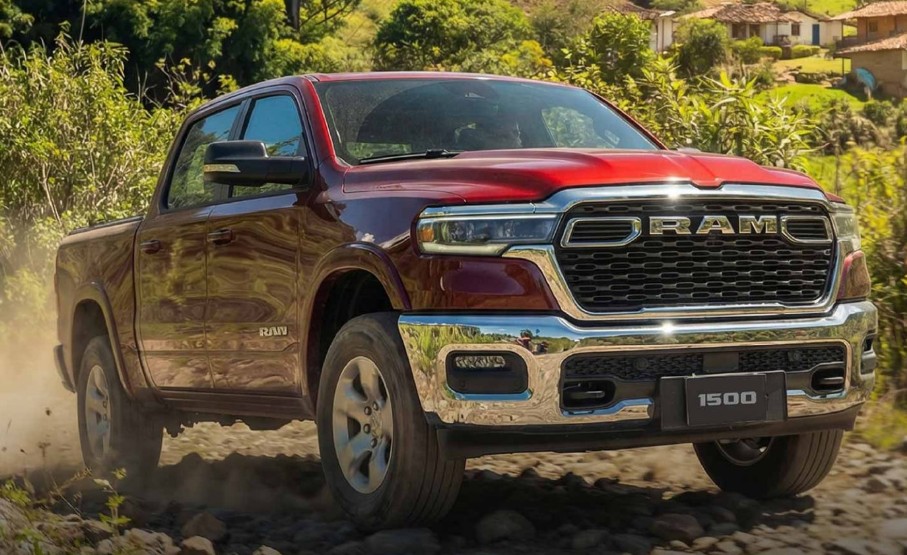
Pull up to a gas station in a Ram 1500 and the choices look simple enough: regular, mid-grade, or premium. Yet that little row of buttons can spark a surprisingly big question: what gas type does a Ram 1500 actually need?
The short answer is that there isn't one fuel grade that applies to every Ram 1500 ever made. The correct Ram 1500 gas type depends heavily on the model year and engine. Some versions are perfectly happy on 87-octane regular unleaded. Certain HEMI-powered trucks have historically recommended 89 octane while allowing 87. Meanwhile, high-output Hurricane-powered models can call for premium fuel.
That distinction matters. Pouring premium into an engine designed for regular doesn't automatically turn the truck into a rocket ship, while using fuel below the manufacturer's requirement can compromise performance.
So instead of treating every Ram 1500 like the same truck, we're going to break this down engine by engine, explain what octane actually means, and help you decide what belongs in your tank.
Content in this publication
- What Gas Does a Ram 1500 Take?
- Ram 1500 Gas Type by Engine
- 5.7L HEMI Ram 1500 Gas Type
- Ram 1500 Hurricane Gas Type
- What Gas Does the Ram 1500 RHO Take?
- Does the Ram 1500 Need Premium Gas?
- 87 vs 89 vs 91 Octane in a Ram 1500
- Is Higher-Octane Gas Better for a Ram 1500?
- Will Premium Gas Give a Ram 1500 More Horsepower?
- Can Using 87 Octane Damage a Ram 1500?
- Can We Mix 87 and 89 Octane?
- Can We Mix Regular and Premium Gas?
- What Happens If We Accidentally Put Regular in a Premium Ram 1500?
- Does the Ram 1500 Take E85?
- What About E10 and E15 Gasoline?
- Top Tier Gas vs Cheap Gas in a Ram 1500
- Best Gas for Towing With a Ram 1500
- Does Premium Gas Improve Ram 1500 MPG?
- Ram 1500 Gas Type in Canada
- Ram 1500 Gas Type by Model Year
- How to Find the Correct Fuel for Your Ram 1500
- Common Ram 1500 Fuel Mistakes
- Does a Modified Ram 1500 Need Different Gas?
- Regular vs Premium: Which Is Cheaper in the Long Run?
- Ram 1500 Gas Type Quick Answer
- Final Thoughts on Ram 1500 Gas Type
- Frequently Asked Questions About Ram 1500 Gas Type
What Gas Does a Ram 1500 Take?
Most Ram 1500 gasoline engines use unleaded gasoline, but the required or recommended octane varies.
As a broad starting point:
- The 3.6L Pentastar V6 generally uses 87-octane regular unleaded.
- Many 5.7L HEMI V8 model years recommend 89 octane while permitting 87.
- Newer Ram applications can specify 87 octane for the HEMI while noting benefits from higher octane.
- Standard-output 3.0L Hurricane engines may use regular unleaded depending on configuration.
- High-output Hurricane applications and performance-oriented trims can require or recommend premium unleaded.
- The supercharged 6.2L Ram 1500 TRX has its own premium-fuel requirements.
For example, Ram's 2019 documentation specifies 87 octane for the 3.6L engine and states that the 5.7L HEMI recommends 89 while accepting 87. Ram's 2024 handbook continued to list 89 octane as recommended and 87 as acceptable for the 5.7L.
That is why checking your exact model year matters more than following advice from somebody who simply says, "My Ram runs fine on regular."
Ram 1500 Gas Type by Engine
Let's make things easier by looking at the engines owners are most likely to encounter.
3.6L Pentastar V6 Gas Type
The familiar 3.6-liter Pentastar V6 has traditionally been the least complicated member of the Ram 1500 family when we're standing at the pump.
For commonly encountered Ram 1500 applications, 87-octane regular unleaded is the appropriate fuel. Ram's 2019 owner documentation explicitly specifies 87 octane for the 3.6L engine.
That means spending extra on premium fuel normally isn't necessary simply because you want to "protect" the engine.
Does Premium Help the 3.6L Pentastar?
This is where myths spread faster than spilled gasoline.
Higher octane fuel isn't inherently cleaner, more powerful, or more nutritious for an engine. Think of octane as resistance to abnormal combustion rather than an energy rating. If the engine is calibrated around regular gasoline, pouring 91 or 93 octane into the tank doesn't automatically unlock hidden horsepower.
For a stock Pentastar that calls for 87, we're usually better off buying high-quality fuel of the specified grade instead of paying extra purely for a higher octane number.
5.7L HEMI Ram 1500 Gas Type
Now we reach the engine responsible for much of the confusion.
The 5.7L HEMI V8 has commonly been associated with 89-octane recommendations, but the exact wording depends on model year.
For the 2024 Ram 1500, Ram's handbook states that the 5.7L engine recommends 89 octane while accepting 87 octane. Earlier fifth-generation documentation gives essentially the same guidance.
However, Ram's 2026 handbook lists 87 octane for the 5.7L HEMI and notes that 89 octane can allow the engine to operate at improved performance levels.
That's a perfect example of why we shouldn't apply one model year's fuel recommendation to every Ram 1500.
Can a 5.7 HEMI Run on 87 Octane?
For many model years, yes.
If your owner's manual states that 87 is acceptable, putting regular fuel in the truck isn't some mechanical crime. The engine management system is designed to operate within the fuel specifications provided by Ram.
The difference is that on HEMI applications where 89 is specifically recommended, mid-grade gives the engine the fuel grade around which optimal operation was intended.
Think of 87 as a pair of everyday work boots and 89 as the pair tailored more closely to the job. Both may get you through the day, but one may better match the conditions the manufacturer had in mind.
Should We Use 89 in a 5.7 HEMI?
If the manual for your particular model year recommends 89, we'd follow that recommendation whenever practical.
The price difference between regular and mid-grade may feel annoying over dozens of gallons, especially if the truck is driven frequently. Yet we're not talking about blindly buying premium for bragging rights. We're talking about using the grade Ram specifically recommends for that engine.
If your manual instead specifies 87 and merely notes potential benefits from 89, regular fuel remains the baseline specification.
Ram 1500 Hurricane Gas Type
The 3.0L Hurricane twin-turbo inline-six changed the Ram 1500 conversation considerably.
Unlike the old naturally aspirated V6-and-V8 lineup, the Hurricane family uses turbocharging to deliver substantial power from three liters of displacement. With that performance comes more attention to fuel grade.
Current 2026 Ram specifications show that several Ram 1500 configurations are listed with regular unleaded fuel, including certain Laramie and Rebel configurations.
However, high-output configurations are a different story.
High-Output Hurricane Fuel Requirements
The 540-horsepower High-Output Hurricane is used in higher-performance and luxury configurations. Ram's current specifications list premium unleaded for models such as the 2026 Tungsten, and the Limited Longhorn specification page likewise identifies premium fuel with its 540-horsepower I6 configuration.
That's important because we shouldn't casually group the standard-output and high-output Hurricane together.
One says, in effect, "regular can be appropriate."
The other says, "bring the good stuff."
Why Turbo Engines Can Be More Sensitive to Octane
Turbochargers force more air into an engine. Combine that extra air with fuel, compression, heat, and aggressive ignition timing, and cylinder pressures climb.
Higher-octane gasoline resists uncontrolled combustion more effectively under demanding conditions. That's one reason high-output turbocharged engines often benefit from, recommend, or require premium fuel.
It's not marketing theater. The engine calibration determines what octane it expects.
What Gas Does the Ram 1500 RHO Take?
The Ram 1500 RHO takes the performance side of the Hurricane formula further.
Ram's official 2026 RHO specifications list premium unleaded as the recommended fuel.
So if we own an RHO, this isn't the truck where we'd automatically reach for regular simply because another Ram 1500 owner does.
Two trucks can share the Ram 1500 badge while having very different appetites.
Usually, not every Ram 1500 needs premium gas.
That's the key takeaway.
A Pentastar V6 that specifies regular doesn't suddenly need premium because we're towing on Saturday. Likewise, many HEMI applications allow regular or recommend mid-grade rather than premium.
Meanwhile, high-output Hurricane configurations can call for premium.
So when somebody asks, "Does a Ram 1500 require premium?" the best answer is another question:
Which Ram 1500?
Engine, model year, and configuration matter.
87 vs 89 vs 91 Octane in a Ram 1500
Octane ratings can feel like gasoline's version of small, medium, and large, but that analogy is misleading.
Higher doesn't automatically mean better.
87-Octane Regular
Regular gasoline is the most common choice and usually the least expensive.
If your Ram specifies 87, then that's exactly what the engine was designed to use under the conditions described by the manufacturer.
There is no need to feel like we're feeding the truck bargain-bin gasoline.
89-Octane Mid-Grade
Mid-grade is particularly relevant to older and recent HEMI-powered Ram 1500s whose manuals recommend 89 while allowing 87.
In those trucks, 89 isn't an arbitrary middle button at the pump. It reflects Ram's specific recommendation for optimal operation.
Premium gasoline becomes important when the engine manufacturer specifically recommends or requires it.
Current high-output Hurricane applications illustrate this clearly, with Ram listing premium unleaded for models including the RHO and Tungsten.
Using premium in an engine designed for regular, however, doesn't guarantee meaningful additional performance.
Is Higher-Octane Gas Better for a Ram 1500?
Not automatically.
This is one of the most persistent gasoline myths.
Octane measures gasoline's ability to resist knock or uncontrolled combustion. It isn't a simple measurement of fuel quality.
Imagine buying running shoes. A $250 racing shoe may be brilliant for a marathon runner but unnecessary for someone walking the dog around the block. It isn't "worse" or "better" in every context—it is designed for a particular job.
Fuel works similarly.
The best octane is usually the one appropriate for the engine's calibration.
Sometimes the answer can be nuanced.
If an engine is engineered to take advantage of higher-octane fuel, using the recommended grade can help it deliver the performance its calibration allows.
But if a Ram engine is designed around 87 octane without a higher-grade performance recommendation, simply filling it with premium shouldn't be treated as a guaranteed horsepower modification.
There is no magic 20-horsepower fairy hiding inside the premium pump.
Can Using 87 Octane Damage a Ram 1500?
It depends entirely on whether 87 meets the minimum fuel specification for the vehicle.
On a Ram whose manufacturer documentation explicitly allows 87, using regular gasoline is within specification. The 2024 5.7L HEMI, for example, lists 87 as acceptable even though 89 is recommended.
But if a particular engine requires a higher grade, habitually ignoring that requirement isn't wise.
Our safest rule is wonderfully boring:
Follow the fuel requirement printed in the owner's manual and on the fuel-filler information for your exact truck.
Boring advice is often excellent advice when engines cost thousands of dollars.
Can We Mix 87 and 89 Octane?
Yes, gasoline grades can physically mix in the tank.
Suppose we have half a tank of 87 and then add 89. Nothing dramatic happens. We simply end up with a blended effective octane somewhere between the two, depending on the quantities involved.
This can be useful when transitioning fuel grades.
What we shouldn't do is assume that random blending somehow creates a scientifically precise custom performance fuel. At an ordinary gas station, we're simply mixing available grades.
The same basic principle applies.
Regular and premium gasoline will mix without turning the fuel tank into a chemistry experiment gone wrong.
The important question remains whether the resulting fuel meets the engine's required octane.
If your Ram requires premium, repeatedly diluting premium with lower-octane fuel defeats the point.
An accidental tank of lower-octane fuel isn't the same thing as deliberately ignoring the manufacturer forever.
Modern engine controls monitor combustion conditions and can adjust operating parameters when necessary. Still, if your truck specifies premium, we'd avoid heavy throttle, aggressive driving, or strenuous towing until the correct fuel has been restored.
Most importantly, consult the owner's manual for the exact procedure and minimum rating applicable to your model.
If the engine begins running abnormally or warning lights appear, professional diagnosis is the smarter move.
Does the Ram 1500 Take E85?
Here's another area where assumptions can get expensive.
We shouldn't assume a Ram 1500 accepts E85 merely because ethanol is common in gasoline.
Ram documentation for the 2019 3.6L and 5.7L engines specifies gasoline containing 0–15% ethanol and says not to use E85. The 2024 handbook likewise warns against E85 for the 5.7L application referenced in its fuel-selection guidance.
E85 contains dramatically more ethanol than ordinary E10 or E15 gasoline.
Unless the exact vehicle is explicitly identified as compatible with E85, don't treat E85 as a cheaper substitute for regular unleaded.
What About E10 and E15 Gasoline?
Many modern gasoline-powered vehicles are designed to tolerate common gasoline-ethanol blends within the manufacturer's stated limits.
In Ram's cited 2019 documentation, both the 3.6L and 5.7L fuel recommendations permit gasoline containing up to 15% ethanol.
Again, model-year documentation wins.
Fuel standards evolve. Engines evolve. A recommendation for a 2019 truck shouldn't automatically be pasted onto a truck from another generation.
Top Tier Gas vs Cheap Gas in a Ram 1500
Octane isn't the only consideration when choosing fuel.
Fuel quality, detergent formulation, station maintenance, turnover, and storage conditions can all affect our fueling experience.
We're generally more concerned with buying the correct octane from a reputable, busy fuel station than obsessing over whether premium fuel sounds more luxurious.
A truck doesn't know whether the station canopy looks expensive. It cares about what reaches the injectors.
Does Brand Matter?
We don't need to become loyal disciples of one gasoline logo.
If the gasoline satisfies the specifications stated by Ram and comes from a reputable source, that's more important than chasing a particular badge.
Consistency and quality matter more than marketing mythology.
Best Gas for Towing With a Ram 1500
Towing makes an engine work harder, so owners naturally wonder whether higher-octane fuel becomes necessary whenever a trailer appears behind the truck.
Our approach is simple.
Start with the fuel specified or recommended by Ram.
If a HEMI model recommends 89 octane, towing is hardly the moment when we'd decide to economize with a lower grade. Likewise, if a high-output Hurricane requires premium, use premium.
But don't randomly jump two octane grades above the manufacturer's specification and assume towing capacity has increased.
Fuel octane doesn't rewrite the truck's certified payload or towing limits.
This question attracts plenty of anecdotal claims.
One owner swears premium gained 2 mpg. Another sees absolutely nothing. A third insists the truck feels smoother.
The problem is that fuel economy varies with temperature, route, traffic, wind, tire pressure, payload, towing, speed, idle time, driving style, and countless other variables.
So we shouldn't treat one tank as laboratory evidence.
If our engine is optimized for a particular fuel grade, using that recommended grade makes sense. But paying extra for premium in a regular-fuel engine solely because we expect dramatic fuel savings can be a poor bargain.
Ram 1500 Gas Type in Canada
Canadian owners need to pay attention to how octane is displayed.
In North America, pump octane is generally expressed using the (R+M)/2 method, sometimes called the Anti-Knock Index or AKI.
That is the scale referenced in Ram's North American owner documentation. The 2024 handbook, for instance, identifies its 89- and 87-octane recommendations using the (R+M)/2 method.
If we're reading advice from another country, octane numbers may be expressed under a different rating system.
Comparing the number alone can therefore be misleading.
Ram 1500 Gas Type by Model Year
Here's where things become especially interesting.
Fuel guidance has evolved along with Ram's engine lineup.
2019–2024 Ram 1500
The fifth-generation Ram 1500 launched with familiar gasoline engines such as the 3.6L Pentastar and 5.7L HEMI.
Ram's 2019 documentation specifies:
- 3.6L: 87 octane
- 5.7L: 89 recommended, 87 acceptable
- Up to 15% ethanol in the cited gasoline applications
- No E85 for those engines
The 2024 handbook continued the 89-recommended/87-acceptable guidance for the 5.7L HEMI.
2025 Ram 1500
The 2025 model year marked a major powertrain shift with the introduction of Hurricane inline-six engines in the refreshed Ram 1500 lineup.
That means owners searching for "Ram 1500 gas type" can't simply reuse older HEMI advice.
Different Hurricane outputs and trims can have different fuel recommendations, making the owner's manual increasingly important.
2026 Ram 1500
The 2026 lineup adds another wrinkle because the HEMI returned alongside the Hurricane family.
Ram's 2026 handbook states 87 octane for the 5.7L HEMI and notes that 89 octane can allow improved performance.
At the same time, Ram's current trim specifications list regular unleaded for several 1500 configurations while specifying premium for high-output models such as the RHO and Tungsten.
In other words, the badge on the tailgate alone no longer tells us enough.
How to Find the Correct Fuel for Your Ram 1500
If we just bought a used Ram and don't know what's supposed to go into it, there are several easy places to check.
Look at:
- The owner's manual. This is the most authoritative source for the exact model year and powertrain.
- The fuel-filler door or cap area. Manufacturers often place fuel-grade information there.
- Your VIN-specific vehicle information. This helps identify the actual engine rather than relying on trim assumptions.
- Official Ram/Mopar documentation. This is particularly useful when the printed manual is missing.
- A Ram dealer or qualified technician. If the truck has been modified, ask how those modifications affect fuel requirements.
The critical word here is exact.
Exact year. Exact engine. Exact configuration.
Common Ram 1500 Fuel Mistakes
Most gasoline mistakes aren't dramatic. They're usually the result of assumptions.
The common ones include using premium because "higher must be better," treating every HEMI year as having identical recommendations, assuming all Hurricane engines take the same grade, confusing diesel with gasoline variants, filling an incompatible truck with E85, or following forum advice without checking the owner's manual.
There's a lesson hiding underneath all of them: Ram 1500 is a model family, not a single mechanical recipe.
Does a Modified Ram 1500 Need Different Gas?
Possibly.
Once we start changing ECU tuning, boost pressure, ignition timing, compression, supercharger hardware, or other performance parameters, factory fuel recommendations may no longer apply.
A performance tune can be calibrated specifically for 91 or 93 octane.
In that situation, the tuning specification becomes crucial.
Putting 87 into an engine running an aggressive premium-fuel tune is a very different scenario from putting 87 into a stock Pentastar designed for regular.
If the truck is modified and we're uncertain what tune it has, finding out should move near the top of our to-do list.
There's no universal answer because the proper comparison starts with the manufacturer's fuel requirement.
If our engine is designed for regular, buying premium every week may simply add cost without providing a proportional benefit.
If our engine requires premium, using regular to save money isn't really a savings strategy—it's ignoring the operating specification of an expensive powertrain.
And if our HEMI recommends 89 while accepting 87, we have some flexibility while still knowing which grade Ram identifies as preferred for that particular model year.
The cheapest fuel isn't always the one with the lowest price on the sign.
The smarter choice is the fuel that matches the truck.
Ram 1500 Gas Type Quick Answer
If we want the whole article compressed into a glovebox-sized summary, it looks something like this:
- 3.6L Pentastar: commonly 87-octane regular.
- 5.7L HEMI, many 2019–2024 models: 89 recommended, 87 acceptable.
- 2026 5.7L HEMI: 87 specified, with 89 capable of supporting improved engine performance according to Ram's handbook.
- Standard-output Hurricane: regular may be specified depending on configuration; verify the exact vehicle.
- High-output Hurricane: premium is specified on high-output applications such as the 2026 Tungsten.
- Ram 1500 RHO: premium unleaded.
- E85: don't use it unless your exact truck is explicitly approved for it.
That small amount of checking can prevent a lot of confusion.
Final Thoughts on Ram 1500 Gas Type
Choosing the right Ram 1500 gas type isn't complicated once we stop treating every Ram 1500 as identical.
The Pentastar V6 is generally comfortable with regular 87-octane gasoline. Many 5.7L HEMI model years recommend 89 while allowing 87, although newer documentation can differ. Standard-output Hurricane applications can use regular in certain configurations, while high-output versions step up to premium fuel.
So our best habit isn't memorizing one octane number.
It's checking the truck.
A Ram 1500 can be a commuter, workhorse, tow rig, luxury cruiser, or performance machine. Its fuel requirement changes with the hardware beneath the hood. Giving it the gasoline specified by Ram is far more useful than automatically reaching for the most expensive button on the pump.
In the end, gasoline is like footwear: the most expensive pair isn't automatically the right pair. What matters is whether it fits the job.
Frequently Asked Questions About Ram 1500 Gas Type
1. Can I put regular 87 gas in a Ram 1500?
Yes, if your particular engine and model year allow 87 octane. The Pentastar V6 has commonly specified 87, and many 5.7L HEMI applications have also allowed it. For example, Ram's 2024 handbook describes 87 as acceptable for the 5.7L while recommending 89. Always confirm the specification for your exact truck.
Generally, many Ram 1500 5.7L HEMI model years do not require premium gasoline. Earlier fifth-generation documentation recommends 89 octane but permits 87, while the 2026 handbook specifies 87 and notes a performance benefit with 89. Your model year's manual should determine what you use.
Not every Hurricane-powered Ram 1500 uses the same fuel recommendation. Current Ram specifications list regular unleaded for certain configurations, while high-output Hurricane models such as the 2026 Tungsten specify premium unleaded. Check the engine output and trim rather than assuming all Hurricane engines are identical.
4. Will 93 octane hurt a Ram 1500 designed for 87?
Using higher-octane gasoline than required generally doesn't mean the engine suddenly receives "too much power." However, there's usually little reason to pay substantially more unless the engine calibration can benefit from the higher octane or the manufacturer recommends it. Follow Ram's specification rather than assuming the highest available number is automatically best.
5. What is the best gas to put in a Ram 1500?
The best gas is the octane grade specified or recommended for your exact engine and model year, purchased from a reputable fuel retailer. That may mean 87 regular for one Ram, 89 mid-grade for another, or premium for a high-output Hurricane application. When the fuel pump and internet disagree, let the owner's manual have the final word.
If you want to know other articles similar to Ram 1500 Gas Type: What Fuel Should You Really Use? you can visit the category Service and Parts.
Suzuki Swift Fuel Tank Capacity: Complete Guide

Mazda CX-5 Weight (2013–2026): Complete Guide in Pounds and KG

Kia Sportage Dashboard Symbols and Warning Lights

MINI Cooper Weight (2002–2027): Complete Weight Chart & Guide

Toyota RAV4 Engine Sizes: Complete Guide (1994–2026)

Toyota RAV4 Weight (2002–2026): Complete Guide by Year and Model
Leave a Reply
More content of your interest