

Ram 1500 Oil Change Interval: How Often Should You Change the Oil?

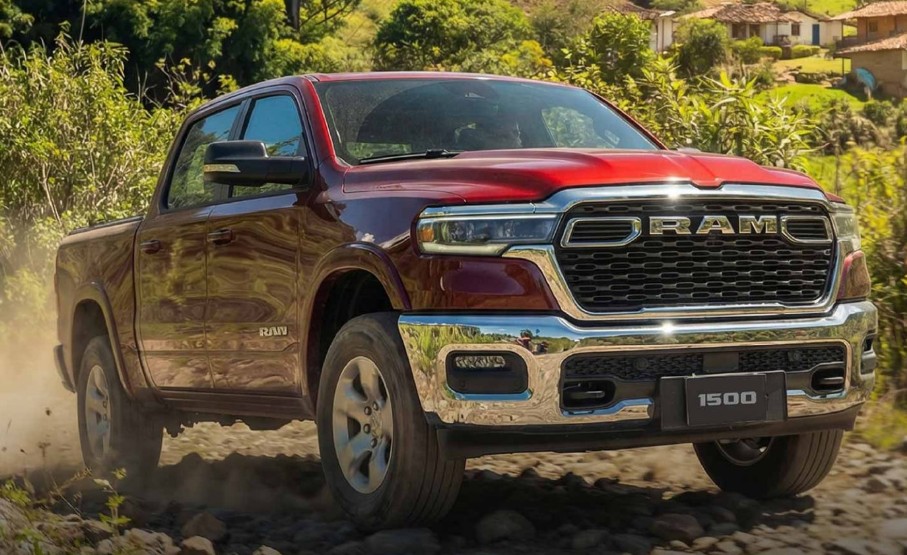
The Ram 1500 oil change interval sounds like it should be a simple number. Drive a certain number of miles, change the oil, reset the reminder, and get back on the road. Easy, right?
Not quite.
Modern Ram 1500 trucks use an oil-life monitoring system, and the correct interval can change depending on how we drive, how much we tow, how often the truck idles, the climate, the engine, and even the model year. A Ram cruising peacefully down the interstate has a very different working life from one pulling a trailer through summer heat or crawling around dusty job sites.
For many modern gasoline-powered Ram 1500 models, the important number to remember is 10,000 miles (about 16,000 km) as a maximum interval rather than an automatic target. Recent Ram maintenance guidance also uses the truck's Oil Change Indicator System and establishes a maximum of 10,000 miles, 12 months, or 350 engine hours, whichever happens first.
That distinction matters.
Think of 10,000 miles as the guardrail at the edge of the road, not necessarily the lane we should drive in. Many trucks will ask for service considerably sooner.
So, should we change the oil every 5,000 miles? Can synthetic oil really last 10,000? What happens when we tow regularly? And should we trust the oil-life monitor?
Let's sort it all out.
Content in this publication
- What Is the Recommended Ram 1500 Oil Change Interval?
- Why Ram Doesn't Give Every Truck the Same Oil Change Number
- How the Ram 1500 Oil Life Monitor Works
- Is 10,000 Miles Too Long Between Ram 1500 Oil Changes?
- Ram 1500 Oil Change Interval for Severe Driving
- Ram 1500 Oil Change Interval When Towing
- Ram 1500 Oil Change Interval for Mostly Highway Driving
- Ram 1500 Oil Change Interval for Low-Mileage Trucks
- Does Synthetic Oil Extend the Ram 1500 Oil Change Interval?
- Does the Oil Filter Need Changing Every Time?
- Should You Check Oil Between Changes?
- What Happens If You Wait Too Long to Change Ram 1500 Oil?
- Should We Change the Oil Early on a New Ram 1500?
- How Often Should a High-Mileage Ram 1500 Get an Oil Change?
- Can You Reset the Ram 1500 Oil Change Indicator Yourself?
- Ram 1500 Oil Change Interval by Driving Style
- How to Choose the Best Oil Change Interval for Your Ram 1500
- Is Changing Ram 1500 Oil More Often Worth It?
- Ram 1500 Oil Change Interval: Our Final Take
- Frequently Asked Questions About Ram 1500 Oil Change Intervals
What Is the Recommended Ram 1500 Oil Change Interval?
The best general rule for a modern Ram 1500 is straightforward: follow the Oil Change Indicator System, but never exceed the maximum interval specified in the owner's manual for your exact model year and engine.
For recent Ram 1500 models, current published maintenance information specifies a maximum interval of:
- 10,000 miles (16,000 km)
- 12 months
- 350 engine hours
Whichever arrives first determines the limit.
Notice that we're saying maximum. We aren't saying every Ram 1500 should automatically go 10,000 miles between changes.
The truck calculates oil life according to operating conditions. Hard use can shorten the interval dramatically.
A Practical Ram 1500 Oil Change Schedule
For owners who prefer a simple mileage-based strategy, we can think about oil changes this way:
| Driving Conditions | Practical Oil Change Approach |
|---|---|
| Mostly highway, light load | Follow oil-life monitor; potentially approaching the factory maximum |
| Mixed city/highway | Often roughly 5,000–7,500 miles makes a sensible conservative target |
| Frequent towing or hauling | Consider shorter intervals |
| Heavy stop-and-go driving | Consider shorter intervals |
| Dusty/off-road conditions | Severe-duty schedule may apply |
| Frequent idling | Change earlier because engine hours accumulate without mileage |
| Very short trips | Shorter intervals may be appropriate |
| Low annual mileage | Don't ignore the time limit |
These middle-mileage recommendations are conservative ownership strategies rather than universal Ram requirements. Your owner's manual and oil-life indicator should always take priority.
Why Ram Doesn't Give Every Truck the Same Oil Change Number
Years ago, the famous rule was simple: change your oil every 3,000 miles.
Modern engines, lubricants, filters, engine-management systems, and oil-monitoring technology have made that blanket recommendation outdated for many vehicles.
Today's Ram 1500 does something smarter. Instead of staring exclusively at the odometer, the Oil Change Indicator System considers how the truck is being operated. Current maintenance guidance specifically notes that driving conditions affect oil-service timing.
That's useful because mileage only tells half the story.
Imagine two Ram 1500s with exactly 6,000 miles since their previous service.
One has spent most of those miles cruising at steady highway speeds.
The other has spent countless hours idling, towing, making cold short trips, crawling through traffic, and working on dusty roads.
They've traveled the same distance, but their engines haven't lived the same life.
Mileage Isn't the Same as Engine Work
An odometer counts how far the truck travels.
It doesn't tell us how hard the engine worked getting there.
That's why engine hours matter, particularly for:
- Construction trucks
- Fleet vehicles
- Work-site pickups
- Trucks left idling for long periods
- Snow-plow or utility applications
- Vehicles spending hours in stationary operation
A truck can barely add mileage while its engine continues running.
In other words, the odometer can be resting while the oil is still punching the clock.
How the Ram 1500 Oil Life Monitor Works
The Ram's Oil Change Indicator isn't simply a mileage countdown.
It is designed to determine service timing according to vehicle operation. Ram maintenance information explains that severe operating conditions can cause the oil-change message to appear earlier than the maximum interval.
The system is useful because it adapts.
Rather than saying, "Every driver gets exactly X miles," it essentially asks, "What kind of life has this engine been living?"
What Makes the Oil-Life Percentage Drop Faster?
Conditions that can contribute to earlier service include:
- Frequent short trips
- Trailer towing
- Extended idling
- Very hot weather
- Very cold weather
- Dusty environments
- Low-speed operation
- Heavy loads
Older and current Ram maintenance guidance consistently emphasizes that severe conditions require more frequent attention than easy highway use.
Should We Trust the Ram Oil Life Monitor?
Yes, but we shouldn't misunderstand it.
The monitor is a maintenance tool, not permission to ignore the engine until the display screams for attention.
We should still:
Check the oil level periodically, pay attention to leaks, use the correct oil specification, install a quality filter, and respect the maximum time and mileage limits.
If the truck says the oil needs changing earlier than we expected, there's usually little reason to argue with it.
Is 10,000 Miles Too Long Between Ram 1500 Oil Changes?
This is probably the biggest debate among Ram owners.
One group changes oil every 5,000 miles like clockwork.
Another follows the Oil Change Indicator and may approach 8,000, 9,000, or even the maximum 10,000-mile interval.
Who's right?
Potentially both.
The maximum interval exists because the truck is designed around modern lubrication and maintenance strategies. Recent guidance for the 2026 Ram 1500 continues to identify 10,000 miles or 12 months as the upper limit, subject to the Oil Change Indicator.
But maximum allowable doesn't mean maximum desirable for every owner.
Why Some Owners Prefer 5,000-Mile Oil Changes
A 5,000-mile interval is easy to remember and provides a generous maintenance cushion.
It may make particular sense when we:
Tow frequently, keep the truck for many years, drive mostly in town, idle a lot, operate in extreme weather, make short trips, or simply prefer conservative preventative maintenance.
Oil is relatively inexpensive compared with major internal engine repairs.
That doesn't mean a 5,000-mile interval is mandatory. It simply gives owners an easy, conservative routine.
Why Longer Intervals Can Still Make Sense
Now imagine a Ram that spends most of its life cruising 50 miles at a time on open highways.
The engine reaches full operating temperature. RPM remains relatively steady. There is little idling and minimal towing.
In that situation, changing perfectly serviceable oil every 3,000 miles may offer little practical advantage.
This is precisely where an adaptive oil-life system becomes useful.
Instead of blindly choosing the shortest possible interval, we can let the truck's maintenance system guide us while respecting the manual's maximum limits.
Ram 1500 Oil Change Interval for Severe Driving
"Severe driving" sounds like rock crawling through the desert with a 10,000-pound trailer hanging off the bumper.
In reality, severe service can look surprisingly ordinary.
Daily traffic can be demanding. So can repeated five-minute errands.
Recent Ram-related service guidance identifies dusty driving, frequent idling, low-RPM operation, towing, and short-trip use among the conditions that can shorten service intervals.
Common Severe-Service Conditions
Your Ram may deserve earlier oil changes if it regularly experiences:
- Trailer towing
- Heavy payloads
- Extensive stop-and-go traffic
- Off-road driving
- Dusty roads
- Long idling periods
- Repeated short trips
- Extreme heat
- Very cold starts
- Commercial operation
The 4,000-Mile Severe-Duty Reference
Published Ram maintenance guidance has specified oil changes around 4,000 miles (6,500 km) for certain severe-duty use involving dusty/off-road conditions, predominant idling, or very-low-RPM operation.
That doesn't automatically mean every owner who occasionally drives down a dirt road needs 4,000-mile changes.
The key word is predominantly.
One weekend camping trip is different from spending five days a week on a construction site.
Ram 1500 Oil Change Interval When Towing
Towing changes the conversation.
Pulling a travel trailer, boat, equipment trailer, or loaded utility trailer makes the engine work harder than normal unloaded cruising.
Oil temperatures and operating demands can increase, especially when towing through mountains, fighting headwinds, or traveling in hot weather.
Ram specifically lists trailer towing among conditions that influence the Oil Change Required message.
Should We Change Oil Before a Long Towing Trip?
It depends on where we are in the current service interval.
If the oil was recently changed and plenty of indicated life remains, there usually isn't a reason to throw good oil away purely because a vacation is approaching.
But suppose the oil-life monitor is already getting low and we're about to tow a camper 2,000 miles across several mountain states.
Changing it beforehand makes sense.
We'd rather begin a hard trip with fresh oil than cross our fingers while watching the remaining oil life fall.
Ram 1500 Oil Change Interval for Mostly Highway Driving
Highway miles are generally easier on engine oil than endless cold starts and short urban trips.
On a long drive, the engine reaches operating temperature and stays there. We avoid repeated starting cycles, extended parking-lot idling, and constant low-speed operation.
That's why a highway-driven Ram may legitimately travel farther before its Oil Change Indicator requests service.
Does that mean we should automatically wait for 10,000 miles?
No.
We follow the monitor and the specific owner's manual.
But highway-heavy driving is exactly the sort of use where longer intervals can make more sense than they do for severe service.
Ram 1500 Oil Change Interval for Low-Mileage Trucks
Here's an easy trap.
Suppose we own a Ram 1500 as a second vehicle. It only covers 4,000 miles a year.
At 10,000 miles per oil change, mathematically we could wait two and a half years.
We shouldn't.
For recent Ram 1500 maintenance guidance, 12 months is also a maximum limit, even when the truck hasn't reached the mileage limit.
Why Time Matters Too
Engines that sit still aren't frozen in a laboratory.
The truck still experiences cold starts, moisture, contamination, temperature cycles, and periods of inactivity.
That's why mileage isn't the only clock running.
For a lightly driven truck, an annual oil change can become the limiting factor long before mileage does.
Does Synthetic Oil Extend the Ram 1500 Oil Change Interval?
Synthetic motor oil is excellent at handling demanding operating conditions, but pouring synthetic oil into the engine doesn't give us permission to invent our own maintenance schedule.
The correct lubricant must meet the specification listed for the exact engine and model year.
And even when using a premium synthetic product, the owner's manual and Oil Change Indicator still determine the service boundaries.
Don't Stretch the Interval Just Because the Bottle Says So
Some motor oils advertise extremely long service intervals.
That's interesting information about the oil.
It isn't necessarily the maintenance schedule for our truck.
Vehicle manufacturers design service recommendations around the whole system: engine construction, filter capacity, operating conditions, emissions equipment, calibration, and expected oil contamination.
The safest hierarchy is:
Owner's manual first, Oil Change Indicator second, oil-brand marketing third.
Does the Oil Filter Need Changing Every Time?
In practical Ram 1500 maintenance, the engine oil and oil filter should be treated as a pair.
Installing fresh oil while leaving a used filter behind is a bit like taking a shower and putting yesterday's muddy socks back on.
The filter captures contaminants circulating through the lubrication system. Replacing it during an oil change restores the filtration component of the service at the same time as the lubricant.
Current Ram maintenance schedules group engine oil and filter service together.
Why Filter Quality Matters
A bargain-basement filter isn't automatically defective, and the most expensive filter isn't automatically best.
What matters is using a filter that meets the appropriate specification for the engine and has been designed for the intended service interval.
When in doubt, an OEM-quality or reputable equivalent filter is the sensible choice.
Should You Check Oil Between Changes?
Absolutely.
An oil-change interval tells us when to replace the lubricant. It doesn't guarantee the engine will maintain exactly the same oil level until then.
Checking the dipstick periodically takes minutes and can catch:
- Gradual oil consumption
- Leaks
- Incorrect fill levels
- Maintenance mistakes
- Unexpected changes in consumption
This becomes especially important before long road trips or towing trips.
Oil Level and Oil Life Aren't the Same Thing
Here's an important distinction.
Oil life tells us when the lubricant is due for replacement.
Oil level tells us whether enough lubricant is in the engine.
A truck can have plenty of calculated oil life remaining and still be low on oil.
One number doesn't replace the other.
What Happens If You Wait Too Long to Change Ram 1500 Oil?
Engine oil lives a hard life.
It lubricates moving components, carries heat, suspends contaminants, helps limit deposits, and protects internal surfaces.
As oil ages, contamination builds and its ability to perform those jobs can deteriorate.
Repeatedly pushing far beyond the recommended interval isn't clever cost-cutting. It's borrowing money from the engine and hoping the bill never arrives.
Possible Effects of Neglected Oil Changes
Long-term neglect can contribute to:
- Sludge and deposit formation
- Accelerated internal wear
- Poor lubrication
- Reduced engine cleanliness
- Timing-system wear
- Increased oil consumption
- Restricted oil passages
- Expensive engine repairs
One slightly overdue oil change doesn't mean an engine is doomed.
The bigger concern is a pattern of neglect.
Should We Change the Oil Early on a New Ram 1500?
Some owners like performing an unusually early first oil change because they believe it removes break-in material.
Others simply follow the normal Oil Change Indicator from day one.
Unless the owner's manual for a particular model specifies a special first-change interval, there's no universal requirement for every Ram 1500 owner to perform a dramatically early first service.
A reasonable approach is simple: check the oil level during the break-in period, follow the manual, and avoid treating internet folklore as factory maintenance policy.
How Often Should a High-Mileage Ram 1500 Get an Oil Change?
Once a Ram reaches 100,000, 150,000, or 200,000 miles, owners often wonder whether oil suddenly needs changing twice as often.
Mileage alone doesn't automatically create a new maintenance interval.
The better question is how the engine behaves.
Does it burn oil? Leak? Spend its days towing? Make lots of short trips? Have an uncertain service history?
Watch the Truck, Not Just the Odometer
With an older Ram, we should pay extra attention to:
- Oil consumption between services
- Oil leaks
- Unusual engine noises
- Changes in oil pressure
- Smoke
- Service history
- Driving conditions
A well-maintained high-mileage engine that cruises gently may have an easier life than a newer truck abused every day.
Age matters, but usage matters more.
Can You Reset the Ram 1500 Oil Change Indicator Yourself?
Yes, the oil-life system can be reset after service, although the precise process varies with model year and instrument-cluster configuration.
The key phrase is after service.
Resetting the monitor without changing the oil doesn't magically rejuvenate anything. It simply erases the truck's maintenance reference point.
That would be like resetting a kitchen timer while leaving the food in the oven.
Don't Forget the Reset After a DIY Oil Change
If we change the oil ourselves and forget to reset the monitor, the truck still thinks the old oil is inside.
The warning may then appear much earlier than expected.
After completing the oil and filter change, follow the exact reset procedure in the owner's manual or vehicle information system for your model year.
Ram provides model-specific owner's manuals through its owner resources, and specifications can differ between generations and powertrains.
Ram 1500 Oil Change Interval by Driving Style
Instead of hunting for one magical mileage figure, we can summarize the entire subject with three ownership profiles.
Profile 1: The Highway Cruiser
We drive long distances, rarely tow, avoid excessive idling, and mostly travel at steady highway speeds.
Strategy: Follow the Oil Change Indicator and respect the factory maximum.
Profile 2: The Everyday Mixed Driver
We commute, run errands, take highway trips, encounter traffic, and occasionally haul or tow.
Strategy: Follow the monitor; many conservative owners choose an interval somewhere around 5,000–7,500 miles even when the monitor allows longer.
Profile 3: The Working Truck
We tow often, idle extensively, carry heavy loads, travel through dust, work off-road, or drive commercially.
Strategy: Treat the truck as severe service and use the shorter maintenance guidance appropriate to the operating conditions.
That's far more useful than pretending every Ram lives the same life.
How to Choose the Best Oil Change Interval for Your Ram 1500
If we want a simple decision process, use this one:
- Identify the exact model year and engine. Don't assume advice for another Ram 1500 applies perfectly to yours.
- Read the maintenance section of the owner's manual. This is the primary authority.
- Watch the Oil Change Indicator System. If it requests service early, don't ignore it.
- Consider how the truck is actually used. Towing, idling, dust, short trips, and temperature extremes matter.
- Never exceed the factory maximum. For recent models, guidance commonly sets that ceiling at 10,000 miles, 12 months, or 350 engine hours, whichever comes first.
- Change the filter with the oil.
- Check the oil level between services.
- Keep maintenance records. Record mileage, date, oil specification, and filter used.
This gives us something better than a generic number: a maintenance strategy tailored to the truck.
Is Changing Ram 1500 Oil More Often Worth It?
There's a point where preventative maintenance becomes excessive.
Changing premium oil every 1,000 miles in a healthy highway-driven truck would generally waste money and resources without providing a meaningful advantage.
At the other extreme, repeatedly stretching past the manufacturer's maximum interval creates unnecessary risk.
The sweet spot sits between those extremes.
For someone who plans to trade the truck in after a few years, following the factory system may be perfectly satisfactory.
For an owner hoping to see 200,000 miles or more, a moderately conservative interval may provide additional peace of mind.
Neither approach requires paranoia.
Good maintenance should feel more like a routine than a rescue mission.
Ram 1500 Oil Change Interval: Our Final Take
So, how often should we change the oil in a Ram 1500?
For recent models, we should follow the Oil Change Indicator System and never exceed the maximum service interval listed for the truck. Current maintenance guidance for modern Ram 1500 models identifies a maximum of 10,000 miles (16,000 km), 12 months, or 350 engine hours, whichever comes first.
But 10,000 miles isn't a command to wait 10,000 miles.
It's a ceiling.
Frequent towing, short trips, extreme temperatures, dusty conditions, off-road operation, heavy loads, and long periods of idling can justify — or trigger — much earlier service.
For many owners who want a simple and conservative routine, changing oil somewhere around 5,000 to 7,500 miles can be an easy strategy, while severe-duty trucks may need service substantially sooner. Those figures are practical ownership choices, not a replacement for your model-specific factory schedule.
The Ram 1500 is built to work. Our job is simply to give its engine clean, correctly specified oil when it asks for it.
Do that consistently and oil changes become what they should be: boring, predictable maintenance instead of the opening chapter of an expensive repair story.
Frequently Asked Questions About Ram 1500 Oil Change Intervals
1. How many miles can a Ram 1500 go between oil changes?
Recent Ram 1500 maintenance guidance allows up to 10,000 miles (16,000 km), 12 months, or 350 engine hours, whichever comes first, while the Oil Change Indicator may request service earlier depending on operating conditions. Always check the owner's manual for your exact year and engine.
2. Should I change my Ram 1500 oil every 5,000 miles?
You don't necessarily have to, but 5,000 miles is a conservative and easy-to-remember interval, particularly for trucks used for towing, city driving, frequent short trips, or demanding conditions. Normal-use trucks can follow the Oil Change Indicator as long as they remain within the factory limits.
3. Can a Ram 1500 really go 10,000 miles on an oil change?
Some recent Ram 1500 models can have a maximum interval of 10,000 miles under the appropriate conditions, but 10,000 miles should be viewed as a maximum limit rather than the required interval for every truck. The oil-life system may request service earlier.
4. Does towing shorten the Ram 1500 oil change interval?
It can. Ram maintenance information identifies trailer towing as an operating condition that can influence how soon the Oil Change Required message appears. Owners who tow frequently should pay particular attention to the oil-life monitor and severe-service recommendations.
5. How often should I change Ram 1500 oil if I barely drive?
Mileage isn't the only limit. For recent Ram 1500 models, maintenance guidance establishes a maximum of 12 months between oil changes even if the truck hasn't reached the mileage threshold. Check your exact owner's manual because recommendations can vary by model year and powertrain.
If you want to know other articles similar to Ram 1500 Oil Change Interval: How Often Should You Change the Oil? you can visit the category Service and Parts.
How to Replace a Toyota Camry Tail Light: Step-by-Step Guide

How to Reset the Oil in Your 2014 Fiat 500L

Renault Megane Boot Space: Size, Litres & Dimensions

Vauxhall Mokka Tyre Pressure Reset: Complete Guide

How to Reset the Tire Pressure System on Your Hyundai Tucson

Hyundai Kona Tire Pressure: Complete PSI Guide
Leave a Reply
More content of your interest