
Tesla Model S vs Audi e-tron GT: UK Performance Comparison

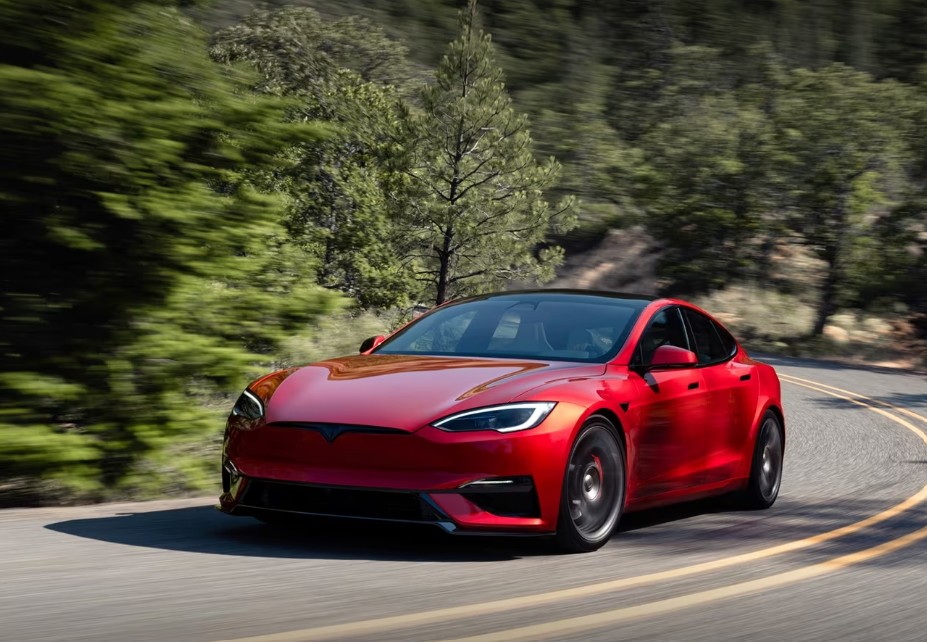
The Tesla Model S vs Audi e-tron GT contest is not merely a battle between two expensive electric saloons. It is a clash between two completely different interpretations of speed.
Tesla approaches performance like a technology company that has discovered a shortcut through the laws of physics. The Model S Plaid delivers almost comical acceleration, enormous power and the kind of straight-line pace that once belonged exclusively to million-pound hypercars.
Audi takes a more traditional route. The e-tron GT combines electric power with decades of chassis development, premium-car craftsmanship and motorsport-inspired engineering. It wants to be fast, certainly, but it also wants every corner, braking zone and steering input to feel polished.
For UK drivers, that distinction matters. Our roads are rarely straight, empty or perfectly surfaced. A car can produce more than 1,000 horsepower, but can it communicate clearly along a narrow B-road? Can it remain comfortable over broken tarmac? Can it deliver its performance repeatedly without becoming tiring?
Let us put these electric heavyweights side by side and discover which one offers the more convincing performance package.
Content in this publication
- Tesla Model S vs Audi e-tron GT at a Glance
- Performance Philosophy: Digital Weapon or Electric Grand Tourer?
- Straight-Line Acceleration
- Rolling Acceleration and Overtaking Performance
- Handling on UK Roads
- Steering Feel and Driver Involvement
- Ride Quality and Body Control
- Braking Performance
- Track Performance and Heat Management
- Top-Speed Performance
- Power Delivery in Wet and Cold Conditions
- Range and Efficiency
- Charging Performance
- Interior Performance Atmosphere
- Passenger Space and Practicality
- Build Quality and Refinement
- Technology and Software
- UK Pricing and Availability
- Running Costs and Performance-Car Reality
- Which Car Feels Faster?
- Which Car Is More Enjoyable to Drive?
- Tesla Model S Strengths and Weaknesses
- Audi e-tron GT Strengths and Weaknesses
- Who Should Buy the Tesla Model S Plaid?
- Who Should Buy the Audi RS e-tron GT Performance?
- Final Verdict: Tesla Model S vs Audi e-tron GT
- Frequently Asked Questions
Tesla Model S vs Audi e-tron GT at a Glance
For the clearest performance comparison, we will focus primarily on the Tesla Model S Plaid and the Audi RS e-tron GT performance, while also considering the wider character of each model range.
| Specification | Tesla Model S Plaid | Audi RS e-tron GT performance |
|---|---|---|
| Power | 1,020 hp | Up to 925 PS |
| Drivetrain | Tri-motor all-wheel drive | Dual-motor quattro all-wheel drive |
| Claimed acceleration | 0–60 mph in 1.99 seconds | 0–62 mph in 2.5 seconds |
| Maximum speed | Up to 200 mph with required hardware | Approximately 155 mph |
| Official range | Up to 379 miles WLTP | Approximately 357–364 miles WLTP |
| Maximum DC charging | Up to 250 kW | Up to 320 kW |
| Character | Brutal, digital and effortless | Controlled, communicative and sophisticated |
Tesla currently quotes 1,020 hp, a 1.99-second 0–60 mph time and up to 379 miles of WLTP range for the Model S Plaid. Audi quotes up to 925 PS and 0–62 mph in 2.5 seconds for the RS e-tron GT performance.
These numbers immediately give Tesla the advantage on paper. However, performance cars are not spreadsheet competitions. Numbers describe what happens; they do not always explain how it feels.
Performance Philosophy: Digital Weapon or Electric Grand Tourer?
The Model S Plaid feels as though someone installed a hyperspace button in a family-sized hatchback. It is outrageously fast, surprisingly practical and almost suspiciously easy to drive.
Its personality revolves around effortless domination. Select the appropriate acceleration setting, press the pedal and the horizon appears to rush towards the windscreen. There is very little theatre before the event. No rising engine note, no gearbox building tension and no dramatic pause. The car simply goes.
The Audi RS e-tron GT performance creates a different atmosphere. It is still violently quick, but its speed feels more carefully choreographed. The seating position, steering response, suspension and power delivery work together to make the driver feel involved rather than merely transported.
Think of the Tesla as a high-powered gaming computer: devastatingly effective, constantly evolving and built around raw capability. The Audi is closer to a beautifully engineered mechanical watch. It may not win every numerical comparison, but its controls and movements feel deliberately connected.
Straight-Line Acceleration
Tesla Model S Plaid: The Launch-Control King
The Model S Plaid is one of the quickest production cars ever offered to ordinary buyers. Tesla’s official UK specification lists a claimed 1.99-second 0–60 mph time, a 9.23-second quarter-mile and 1,020 hp from its tri-motor powertrain.
Those figures are so extreme that they can become difficult to process. A conventional sports car accelerates hard enough to push you into the seat. The Plaid feels as though the seat itself has been fired forwards.
Its three electric motors can distribute immense force across all four wheels. Because electric motors deliver torque almost instantly, there is no waiting for turbochargers, revs or a gearbox to find the correct ratio.
On a properly prepared surface, the Plaid launches with remarkable consistency. The initial hit is savage, but what makes the car truly extraordinary is that the acceleration does not immediately fade. It continues pulling at motorway speeds with the determination of a jet gathering pace along a runway.
Is the 1.99-Second Figure Realistic in Britain?
The official number should be interpreted carefully. Achieving the fastest possible launch requires favourable conditions, suitable battery temperature, adequate charge, good tyres and an appropriate surface.
A damp British road, cold tyres or loose tarmac will change the result. Nevertheless, even when conditions are imperfect, the Model S Plaid remains absurdly quick.
In everyday driving, the difference between 1.99 and 2.3 seconds is almost irrelevant. Both are fast enough to rearrange your internal organs and surprise passengers who thought they understood acceleration.
Audi RS e-tron GT Performance: Slower, Yet Hardly Slow
Audi’s latest RS e-tron GT performance produces up to 925 PS under launch-control conditions and can accelerate from 0–62 mph in 2.5 seconds. It is the most powerful production model Audi has offered.
Next to the Tesla, 2.5 seconds may look almost ordinary. It is not.
The Audi launches with enormous authority, compressing its passengers into their seats while the quattro system carefully manages traction. The delivery feels muscular rather than explosive. It gives the impression that every component has agreed on precisely how the acceleration should unfold.
The RS also has a two-speed transmission on its rear axle. The lower gear helps deliver fierce acceleration, while the higher ratio supports efficiency and performance at speed. The shift creates a small but noticeable change in character, giving the Audi a hint of the mechanical rhythm missing from many EVs.
Which Car Wins the Acceleration Battle?
The Tesla wins. Clearly.
It offers more power, a quicker official launch and stronger hypercar-style theatre. Anyone who considers acceleration the single most important measure of performance should choose the Model S Plaid.
However, there is a point at which extra acceleration becomes less useful. On UK roads, opportunities to deploy more than 900 PS responsibly are already limited. The difference between “astonishing” and “slightly more astonishing” may matter more at a drag strip than during a Sunday drive through the Cotswolds.
Rolling Acceleration and Overtaking Performance
Launching from rest creates dramatic videos, but rolling acceleration matters more in everyday life.
This is where both cars feel almost unfair. Press the accelerator at 40 mph and either one can complete an overtake before many petrol cars have selected a lower gear.
The Model S Plaid feels especially relentless above 60 mph. Earlier electric cars often delivered a huge initial surge before losing enthusiasm as speed increased. The Plaid continues to accelerate with startling strength.
Joining a motorway requires little more than a controlled movement of your right foot. Full throttle is rarely necessary. In fact, using all the available performance on a short slip road can feel excessive.
The Audi is slightly less ferocious but easier to meter out. Its accelerator mapping makes the power feel progressive. You can request a small increase, a strong surge or maximum acceleration without the car feeling as though it has only two settings.
For rapid cross-country driving, that precision can be more satisfying than absolute force.
Handling on UK Roads
How the Tesla Model S Plaid Corners
The Plaid is far more capable in corners than its size, weight and straight-line reputation might suggest.
Its low battery position helps reduce the centre of gravity, while the adaptive air suspension controls body movement effectively. The steering is quick, and the all-wheel-drive system can deliver enormous traction when leaving bends.
Tesla’s Track Mode also adjusts powertrain cooling, regenerative braking, stability control and torque distribution to improve circuit performance. Tesla says the mode was designed to maintain performance by managing heat in the battery, motors and brakes.
Yet the Model S does not always communicate its abilities naturally. The steering can feel more digital than descriptive. It tells the car where to go, but it does not consistently tell the driver what the front tyres are doing.
The result is extraordinary pace without the same degree of conversation offered by the Audi.
You may enter a bend quickly, feel the Tesla grip and exit at a remarkable speed. What you may not experience is the delicate buildup of information that encourages you to explore the limit gradually.
How the Audi e-tron GT Corners
The Audi feels like a car developed by engineers who spent years worrying about the exact moment a tyre begins to load up.
Its steering is controlled, its body movements are disciplined and its responses feel natural for a large grand tourer. The driver sits low, helping the car feel wrapped around its occupants rather than positioned beneath them.
Available or standard chassis technologies—depending on the exact UK version and specification—can include adaptive air suspension, all-wheel steering and a controlled rear differential.
All-wheel steering is particularly useful. At lower speeds, the rear wheels can turn in the opposite direction to the fronts, making the car more agile in tight spaces. At higher speeds, they can turn in the same direction, improving stability.
The RS e-tron GT performance does not shrink around the driver like a small sports car. It remains a wide, heavy machine. However, it manages its dimensions with impressive grace.
Which One Is Better on a B-Road?
The Audi.
The Tesla can be faster between two points, particularly where the road opens up. The Audi is more rewarding through a sequence of corners.
Its controls feel better coordinated, its power is easier to deploy smoothly and its chassis communicates with greater clarity. Where the Tesla sometimes feels like it is calculating the road, the Audi feels like it is reading it with you.
Steering Feel and Driver Involvement
Performance is not only about grip. It is also about confidence.
The Audi’s steering builds confidence through consistency. The weighting is measured, the response is predictable and the front axle generally feels connected to the driver’s hands.
It may not deliver the constant surface detail of an old hydraulic steering system, but it provides enough information to establish a rhythm.
The Tesla’s steering is extremely responsive, particularly with its unconventional yoke-style control where fitted. Some drivers adapt quickly; others find the shape awkward during tighter manoeuvres or rapid corrections.
A conventional round steering wheel is easier to understand and requires no learning period. The yoke can make the cabin feel futuristic, but futuristic does not automatically mean ergonomically superior.
The Model S’s steering speed complements its rapid responses, although it can initially make the car feel nervous. Once acclimatised, drivers can place it accurately. Even so, the Audi’s steering feels more mature.
You may be interested in reading Ford Ranger Models Australia: Complete Range Explained
Ride Quality and Body Control
Tesla’s Comfortable but Occasionally Busy Ride
The Model S uses adaptive air suspension to balance comfort and control. On smooth motorways, it is quiet, stable and impressively relaxing.
Broken urban roads reveal more complexity. Large wheels and performance-oriented tyres can introduce sharp impacts, while the structure does not always isolate occupants as elegantly as the Audi.
The Plaid rarely feels crude, but it can feel busy over a sequence of poor surfaces. Smaller wheels generally improve comfort and efficiency, though they alter the car’s visual presence.
Audi’s Grand-Touring Advantage
The e-tron GT’s ability to combine body control with ride comfort is one of its greatest strengths.
It remains composed through quick direction changes yet can absorb uneven surfaces without losing its luxury-car manners. The body does not float, nor does it crash aggressively over every imperfection.
This matters in Britain, where a theoretically perfect chassis may meet potholes, patched asphalt, raised drain covers and sudden changes in camber within the same mile.
The Audi feels developed for this reality. It breathes with the road rather than fighting it.
Braking Performance
Heavy, powerful EVs place enormous demands on their brakes.
Both models use regenerative braking to recover energy, but their approaches differ. Tesla encourages substantial one-pedal driving. Lift off the accelerator and the car slows decisively, allowing many journeys to be completed with limited use of the brake pedal.
This is efficient and convenient, though drivers may need time to adapt.
Audi generally creates a more familiar transition between regenerative and friction braking. The brake pedal feels closer to that of a conventional performance car, making it easier to judge pressure during enthusiastic driving.
Under repeated hard braking, specification matters enormously. Tesla offers a carbon-ceramic brake package for compatible Plaid vehicles. The package includes large carbon-silicon-carbide discs, upgraded calipers, performance pads and track-ready fluid. Tesla says it improves high-speed stability, cornering capability and repeatable stopping performance.
For ordinary road use, both cars stop with immense power. During demanding circuit driving, the Audi’s pedal calibration and chassis balance may inspire greater confidence in standard form. A Plaid fitted with Tesla’s complete Track Package becomes a much more serious track tool, but the package adds considerable expense.
Track Performance and Heat Management
The Model S Plaid has the stronger headline track potential.
Its power advantage is enormous, and Tesla’s Track Mode allows drivers to adjust handling balance, stability assistance and regenerative braking. Optimised cooling helps maintain motor and battery output during repeated high-load use.
With the correct brake hardware and tyres, the Tesla can produce staggering lap-time potential.
However, the Audi may be easier to enjoy for longer. Its controls are intuitive, its braking behaviour is predictable and its chassis gives the driver more information.
On a circuit, the Tesla can feel like a machine that wants to destroy the stopwatch. The Audi feels like a machine that wants to complete the lap with you.
The ideal choice therefore depends on the objective:
- For maximum acceleration and lap-time potential: Tesla Model S Plaid
- For balance, confidence and driver involvement: Audi RS e-tron GT performance
- For repeated drag-strip launches: Tesla Model S Plaid
- For flowing circuit sessions: Audi RS e-tron GT performance
- For occasional track use without sacrificing refinement: Audi
Top-Speed Performance
Tesla lists a potential top speed of 200 mph for the Model S Plaid, although reaching the highest quoted speed requires appropriate wheels, tyres and hardware.
The Audi RS e-tron GT performance is electronically limited to a considerably lower speed.
For UK owners, this difference is almost entirely academic. Neither car can approach its maximum speed legally on a public road.
Top speed still reveals something about engineering priorities. Tesla designed the Plaid to compete with supercars across multiple performance measurements. Audi prioritised usable road speed, stability and grand-touring composure.
The Tesla wins the statistic. The Audi loses almost nothing in everyday usefulness.
Power Delivery in Wet and Cold Conditions
British weather can turn a performance comparison upside down.
In dry conditions, both cars use their all-wheel-drive systems to distribute power with impressive effectiveness. In heavy rain, however, accelerator calibration becomes critical.
The Audi makes its performance easy to access progressively. The driver can feed power into the road without provoking an unnecessarily aggressive response.
The Tesla’s traction systems are highly capable, but the Plaid’s colossal output demands respect. Its computers can manage wheel slip faster than a human can, yet no electronic system can create grip where none exists.
Cold temperatures also affect battery performance and range. Preconditioning helps prepare the battery for rapid charging and high output. Drivers who plan journeys through the navigation system can give either car a better opportunity to manage temperature efficiently.
Winter tyres are worth considering for owners who regularly travel through colder or elevated parts of the UK. More horsepower cannot compensate for unsuitable rubber.
Range and Efficiency
Performance cars consume energy quickly when driven aggressively, regardless of whether that energy comes from petrol or electricity.
Tesla quotes up to 379 miles of WLTP range for the Model S Plaid. Audi’s current UK material places the RS e-tron GT performance at roughly 357–364 miles, depending on specification and test configuration.
The difference is not enormous, but Tesla generally holds an efficiency advantage. Its aerodynamic shape, powertrain optimisation and software integration help it travel impressive distances for a car with so much performance.
Real-world range depends on:
- Outside temperature
- Average speed
- Wheel and tyre choice
- Cabin-heating use
- Elevation changes
- Traffic conditions
- Driving style
- Battery preconditioning
- Frequency of hard acceleration
Driven gently in mild weather, both can cover long motorway journeys comfortably. Driven like qualifying laps, both will drain their batteries considerably faster.
The Tesla is the better choice for drivers who want maximum performance and strong efficiency from the same vehicle.
Charging Performance
The Audi fights back with its 800-volt electrical architecture.
Current UK specifications list a maximum DC charging rate of 320 kW, with a claimed 10–80% charging time of approximately 18 minutes under suitable conditions.
The Model S can charge at up to approximately 250 kW on compatible rapid chargers. Tesla’s major advantage is not only peak speed but the integration of its cars, navigation system and Supercharger network.
The navigation system can direct drivers to chargers, estimate arrival charge and precondition the battery. This reduces the mental effort involved in long journeys.
Audi’s higher peak rate is impressive, but the charger must be capable of delivering it. Charging speed also varies throughout the session. A car may briefly reach its maximum before the rate tapers as the battery fills.
For long-distance UK travel:
- Audi offers the higher theoretical peak charging rate
- Tesla offers an exceptionally integrated charging experience
- Both are capable of completing long journeys with short charging stops
- Actual charger reliability may matter more than the advertised maximum
Interior Performance Atmosphere
Inside the Tesla Model S
The Tesla cabin is minimalist, spacious and dominated by screens.
Its horizontal central display controls most vehicle functions, while the rear passengers receive their own entertainment screen. The interface is responsive, and software features are presented with the confidence of a technology product.
The absence of conventional buttons creates a clean appearance, but not every function benefits from being placed inside a menu. Adjusting a setting through a touchscreen can demand more attention than turning a physical control.
Materials have improved, although the Model S still feels different from a conventional European luxury car. The appeal lies in openness, technology and simplicity rather than decorative craftsmanship.
Inside the Audi e-tron GT
The Audi cabin feels more focused around the driver.
Physical controls remain available for several important functions, the driving position is excellent and the materials create a stronger sense of occasion.
The dashboard appears structured rather than empty. Screens are integrated into the architecture instead of becoming the architecture.
The e-tron GT feels like a performance car that happens to be electric. The Model S feels like an electric technology platform that happens to deliver supercar performance.
For drivers who enjoy traditional premium-car ergonomics, the Audi wins comfortably.
Passenger Space and Practicality
The Model S is the more practical vehicle.
You may be interested in readingFord Ranger Models Australia: Complete Range ExplainedYou may be interested in reading
 Nissan Note Generations: Complete Model History Guide
Its large rear hatch provides easier access to the luggage compartment than the Audi’s conventional saloon-style boot opening. It also offers generous passenger space and useful storage beneath the bonnet.
The Audi’s low roofline and sculpted body create a more dramatic shape but introduce compromises. Rear passengers may find headroom tighter, and the boot opening is less versatile.
Both can function as daily family cars, but the Tesla disguises its practicality better. It combines huge performance with a body that can swallow luggage like a premium executive hatchback.
The Audi asks owners to accept a little inconvenience in exchange for its elegant proportions.
Build Quality and Refinement
Audi has the advantage in perceived construction quality.
Switches operate with deliberate resistance, trim pieces feel carefully fitted and the cabin remains impressively composed at speed. Road and wind noise are well controlled, creating the atmosphere expected from an expensive grand tourer.
Tesla’s quality has improved over time, but consistency has historically been a concern. Buyers should inspect panel alignment, paint finish, seals and interior trim carefully.
The Model S remains quiet and refined by general standards. It is simply competing against an Audi that treats refinement as one of its central missions.
On a long motorway journey, the Audi feels expensive in a traditional sense. The Tesla feels advanced.
Technology and Software
Tesla leads in software integration.
Its infotainment system is fast, frequently updated and packed with features. Route planning, charging integration, phone-app controls and over-the-air updates make the vehicle feel alive long after delivery.
Audi’s interface is polished but more conventional. It provides the expected navigation, media and vehicle functions without becoming the centre of the ownership experience.
Some buyers will prefer that. Not everyone wants a car that changes continuously or places so many controls behind a touchscreen.
Tesla makes software part of the car’s personality. Audi uses software to support the driving experience.
UK Pricing and Availability
The Audi RS e-tron GT remains an extremely expensive car. Audi UK currently lists the RS e-tron GT from approximately £127,425 OTR, with the higher-performance version and optional equipment pushing the total considerably further.
Tesla’s UK Model S ordering situation and pricing have changed over time, so prospective buyers should confirm current new-car availability directly with Tesla. Used and previously supplied examples may represent the more realistic route into Model S ownership.
This availability question could materially affect the buying decision. The Audi offers a familiar UK dealer network, conventional servicing support and a model line designed for the local market.
The Tesla may deliver more performance per pound, especially on the used market, but ownership logistics deserve careful investigation.
Running Costs and Performance-Car Reality
Electric power does not make either vehicle inexpensive to run.
Owners should budget for:
- High insurance premiums
- Expensive performance tyres
- Rapid tyre wear under frequent hard acceleration
- Potential wheel damage on poor roads
- Costly suspension or braking components
- Significant depreciation
- Higher public-charging costs than home charging
- Specialist repairs outside warranty
The Tesla’s acceleration can consume rear tyres with enthusiasm, even though its all-wheel-drive system spreads the workload. The Audi’s weight and wide performance tyres also create substantial replacement costs.
Charging at home on an appropriate tariff can make daily energy costs reasonable. Relying entirely on motorway rapid chargers changes the calculation.
Neither car should be purchased simply because electricity appears cheaper than petrol. These are high-performance luxury cars, and their broader ownership costs reflect that.
Which Car Feels Faster?
The Tesla feels faster in almost every straight-line situation.
Its initial launch is more violent, its rolling acceleration is more relentless and its power delivery seems almost detached from ordinary mechanical limitations.
The Audi still feels extremely fast, but it presents speed in a calmer, more organised way.
Passengers will probably remember the Tesla’s acceleration for longer. Drivers may remember the Audi’s complete behaviour more fondly.
That is the central theme of this comparison: Tesla creates the bigger moment, while Audi creates the richer sequence of moments.
Which Car Is More Enjoyable to Drive?
For a ten-second demonstration, the Tesla.
For a twisting two-hour drive, the Audi.
The Model S Plaid delivers an experience that everyone should feel at least once. Its acceleration is not merely quick; it resets expectations.
The e-tron GT is more enjoyable when the road begins to curve. Its steering, suspension, brakes and accelerator work together with greater harmony.
Driving enjoyment is subjective, of course. Some people enjoy performance because it delivers measurable domination. Others value balance, feedback and rhythm.
Tesla appeals powerfully to the first group. Audi is more likely to satisfy the second.
Tesla Model S Strengths and Weaknesses
Main Strengths
- Extraordinary acceleration
- More than 1,000 horsepower in Plaid form
- Strong high-speed performance
- Excellent practicality
- Competitive official range
- Highly integrated software
- Convenient charging ecosystem
- Large luggage area
- Frequent software updates
Main Weaknesses
- Steering offers limited natural feedback
- Minimalist controls can distract
- Ride can become unsettled on poor surfaces
- Standard braking hardware may not suit sustained track use
- Cabin does not feel as traditionally luxurious as the Audi
- UK availability may be restricted or change over time
- Performance is difficult to use responsibly on public roads
Audi e-tron GT Strengths and Weaknesses
Main Strengths
- Beautifully balanced chassis
- More natural steering response
- Progressive and controllable power delivery
- Strong brake-pedal calibration
- Excellent ride quality
- Premium cabin materials
- Very rapid 320 kW charging capability
- Dramatic styling
- Better driver involvement
Main Weaknesses
- Less acceleration than the Tesla
- Extremely high purchase price
- Less practical boot access
- Tight rear headroom
- Expensive options
- Heavy weight remains noticeable
- Infotainment is less advanced than Tesla’s
- Depreciation may be substantial
Who Should Buy the Tesla Model S Plaid?
Choose the Tesla when you want:
- The quickest possible acceleration
- Hypercar performance in a practical body
- Strong range and efficiency
- Advanced software
- Easy long-distance charging
- Large luggage capacity
- Maximum performance for the money
The Plaid is ideal for buyers fascinated by technology and numerical capability. It turns every motorway entry into a potential launch sequence and every passenger into an involuntary performance tester.
It is also the more versatile family vehicle. That combination of luggage space, passenger room, range and outrageous speed remains difficult to match.
Who Should Buy the Audi RS e-tron GT Performance?
Choose the Audi when you want:
- Better steering and chassis communication
- A more polished grand-touring experience
- Premium build quality
- Greater ride sophistication
- More intuitive braking
- A traditional driver-focused cabin
- Dramatic design
- Rapid 800-volt charging
The Audi is for the driver who cares about how a car reaches a speed, not merely the number displayed when it gets there.
It gives up a little straight-line pace but gains finesse. On a real British road, that trade may be worthwhile.
Final Verdict: Tesla Model S vs Audi e-tron GT
The Tesla Model S Plaid wins the acceleration contest. It is quicker, more powerful, more practical and generally more efficient. Nothing about its family-friendly shape prepares passengers for the violence of its performance.
As a demonstration of electric powertrain capability, it is astonishing.
The Audi RS e-tron GT performance wins the driving-experience contest. Its steering is more communicative, its ride is better resolved and its responses feel more natural. It transforms huge electric performance into something a driver can explore rather than simply activate.
Therefore, our verdict depends on what “performance” means to you.
When performance means the quickest launch, the strongest acceleration and the largest numbers, buy the Tesla.
When performance means balance, confidence, control and enjoyment across a difficult road, buy the Audi.
The Model S Plaid is the faster machine. The RS e-tron GT performance is the more complete performance car.
Frequently Asked Questions
Is the Tesla Model S faster than the Audi e-tron GT?
Yes. The Tesla Model S Plaid has an official 0–60 mph time of 1.99 seconds, while the Audi RS e-tron GT performance reaches 0–62 mph in 2.5 seconds. Testing methods differ slightly, but the Tesla holds a clear straight-line advantage.
Which is better to drive, the Tesla or Audi?
The Audi is generally more engaging on a twisting road. Its steering, braking and suspension feel more cohesive. The Tesla is exceptionally capable, but its greatest strength remains its explosive acceleration.
Which electric car has the longer range?
Tesla lists up to 379 miles of WLTP range for the Model S Plaid. Audi quotes roughly 357–364 miles for the RS e-tron GT performance, depending on specification. Real-world results will vary with temperature, speed and driving style.
Does the Audi e-tron GT charge faster than the Tesla Model S?
The Audi has a higher advertised peak DC rate. Its 800-volt system can accept up to 320 kW and Audi claims a 10–80% charge in about 18 minutes under ideal conditions. Tesla’s charging network and route-planning integration may nevertheless make long journeys simpler.
Which is the better UK performance EV?
The Audi is the stronger choice for handling, ride quality and driver involvement. The Tesla is better for acceleration, practicality, software and maximum performance. For UK B-roads, we would choose the Audi; for all-out speed and everyday versatility, we would choose the Tesla.
You may be interested in readingFord Ranger Models Australia: Complete Range ExplainedYou may be interested in reading
Nissan Note Generations: Complete Model History GuideYou may be interested in reading
Nissan Note Years to Avoid: New Zealand Buyer’s GuideIf you want to know other articles similar to Tesla Model S vs Audi e-tron GT: UK Performance Comparison you can visit the category Models.
Volkswagen T-Cross vs Volkswagen T-Roc: Which Is Better?
Hyundai Tucson Weight: Complete Guide to Curb, Gross, and Payload Specs

Honda Passport vs Toyota 4Runner: Which SUV Is Better?
Honda Passport vs Ford Bronco: Which SUV Is Better?
Honda Passport vs Ford Explorer: Which SUV Is Better?
Honda Passport or Pilot: Which SUV Is Better?
Leave a Reply
More content of your interest