
Vauxhall Agila vs Suzuki Splash: Which Is Better?

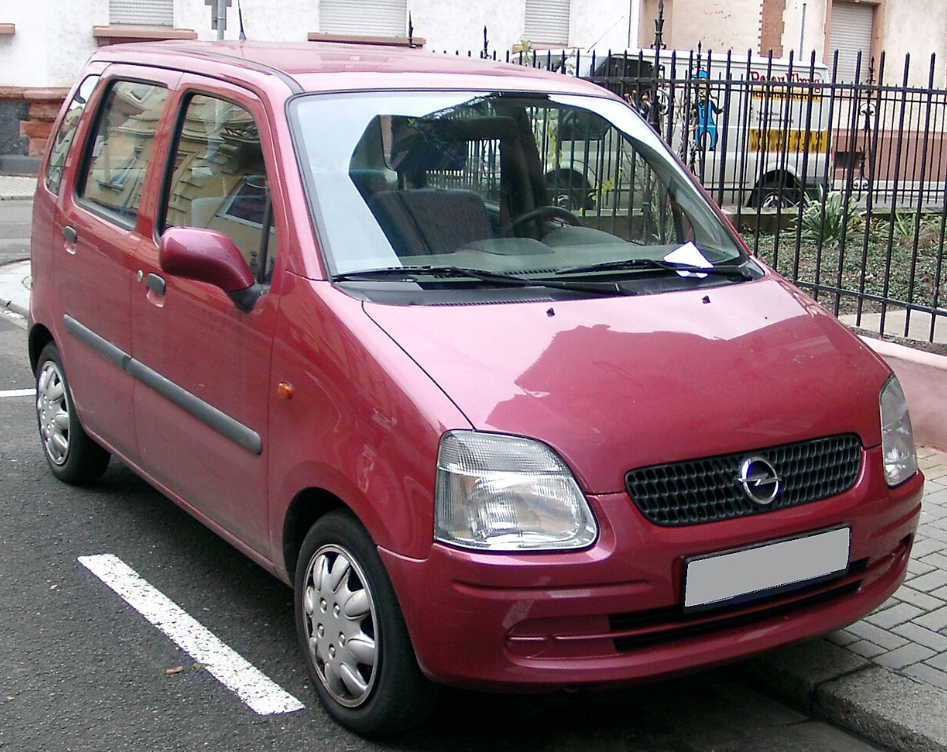
If we're comparing the Vauxhall Agila vs Suzuki Splash, we're looking at two remarkably similar small cars that offer affordable motoring, excellent manoeuvrability and surprisingly practical interiors.
Both models are popular choices for drivers searching for an inexpensive used city car in the UK. They share much of their engineering, including their platform, several engines and their basic mechanical layout.
However, they aren't completely identical.
The Vauxhall Agila offers distinctive styling, a slightly different interior presentation and a larger officially quoted boot capacity. Meanwhile, the Suzuki Splash has a strong reputation for durability, attractive equipment options and the dependable engineering associated with Suzuki's smaller cars.
But which one should we buy?
In this comprehensive comparison, we'll explore the differences in reliability, engine performance, fuel economy, practicality, safety, maintenance costs and overall value.
Content in this publication
- Vauxhall Agila vs Suzuki Splash: Quick Comparison
- Are the Vauxhall Agila and Suzuki Splash the Same Car?
- Exterior Design: Which Looks Better?
- Dimensions and Parking: Which Is Easier?
- Interior Space and Comfort
- Vauxhall Agila vs Suzuki Splash Boot Space
- Engine Options: Vauxhall Agila vs Suzuki Splash
- Fuel Economy: Which Uses Less Petrol?
- Performance and Acceleration
- Driving Experience and Handling
- Safety: Which Car Is Better Equipped?
- Equipment and Trim Levels
- Vauxhall Agila vs Suzuki Splash Reliability
- Which Car Is Cheaper to Maintain?
- Used Car Prices and Value for Money
- Vauxhall Agila vs Suzuki Splash for New Drivers
- Which Is Better for Motorway Driving?
- Automatic Gearbox Comparison
- What Should We Check Before Buying?
- Which Car Should We Choose?
- Frequently Asked Questions
Vauxhall Agila vs Suzuki Splash: Quick Comparison
Before examining each vehicle in detail, let's compare their main characteristics.
| Feature | Vauxhall Agila | Suzuki Splash |
|---|---|---|
| Relevant generation | Second generation, 2008 onwards | 2008–2014 UK model |
| Body style | Five-door hatchback | Five-door hatchback |
| Seating capacity | Five | Five |
| Platform | Suzuki-developed | Suzuki-developed |
| Petrol engines | 1.0L and 1.2L | 1.0L and 1.2L |
| Diesel option | 1.3 CDTi, earlier versions | 1.3 DDiS, earlier versions |
| Transmission | Manual or automatic | Manual or automatic |
| Boot capacity | 225 litres | 178 litres |
| Fuel tank | 45 litres | 45 litres |
| Width | 1,680 mm | 1,680 mm |
| Height | 1,590 mm | 1,590 mm |
| Best engine choice | 1.2 petrol | 1.2 petrol |
| Main advantage | Practicality and used-market value | Equipment and overall appeal |
Specifications vary by model year, engine and trim. The luggage figures are the manufacturers' published capacities, which can reflect different measurement conventions.
Our initial verdict: The Suzuki Splash 1.2 petrol is an excellent all-round choice, particularly in a well-equipped version. However, a properly maintained Vauxhall Agila 1.2 could be the better purchase if it costs less or has a stronger service history.
Are the Vauxhall Agila and Suzuki Splash the Same Car?
One of the most interesting facts about these vehicles is that they share much more than their appearance suggests.
The second-generation Vauxhall Agila and Suzuki Splash were developed through a collaboration between General Motors and Suzuki.
Both vehicles were manufactured at Suzuki's facility in Hungary.
This partnership allowed the manufacturers to reduce development costs while offering slightly different versions of the same basic vehicle.
Their common components and engineering include:
- Basic vehicle platform and structural architecture.
- Front-wheel-drive layout.
- Several petrol and diesel engine options.
- Manual and automatic transmission configurations.
- MacPherson-strut front suspension.
- Torsion-beam rear suspension.
- Much of the interior architecture.
- Numerous mechanical service components.
Because of these similarities, their driving characteristics and maintenance requirements are closely related.
What Is Different?
The most obvious differences involve exterior styling.
Although their overall proportions are similar, the vehicles have different front-end designs, lighting units, bumpers and various exterior body panels.
The manufacturers also selected different colours, trim combinations and equipment packages.
Consequently, we shouldn't assume that every component is interchangeable, especially exterior panels and trim pieces.
Important: Not Every Agila Is a Splash
The first-generation Vauxhall Agila, manufactured between 2000 and 2008, was based on the Suzuki Wagon R+.
It is the second-generation Agila, introduced in 2008, that directly corresponds to the Suzuki Splash.
This distinction matters when buying replacement parts or comparing reliability.
Exterior Design: Which Looks Better?
When comparing exterior appearance, personal preference plays an important role.
Vauxhall Agila Styling
The second-generation Agila represented a significant departure from its predecessor.
Instead of the previous boxy shape, Vauxhall introduced a more rounded and contemporary design.
Its main styling characteristics include a prominent front grille, relatively large headlights, a rising window line and a compact, upright profile.
We particularly like how the high roof combines with the short bonnet to create a practical vehicle without making it look excessively utilitarian.
Suzuki Splash Styling
The Suzuki Splash has a slightly more distinctive front-end design, with its own grille, bumper and headlight arrangement.
Its proportions create an approachable appearance that suits its urban purpose.
The Splash also received updates during its production life, so later models may look noticeably different from early examples.
Exterior Design Verdict
Neither car has a major functional advantage based purely on styling.
We would choose the Suzuki Splash for its distinctive appearance, although buyers who prefer Vauxhall's design language may find the Agila more attractive.
Dimensions and Parking: Which Is Easier?
Both vehicles were designed with congested urban environments in mind.
Their compact dimensions make them particularly suitable for narrow residential streets, crowded supermarket car parks and city-centre driving.
The second-generation Agila measures approximately 3,740 mm long, 1,680 mm wide and 1,590 mm tall.
The Splash shares the same width and height, although its length varies slightly by model year and exterior design.
For example, Suzuki's 2012 UK brochure lists an overall length of 3,775 mm.
Turning Circle Comparison
The manufacturers' quoted turning circles are:
- Vauxhall Agila: approximately 9.6 metres.
- Suzuki Splash: approximately 9.4 metres.
The Splash has a small advantage on paper, but the difference is unlikely to be particularly noticeable in everyday driving.
Both offer light steering and a short overall length, making them easy to manoeuvre.
Winner: Draw. Both are excellent urban vehicles.
Interior Space and Comfort
Despite their compact exterior dimensions, both cars offer more interior room than we might initially expect.
Their tall body designs are especially important because they create useful headroom.
Front Seat Comfort
Both vehicles have a relatively high driving position.
This makes entering and leaving the car easier than in some lower hatchbacks.
The upright seating arrangement also gives drivers a good view of the road.
We can expect:
- Comfortable seating for most average-sized adults.
- Straightforward dashboard controls.
- Good forward visibility.
- Convenient interior storage.
- A driving position particularly suited to urban journeys.
Neither model provides luxury-car refinement, but their cabins are functional.
Rear Passenger Space
The rear seats are surprisingly useful considering the vehicles' dimensions.
Two adults can generally travel in the back without feeling excessively cramped on shorter journeys.
Both cars are officially five-seaters, although accommodating three adults across the rear bench will be less comfortable.
The relatively high roofline is particularly beneficial for taller passengers.
Interior Quality
Both vehicles use substantial amounts of hard plastic.
However, that isn't necessarily a disadvantage in an inexpensive city car.
Simple materials can be easy to clean, while uncomplicated controls reduce distractions.
When buying a used example, we should inspect seat fabrics, switches, door handles and interior trim carefully.
At this age, previous ownership and maintenance will usually matter more than differences in the original cabin materials.
Vauxhall Agila vs Suzuki Splash Boot Space
Boot capacity is one of the more interesting differences between these vehicles.
According to published manufacturer specifications:
| Boot specification | Vauxhall Agila | Suzuki Splash |
|---|---|---|
| Rear seats upright | 225 litres | 178 litres |
| Rear seats fold down | Yes | Yes |
| Underfloor storage | Available | Available |
| Split-folding rear bench | Depending on trim | Depending on trim |
The Vauxhall Agila has a 47-litre advantage in the published standard boot figures.
However, we need to interpret this carefully.
Manufacturers have used different luggage measurement conventions, and the cars have very similar underlying packaging. The published difference does not necessarily translate into an equivalent amount of extra usable space for every type of luggage.
Which Is Better for Shopping?
Both cars can accommodate everyday shopping, backpacks and smaller bags.
The Agila's quoted capacity makes it attractive for buyers who prioritise luggage space, but the actual boot layout and underfloor arrangement should be examined.
Which Is Better for Larger Items?
Both models allow the rear seats to fold forward.
This creates significantly more space for bulky objects.
Nevertheless, neither car is an ideal choice for regularly transporting large furniture, multiple full-sized suitcases or substantial sports equipment.
For those requirements, a larger hatchback or estate would be more appropriate.
Boot space verdict: The Agila has the larger published figure, but we recommend physically testing any bulky items before making a decision.
Engine Options: Vauxhall Agila vs Suzuki Splash
Choosing the right engine can make a bigger difference than choosing between the two badges.
Both vehicles were offered with economical small-capacity engines.
The main options were 1.0-litre petrol, 1.2-litre petrol and, on earlier examples, 1.3-litre diesel.
1.0-Litre Petrol Engine
The 1.0-litre three-cylinder petrol engine is designed primarily for economical urban driving.
Later versions produce approximately 68 PS, while some earlier specifications quote slightly less power.
Its strengths include simplicity, modest fuel consumption and adequate performance in town.
However, acceleration is relatively slow.
With several passengers onboard, we may need to work the engine harder on hills or when joining faster roads.
This engine makes sense for drivers who mainly undertake short urban journeys.
1.2-Litre Petrol Engine
For most buyers, the 1.2-litre petrol engine is the better option.
Earlier versions produced approximately 86 PS, while later examples offered 94 PS.
The additional power provides noticeably better flexibility.
You may be interested in reading Toyota Corolla AE86 Engine Swap – The Ultimate Guide
It is particularly useful when:
- Accelerating onto dual carriageways.
- Climbing hills with passengers.
- Overtaking slower vehicles.
- Driving at motorway speeds.
- Carrying luggage.
The four-cylinder engine also generally feels smoother than the smaller three-cylinder unit.
Although the 1.2 consumes slightly more fuel, we believe the improvement in everyday usability justifies the difference.
Our preferred engine for both cars is the 1.2-litre petrol.
1.3-Litre Diesel Engine
Earlier Agila and Splash models were also available with a 1.3-litre turbocharged diesel engine.
The Agila version was marketed as the 1.3 CDTi, while Suzuki used the DDiS designation.
This engine offers useful low-speed torque and potentially good fuel economy.
However, diesel ownership brings additional considerations.
Depending on the version, age and emissions equipment, repairs involving injectors, turbocharger components, exhaust gas recirculation or particulate-filter systems can become expensive.
Drivers who regularly travel longer distances may still find a well-maintained diesel suitable.
For predominantly short journeys, we would generally prefer one of the petrol engines.
Fuel Economy: Which Uses Less Petrol?
Fuel consumption is an important consideration when purchasing an inexpensive used car.
Fortunately, both vehicles can be economical.
Because they share engines and much of their mechanical engineering, equivalent versions have almost identical official fuel economy figures.
Official 2012 UK Fuel Economy Figures
| Engine and transmission | Agila | Splash |
|---|---|---|
| 1.0 petrol manual | 60.1 mpg | 60.1 mpg |
| 1.2 petrol manual | 55.4 mpg | 55.4 mpg |
| 1.2 petrol automatic | 49.6 mpg | 49.6 mpg |
These are manufacturer-reported UK imperial mpg combined-cycle figures for the 2012 versions, not guaranteed real-world consumption.
Which Engine Is Most Economical?
The 1.0 petrol offers the lowest official consumption among the petrol options.
However, that doesn't necessarily make it the cheapest to operate in every situation.
On faster roads or when carrying passengers, the smaller engine may need to work harder.
The 1.2 manual provides a useful compromise between economy and performance.
What About Real-World MPG?
Actual consumption depends on several factors:
- Traffic conditions.
- Driving style.
- Tyre pressures.
- Vehicle load.
- Mechanical condition.
- Ambient temperature.
- Journey length.
A poorly maintained vehicle can consume noticeably more fuel than an equivalent example in good condition.
We would therefore place more importance on service history and engine condition than on minor differences between published figures.
Fuel economy winner: Draw.
Performance and Acceleration
Neither the Suzuki Splash nor the Vauxhall Agila was designed to deliver sports-car performance.
Their priorities are efficiency, practicality and ease of driving.
Nevertheless, the choice of engine makes a noticeable difference.
Acceleration Comparison
For the later 2012 petrol versions:
| Engine | 0–62 mph |
|---|---|
| 1.0 petrol manual | 14.7 seconds |
| 1.2 petrol manual | 12.0 seconds |
| 1.2 petrol automatic | 14.0 seconds |
Both cars have very similar acceleration when fitted with equivalent engines.
The 1.2 manual is clearly the strongest everyday performer.
Its advantage is especially noticeable when travelling outside urban areas.
Is the 1.0 Engine Too Slow?
Not necessarily.
For supermarket trips, commuting through traffic and driving on residential streets, the 1.0 can be perfectly adequate.
However, drivers who frequently use motorways may find it underpowered.
If we regularly travel with several passengers, the 1.2 is the more sensible choice.
Driving Experience and Handling
The Agila and Splash share closely related suspension and steering systems.
Consequently, their road manners are broadly similar.
City Driving
Both vehicles are well suited to urban environments.
Their light steering makes parking relatively easy, while their compact dimensions are useful when navigating narrow roads.
The elevated seating position provides good forward visibility.
However, the relatively thick rear pillars can create blind spots, so care is needed when reversing.
Motorway Driving
Both cars are capable of motorway journeys, especially with the 1.2 engine.
However, their small size and relatively basic sound insulation mean they aren't as refined as larger hatchbacks.
Road and wind noise become more noticeable at higher speeds.
The 1.0 engine may also feel strained during sustained acceleration.
Suspension Comfort
Both vehicles use relatively simple suspension systems.
This helps keep maintenance manageable.
However, poorly maintained roads can expose the limitations of their short wheelbases.
Suspension wear, worn tyres and incorrect tyre pressures can further reduce comfort.
For a used example, a proper road test is essential.
Driving experience verdict: There is no significant overall winner. Engine choice and suspension condition are more important.
Safety: Which Car Is Better Equipped?
Safety deserves particular attention because equipment can vary significantly by model year and trim level.
The Suzuki Splash achieved a four-star rating under the Euro NCAP testing system used in 2008.
We shouldn't compare that historical rating directly with modern Euro NCAP star ratings, because testing requirements have become more demanding.
The Agila shares the Splash's underlying engineering, but its equipment should be assessed separately.
Airbags and Stability Control
Many versions of both vehicles include front and side airbags, anti-lock brakes and electronic brake assistance.
However, electronic stability control and curtain airbags were not necessarily standard on every version.
For example, Suzuki's 2012 UK specification listed electronic stability control and curtain airbags among the additional features of the SZ4 trim.
The specification of an individual used car should always be confirmed rather than assumed.
Which Should We Choose for Safety?
If safety equipment is a priority, we would look for a version fitted with electronic stability control and the greatest available airbag protection.
A well-equipped Suzuki Splash SZ4 is particularly attractive in this respect.
However, the vehicle's accident history, tyre condition and overall mechanical condition remain essential considerations.
Equipment and Trim Levels
Although the vehicles share engineering, their equipment packages differ.
Vauxhall Agila Trims
Earlier second-generation Agila models were available in specifications such as:
- Expression.
- Club.
- Design.
Later UK versions included Expression, S and SE variants.
Higher specifications could include air conditioning, electric front windows, alloy wheels, steering-wheel audio controls and more flexible luggage arrangements.
Suzuki Splash Trims
Earlier Splash models included GLS and GLS+ specifications.
Later UK models were offered in SZ2, SZ3 and SZ4 trims.
The SZ4 is particularly appealing thanks to equipment that could include electronic stability control, curtain airbags, alloy wheels, front fog lights and keyless entry.
Which Offers Better Equipment?
The Suzuki often stands out for its equipment packages, although the precise advantage depends on the model year.
When comparing used examples, we should focus on the actual features fitted rather than simply assuming one brand is better equipped.
For instance, functioning air conditioning may be worth more to an everyday driver than alloy wheels or decorative trim.
Vauxhall Agila vs Suzuki Splash Reliability
Reliability is arguably the most important consideration when buying either of these older vehicles.
Both benefit from relatively straightforward engineering and Suzuki-developed mechanical components.
However, neither vehicle is immune to wear, corrosion or age-related problems.
Is the Vauxhall Agila Reliable?
The second-generation Agila generally has a respectable reputation for reliability when properly maintained.
Its petrol engines are relatively straightforward, and the vehicle lacks many of the complicated electronic systems found in newer cars.
However, maintenance history is crucial.
A neglected Agila with worn suspension components, brake corrosion and clutch problems can become expensive to repair.
Is the Suzuki Splash Reliable?
The Splash also enjoys a generally positive reputation.
Its simple petrol engines and practical design make it attractive as an inexpensive used vehicle.
Nevertheless, MOT data highlights the importance of inspecting suspension components, brake pipes and other wear-related items.
You may be interested in readingToyota Corolla AE86 Engine Swap – The Ultimate GuideYou may be interested in reading
 Does the Toyota Camry Have CVT Transmission?
These issues are especially relevant now that many examples are well over ten years old.
Common Problems to Check
For either car, we recommend paying particular attention to the following areas.
Suspension Wear
Listen for knocking noises when driving over bumps.
Inspect suspension bushes, ball joints, drop links, shock absorbers and coil springs.
Worn components can affect handling, tyre wear and MOT results.
Brake Corrosion
Check brake pipes and hoses carefully.
Corrosion can become a significant issue on older vehicles, especially those exposed to winter road salt.
Brake discs, pads and rear drum-brake components should also be inspected.
Clutch Wear
Manual cars used extensively in city traffic may have experienced frequent clutch operation.
Symptoms of wear can include slipping under acceleration, difficulty selecting gears or an unusually high biting point.
Exhaust System Problems
Inspect the exhaust system for corrosion, leaks and damaged mountings.
An excessively noisy exhaust may indicate a developing problem.
Air Conditioning Faults
Check that the air conditioning produces cold air.
A system that doesn't work may require more than a simple refrigerant recharge.
Electrical Equipment
Test all windows, locks, lights, switches and dashboard instruments.
Individual electrical faults aren't necessarily serious, but several problems together may indicate poor maintenance.
Which Car Is Cheaper to Maintain?
Maintenance costs should be broadly similar when comparing equivalent petrol versions.
Both models use relatively straightforward mechanical systems.
Routine maintenance includes engine oil changes, filters, spark plugs, tyres, brakes and suspension components.
Parts Availability
The Agila may benefit from Vauxhall's established presence in the UK.
The Splash benefits from Suzuki parts support and the shared mechanical architecture.
Many service components are closely related or common between equivalent versions.
However, we should verify compatibility using the exact registration, engine code and part number.
Exterior body panels and lighting units are especially likely to differ.
Insurance Costs
Insurance costs depend on the driver's circumstances and the specific version of the car.
Relevant factors include age, postcode, claims history, annual mileage and insurance group.
Neither vehicle should automatically be considered cheaper to insure without obtaining actual quotations.
Road Tax
Vehicle Excise Duty depends on the car's registration date and official emissions.
Different engine and transmission combinations can fall into different tax bands.
We recommend checking the registration-specific tax amount before buying rather than relying on historic brochure figures.
Used Car Prices and Value for Money
Both vehicles now occupy the affordable end of the used-car market.
However, prices vary considerably according to condition, mileage, location and service history.
The Suzuki Splash can sometimes command a premium because of its reputation and desirability.
Conversely, a Vauxhall Agila may offer attractive value when similarly equipped examples are available for less.
When Is the Agila Better Value?
We would favour the Agila if it offered:
- A lower purchase price.
- A documented maintenance history.
- A clean MOT record.
- A healthy 1.2 petrol engine.
- Good tyre and brake condition.
- No significant corrosion.
When Is the Splash Worth Paying More For?
The Splash may justify a higher asking price if it has better safety equipment, fewer previous owners, stronger service records or noticeably better mechanical condition.
We wouldn't pay a substantial premium purely for the Suzuki badge.
At this age, buying the better-maintained car is usually the smarter decision.
Vauxhall Agila vs Suzuki Splash for New Drivers
Both models can be suitable choices for inexperienced drivers.
Their compact dimensions and predictable handling help make urban driving less intimidating.
The 1.0 petrol versions may also be attractive to drivers prioritising modest running costs.
However, insurance quotations should always be checked before purchase.
Why the Agila Makes Sense
The Agila is worth considering when affordability is the main priority.
A clean, well-maintained example can provide dependable everyday transport without requiring a large purchase budget.
Why the Splash Makes Sense
The Splash offers similarly easy driving characteristics, along with appealing trim and equipment options.
We would particularly favour a well-equipped version with electronic stability control where available.
Our choice for a new driver: Whichever car has the better maintenance history, appropriate safety equipment and lower total ownership cost.
Which Is Better for Motorway Driving?
Neither vehicle is primarily intended as a long-distance motorway cruiser.
Nevertheless, both can manage occasional motorway journeys.
For this type of driving, we strongly prefer the 1.2 petrol engine.
The additional power makes accelerating and maintaining speed more comfortable.
It also offers greater flexibility when travelling with passengers.
We would pay particular attention to tyre condition, wheel alignment, suspension performance and unusual engine noises during the test drive.
For frequent long-distance travel, a larger car such as the Suzuki Swift or Vauxhall Corsa may offer greater refinement.
Automatic Gearbox Comparison
Both the Agila and Splash were available with a four-speed automatic transmission paired with the 1.2 petrol engine.
This makes them appealing to drivers who want an easy-to-operate small car.
Advantages of the Automatic
Automatic versions eliminate the need to operate a clutch pedal.
This can be particularly useful in stop-start urban traffic.
The transmission also makes low-speed manoeuvring more convenient.
Disadvantages of the Automatic
Compared with the manual transmission, the automatic generally provides slower acceleration and higher fuel consumption.
The official 2012 combined economy figure of 49.6 mpg illustrates that difference.
When buying an automatic, we should check for smooth gear engagement, unusual noises, fluid leaks and delayed responses.
A properly functioning gearbox is essential because a major automatic transmission repair could represent a substantial proportion of the vehicle's value.
What Should We Check Before Buying?
Whether we choose the Agila or Splash, a careful pre-purchase inspection can prevent expensive mistakes.
Here is our recommended checklist.
| Inspection | What to look for |
|---|---|
| Engine | Smooth starting, stable idle, no unusual noises |
| Cooling system | No overheating or coolant leaks |
| Gearbox | Smooth gear selection |
| Clutch | No slipping or excessive vibration |
| Suspension | No knocking, excessive bouncing or broken springs |
| Brakes | Good stopping performance and no serious corrosion |
| Bodywork | No significant accident damage or structural rust |
| Tyres | Even wear and appropriate tread depth |
| Air conditioning | Cold air and normal operation |
| Electronics | Working windows, locks, lights and instruments |
| MOT history | No recurring unresolved defects |
| Service records | Evidence of regular maintenance |
Check the MOT History
In the UK, we can check a car's MOT history using its registration number.
This can reveal previous test failures, advisory notices and recorded mileage.
Particular attention should be paid to recurring warnings.
For example, a brake pipe repeatedly described as corroded deserves investigation, even if the vehicle has recently passed its MOT.
Test Drive Before Purchasing
A short drive around the block isn't enough.
Ideally, we should test the car on different road surfaces and at varying speeds.
We want to confirm that the steering feels normal, the brakes operate smoothly and the engine pulls consistently.
If we lack mechanical experience, an independent pre-purchase inspection can be worthwhile.
Which Car Should We Choose?
The answer depends on our priorities.
| Buying priority | Our preferred choice |
|---|---|
| Lowest purchase price | Best-value individual example |
| City driving | Either |
| Fuel economy | Either, with equivalent engines |
| Stronger acceleration | Either 1.2 manual |
| Published standard boot capacity | Vauxhall Agila |
| Higher-spec safety equipment | Suzuki Splash SZ4 |
| Automatic driving | Either 1.2 automatic |
| Long-term reliability | Best-maintained example |
| Overall recommendation | Suzuki Splash 1.2 petrol |
The similarities between these vehicles are so substantial that comparing individual examples makes more sense than relying exclusively on brand reputation.
A tidy Agila with a full service history could easily be a better purchase than a neglected Splash.
Equally, a well-maintained Splash with desirable safety equipment could justify paying slightly more.
Frequently Asked Questions
1. Is the Suzuki Splash the Same as the Vauxhall Agila?
The Suzuki Splash and second-generation Vauxhall Agila share the same basic vehicle architecture and much of their mechanical engineering. However, they have different exterior styling, trim options and equipment packages. The first-generation Agila is based on the Suzuki Wagon R+, not the Splash.
2. Which Is More Reliable, the Agila or Splash?
Both vehicles have broadly similar reliability potential because they share much of their engineering. Their condition, mileage and maintenance history are more important than the badge. We would generally favour a well-maintained 1.2 petrol example of either model.
3. Does the Vauxhall Agila Have a Bigger Boot?
The Vauxhall Agila has a manufacturer-quoted standard boot capacity of 225 litres, compared with 178 litres for the Suzuki Splash. However, measurement conventions and luggage-floor arrangements can affect published figures, so buyers should compare the actual usable space.
4. Which Is Better, the 1.0 or 1.2 Engine?
For most drivers, the 1.2 petrol engine is preferable. It provides stronger acceleration and greater flexibility for motorway driving, hills and carrying passengers. The 1.0 remains a reasonable option for predominantly urban journeys.
You may be interested in readingToyota Corolla AE86 Engine Swap – The Ultimate GuideYou may be interested in reading
Does the Toyota Camry Have CVT Transmission?You may be interested in reading
 Toyota Camry Trim Levels 2014: A Detailed Guide to Choosing the Best
5. Is the Suzuki Splash Worth Buying Used?
Yes, a well-maintained Suzuki Splash can be an excellent inexpensive
If you want to know other articles similar to Vauxhall Agila vs Suzuki Splash: Which Is Better? you can visit the category Models.
12 Best Kia Sorento Alternatives in 2026
Kia Sorento Model Differences: Complete Trim Guide
Ford C-Max Years: Complete Guide to the Best and Worst Models
Toyota Equivalent to Honda Passport: Best Alternatives Compared
Cars Similar to Honda Passport: 10 Best SUV Alternatives in 2026
Kia Sorento Top of the Range: Ultimate 2026 Guide
Leave a Reply
More content of your interest