
Vauxhall Antara Kerb Weight: Complete UK Guide

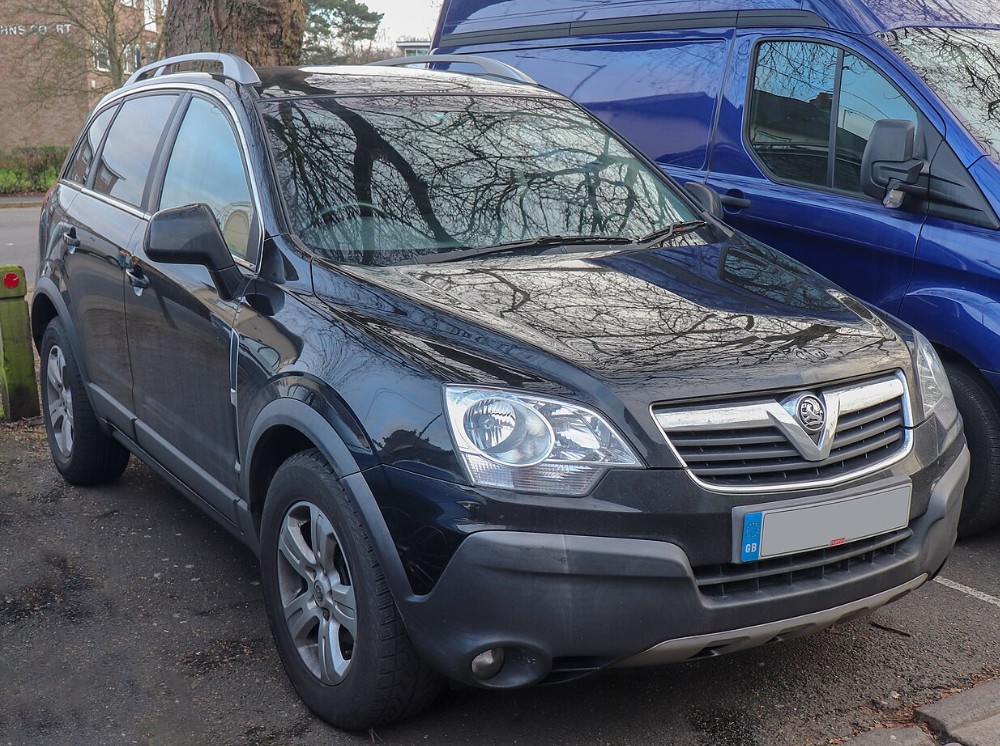
The Vauxhall Antara kerb weight is not represented by one universal figure. Depending on the model year, engine, transmission, trim level and whether the vehicle has front-wheel drive or four-wheel drive, an Antara can weigh roughly 1,730kg to almost 1,900kg before passengers and luggage are added.
That is a substantial range. A lighter Antara can be more than 150kg below a heavily equipped version—the equivalent of carrying two adults before anyone has even climbed aboard.
For many owners, the number remains buried in a handbook or vehicle document until they need to tow a caravan, calculate payload, cross a weight-restricted bridge or compare replacement vehicles. Then it suddenly matters quite a lot.
In this guide, we will explain the typical Vauxhall Antara kerb-weight figures, why different websites publish different numbers, how drivetrain and equipment affect weight, and where to find the correct figure for your particular vehicle.
Content in this publication
- What Is the Vauxhall Antara Kerb Weight?
- What Does Kerb Weight Actually Mean?
- Vauxhall Antara Kerb Weight by Engine
- Vauxhall Antara FWD Versus 4x4 Weight
- Manual Versus Automatic Antara Kerb Weight
- Kerb Weight Versus Gross Vehicle Weight
- Why Payload Matters as Much as Kerb Weight
- Vauxhall Antara Kerb Weight in Pounds
- How Kerb Weight Affects Towing
- Does Kerb Weight Include the Driver?
- Where Can We Find the Exact Weight of an Antara?
- How to Weigh a Vauxhall Antara Properly
- How Weight Affects Fuel Consumption
- How Kerb Weight Influences Braking and Handling
- How Optional Equipment Changes Kerb Weight
- Is the Vauxhall Antara Heavy for Its Size?
- Common Mistakes When Checking Antara Weight
- Which Antara Weight Figure Should We Use?
- Vauxhall Antara Kerb Weight Quick Reference
- Conclusion
- Frequently Asked Questions
What Is the Vauxhall Antara Kerb Weight?
Most Vauxhall Antara models have a kerb weight somewhere between approximately 1,730kg and 1,896kg.
Earlier 2.0 CDTi versions are commonly listed at around 1,730–1,795kg, while later 2.2 CDTi models usually sit between approximately 1,821kg and 1,896kg, depending on drivetrain, gearbox and specification. Published figures include 1,795kg for certain 2.0 CDTi models, 1,821kg for a 2.2 CDTi front-wheel-drive version and 1,896kg for some higher-specification 2.2 CDTi derivatives.
Here is a practical overview:
| Vauxhall Antara version | Approximate kerb weight |
|---|---|
| Early 2.0 CDTi variants | 1,730–1,795kg |
| 2.4-litre petrol FWD | Around 1,750kg |
| 2.2 CDTi FWD manual | Around 1,821kg |
| 2.2 CDTi 4x4 manual | Around 1,836–1,896kg |
| Heavier automatic or high-spec models | Up to about 1,900kg |
These numbers should be treated as guidance rather than a substitute for the figure recorded for your exact vehicle. Wheels, trim, factory options, spare-wheel arrangements and transmission type can all alter the final number.
What Does Kerb Weight Actually Mean?
Kerb weight is the weight of a vehicle in road-ready condition but without passengers or normal luggage.
Depending on the measurement standard used, it generally includes:
- The engine and all operating fluids
- Coolant, brake fluid and lubricants
- A specified quantity of fuel
- Standard factory equipment
- The fitted battery
- Essential road equipment
The confusing part is that not every manufacturer, registration authority or vehicle-data provider uses precisely the same definition.
One published figure may include a nominal 75kg driver. Another may exclude the driver. A third may be based on the lightest vehicle in the range rather than the exact trim being advertised.
That is why two respectable sources can publish slightly different Vauxhall Antara kerb-weight figures without either one necessarily being completely wrong.
Kerb Weight Is Not the Empty Shell Weight
People sometimes imagine kerb weight as the weight of a completely empty car with no fuel or fluids. That is closer to a dry-weight concept, which is rarely the most useful number for an ordinary road car.
Kerb weight is intended to represent the vehicle as it would realistically sit at the roadside, ready to be driven.
Think of it as the Antara wearing its boots and coat, but not yet carrying the family’s suitcases.
Vauxhall Antara Kerb Weight by Engine
The engine fitted to the Antara plays a large part in determining its weight. Diesel engines are generally heavier than comparable petrol engines because they use stronger internal components and additional emissions equipment.
Vauxhall Antara 2.0 CDTi Kerb Weight
Early Vauxhall Antara 2.0 CDTi models are frequently quoted between approximately 1,730kg and 1,795kg.
A published specification for the 2.0 CDTi 150PS 4x4 gives a range of 1,730–1,790kg, while another listing for the 2.0 CDTi 16v S states a minimum kerb weight of 1,795kg. The variation reflects differences in trim, equipment and the way each source defines the measurement.
A practical working figure for many early diesel Antaras is therefore around 1.75 to 1.80 tonnes.
Why the 2.0 CDTi Figures Vary
Two apparently identical 2.0 CDTi vehicles may not have the same weight. Differences can include:
- Manual versus automatic transmission
- Two-wheel drive versus four-wheel drive
- Wheel and tyre size
- Trim-specific equipment
- Full-size spare wheel or repair kit
- Towbar or dealer-fitted accessories
- Sunroof, navigation and upgraded audio equipment
A weight range in a brochure is not necessarily vague marketing. It may be the only sensible way to describe several configurations sold under one model name.
Vauxhall Antara 2.2 CDTi Kerb Weight
The facelifted 2.2 CDTi Antara is generally heavier than the lightest early 2.0 CDTi models.
The 2.2 CDTi Diamond 2WD Start/Stop has been listed with a minimum kerb weight of 1,821kg, while a 2.2 CDTi Exclusiv listing gives 1,896kg. A European specification for a 2.2 CDTi 163PS 4x4 reports 1,836kg without a driver.
We can therefore use the following broad guide:
| 2.2 CDTi configuration | Typical published figure |
|---|---|
| FWD manual, lighter trim | About 1,821kg |
| 4x4 manual | About 1,836–1,896kg |
| High-specification or automatic model | Often near the upper end of the range |
The 2.2-litre engine itself is only part of the story. The four-wheel-drive hardware, transmission and trim equipment often explain more of the difference than the engine displacement alone.
Vauxhall Antara 2.4 Petrol Kerb Weight
The 2.4-litre petrol Antara is less common in the UK used market, but it should not be forgotten. A published specification for a facelift-era 2.4-litre front-wheel-drive model lists an unladen weight of approximately 1,750kg.
Despite having a relatively large petrol engine, it may be lighter than some diesel 4x4 models because it avoids certain heavy diesel and all-wheel-drive components.
Vauxhall Antara FWD Versus 4x4 Weight
A four-wheel-drive Antara normally weighs more than its front-wheel-drive counterpart.
The extra weight comes from components such as:
- Rear differential
- Propshaft
- Additional driveshafts
- Transfer hardware
- Supporting brackets and mountings
- Extra fluids and casings
Individually, these parts may not sound dramatic. Together, they can add a meaningful amount of mass.
A front-wheel-drive 2.2 CDTi may be listed at around 1,821kg, while comparable four-wheel-drive versions can move comfortably above 1,830kg and, in some specifications, approach 1,900kg.
Does the Extra 4x4 Weight Matter?
Yes, although not always negatively.
The additional weight can influence:
- Acceleration
- Braking distance
- Fuel consumption
- Tyre wear
- Suspension loading
- Payload
- Caravan weight matching
However, a heavier tow car can also feel more planted when towing. Weight alone does not make a vehicle a good tow car, but a substantial kerb weight may help improve the tow car-to-caravan weight ratio.
The lesson is simple: extra mass is neither automatically good nor bad. It changes the vehicle’s operating limits, so we need to understand it rather than merely admire the biggest number.
Manual Versus Automatic Antara Kerb Weight
Automatic gearboxes usually add weight compared with equivalent manual transmissions.
An automatic unit includes a torque converter, additional hydraulic components, cooling arrangements and a more complex casing. The precise difference varies, but it is common for an automatic Antara to be heavier than a manual version with the same engine and drivetrain.
Vauxhall’s 2013 specification guide separated its weight-related limits by drivetrain and transmission. It listed gross vehicle weights of 2,270kg for FWD diesel models, 2,345kg for manual 4x4 models and 2,370kg for automatic 4x4 models. These are maximum permissible weights rather than kerb weights, but they clearly show that the automatic 4x4 configuration carried the highest authorised total.
That distinction matters. We should never mistake a 2,370kg gross vehicle weight for the vehicle’s kerb weight.
Kerb Weight Versus Gross Vehicle Weight
Kerb weight and gross vehicle weight are related, but they describe two very different conditions.
Kerb Weight
Kerb weight is the vehicle in running condition before ordinary occupants and luggage are added.
Gross Vehicle Weight
Gross vehicle weight—often abbreviated to GVW—is the maximum legally permitted weight of the fully loaded vehicle.
It includes:
- The vehicle itself
- Driver
- Passengers
- Luggage
- Accessories
- Towbar nose load
- Any other carried items
Vauxhall defined gross vehicle weight in its Antara specifications as the total permissible weight of the vehicle, including passengers and luggage. The 2013 guide listed GVWs of 2,183kg for FWD petrol models, 2,270kg for FWD diesel versions, 2,345kg for manual 4x4 models and 2,370kg for automatic 4x4 models.
A Simple Weight Example
Suppose an Antara has:
- Kerb weight: 1,821kg
- Gross vehicle weight: 2,270kg
The theoretical difference is:
2,270kg − 1,821kg = 449kg
That 449kg must cover the occupants, luggage, accessories and any towball load applied to the car. The same published specification that gives the 1,821kg minimum kerb weight also reports a maximum loading weight of 449kg.
Four adults could easily account for 300kg or more. Add holiday bags, a dog, roof equipment and caravan noseweight, and the spare capacity can shrink like an ice cube in sunlight.
Why Payload Matters as Much as Kerb Weight
Kerb weight tells us how heavy the vehicle starts. Payload tells us how much more it can safely carry.
A heavy SUV does not automatically have a huge payload. In fact, optional equipment can increase kerb weight without increasing the gross vehicle weight, leaving less capacity for people and luggage.
This is especially important for:
- Caravan holidays
- Airport transfers
- Five-person family trips
- Camping equipment
- Roof boxes
- Bicycle carriers
- Mobility equipment
- Heavy tools
How to Estimate Your Actual Load
A useful calculation is:
Occupants + luggage + accessories + noseweight = total added load
For example:
| Item | Example weight |
|---|---|
| Driver | 80kg |
| Front passenger | 70kg |
| Two rear passengers | 120kg |
| Luggage | 80kg |
| Caravan noseweight | 75kg |
| Total added load | 425kg |
On an Antara with a 449kg payload allowance, that example would leave only 24kg of spare capacity.
Of course, people and luggage vary. The point is not that every trip will overload the car, but that a large SUV can reach its limit sooner than its appearance suggests.
Vauxhall Antara Kerb Weight in Pounds
UK vehicle specifications normally use kilograms, but some owners prefer pounds, particularly when reading American specifications or comparing imported accessories.
Here are approximate conversions:
| Kerb weight in kilograms | Approximate weight in pounds |
|---|---|
| 1,730kg | 3,814lb |
| 1,750kg | 3,858lb |
| 1,795kg | 3,957lb |
| 1,821kg | 4,015lb |
| 1,836kg | 4,048lb |
| 1,896kg | 4,180lb |
To convert kilograms to pounds, multiply by approximately 2.2046.
Therefore:
1,821kg × 2.2046 = approximately 4,015lb
For UK towing and legal calculations, it is usually safer to remain in kilograms. Converting backwards and forwards can introduce rounding errors, and the vehicle’s official plates will normally display kilograms.
How Kerb Weight Affects Towing
Kerb weight is one of the first figures caravan owners examine because it helps determine a sensible matching ratio between the tow car and caravan.
A commonly discussed guideline for less experienced caravan users is to keep the caravan’s actual laden weight at around 85% of the tow car’s kerb weight. This is a matching guideline, not a replacement for the manufacturer’s towing limit, plated limits or licensing rules.
A tow-weight source lists the 2.2 CDTi FWD Antara at 1,821kg, producing an 85% figure of approximately 1,548kg. A 2.0 CDTi example with a 1,795kg kerb weight produces an 85% figure of roughly 1,526kg.
Antara 85% Towing-Match Examples
| Antara kerb weight | 85% matching figure |
|---|---|
| 1,730kg | 1,471kg |
| 1,795kg | 1,526kg |
| 1,821kg | 1,548kg |
| 1,836kg | 1,561kg |
| 1,896kg | 1,612kg |
These calculations do not mean every caravan below that figure is automatically suitable.
We must still check:
- Manufacturer’s maximum braked towing weight
- Caravan’s actual laden weight
- Maximum authorised mass
- Gross train weight
- Towbar noseweight limit
- Vehicle payload
- Driving-licence entitlement
- Condition and distribution of the load
Official Antara Towing Limits
Vauxhall’s 2013 guide listed a maximum braked towing weight of 2,000kg for FWD diesel and manual 4x4 models, while the automatic 4x4 was listed at 1,700kg. The unbraked limit was shown as 750kg. The guide also stated that additional weight from luggage or passengers should be deducted from maximum towing capability under the conditions described.
Later specifications changed as the range was simplified. Vauxhall’s July 2016 guide listed the remaining FWD Antara with a 2,270kg gross vehicle weight, 2,000kg braked towing limit, 750kg unbraked limit, 80kg maximum noseweight and 100kg maximum roof-rack load.
Always check the figures for the exact registration and model rather than applying one brochure’s data to every Antara ever built.
Does Kerb Weight Include the Driver?
Sometimes it does; sometimes it does not.
That is one of the largest sources of confusion in online specification tables.
Some European measurement methods include a nominal driver, commonly represented as 75kg. Other sources label the weight explicitly as being “without a driver.” For example, one published specification gives the 2.2 CDTi 163PS 4x4 a curb weight of 1,836kg without a driver.
If another source uses a standard that includes a driver, the quoted figure could appear tens of kilograms higher even when the underlying vehicle is the same.
How to Compare Figures Fairly
Before comparing two weights, look for phrases such as:
- Minimum kerb weight
- EC kerb weight
- Unladen weight
- Mass in running order
- Weight without driver
- Weight including driver
- Base vehicle weight
Without a shared definition, comparing the numbers is like comparing two fuel-economy figures when one is in UK mpg and the other is in US mpg. They look similar, but they are not playing by precisely the same rules.
Where Can We Find the Exact Weight of an Antara?
The best source depends on why we need the information.
Check the Vehicle Identification Plate
The vehicle plate normally displays legal maximum masses rather than kerb weight. It may show:
- Maximum permitted vehicle mass
- Maximum permitted train mass
- Maximum front-axle load
- Maximum rear-axle load
These figures are essential for loading and towing, but the first number should not be mistaken for kerb weight.
Check the V5C Registration Document
The V5C may include a mass-in-service figure. This can be useful, but terminology and available fields may vary with vehicle age and registration history.
Consult the Original Brochure
A brochure can help identify the appropriate range for the model year, engine and drivetrain.
However, brochures may publish minimum figures or combine several versions under one heading. They are excellent reference material, but they may not account for every option fitted to an individual used car.
Read the Owner’s Manual
The manual explains loading limits, towing procedures, tyre pressures and weight-related warnings. It may direct the owner to the identification plate or vehicle-specific documents for exact values.
Use a Public Weighbridge
A weighbridge is the best way to determine what the vehicle actually weighs in its current condition.
This is particularly useful after fitting:
- Towbar
- Side steps
- Underbody protection
- Roof bars
- Large audio system
- Mobility equipment
- Permanent storage drawers
- Heavy aftermarket wheels
A 15-year-old used Antara may no longer weigh exactly what it did when it rolled out of the factory.
How to Weigh a Vauxhall Antara Properly
For a meaningful reading, prepare the car in the condition relevant to your calculation.
For normal running weight:
- Fill the fuel tank to the chosen level.
- Remove temporary luggage.
- Leave permanent accessories fitted.
- Decide whether the driver should remain in the vehicle.
- Record the weight conditions clearly.
- Compare the result with the plated limits.
For towing preparation, weigh the full combination in holiday-ready condition. Ideally, obtain separate readings for:
- Tow car only
- Caravan only
- Combined outfit
- Front axle
- Rear axle
The combined total can be legal while an individual axle is overloaded, so one large number does not always tell the complete story.
How Weight Affects Fuel Consumption
A heavier vehicle requires more energy to accelerate. It also places greater demand on the engine when climbing hills and repeatedly moving away from junctions.
That does not mean every additional kilogram causes a dramatic fall in economy, but weight becomes more noticeable in:
- Stop-start traffic
- Mountainous areas
- Short urban journeys
- Fully loaded trips
- Caravan towing
- Aggressive acceleration
The Antara is already a relatively heavy SUV. Adding several passengers, a full boot and roof equipment can make it feel less eager, particularly with an automatic gearbox or on steep roads.
At motorway speed, aerodynamic drag becomes a dominant factor. A large roof box may therefore hurt fuel consumption more than the same luggage placed low inside the boot.
How Kerb Weight Influences Braking and Handling
More mass means more momentum.
When the Antara is heavily loaded, it may:
- Take longer to accelerate
- Require more braking distance
- Lean more through corners
- React more slowly to steering inputs
- Place greater stress on tyres
- Feel less stable if luggage is poorly distributed
Good load placement makes a substantial difference. Heavy items should generally be carried low and secured against movement.
A heavy suitcase sliding across the luggage compartment during an emergency manoeuvre is not merely annoying. It changes the vehicle’s balance at exactly the moment we want the chassis to behave predictably.
Tyre Pressure Becomes More Important
Manufacturers often specify higher tyre pressures for heavily loaded use. The correct values should be taken from the vehicle’s pressure label or handbook.
Underinflated tyres on a heavily loaded SUV generate additional heat, reduce steering precision and increase rolling resistance. The Antara may be built like a sturdy wardrobe, but its entire relationship with the road still passes through four relatively small tyre contact patches.
How Optional Equipment Changes Kerb Weight
Factory options do not weigh nothing.
Common weight-adding features include:
- Automatic transmission
- Four-wheel-drive system
- Larger alloy wheels
- Electric seats
- Sunroof
- Navigation and upgraded audio
- Spare wheel
- Towbar
- Roof bars
- Side steps
- Protection bars
Larger alloy wheels can be heavier than smaller wheels, although the final difference depends on wheel construction and tyre size. A towbar assembly may also add several tens of kilograms before any trailer noseweight is applied.
This is why specification pages frequently say “minimum kerb weight.” That word—minimum—is doing a surprising amount of work.
Is the Vauxhall Antara Heavy for Its Size?
Yes, by modern compact-SUV standards, the Antara is fairly heavy.
Even lighter versions are around 1.7 tonnes, while many 2.2 CDTi models sit comfortably above 1.8 tonnes. The robust structure, diesel engine, generous equipment and available four-wheel-drive system all contribute.
The weight brings mixed consequences.
Possible Advantages
- Substantial feel on the road
- Potentially favourable caravan weight matching
- Stable motorway character
- Strong sense of solidity
- Useful traction in 4x4 versions
Possible Disadvantages
- Higher fuel consumption
- Increased tyre and brake wear
- Reduced payload in heavily equipped trims
- Less agile handling
- Greater load on suspension components
- More effort required during acceleration
A heavy car can feel reassuring, but weight is not a substitute for well-maintained brakes, good tyres or sensible driving.
Common Mistakes When Checking Antara Weight
Mistaking GVW for Kerb Weight
A figure around 2,270–2,370kg is probably a gross vehicle weight, not the empty road-ready weight.
Using the Wrong Engine Version
A 2.0 CDTi figure should not automatically be applied to a later 2.2 CDTi.
Ignoring the Drivetrain
A front-wheel-drive model will not necessarily match the weight of a four-wheel-drive Antara.
Assuming Every Trim Is Identical
Diamond, Exclusiv, SE Nav and other derivatives can carry different equipment.
Using Kerb Weight as Payload
Kerb weight describes the starting mass. It does not tell us directly how much luggage can be carried without also knowing the gross vehicle weight.
Using a Towing Limit as a Recommendation
A 2,000kg braked towing limit is a maximum under specified conditions, not proof that every 2,000kg trailer is appropriate for every driver or journey.
Which Antara Weight Figure Should We Use?
Use the figure that matches the purpose.
For a general article or vehicle comparison, a published model-specific kerb-weight figure is usually enough.
For caravan matching, use the recognised kerb or mass-in-service figure for the exact vehicle and confirm the caravan’s true laden weight.
For legal loading calculations, rely on:
- Vehicle identification plate
- V5C information where applicable
- Manufacturer documentation
- Towbar plate
- Caravan plate
- Weighbridge readings
For buying replacement suspension, tyres or towing equipment, identify the exact model by registration, VIN, engine, gearbox and drivetrain.
The more serious the decision, the less we should rely on a generic search-result snippet.
Vauxhall Antara Kerb Weight Quick Reference
Here is the whole discussion condensed into one practical snapshot:
- Overall Antara kerb-weight range: roughly 1,730–1,896kg
- Early 2.0 CDTi: commonly around 1,730–1,795kg
- 2.4 petrol FWD: approximately 1,750kg
- 2.2 CDTi FWD: approximately 1,821kg in lighter specifications
- 2.2 CDTi 4x4: commonly around 1,836kg or more
- Heavier high-spec models: can approach 1,900kg
- Typical diesel GVW: around 2,270–2,370kg, depending on configuration
- Common braked towing limit: up to 2,000kg on many manual diesel versions
- Unbraked towing limit: commonly 750kg
- Roof-load limit in Vauxhall guides: 100kg
- Later-model maximum noseweight: listed at 80kg in the 2016 guide
These figures provide a useful starting point, but the individual vehicle’s documents and plates remain the final reference.
Conclusion
The Vauxhall Antara kerb weight generally falls between about 1,730kg and 1,896kg, although the exact figure depends on engine, drivetrain, gearbox, trim and measurement method.
Early 2.0 CDTi models tend to sit toward the lower half of the range. Later 2.2 CDTi versions—especially four-wheel-drive or highly equipped examples—often weigh more than 1.8 tonnes and may approach 1.9 tonnes.
That substantial mass helps explain why the Antara has often appealed to caravan owners. It can feel planted and reassuring, like a pair of walking boots beside a row of trainers. Yet the same weight can increase fuel consumption, braking demands and component wear.
Most importantly, kerb weight should never be viewed alone. We also need to consider gross vehicle weight, payload, axle limits, towing capacity and train weight.
For casual comparison, an online specification is useful. For towing or legal loading, check the vehicle plate, registration documents and manufacturer data. When precision truly matters, a weighbridge removes the guesswork.
Frequently Asked Questions
1. What is the average Vauxhall Antara kerb weight?
A typical Vauxhall Antara weighs around 1,800kg to 1,850kg at the kerb. Lighter versions may be close to 1,730kg, while heavier 2.2 CDTi models can approach 1,900kg.
2. How much does a Vauxhall Antara 2.2 CDTi weigh?
Published kerb-weight figures for the 2.2 CDTi generally range from approximately 1,821kg to 1,896kg. Front-wheel-drive manual versions tend to be lighter, while 4x4, automatic and higher-specification models usually weigh more.
3. What is the Vauxhall Antara 2.0 CDTi kerb weight?
Most published figures place the 2.0 CDTi between approximately 1,730kg and 1,795kg, depending on trim, model year, drivetrain and the definition used by the data provider.
4. Is kerb weight the same as gross vehicle weight?
No. Kerb weight is the road-ready vehicle before ordinary passengers and luggage are added. Gross vehicle weight is the maximum permitted total when the car, occupants, luggage and other loads are combined.
5. Is the Vauxhall Antara suitable for towing a caravan?
Many diesel Antaras have substantial kerb weights and published braked towing limits of up to 2,000kg, making them potentially capable tow cars. Suitability still depends on the exact vehicle, caravan weight, payload, noseweight, licence rules and driver experience.
If you want to know other articles similar to Vauxhall Antara Kerb Weight: Complete UK Guide you can visit the category Service and Parts.
MG HS Tyre Pressure Guide: Correct PSI and TPMS
Toyota Yaris Cross Dashboard Symbols

BMW 3 Series Warning Lights: The Complete Guide to Understanding Every Dashboard Symbol
Nissan Qashqai Fuel Tank Capacity: Complete Guide

Suzuki Swift Fuel Tank Capacity: Complete Guide
Mazda CX-5 Weight (2013–2026): Complete Guide in Pounds and KG
Leave a Reply
More content of your interest